How Does the Stock Market Work for Beginners?
Most beginners hear about the stock market in a confusing way. One person says it is the best way to build wealth. Another says it is gambling. Social media shows people making quick money, while real investors often talk about patience, risk, boring habits, and time. The truth is simpler: the stock market is a place where people buy and sell small ownership pieces of real companies.
This guide explains the stock market as if you are learning it for the first time. No complicated language. No fake promises. No “get rich quick” advice. You will learn what stocks are, why prices move, how beginners can start, what mistakes to avoid, and how to think like a careful long-term investor rather than an emotional gambler.
1. What Is the Stock Market in Simple Words?
The stock market is a system where shares of companies are bought and sold. A share, also called a stock, is a small ownership piece of a company. If you buy one share of a company, you do not run the company, but you own a tiny part of it. If the company grows and becomes more valuable, your share may become more valuable. If the company performs badly, your share may lose value.
Think of a company as a large pizza. When the company sells shares, it is cutting the pizza into many small slices. Investors buy some slices. The bigger and more successful the pizza becomes, the more people may be willing to pay for each slice. But if the business struggles, demand for those slices may fall.
The stock market includes stock exchanges, brokers, investors, traders, companies, regulators, market makers, analysts, and financial news. For a beginner, the most important idea is this: the stock market lets ordinary people own parts of businesses without starting those businesses themselves.
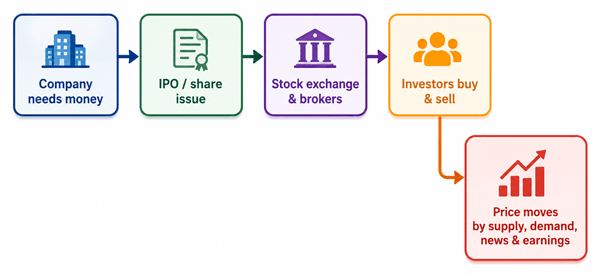
Figure 1: A simple view of how companies, exchanges, brokers, and investors connect.
2. Why Do Companies Sell Shares?
Companies sell shares mainly to raise money. A growing business may need money to build factories, hire people, develop technology, open new branches, pay debts, or expand into new markets. Instead of borrowing all the money from banks, a company can sell ownership shares to investors.
When a private company sells shares to the public for the first time, it is called an Initial Public Offering, or IPO. After the IPO, investors can trade those shares with each other in the secondary market. Most daily stock market activity happens in this secondary market. When you buy shares through a brokerage app, you are usually buying them from another investor, not directly from the company.
| Market Type | What Happens | Beginner Example |
|---|---|---|
| Primary market | A company sells new shares to raise money. | A company launches an IPO and public investors buy newly issued shares. |
| Secondary market | Investors buy and sell existing shares with each other. | You buy 10 shares of a public company through a broker from another seller. |
3. How Stock Prices Move
A stock price moves because buyers and sellers keep agreeing on new prices. If more people want to buy a stock than sell it, the price usually rises. If more people want to sell than buy, the price usually falls. This is supply and demand.
But supply and demand are influenced by many things: company earnings, future growth expectations, interest rates, inflation, industry news, government rules, global events, investor emotions, and overall market conditions. A good company can still see its stock fall if investors expected even better results. A weak company can rise for a while if people become excited or speculative.
This is why beginners should not think, “Good company means stock always goes up.” The stock market prices expectations, not just current quality. The price already reflects what many investors believe may happen in the future.
| News or Event | Possible Market Reaction | Why It Matters |
|---|---|---|
| Strong quarterly earnings | Stock may rise | Investors may believe profits and growth are improving. |
| Weak guidance from management | Stock may fall | The future may look less profitable than expected. |
| Interest rates rise | Many stocks may fall | Higher rates can reduce borrowing, spending, and valuation levels. |
| A popular product launch | Stock may rise or fall | It depends on whether results beat or miss investor expectations. |
| Market panic | Good and bad stocks may fall together | Fear can cause broad selling even when businesses remain solid. |
4. Investing vs Trading: What Beginners Must Understand
Investing and trading are not the same. Investing usually means buying assets with the intention of holding them for years. The investor focuses on business quality, diversification, patience, and long-term goals. Trading usually means buying and selling more frequently to profit from short-term price movements.
Many beginners start with a trading mindset because it looks exciting. They want fast profit. They check prices every hour. They follow tips. They panic when prices fall. Real experience teaches a different lesson: the easiest part is buying a stock; the hardest part is controlling emotions when the price moves against you.
| Approach | Time Frame | Main Focus | Beginner Risk |
|---|---|---|---|
| Long-term investing | Years or decades | Business growth, diversification, compounding | Still risky, but easier to manage with patience and planning. |
| Swing trading | Days to weeks | Price trends and momentum | Requires skill, discipline, and risk control. |
| Day trading | Minutes to hours | Short-term price movements | Very difficult for beginners; losses can happen quickly. |
| Speculation | Unclear | Hope, hype, rumors, or social media tips | High risk because decisions are not based on a clear plan. |
Practical note: A beginner does not need to trade daily to use the stock market. Many successful everyday investors use simple diversified funds, regular contributions, and long time horizons.
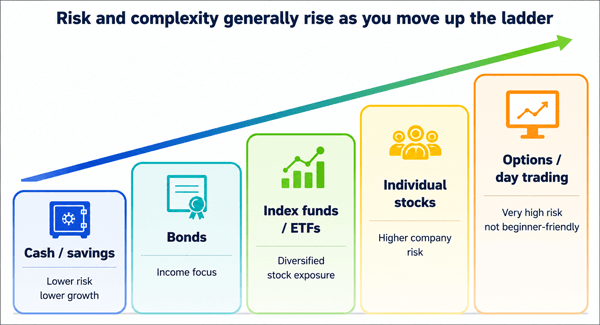
Figure 2: Risk and complexity rise as products become less diversified or more speculative.
5. The Main Ways People Make Money From Stocks
Stocks can make money in two basic ways: capital gains and dividends. A capital gain happens when you sell a stock for more than you paid. A dividend is a cash payment some companies share with stockholders from profits. Not every company pays dividends. Some companies keep profits and reinvest them to grow faster.
| Method | Simple Example | Important Reality |
|---|---|---|
| Capital gain | You buy a stock at $50 and later sell it at $70. | The gain is not guaranteed. The stock could also fall to $35. |
| Dividend income | A company pays shareholders $2 per share each year. | Dividends can be reduced or stopped if the company struggles. |
| Compounding | Dividends and gains are reinvested over many years. | Compounding needs time, patience, and consistency. |
Many beginners underestimate compounding because it feels slow at first. But compounding becomes powerful when returns are reinvested and money stays invested for many years. The practical lesson is not “invest everything today.” It is “start with a plan, invest money you can leave alone, and let time do part of the work.”
6. What Beginners Should Know Before Buying a Stock
Before buying any stock, a beginner should answer a few basic questions. These questions help turn a random purchase into a thoughtful decision.
- What does the company actually do, and how does it make money?
- Is the company profitable, growing, stable, or highly uncertain?
- Why do I want to buy it: business reasons, diversification, long-term goal, or just hype?
- How much could I emotionally and financially handle losing?
- Am I buying one company, or am I building a diversified portfolio?
- What fees, taxes, currency risks, or account rules apply in my country?
- Will I still be comfortable holding this if the price falls 20% or 30% temporarily?
A useful beginner habit is to write a one-paragraph reason before buying. For example: “I am buying this diversified index fund because I want broad market exposure for long-term retirement savings, and I plan to hold it for at least 10 years.” This simple note can protect you from emotional decisions later.
7. Individual Stocks, Index Funds, and ETFs: What Is the Difference?
Beginners often think stock investing means choosing famous companies one by one. That is only one option. Many investors use index funds or exchange-traded funds, called ETFs, to buy many stocks at once. This reduces the risk of depending too much on one company.
| Investment | What You Own | Pros | Cons |
|---|---|---|---|
| Individual stock | Shares of one company | Direct ownership, high upside if the company does very well. | Company-specific risk; requires research and emotional discipline. |
| Index fund | A fund tracking a market index | Broad diversification, simple, often lower cost. | Will not beat the market it tracks before fees; still falls when the market falls. |
| ETF | A fund traded like a stock | Diversified, flexible, easy to buy and sell during market hours. | Can still be risky depending on what the ETF owns. |
| Mutual fund | Professionally managed basket of assets | Can be diversified and automated. | Fees and rules vary; some underperform after costs. |
Practical note: For many beginners, a broad low-cost index fund or ETF can be easier than trying to pick winning stocks. It is not exciting, but it is often more practical for long-term goals.
8. A Practical Example: How a Beginner Might Start
Imagine Sara is 28 years old. She has no stock market experience. She has a stable job, some savings, and wants to invest for long-term wealth building. She does not want to gamble or watch charts all day.
- She first builds an emergency fund so she is not forced to sell investments during a bad month.
- She pays attention to high-interest debt, because paying expensive debt may be a better guaranteed return than risky investing.
- She opens an account with a regulated broker and learns the fee structure before depositing money.
- She starts small with money she can leave invested for years.
- She chooses a diversified fund instead of putting all her money into one trending stock.
- She sets a monthly contribution plan and reviews her portfolio occasionally, not every hour.
- She keeps learning, avoids social media hype, and increases contributions as her income grows.
This example is not the only correct path, but it reflects a beginner-friendly mindset: protect your financial base first, understand what you are buying, diversify, keep costs low, and avoid decisions driven by fear or excitement.
9. How to Buy a Stock: Step-by-Step
The exact process depends on your country and broker, but the basic steps are similar.
- Choose a regulated brokerage platform. Look for licensing, reputation, fees, customer support, available markets, research tools, and account security.
- Complete account verification. Brokers usually require identity documents and tax-related information.
- Deposit money. Start with an amount that will not harm your essential living needs.
- Search for the stock, ETF, or fund by name or ticker symbol.
- Choose order type. A market order buys quickly at the current available price. A limit order lets you set the maximum price you are willing to pay.
- Review the order carefully. Check ticker, quantity, estimated cost, fees, and currency.
- Place the order and record why you bought it.
- Monitor the investment based on your plan, not daily emotions.
| Order Type | Meaning | Beginner Use |
|---|---|---|
| Market order | Buy or sell immediately at the best available price. | Simple, but final price can differ in fast-moving markets. |
| Limit order | Buy or sell only at your chosen price or better. | Useful when you want price control. |
| Stop-loss order | An order that may sell after a stock falls to a certain level. | Can manage risk, but may trigger during temporary volatility. |
10. What Is Diversification and Why Does It Matter?
Diversification means not putting all your money in one place. If you own only one stock and that company fails, your portfolio can be badly damaged. If you own many companies across industries and regions, one bad company may hurt less.
Diversification does not remove all risk. A broad market crash can still pull down diversified portfolios. But diversification helps reduce the risk of one company, one sector, or one mistake destroying your plan.
| Portfolio | What It Looks Like | Main Risk |
|---|---|---|
| Concentrated | 100% in one technology stock | One company problem can cause a large loss. |
| Sector-heavy | Most money in banks or energy companies | A sector downturn can hurt badly. |
| Broadly diversified | Mix of many companies, sectors, and possibly asset classes | Still exposed to market risk, but less dependent on one business. |
11. Common Beginner Mistakes
- Buying because a friend, influencer, or online group said a stock will “definitely go up.”
- Investing emergency money that may be needed soon.
- Checking prices constantly and making emotional decisions.
- Confusing a falling price with a bargain without studying the business.
- Putting too much money into one stock, one sector, or one theme.
- Ignoring fees, taxes, spreads, currency conversion, and account rules.
- Thinking past performance guarantees future results.
- Using margin, options, or leveraged products before understanding the risks.
- Selling a long-term investment during a normal market drop without reviewing the original plan.
- Chasing high dividends without checking whether the dividend is sustainable.
The biggest beginner mistake is usually not a lack of intelligence. It is lack of process. A beginner can know the definition of a stock and still lose money because of impatience, overconfidence, or panic. Good investing is partly knowledge and partly behavior.
12. How Much Money Do You Need to Start?
You do not need to be rich to learn about the stock market. Many modern brokers allow small investments, fractional shares, or low minimums. However, “you can start small” does not mean “you should invest before you are ready.” A beginner should first think about emergency savings, essential bills, expensive debt, and investment time horizon.
Money needed within the next few months or next few years may not belong in stocks because the market can fall at the wrong time. Money for long-term goals has more time to recover from market declines. This is why the same stock market can be reasonable for retirement savings but dangerous for next month’s rent.
13. Is the Stock Market Safe?
The stock market is regulated, but it is not risk-free. Regulation can reduce fraud and improve transparency, but it cannot guarantee profits. Public companies can lose value. Markets can crash. Brokers can charge fees. Investors can make poor decisions.
A safer beginner approach usually includes using regulated brokers, avoiding unrealistic promises, diversifying, keeping costs low, understanding the investment, using strong account security, and never investing money needed for essential short-term needs.
Practical note: Be careful with anyone promising guaranteed stock market profits, secret signals, risk-free trading, or unusually high returns. Honest investing education explains both potential reward and risk.
14. Beginner Checklist Before Investing
- I understand that stocks can go down and I can lose money.
- I have handled urgent bills and have an emergency fund or safety plan.
- I know my goal: retirement, education, wealth building, income, or learning.
- I know my time horizon: short-term money and long-term money are separate.
- I understand the basic product I am buying: stock, ETF, index fund, or mutual fund.
- I know the fees, taxes, account rules, and currency considerations.
- I am diversified or I clearly understand the risk of not being diversified.
- I have written a simple plan for when I will buy, hold, add, rebalance, or sell.
- I will not rely on social media hype as my main research method.
15. Helpful Facts Beginners Should Remember
- A stock is ownership, not just a price chart.
- The market can be right in the long run but emotional in the short run.
- Low fees matter because costs reduce returns over time.
- Diversification helps, but it does not prevent losses.
- Dividends are not free money; stock prices and company value still matter.
- A famous company is not automatically a good investment at any price.
- The best beginner strategy is often simple, consistent, and boring.
- Risk management matters more than prediction.
- Learning to do nothing during panic can be a valuable investing skill.
16. Frequently Asked Questions
16.1 Is the stock market gambling?
It can become gambling if you buy randomly, chase hype, or risk money without a plan. But long-term investing in real businesses or diversified funds is different from gambling because it is based on ownership, productivity, earnings, and time. Risk still exists.
16.2 Can beginners make money from stocks?
Yes, beginners can make money, but they can also lose money. A realistic goal is not quick profit. It is learning, managing risk, diversifying, and building wealth gradually.
16.3 What is the best stock for beginners?
There is no universal best stock. Many beginners are better served by learning about diversified index funds or ETFs before buying individual companies.
16.4 Should I buy stocks when the market is down?
A lower market can create opportunities, but only if you have a plan, time horizon, and risk tolerance. Do not buy only because something is cheaper than last week.
16.5 How often should I check my portfolio?
Long-term investors usually do not need to check daily. A monthly or quarterly review may be enough for many beginners, depending on their plan.
16.6 Can I lose all my money?
If you put everything into one company, yes, a severe failure could destroy most or all of that position. A diversified fund is less likely to go to zero, but it can still lose value.
16.7 What is better: stocks or crypto?
They are different assets with different risks. Stocks represent ownership in businesses. Crypto assets vary widely and can be highly volatile. Beginners should understand any asset before buying it.
17. Final Thoughts: The Beginner Mindset That Works
The stock market is not magic. It is not only for rich people, and it is not a guaranteed money machine. It is a marketplace where ownership in companies changes hands. Beginners can use it wisely by focusing on education, risk management, diversification, realistic expectations, and long-term discipline.
The best first step is not to find the hottest stock. The best first step is to understand your own goal. Why are you investing? How long can the money stay invested? What level of loss can you handle? What simple plan will you follow when the market becomes noisy?
Once you answer those questions, the stock market becomes less frightening. You stop seeing it as a mystery and start seeing it as a tool. Like any tool, it can help or harm depending on how you use it. Use it with patience, honesty, research, and respect for risk.
Sources Consulted and Checked
The following sources were consulted and checked while preparing this article to support its accuracy, clarity, and people-first educational purpose. They provide general investor education, fraud-prevention guidance, and content-quality principles.
- Investor.gov, “Introduction to Investing” - investing involves assets such as stocks and bonds, expected returns, dividends, and risk.
- SEC, “Beginners Guide to Investing” - investor education and fraud-prevention orientation.
- FINRA, “Stocks” and “Investing Basics” - stocks as ownership shares and the role of risk, return, and investor education.
Reader Advice
This article is provided solely for educational and general information purposes and does not constitute personal financial, investment, tax, legal, or brokerage advice. Investing involves risk, including the possible loss of principal, and no return is guaranteed. Before making any decision, readers should consider their objectives, financial position, time horizon, emergency savings, debts, risk tolerance, fees, taxes, currency exposure, and applicable local laws and account rules. Regulations, market conditions, product features, charges, facts, and figures may change over time or differ by country, broker, and individual circumstances. Readers should therefore verify current information through official regulators, licensed financial institutions, and other authoritative sources, and seek advice from an appropriately qualified professional where necessary. Never invest money required for essential or near-term needs, and be cautious of guaranteed-profit claims, pressure tactics, or unverified online tips.