Fundamental Analysis for Stock Market Beginners
Imagine you are thinking about buying a small local bakery. You would not buy it just because many people are talking about it. You would ask simple questions: How much money does it make? Is rent too high? Are customers increasing? Does the owner have debt? Is the asking price fair? Fundamental analysis uses the same common-sense thinking, but for listed companies in the stock market.
Fundamental analysis is the process of studying a company as a real business before deciding whether its stock deserves your money. Instead of asking only, 'Is the stock price going up today?', you ask, 'Is this business healthy, growing, well-managed, reasonably priced, and suitable for my investment plan?'
For a beginner, this approach is powerful because it slows you down. It keeps you from buying only because of a viral tip, a social media post, or fear of missing out. It does not make investing risk-free, but it gives you a practical way to separate a strong business from a weak story.
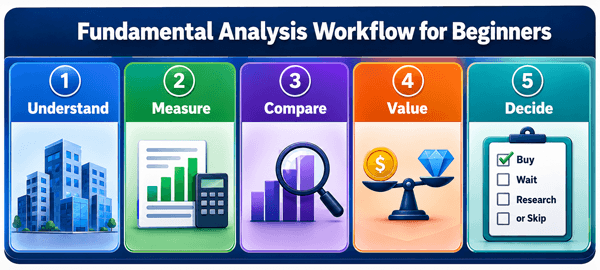
Figure 1. A beginner-friendly fundamental analysis workflow
| 1. Understand | 2. Measure | 3. Compare | 4. Value | 5. Decide |
|---|---|---|---|---|
| Business model | Statements and ratios | Competitors and trends | Price versus quality | Buy, wait, research, or skip |
1. What Is Fundamental Analysis?
Fundamental analysis is a method of evaluating a stock by studying the company behind it. The goal is to understand the company's real business quality, financial strength, future potential, risks, and whether the current stock price looks reasonable compared with those facts.
A simple definition is: fundamental analysis helps you decide whether a stock is worth owning based on business facts, not market noise.
This does not mean the stock will rise immediately after you buy it. A good company can stay undervalued for a long time. A popular stock can become expensive and still go higher for a while. The market can behave emotionally in the short term. Fundamental analysis is mainly useful for investors who want to think like business owners, not gamblers.
Beginner mindsetDo not start by asking, "Which stock will double?" Start by asking, "Which business do I understand well enough to judge, and what price would make sense for the risks?"
1.1 Fundamental analysis vs. technical analysis
Beginners often hear two phrases: fundamental analysis and technical analysis. They are not the same.
| Method | Main question | Beginner takeaway |
|---|---|---|
| Fundamental analysis | Is the business strong and is the stock price reasonable? | Useful for long-term investors who want to understand the company. |
| Technical analysis | What do price patterns, volume, and trends suggest? | Useful for traders, but it can become risky when used without risk control. |
| News or sentiment | What is the market excited or worried about right now? | Can move prices quickly, but hype is not the same as value. |
2. How Fundamental Analysis Works Step by Step
A beginner does not need to read every possible ratio on day one. A practical approach is to move from simple understanding to deeper analysis. Here is a clean step-by-step process.
- Understand the business model: what the company sells, who buys it, and why customers choose it.
- Check revenue and profit trends: is the business growing, shrinking, or only looking good for one unusual year?
- Review debt and financial strength: can the company survive hard times?
- Study cash flow: does reported profit turn into real cash?
- Compare with competitors: is the company better, cheaper, riskier, or simply more popular?
- Think about valuation: is the stock price fair compared with earnings, growth, assets, and future prospects?
- Write down risks: what could hurt the business, profits, or stock price?
- Make a decision: buy, wait for a better price, keep researching, or skip.
The most important part is writing your reasoning. Many experienced investors keep a short investment journal. They write why they bought, what they expect, what would prove them wrong, and when they will review the stock. This simple habit can prevent emotional decisions later.
3. The Three Financial Statements Beginners Should Know
Financial statements are the company's report card. They can look intimidating, but beginners only need to understand what each statement is trying to say.
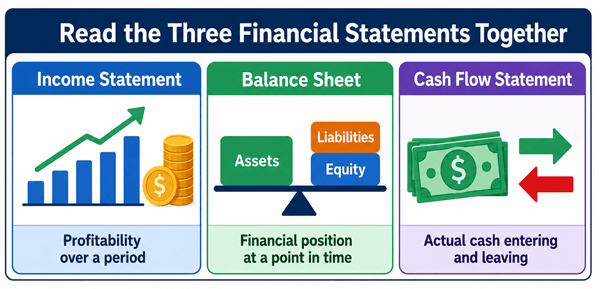
Figure 2. Read the three financial statements together
| Income Statement | Balance Sheet | Cash Flow Statement |
|---|---|---|
| Profitability over a period | Financial position at a point in time | Actual cash entering and leaving |
3.1 Income statement: Is the company making money?
The income statement shows revenue, expenses, and profit over a period of time. For beginners, revenue means total sales, gross profit shows how much is left after direct costs, operating profit shows profit from the main business, and net income is the final profit after all expenses and taxes.
- Good sign: revenue and profit are growing steadily, not only for one lucky quarter.
- Warning sign: sales are growing but profits are falling because costs are rising faster.
- Beginner question: If sales doubled, would profits also improve, or would costs eat the growth?
3.2 Balance sheet: Is the company financially strong?
The balance sheet shows what the company owns and what it owes at a specific point in time. Assets are things the company owns, liabilities are obligations, and shareholder equity is the remaining value after liabilities. A beginner should pay attention to cash, debt, inventory, receivables, and whether debt is manageable.
- Good sign: enough cash and reasonable debt.
- Warning sign: debt keeps rising while profits and cash flow stay weak.
- Beginner question: Could this company survive a bad year without raising money at a painful price?
3.3 Cash flow statement: Is profit turning into real cash?
The cash flow statement tracks actual cash entering and leaving the business. This matters because accounting profit is not always the same as cash. A company may report profit but still struggle if customers are not paying on time, inventory is piling up, or heavy spending is required to maintain the business.
- Good sign: operating cash flow is positive and usually close to or higher than net income.
- Warning sign: the company reports profit but repeatedly burns cash.
- Beginner question: Does the business generate enough cash to fund operations, growth, dividends, or debt repayment?
4. The Most Useful Fundamental Analysis Ratios for Beginners
Ratios are shortcuts. They help you compare companies, but they are not magic. A ratio becomes useful only when you understand the business, the industry, and the reason behind the number.
| Ratio | What it tells you | Simple example | Beginner caution |
|---|---|---|---|
| P/E ratio | Price compared with earnings | A P/E of 20 means investors pay $20 for $1 of annual earnings. | Low P/E can mean cheap, but it can also mean the business is weak. |
| P/B ratio | Price compared with book value | Useful for banks and asset-heavy companies. | Less useful for software or brand-heavy businesses. |
| Debt-to-equity | How much debt is used compared with equity | Higher debt can increase risk in downturns. | Some industries naturally use more debt than others. |
| ROE / ROIC | How efficiently the company uses capital | High returns can show a strong business model. | Very high numbers may be temporary or boosted by leverage. |
| Free cash flow | Cash left after maintaining and growing the business | Can fund dividends, buybacks, debt repayment, or expansion. | One-year cash flow can be distorted by working capital changes. |
| Dividend yield | Dividend compared with stock price | A 4% yield means annual dividend equals 4% of price. | A very high yield can signal risk of a dividend cut. |
A practical rule for beginners: never judge a stock using one ratio alone. A low P/E, high dividend yield, or fast revenue growth can all be misleading without context.
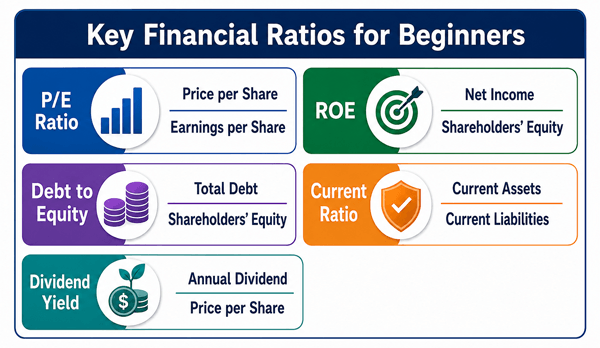
Figure 3. Valuation should be judged with business quality and growth
| Signal | Possible positive meaning | Possible warning |
|---|---|---|
| Low P/E | The stock may be undervalued | Earnings may be expected to decline |
| High growth | The business may be expanding strongly | The price may already assume perfect results |
| High dividend yield | Income may be attractive | The dividend may be at risk |
5. Qualitative Factors: The Things Numbers Do Not Fully Show
Fundamental analysis is not only about spreadsheets. Some of the most important questions are qualitative, meaning they involve judgment.
5.1 Business model
Ask how the company makes money. Is it selling one-time products, subscriptions, financial services, advertising, commodities, or something else? A beginner should prefer businesses they can explain in one or two sentences.
5.2 Competitive advantage
A competitive advantage is the reason a company can protect profits. It may come from brand power, network effects, patents, low costs, switching costs, distribution, regulation, or customer trust. Without an advantage, competitors may copy the business and reduce profits.
5.3 Management quality
Management matters because executives decide how to use company money. They can reinvest in growth, pay dividends, buy back shares, reduce debt, or make acquisitions. Beginners should look for clear communication, realistic targets, honest discussion of risks, and a history of sensible capital allocation.
5.4 Industry trends
A good company in a shrinking industry may struggle. A weak company in a growing industry may still disappoint. Look at demand, regulation, technology changes, customer behavior, interest rates, and competition. The question is not only whether the industry is exciting, but whether the company can profit from it.
6. A Practical Example: How a Beginner Might Analyze a Stock
The following example uses a fictional company so the focus stays on the process, not a stock recommendation.
6.1 Example company: FreshCart Ltd.
FreshCart Ltd. is a fictional grocery delivery company. Its stock price recently fell 30%, and many people online are saying it is now cheap. A beginner wants to know whether the drop is an opportunity or a warning.
6.2 Step 1: Understand the business
FreshCart earns money by delivering groceries and charging service fees. It also sells advertising space to brands inside its app. The company depends on delivery efficiency, customer repeat orders, technology, and supplier relationships.
6.3 Step 2: Review basic numbers
| Metric | Year 1 | Year 2 | Beginner interpretation |
|---|---|---|---|
| Revenue | $500m | $650m | Sales are growing 30%. |
| Net income | -$40m | $10m | Company moved from loss to small profit. |
| Operating cash flow | -$20m | $45m | Cash generation improved. |
| Total debt | $180m | $260m | Debt increased, so risk needs review. |
| Free cash flow | -$60m | $5m | Still thin after spending needs. |
6.4 Step 3: Ask what changed
The stock fell because investors worry that fuel costs, driver wages, and competition will reduce margins. That is a real risk. The beginner should not simply say, "The stock is down, so it is cheap." A falling price only creates value if the business is worth more than the market currently believes.
6.5 Step 4: Compare with competitors
If competitors have stronger cash flow, lower debt, and better customer retention, FreshCart may deserve a lower valuation. If FreshCart has better technology, lower delivery costs, and faster repeat orders, the lower price may deserve more research.
6.6 Step 5: Decide with humility
A reasonable beginner conclusion might be: "FreshCart is improving, but debt is rising and free cash flow is still weak. I will not buy only because the price dropped. I will wait for two more quarters of positive free cash flow or a better margin of safety."
What experienced investors often learn the hard way
A stock can look cheap after falling 30%, then fall another 30% if earnings weaken. Price decline alone is not analysis. The business must support the valuation.
7. How Beginners Can Use Fundamental Analysis in Real Life
Here is a practical routine that a new investor can follow without becoming overwhelmed.
- Choose one company you already understand. Avoid starting with complicated banks, biotech companies, or highly leveraged businesses unless you are ready to study them deeply.
- Read the company overview and risk factors in its annual report. For U.S. companies, annual reports on Form 10-K and quarterly reports on Form 10-Q are available through SEC filings.
- Write a one-paragraph business summary in your own words. If you cannot explain it simply, keep learning before investing.
- Look at five years of revenue, profit, debt, and cash flow if available. Trends matter more than one headline number.
- Compare the company with two competitors in the same industry. Do not compare a bank with a software company or a utility with a fast-growing online marketplace.
- Check valuation using two or three simple ratios, such as P/E, P/S, free cash flow yield, or dividend yield, depending on the business type.
- List the top three risks. Be specific. "Competition" is too vague. "A larger competitor can reduce prices because it has lower delivery costs" is better.
- Decide your action: buy a small position, add to a watchlist, wait for a better price, or skip.
For beginners, a watchlist is often more useful than immediate buying. You can track great companies, learn how they behave during earnings, and wait until price and business quality make sense together.
8. Beginner-Friendly Checklist Before Buying a Stock
- Can I explain the business in simple language?
- Do I understand how the company makes money?
- Are revenue and profits growing for healthy reasons?
- Does the company generate cash, not only accounting profit?
- Is debt manageable?
- Does the company have a durable advantage or is it easy to copy?
- Is management honest and realistic in communication?
- Is the valuation reasonable compared with growth and risk?
- Have I compared it with competitors?
- What would make me admit I was wrong?
- Is this stock suitable for my overall investment portfolio and risk tolerance?
- Am I diversified, or am I putting too much money into one idea?
9. Common Mistakes Beginners Make
9.1 Mistake 1: Buying because a stock is popular
Popularity can push prices far above reasonable value. A company can be excellent and still be a poor investment if the stock price already assumes perfect results.
9.2 Mistake 2: Thinking a low price means cheap
A $5 stock is not automatically cheaper than a $500 stock. What matters is the value of the business compared with the total company value, earnings, cash flow, assets, and risks.
9.3 Mistake 3: Looking only at P/E ratio
The P/E ratio is useful, but it does not tell the whole story. A high-quality company with strong growth may deserve a higher P/E. A struggling company may have a low P/E because investors expect earnings to fall.
9.4 Mistake 4: Ignoring debt
Debt can help a company grow, but too much debt reduces flexibility. During recessions, high interest rates, or weak sales periods, debt can turn a normal business problem into a survival problem.
9.5 Mistake 5: Forgetting opportunity cost
When you buy one stock, you are choosing it instead of another stock, an index fund, a bond, cash, or another investment. Fundamental analysis should help you decide whether the expected reward is worth the risk compared with other choices.
9.6 Mistake 6: Confusing a good company with a good stock
A good company can be a bad stock at the wrong price. A boring company can be a good stock at the right price. Valuation connects business quality with investment return potential.
10. Helpful Facts Beginners Should Know
- No analysis method can remove market risk. Even well-researched stocks can fall.
- A company's annual report is usually more useful than social media opinions.
- Revenue growth without profit or cash flow needs careful investigation.
- High dividend yield can be attractive, but it can also signal danger if profits cannot support the dividend.
- Share buybacks help shareholders only when done at sensible prices and without weakening the balance sheet.
- Different industries require different valuation tools. Banks, utilities, technology companies, retailers, and commodity producers should not be judged by one universal ratio.
- Diversification matters because even good analysis can be wrong.
- Taxes, fees, brokerage costs, currency risk, and inflation can affect real returns.
11. Fundamental Analysis and Long-Term Investing
Fundamental analysis fits naturally with long-term investing because business results take time. A company may need years to expand margins, reduce debt, launch products, or grow into a large market. Short-term price movements can be noisy, but long-term stock performance is usually tied to earnings, cash flow, capital allocation, and valuation.
This is why many beginners use fundamental analysis alongside a broader plan: emergency savings first, diversified portfolio construction, suitable asset allocation, and regular review. Individual stocks can be part of a portfolio, but they should not replace basic financial planning.
12. A Simple Stock Research Template
Readers can copy this template and use it for any company they are studying.
| Question | My notes |
|---|---|
| What does the company do? | |
| How does it make money? | |
| Who are its main competitors? | |
| What are the five-year revenue and profit trends? | |
| Is cash flow strong or weak? | |
| How much debt does it have? | |
| What is the main competitive advantage? | |
| What are the top three risks? | |
| Which valuation ratios are most relevant? | |
| What price or condition would make me interested? | |
| What would make me sell or change my view? |
13. FAQ
13.1 Is fundamental analysis good for beginners?
Yes, because it teaches beginners to look at the business behind the stock. It encourages patience, research, and risk awareness. However, beginners should start simple and avoid overconfidence.
13.2 How long does it take to learn fundamental analysis?
You can learn the basic framework in a few days, but good judgment takes practice. Reading annual reports, comparing companies, and reviewing past mistakes are what build skill over time.
13.3 What is the first thing to check before buying a stock?
Start by understanding the business model. If you cannot explain how the company makes money, the financial ratios may not help much.
13.4 Which financial statement is most important?
All three matter. The income statement shows profit, the balance sheet shows financial strength, and the cash flow statement shows real cash generation.
13.5 Can fundamental analysis predict stock prices?
No. It can help estimate business value and risk, but it cannot predict short-term stock prices with certainty.
13.6 Should beginners buy individual stocks or index funds?
Many beginners start with diversified funds because they reduce single-company risk. Individual stocks require more research, emotional control, and ongoing review.
13.7 What is intrinsic value?
Intrinsic value is an estimate of what a business is worth based on its future cash flows, assets, growth, and risk. It is an estimate, not a fixed fact.
13.8 What is margin of safety?
Margin of safety means buying with room for error. If your estimate of value is wrong or the business faces problems, a lower purchase price can reduce, but not eliminate, risk.
13.9 Is a low P/E stock always undervalued?
No. A low P/E can mean the market expects earnings to decline or sees higher risk. Always ask why the valuation is low.
13.10 What tools can beginners use?
Beginners can use company annual reports, SEC EDGAR filings, brokerage research tools, stock screeners, investor relations pages, and financial education resources. Tools help, but they do not replace judgment.
14. Conclusion: The Best Beginner Approach
Fundamental analysis is not about becoming a Wall Street expert overnight. It is about asking better questions before putting money at risk. A beginner who understands the business, reads the basic financial statements, checks valuation, compares competitors, and respects risk is already ahead of many people who buy stocks on tips and emotion.
The best habit is simple: slow down, write your reasoning, avoid hype, diversify, and keep learning. Good investing is not only about finding winners. It is also about avoiding obvious mistakes, protecting your capital, and making decisions that match your goals and risk tolerance.
The following sources were consulted and checked while preparing this article to support accuracy, clarity, and alignment with reliable investor-education and people-first content guidance.
- SEC Investor.gov: How to Read a 10-K/10-Q: https://www.investor.gov/introduction-investing/general-resources/news-alerts/alerts-bulletins/how-read
- SEC: Beginners' Guide to Financial Statements: https://www.sec.gov/about/reports-publications/investorpubsbegfinstmtguide
- FINRA: Evaluating Stocks: https://www.finra.org/investors/investing/investment-products/stocks/evaluating-stocks
- Investor.gov: Using EDGAR to Research Investments: https://www.investor.gov/introduction-investing/getting-started/researching-investments/using-edgar-research-investments
This article is provided only for general educational and informational purposes. It does not constitute personal investment, financial, tax, accounting, or legal advice, and it should not be treated as a recommendation to buy, sell, or hold any security or financial product. Stock prices can fall, businesses can underperform, and no analysis method can guarantee profits or prevent losses. Before making any decision, readers should consider their own goals, financial circumstances, time horizon, risk tolerance, diversification needs, fees, taxes, and other relevant factors, and should seek advice from appropriately qualified professionals when necessary.
Financial rules, disclosure requirements, market conditions, company information, and figures may change over time or differ by country, jurisdiction, platform, and individual circumstances. Readers should therefore verify material facts, filings, rules, and current figures through official company disclosures, regulators, tax authorities, and other authoritative sources. Any examples in this article are illustrative only, and the fictional company discussed is not an investment recommendation.