ETF vs Mutual Fund: Which Is Better for Stock Market Investors?
1. Introduction: the simple answer first
For many stock market investors, the question is not really “ETF or mutual fund?” The better question is: “Which fund helps me invest regularly, pay low costs, stay diversified, and avoid emotional mistakes?” Both ETFs and mutual funds can be excellent tools. Both can hold hundreds or thousands of stocks. Both can be used for long-term wealth building. And both can also be poor choices if the fund is expensive, too risky, badly understood, or bought only because someone on the internet recommended it.
In simple words, an ETF, or exchange-traded fund, is a basket of investments that trades on the stock exchange during the day, like a stock. A mutual fund is also a basket of investments, but investors usually buy or sell it directly through a fund company, broker, or retirement plan at the end-of-day net asset value, often called NAV. FINRA explains that ETFs are pooled, professionally managed investments like mutual funds, but ETF shares trade throughout the trading day at market prices. The SEC also notes that ETF prices can be different from the value of the ETF’s underlying assets, while mutual funds are generally priced at NAV after the market closes.
For a beginner, the practical difference feels like this: an ETF gives more trading flexibility and often lower costs, while a mutual fund often gives more simplicity for automatic investing and retirement plans. But “often” does not mean “always.” Some mutual funds are very cheap. Some ETFs are expensive or complex. Some ETFs are perfect for long-term index investing. Some are designed for short-term trading and are not suitable for beginners. The label is only the wrapper. The real investment is what the fund owns, what it costs, how risky it is, and how well it fits your plan.
2. What is an ETF?
An ETF is a fund that owns a portfolio of assets such as stocks, bonds, commodities, or a mix of securities. When you buy one share of an ETF, you are buying a small piece of that whole basket. For example, a broad U.S. stock market ETF may hold shares of hundreds or thousands of companies. Instead of buying each company one by one, the investor buys one ETF and receives broad exposure in a single trade.
The “exchange-traded” part is important. ETF shares are listed on an exchange, so you can buy or sell them during market hours through a brokerage account. The price moves during the day because buyers and sellers are trading the ETF, and because the value of the underlying holdings is changing. This can be useful, but it can also tempt beginners to trade too much. Many experienced ETF investors treat ETFs like long-term building blocks, not like lottery tickets.
Most popular ETFs are index ETFs. That means they try to track a market index, such as a total stock market index, a large-cap stock index, a sector index, or an international stock index. There are also active ETFs, bond ETFs, dividend ETFs, commodity ETFs, thematic ETFs, leveraged ETFs, inverse ETFs, and option-income ETFs. A beginner should not assume every ETF is simple just because the word ETF sounds modern. A plain total market ETF is very different from a leveraged or options-based ETF.
3. What is a mutual fund?
A mutual fund is also a pooled investment vehicle. Many investors put money into the same fund, and the fund manager invests that money according to the fund’s stated objective. A mutual fund may own stocks, bonds, money market instruments, or a mix. When you buy shares of the mutual fund, you participate in the gains, losses, dividends, and expenses of the fund.
The main operational difference is pricing. Traditional open-end mutual funds are normally bought and sold once per trading day at the fund’s NAV, calculated after the market closes. If you place an order during the day, you do not know the exact price until the NAV is calculated. This can feel less flexible than ETF trading, but it also reduces the temptation to watch every tick and trade emotionally.
Mutual funds are common in employer retirement plans, systematic investment plans, automatic monthly contributions, and accounts where people want a simple “set it and keep adding” routine. Many mutual funds are actively managed, meaning a manager chooses securities with the goal of beating a benchmark. Many others are index mutual funds that simply track a market index, similar to index ETFs.
4. ETF vs mutual fund: the easiest comparison
| Feature | ETF | Mutual Fund | Beginner takeaway |
|---|---|---|---|
| How it trades | Trades on an exchange during market hours, like a stock. | Usually bought or sold once per day at closing NAV. | ETF gives control; mutual fund gives simplicity. |
| Price you receive | Market price, which can move during the day and may be slightly above or below NAV. | End-of-day NAV after the market closes. | Avoid market orders in thin ETFs; mutual funds remove intraday price decisions. |
| Minimum investment | Often one share; many brokers allow fractional ETF shares. | Can be low, but some funds require $500, $1,000, $3,000, or more. | ETF may be easier for very small starting amounts. |
| Automatic investing | Broker-dependent; improving, but not universal. | Often very easy for monthly automatic contributions. | Mutual funds can be smoother for salary-based investing. |
| Costs | Many broad index ETFs have very low expense ratios; trading spreads may matter. | Index mutual funds can be low-cost; active funds can be more expensive. | Compare expense ratio, loads, transaction fees, and spreads. |
| Taxes in taxable accounts | Often tax-efficient because of ETF structure, especially broad index ETFs. | Can distribute taxable capital gains even if you reinvest. | ETF often has an edge in taxable accounts, but not every ETF is tax-efficient. |
| Retirement plans | Less common in many employer plans. | Very common in 401(k)-style plans and retirement accounts. | Use the best low-cost option available in the account. |
| Trading behavior | Easy to trade quickly, which can be good or bad. | Harder to trade impulsively during the day. | The best fund can fail if investor behavior is poor. |
| Transparency | Many ETFs publish holdings frequently, often daily. | Holdings may be disclosed monthly or quarterly with a lag. | ETF transparency helps DIY investors, but active managers may prefer delayed disclosure. |
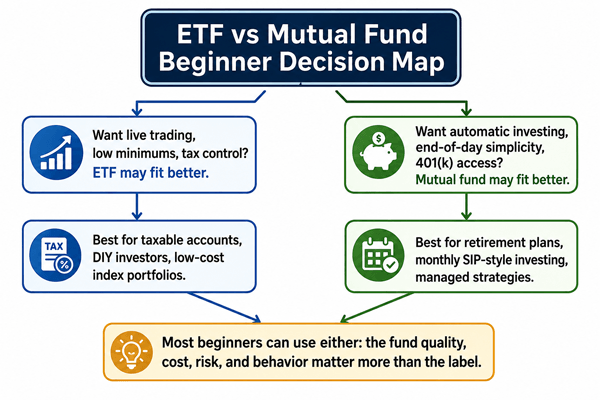
Figure 1: Beginner decision map for ETF vs mutual fund
5. How ETFs work behind the scenes, in plain English
Imagine a large basket filled with shares of many companies. The ETF sponsor designs the basket, publishes the rules, and keeps the fund aligned with its objective. Regular investors buy and sell ETF shares on the exchange. Large institutional traders, often called authorized participants, can create or redeem large blocks of ETF shares with the fund. This creation and redemption process helps keep the ETF’s market price close to the value of its holdings.
Beginners do not need to master the mechanics before investing, but they should understand the result: ETF prices can move during the day, and in normal markets a liquid ETF usually trades close to its NAV. In stressed markets or thinly traded ETFs, the gap can widen. That is why many practical investors use limit orders instead of market orders when buying or selling ETFs, especially outside the most liquid broad market funds.
A common real-life beginner experience is buying an ETF immediately after the market opens, then seeing the price jump around. This does not mean the ETF is broken. The first and last minutes of the trading day can be more volatile. A simple habit is to avoid trading at the market open or close unless you know what you are doing.
6. How mutual funds work behind the scenes, in plain English
With a mutual fund, you normally send money to the fund through a broker, fund platform, or retirement account. The fund company calculates the value of everything the fund owns after the market closes. That value, minus liabilities, divided by the number of fund shares, becomes the NAV. Your buy or sell order is filled at that NAV.
This end-of-day process makes mutual funds feel less like trading and more like saving. That can be a major benefit for beginners who want to invest monthly and stop checking prices. Many investors build serious portfolios by simply choosing low-cost index mutual funds, setting automatic contributions, and increasing contributions over time.
The downside is that mutual funds may have minimum investments, possible loads or transaction fees, redemption fees in some cases, and taxable distributions in taxable accounts. These details are not always exciting, but they can affect real returns.
7. Which is better for beginners?
For most beginners, the better choice is the one that makes good behavior easier. If you are opening a taxable brokerage account with a small amount of money and your broker offers commission-free ETF trades and fractional shares, a low-cost broad market ETF can be a practical starting point. If you are investing inside a retirement plan or want automatic monthly investing with no trading decisions, a low-cost mutual fund may be more comfortable.
A beginner should avoid the mistake of comparing “ETF” against “mutual fund” as if all ETFs are one product and all mutual funds are another. A total stock market ETF and a total stock market index mutual fund may be almost identical in investment exposure. A leveraged technology ETF and a balanced retirement mutual fund are completely different products. Compare funds with similar goals before deciding.
Practical rule: first choose your asset allocation, then choose the fund wrapper. For example, decide whether you want U.S. stocks, international stocks, bonds, or a mix. Then compare ETF and mutual fund versions based on cost, tax treatment, liquidity, minimum investment, and ease of use.
8. Costs: the part beginners underestimate
The expense ratio is the yearly fund fee taken from the fund’s assets. You do not usually receive a separate bill; the cost quietly reduces the fund’s return. A small difference can become large over decades. Morningstar’s 2026 fee study reported that the average expense ratio paid by U.S. fund investors fell from 0.80% in 2006 to 0.32% in 2025, showing how strongly investors and advisors have moved toward lower-cost funds.
But the expense ratio is not the only cost. ETF investors should also notice bid-ask spread, trading commissions if any, and market impact for less liquid funds. Mutual fund investors should check for sales loads, 12b-1 fees, short-term redemption fees, transaction fees at the brokerage, and whether a cheaper share class is available. A “no-load” low-cost index mutual fund may be cheaper than a fancy ETF. A broad ETF may be cheaper than an actively managed mutual fund. The answer depends on the actual fund.
Here is a simple example. Suppose two investors each invest $10,000 for 30 years, and the investment earns 7% per year before fund costs. One pays 0.05% per year and the other pays 0.75% per year. The difference may look tiny in one year, but over a long investing life, the higher fee can quietly take thousands of dollars that could have stayed invested.
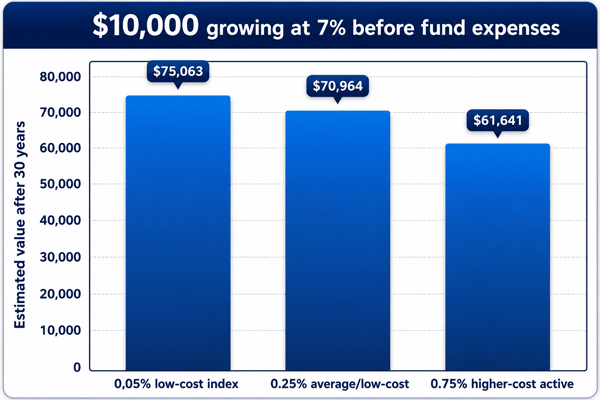
Figure 2: Why expense ratios matter over long periods
9. Tax efficiency: why ETFs often get attention
Taxes depend on your country, account type, income, holding period, and fund activity, so readers should check local rules or speak with a qualified tax professional. In the United States, ETFs are often described as tax-efficient because many ETFs can use in-kind redemptions to reduce the need to sell securities inside the fund. Less selling inside the fund can mean fewer taxable capital gain distributions to shareholders.
Mutual funds can distribute capital gains to shareholders when the fund sells investments at a profit. The IRS explains that capital gain distributions are generally paid or credited to the investor and are considered income. This can surprise beginners: you may owe tax on a mutual fund distribution in a taxable account even if you reinvest the money and do not sell your own shares.
Tax efficiency matters most in taxable brokerage accounts. Inside retirement accounts, tax-advantaged accounts, or employer plans, the ETF tax advantage may matter less or not at all. That is why many investors use ETFs in taxable accounts and mutual funds in retirement accounts, but this is a common pattern, not a universal rule.
10. Performance: ETFs do not automatically beat mutual funds
A big myth is that ETFs always perform better. The truth is more boring and more useful: performance comes from what the fund owns, what strategy it follows, what it costs, and how the investor behaves. If an ETF and a mutual fund track the same index with similar fees, their long-term returns may be very close before taxes.
Active mutual funds sometimes try to beat the market by selecting stocks. Some do well for a period. Many do not after fees. Active ETFs also exist, so active management is not only a mutual fund feature anymore. Beginners should be careful with any fund that markets itself using recent performance. A fund’s strong past return may come from a temporary trend, extra risk, concentration in a few stocks, or luck.
Better questions than “Which performed best last year?” include: What index or strategy does this fund follow? How long has the manager or process been in place? What is the expense ratio? How diversified is it? What happened in bad markets? Does it match my time horizon?
11. Risk: the wrapper is not the risk, the holdings are
An ETF holding short-term Treasury bills may be much less volatile than a mutual fund holding small-cap growth stocks. A mutual fund holding a broad bond index may be less volatile than an ETF holding leveraged technology stocks. This is why the product label is not enough.
Beginner investors should check these risks before buying: market risk, concentration risk, sector risk, currency risk, interest-rate risk for bond funds, credit risk for bond funds, liquidity risk, tracking error, and behavioral risk. Behavioral risk means the risk that you panic sell during a decline or chase a hot theme after it has already risen.
A practical beginner habit is to read the fund’s top holdings and sector allocation. If a “diversified” ETF has 40% in one sector or a few mega-cap stocks, it may behave more concentrated than expected. If a mutual fund uses derivatives, leverage, or a narrow strategy, it may not be suitable for a simple long-term portfolio.
12. Real beginner examples
- Sara has $100 and wants to start investing in a taxable brokerage account. Her broker allows fractional ETF shares and commission-free trades. A broad, low-cost stock market ETF may be convenient because she can invest a small amount without meeting a mutual fund minimum. Her main job is not to trade every day; it is to keep adding money and stay diversified.
- Ali invests through his employer retirement plan. The plan offers several mutual funds but no ETFs. He chooses a low-cost target-date mutual fund because it automatically mixes stocks and bonds based on his expected retirement year. For him, the mutual fund is not a second-best choice. It may be the most practical choice available.
- Maria has a taxable account and already owns a high-cost active mutual fund that distributes capital gains every year. She compares it with a low-cost index ETF. She does not blindly switch, because selling the mutual fund may trigger taxes. Instead, she checks unrealized gains, future contributions, fees, and tax impact before making a change.
- Jamal wants to buy a hot artificial intelligence ETF after seeing strong returns online. He reads the holdings and sees that it is concentrated in a small group of companies. He decides to limit it to a small satellite position or skip it, because his core portfolio already gives him exposure to many technology companies through a broad market fund.
13. How to choose a good ETF or mutual fund: a practical checklist
- Start with the goal. Are you investing for retirement, a house down payment, education, income, or long-term wealth? A five-year goal and a thirty-year goal should not use the same level of stock risk.
- Choose the asset class. Decide whether you need stocks, bonds, cash-like funds, or a balanced mix. Do not begin with a product name.
- Prefer broad diversification for the core. Many beginners do better with broad total market funds than with narrow sector bets.
- Check the expense ratio. Lower is not always better if the strategy is different, but for similar index funds, cost is one of the most reliable things you can control.
- Look for hidden costs. For ETFs, check bid-ask spread and liquidity. For mutual funds, check loads, transaction fees, minimums, and redemption rules.
- Read the holdings. Make sure the fund owns what you think it owns.
- Check tracking and history. For index funds, see whether the fund closely tracks its benchmark. For active funds, understand the manager’s process and risk.
- Match the account type. Taxable accounts may favor tax-efficient ETFs. Retirement accounts may make mutual funds easier and tax differences less important.
- Build an investing routine. A slightly imperfect fund used consistently may beat a perfect fund that you never buy because the process is too complicated.
- Avoid products you cannot explain. If you cannot explain how the fund makes money and how it can lose money, keep learning before investing.
14. When an ETF may be better
An ETF may be better when you want low minimum investment, intraday trading flexibility, tax efficiency in a taxable account, transparent holdings, and easy access through a brokerage account. ETFs can also be useful for investors who want to build a portfolio of specific asset classes, such as U.S. stocks, international stocks, bonds, real estate, or commodities.
ETFs are especially attractive for DIY investors who are comfortable placing trades and who understand basic order types. A limit order lets you set the maximum price you are willing to pay or the minimum price you are willing to accept when selling. This small habit can protect beginners from bad fills in less liquid ETFs.
However, ETF flexibility is not always a blessing. If you check prices all day, switch funds constantly, or chase every market trend, the ETF structure can make bad behavior easier. The best ETF strategy is often boring: choose diversified low-cost funds and hold them through normal market ups and downs.
15. When a mutual fund may be better
A mutual fund may be better when you want automatic investing, simple end-of-day pricing, easy dividend reinvestment, and access through an employer retirement plan. Mutual funds can also be useful when you prefer a professionally managed active strategy and understand the fees and risks.
Mutual funds often fit people who want investing to feel like a monthly bill: money comes from income, goes into the fund, and stays invested. This is powerful because wealth building usually depends more on saving rate, time, diversification, and discipline than on choosing the trendiest product wrapper.
The weak point is cost and tax surprise. Some mutual funds are expensive, and some make taxable distributions. Beginners should not buy a mutual fund simply because a bank employee, broker, relative, or social media account says it is “safe” or “best.” Read the fund facts and compare alternatives.
16. Common mistakes beginners make
- Looking only at past returns. A fund that performed best last year may simply have taken more risk. Past performance is not a guarantee of future results.
- Ignoring expenses. A high expense ratio is a headwind every year. The fund must overcome that cost before the investor benefits.
- Buying too many similar funds. Owning five broad U.S. stock funds may look diversified, but they may hold many of the same companies.
- Confusing dividend yield with free money. Dividends are part of total return, not magic income. High yield can come with higher risk or lower growth.
- Trading ETFs like gambling chips. ETF liquidity makes trading easy, but frequent trading can hurt returns through poor timing and taxes.
- Assuming mutual funds are old-fashioned. Some mutual funds are low-cost, diversified, and excellent for retirement investing.
- Forgetting taxes before switching. Selling an old fund in a taxable account can create capital gains tax. Compare the future benefit with the immediate tax cost.
17. A simple portfolio example for educational purposes
Consider a young long-term investor with high risk tolerance and a 25-year horizon. A simple portfolio might use a broad total stock market fund for the core, an international stock fund for global diversification, and a bond fund if the investor wants smoother returns. This can be built using ETFs or mutual funds.
ETF version: Total stock market ETF + international stock ETF + bond ETF. Mutual fund version: Total stock market index mutual fund + international stock index mutual fund + bond index mutual fund. If the funds track similar indexes and have similar costs, the investment exposure may be very similar. The investor should choose the version that fits account type, taxes, minimums, and behavior.
This example is not a recommendation for every reader. A person close to retirement, a person with unstable income, a person saving for a near-term goal, or a person who panics during market declines may need a different mix. The important lesson is that asset allocation comes before product wrapper.
18. ETF vs mutual fund: final verdict
For stock market investors, ETFs are often better for taxable brokerage accounts, small starting amounts, transparent low-cost index investing, and investors who can trade responsibly. Mutual funds are often better for automatic investing, employer retirement plans, target-date strategies, and investors who prefer simplicity over intraday control.
But the most honest answer is: the better product is the one that helps you follow a sound plan at a low cost with risks you understand. A low-cost index mutual fund can be better than an expensive ETF. A broad ETF can be better than a high-fee active mutual fund. A retirement-plan mutual fund can be better than an ETF you cannot access in that account. The right comparison is fund versus fund, not label versus label.
If you are a beginner, do not rush. Learn the basic terms, compare costs, read the fund objective, start with broad diversification, and invest money you can leave alone for the proper time horizon. The stock market rewards patience more often than excitement.
19. Quick answers
19.1 Is an ETF better than a mutual fund?
An ETF is often better for investors who want low costs, tax efficiency, and trading flexibility. A mutual fund is often better for automatic investing, retirement plans, and simple end-of-day pricing. The best choice depends on the fund’s holdings, fees, taxes, account type, and your behavior.
19.2 Are ETFs safer than mutual funds?
No. Safety depends on what the fund owns. A broad bond mutual fund may be less volatile than a leveraged stock ETF. A broad stock ETF may be riskier than a conservative balanced mutual fund.
19.3 Can beginners invest in ETFs?
Yes, beginners can use ETFs, especially broad low-cost index ETFs, but they should understand market orders, bid-ask spreads, volatility, taxes, and the risk of emotional trading.
19.4 Can beginners invest in mutual funds?
Yes. Mutual funds are common beginner tools because they support automatic investing, retirement plans, and diversified portfolios. Beginners should check minimum investment, fees, loads, and tax distributions.
19.5 Which is better for long-term investing?
Both can work for long-term investing. For similar index strategies, an ETF and mutual fund may deliver similar market exposure. Costs, taxes, account type, and consistency usually matter more than the wrapper.
20. FAQs: ETF vs Mutual Fund
20.1 What is the main difference between ETF and mutual fund?
An ETF trades on a stock exchange during the day at market prices. A mutual fund is usually bought or sold once per day at end-of-day NAV.
20.2 Do ETFs pay dividends?
Many ETFs pay dividends if the underlying holdings pay dividends. The ETF may distribute income to shareholders, and the tax treatment depends on account type and local rules.
20.3 Do mutual funds pay dividends?
Many mutual funds distribute dividends and capital gains. In taxable accounts, these distributions may be taxable even when reinvested.
20.4 Can I lose money in ETFs and mutual funds?
Yes. Both can lose value if the investments they hold decline. Diversification can reduce company-specific risk, but it does not remove market risk.
20.5 Should I choose active or index funds?
Beginners often start with low-cost index funds because they are simple, diversified, and transparent. Active funds may fit some investors, but they require more due diligence on fees, manager skill, process, and risk.
20.6 How many funds does a beginner need?
Many beginners can start with one diversified target-date fund, one balanced fund, or a small set of broad index funds. More funds do not automatically mean better diversification.
20.7 What should I check before buying any fund?
Check objective, holdings, expense ratio, risks, performance history, benchmark, turnover, tax distributions, minimum investment, and whether it fits your time horizon.
20.8 Are ETFs good for monthly investing?
They can be, especially if your broker supports fractional shares and automatic ETF investing. If not, mutual funds may be smoother for automatic monthly contributions.
20.9 Are mutual funds outdated?
No. Many mutual funds remain useful, especially low-cost index mutual funds, target-date funds, and retirement-plan options.
20.10 Which is better in a taxable account?
ETFs often have a tax-efficiency advantage in taxable accounts, especially broad index ETFs. But investors should compare the actual fund and consider tax consequences before switching existing holdings.
Sources Consulted and Checked
These sources were consulted and checked while preparing this article to support factual accuracy, clarity, and alignment with reliable public guidance.
- FINRA: Exchange-Traded Funds and Products; Mutual Fund vs ETF: What’s the Difference? — https://www.finra.org/investors/investing/investment-products/exchange-traded-funds-and-products
- SEC Investor.gov / SEC Investor Bulletin: Exchange-Traded Funds and Products; ETF investor bulletin explaining exchange trading and NAV differences — https://www.sec.gov/investor/alerts/etfs.pdf
- Investment Company Institute (ICI): 2025 Investment Company Fact Book quick facts and fund industry statistics — https://www.ici.org/files/2025/2025-factbook-quick-facts-guide.pdf
- Morningstar: 2026 Annual U.S. Fund Fee Study, fund fee trends — https://www.morningstar.com/business/insights/research/annual-us-fund-fee-study
- IRS: Mutual funds: capital gains distributions are income to the investor — https://www.irs.gov/faqs/capital-gains-losses-and-sale-of-home/mutual-funds-costs-distributions-etc/mutual-funds-costs-distributions-etc-4
- Vanguard: ETF education and ETF vs mutual fund comparison, including automatic investing and tax-efficiency discussion — https://investor.vanguard.com/investor-resources-education/etfs/etf-vs-mutual-fund
Reader Advice
This article is provided solely for educational and general informational purposes. It is not personal financial, investment, tax, legal, or accounting advice, and it does not recommend any particular ETF, mutual fund, security, strategy, broker, platform, or course of action. Investment decisions should be based on each reader’s objectives, financial circumstances, risk tolerance, time horizon, account type, and applicable laws and tax rules. Before investing, changing an existing holding, or acting on any information in this article, readers should review the relevant prospectus and official fund documents and, where appropriate, consult a qualified financial, tax, or legal professional.
Fund fees, holdings, performance, platform features, market conditions, tax treatment, laws, regulations, and other facts can change over time and may vary by country, jurisdiction, provider, and individual circumstances. Readers should therefore verify current facts, figures, rules, and product details through official and authoritative sources. All investments involve risk, including possible loss of principal, and past performance does not guarantee future results.