Stock Market Terms Every Beginner Must Know
1. Introduction: why stock market words feel confusing at first
The stock market can sound more complicated than it really is because beginners are often hit with too many terms at once: shares, brokers, ETFs, dividends, market cap, bull market, bear market, liquidity, bid, ask, limit order, portfolio, volatility, P/E ratio, and many more. The problem is not that these ideas are impossible. The problem is that most explanations assume you already know the basics.
Think of the stock market as a large marketplace where people buy and sell small pieces of companies. A stock is one small ownership share in a business. A stock exchange is the organized place where those shares trade. A broker is the company or app that lets you place orders. A portfolio is the collection of investments you own. Once these simple building blocks make sense, the rest becomes much easier.
This article is written for someone who has no idea where to start. It explains the most important stock market terms in plain English, shows how they work in real life, and gives practical examples. The goal is to help readers understand the language before they risk real money.
2. What is the stock market?
The stock market is a system where investors buy and sell ownership shares of companies. When a company wants to raise money, it may sell shares to the public. After those shares are listed, investors trade them with one another through regulated markets and brokerage platforms.
A beginner can imagine it like a used-car marketplace, but instead of cars, people trade pieces of businesses. Prices move because buyers and sellers disagree about what a company is worth today and what it may be worth in the future. Good news, weak earnings, interest rates, inflation, product launches, competition, investor fear, and investor excitement can all affect prices.
The stock market is not a magic money machine. It is also not only for rich people. It is a place where long-term investors may build wealth over time, but it involves risk. Share prices can fall, sometimes sharply. A smart beginner learns the terms first, starts small, diversifies, and never invests money needed for rent, food, emergency savings, or short-term bills.
3. How the stock market works in simple steps
When you buy a stock, you usually do not call the stock exchange directly. You open an online brokerage account or use a regulated stock trading app. You search for a company or fund, choose how many shares or how much money you want to invest, select an order type, and submit the order. Your broker sends the order to the market, where it is matched with someone willing to sell.
If the trade is executed, your brokerage account shows that you own the shares. The cash is deducted, and the investment becomes part of your portfolio. Later, the price may rise or fall. You may also receive dividends if the company or fund pays them. When you sell, the process works in reverse.
Behind the scenes, markets use rules, exchanges, clearing systems, and regulators to make trading more orderly. For a beginner, the practical point is simple: every trade has a price, every investment has risk, and every platform has rules and fees you should understand before clicking buy.
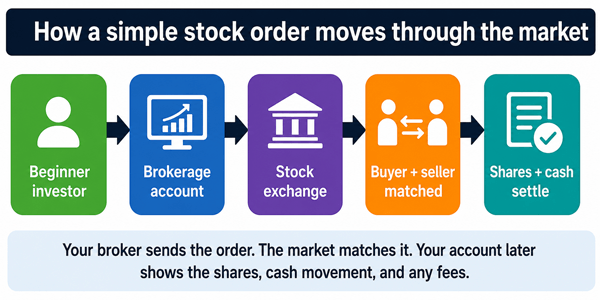
Figure 1: A simplified view of how a stock order travels from an investor to the market.
4. Stock market terms every beginner must know
Below are the terms beginners most often see when opening a brokerage account, reading financial news, comparing investment apps, or learning how to build an investment portfolio. Each term includes a simple meaning, how it works, and a practical example.
4.1 Stock / Share
A stock, also called a share, is a small piece of ownership in a company. If you own one share of a company, you own a tiny part of that business. You do not control the company, but you may benefit if the business grows and the market values it more highly.
Practical example: If a company has 1,000,000 shares and you own 10, you own a very small fraction of the company. Your gain or loss depends on the share price and any dividends.
4.2 Public company
A public company is a business whose shares can be bought and sold by the public through stock exchanges or other regulated markets. Public companies usually publish financial reports so investors can review sales, profits, debt, and risks.
Practical example: A beginner should read at least the company profile, recent earnings summary, and basic risks before buying an individual stock.
4.3 IPO
An initial public offering, or IPO, is when a company sells shares to the public for the first time. IPOs can attract attention, but they can also be volatile because the market is still deciding what the company is worth.
Practical example: A popular IPO may jump on the first day and then fall later. Beginner lesson: excitement is not the same as value.
4.4 Ticker symbol
A ticker symbol is the short code used to identify a stock or fund. It helps investors search quickly on brokerage platforms and financial websites.
Practical example: Apple trades under AAPL in the United States. An ETF may have a ticker like VOO or SPY. Always confirm the company name, exchange, and currency before buying.
4.5 Stock exchange
A stock exchange is an organized marketplace where securities trade. Famous examples include the New York Stock Exchange and Nasdaq. Different countries have their own exchanges and listing rules.
Practical example: The exchange is the marketplace; your broker is the doorway you use to access it.
4.6 Broker / brokerage account
A broker is a regulated firm that lets you buy and sell investments. A brokerage account is the account you use to hold cash, stocks, ETFs, mutual funds, and other securities.
Practical example: When comparing online brokerage accounts, beginners should check account minimums, trading fees, available markets, customer support, investor education, and whether the platform is properly regulated.
4.7 Stock trading app
A stock trading app is a mobile or web platform for placing trades. It can make investing convenient, but it can also encourage impulsive behavior if the design feels like a game.
Practical example: Useful: setting up recurring ETF investments. Risky: checking prices every hour and buying because a notification says a stock is moving.
4.8 Portfolio
A portfolio is the full collection of investments you own. It may include stocks, ETFs, bonds, mutual funds, cash, and retirement account holdings.
Practical example: A beginner portfolio might include a broad index fund, a bond fund, and cash. A risky portfolio might hold only one trending stock.
4.9 Asset allocation
Asset allocation means dividing money among different asset types, such as stocks, bonds, and cash. It is one of the biggest decisions in investing because it shapes risk and return.
Practical example: A young long-term investor may hold more stocks. Someone saving for a house in one year may need more cash and lower-risk assets.
4.10 Diversification
Diversification means not putting all your money into one company, sector, or idea. It helps reduce the damage if one investment performs badly.
Practical example: Owning one airline stock is concentrated. Owning a broad market ETF is more diversified because it may hold hundreds of companies.
4.11 Bull market
A bull market is a period when prices are generally rising and investor confidence is strong. People often feel optimistic in bull markets, sometimes too optimistic.
Practical example: Beginner mistake: assuming a rising market proves every investment is safe.
4.12 Bear market
A bear market is a period when prices fall significantly from recent highs. Fear increases, news feels negative, and many beginners panic.
Practical example: Practical lesson: a bear market can be painful, but long-term investors with diversified portfolios often plan for downturns before they happen.
4.13 Volatility
Volatility means how much and how quickly prices move. A highly volatile stock may rise 8% one day and fall 10% the next.
Practical example: Volatility is not automatically bad, but it becomes dangerous when you need the money soon or cannot emotionally handle large swings.
4.14 Liquidity
Liquidity means how easily you can buy or sell an investment without moving the price too much. Large, heavily traded stocks and major ETFs are usually more liquid than tiny companies.
Practical example: A liquid stock may have many buyers and sellers. An illiquid stock may have wide bid-ask spreads and poor execution prices.
4.15 Bid price
The bid is the highest price buyers are currently willing to pay.
Practical example: If the bid is $49.95, that is what buyers are offering at that moment.
4.16 Ask price
The ask is the lowest price sellers are currently willing to accept.
Practical example: If the ask is $50.05, that is what sellers are asking at that moment.
4.17 Bid-ask spread
The bid-ask spread is the gap between the bid and ask. It is a hidden trading cost because buyers often pay the ask and sellers often receive the bid.
Practical example: Bid $49.95 and ask $50.05 means a $0.10 spread. Tight spreads are usually better for beginners.
4.18 Market order
A market order tells your broker to buy or sell immediately at the best available current price. It gives speed, not price control.
Practical example: If a stock is moving quickly, your final execution price can be different from what you saw before clicking buy.
4.19 Limit order
A limit order tells your broker the highest price you are willing to pay when buying, or the lowest price you are willing to accept when selling. It gives price control but does not guarantee execution.
Practical example: If a stock trades at $52 and you place a buy limit at $50, the order only fills if the market reaches your price or better.
4.20 Stop order / stop-loss order
A stop order becomes active when a specified stop price is reached. A stop-loss is often used to limit losses, but it does not guarantee the exact sale price in a fast market.
Practical example: If you buy at $100 and set a stop at $90, the order may trigger near $90, but the final sale could be lower during sharp moves.
4.21 Trading volume
Volume is the number of shares traded during a period. Higher volume often means more interest and better liquidity.
Practical example: A price move on high volume may be more meaningful than a move on very low volume, but volume alone does not prove a good investment.
4.22 Market capitalization
Market cap is the total market value of a company: share price multiplied by shares outstanding. It helps compare company size.
Practical example: A $100 stock with 1 billion shares has a $100 billion market cap. Price alone does not tell whether a company is big or small.
4.23 Dividend
A dividend is a payment a company or fund makes to shareholders, usually from profits or cash flow. Not all companies pay dividends.
Practical example: A dividend stock may pay income, but a high dividend yield can sometimes be a warning sign if the payout is not sustainable.
4.24 Dividend yield
Dividend yield compares annual dividend payments with the stock price. It is shown as a percentage.
Practical example: If a stock pays $2 per year and trades at $50, the dividend yield is 4%. Beginners should check whether earnings can support the dividend.
4.25 Capital gain
A capital gain happens when you sell an investment for more than you paid.
Practical example: Buy at $40 and sell at $55: your capital gain is $15 per share before taxes and fees.
4.26 Capital loss
A capital loss happens when you sell for less than you paid.
Practical example: Buy at $40 and sell at $30: your capital loss is $10 per share. Losses are part of investing; the key is managing size and risk.
4.27 ETF
An exchange-traded fund, or ETF, is a fund that trades like a stock and often holds many investments. ETFs are popular with beginners because they can provide diversification at low cost.
Practical example: A broad stock market ETF may give exposure to hundreds or thousands of companies through one purchase.
4.28 Index fund
An index fund tries to track a market index rather than pick individual winners. It can be structured as a mutual fund or ETF.
Practical example: Instead of guessing which company will win, an S&P 500 index fund owns a basket of large U.S. companies.
4.29 Mutual fund
A mutual fund pools money from many investors to buy a portfolio of securities. Mutual funds usually trade once per day after the market closes.
Practical example: Some mutual funds are actively managed; others track indexes. Fees matter because they reduce returns over time.
4.30 Expense ratio
The expense ratio is the annual cost of owning a fund, shown as a percentage of assets. Lower is usually better when comparing similar funds.
Practical example: A 0.05% expense ratio costs about $5 per year per $10,000 invested. A 1.00% expense ratio costs about $100 per year per $10,000.
4.31 P/E ratio
The price-to-earnings ratio compares a company's stock price with its earnings per share. It is a quick valuation tool, not a full answer.
Practical example: A high P/E may mean investors expect fast growth, or it may mean the stock is overpriced. A low P/E may mean value, or it may signal problems.
4.32 EPS
Earnings per share is a company's profit divided by the number of shares. It helps investors see profit on a per-share basis.
Practical example: If profits rise but the share count rises even faster, EPS may not improve much.
4.33 Revenue
Revenue is the money a company brings in from sales before expenses.
Practical example: A company can have rising revenue but still lose money if costs are too high.
4.34 Profit / net income
Profit, or net income, is what remains after expenses, taxes, and costs. It shows whether the business actually makes money.
Practical example: Beginner lesson: sales growth is exciting, but profits and cash flow matter.
4.35 Cash flow
Cash flow shows money moving into and out of a business. Many investors pay close attention to free cash flow because accounting profit does not always equal cash in the bank.
Practical example: A company may report profit but struggle if customers are slow to pay or debt costs rise.
4.36 Earnings report
An earnings report is a regular company update showing revenue, profit, expenses, guidance, and management commentary.
Practical example: Stocks often move sharply after earnings because investors compare results with expectations.
4.37 Guidance
Guidance is management's outlook for future sales, profit, or business conditions. Markets can react strongly when guidance changes.
Practical example: A company can beat current earnings but fall if future guidance disappoints.
4.38 Blue-chip stock
A blue-chip stock is a large, established company with a long operating history. Blue chips can still lose value, but they are usually less speculative than tiny unproven companies.
Practical example: Beginners often recognize blue-chip brands, but brand familiarity alone is not enough reason to buy.
4.39 Growth stock
A growth stock is a company expected to grow revenue or earnings faster than average. These stocks can perform well but may be expensive and volatile.
Practical example: A fast-growing technology company may be a growth stock. If growth slows, the share price can drop quickly.
4.40 Value stock
A value stock appears cheap compared with earnings, assets, dividends, or cash flow. Value investing tries to buy quality assets at reasonable prices.
Practical example: A low P/E may attract value investors, but beginners must check whether the business is cheap for a good reason.
4.41 Dollar-cost averaging
Dollar-cost averaging means investing a fixed amount at regular intervals. It reduces the pressure of choosing the perfect day to invest.
Practical example: Investing $100 every month into an ETF buys more shares when prices are low and fewer when prices are high.
4.42 Compound interest / compounding
Compounding happens when gains generate more gains over time. In investing, reinvested dividends and long-term growth can compound.
Practical example: A small monthly investment can become meaningful over years, but compounding needs time, patience, and consistency.
4.43 Risk tolerance
Risk tolerance is your ability and willingness to handle investment losses in exchange for potential returns.
Practical example: A person who cannot sleep after a 5% drop should not build a portfolio that may fall 30% in a bear market.
4.44 Time horizon
Time horizon means how long before you need the money. A longer time horizon can usually handle more market movement than a short one.
Practical example: Money needed next month should not be in volatile stocks. Money for retirement decades away may have more room to ride out downturns.
4.45 Rebalancing
Rebalancing means adjusting your portfolio back to your target mix after market moves change it.
Practical example: If stocks rise and become too large a share of your portfolio, rebalancing may mean selling some stock funds or adding to bonds.
4.46 Brokerage fees
Brokerage fees are costs charged by a broker, fund, or platform. They may include commissions, spreads, currency conversion, account fees, fund expenses, and advisory fees.
Practical example: Zero-commission trading does not mean zero cost. Beginners should also check spreads, expense ratios, withdrawal fees, and margin rates.
4.47 Margin
Margin means borrowing money from your broker to buy investments. It can increase gains, but it can also magnify losses and create forced selling.
Practical example: Beginners should be extremely careful with margin. Losing borrowed money is much worse than losing only money you owned.
4.48 Robo-advisor
A robo-advisor is an automated investment service that builds and manages portfolios based on your goals and risk profile. It may be useful for hands-off investors, but fees and assumptions still matter.
Practical example: A beginner who wants simple ETF investing may compare a robo-advisor with a do-it-yourself brokerage account.
4.49 Financial advisor
A financial advisor is a professional who helps with investing, retirement planning, taxes, insurance, and broader financial decisions. Quality, credentials, and fee structure vary widely.
Practical example: A good advisor explains risks clearly and avoids pressure. Beginners should understand whether the advisor is fee-only, commission-based, or both.
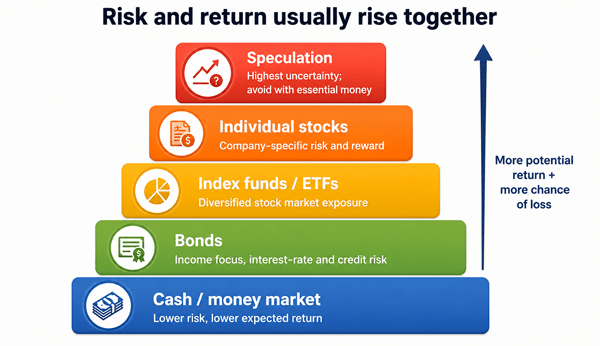
Figure 2: A beginner-friendly way to think about risk and return across common asset types.
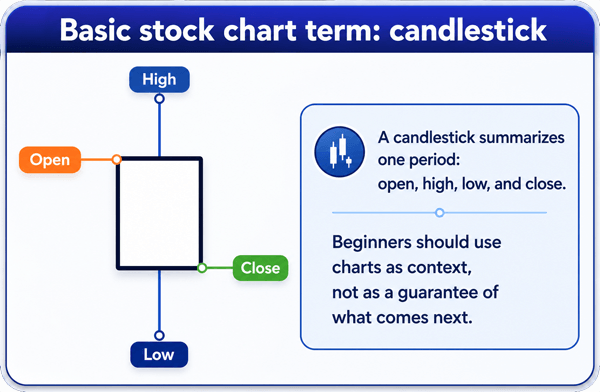
Figure 3: A basic candlestick chart term explained visually.
5. Helpful comparisons beginners should understand
| Comparison | Simple difference | Beginner takeaway |
|---|---|---|
| Market order vs limit order | Market order prioritizes speed. Limit order prioritizes price. | Use market orders only when liquidity is high and price difference is unlikely to matter. Use limit orders when price control matters, especially with volatile or thinly traded securities. |
| Stock vs ETF | A stock is ownership in one company. An ETF is usually a basket of many investments. | Beginners often use ETFs for diversification and individual stocks only after learning how to analyze businesses. |
| Dividend yield vs total return | Dividend yield shows income compared with price. Total return includes dividends plus price changes. | A high dividend does not help if the share price falls much more than the dividend paid. |
| Trading vs investing | Trading focuses on shorter-term price moves. Investing focuses on long-term business or market growth. | A beginner is usually better served by learning investing basics before attempting active trading. |
| Price vs value | Price is what the market currently charges. Value is what the asset may reasonably be worth. | A cheap-looking $5 stock can be expensive if the business is weak. A $500 stock can be reasonable if earnings and cash flow support it. |
6. How beginners can use these terms in real life
First, use the terms to read your brokerage screen calmly. Before placing a trade, check the ticker, company or fund name, price, bid, ask, spread, order type, estimated cost, and fees. Many beginner mistakes happen because someone buys the wrong ticker or uses a market order without understanding the spread.
Second, use the terms to compare investments. Instead of asking only, 'Will this stock go up?', ask better questions: Is this a stock, ETF, or mutual fund? What is the expense ratio? Is the company profitable? How much debt does it have? What is the P/E ratio compared with similar businesses? How volatile is it? Does it fit my time horizon and risk tolerance?
Third, use the terms to build a plan. A beginner plan may include an emergency fund, clear goals, a monthly investment amount, a diversified portfolio, low-cost index funds or ETFs, and a rule against investing money needed soon. The best stock market education is not memorizing words; it is using the words to make fewer careless decisions.
Honest investing practice: Avoid articles, influencers, or groups that promise guaranteed profits, secret signals, or risk-free high returns. Real investing involves uncertainty. Good education teaches risk before reward.
7. Common beginner mistakes and better habits
- Buying because the price is low: A low price does not mean a bargain. Look at market cap, earnings, debt, cash flow, and business quality.
- Confusing a famous company with a good investment: A great product can still be an overpriced stock. Valuation matters.
- Ignoring fees: Expense ratios, advisory fees, spreads, and currency costs can quietly reduce returns.
- Putting all money into one stock: Diversification cannot remove all risk, but it can reduce company-specific damage.
- Using margin too early: Borrowed money can turn a normal loss into a serious financial problem.
- Checking prices constantly: Too much checking often leads to emotional buying and selling.
- Following hype without research: If you cannot explain what you own and why, you may be speculating, not investing.
- Investing emergency money: Money needed soon belongs in safer, liquid places, not volatile stocks.
8. Quick glossary table: stock market terms in plain English
| Term | Plain-English meaning |
|---|---|
| Stock / Share | A stock, also called a share, is a small piece of ownership in a company. |
| Public company | A public company is a business whose shares can be bought and sold by the public through stock exchanges or other regulated markets. |
| IPO | An initial public offering, or IPO, is when a company sells shares to the public for the first time. |
| Ticker symbol | A ticker symbol is the short code used to identify a stock or fund. |
| Stock exchange | A stock exchange is an organized marketplace where securities trade. |
| Broker / brokerage account | A broker is a regulated firm that lets you buy and sell investments. |
| Stock trading app | A stock trading app is a mobile or web platform for placing trades. |
| Portfolio | A portfolio is the full collection of investments you own. |
| Asset allocation | Asset allocation means dividing money among different asset types, such as stocks, bonds, and cash. |
| Diversification | Diversification means not putting all your money into one company, sector, or idea. |
| Bull market | A bull market is a period when prices are generally rising and investor confidence is strong. |
| Bear market | A bear market is a period when prices fall significantly from recent highs. |
| Volatility | Volatility means how much and how quickly prices move. |
| Liquidity | Liquidity means how easily you can buy or sell an investment without moving the price too much. |
| Bid price | The bid is the highest price buyers are currently willing to pay. |
| Ask price | The ask is the lowest price sellers are currently willing to accept. |
| Bid-ask spread | The bid-ask spread is the gap between the bid and ask. |
| Market order | A market order tells your broker to buy or sell immediately at the best available current price. |
| Limit order | A limit order tells your broker the highest price you are willing to pay when buying, or the lowest price you are willing to accept when selling. |
| Stop order / stop-loss order | A stop order becomes active when a specified stop price is reached. |
| Trading volume | Volume is the number of shares traded during a period. |
| Market capitalization | Market cap is the total market value of a company: share price multiplied by shares outstanding. |
| Dividend | A dividend is a payment a company or fund makes to shareholders, usually from profits or cash flow. |
| Dividend yield | Dividend yield compares annual dividend payments with the stock price. |
| Capital gain | A capital gain happens when you sell an investment for more than you paid. |
| Capital loss | A capital loss happens when you sell for less than you paid. |
| ETF | An exchange-traded fund, or ETF, is a fund that trades like a stock and often holds many investments. |
| Index fund | An index fund tries to track a market index rather than pick individual winners. |
| Mutual fund | A mutual fund pools money from many investors to buy a portfolio of securities. |
| Expense ratio | The expense ratio is the annual cost of owning a fund, shown as a percentage of assets. |
| P/E ratio | The price-to-earnings ratio compares a company's stock price with its earnings per share. |
| EPS | Earnings per share is a company's profit divided by the number of shares. |
| Revenue | Revenue is the money a company brings in from sales before expenses. |
| Profit / net income | Profit, or net income, is what remains after expenses, taxes, and costs. |
| Cash flow | Cash flow shows money moving into and out of a business. |
| Earnings report | An earnings report is a regular company update showing revenue, profit, expenses, guidance, and management commentary. |
| Guidance | Guidance is management's outlook for future sales, profit, or business conditions. |
| Blue-chip stock | A blue-chip stock is a large, established company with a long operating history. |
| Growth stock | A growth stock is a company expected to grow revenue or earnings faster than average. |
| Value stock | A value stock appears cheap compared with earnings, assets, dividends, or cash flow. |
| Dollar-cost averaging | Dollar-cost averaging means investing a fixed amount at regular intervals. |
| Compound interest / compounding | Compounding happens when gains generate more gains over time. |
| Risk tolerance | Risk tolerance is your ability and willingness to handle investment losses in exchange for potential returns. |
| Time horizon | Time horizon means how long before you need the money. |
| Rebalancing | Rebalancing means adjusting your portfolio back to your target mix after market moves change it. |
| Brokerage fees | Brokerage fees are costs charged by a broker, fund, or platform. |
| Margin | Margin means borrowing money from your broker to buy investments. |
| Robo-advisor | A robo-advisor is an automated investment service that builds and manages portfolios based on your goals and risk profile. |
| Financial advisor | A financial advisor is a professional who helps with investing, retirement planning, taxes, insurance, and broader financial decisions. |
9. Beginner checklist before buying your first stock or ETF
- I have an emergency fund or at least a basic cash safety buffer.
- I understand that prices can fall and losses are possible.
- I know whether I am buying a stock, ETF, mutual fund, bond, or other security.
- I checked the ticker symbol, expense ratio, bid-ask spread, and order type.
- I understand why this investment fits my goal, time horizon, and risk tolerance.
- I am not using borrowed money or margin as a beginner.
- I am not buying because of hype, fear of missing out, or a guaranteed-profit claim.
- I know how this investment affects my overall portfolio diversification.
10. FAQs about stock market terms for beginners
10.1 What is the most important stock market term for a beginner?
Risk may be the most important term because every other decision depends on it. Before thinking about profit, understand how much you can lose, how long you can stay invested, and whether you are diversified.
10.2 Should beginners buy individual stocks or ETFs?
Many beginners start with diversified ETFs or index funds because they are easier to understand and reduce single-company risk. Individual stocks require more research and emotional discipline.
10.3 Is stock trading the same as investing?
No. Trading usually focuses on shorter-term price movements. Investing usually focuses on long-term ownership, business growth, dividends, compounding, and portfolio planning.
10.4 Can beginners make money in the stock market?
Yes, it is possible, especially over long periods with disciplined, diversified investing. But losses are also possible, and no honest source can guarantee returns.
10.5 What is a good first step?
Learn the terms, compare regulated brokerage accounts, practice reading quotes without placing trades, and consider simple diversified investments before complex strategies.
10.6 Do I need a financial advisor?
Not always. Some people manage simple portfolios themselves; others benefit from a qualified financial advisor or robo-advisor. The key is understanding fees, conflicts of interest, and the advice you receive.
Sources Consulted and Checked
The following sources were consulted and checked while preparing this article to support clarity and accuracy:
- U.S. SEC Investor.gov - Introduction to Investing; Asset Allocation and Diversification; Risk Tolerance; Compound Interest Calculator; Types of Orders.
- FINRA - Order Types; Time Parameters and Qualifiers on Stock Orders.
- USA.gov - Securities and Exchange Commission overview.
- General editorial experience reflected in beginner-focused examples: common mistakes include confusing price with value, ignoring fees, overtrading, following hype, and underestimating risk.
Reader Advice
This article is provided solely for educational and informational purposes and does not constitute financial, investment, tax, legal, or other professional advice. It does not recommend any specific stock, ETF, broker, app, financial advisor, or investment strategy. Investment values can rise or fall, and losses are possible. Before making any financial decision, readers should consider their own goals, financial circumstances, time horizon, and risk tolerance, and seek advice from a suitably qualified professional when appropriate. Laws, regulations, taxes, fees, market conditions, product features, and platform rules may differ by country and may change over time. Readers should therefore verify important facts, figures, eligibility requirements, costs, and current rules through official regulators, licensed providers, and other authoritative sources before acting.