What Is an IPO in the Stock Market and How Does It Work?
1. Simple answer: what is an IPO?
An IPO, or initial public offering, is the first time a private company sells its shares to the general public through the stock market. Before an IPO, ownership is usually limited to founders, employees, venture capital investors, private equity firms, and other early backers. After the IPO, ordinary investors can buy and sell the company’s shares through a brokerage account or, in many countries, through a demat and trading account.
Think of it like this: a business that was previously owned by a small group opens a door and says, “The public can now buy a small piece of this company.” That small piece is called a share. If the company grows and the market values it more highly, the share price may rise. If the business disappoints, the economy weakens, or investors paid too much at the start, the share price may fall.
The U.S. Securities and Exchange Commission describes an IPO as the first time a company offers shares of capital stock to the general public in a registered offering. The SEC also notes that companies generally must register securities before offering or selling them to the public unless an exemption applies. Investor.gov gives the beginner version: an IPO generally means a company first sells its shares to the public.
2. A very simple IPO example
Imagine a private company called FreshCart. It delivers groceries and has grown quickly in several cities. The founders want money to expand into new markets, build warehouses, improve technology, and repay some debt. Instead of borrowing all the money from a bank, FreshCart decides to go public.
| Step | What happens in the example | What it means for a beginner |
|---|---|---|
| 1. Company prepares | FreshCart hires investment banks, lawyers, auditors, and accountants. | A serious IPO is a long process, not a random social media announcement. |
| 2. Prospectus is filed | FreshCart publishes financials, risks, business model, and how IPO money may be used. | The prospectus is the beginner’s main source, not hype posts. |
| 3. Price range is discussed | Bankers test demand from large investors and suggest a price range, such as $18 to $22 per share. | The IPO price is based on demand, valuation, market mood, and negotiation. |
| 4. IPO price is set | Final offer price becomes $20 per share. | This is the price allocated investors pay before public trading starts. |
| 5. Shares begin trading | FreshCart lists on an exchange. The first public trade is $26. | The first market price can be higher or lower than the IPO price. |
| 6. Real life begins | After six months, shares trade at $18 because growth slowed. | A strong opening day does not guarantee long-term success. |
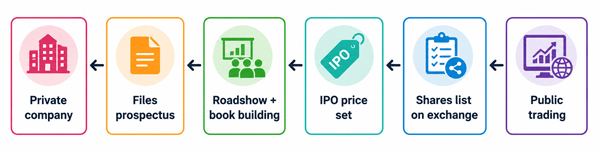
Figure 1. The basic IPO journey from a private company to public trading.
3. Why do companies launch an IPO?
A company usually launches an IPO because it wants access to a larger pool of capital and a public market for its shares. Going public can help a business raise money for expansion, acquisitions, research, new products, debt repayment, or brand credibility. It also gives early investors and some employees a path to eventually sell shares, although lock-up agreements may restrict selling for a period after listing.
However, an IPO is not free money. A public company faces more reporting duties, investor pressure, quarterly earnings expectations, legal costs, public scrutiny, and market volatility. A founder who enjoyed private control may now have to answer to public shareholders and analysts. This is why strong private companies do not always rush to list.
4. How does an IPO work step by step?
The exact process differs by country and exchange, but the main idea is similar: prepare the company, disclose important information, test investor demand, price the shares, allocate shares, list on an exchange, and then trade publicly.
4.1 The company decides it is ready
The company’s board and owners decide whether public listing makes sense. They look at revenue, profits or losses, growth rate, market opportunity, corporate governance, accounting controls, legal risks, and investor appetite. A company does not need to be profitable to go public, but it must explain its business and risks honestly.
4.2 Investment banks are hired as underwriters
Underwriters are usually investment banks that help structure the IPO, estimate valuation, prepare investor marketing, coordinate with regulators, and support the offering. In simple words, they are the bridge between the company and investors. Their job is not charity; they earn fees. That is one reason beginners should not treat IPO marketing as independent advice.
4.3 The company prepares a prospectus
The prospectus is the most important IPO document for an investor. It explains the business, financial statements, major risks, use of proceeds, management, ownership, related-party transactions, legal issues, and other key details. A beginner does not need to understand every accounting note on day one, but should at least read the business overview, risk factors, revenue trend, profit or loss trend, debt, customer concentration, and use of IPO funds.
4.4 Regulators and exchanges review the filing
In the United States, the SEC registration process and FINRA’s review of public offering filings are both important parts of the broader offering environment. FINRA says its review of public offering filings provides regulatory guidance about fair and reasonable underwriting arrangements and complements the SEC registration process. FINRA also says the review process averages 10 to 25 business days. Other countries have their own regulators and exchange rules.
4.5 The roadshow and book-building happen
During the roadshow, company executives and underwriters present the company to large investors. In book-building, underwriters collect indications of interest: who wants shares, how many, and at what price range. This helps decide the final IPO price. Retail investors often see only the final offer or a limited subscription window, while institutions may have deeper access to management presentations.
4.6 The IPO price is set and shares are allocated
The final IPO price is usually set shortly before listing. If demand is high, the price may be set at the top of the range or above it. If demand is weak, the company may lower the price, delay the IPO, or cancel it. Allocation means deciding who actually receives shares at the offer price. A common beginner frustration is applying for an IPO and receiving no shares or only a small allotment.
4.7 Shares start trading on the stock exchange
Once listed, shares trade like other public stocks. The first trade can be higher than the offer price, lower than the offer price, or close to it. From this point onward, the share price is driven by supply, demand, news, financial results, market conditions, interest rates, investor sentiment, and expectations about the company’s future.
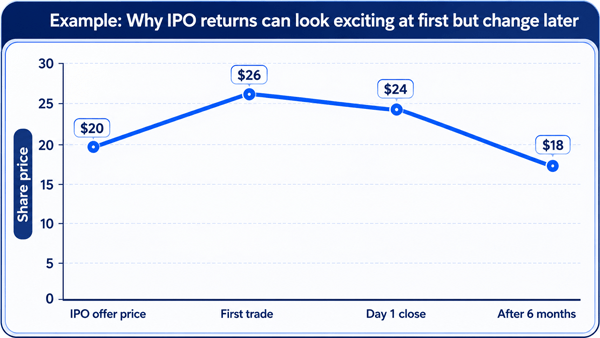
Figure 2. Illustrative IPO price movement: an opening-day gain can reverse over time.
5. IPO price vs listing price: the key difference beginners miss
The IPO offer price is the price paid by investors who receive shares in the IPO allocation. The listing price, opening price, or first trade price is the price when the stock begins trading publicly. These are not always the same. If an IPO is priced at $20 but the first public trade is $26, allocated investors have an immediate paper gain, while a beginner buying at $26 is paying a different price and taking a different risk.
| Term | Meaning | Beginner lesson |
|---|---|---|
| IPO offer price | Price set before shares start trading. | Not every investor gets shares at this price. |
| Opening/listing price | First price when the stock trades publicly. | This may already include excitement and demand. |
| Closing price | Price at the end of the first trading day. | A first-day pop can fade by the close or later. |
| Market price after listing | Price after normal buying and selling begins. | This is where long-term investors live. |
6. How can a beginner invest in an IPO?
A beginner can usually approach IPO investing in two ways. First, they can apply for shares before listing through a broker, bank, investment platform, or demat account, depending on the country. Second, they can wait until the shares list and buy in the open market like any other stock. The first method may sound attractive because the offer price may be lower than the opening price, but allocation is not guaranteed. The second method is easier, but the investor may pay a much higher price if the stock jumps on listing day.
| Method | How it works | Pros | Risks |
|---|---|---|---|
| Apply before listing | Submit an IPO application through a broker/platform. | Chance to receive shares at offer price. | May receive no allotment; limited information; lock-in or flipping rules may apply. |
| Buy after listing | Wait for public trading and buy through the market. | More control over price; can watch early trading. | May overpay during hype; price can be volatile. |
| Wait for first earnings reports | Study the company after it becomes public. | More financial history and market reaction available. | May miss early gains if the business performs well. |
7. What beginners should check before buying an IPO
- Business model: Can you explain in one sentence how the company makes money? If not, slow down.
- Revenue quality: Is revenue growing because customers love the product, or because of discounts, one-time contracts, or aggressive marketing?
- Profitability and cash flow: A fast-growing company can still burn cash. Losses are not always bad, but they must be understandable.
- Debt and use of funds: Is IPO money going toward growth, debt repayment, existing shareholders selling, or all of these?
- Valuation: A great company can be a poor investment if the IPO price is too high.
- Competition: Does the company have pricing power, brand strength, technology, licenses, network effects, or cost advantages?
- Customer concentration: If one or two customers create a large share of revenue, losing them can hurt badly.
- Lock-up expiration: When insiders become free to sell, extra supply may pressure the share price.
- Management quality: Look for clear communication, relevant experience, honest risk discussion, and sensible capital allocation.
- Your own plan: Know whether you are investing for listing gains, long-term growth, or learning with a small position.
8. The prospectus: what to read first if you are new
Many beginners open the prospectus and feel overwhelmed. That is normal. You do not need to read it like a lawyer at first. Start with the parts that answer practical questions.
| Prospectus section | Question it answers | Why it matters |
|---|---|---|
| Business overview | What does the company actually do? | You should not invest in a business you cannot describe. |
| Risk factors | What can go wrong? | This section often reveals the real weak points. |
| Management discussion | Why did revenue, margins, and cash flow change? | It connects numbers with business reality. |
| Use of proceeds | Where will IPO money go? | Growth funding is different from paying old debts or enabling exits. |
| Major shareholders | Who owns the company before and after IPO? | Shows incentives and potential selling pressure. |
| Financial statements | Revenue, profit/loss, debt, cash, margins. | Numbers protect you from pure storytelling. |
9. Common IPO risks beginners underestimate
The biggest IPO risk is not that the company is bad. Sometimes the company is good, but the price is too optimistic. IPOs often arrive when a company, its bankers, and early investors believe the market will pay an attractive price. That does not automatically mean the price is attractive for a new buyer.
Another risk is limited public trading history. A long-listed company has years of quarterly results, analyst questions, dividend history, management behavior, and market reactions. A new IPO has less public evidence. Investors are often pricing a story about the future, and stories can change fast.
Volatility is also common. IPO stocks may move sharply because the free float can be small, demand can be emotional, and early investors may be restricted from selling. When lock-ups expire, more shares may become available, which can pressure the price if demand is weak. Beginners should also watch for small-cap IPO scams, social media pump-and-dump behavior, and “guaranteed listing gain” claims. FINRA has warned about manipulative activity and social media scams around some small-cap IPOs.
10. IPO investing vs normal stock investing
| Factor | IPO investing | Buying established listed stocks |
|---|---|---|
| Information history | Limited public history. | More reports, market history, and analyst coverage. |
| Price discovery | Price is still being discovered. | Market has already tested the stock over time. |
| Volatility | Often high near listing. | Can still be high, but usually more established. |
| Hype factor | Often very strong. | Usually less concentrated around one event. |
| Access | Offer-price access may be limited. | Anyone with a brokerage account can buy at market price. |
| Best beginner use | Small, researched position or watchlist learning. | Core portfolio building often starts here. |
11. Are IPOs good for beginners?
IPOs can be educational, but they are not automatically beginner-friendly. A beginner may be attracted by stories of stocks doubling on listing day. Those stories are real in some cases, but they are only one side of the experience. Many IPOs disappoint, trade below issue price, or rise at first and fall later. The safer beginner mindset is: “I am studying a business and a price,” not “I am joining a guaranteed event.”
A practical approach is to treat IPOs as a small satellite part of a portfolio, not the foundation. The foundation for many beginners is usually emergency savings, debt management, basic diversified investing, and understanding risk. IPOs belong after the investor can read basic financials, compare valuations, and emotionally handle volatility.
12. Practical beginner strategy: how to use IPOs wisely
A beginner can use IPOs in a disciplined way without chasing every new listing. First, build an IPO checklist and apply it the same way each time. Second, decide position size before the listing, not during hype. Third, separate trading plans from investing plans. Buying for a quick listing gain is a different behavior from owning a business for five years. Fourth, keep notes on why you bought, what you expected, and what happened. This creates real experience over time.
Practical rule: If the only reason you want the IPO is “everyone is talking about it,” you do not have an investment thesis. You have social proof. Social proof can move prices briefly, but it is not a substitute for valuation, risk management, and business understanding.
For a first IPO, many beginners are better served by observing rather than buying. Read the prospectus, estimate what price you would consider fair, watch the listing, and review the company after its first quarterly results. This exercise costs nothing and teaches more than a rushed trade.
13. How IPO allotment works in simple terms
IPO allotment means deciding who gets shares when demand is greater than supply. If an IPO is oversubscribed, not every applicant receives the full amount requested. Some receive fewer shares, some receive none, and large institutions may receive allocations based on underwriter judgment, relationship, demand quality, or local rules. Retail systems vary by market. In some countries, retail allotment may involve categories, minimum lots, randomization, proportionate allotment, or platform-level eligibility rules.
This is why a beginner should not build a plan that depends on receiving shares. You might apply for an IPO expecting a listing gain and receive nothing. Or you might receive shares in a weak IPO that starts trading below the offer price. Both outcomes are normal market possibilities.
14. What is a lock-up period?
A lock-up period is a time after the IPO when insiders, early investors, or employees may be restricted from selling shares. The purpose is to prevent too much supply from hitting the market immediately. When the lock-up expires, some holders may sell. That does not always mean the stock will fall, but it is a date beginners should know. If many early holders want liquidity and buyer demand is weak, the share price can come under pressure.
15. What is IPO flipping?
IPO flipping means receiving IPO shares and quickly selling them soon after listing, often to capture a first-day gain. Some brokers discourage or restrict flipping because underwriters prefer stable shareholders. Retail investors should read platform rules carefully. A broker may limit future IPO access if a client repeatedly sells immediately after receiving allocations. Even where flipping is allowed, it is risky because the opening price can be below the offer price.
16. Real-world style example: good company, bad price
Suppose CloudDesk is a popular software company growing revenue 35% per year. People love the product, the brand is strong, and the company has a long runway. That sounds attractive. But now suppose the IPO price values the company at 25 times annual sales while similar public companies trade at 10 times sales. For CloudDesk to become a good investment from the IPO price, it must not only grow, but grow fast enough to justify a premium valuation. If growth slows from 35% to 20%, the stock can fall even though the company is still improving.
This is one of the most important IPO lessons: business quality and investment quality are related, but not identical. A wonderful company can be a poor investment at an unrealistic price. A boring company can be a reasonable investment at a cheap price. IPO marketing often highlights business quality. The investor must also judge price.
17. Helpful facts beginners should know
- The public does not always get equal access to the IPO offer price. Institutions may receive large allocations before normal trading begins.
- A first-day price jump is not the same as a long-term return. It may simply mean the IPO was priced below opening demand.
- A stock trading below IPO price does not automatically mean it is cheap. The business may have been overvalued or fundamentals may have changed.
- A famous brand is not automatically a good stock. Brand popularity must translate into durable profits and cash flow over time.
- IPO proceeds do not always go entirely to the company. Some offerings include shares sold by existing shareholders.
- Regulated filings are more reliable than influencer claims, but they still require careful reading.
- Small-cap IPOs can be especially risky because they may have lower liquidity, less coverage, and higher manipulation risk.
18. Red flags to avoid
- Promises of guaranteed profit or guaranteed listing gain.
- Social media groups pressuring people to buy quickly.
- No clear explanation of how the business makes money.
- Heavy losses with no believable path to better margins.
- Large related-party transactions that are hard to understand.
- Management selling aggressively while public investors are buying.
- Weak auditors, legal disputes, or repeated changes in financial reporting.
- A valuation much higher than comparable companies without a strong reason.
19. Beginner-friendly IPO checklist
- ☐ Can I explain the business in one sentence?
- ☐ Did I read the prospectus summary and risk factors?
- ☐ Is revenue growing, and is growth likely to continue?
- ☐ Is the company profitable or moving toward profitability?
- ☐ How much debt does the company have?
- ☐ Where will the IPO money go?
- ☐ Who is selling shares: the company, existing investors, or both?
- ☐ What valuation am I paying compared with similar listed companies?
- ☐ What could make the stock fall 30% or more?
- ☐ What is my maximum position size?
- ☐ Am I buying for listing gain, long-term ownership, or learning?
- ☐ What will make me sell? What will make me hold?
20. Frequently asked questions
20.1 Is IPO investing profitable?
It can be profitable, but it is not guaranteed. Some IPOs rise sharply, some fall below issue price, and some perform well only after years. Profit depends on business performance, valuation, market conditions, allocation, and investor discipline.
20.2 Can beginners apply for IPOs?
In many markets, yes, if they have the required brokerage, trading, or demat account. The better question is whether they understand the company, price, risks, and their own reason for buying.
20.3 What is oversubscription?
Oversubscription happens when investors apply for more shares than are available. It may signal demand, but it does not guarantee future returns.
20.4 Should I buy an IPO on listing day?
Only if the price still makes sense after opening. Many beginners buy because the stock is moving fast. A better approach is to compare the listing price with fundamentals and your plan.
20.5 What is the difference between IPO and FPO?
An IPO is the company’s first public share sale. An FPO, or follow-on public offering, happens after the company is already listed and sells additional shares to the public.
20.6 What is the difference between IPO and direct listing?
In a traditional IPO, new shares are usually sold with underwriters helping price and allocate the offering. In a direct listing, existing shares may begin trading publicly without the same traditional underwritten capital raise structure. Rules vary by market.
20.7 What is the best IPO to invest in?
There is no universal best IPO. The right question is whether a specific IPO fits your goals, risk tolerance, valuation discipline, and portfolio plan.
21. Final takeaway
An IPO is simply the moment a private company becomes available to public stock market investors. The idea is easy, but the decision is not always easy. A beginner should understand the business, read the prospectus, compare valuation, respect risk, and avoid hype. The best IPO investors are not the ones who chase every new listing. They are the ones who know when to study, when to wait, when to buy small, and when to walk away.
Sources Consulted and Checked
The following authoritative sources were consulted and checked while preparing this article to support accuracy, clarity, and alignment with current guidance.
- U.S. Securities and Exchange Commission, “Initial Public Offerings (IPOs)” - definition, registration context, listing context, and IPO statistics page updated Dec. 22, 2025.
- Investor.gov, “Initial Public Offering (IPO)” - beginner definition and related investor education links.
- FINRA, “Public Offerings” - review process, underwriting arrangements, and average review process timing.
Reader Advice
This article is provided solely for educational and general informational purposes. It does not constitute personal financial, investment, legal, tax, or professional advice; it is not a recommendation to buy, sell, subscribe to, or hold any security; and it does not guarantee any investment outcome. IPOs and newly listed shares can be highly volatile and may result in substantial or total loss of invested capital. Before making any decision, readers should consider their objectives, financial position, time horizon, and tolerance for risk, carefully review the applicable prospectus and official regulatory filings, and seek advice from a suitably qualified professional where appropriate.
Rules, eligibility requirements, allotment methods, market practices, fees, taxes, timelines, and regulatory requirements differ by country, exchange, broker, and individual circumstances and may change over time. Readers should therefore verify all facts, figures, dates, and requirements through current official sources before acting.