What Is Market Capitalization in the Stock Market?
1. Quick Answer
Market capitalization, usually called market cap, is the total stock market value of a publicly traded company. It is calculated by multiplying the current share price by the total number of shares outstanding. In simple words, market cap tells you how big the stock market thinks a company is right now.
2. What Market Capitalization Means in Simple Words
Market capitalization is a quick way to describe the size of a company in the stock market. When people say a company is a large-cap stock, mid-cap stock, or small-cap stock, they are usually talking about its market cap.
Think of it like the market’s current price tag for the company’s common stock. It does not mean the company has that much cash in the bank. It does not mean the business could be sold tomorrow for exactly that amount. It simply means that, based on today’s share price and today’s number of shares, investors are valuing the company’s equity at that total amount.
For a beginner, market cap is useful because it stops you from judging a stock by share price alone. A $20 stock is not automatically cheaper than a $200 stock. A company with a $20 share price can be much larger than a company with a $200 share price if it has many more shares outstanding.
3. How to Calculate Market Cap
The formula is simple: market cap equals current share price multiplied by shares outstanding. If a company has 10 million shares outstanding and each share trades at $30, the market cap is $300 million.
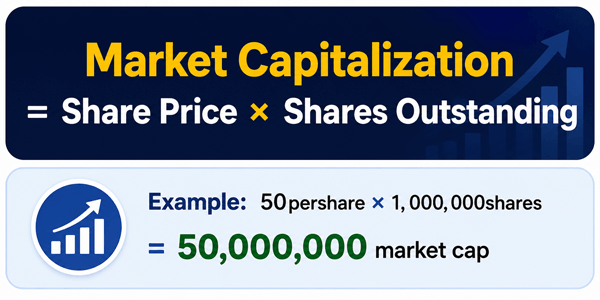
Figure 1. The basic market capitalization formula.
Here is the beginner-friendly version: share price tells you the price of one slice of the company. Shares outstanding tells you how many slices exist. Market cap tells you the value of all those slices combined.
Example: Company Alpha trades at $50 per share and has 1 million shares outstanding. Its market cap is $50 million. Company Beta also trades at $50 per share but has 5 billion shares outstanding. Its market cap is $250 billion. Same share price, completely different company size.
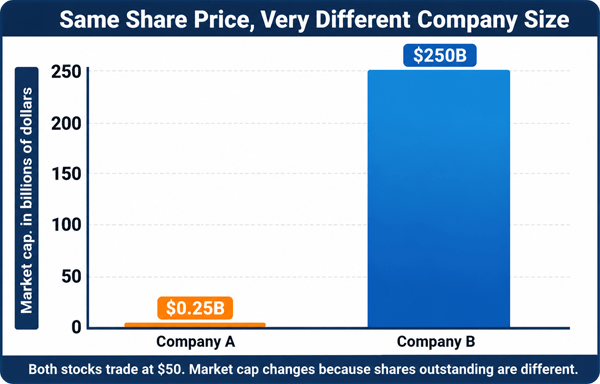
Figure 2. The same share price can represent companies of very different sizes.
4. Why Market Cap Matters to Beginners
Market cap helps beginners compare companies more fairly. It gives context for company size, business maturity, risk level, potential volatility, and how a stock may fit inside an investment portfolio.
In real investor behavior, beginners often look at a low share price and think the stock is “cheap.” More experienced investors usually ask a better question: cheap compared with what? Market cap is one of the first numbers that helps answer that question, although it should never be the only number used.
Market cap also affects how stocks are grouped inside mutual funds, index funds, and ETFs. Many funds focus on large-cap stocks, small-cap stocks, technology stocks, value stocks, or growth stocks. Understanding market cap makes those fund labels easier to understand before opening or using a brokerage account.
5. Market Cap Categories: Mega, Large, Mid, Small, and Micro
Market cap categories are not perfect rules, but they are helpful guideposts. In the U.S. market, many investor-education sources describe mega-cap companies as above about $200 billion, large-cap companies as roughly $10 billion to $200 billion, mid-cap companies as roughly $2 billion to $10 billion, small-cap companies as roughly $250 million to $2 billion, and micro-cap companies as below roughly $250 million.
These numbers can change by country, index provider, and market cycle. A company considered large in one market may be only mid-sized in another. The important idea is not memorizing every cutoff. The important idea is understanding what the categories usually imply about risk, stability, liquidity, and growth expectations.
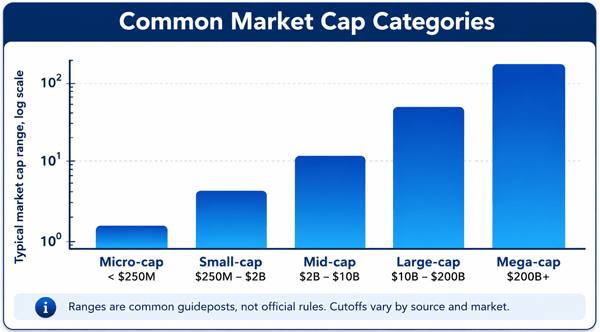
Figure 3. Common market capitalization categories used as general guideposts.
5.1 Mega-Cap and Large-Cap Stocks
Mega-cap and large-cap stocks are usually mature companies with established brands, larger customer bases, deeper access to capital, and more analyst coverage. They may be included in major stock indexes, which can increase attention from institutional investors and index funds.
The practical benefit is that many large companies are easier to research. They often publish detailed reports, receive broad news coverage, and have more trading volume. The practical drawback is that size can limit growth speed. A giant company may still grow, but doubling a $1 trillion business is much harder than doubling a $1 billion business.
Beginners often use large-cap stocks as a starting point because they are familiar names. That can be reasonable, but familiarity is not the same as safety. A famous company can still become overpriced, lose market share, carry too much debt, or disappoint investors.
5.2 Mid-Cap Stocks
Mid-cap stocks sit in the middle. They may be past the fragile early stage but still have room to expand. Many investors like mid-cap companies because they can offer a balance between growth potential and business maturity.
In practical terms, a mid-cap company may already have real customers, revenue, management experience, and a proven product, but it may not yet dominate its industry. This can create opportunity, but it can also create risk. Mid-cap stocks can fall sharply if growth slows, competition increases, or earnings miss expectations.
5.3 Small-Cap and Micro-Cap Stocks
Small-cap and micro-cap stocks can attract beginners because the stories often sound exciting: a young company, a new technology, a turnaround, or a hidden opportunity. Sometimes small companies become much larger over time. But small-cap investing also requires more patience, research, and risk control.
Smaller companies may have less access to financing, fewer products, less predictable earnings, lower trading volume, and weaker analyst coverage. Their stock prices can move quickly, especially around earnings reports, product updates, regulation changes, or market rumors.
For a beginner, the honest approach is to avoid treating small-cap stocks like lottery tickets. If you invest in smaller companies, position sizing, diversification, and research discipline matter even more.
6. Market Cap Comparison Table for Beginners
| Category | Typical size | Common strengths | Common risks | Beginner takeaway |
|---|---|---|---|---|
| Mega/Large-cap | $10B+ | Established businesses, liquidity, broad research coverage | May grow slower; can still be overvalued | Good for learning, but still analyze valuation and fundamentals |
| Mid-cap | $2B-$10B | Balance of maturity and growth potential | Can be more volatile than large caps | Useful for investors seeking growth with some business history |
| Small-cap | $250M-$2B | Higher growth potential, less discovered opportunities | Higher volatility, weaker financing, less coverage | Use smaller position sizes and stronger research discipline |
| Micro-cap | Below $250M | Possible early-stage opportunities | Low liquidity, fraud risk, sharp price swings | Not ideal for beginners unless they understand the risk |
Note: Category thresholds are approximate and may vary by source, country, index provider, and market conditions.
7. What Market Cap Can Tell You
It can tell you the market’s current estimate of a company’s equity size. It can help you compare companies in the same industry. It can help you understand whether a stock is likely to behave more like a stable giant, a growing challenger, or a speculative small company.
It can also help with portfolio diversification. A portfolio made only of small-cap stocks may behave very differently from a portfolio made mostly of large-cap stocks. A balanced investment portfolio may include different market cap segments depending on the investor’s goals, risk tolerance, and time horizon.
8. What Market Cap Cannot Tell You
Market cap does not tell you whether a stock is automatically cheap or expensive. For that, investors look at valuation metrics such as price-to-earnings ratio, price-to-sales ratio, free cash flow, earnings growth, profit margins, debt levels, and industry comparisons.
Market cap does not tell you how much cash the company has. It does not include debt the way enterprise value does. It does not reveal management quality, customer loyalty, competitive advantage, or future profitability by itself.
Market cap can also change quickly because the stock price changes. If the share price rises 10%, market cap rises 10%, assuming shares outstanding stay the same. If the share price falls 20%, market cap falls 20%.
9. Market Cap vs Share Price
This is one of the most important beginner lessons. Share price is the cost of one share. Market cap is the value of all shares. A company with a lower share price is not necessarily smaller, cheaper, or better.
Imagine two shops selling pizza. One shop cuts its pizza into 8 slices and charges $5 per slice. Another cuts the same size pizza into 40 tiny slices and charges $1 per slice. The $1 slice is cheaper per slice, but the whole pizza may cost the same. Stocks work in a similar way. Share count matters.
10. Market Cap vs Enterprise Value
Market cap focuses on equity value. Enterprise value attempts to show a broader takeover-style value by adding debt and subtracting cash. Beginners do not need to master enterprise value immediately, but they should know why market cap can be incomplete.
Example: Company A has a market cap of $10 billion and almost no debt. Company B also has a market cap of $10 billion but has $8 billion in debt. Looking only at market cap makes them appear similar, but their financial risk may be very different.
11. How Beginners Can Use Market Cap in Real Investing
Use market cap as a first filter, not a final decision. Before buying a stock, ask: What size is this company? Is it a large, mature business or a smaller, riskier company? Does that match my risk tolerance? Am I buying because I understand the business, or just because the share price looks low?
Use it for diversification. A beginner might compare how much of their portfolio is in large-cap, mid-cap, and small-cap stocks or funds. This helps avoid accidentally taking more risk than intended.
Use it when comparing companies in the same industry. Comparing a $500 billion technology company with a $500 million technology company without considering size can lead to unrealistic expectations. The smaller company may have more room to grow, but the larger company may have more resources, customers, and resilience.
12. Practical Example: Two Stocks at the Same Price
Suppose Stock A trades at $25 and has 100 million shares outstanding. Its market cap is $2.5 billion. Stock B also trades at $25 but has 8 billion shares outstanding. Its market cap is $200 billion.
A beginner may think both stocks are similar because the share price is the same. They are not. Stock A may be a mid-cap company, while Stock B may be a large-cap company. Their risk profile, investor base, liquidity, analyst coverage, and growth expectations may be completely different.
13. Common Mistakes Beginners Make With Market Cap
Mistake one: thinking a low share price means a stock is cheap. A low share price can simply mean the company has issued many shares, completed stock splits, or lost investor confidence.
Mistake two: thinking large-cap means risk-free. Large companies can fall, cut dividends, lose innovation, face lawsuits, or become overvalued.
Mistake three: ignoring dilution. If a company issues more shares, existing shareholders own a smaller percentage of the business unless they buy more. Market cap calculations should use updated shares outstanding.
Mistake four: comparing companies from different industries without context. A $20 billion bank, a $20 billion software company, and a $20 billion retailer may deserve very different valuation multiples because their business models differ.
14. Helpful Facts Worth Knowing
Market cap is constantly changing during market hours because stock prices change. It is more useful as a live estimate than a permanent label.
Stock splits usually change share price and share count, but they do not directly change market cap by themselves. If a company does a 2-for-1 split, the share count doubles and the share price is adjusted roughly in half. The market cap is broadly unchanged at the moment of the split.
Buybacks can reduce shares outstanding. If a company repurchases shares, the same business value may be spread across fewer shares. This can affect per-share metrics and sometimes market cap depending on how investors react.
Index funds often use market-cap weighting. That means larger companies can have a bigger influence on the fund’s performance than smaller companies.
15. A Beginner-Friendly Checklist Before Using Market Cap
First, calculate or verify the market cap. Second, identify the category: mega, large, mid, small, or micro. Third, compare the company with similar companies in the same industry. Fourth, check revenue, earnings, cash flow, debt, and valuation. Fifth, understand why the market may be valuing the company that way. Sixth, decide whether the risk fits your personal situation.
The most honest investing habit is to slow down. Market cap is a helpful shortcut, but it should lead to better questions, not quick guesses.
16. Where Market Cap Fits in a Portfolio Strategy
For long-term investors, market cap can help build a more intentional portfolio. Someone who wants relative stability may prefer broad large-cap index funds. Someone with a longer time horizon and higher risk tolerance may include mid-cap or small-cap exposure. Someone near retirement may focus more on diversification, income, risk management, and professional financial planning.
Beginners should be careful with any article, video, or social media post that says one market cap category is always best. Different categories perform differently in different economic environments. Interest rates, inflation, earnings growth, investor sentiment, and industry trends can all affect performance.
17. Summary
Market capitalization is the stock market’s current value of a company’s outstanding shares. It is calculated with one simple formula: share price multiplied by shares outstanding. It helps investors understand company size, compare stocks, think about risk, and build a more diversified investment portfolio.
But market cap is not a complete investing system. It does not tell you whether a stock is a bargain. It does not replace research. It does not remove risk. The best way to use market cap is as a starting point for smarter, more honest analysis.
18. FAQ: Market Capitalization in the Stock Market
18.1 What is market capitalization in one sentence?
Market capitalization is the total market value of a public company’s outstanding shares.
18.2 What is the market capitalization formula?
Market cap = current share price × total shares outstanding.
18.3 Is market cap the same as company value?
Not exactly. Market cap shows equity value based on the stock price, but it does not include debt, cash, or private-market takeover considerations.
18.4 Is a bigger market cap always better?
No. Bigger companies may be more established, but they can still be overvalued or face business problems. Smaller companies may grow faster but usually carry more risk.
18.5 Should beginners buy only large-cap stocks?
Not necessarily. Many beginners start with diversified funds or familiar large companies, but the right mix depends on goals, time horizon, and risk tolerance.
18.6 Can market cap change every day?
Yes. Since stock prices move during trading, market cap can change constantly.
18.7 Does a stock split change market cap?
A stock split does not directly change market cap at the moment it happens. It changes share price and share count proportionally.
18.8 What is a good market cap for investing?
There is no single “good” market cap. A suitable investment depends on valuation, business quality, risk, diversification, and personal financial goals.
Sources Consulted and Checked
The following sources were consulted and checked while preparing this article and reviewing its factual accuracy:
- Investor.gov, “Market Capitalization” - definition and formula.
- FINRA, “Stocks - Market Cap Explained” - examples, categories, and limitations.
- Fidelity, “What is market cap and how do you calculate it?” - formula and beginner example.
- Charles Schwab, “How Well Do You Know Market Cap?” - market cap categories and investor context.
Reader Advice
This article is provided solely for educational and informational purposes and does not constitute financial, investment, legal, tax, or other professional advice. The examples are simplified for learning and should not be treated as recommendations to buy, sell, or hold any security or investment product.
Market conditions, company data, market-cap classifications, laws, regulations, tax rules, product terms, and professional standards may change over time and may differ by country, market, index provider, and individual circumstances. Before making any financial decision, readers should independently verify current facts, figures, rules, and disclosures through official or primary sources, carefully evaluate the risks, and consider consulting a suitably qualified financial, legal, tax, or other professional adviser.
All investing involves risk, including the possible loss of principal. No market-cap category, investment approach, or example discussed in this article guarantees safety, returns, or suitability for any particular reader.