How to Analyze Stocks Before Investing
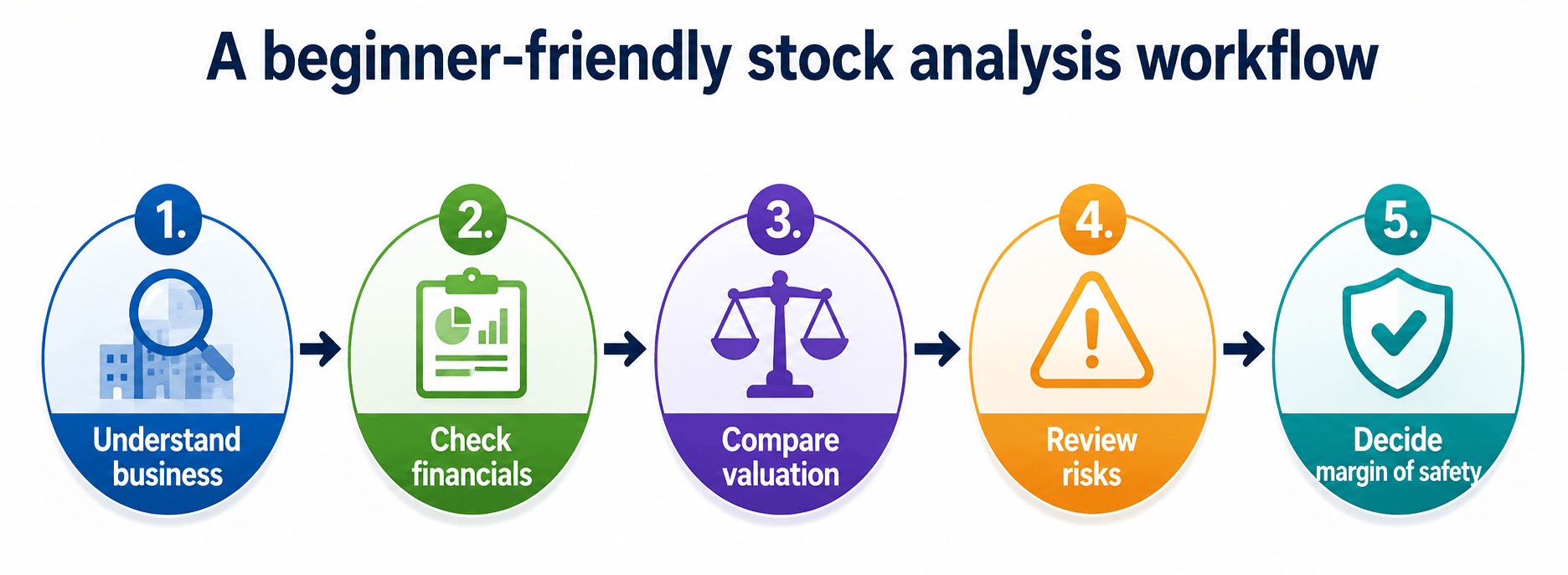
Figure 1: A simple research process helps beginners avoid random stock picking.
1. What Stock Analysis Really Means
Stock analysis means studying a company before buying its shares. Instead of asking, “Is this stock going up tomorrow?”, a serious investor asks better questions: What does this company do? Does it make money? Is it financially strong? Is the current stock price reasonable compared with the business quality? What could go wrong?
Think of a stock as a small ownership piece in a real business. When you buy shares, you are not just buying a ticker symbol moving on a screen. You are buying exposure to a company’s products, customers, managers, debts, profits, risks, and future expectations. Stock analysis is the process of checking those things before you invest.
For beginners, the goal is not to become a Wall Street analyst overnight. The goal is to reduce avoidable mistakes. You may still be wrong. Even experienced investors are wrong. But analysis helps you avoid buying only because of social media hype, a friend’s tip, a sudden price jump, or fear of missing out.
2. The Honest Mindset Beginners Need First
Before learning formulas, beginners should understand one truth: stock analysis does not guarantee profit. A great company can become a bad investment if you pay too much. A cheap stock can become even cheaper if the business is weak. A popular stock can fall sharply if expectations are too high. Good analysis improves your decision-making, but it does not remove risk.
Investors should avoid promises such as “sure profit,” “guaranteed return,” or “best stock to buy now.” Those phrases may attract attention, but they are not reliable. A better approach is to think carefully, compare alternatives, verify information, and manage risk.
Because investing decisions can affect real financial outcomes, use plain explanations, practical examples, risk checks, and reliable sources rather than hype.
2.1 Before analyzing any stock, answer these personal questions
- What is my goal: long-term wealth, dividend income, retirement, education, or short-term speculation?
- How long can I keep the money invested without needing it?
- How much loss can I emotionally and financially tolerate?
- Am I investing money I can afford to leave alone, or money needed for rent, bills, debt payments, or emergencies?
- Do I understand the company well enough to explain it in two minutes?
Many beginners skip these questions and jump straight into price charts. That can be dangerous. A stock may be suitable for one person and unsuitable for another because goals, time horizon, income stability, and risk tolerance are different.
3. The 5-Step Stock Analysis Framework
You do not need a complicated model to start. A beginner can use a clean five-step framework: understand the business, read the financials, compare valuation, review quality and competition, and check risk before deciding. Each step answers a different question.
| Step | Main question |
|---|---|
| 1. Business | What does the company sell, who buys it, and why does it matter? |
| 2. Financials | Is revenue growing, are profits healthy, and is cash flow real? |
| 3. Valuation | Is the stock price reasonable compared with earnings, growth, assets, and competitors? |
| 4. Quality | Does the company have strong management, a durable advantage, and a clear strategy? |
| 5. Risk | What could damage the business or make the investment fail? |
4. Step 1: Understand the Business
Start with the business, not the stock price. A beginner-friendly test is this: can you explain how the company makes money without using complicated words? If not, keep researching.
4.1 Questions to ask
- What products or services does the company sell?
- Who are its customers: consumers, businesses, governments, or all three?
- How does it earn revenue: product sales, subscriptions, advertising, interest income, transaction fees, licensing, or something else?
- Is demand recurring or one-time?
- Is the company dependent on one product, one supplier, one customer, one country, or one regulation?
- What trend supports the business: digital payments, cloud computing, aging population, energy demand, online shopping, infrastructure, or another long-term driver?
A practical example: suppose a company sells low-cost household products. The business may be easier to understand than a biotech company waiting for one drug approval. That does not automatically make it a better investment, but it may be easier for a beginner to evaluate. In investing, staying inside your circle of understanding is a strength, not a weakness.
4.2 Look for revenue quality
Not all revenue is equal. Recurring revenue from subscriptions, replacement products, service contracts, or loyal repeat customers can be more predictable than one-time project revenue. However, even recurring revenue can weaken if customers cancel, competitors cut prices, or the company must spend heavily to keep growth alive.
Beginner tip: Read the company’s annual report, investor presentation, or official website. Do not rely only on social media summaries. For U.S. public companies, annual reports on Form 10-K and quarterly reports on Form 10-Q provide detailed information about the business, risks, and financial results.
5. Step 2: Read the Financial Statements Without Getting Lost
Financial statements can look scary, but beginners only need to understand what each statement is trying to tell them. The income statement shows profit performance, the balance sheet shows financial position, and the cash flow statement shows how cash moves through the business.
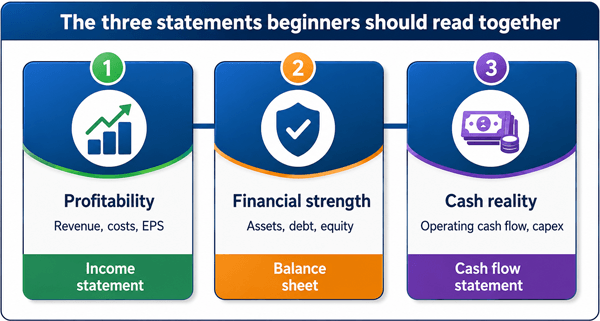
Figure 2: Read all three statements together. Profit without cash flow can be a warning sign.
5.1 Income statement: Is the company profitable?
The income statement shows revenue, expenses, and profit over a period. Beginners should check whether revenue is growing, gross margin is stable, operating expenses are controlled, and net income is positive or improving. Earnings per share, often called EPS, shows profit allocated to each share.
5.2 Balance sheet: Is the company financially strong?
The balance sheet shows assets, liabilities, and shareholders’ equity at a point in time. Beginners should look for too much debt, falling cash, rising inventory, or large liabilities. Debt is not always bad. Many strong businesses use debt sensibly. The danger is debt that becomes hard to service when sales slow down or interest rates rise.
5.3 Cash flow statement: Is profit turning into real cash?
The cash flow statement is one of the most useful documents for beginners because it helps separate accounting profit from cash reality. Operating cash flow shows cash generated from the core business. Capital expenditure shows money spent on property, equipment, software, or long-term assets. Free cash flow is often estimated as operating cash flow minus capital expenditures.
A company reporting profit but consistently burning cash deserves extra caution. Sometimes there is a good reason, such as heavy investment for growth. Sometimes it signals weak collections, inventory problems, aggressive accounting, or a business model that needs constant funding.
5.4 Simple financial signs beginners can check
- Revenue trend: Is sales growth steady, slowing, or shrinking?
- Gross margin: Does the company keep enough profit after direct costs?
- Operating margin: Does the core business make money after normal expenses?
- Net income: Is the company profitable after all costs?
- Operating cash flow: Is the business generating cash?
- Debt level: Can the company handle debt in a downturn?
- Share count: Is the company issuing many new shares and diluting owners?
6. Step 3: Use Valuation Ratios the Right Way
Valuation is the part where beginners often get confused. A stock can be a good company but a poor investment if the price is too high. Valuation ratios help compare price with earnings, sales, book value, cash flow, or dividends. They are useful, but they are not magic.
6.1 P/E ratio: price compared with earnings
The price-to-earnings ratio, or P/E ratio, compares a company’s stock price with its earnings per share. If a stock trades at $50 and earns $5 per share, its P/E is 10. In simple language, investors are paying $10 for each $1 of annual earnings.
A lower P/E can mean the stock is cheaper, but it can also mean the market expects weak growth or higher risk. A higher P/E can mean the stock is expensive, but it can also reflect strong growth expectations. Beginners should compare P/E ratios only among similar companies in the same industry.
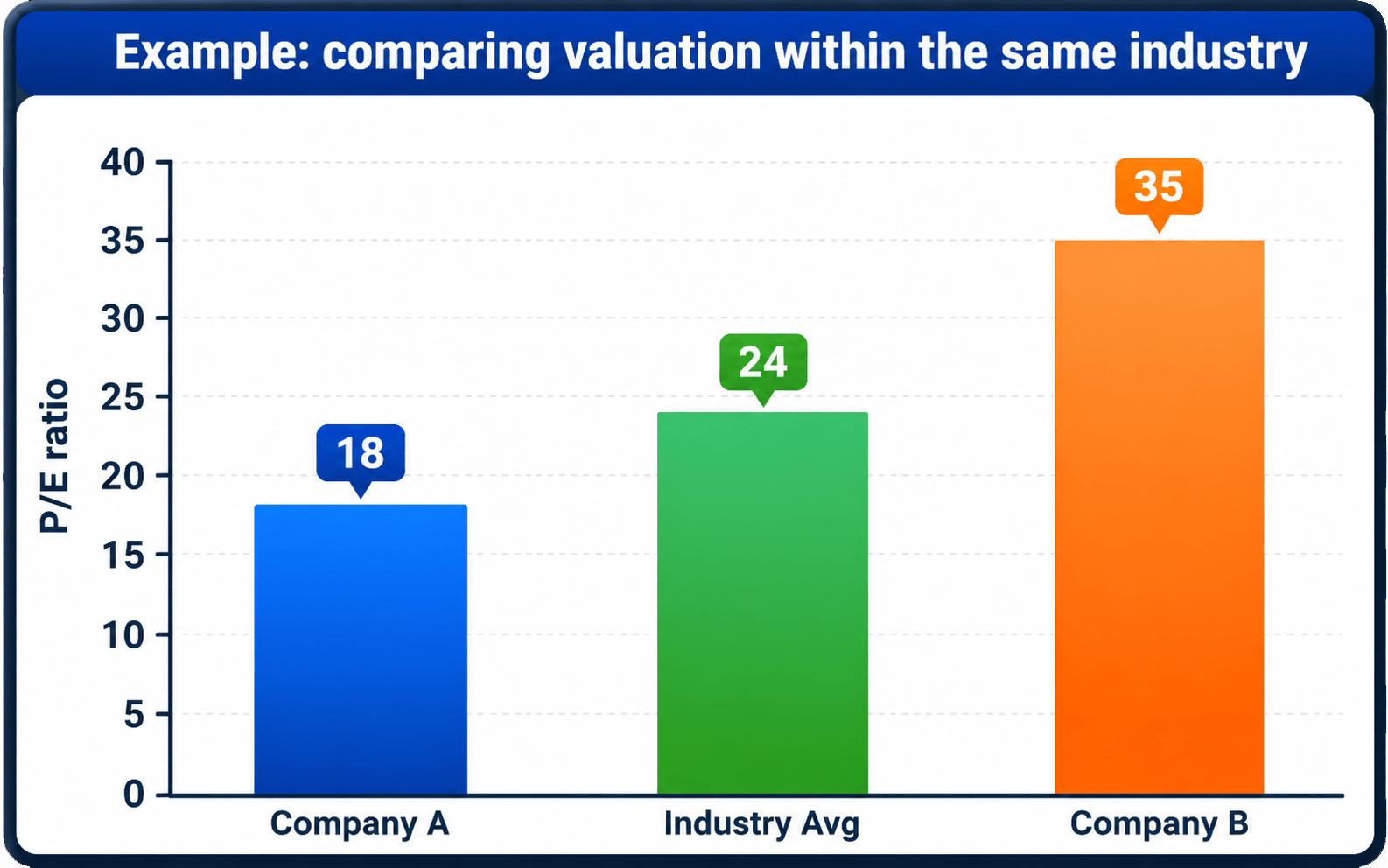
Figure 3: A ratio is most useful when compared with similar businesses and industry averages.
6.2 Other beginner-friendly valuation ratios
| Ratio | How beginners should use it |
|---|---|
| Price-to-sales (P/S) | Useful for companies with little or no profit, but dangerous if margins are weak. |
| Price-to-book (P/B) | Often used for banks, insurers, and asset-heavy businesses; less useful for some software or brand-heavy companies. |
| EV/EBITDA | Compares business value with operating earnings before certain costs; useful for comparing companies with different debt levels, but should not replace cash flow analysis. |
| Dividend yield | Annual dividend divided by stock price; useful for income investors, but a very high yield can be a warning if the dividend is unsafe. |
| Free cash flow yield | Free cash flow divided by market value; helps show how much cash the business generates compared with its price. |
A practical rule: Never buy a stock only because one ratio looks cheap. Ask why it is cheap. Is it temporarily disliked, or is the business permanently declining? Cheap can become cheaper when fundamentals are deteriorating.
7. Step 4: Study Management, Moat, and Competition
Numbers tell you what happened. Management quality and competitive advantage help you think about what could happen next. A company with honest, skilled management and a durable advantage often deserves more attention than a company with flashy promises but weak execution.
7.1 Management quality
Beginners can review management by reading annual letters, earnings call transcripts, capital allocation decisions, debt choices, and long-term targets. Good managers explain problems clearly, avoid unrealistic promises, and act like owners. Be cautious when management constantly changes strategy, blames outside factors, or promotes adjusted numbers while ignoring cash flow and debt.
7.2 Competitive advantage or “moat”
A moat is something that helps a company defend profits against competitors. Examples include strong brands, switching costs, network effects, patents, cost advantages, licenses, distribution power, or customer trust. A moat is not just a slogan. It should appear in the numbers through stable margins, loyal customers, pricing power, or long-term market share.
7.3 Competition
Compare the company with two or three direct competitors. Check growth, margins, debt, valuation, and customer reputation. Many beginners analyze a company in isolation and miss the fact that competitors are growing faster, operating more efficiently, or selling at a more reasonable valuation.
8. Step 5: Check Risks and Decide If the Price Gives You Enough Safety
Risk is not only price volatility. Real risk is losing money because the business performs worse than expected, the balance sheet becomes stressed, the industry changes, or you overpay. Good investors do not ignore risk. They write it down before buying.
8.1 Common stock risks beginners should review
- Business risk: products become less popular, customers leave, or costs rise.
- Financial risk: too much debt, weak cash flow, or expensive refinancing.
- Valuation risk: the company is good, but the stock price already assumes perfection.
- Management risk: poor capital allocation, weak governance, or unrealistic promises.
- Industry risk: new technology, regulation, commodity prices, or changing consumer behavior.
- Liquidity risk: smaller stocks may be hard to buy or sell at fair prices.
- Currency and country risk: foreign operations can be affected by exchange rates and political changes.
8.2 Margin of safety
A margin of safety means leaving room for mistakes. If your analysis suggests a business is worth around $100 per share, buying at $98 leaves little room for error. Buying at a meaningful discount may protect you if your assumptions are too optimistic. The exact discount depends on business quality, stability, debt, and uncertainty.
For beginners, margin of safety is a mindset: do not require everything to go perfectly for your investment to work.
9. Practical Example: Analyzing a Fictional Stock
Let’s analyze a fictional company called FreshHome Foods. This is not a real recommendation. It is only an educational example showing how a beginner could think through a stock.
9.1 Business summary
FreshHome Foods sells packaged healthy snacks through supermarkets and online grocery platforms. Revenue comes from repeat purchases, which is positive. The company has a recognizable brand in one region but is trying to expand nationally. The business is easy to understand, but competition is intense because many food brands fight for shelf space.
9.2 Financial snapshot
| Metric | Year 1 | Year 2 | Beginner interpretation |
|---|---|---|---|
| Revenue | $500M | $590M | Sales grew 18%, which is healthy. |
| Gross margin | 38% | 40% | Slight improvement suggests pricing or cost control is better. |
| Net income | $35M | $42M | Profit grew, but slower than revenue. |
| Operating cash flow | $48M | $55M | Cash flow supports reported profit. |
| Debt | $180M | $260M | Debt increased; check why and whether interest costs are manageable. |
| Shares outstanding | 100M | 108M | Shareholders were diluted by 8%. |
9.3 Valuation comparison
FreshHome trades at a P/E of 28. Similar food companies trade between 18 and 24. FreshHome is more expensive than peers, so a beginner should ask: does it truly deserve a premium? Maybe yes, if it can grow nationally with strong margins. Maybe no, if growth slows or debt keeps rising.
9.4 Risk notes
- Expansion may require heavy marketing and distribution spending.
- Large supermarket chains may demand discounts, hurting margins.
- Debt increased, so interest expense should be monitored.
- The stock already prices in strong growth, leaving less margin of safety.
9.5 Possible beginner decision
A cautious beginner might decide: “I like the business and cash flow, but the valuation is high and debt is rising. I will add it to my watchlist and wait for either a better price or another quarter of evidence that expansion is working.” This is a valid outcome. Analysis does not always end with buying. Sometimes the best decision is to wait.
10. Beginner Checklist Before Buying Any Stock
- ☐ I can explain the business in simple language.
- ☐ I know how the company makes money.
- ☐ I have read at least the latest annual report summary, financial statements, and risk section.
- ☐ Revenue, profit, and cash flow trends make sense.
- ☐ Debt does not look dangerous compared with cash flow.
- ☐ The valuation is reasonable compared with growth and similar companies.
- ☐ I understand the main risks and have written them down.
- ☐ I am not buying only because of hype, fear, or a tip.
- ☐ The investment fits my time horizon and risk tolerance.
- ☐ I have considered diversification rather than putting too much money into one stock.
11. Common Mistakes Beginners Learn the Hard Way
11.1 Mistake 1: Buying the story and ignoring the numbers
A company can have an exciting story and weak financials. Stories are useful, but they must eventually show up in revenue, margins, cash flow, or customer growth. If the story keeps getting bigger while the numbers get worse, be careful.
11.2 Mistake 2: Confusing a falling price with a bargain
A stock that fell 50% is not automatically cheap. It may still be expensive if earnings are collapsing. Always compare price with business value, not with the previous high.
11.3 Mistake 3: Following influencers without checking sources
Some online content is educational, but some is promotional. Beginners should be especially careful with “hidden gem,” “next big stock,” or “guaranteed return” claims. Always verify using company filings, official statements, and independent data.
11.4 Mistake 4: Ignoring position size
Even if you like a stock, putting too much money into one company can be risky. Diversification helps reduce the impact of being wrong about one business.
11.5 Mistake 5: Selling only because the price moved
Price changes happen every day. A better question is whether the investment thesis changed. If the business is stronger and valuation is still reasonable, a price drop may not be a reason to panic. If the business is weaker than expected, even a small drop may deserve attention.
12. Helpful Facts and Comparisons for Beginners
| Concept | Simple meaning | Beginner warning |
|---|---|---|
| Stock price | What one share costs today | A low price per share does not mean the company is cheap. |
| Market capitalization | Share price multiplied by shares outstanding | Better for company size than share price alone. |
| EPS | Profit per share | Can be affected by buybacks, dilution, or one-time items. |
| Dividend yield | Annual dividend divided by stock price | High yield may signal risk if profits and cash flow cannot support it. |
| Beta | How volatile a stock has been compared with the market | Past volatility does not capture every business risk. |
| Analyst target price | An analyst’s estimate of future price | Useful to read, but not a guarantee or substitute for your own research. |
13. How Beginners Can Use Stock Analysis in Real Life
A practical routine is better than random research. Choose a company you understand. Spend 30 minutes reading what the company does. Spend another 30 minutes reviewing revenue, profit, cash flow, and debt. Compare valuation with two competitors. Then write a one-page investment note.
13.1 Simple one-page investment note template
- Company: What it does in one paragraph.
- Why I am interested: growth, dividends, valuation, quality, or another reason.
- Key numbers: revenue growth, margins, net income, cash flow, debt, valuation.
- Competitors: two or three alternatives and how they compare.
- Risks: at least three things that could go wrong.
- Decision: buy, wait, avoid, or research more.
- Review date: when I will check the thesis again.
Writing the note matters because it slows you down. It also helps you learn from experience. Months later, you can compare what you expected with what actually happened.
14. FAQs About Analyzing Stocks Before Investing
14.1 How long does it take to analyze a stock?
A first review may take one to three hours for a beginner. A deeper review can take much longer. The goal is not speed. The goal is to understand enough to make a calm decision.
14.2 Should beginners use technical analysis or fundamental analysis?
Fundamental analysis studies the business, financials, valuation, and risks. Technical analysis studies price and volume patterns. Beginners who want to invest, not trade, usually benefit from learning fundamental analysis first because it explains what they actually own.
14.3 Is a low P/E stock always better?
No. A low P/E may signal value, but it may also reflect weak growth, high debt, legal risk, or declining earnings. Always compare the ratio with business quality and industry peers.
14.4 What is the most important financial statement?
There is no single statement to read alone. The income statement shows profitability, the balance sheet shows strength, and the cash flow statement shows cash reality. Read them together.
14.5 Can I invest if I do not understand accounting?
Yes, but start slowly. Learn basic revenue, profit, debt, and cash flow. Use diversified funds while you build knowledge if individual stock research feels overwhelming.
14.6 What should I avoid as a beginner?
Avoid investing emergency money, chasing hype, using borrowed money without understanding the risk, buying based on one ratio, and concentrating too much money in one stock.
15. Final Thoughts
Learning how to analyze stocks before investing is not about predicting tomorrow’s price. It is about understanding the business, checking the numbers, comparing the price with value, and respecting risk. The best investors are not always the people with the most complicated spreadsheets. Often, they are the people who ask simple questions consistently and avoid emotional decisions.
For beginners, the strongest starting point is a repeatable checklist: understand the company, read the financial statements, compare valuation, study competition, write down risks, and only invest when the opportunity fits your personal goals. A missed opportunity is not a disaster. A poorly understood investment can be.
Reader Advice
This article is provided for educational and informational purposes only. It does not constitute financial, investment, tax, legal, or other professional advice, and it is not a recommendation to buy, sell, or hold any security. Before making any financial decision, readers should consider their personal goals, financial circumstances, time horizon, and risk tolerance, and should seek advice from a suitably qualified professional where appropriate.
Market conditions, laws, regulations, company information, financial figures, and investment products can change over time and may differ by country or individual circumstances. Readers should therefore verify current facts, figures, filings, rules, fees, and other relevant information through official and reputable sources. All investing involves risk, including the possible loss of principal, and past performance does not guarantee future results.
Sources Consulted and Checked
The following official and reputable sources were consulted when preparing this article and checking its accuracy. Readers should review the latest versions directly because guidance and information may change over time.
- Investor.gov, Introduction to Investing: Risk tolerance, time horizon, asset allocation, and diversification concepts.
- Investor.gov / SEC, How to Read a 10-K and 10-Q: Public company reports provide detailed information about business, risks, and financial results.
- SEC, Beginners’ Guide to Financial Statements: Basic explanation of income statements, balance sheets, and cash flow statements.
- FINRA, Evaluating Stocks: P/E ratio definition and beginner-friendly valuation context.
- SEC statement on cash flow information: Cash flow statements help investors assess future cash generation, obligations, and dividends.