Stock Market Risk Management Strategies for Beginners
1. What Is Stock Market Risk Management?
Stock market risk management means using rules and habits that limit how badly one wrong decision can hurt you. It does not mean avoiding risk completely. Stocks rise and fall because companies, interest rates, inflation, news, earnings, investor emotions, and economic conditions change. Risk management helps a beginner stay in the game long enough to learn, compound, and avoid emotional decisions.
Think of it like driving. A seat belt does not guarantee that an accident will never happen, but it can reduce damage if something goes wrong. In investing, your seat belt is a mix of diversification, position sizing, emergency savings, stop-loss planning, asset allocation, research, and patience.
Beginner-friendly definition: Risk management is the process of deciding how much you can afford to lose, where you will invest, how much you will invest, when you will review, and when you will walk away - before emotions take control.
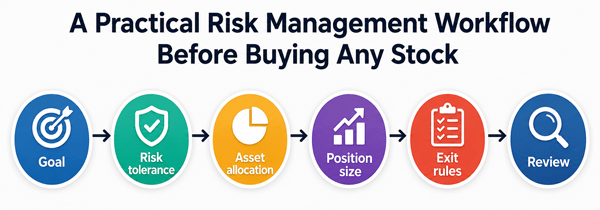
Figure 1: A simple process beginners can follow before buying any stock.
2. Why Risk Management Matters More Than Stock Picking
Many beginners believe investing success comes from finding the next big stock. In real life, most long-term investors survive because they control risk. A person can be right about several investments and still lose money if they put too much into one stock, panic during a market fall, use borrowed money, or buy without a plan.
People’s experiences in the market often follow the same pattern: they start with excitement, make a few gains, become overconfident, put too much money into one idea, then face a sudden drop. The painful lesson is that risk feels small when prices are rising and feels huge only after the loss has already happened.
Honest investing principle: Never build an investment plan around “I cannot lose.” Build it around “What will I do if I am wrong?”
3. The Main Types of Stock Market Risk Beginners Should Know
| Risk Type | What It Means | Simple Example |
|---|---|---|
| Market risk | The whole market falls because of recession fears, rate changes, inflation, war, policy changes, or investor panic. | A strong company can still fall 20% if the broad market drops. |
| Company risk | A single business disappoints investors because of weak earnings, fraud, debt, poor management, or product failure. | A popular stock falls after bad quarterly results. |
| Sector risk | One industry gets hit harder than others. | Oil stocks fall when energy prices drop; bank stocks fall during banking stress. |
| Liquidity risk | You cannot easily sell at a fair price when you need cash. | A thinly traded small-cap stock drops sharply when many people sell. |
| Valuation risk | You buy a good company at too expensive a price. | The business grows, but the stock still falls because expectations were too high. |
| Behavioral risk | Your own emotions cause bad decisions. | Panic selling near a bottom or buying because of FOMO. |
| Currency and country risk | Foreign investments are affected by exchange rates, rules, taxes, and local politics. | A foreign stock performs well locally but your return falls after currency movement. |
4. Ten Beginner-Friendly Risk Management Strategies
4.1 Know Your Risk Tolerance Before You Invest
Risk tolerance is your ability and willingness to handle losses in exchange for possible returns. A beginner should look at both sides. Ability is practical: income, job stability, debt, emergency fund, family responsibility, and time horizon. Willingness is emotional: whether you can stay calm when your portfolio falls.
A common beginner mistake is copying someone else’s portfolio. A 25-year-old with stable income and no dependents may handle more stock market volatility than someone who needs the money for a house deposit next year. The same stock can be suitable for one person and too risky for another.
Ask yourself:
- Can I leave this money invested for at least several years?
- Would a 20% drop make me panic-sell?
- Do I already have emergency savings outside the market?
- Am I investing, or am I trying to recover money quickly?
- Would losing this money affect rent, food, education, or debt payments?
4.2 Build an Emergency Fund First
Risk management starts before buying stocks. Beginners often invest money they may need soon. Then, when an emergency happens, they are forced to sell during a bad market. This turns temporary market volatility into a real loss.
A practical approach is to keep essential short-term money in safer, accessible places such as a bank account, money market fund, or other cash equivalent suitable for your country. The exact amount depends on your job stability and family needs, but many beginner education resources discuss several months of essential expenses as a useful starting point.
4.3 Use Asset Allocation, Not Just Stock Selection
Asset allocation means deciding how much of your total portfolio goes into stocks, bonds, cash, and other assets. It is one of the most important risk management decisions because it controls your overall exposure to market swings. A portfolio that is 100% in stocks usually moves more sharply than one that also has cash or bonds.
| Investor Situation | Possible Allocation Style | Why It May Fit | Main Risk |
|---|---|---|---|
| Needs money soon | More cash, less stocks | Reduces chance of selling stocks during a drop | May not grow enough to beat inflation |
| Long time horizon, stable income | More stocks, diversified funds | Can accept volatility for possible long-term growth | Large temporary declines can still happen |
| Retired or near retirement | Balanced mix with income assets | Focuses on stability and withdrawals | Too much safety can reduce growth |
| Beginner learning individual stocks | Core diversified funds plus small stock positions | Limits damage from beginner mistakes | Still requires discipline and review |
4.4 Diversify So One Mistake Cannot Ruin You
Diversification means spreading investments across different companies, industries, asset classes, and sometimes countries. It cannot guarantee profit or prevent losses, but it can reduce the damage from one bad company or one weak sector. For beginners, broad-market index funds or ETFs are often easier diversification tools than trying to pick many individual stocks.
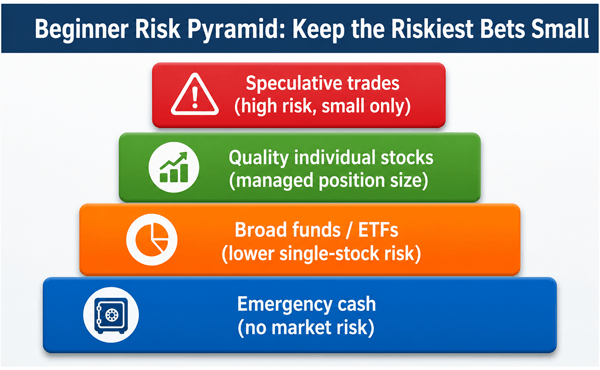
Figure 2: A beginner-friendly risk pyramid. The highest-risk ideas should usually be the smallest part of the plan.
A simple practical rule: If one company failing would seriously damage your financial future, your position is probably too large. Beginners often learn this the hard way after putting most of their money into one “sure thing.”
4.5 Control Position Size
Position sizing means deciding how much money to put into one investment. This is where risk management becomes practical. A good stock idea can become dangerous if the position is too large. A risky stock can be manageable if the position is small enough.
Many experienced traders think in terms of “risk per trade” rather than “how much can I buy?” For example, a beginner with a $5,000 account may decide not to risk more than 1% of the account, or $50, on any single stock trade. If the planned exit point is 10% below the purchase price, the largest position would be about $500 because a 10% drop on $500 is $50.
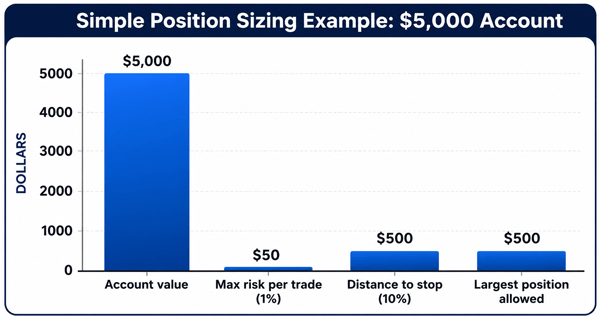
Figure 3: Example only. Position sizing helps a beginner define the possible loss before buying.
4.6 Have an Exit Plan Before You Buy
An exit plan is a written reason for when you will sell. Without an exit plan, beginners often hold losing stocks because they hope to “get back to even,” or they sell winning stocks too early because they fear losing a small profit.
| Exit Rule | Best For | Example |
|---|---|---|
| Stop-loss level | Short-term trades where price discipline matters | Sell if the stock closes 10% below purchase price. |
| Business thesis broken | Long-term investors | Sell if debt rises sharply and earnings quality weakens. |
| Valuation target reached | Value or growth investors | Trim if the price becomes far above reasonable valuation. |
| Portfolio rebalancing | Portfolio risk control | Sell some winners if one stock becomes too large. |
A stop-loss can help limit damage, but it is not magic. In fast markets, the sale price may be worse than expected. Long-term investors may prefer thesis-based exits instead of automatic selling during normal volatility. The key is to choose a method before buying, not during panic.
4.7 Avoid Leverage Until You Truly Understand It
Leverage means using borrowed money or complex products to increase exposure. Margin trading, options, futures, and leveraged ETFs can magnify gains, but they can also magnify losses quickly. For beginners, leverage often turns a normal investing mistake into a serious financial problem.
A simple rule for new investors: First learn how to manage risk without borrowed money. If you cannot control emotions with a normal stock position, leverage will usually make the emotional pressure worse.
4.8 Use Dollar-Cost Averaging Carefully
Dollar-cost averaging means investing a fixed amount on a regular schedule, such as every month. It can reduce the pressure of trying to pick the perfect entry price. For beginners, it is helpful because it turns investing into a habit rather than a prediction game.
However, dollar-cost averaging is not a guarantee. If you average into a weak individual company without checking the business, you may simply buy more of a bad investment. It works best when combined with diversified funds, a long time horizon, and regular review.
4.9 Rebalance Your Portfolio
Rebalancing means bringing your portfolio back to your target mix. Suppose your plan is 70% stocks and 30% safer assets. After a strong market year, stocks may grow to 85% of your portfolio. That can feel good, but it also means your risk has increased. Rebalancing forces you to review risk instead of only celebrating gains.
| Asset | Target | Current After Market Move | Possible Action |
|---|---|---|---|
| Stocks | 70% | 85% | Add new money to safer assets or trim stocks |
| Bonds / cash | 30% | 15% | Rebuild safety cushion |
4.10 Keep a Written Investment Journal
A journal is one of the simplest risk management tools because it exposes your thinking. Before buying, write the reason, expected holding period, risks, position size, exit plan, and what would prove you wrong. Later, review whether the decision was based on logic or emotion.
Many investors discover that their worst decisions came from hurry: buying after social media hype, chasing a stock after a big move, or selling because of scary headlines. A journal slows you down.
| Journal Question | Beginner Example |
|---|---|
| Why am I buying? | The company has growing revenue, manageable debt, and a valuation I understand. |
| What can go wrong? | Competition, falling margins, overvaluation, market downturn. |
| How much can I lose? | Maximum planned loss is 1% of total portfolio. |
| When will I sell? | If the business weakens or the position exceeds my risk limit. |
| What emotion am I feeling? | Excited because the price rose recently - possible FOMO warning. |
5. Practical Example: Two Beginners, Same Stock, Different Risk
Ali and Sara both like the same technology stock. Ali puts 60% of his savings into it because he saw strong recent returns. Sara puts 5% into it and keeps the rest diversified. If the stock falls 40%, Ali loses 24% of his savings from one decision. Sara loses only 2% of her portfolio. The stock was the same; the risk management was different.
This example shows why beginners should not ask only “Is this a good stock?” They should also ask “How much of my portfolio should this be?” and “What happens if I am wrong?”
6. Risk Management vs. Risk Avoidance
| Approach | What It Sounds Like | Likely Result |
|---|---|---|
| Risk avoidance | I will never invest because stocks can fall. | Money may be safer short term but may lose purchasing power to inflation. |
| Risk ignoring | This stock will definitely go up. I am all in. | One bad event can cause major damage. |
| Risk management | I accept uncertainty, size positions carefully, diversify, and review. | No guarantee, but better survival and decision quality. |
7. Beginner Mistakes That Increase Stock Market Risk
- Putting emergency money into stocks.
- Buying because of hype without understanding the business.
- Owning too many similar stocks and thinking it is diversification.
- Using margin or options before mastering basic investing.
- Refusing to sell when the original reason for buying is no longer true.
- Checking prices every few minutes and reacting emotionally.
- Confusing a falling price with a bargain.
- Ignoring fees, taxes, currency risk, and liquidity.
- Believing any strategy can guarantee profit.
8. A Simple Stock Risk Checklist Before You Buy
- ☐ I have emergency savings outside the stock market.
- ☐ I know my goal and time horizon.
- ☐ I understand what the company does.
- ☐ I have checked revenue, profit, debt, cash flow, and valuation.
- ☐ The position size is small enough that I can survive being wrong.
- ☐ I know the biggest risks to the company and industry.
- ☐ I have an exit rule written down.
- ☐ I am not buying only because someone online recommended it.
- ☐ This investment fits my overall asset allocation.
- ☐ I understand that loss is possible.
9. Frequently Asked Questions
9.1 What is the best stock market risk management strategy for beginners?
The best starting strategy is a combination of diversification, position sizing, emergency savings, and a written investment plan. No single tool is enough by itself.
9.2 How much should a beginner risk on one stock?
There is no universal number, but many beginners keep individual stock positions small so one mistake cannot seriously damage the portfolio. Some traders limit risk to about 1% of account value per trade, but long-term investors may use different rules.
9.3 Does diversification remove all risk?
No. Diversification can reduce company-specific risk, but it cannot remove market risk. A diversified stock portfolio can still fall during a broad market decline.
9.4 Are stop-loss orders good for beginners?
They can help some beginners stay disciplined, especially for short-term trades. But they can also trigger during normal volatility, and fast markets may execute at worse prices. They should be used with a clear plan.
9.5 What is the safest way to start investing in stocks?
For many beginners, a cautious start is learning first, keeping emergency cash, using diversified funds, avoiding leverage, and investing gradually. “Safest” still does not mean risk-free.
9.6 How often should I review my portfolio?
Many long-term beginners review monthly or quarterly and rebalance when allocations move far from the plan. Constant checking can encourage emotional decisions.
10. Final Thoughts: Protect First, Grow Second
The stock market rewards patience, discipline, and realistic expectations. Beginners do not need a perfect strategy. They need a survivable strategy. Risk management is what keeps one bad stock, one bad month, or one emotional decision from destroying years of progress.
Before asking how much you can make, ask how much you can afford to lose. Before buying a stock, decide your position size, your reason, your risk, and your exit. That is how beginners move from guessing to investing with a plan.
Sources Consulted and Checked
The following sources were consulted and checked while preparing this article to support accuracy, reliability, and alignment with established investor-education guidance.
- SEC Investor.gov - Asset Allocation and Diversification
- SEC Investor.gov - Beginners Guide to Asset Allocation, Diversification, and Rebalancing
- FINRA - Know Your Risk Tolerance
- FINRA - Asset Allocation and Diversification
Reader Advice
This article is provided solely for educational and informational purposes. It does not constitute personal financial, investment, tax, legal, or other professional advice, and it does not guarantee any particular result or profit. Before making an investment or financial decision, readers should consider their objectives, financial circumstances, risk tolerance, time horizon, and applicable costs, taxes, and regulations, and should seek advice from a suitably qualified professional where appropriate.
Market conditions, laws, tax rules, product features, fees, and regulatory requirements can change and may differ by country, institution, and individual circumstances. Readers should therefore verify important facts, figures, eligibility requirements, and current rules through official and up-to-date sources before acting. All investments involve risk, including the possible loss of principal.