Common Stock vs Preferred Stock: Understanding Types of Stock Market Shares
1. What Are Stock Market Shares?
A share of stock is a small ownership claim in a company. When a company sells shares to the public, people can buy those shares through a brokerage account. In simple words, the company gets money to grow, and investors get a chance to benefit if the business becomes more valuable over time.
But not every share gives the same rights. Some shares are built for growth and voting power. Others are built more for regular dividend income and priority over ordinary shareholders. That is why beginners should understand common stock and preferred stock before they invest.
The easiest way to think about it is this: common stock is like being a regular owner of the business, while preferred stock is like owning a special class of shares with certain payment preferences. Both are stocks, but they behave differently.
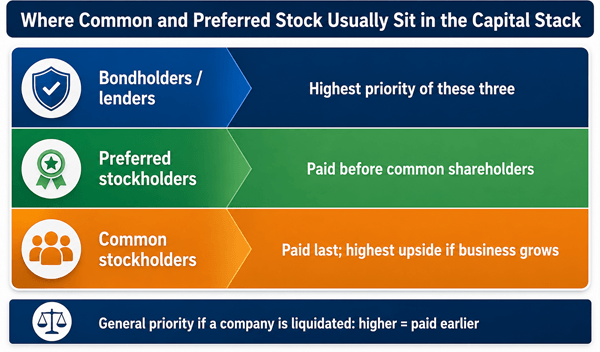
Figure 1. General payment priority in liquidation.
1.1 Beginner Takeaway
Common stock is usually about ownership, voting, and long-term price growth. Preferred stock is usually about dividend preference, income potential, and a higher claim than common stock if the company is liquidated. Neither one is automatically safe or automatically better.
2. Common Stock Explained in Easy Words
Common stock is the type of stock most people mean when they say they bought shares of Apple, Microsoft, Tesla, Coca-Cola, or another public company. It represents ordinary ownership in a company.
If the company grows, earns more money, and investors become more confident, the common stock price may rise. If the business struggles, the stock price may fall. Common shareholders usually benefit the most from business growth, but they also stand last in line if things go badly.
Common stockholders often receive voting rights. Voting rights let shareholders vote on certain corporate matters, such as electing directors or approving major company decisions. A beginner with only a few shares may not control the company, but the vote is still a real ownership right.
2.1 How common stock makes money
- Capital appreciation: You buy a share at one price and later sell it at a higher price.
- Dividends: Some companies share part of their profits with shareholders as cash dividends.
- Long-term compounding: If a business grows for many years, reinvested dividends and price growth can compound.
2.2 Simple common stock example
Suppose Sara buys 10 common shares of a company at $50 each, so she invests $500. Two years later, the shares trade at $70. If she sells, her investment is worth $700 before fees and taxes. She made $200 in price gain. If the company also paid $1 per share per year in dividends, she received another $20 over two years. But if the share price fell to $35, her shares would be worth only $350. That is the tradeoff: common stock can offer upside, but it can also lose money.
3. Preferred Stock Explained in Easy Words
Preferred stock is a special type of share. It is still equity, but it often acts partly like a stock and partly like an income investment. Preferred shareholders usually do not have the same voting power as common shareholders, but they usually get paid dividends before common shareholders.
Preferred stock also usually has a liquidation preference. That means if a company is wound down and assets are distributed, preferred shareholders generally stand ahead of common shareholders. This does not guarantee they will be paid in full. If the company has too little value left, preferred shareholders can still lose money.
Many preferred stocks are issued with a stated dividend rate, often based on a par value such as $25 or $100 per share. Some preferred shares are callable, meaning the company may be allowed to redeem them after a certain date. Some are convertible, meaning they may be exchanged for common stock under specific terms.
3.1 How preferred stock makes money
- Preferred dividends: The main reason many investors consider preferred stock is income.
- Price changes: Preferred shares can move up or down in the market, especially when interest rates, credit quality, or company risk changes.
- Possible conversion: Some preferred shares can convert into common shares, which may add upside but also complexity.
3.2 Simple preferred stock example
Imagine a preferred share has a $25 par value and pays a 6% annual dividend. The expected annual dividend is $1.50 per share because $25 x 6% = $1.50. If an investor buys the preferred share at $25, the yield is 6%. If the investor buys it at $30, the current yield is $1.50 / $30 = 5%. If the investor buys it at $20, the current yield is 7.5%. This is why price matters. A high dividend rate does not automatically mean a good deal.
4. Common Stock vs Preferred Stock: Quick Comparison Table
| Feature | Common Stock | Preferred Stock | Beginner Meaning |
|---|---|---|---|
| Main purpose | Ownership and growth potential | Income preference and priority | Common is usually for upside; preferred is usually for income. |
| Voting rights | Often yes | Usually limited or none | Common shareholders usually have more say. |
| Dividends | Possible, not guaranteed | Usually stated and paid before common dividends | Preferred dividends may be more predictable but still not risk-free. |
| Price behavior | Can rise or fall significantly with business results | Often moves with interest rates and credit risk as well as company health | The risks are different, not absent. |
| Liquidation priority | Paid after creditors and preferred shareholders | Paid after creditors but before common shareholders | Preferred ranks above common, but below debt. |
| Upside potential | Higher if company grows strongly | Usually more limited unless convertible | Common owners often get more growth benefit. |
| Risk of loss | High if the business performs poorly | Also meaningful, especially with weak issuers or rising rates | Both can lose money. |
| Best suited for | Long-term growth investors who accept volatility | Income-focused investors who understand terms and risks | The right choice depends on goals and risk tolerance. |
5. The Most Important Differences Beginners Should Understand
5.1 Ownership and voting rights
Common stock usually gives shareholders voting rights. This matters because shareholders vote on directors and other important corporate issues. Preferred stock often gives up most voting rights in exchange for dividend preference or other special rights.
5.2 Dividend priority
Preferred shareholders usually receive dividends before common shareholders. If a company is under pressure, it may reduce or suspend common dividends first. However, preferred dividends can also be suspended depending on the terms and the company's financial condition.
5.3 Liquidation preference
If a company goes bankrupt or liquidates, creditors are paid before shareholders. Preferred shareholders usually rank ahead of common shareholders, but they are still behind lenders and bondholders. Common shareholders are last in line.
5.4 Growth potential
Common stock generally offers stronger upside because common shareholders own the residual value of the business. Preferred stock often has more limited upside because its value is tied to dividend terms, interest rates, credit quality, and call features.
5.5 Interest-rate sensitivity
Preferred shares can behave like long-term income securities. When interest rates rise, existing preferred shares with lower dividend rates may become less attractive, which can push prices down.
5.6 Call risk
Some preferred shares are callable. If the company can refinance at a lower cost, it may redeem the preferred shares. Investors who paid above the call price can lose money even if the company is healthy.
5.7 Complexity of terms
Preferred stock terms can vary widely. Some are cumulative, non-cumulative, callable, convertible, participating, fixed-rate, floating-rate, or fixed-to-floating. Beginners should never assume all preferred shares work the same way.
6. Types of Common and Preferred Shares
6.1 Types of common stock
- Single-class common stock: one share usually equals one vote.
- Dual-class common stock: one class may have stronger voting rights than another. This can let founders or insiders keep control.
- Non-voting common stock: shareholders may receive economic exposure but little or no voting power.
6.2 Types of preferred stock
- Cumulative preferred: unpaid dividends may accumulate and usually must be paid before common dividends resume.
- Non-cumulative preferred: missed dividends may not accumulate. This is common in some bank preferred shares.
- Convertible preferred: can convert into common stock under set terms.
- Callable preferred: the company can redeem it after a stated date, usually at a set price.
- Participating preferred: may receive extra dividends beyond the stated preference if certain conditions are met.
- Fixed-to-floating preferred: pays a fixed dividend for a period, then changes based on a reference rate plus a spread.
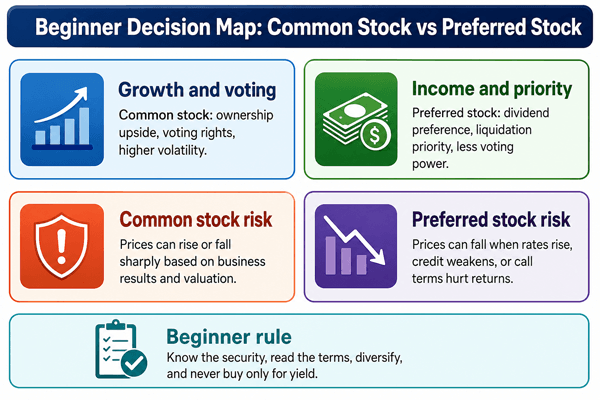
Figure 2. Beginner decision map for common stock and preferred stock.
7. How Beginners Can Use This Knowledge Practically
7.1 Decide your goal
If your goal is long-term growth, common stock or diversified stock funds may be more relevant. If your goal is income, preferred stock may be worth studying, but do not chase yield blindly.
7.2 Read the security terms
For common stock, understand the business, share class, voting rights, dilution, earnings, debt, and valuation. For preferred stock, read the dividend rate, call date, call price, cumulative status, conversion terms, credit quality, and whether dividends are qualified for tax purposes.
7.3 Compare yield with risk
A preferred stock yielding far more than similar securities may be signaling higher risk. Ask why the yield is high before buying.
7.4 Diversify
Owning one or two stocks can be risky. Many beginners reduce company-specific risk by using diversified funds or by keeping position sizes small.
7.5 Check liquidity
Some preferred shares trade with lower volume than popular common stocks. Low liquidity can make it harder to buy or sell near the price you expect.
7.6 Keep taxes and fees in mind
Dividends, capital gains, brokerage fees, and tax treatment can affect real returns. Tax rules vary by country and account type.
8. Practical Investor Experiences: What People Usually Learn the Hard Way
- Many beginners buy common stock because they recognize a company name. Later, they learn that a good company is not always a good stock at any price. Valuation matters.
- Some investors buy preferred shares only because the yield looks high. Later, they discover call risk, interest-rate risk, or weak company finances. The dividend is only one part of the story.
- People often assume preferred stock is as safe as a bank deposit because the word 'preferred' sounds protective. It is not. Preferred stock is still a market security and can lose value.
- Common stock investors sometimes panic during market drops. A written plan helps: why you bought, what would make you sell, how much loss you can tolerate, and whether the investment still fits your goal.
- Income investors sometimes ignore inflation. A fixed preferred dividend may feel stable, but if living costs rise, the real buying power of that income may decline.
9. Side-by-Side Practical Example
Company ABC has both common stock and preferred stock trading in the market.
| Investor | Buys | Main hope | Main risk |
|---|---|---|---|
| Ali | ABC common stock at $40 | The company grows and shares rise to $60, $80, or more | Price may fall sharply if earnings disappoint. Dividend may be cut. |
| Maria | ABC preferred stock at $25 with a 6% dividend | Receives about $1.50 per year in dividends and ranks ahead of common shareholders | Price may fall if rates rise or ABC becomes riskier. Shares may be called. |
Neither Ali nor Maria is automatically right. Ali may do better if ABC becomes much more profitable. Maria may do better if ABC stays stable and continues paying preferred dividends while the common stock does not rise much. Their best choice depends on their goal, time horizon, and risk tolerance.
10. Beginner Checklist Before Buying Any Stock Share
- Do I understand whether this is common stock, preferred stock, or another security?
- What exactly gives me a return: price growth, dividends, conversion, or something else?
- What could make me lose money?
- Does the company have too much debt or weak cash flow?
- Are dividends sustainable or only attractive on the surface?
- For preferred stock, what are the call date, call price, cumulative status, and credit risk?
- For common stock, what are the valuation, voting rights, dilution risk, and long-term business outlook?
- How much of my portfolio would this one investment represent?
- Have I read reliable sources, company filings, and not just social media opinions?
- Am I buying because of a plan, or because of fear of missing out?
11. Common Stock vs Preferred Stock: Which Is Better?
The honest answer is: neither is always better. Common stock may be better for investors who want long-term growth, can handle volatility, and want voting rights. Preferred stock may be better for investors who want income potential and understand dividend priority, call risk, and interest-rate sensitivity.
A beginner should not ask only, "Which stock pays more?" A better question is, "Which type of share matches my goal, risk tolerance, and time horizon?" This is the difference between investing and simply chasing returns.
12. Mistakes Beginners Should Avoid
12.1 Thinking preferred stock is guaranteed
Preferred dividends have priority over common dividends, but they are not the same as insured bank interest.
12.2 Buying common stock only because the price is low
A $5 stock is not automatically cheaper than a $100 stock. Market capitalization, earnings, debt, and future prospects matter.
12.3 Ignoring the prospectus or filings
Preferred share terms can hide important details. Company filings explain rights, risks, and restrictions.
12.4 Chasing high dividend yield
A very high yield may mean the market expects trouble. Always ask whether the dividend is sustainable.
12.5 Confusing income with total return
A preferred stock can pay dividends while its market price falls. A common stock can pay no dividend but still create strong long-term returns.
13. Frequently Asked Questions
13.1 Is preferred stock safer than common stock?
Preferred stock usually ranks ahead of common stock for dividends and liquidation, but it is not risk-free. It can fall in price and dividends may be suspended under some terms.
13.2 Do common shareholders always get dividends?
No. Many common stocks pay no dividend. Companies may choose to reinvest profits or may not have enough profits to distribute.
13.3 Do preferred shareholders vote?
Usually preferred shareholders have limited or no voting rights, although terms vary by company and issue.
13.4 Can preferred stock lose money?
Yes. Preferred stock can lose value because of rising interest rates, weak company finances, lower credit quality, low liquidity, or unfavorable call terms.
13.5 Can a company have both common and preferred stock?
Yes. Many companies issue common shares, and some also issue one or more classes of preferred shares.
13.6 Should beginners buy individual common or preferred stocks?
Beginners should first learn the basics, consider diversified options, and avoid putting too much money into one security. Individual stocks require research and risk control.
13.7 What is the main keyword difference between common shares and preferred shares?
Common shares usually focus on ownership, voting rights, and capital appreciation. Preferred shares usually focus on dividend priority and liquidation preference.
14. Simple Glossary
| Term | Plain-English meaning |
|---|---|
| Capital appreciation | Increase in the market price of an investment. |
| Dividend | A payment a company makes to shareholders, usually from profits or available cash. |
| Liquidation preference | The right to be paid before another class of shareholders if a company liquidates. |
| Callable preferred stock | Preferred stock the company can redeem after a certain date at a set price. |
| Convertible preferred stock | Preferred stock that can be converted into common stock under specific terms. |
| Cumulative dividend | A preferred dividend that may accumulate if missed, depending on the terms. |
| Yield | Income received from an investment compared with the price paid. |
| Voting rights | Rights that allow shareholders to vote on certain company matters. |
| Diversification | Spreading investments across different assets to reduce dependence on one outcome. |
15. Conclusion: The Simple Way to Remember It
Common stock is usually the growth-and-ownership share. Preferred stock is usually the income-and-priority share. Common shareholders often get voting rights and more upside if the company succeeds. Preferred shareholders usually get dividend priority and a higher claim than common shareholders if the company is liquidated.
The best beginner approach is not to guess which one is “better.” Learn what you own, read the terms, compare risk with reward, diversify, and avoid dishonest shortcuts such as hype, fake guarantees, or social media stock tips. Good investing is built on patience, research, and risk management.
Sources Consulted and Checked
The following sources were consulted and checked while preparing this article to support accuracy and clarity. Readers should review the latest official materials when making decisions.
- Investor.gov - Stocks FAQs
- Investor.gov - Shareholder Voting
- Investor.gov - What is Risk?
- Investor.gov - Convertible Securities
- Investor.gov - Ex-Dividend Dates
- Charles Schwab - Preferred Stock: Potential Income Tool
Reader Advice
This article is provided solely for educational and informational purposes and does not constitute personalized financial, investment, legal, tax, or other professional advice. Stock prices and dividend payments can change, and investors may lose some or all of their invested capital. Rules, tax treatment, market conditions, company terms, and regulatory requirements may vary by country, account type, security, and time. Before making any decision, readers should independently verify facts, figures, security terms, company filings, fees, taxes, and applicable rules through current official sources. Consider personal goals, time horizon, financial circumstances, diversification, and risk tolerance, and seek advice from an appropriately qualified professional when necessary.