How to Sell Cryptocurrency: Step-by-Step Guide, Tips, Fees, Risks and Best Practices
1. Quick Answer: How Do You Sell Cryptocurrency?
To sell cryptocurrency, you choose a selling method, move the crypto to that platform if necessary, place a sell order, convert the crypto into cash or a stablecoin, withdraw the money to your bank or payment account, and save your transaction records for taxes.
- For most beginners, the easiest method is a regulated crypto exchange such as Coinbase, Kraken, Binance, Gemini, or another reputable platform available in your country.
- For better pricing, use the exchange trading screen or advanced trade feature instead of a quick “sell now” button when you understand the basics.
- For privacy or local cash deals, peer-to-peer selling may be possible, but it carries higher scam and safety risks.
- For fast cash, crypto ATMs may work in some regions, but fees are often much higher than exchange fees.
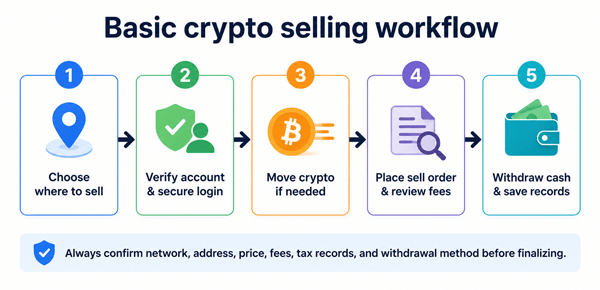
Figure 1. A simple workflow for selling cryptocurrency safely.
2. What Does It Mean to Sell Cryptocurrency?
Selling cryptocurrency means exchanging a digital asset, such as Bitcoin (BTC), Ethereum (ETH), Solana (SOL), or a stablecoin, for another form of value. In everyday use, “selling crypto” usually means converting crypto into your local currency, such as USD, EUR, GBP, PKR, CAD, or AUD.
However, selling can happen in several ways:
- Crypto to fiat: You sell BTC for USD and withdraw dollars to your bank.
- Crypto to stablecoin: You sell ETH for USDT or USDC but keep funds on a crypto platform.
- Crypto to another crypto: You trade BTC for ETH. This may still be taxable in some countries.
- Crypto to cash via P2P or ATM: You receive cash or a bank transfer from another person or machine.
The important beginner point is this: selling is not just pressing a button. You must consider where you sell, the price you receive, platform fees, network fees, withdrawal timing, security, and tax records.
3. Common Reasons People Sell Crypto
- Taking profits after the price has increased.
- Cutting losses or reducing exposure to volatility.
- Paying bills or converting investment gains into usable cash.
- Rebalancing a portfolio after crypto becomes too large a percentage of total savings.
- Moving from a risky asset into a more stable one, such as cash or a stablecoin.
- Leaving a platform or wallet that no longer feels safe or convenient.
Beginner example
Sara bought $500 of Bitcoin. Months later, it is worth $750. She sells $250 worth of BTC, withdraws the cash to her bank, and keeps the rest invested. She records the date, amount sold, fees, and original purchase cost so she can calculate any taxable gain later.
4. Where Can You Sell Cryptocurrency?
There is no single best place for everyone. The right method depends on your country, the coin you hold, how fast you need cash, how much you are selling, and your risk tolerance.
| Selling method | Best for | Main advantages | Main drawbacks |
|---|---|---|---|
| Centralized exchange | Most beginners | Easy interface, bank withdrawals, high liquidity, transaction history | Requires account verification; fees and withdrawal rules vary |
| Advanced exchange/trading screen | Users who want better pricing | Limit orders, lower trading fees on many platforms, more control | More confusing for beginners; wrong order settings can cause mistakes |
| Broker or payment app | Small simple sales | Very easy; familiar app experience | Often wider spreads, fewer crypto choices, less trading control |
| Peer-to-peer marketplace | Local payment methods or regions with limited exchange access | Flexible payment options; direct buyer/seller deals | Higher scam risk; disputes; bank chargeback or fake payment risks |
| Crypto ATM | Small urgent cash sales | Fast in some locations; may not need complex trading screens | Often high fees, low limits, poor exchange rates, limited coins |
| Decentralized exchange | Selling tokens into stablecoins without a centralized account | Self-custody, on-chain access, useful for DeFi tokens | No bank withdrawal; gas fees; slippage; smart contract and wallet risks |
4.1 Best Option for Beginners
For a first sale, a reputable centralized exchange is usually the most practical choice because it combines selling, price quotes, identity verification, fiat withdrawal, and records in one place. After you learn how fees and order types work, the advanced trading screen on the same exchange may give you more control and sometimes lower costs.
5. Before You Sell: A Beginner Checklist
- Confirm the exact asset you own. BTC, wrapped BTC, and tokens on different chains are not the same thing.
- Check whether your platform supports selling that asset in your country.
- Verify your account before you need cash urgently. Verification can take time.
- Set up two-factor authentication with an authenticator app or security key where possible.
- Add and test your withdrawal method, such as a bank account.
- Understand the difference between trading fees, spreads, network fees, and withdrawal fees.
- Know your tax cost basis: what you paid, when you bought, and any fees paid.
- Never share your seed phrase or private key with anyone claiming to help you sell.
6. How to Sell Cryptocurrency on an Exchange: Step-by-Step
The exact buttons differ by platform, but the process is similar on most beginner-friendly exchanges.
6.1 Step 1: Choose a reputable exchange
Pick a platform that operates legally in your country, supports your coin, supports your local currency or withdrawal method, and has clear fees. Look for security features, transparent fee pages, customer support, and a clean history of withdrawals.
6.2 Step 2: Create and verify your account
Most regulated exchanges require identity verification, sometimes called KYC. You may need to provide your name, address, date of birth, government ID, and sometimes proof of address. Do this before moving funds if possible.
6.3 Step 3: Secure the account
Use a strong unique password. Turn on two-factor authentication. Avoid SMS 2FA if a stronger option is available. Save backup codes offline. Check that you are on the correct website or official app.
6.4 Step 4: Deposit or locate your crypto
If your crypto is already on the exchange, go to your portfolio. If it is in a personal wallet, deposit it to the exchange using the correct asset and network. For example, sending USDT on the wrong network can cause loss of funds. Start with a small test transaction when moving a large amount.
6.5 Step 5: Choose what you want to receive
You may sell into your local currency, such as USD or EUR, or into a stablecoin such as USDC or USDT. Selling to fiat is useful when you want to withdraw to a bank. Selling to a stablecoin is useful when you want to stay on-chain or wait before withdrawing.
6.6 Step 6: Select the order type
Beginners often use a market order or instant sell. A market order sells quickly at the best available current price, but the final price may vary slightly. A limit order lets you choose the minimum price you are willing to accept, but it may not fill if the market does not reach that price.
6.7 Step 7: Review the quote carefully
Before confirming, check the amount of crypto sold, estimated cash received, spread, trading fee, withdrawal fee, and final price. Quotes can refresh quickly in volatile markets.
6.8 Step 8: Confirm the sale
Once you confirm, the sale may be final. Crypto trades usually cannot be reversed just because you changed your mind or entered the wrong amount.
6.9 Step 9: Withdraw your cash
After the sale, withdraw to your linked bank account or supported payment method. Withdrawal speed and fees vary by country, bank, and platform.
6.10 Step 10: Save your records
Download or save your transaction history. Keep the purchase date, purchase price, sale date, sale price, fees, wallet transfers, and exchange statements. You may need these for taxes or future account reviews.
7. Market Order vs Limit Order: Which Should You Use?
| Order type | How it works | Pros | Cons | Good for |
|---|---|---|---|---|
| Market order | Sells immediately at current available prices. | Fast and simple. | Final price can be worse than expected in volatile or low-liquidity markets. | Small beginner sales or urgent selling. |
| Limit order | Sells only at your chosen price or better. | More control over price; avoids accepting a bad quote. | May not execute if the market does not reach your price. | Patient sellers and larger sales. |
| Stop order / stop-limit | Triggers a sell when price reaches a set level. | Can help manage downside risk. | Can execute poorly during sudden crashes or fail to fill depending on settings. | Experienced users managing risk. |
Practical tip
For a small first sale, an instant sell or market order is usually easiest. For a larger sale, consider using limit orders or splitting the sale into smaller parts to reduce slippage and avoid emotional decisions.
8. Understanding Crypto Selling Fees
Fees are one of the most misunderstood parts of selling cryptocurrency. A platform can advertise “low fees” while still charging through spread, withdrawal fees, or less favorable conversion rates. Always review the final quote, not just the headline fee.
| Fee or cost | What it means | Example |
|---|---|---|
| Trading fee | The platform fee for executing the sale. It may be a percentage of the trade. | Selling $1,000 with a 0.4% fee costs $4. |
| Spread | The difference between the market price and the price you receive. Wider spreads mean worse pricing. | BTC market price is $60,000, but your sell quote is based on $59,700. |
| Network fee / gas fee | The blockchain fee paid to move crypto from a wallet to an exchange or DEX. | Sending ETH or ERC-20 tokens can cost more when the network is congested. |
| Withdrawal fee | The fee to move cash from the platform to a bank or payment method. | Instant card withdrawal may cost more than a standard bank transfer. |
| P2P or ATM markup | The buyer, seller, or ATM operator may build a markup into the exchange rate. | A crypto ATM may give much less cash than the market price suggests. |
| Slippage | The price changes between quote and execution, especially on large or illiquid trades. | A token with low liquidity sells at progressively lower prices as your order fills. |
8.1 Typical Fee Ranges to Expect
Exact fees change by platform, country, volume, payment method, and product. As a rough beginner guide:
| Method | Typical cost pattern | Notes |
|---|---|---|
| Advanced exchange trade | Often among the lowest percentage trading costs, especially for liquid coins. | May have maker/taker tiers and volume discounts. |
| Simple instant sell | Usually easier but can include spread and higher built-in costs. | Best for convenience, not always best price. |
| P2P sale | Platform may charge low or no trading fee, but price and payment risk vary. | Use escrow and only trade on reputable platforms. |
| Crypto ATM | Often one of the highest-cost methods. | Check total cash received before confirming. |
| DEX swap to stablecoin | Can be cheap or expensive depending on network gas and liquidity. | Does not directly cash out to bank. |
8.2 How to Reduce Fees When Selling Crypto
- Compare the instant sell quote with the advanced trading screen before confirming.
- Use limit orders for larger sales when you do not need immediate execution.
- Avoid moving crypto during periods of very high blockchain congestion if possible.
- Sell highly liquid pairs when available, such as BTC/USD, ETH/USD, BTC/USDT, or ETH/USDC.
- Check withdrawal methods. Standard bank transfer may be cheaper than instant card cash-out.
- Avoid unnecessary conversions. Selling BTC to USDT, then USDT to USD, may create extra fees or taxable events.
- Do not chase tiny fee savings by using an unsafe or unknown platform. Security matters more than a small percentage difference.
9. Example: Selling $1,000 of Bitcoin
Imagine you want to sell $1,000 worth of BTC. Here is how the final amount can differ depending on the method. These are simplified examples, not live quotes.
| Scenario | Visible trading fee | Other cost | Estimated cash before tax |
|---|---|---|---|
| Advanced exchange trade | $4 trading fee | $0 to $5 withdrawal fee | About $991 to $996 |
| Instant sell | $0 to $15 visible fee | Spread may reduce price by several dollars or more | About $975 to $995 |
| Crypto ATM | Fee and markup can be much higher | Poor exchange rate may reduce proceeds | Could be significantly below $1,000 |
| P2P sale | Platform fee may be low | Buyer price, payment risk, and dispute risk vary | Could be better or worse than exchange sale |
10. Selling Crypto From a Self-Custody Wallet
If your crypto is in a wallet such as MetaMask, Ledger, Trezor, Trust Wallet, Phantom, or another self-custody wallet, you usually have two choices: send it to an exchange and sell, or swap it through a decentralized exchange into a stablecoin.
10.1 Option A: Send to an Exchange and Sell
- Log in to the exchange and choose Deposit for the exact coin.
- Select the correct network. This is critical.
- Copy the deposit address from the exchange.
- Send a small test amount first when possible.
- Wait for blockchain confirmations.
- Sell the crypto on the exchange and withdraw cash.
Network warning
Do not assume all versions of a coin are interchangeable. USDT on Ethereum, Tron, Solana, BNB Smart Chain, and other networks may require different addresses and deposit settings. Sending on an unsupported network can lead to permanent loss or a long recovery process, if recovery is possible at all.
10.2 Option B: Swap on a Decentralized Exchange
A decentralized exchange, or DEX, lets you swap tokens directly from your wallet. This can be useful for tokens not listed on a centralized exchange. However, a DEX usually cannot send cash to your bank. You may swap into a stablecoin first, then later send that stablecoin to an exchange that supports fiat withdrawals.
- Check token contract addresses carefully to avoid fake tokens.
- Set slippage tolerance carefully. Too high can expose you to bad execution or MEV attacks.
- Keep enough native coin for gas fees, such as ETH for Ethereum or SOL for Solana.
- Understand that on-chain transactions are generally irreversible.
11. Taxes: Do You Pay Tax When You Sell Cryptocurrency?
In many countries, selling cryptocurrency can create a taxable event. The exact rules depend on where you live. In the United States, the IRS treats virtual currency as property for federal income tax purposes, and income from digital assets may need to be reported. Other countries may apply capital gains tax, income tax, wealth tax, VAT rules, or special crypto reporting rules.
Common taxable events may include:
- Selling crypto for fiat currency.
- Trading one crypto for another crypto.
- Using crypto to buy goods or services.
- Receiving crypto from mining, staking, airdrops, rewards, employment, or business activity.
11.1 Simple Tax Example
You bought 0.02 BTC for $800 including fees. Later, you sold it for $1,100 after fees. Your gain is roughly $300. Depending on your country and how long you held it, that gain may be taxed differently.
11.2 Records to Keep
- Purchase date and purchase price.
- Sale date and sale price.
- Fees paid to buy, sell, withdraw, or transfer.
- Wallet addresses and transaction IDs when useful.
- Exchange statements and CSV exports.
- Fair market value at the time of each transaction.
- Notes explaining transfers between your own wallets so they are not mistaken for sales.
Tax best practice
Before selling a large amount, speak with a qualified tax professional in your country. A small planning step can prevent expensive reporting mistakes, especially if you traded often, used DeFi, received staking rewards, or moved assets across several wallets and exchanges.
12. Risks of Selling Cryptocurrency
| Risk | What can go wrong | How to reduce it |
|---|---|---|
| Price volatility | The price can move sharply before or during your sale. | Use limit orders, sell in portions, and avoid panic decisions. |
| Wrong network or address | Funds can be lost when sent to the wrong chain or address. | Verify asset, network, and address; use a test transfer. |
| Exchange withdrawal delays | A platform may pause withdrawals, request extra verification, or experience outages. | Use reputable platforms and avoid leaving funds there longer than needed. |
| Scams and phishing | Fake support agents, fake websites, and fake buyers can steal funds. | Use bookmarks, 2FA, official apps, and never share seed phrases. |
| Tax mistakes | Missing cost basis or unreported sales can cause penalties. | Keep records and use crypto tax software or a professional when needed. |
| Low liquidity | Small tokens may sell at a much worse price than the chart suggests. | Check order book depth or liquidity pool size before selling. |
| P2P payment risk | A buyer may send fake proof, reverse payment, or pressure you outside escrow. | Use platform escrow, verified buyers, and never release crypto before confirmed payment. |
13. Common Beginner Mistakes to Avoid
- Selling the wrong asset because token names look similar.
- Sending crypto to an exchange over an unsupported network.
- Ignoring spread and focusing only on the visible fee.
- Keeping large balances on an exchange after selling or before withdrawing.
- Using public Wi-Fi or a search-engine ad to log in to an exchange.
- Accepting P2P payments outside the platform’s escrow process.
- Forgetting that crypto-to-crypto trades can be taxable in some countries.
- Selling everything during panic without a plan.
- Trusting social media “helpers,” recovery agents, or guaranteed-return groups.
- Failing to save transaction records before closing an account.
14. Best Practices for Selling Crypto Safely
14.1 Decide why you are selling before you sell
A clear reason helps prevent emotional decisions. Examples: “I will sell 25% if the price reaches my target,” “I need cash for a bill,” or “Crypto is now too much of my portfolio.”
14.2 Sell in portions when the amount is large
Splitting a sale can reduce timing risk. For example, instead of selling $10,000 of ETH in one order, you might sell $2,500 at a time over several days or use limit orders at planned levels. This does not guarantee a better result, but it can reduce regret and execution risk.
14.3 Use the right order type
Use a market order when speed matters and the asset is highly liquid. Use a limit order when price control matters. Avoid complex order types until you understand how they trigger and fill.
14.4 Check the all-in price
The best selling method is not always the one with the lowest advertised fee. Compare the final amount you receive after trading fee, spread, withdrawal fee, and expected tax impact.
14.5 Protect your account before moving funds
Security should come before convenience. Enable 2FA, confirm withdrawal addresses, use official apps, and consider a hardware wallet for funds you are not ready to sell.
14.6 Keep a tax folder
Create a folder for exchange CSVs, screenshots of major transactions, wallet addresses, and notes about transfers. Good records are easier to keep now than to recreate years later.
15. Pros and Cons of Selling Cryptocurrency
| Pros | Cons |
|---|---|
| Turns digital assets into usable cash. | Can trigger taxes or reporting duties. |
| Lets you lock in gains or reduce losses. | You may sell before a future price increase. |
| Can reduce portfolio risk and volatility. | Fees, spread, and slippage can reduce proceeds. |
| May help rebalance your finances. | Mistakes with wallet transfers can be irreversible. |
| Gives flexibility during emergencies. | Scams, fake platforms, and P2P disputes are real risks. |
16. Crypto Selling Scenarios
16.1 Scenario 1: You want to sell a small amount quickly
Use a reputable exchange or broker app. Review the quote, accept the fee if it is reasonable, withdraw to your bank, and save the record. This is the simplest route.
16.2 Scenario 2: You want to sell a large amount
Do not rush. Verify withdrawal limits, tax impact, bank transfer limits, and whether the platform may require source-of-funds documentation. Consider selling in portions and using limit orders. For very large sales, professional tax and financial advice is sensible.
16.3 Scenario 3: You hold a small altcoin not listed on your exchange
You may need to swap it on a DEX into ETH, SOL, USDC, USDT, or another widely supported asset, then send that asset to an exchange for cash withdrawal. Check contract addresses, liquidity, and gas fees first.
16.4 Scenario 4: You need local payment options
A P2P marketplace may support local bank transfers or wallets. Use only reputable escrow-based platforms, trade with verified users, keep communication inside the platform, and never release crypto until payment is fully confirmed in your own account.
17. How to Spot a Bad Selling Offer or Scam
- Someone offers a price far above market value but wants you to move the conversation off-platform.
- A buyer sends a screenshot of payment but the money is not in your account.
- A “support agent” asks for your seed phrase, private key, password, or 2FA code.
- A website looks like a real exchange but the URL is slightly different.
- A stranger says you must pay a tax, unlock fee, verification fee, or recovery fee before withdrawing.
- A group chat or influencer promises guaranteed returns or risk-free trades.
- Someone pressures you to act immediately or says the deal is available only for minutes.
Golden rule
Real support teams do not need your seed phrase. Anyone who asks for it can take your crypto.
18. Beginner Glossary
| Term | Simple meaning |
|---|---|
| Fiat currency | Government-issued money such as USD, EUR, GBP, or PKR. |
| Stablecoin | A crypto token designed to track a currency such as the US dollar. Examples include USDC and USDT. |
| Exchange | A platform where people buy, sell, and trade crypto. |
| Wallet | Software or hardware used to hold and manage crypto keys. |
| Private key / seed phrase | Secret information that controls access to crypto. Never share it. |
| Network fee / gas | The blockchain fee paid to send or swap crypto. |
| Liquidity | How easily an asset can be bought or sold without moving the price much. |
| Slippage | The difference between expected price and actual execution price. |
| Spread | The gap between buy and sell prices quoted by a platform. |
| KYC | Identity verification required by many regulated financial platforms. |
19. Frequently Asked Questions
19.1 What is the easiest way to sell cryptocurrency?
For most beginners, the easiest way is to use a reputable centralized exchange or regulated broker app available in your country. It lets you sell crypto and withdraw money to a bank from one account.
19.2 Can I sell crypto instantly?
Often yes, especially for major assets such as Bitcoin and Ethereum on large exchanges. But “instant” does not always mean the cash reaches your bank instantly. Bank withdrawals may take minutes, hours, or several business days depending on the method.
19.3 Is selling crypto legal?
In many countries, selling crypto is legal, but rules vary. Some countries restrict crypto activity, require reporting, or limit bank access. Check your local laws and the platform’s availability in your region.
19.4 Do I need a bank account to sell crypto?
Not always. Some platforms support card withdrawals, payment apps, P2P transfers, or cash options. However, a bank account is usually the most straightforward and safest way to receive fiat proceeds from a regulated exchange.
19.5 Can I sell crypto without an exchange?
Yes. You may use P2P marketplaces, crypto ATMs, direct private sales, or DEX swaps. These methods can be useful but usually involve more risk, higher fees, or extra steps to receive cash.
19.6 What happens after I sell crypto?
Your crypto balance decreases and your cash, stablecoin, or other received asset balance increases. You can then withdraw cash, keep the balance on the platform, or use it for another trade. Save the transaction record.
19.7 Should I sell all my crypto at once?
Not necessarily. Selling all at once may be appropriate if you need cash or want to exit risk, but many people sell gradually to reduce timing risk. The right choice depends on your goals and financial situation.
19.8 Why did I receive less money than expected?
The difference may come from trading fees, spread, slippage, network fees, withdrawal fees, or price movement between quote and execution.
19.9 Is selling crypto taxable?
Often yes, but it depends on your country and situation. In many tax systems, selling, trading, or spending crypto may create a taxable event. Keep records and consult a tax professional if unsure.
19.10 Can a crypto sale be reversed?
Usually no. Once a crypto trade or blockchain transfer is completed, it is generally final. That is why checking details before confirming is so important.
19.11 What is the safest way to sell a large amount of crypto?
Use a reputable platform, verify your account and withdrawal limits in advance, consider selling in smaller portions, use limit orders when appropriate, secure your account, and get tax guidance before making the sale.
19.12 Should I sell crypto for cash or stablecoins?
Sell for cash if you want money in your bank or to reduce crypto exposure. Sell for stablecoins if you want to stay in the crypto ecosystem, trade later, or move funds on-chain. Stablecoins have their own risks and are not the same as insured bank deposits.
20. Final Checklist Before You Sell
- I know exactly what asset and network I am using.
- I chose a reputable platform that supports my coin and withdrawal method.
- My account is secured with strong 2FA.
- I understand the fee, spread, and withdrawal cost.
- I reviewed the final quote before confirming.
- I considered whether a limit order or partial sale would be better.
- I know whether the sale may be taxable in my country.
- I saved my transaction records.
- I withdrew funds safely or moved remaining crypto to secure storage.
21. Conclusion
Selling cryptocurrency is simple once you understand the basic workflow, but the details matter. A beginner should focus on safety, clear fees, correct networks, tax records, and avoiding pressure. Start with a small sale if you are new, use a reputable platform, review every quote carefully, and keep good records. The best sale is not just the one that happens quickly; it is the one you understand, can document, and can complete without unnecessary risk.
Sources Consulted and Checked
These sources were consulted and checked while preparing this document and reviewing its accuracy.
- Coinbase Help - Pricing and fees disclosures; spread and transaction fee information
- Coinbase Help - Understanding slippage and spread
- Kraken - Fee schedule and instant buy/sell fee information
- Binance - Spot trading fee rate
- Internal Revenue Service - Digital assets reporting overview
- Internal Revenue Service - Virtual currency transaction FAQs
- SEC Investor.gov - Crypto assets investor resources
- SEC Investor.gov - Crypto asset custody basics for retail investors
- FINRA - Crypto assets risk overview
- CFTC - Investor alert on fraudulent digital asset and crypto schemes
Reader Advice
This article is provided for educational and informational purposes only. It is not personalized financial, investment, tax, or legal advice, and it does not recommend any particular cryptocurrency, platform, transaction, or strategy. Cryptocurrency prices can be highly volatile, transactions may be irreversible, and selling may involve fees, scams, security risks, bank or exchange restrictions, and tax or reporting obligations. Rules, policies, laws, platform features, fees, supported assets, withdrawal methods, and statistics can change over time and may vary by country or region. Before making a decision, verify current details through official government, regulator, tax authority, bank, wallet, and platform sources, carefully review the transaction information, and consider advice from an appropriately qualified professional for your circumstances.