Best Crypto Exchanges for Beginners in the US: Top Platforms, Fees & Safety Guide
Important: There is no single “best” crypto exchange for every beginner. The right choice depends on your state, payment method, purchase size, desired coins, withdrawal plans, security preferences and willingness to use an order book. This guide ranks platforms by use case—not by sponsorship or promotional claims.
1. Quick Answer: Which Exchange Is Best for a Beginner?
For most first-time U.S. buyers, Coinbase is the easiest all-around starting point because it combines a familiar interface, broad educational support and an optional lower-cost advanced trading mode. Kraken is often the stronger choice for beginners who are willing to learn a slightly more technical interface in exchange for transparent order-book trading and competitive fees. Gemini may appeal to security-conscious users who value a regulated, streamlined platform and do not need the widest coin selection. Robinhood Crypto can be convenient for people who already use Robinhood for stocks, but “commission-free” does not mean cost-free because the trade price can include a spread. Crypto.com offers a large mobile-focused ecosystem and broad asset access, but beginners should compare the final quote carefully because app pricing and spreads can differ from exchange-style order-book pricing.
| Platform | Best for | Beginner strengths | Main caution | Good fit |
|---|---|---|---|---|
| Coinbase | Best all-around beginner experience | Simple onboarding; recurring buys; Advanced mode available | Simple trades may include fees and spread; costs vary by order | Beginners who want a guided platform |
| Kraken | Best for learning low-cost order-book trading | Strong security focus; Kraken Pro; clear maker/taker model | Standard instant trades can cost more than Pro; interface has more depth | Cost-conscious beginners willing to learn |
| Gemini | Best for a streamlined security-first experience | Simple interface; ActiveTrader option; U.S. licensing disclosures | Smaller asset range than some rivals; fee schedules vary by interface | Users prioritizing simplicity and custody controls |
| Robinhood Crypto | Best for existing Robinhood users | Integrated with stocks; simple app; crypto transfers supported for eligible assets | Spread/order-routing economics; fewer specialist crypto tools | Occasional buyers wanting one finance app |
| Crypto.com App | Best for mobile-first asset variety | Large selection; easy app onboarding; multiple payment methods | Final cost may include spread; features vary by state/jurisdiction | Mobile users seeking many supported assets |
Best practical ruleOpen accounts only after comparing the all-in cost of the exact transaction you plan to make. Review the preview screen for the purchase price, stated fee, spread, deposit charge and later withdrawal fee. A platform with a low headline fee may still be expensive for a small debit-card purchase or an instant conversion.
2. What Is a Crypto Exchange?
A crypto exchange is a platform that lets customers buy, sell or trade digital assets such as bitcoin and ether. A centralized exchange typically holds customer assets, maintains account records, performs identity checks and matches trades internally or through market makers. This differs from a decentralized exchange, where users generally trade through blockchain-based smart contracts and keep control of their own wallets.
2.1 Centralized exchange vs. broker app vs. decentralized exchange
| Type | How it works | Beginner advantage | Key risk |
|---|---|---|---|
| Centralized crypto exchange | Platform provides accounts, custody and trading tools | Easy USD funding, support and transaction history | Platform/custody failure, hacking, freezes or withdrawal limits |
| Broker-style crypto app | App routes or executes orders and displays a simple quote | Very easy buying experience | Spread may be less visible; crypto protections differ from stock protections |
| Decentralized exchange | Wallet interacts directly with smart contracts | Self-custody and broad on-chain access | Smart-contract risk, scams, irreversible errors and network fees |
3. How We Evaluated Beginner Crypto Exchanges
The rankings in this guide use a beginner-first framework. Coin count and promotional rewards matter less than whether a new customer can understand the true cost, protect the account, withdraw assets safely and obtain usable records for taxes.
- Safety and operating history: account security tools, custody disclosures, incident response, withdrawal controls and transparency.
- Availability and regulatory footprint: whether the platform serves U.S. customers and whether features differ by state.
- All-in cost: trading fee, spread, funding charge, withdrawal fee, network fee and subscription cost.
- Ease of use: identity verification, bank linking, order preview, recurring purchases and customer support.
- Transfer capability: whether customers can send supported crypto to an external wallet and what limits apply.
- Tax records: transaction exports, cost-basis information and reporting support.
- Asset quality and selection: useful access without encouraging beginners to chase illiquid or highly speculative tokens.
- Upgrade path: ability to move from simple purchases to limit orders and lower-cost maker/taker trading.
4. The Best Crypto Exchanges for Beginners in the US
4.1 Coinbase - Best All-Around Starting Point
Coinbase is often the easiest platform for a first U.S. crypto purchase. Its main interface is designed around simple dollar purchases, recurring buys and portfolio tracking. When a user is ready, Coinbase Advanced provides order-book trading with volume-based maker and taker fees and no embedded spread in the same way as the simple quote experience. Coinbase states that customer assets are held 1:1, but customers should still read the applicable custody and legal terms rather than treating an exchange account like an insured bank deposit. [1][2]
4.2 Why beginners may like it
- Straightforward identity verification and bank linking.
- Easy one-time and recurring dollar purchases.
- A large educational library and clear asset pages.
- An Advanced interface that creates a path toward limit orders and lower trading costs.
- Support for withdrawing many assets to an external wallet, subject to asset, network and account restrictions.
4.3 Main drawbacks
- The simple buy/sell screen can include both stated fees and a spread, so the final preview matters more than a headline rate.
- Fee amounts can vary with order size, payment method, market conditions and account factors.
- A large menu of tokens can tempt beginners into speculative assets they do not understand.
- Customer support experiences can vary, particularly during account reviews or market stress.
Best use caseA beginner who wants a polished, guided experience and expects to graduate to limit orders without opening a second account.
4.4 Kraken - Best for Cost-Conscious Beginners Ready to Learn
Kraken combines a beginner-oriented app with Kraken Pro, an order-book interface. The important lesson is that these are not economically identical. Kraken’s standard instant transactions can include a fixed trading charge and spread, while Kraken Pro uses a tiered maker/taker schedule. Kraken updated fee tiers in July 2026, so readers should verify the live schedule before trading. [3][4][5]
4.5 Why beginners may like it
- A strong emphasis on account security and operational controls.
- Kraken Pro gives beginners a practical way to learn limit orders and maker/taker fees.
- Useful funding documentation, including method-specific processing times and possible charges.
- A broad set of supported crypto assets and trading pairs, subject to U.S. restrictions.
4.6 Main drawbacks
- The platform has more settings and terminology than a one-button broker app.
- Instant Buy convenience can be materially more expensive than placing an order through Kraken Pro.
- Funding options, hold periods and availability can vary by bank, account and state.
- Withdrawal fees and minimums differ by asset and network.
Best use caseA beginner who is willing to spend an hour learning limit orders to reduce repeat trading costs.
4.7 Gemini - Best for a Streamlined, Security-Focused Experience
Gemini offers a simple exchange interface and a more advanced ActiveTrader mode with volume-based fees. Its public materials emphasize security controls, institutional custody capabilities and state licensing information. For beginners, its strongest appeal is a relatively focused user experience rather than the largest possible token catalog. [6][7][8]
4.8 Why beginners may like it
- Clear, uncluttered trading experience.
- ActiveTrader provides an order-book upgrade path.
- Public state-by-state licensing and availability pages can help users verify local access.
- Security and custody are central parts of the platform’s positioning.
4.9 Main drawbacks
- Asset selection is narrower than platforms that list hundreds of tokens.
- Fees differ between the simplified interface, ActiveTrader and transfer services.
- Some services or assets may be unavailable in particular jurisdictions.
- Security credentials do not eliminate insolvency, cyber, legal or account-access risk.
4.10 Robinhood Crypto - Best for Existing Robinhood Customers
Robinhood Crypto can be attractive to a user who already manages stocks and cash through the Robinhood app. The interface is familiar and does not present a traditional trading commission. However, crypto orders involve execution prices and spreads. Robinhood’s order-routing disclosure gives an example in which the company receives most of a quoted spread. A beginner should therefore compare the execution quote—not merely the word “commission-free.” [9][10]
4.11 Why beginners may like it
- One app for stocks and crypto.
- Simple dollar-based orders and portfolio view.
- No separately labeled trading commission on standard crypto trades.
- Eligible crypto assets can be deposited or withdrawn, subject to account and asset rules.
4.12 Main drawbacks
- The economic cost can appear through the spread and order execution.
- The crypto product is legally distinct from securities brokerage services; protections are not identical.
- Asset selection and advanced crypto-native tools may be more limited than specialist exchanges.
- A simple interface may encourage market orders without teaching price control.
4.13 Crypto.com App - Best for Mobile-First Asset Variety
Crypto.com’s U.S. app emphasizes mobile onboarding, a wide asset range and several funding methods. Its U.S. site states that other fees and spread may apply even where a deposit method is described as zero-fee. That distinction is important: a free deposit does not make the subsequent crypto purchase free. Availability also varies by jurisdiction and product. [11][12]
4.14 Why beginners may like it
- Mobile-first design and biometric access.
- Large selection of supported crypto assets.
- Multiple ways to fund purchases, depending on eligibility.
- Integrated wallet, card and broader ecosystem features for users who need them.
4.15 Main drawbacks
- The app’s quoted buy/sell price may include a spread that is more important than the displayed fee.
- The broad ecosystem can feel complex and may steer users toward products they do not need.
- Some features, promotions or assets vary by state and regulatory restrictions.
- Beginners may confuse the Crypto.com App with exchange-style order-book products available in other jurisdictions.
5. Honorable Mentions and Alternatives
5.1 Fidelity Crypto
Fidelity Crypto may suit existing Fidelity customers who want bitcoin or ether exposure inside a familiar financial dashboard. It is generally less useful for someone seeking a broad token selection or on-chain ecosystem. Users must check current state availability, spread disclosures, transfer functionality and the legal entity providing the service.
5.2 Cash App
Cash App is one of the simplest ways to buy small amounts of bitcoin and supports bitcoin withdrawals. It is not a full multi-asset exchange, but it can be appropriate for a beginner who wants only bitcoin and values simplicity. Compare the disclosed fee and price spread before confirming.
5.3 PayPal and Venmo
PayPal and Venmo offer convenient crypto access for existing users. They can be reasonable for small, occasional purchases, but specialist exchanges usually provide more trading controls, asset choices and transparent order-book tools. Confirm transfer eligibility before buying if self-custody is part of your plan.
6. Crypto Exchange Fees Explained in Plain English
The cheapest exchange cannot be identified from one fee number. Your real cost is the difference between what leaves your bank account and the market value of the crypto you receive, plus the cost of eventually selling or withdrawing it.
6.1 The six costs beginners should check
- Trading fee: a percentage or flat charge for executing the trade.
- Spread: the difference between the market reference price and the price quoted to you. A spread can exist even when the platform advertises zero commission.
- Funding fee: a charge for debit cards, instant bank transfers, wire transfers or payment processors.
- Withdrawal fee: a platform fee for taking dollars or crypto off the exchange.
- Network fee: a blockchain transaction charge when crypto is sent on-chain. It can change with network demand.
- Subscription or membership fee: a monthly plan may waive some trading fees but can have volume limits, exclusions or embedded spreads.
6.2 Example: why the preview screen matters
Suppose a beginner wants to spend $500 on bitcoin. Platform A charges a visible $5 fee and quotes bitcoin 0.40% above the reference market price. The approximate entry cost is $7 before any future withdrawal fee. Platform B advertises “zero commission” but quotes a price 1.00% above the reference price, producing an approximate $5 cost. Platform C charges a 0.40% taker fee through an order book, or about $2, but the user must place the order correctly. The cheapest option changes with order size, spread and execution method.
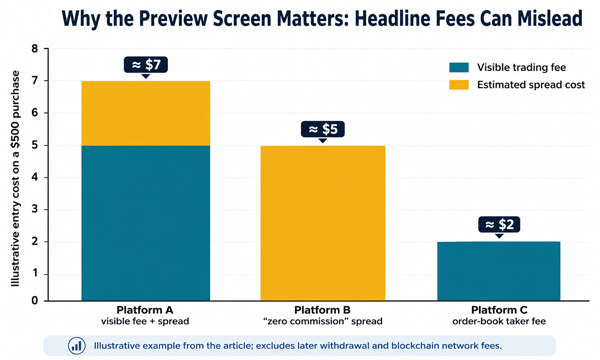
Figure 1. Illustrative all-in entry costs from the article’s $500 example; actual quotes change continuously.
6.3 Simple Buy vs. Advanced Trade
| Feature | Simple/instant buy | Advanced/order book | What beginners should do |
|---|---|---|---|
| Price | Platform gives a final quote, often including spread | You see bids/asks and place an order | Compare the all-in preview |
| Ease | Very easy | Requires basic order knowledge | Start small and learn limit orders |
| Fees | May be higher or less transparent | Usually maker/taker schedule | Check the current lowest-volume tier |
| Execution control | Limited | Market, limit and sometimes stop orders | Use limit orders when appropriate |
| Best for | First tiny purchase or convenience | Repeat purchases and price control | Graduate once comfortable |
7. How to Choose a Crypto Exchange: A Beginner Decision Framework
- Confirm U.S. and state availability. A platform may operate nationally while restricting particular assets, staking, transfers or payment methods in your state.
- Decide what you actually need. For a first bitcoin purchase, hundreds of altcoins, leverage, derivatives and yield products are distractions—not advantages.
- Price your exact transaction. Test the preview for your planned amount and funding method, then compare the crypto quantity received.
- Check withdrawal capability. Confirm that the exact asset can be sent on the correct network to an external wallet and note any hold period, minimum or fee.
- Review security controls. Require app-based or hardware-key multifactor authentication, withdrawal allowlisting where available, device management and login alerts.
- Read the legal and custody disclosures. Identify which entity holds crypto and dollars, whether assets are commingled, and what may happen in bankruptcy.
- Evaluate tax records. Look for CSV exports, transaction history, cost-basis data and support for transfers between wallets.
- Start with a small test. Make a small purchase and, if appropriate, a small withdrawal before committing a larger amount.
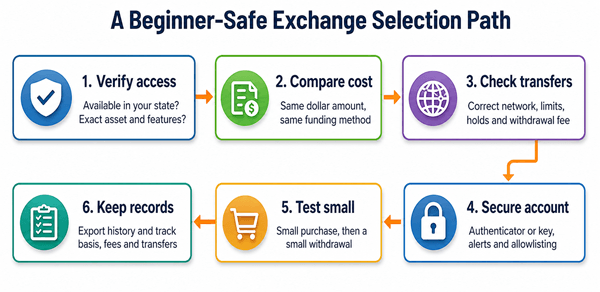
Figure 2. Use the same sequence for every platform so convenience does not override cost, transferability or security.
8. Security: How to Protect a New Exchange Account
Critical warningCrypto transactions are usually irreversible. A bank or card payment may sometimes be disputed, but a correctly confirmed blockchain transfer generally cannot be recalled by the exchange. The CFTC warns that virtual currencies are frequent targets for hackers and fraud, with no assurance of recovery after theft. [13]
- Use a unique password generated by a password manager. Never reuse your email password.
- Enable app-based two-factor authentication or a hardware security key. Avoid SMS when a stronger method is available.
- Protect the email account connected to the exchange with equally strong security.
- Turn on withdrawal allowlisting and time delays, where offered.
- Never share a one-time code, recovery phrase, private key or remote-screen access with “support.”
- Bookmark the official website and avoid login links in search ads, emails, texts or social media.
- Use a small test transfer and verify the network, address and destination tag or memo.
- Keep long-term holdings off an exchange only if you understand self-custody and can secure backups. Self-custody replaces platform risk with personal key-management risk.
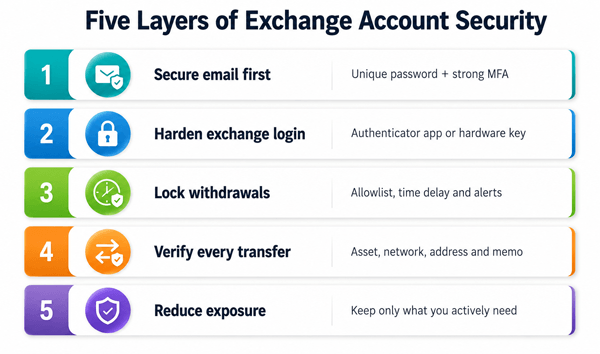
Figure 3. Account security works in layers; no single control eliminates phishing, platform or transfer risk.
9. Are Crypto Exchanges FDIC or SIPC Insured?
Crypto assets themselves are not FDIC-insured deposits. The FDIC explicitly lists crypto assets among products it does not insure and warns that failure of a non-bank crypto company is not covered merely because the company uses a partner bank. Some exchanges may place eligible U.S. dollar balances at insured banks under pass-through arrangements, but coverage depends on account structure, recordkeeping and other requirements. It does not insure the crypto or protect against a crypto platform’s failure. [14][15]
SIPC protection is also commonly misunderstood. FINRA explains that crypto assets that are not “securities” under the Securities Investor Protection Act are not protected by SIPC, even when a related brokerage firm is a SIPC member. Always distinguish the broker-dealer from its crypto affiliate and read which entity provides each service. [16]
10. U.S. Regulation and Consumer Protection
The U.S. crypto regulatory framework involves multiple federal and state authorities. The SEC oversees securities markets and applies federal securities laws when a crypto asset or activity falls within its jurisdiction. The CFTC regulates derivatives markets and has anti-fraud and anti-manipulation authority in relevant commodity markets. FinCEN administers federal anti-money-laundering requirements for money services businesses, while states commonly regulate money transmission and virtual currency activity. The practical result for beginners is that “regulated” is not a single yes-or-no label and does not create bank-like protection for every product.
What to verifyLook for the platform’s legal entity, state licensing page, customer agreement, custody terms, fee schedule, risk disclosure and complaint channels. Do not rely only on app-store ratings, celebrity endorsements or a “U.S.-based” claim.
11. Crypto Taxes for U.S. Beginners
The IRS treats digital assets as property for federal income tax purposes. Buying crypto with U.S. dollars and simply holding it generally does not create a taxable disposal, but selling crypto, exchanging one crypto asset for another, or spending crypto can produce a capital gain or loss. Receiving crypto for services, rewards or other income-producing activities can create ordinary income. The IRS requires taxpayers to answer the digital-asset question on applicable federal returns. [17][18]
11.1 Tax records to keep
- Date and time of each acquisition and disposal.
- Quantity and type of digital asset.
- Fair market value in U.S. dollars.
- Fees and qualifying transaction costs.
- Cost basis and holding period.
- Wallet addresses and transfer records showing that a movement was a non-taxable transfer rather than a sale.
- Forms and statements issued by exchanges, while recognizing that the taxpayer remains responsible for an accurate return.
Tax exampleYou buy 0.01 BTC for $600 plus a $6 transaction cost. Your starting basis is generally $606. You later sell it for $800 and pay $8 in selling costs. Your approximate amount realized is $792, producing a $186 gain before applying the relevant tax rules and holding period.
12. How to Buy Crypto Safely: Step-by-Step
- Define the purpose and maximum loss. Decide whether this is a small speculative allocation, a learning purchase or a long-term position. Do not use rent, emergency savings or high-interest borrowed money.
- Choose a platform using the decision framework above. Confirm state availability and the exact asset.
- Create the account from the official site or verified app-store listing. Secure the email account first.
- Complete identity verification. Legitimate U.S. platforms commonly request legal name, date of birth, address, tax identification information and identity documents.
- Link the lowest-cost suitable payment method. ACH is often cheaper than a debit card, though settlement or withdrawal holds may apply.
- Preview a small purchase. Record the market reference price, final quoted price, fee and crypto quantity.
- Use a limit order in the advanced interface when you understand it. A limit buy sets the maximum price you agree to pay; it may not execute.
- Review the confirmation and save records. Do not rush because prices are moving.
- For self-custody, test with a small withdrawal. Confirm the asset and network match the receiving wallet exactly.
- Reassess periodically. Remove unnecessary API keys, review connected devices and export transaction records.
13. Common Beginner Mistakes
| Mistake | Why it is costly | Better practice |
|---|---|---|
| Choosing by coin count | Encourages speculation in weak or illiquid tokens | Choose by safety, cost and withdrawal needs |
| Assuming zero commission means free | Spread can exceed a visible fee | Compare final execution price and quantity |
| Using debit cards for convenience | Card charges can make small purchases expensive | Compare ACH or wire options |
| Leaving 2FA on SMS only | SIM-swap attacks can bypass text codes | Use an authenticator app or security key |
| Sending on the wrong network | Funds may be permanently lost | Match asset, network, address and memo |
| Keeping no tax records | Transfers and swaps become difficult to reconstruct | Export records regularly |
| Chasing staking or yield | Yield can add platform, lockup, tax and token risk | Understand principal risk before rewards |
| Trading too frequently | Fees, spreads and taxes compound | Use a written plan and limit activity |
| Borrowing to buy crypto | Losses remain while debt and interest continue | Use only money you can afford to lose |
14. When a Crypto Exchange Is the Wrong Choice
- You want regulated market exposure without managing crypto wallets. A spot bitcoin or ether exchange-traded product in a brokerage account may be simpler, though it has management fees and does not give you transferable coins.
- You cannot tolerate a major loss. FINRA warns that crypto assets are often extremely volatile and the risk of losing the entire investment can be significant. [16]
- You need government-insured principal. Crypto is not an FDIC-insured savings product.
- You are buying because of urgency, guaranteed-return claims or private messages. These are common scam signals.
- You do not have an emergency fund or are carrying high-interest debt. Basic financial resilience normally deserves priority.
| Walk away when The final quote is unclear Withdrawals are unavailable for your asset “Support” contacts you first Returns are described as guaranteed |
Proceed only when You can verify the legal entity The full cost is shown before confirmation Strong MFA and withdrawal controls are available You have tested with a small amount |
15. Beginner Exchange Selection Checklist
- ☐ Available in my state
- ☐ Supports the exact asset I want
- ☐ Shows the final price and fee before confirmation
- ☐ Offers low-cost bank funding
- ☐ Allows external withdrawals for my asset
- ☐ Provides strong non-SMS 2FA
- ☐ Offers withdrawal allowlisting or lock features
- ☐ Publishes a current fee schedule
- ☐ Provides transaction exports and tax records
- ☐ Has clear custody and bankruptcy disclosures
- ☐ No pressure to use leverage, derivatives or yield products
- ☐ I completed a small test purchase and withdrawal
16. Frequently Asked Questions
16.1 What is the best crypto exchange for a complete beginner in the US?
Coinbase is often the most approachable all-around option, while Kraken can be better for a beginner who wants lower-cost order-book trading. Gemini suits users who prefer a focused security-first platform. The best choice depends on state availability and the all-in cost of your exact transaction.
16.2 Which U.S. crypto exchange has the lowest fees?
There is no universal winner. Advanced order-book interfaces are usually cheaper than instant-buy screens, but maker/taker tiers, spreads, payment methods and withdrawal costs change the result. Compare a live quote for the same dollar amount on the same day.
16.3 Is Coinbase safe for beginners?
Coinbase provides major security features and a long operating history, but no exchange is risk-free. Use strong 2FA, withdrawal controls and a unique password, and do not confuse crypto holdings with insured bank deposits.
16.4 Is Kraken better than Coinbase?
Kraken may be better for fee-conscious users who will learn Kraken Pro. Coinbase may be better for a first-time user who prioritizes a polished, guided interface. Both require careful review of the specific transaction mode.
16.5 Can I buy crypto without an exchange?
Yes. Some broker apps, payment apps, bitcoin ATMs and peer-to-peer services provide access, while decentralized exchanges enable wallet-to-wallet trading. Each alternative has different fees, fraud risks, asset choices and custody implications.
16.6 Do I need a crypto wallet?
Not for an initial purchase on a centralized exchange. A personal wallet becomes relevant if you want self-custody or on-chain use. Self-custody can reduce exchange exposure but makes you fully responsible for keys, backups and transaction accuracy.
16.7 Should beginners move crypto off an exchange?
Only after understanding wallet security. A small long-term holding may justify self-custody, but a lost recovery phrase or wrong-network transfer can be permanent. Start with a small test.
16.8 Are crypto exchanges insured?
Crypto is not FDIC insured. Eligible cash may sometimes receive pass-through deposit insurance through partner-bank structures, subject to conditions. SIPC generally does not protect crypto assets that are not SIPA securities.
16.9 Is buying crypto taxable?
Buying crypto with dollars and holding it generally is not a taxable disposal. Selling, swapping or spending it can create a gain or loss. Income received in crypto can also be taxable.
16.10 Can I buy crypto with a credit card?
Some platforms or issuers may permit it, but fees, cash-advance treatment, interest and fraud controls can make it costly. Using debt to buy a volatile asset is generally a poor beginner practice.
16.11 What is a maker fee and a taker fee?
A maker order adds liquidity to an order book, often by resting as a limit order. A taker order removes available liquidity, often by executing immediately. Exchanges commonly charge different rates for each.
16.12 What is a crypto spread?
The spread is the difference between buy and sell prices or between a reference price and your quoted execution price. It is a real cost even when no separate commission appears.
16.13 How much crypto should a beginner buy?
Only an amount that can fall sharply—or go to zero—without affecting essential goals. Many beginners should start with a very small educational purchase rather than a portfolio-sized commitment.
16.14 Can an exchange freeze my account?
Yes. Exchanges may restrict accounts for identity reviews, fraud concerns, legal orders, sanctions screening, payment reversals or security events. Keep records and avoid relying on an exchange as an emergency cash account.
16.15 What should I do if crypto “support” contacts me first?
Assume it may be a scam. Do not share codes, install remote-access software or send crypto. Contact the platform through the official app or bookmarked website.
16.16 Are stablecoins safer than bitcoin?
Stablecoins usually aim for price stability, but they add issuer, reserve, redemption, regulatory and platform risks. “Stable” does not mean guaranteed or FDIC insured.
16.17 Should beginners use staking?
Not until they understand lockups, reward variability, validator or platform risk, token-price risk and taxes. A higher advertised yield does not make the principal safer.
16.18 Are decentralized exchanges better?
They offer self-custody and broad on-chain access but expose beginners to smart-contract bugs, scam tokens, wallet-draining approvals, network fees and irreversible mistakes. They are usually not the best first step.
17. Final Verdict
For a typical U.S. beginner, Coinbase is the strongest all-around starting point, Kraken is the strongest learning-and-cost alternative, Gemini is a credible security-focused option, Robinhood Crypto is convenient for existing Robinhood customers, and Crypto.com is appealing for mobile-first users who value asset variety. The ranking changes when the user’s state, payment method, transaction size or withdrawal plan changes.
The most important beginner decision is not which logo to trust. It is whether you can verify the platform, understand the all-in cost, secure the account, withdraw safely and maintain tax records. Start small, avoid leverage, and treat every promised return as compensation for risk—not free money.
Reader Advice
This article is provided for educational and informational purposes only and does not constitute personalized financial, investment, tax, legal, or other professional advice or a recommendation to use any exchange or buy any crypto asset. Crypto assets and exchange services involve significant risks, including volatility, fraud, hacking, platform failure, account restrictions, irreversible transfers, and the possible loss of some or all funds. Fees, features, availability, laws, regulations, tax rules, policies, and statistics can change over time and may vary by state, country, and individual circumstances. Before making a decision, verify current information through official exchange disclosures and relevant government or regulatory sources, assess whether the risks are suitable for you, and seek qualified professional advice when appropriate.
Sources Consulted and Checked
These official platform and regulator sources were consulted and checked while preparing this article and reviewing its accuracy. Because fees, product access, policies, and rules can change, readers should verify the latest information directly from official sources before acting.
- [1] Coinbase Advanced Trade
- [2] Coinbase pricing and fee disclosures
- [3] Kraken overview of fees
- [4] Kraken trading fee explanation
- [5] Kraken July 2026 fee-tier changes
- [6] Gemini Exchange
- [7] Gemini ActiveTrader
- [8] Gemini trading fee schedules
- [9] Robinhood Crypto
- [10] Robinhood crypto order routing
- [11] Crypto.com U.S. platform
- [12] Crypto.com U.S. crypto app
- [13] CFTC: Understand the Risks of Virtual Currency Trading
- [14] FDIC: Financial products not insured
- [15] FDIC crypto insurance fact sheet
- [16] FINRA: Crypto Asset Risks
- [17] IRS: Digital Assets
- [18] IRS: Digital Asset Transaction FAQs
- [19] SEC Investor Alerts and Bulletins