How to Sell Cryptocurrency in the US: Complete Guide to Selling Crypto Safely
Quick answer
To sell cryptocurrency in the United States, choose a reputable platform available in your state, complete identity verification, deposit or transfer the crypto, select a market or limit sell order, review the quoted price and total fees, confirm the sale, and withdraw the U.S. dollars to a verified bank account. Keep records of the acquisition date, cost basis, sale proceeds, fees, and transaction IDs because selling, swapping, or spending crypto can create a reportable capital gain or loss.
Selling crypto is technically simple, but getting the best result requires more than pressing a “Sell” button. The method you choose affects your price, fees, withdrawal speed, fraud exposure, tax records, and legal protections. This guide explains the main ways to cash out cryptocurrency in the U.S., how to complete a sale safely, how taxes generally work, and how to avoid common mistakes.
1. Key Takeaways
- Selling crypto for U.S. dollars is generally a taxable disposition. Trading one cryptocurrency for another or using crypto to buy goods or services can also be taxable.
- Your real cost may include a trading fee, spread, slippage, blockchain network fee, withdrawal fee, and bank or payment-processing charge.
- A limit order can provide more price control than an instant sale, but it may not fill. A market order prioritizes execution, not a guaranteed price.
- Use a platform that serves your state, supports your asset and withdrawal method, clearly discloses costs, and has strong account-security controls.
- For 2025 transactions, U.S. brokers began reporting certain digital-asset proceeds on Form 1099-DA. You remain responsible for accurate reporting even when a form is missing or incomplete.
- Always verify wallet addresses and networks, test large transfers with a small amount, enable multi-factor authentication, and distrust anyone promising guaranteed returns or asking for your seed phrase.
2. What Does It Mean to Sell Cryptocurrency?
Selling cryptocurrency means disposing of a digital asset in exchange for something else. The most obvious example is converting Bitcoin, Ether, or another token into U.S. dollars. For U.S. tax purposes, however, a “sale” or disposition can be broader than a cash-out.
| Transaction | What you receive | Usually a taxable disposition? |
|---|---|---|
| Sell crypto for USD | U.S. dollars in your platform cash balance | Yes |
| Swap BTC for ETH | Another digital asset | Yes |
| Use crypto to buy a laptop | Goods or services | Yes |
| Transfer between wallets you own | The same asset remains yours | Generally no, although fees and records still matter |
| Donate crypto to a qualified charity | Charitable contribution | Special rules apply; obtain tax guidance |
| Gift crypto to another person | No sale proceeds | Gift and later basis rules may apply |
The IRS treats digital assets as property for federal income-tax purposes. When a capital asset is sold, the owner generally recognizes a capital gain or loss equal to the amount realized minus adjusted cost basis. [1][2]
3. At a Glance: The Selling Process
- Decide how much to sell and why you are selling.
- Choose a U.S.-available selling method and verify its costs and limits.
- Create and secure the account, then complete identity verification.
- Transfer the correct asset on the correct blockchain network, if necessary.
- Choose an instant sale, market order, or limit order.
- Review the price, spread, fees, and estimated net proceeds.
- Confirm the sale and wait for settlement or order execution.
- Withdraw dollars to a verified bank or eligible payment method.
- Download records and calculate the gain or loss for tax reporting.
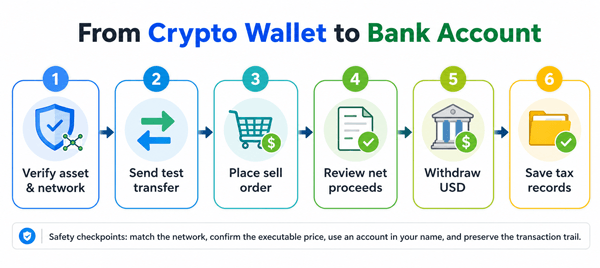
Figure 1. A safe cash-out sequence from self-custody or another platform to a U.S. bank account.
4. Ways to Sell Cryptocurrency in the US
The best method depends on transaction size, urgency, privacy expectations, supported assets, experience, and risk tolerance. No single option is best for everyone.
| Method | Best for | Main advantages | Main drawbacks |
|---|---|---|---|
| Centralized crypto exchange | Most retail sellers | High liquidity, bank withdrawals, order types, transaction history | Identity verification, custody risk, platform and withdrawal fees |
| Brokerage or payment app | Convenience and small balances | Simple interface; may connect to existing financial account | Wider spreads, fewer order controls, limited token or transfer support |
| Peer-to-peer marketplace | Users needing flexible payment methods | Can offer choice of payment methods and negotiated prices | Higher scam, chargeback, and counterparty risk; requires careful escrow use |
| Crypto ATM or kiosk | Small, urgent cash transactions where selling is supported | Physical cash access | Often high fees/spreads, low limits, limited locations and assets |
| Over-the-counter desk | Large transactions | Personalized execution, reduced market impact, settlement support | High minimums, due diligence, counterparty and eligibility requirements |
| Decentralized exchange plus off-ramp | Experienced self-custody users | Wallet control and access to on-chain markets | Smart-contract, network, slippage, bridge, and off-ramp risks |
| Direct private sale | Known, trusted counterparties | Flexible terms | Highest fraud, personal-safety, payment-finality, and documentation concerns |
4.1 Centralized cryptocurrency exchanges
A centralized exchange matches buyers and sellers and may hold crypto and cash on users’ behalf. This is usually the most practical route for a U.S. beginner because it combines liquidity, identity verification, order execution, records, and bank withdrawals. Confirm that the exchange serves your state and supports both the asset and your preferred cash-out method.
4.2 Brokerages and payment apps
Some investment apps and payment services let users sell supported crypto directly. They can be convenient, but “zero commission” does not necessarily mean zero cost. The quoted price may include a spread or markup, and external wallet transfers may be restricted.
4.3 Peer-to-peer sales
A P2P marketplace connects individual buyers and sellers. Use only a platform with escrow, verified counterparties, dispute procedures, and clear payment rules. Never release crypto because a buyer sends a screenshot; confirm that funds are final and actually available in your account.
4.4 Over-the-counter trading desks
OTC desks are designed for larger trades and can help reduce slippage or visible market impact. Sellers should investigate the desk’s legal entity, licensing or registration status where applicable, settlement process, minimum trade size, pricing method, custody arrangements, and counterparty protections.
4.5 Decentralized exchanges and on-chain off-ramps
A decentralized exchange typically swaps one token for another through a smart contract; it usually does not send dollars directly to a bank. The user may need to swap into a supported asset, transfer it to a compliant off-ramp, sell for USD, and then withdraw. Each step can add fees, taxable events, and operational risk.
5. How to Sell Cryptocurrency in the US: Step by Step
5.1 Step 1: Define the goal and amount
Decide whether you are selling the entire position, taking partial profits, covering an expense, reducing portfolio risk, rebalancing, or realizing a tax loss. A clear goal helps prevent emotional decisions during volatile price movements.
Expert tip
For a large position, consider dividing the sale into smaller tranches rather than relying on one all-or-nothing transaction. This can reduce timing risk, but more transactions may mean more fees and tax lots.
5.2 Step 2: Choose and evaluate a platform
- Availability: Does it legally serve residents of your state?
- Asset and network support: Does it support the exact coin, token, and blockchain network you plan to send?
- Liquidity: Is there enough trading volume and order-book depth for your transaction size?
- Total pricing: What are the trading fee, spread, withdrawal fee, and minimums?
- Cash withdrawal: Does it support ACH, wire, instant transfer, debit card, or another method you can use?
- Security: Does it provide app-based or hardware-key multi-factor authentication, address allowlisting, withdrawal locks, and login alerts?
- Reputation and disclosures: Are the legal entity, terms, risk disclosures, custody arrangements, and customer-support channels clear?
- Tax records: Can you export transaction history and receive applicable tax forms?
Protection reminder
Crypto assets themselves are not FDIC-insured deposits. FDIC insurance does not cover crypto assets or protect against a crypto company’s failure. Any cash balance coverage depends on the specific arrangement and should be verified directly. [6]
5.3 Step 3: Open and secure the account
Most U.S.-facing platforms require know-your-customer verification. You may need to provide your legal name, address, date of birth, Social Security number or taxpayer identification information, government-issued ID, and a selfie or liveness check. Use a unique password and secure the email account linked to the platform.
- Enable phishing-resistant multi-factor authentication where available; a hardware security key is stronger than SMS.
- Save backup codes offline in a secure location.
- Turn on withdrawal address allowlisting and anti-phishing codes if offered.
- Do not share passwords, one-time codes, private keys, or seed phrases with support agents or anyone else.
5.4 Step 4: Deposit or transfer the crypto
If the crypto is already on the selling platform, you can skip this step. If it is in a self-custody wallet or another exchange, generate a deposit address for the exact asset and network.
1. Confirm the destination supports the token and network. For example, the same stablecoin may exist on several networks.
2. Check whether a memo, tag, or destination note is required.
3. Copy the address carefully and verify the first and last characters on both devices.
4. Send a small test transaction before moving a large amount.
5. Wait for the platform’s required blockchain confirmations before trying to sell.
Warning
Sending an asset to an unsupported address or using the wrong blockchain network can lead to permanent loss or a difficult, expensive recovery process. Blockchain transfers are generally irreversible.
5.5 Step 5: Choose the order type
| Order or quote type | How it works | When it may fit | Key risk |
|---|---|---|---|
| Instant sell / convert | Platform gives a time-limited quote | Beginners and small, urgent sales | Spread may be wider and less transparent |
| Market order | Sells against the best available bids | When execution is more important than exact price | Final price may be worse than expected in a thin or fast market |
| Limit order | You set the minimum acceptable price | When price control matters | Order may fill partially or not at all |
| Stop or stop-limit order | Triggers after a specified price level | Risk management on platforms that offer it | Fast moves and gaps can produce unexpected execution or no fill |
Market order example: You sell 0.25 BTC when the displayed midpoint is $60,000. A perfectly priced sale would produce $15,000 before costs. If liquidity is thin and the average fill is $59,850, gross proceeds become $14,962.50. A 0.40% trading fee would reduce that by another $59.85, leaving $14,902.65 before withdrawal charges and taxes.
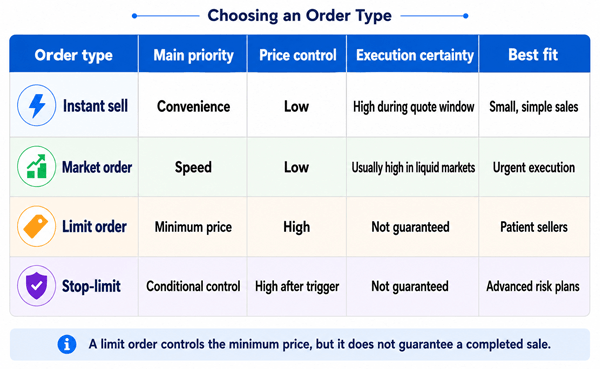
Figure 2. Order types trade off convenience, speed, price control, and certainty of execution.
5.6 Step 6: Review the complete quote
Before confirming, compare the expected net proceeds—not just the advertised fee. Review the execution price, quantity sold, trading fee, spread, estimated slippage, blockchain fee, withdrawal fee, and any payment-processing charge.
| Cost component | What it means | How to reduce it |
|---|---|---|
| Trading fee | Commission charged for executing the trade | Use the appropriate interface and order type; review volume-based tiers |
| Spread | Difference between buy and sell prices or between reference and quoted price | Compare the quote with a reliable market price; avoid illiquid assets |
| Slippage | Difference between expected and actual average execution price | Use liquid markets, smaller orders, or limit orders |
| Network fee | Blockchain fee for moving crypto to the platform | Transfer during lower congestion when practical; choose supported efficient networks carefully |
| Crypto withdrawal fee | Fee to withdraw crypto rather than cash | Not usually relevant after cashing out, but compare before moving assets |
| USD withdrawal fee | ACH, wire, card, or instant-transfer charge | Use standard ACH when time allows; check minimums and limits |
| Conversion route cost | Extra trades when direct USD pair is unavailable | Prefer a direct, liquid USD market where suitable |
| Tax cost | Federal and possibly state tax on net gains | Track basis, fees, holding period, and losses; plan with a tax professional |
5.7 Step 7: Confirm and monitor the sale
Review the confirmation screen, then save the order number or trade ID. For a limit order, monitor whether it remains open, partially fills, or expires. Cancel stale orders you no longer want. Do not assume a displayed order is complete until the transaction history shows the executed quantity and price.
5.8 Step 8: Withdraw USD to your bank
After the trade settles, select an eligible withdrawal method. ACH transfers are often lower cost but may take several business days. Wires can be faster for larger amounts but commonly cost more. Instant transfers may carry a percentage fee or lower limit.
- Withdraw only to an account in your own name unless the platform clearly permits otherwise.
- Check daily, weekly, and rolling withdrawal limits before selling.
- For a large cash-out, contact your bank in advance if appropriate and keep documentation showing the source of funds.
- Be prepared for compliance reviews requesting transaction history or proof of source of funds.
5.9 Step 9: Save records for taxes and future audits
- Date and time acquired and disposed of
- Quantity and type of digital asset
- Fair market value in U.S. dollars at acquisition and sale
- Cost basis, including eligible acquisition costs
- Sale proceeds and transaction fees
- Holding period and tax-lot method used
- Wallet addresses, transaction hashes, trade confirmations, and bank statements
- Forms 1099-DA or other tax documents received
6. How Much Does It Cost to Sell Cryptocurrency?
There is no universal selling fee. A low advertised commission can be offset by a poor exchange rate or expensive withdrawal. The useful measure is total execution cost.
Net cash received = gross sale proceeds − trading fee − spread/slippage cost − transfer or withdrawal charges
Taxable gain or loss (simplified) = amount realized − adjusted cost basis
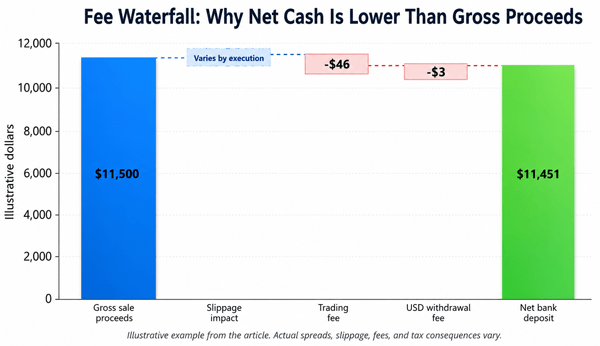
Figure 3. Illustrative fee waterfall based on the article example; actual costs vary by platform, market, network, and withdrawal method.
Example
Suppose you bought crypto for $8,000 and later sell it for $11,500. The platform charges $46 to trade and $3 to withdraw. If the $46 selling fee reduces the amount realized, the simplified amount realized is $11,454. Your gain before considering other basis adjustments is $3,454. Your bank receives $11,451 after the separate withdrawal fee. Tax treatment can depend on the facts, so preserve the fee records.
6.1 Hidden Costs That Beginners Often Miss
- A wide spread embedded in an instant-conversion quote
- Poor execution caused by low liquidity
- Network fees paid merely to move the crypto to the selling venue
- Multiple conversion steps, each creating fees and potentially taxable dispositions
- Fees paid in crypto, which can themselves involve a disposition
- Bank wire, card, or instant-transfer charges
- Tax software, accounting, or professional-preparation costs
- Opportunity cost from withdrawal holds or delayed settlement
7. US Taxes When You Sell Cryptocurrency
Federal tax consequences depend on how you acquired the asset, how you used it, your holding period, and whether the activity is personal investment, business, mining, staking, compensation, or another category. The following is a general framework for an individual holding crypto as a capital asset.
7.1 Capital gain or loss
A gain occurs when the amount realized exceeds adjusted cost basis. A loss occurs when basis exceeds the amount realized. Cost basis generally starts with what you paid for the asset in U.S. dollars, including certain acquisition costs. The amount realized generally reflects what you received, adjusted for relevant selling costs. [2]
7.2 Short-term versus long-term
| Holding period | General federal treatment | Practical implication |
|---|---|---|
| One year or less | Short-term capital gain; generally taxed at ordinary income-tax rates | Selling shortly before the one-year point may produce a higher rate than a long-term sale |
| More than one year | Long-term capital-gain rates generally apply | Potentially lower federal rate, depending on taxable income and filing status |
State income taxes may also apply. Some states tax capital gains as ordinary income, while rules differ in states without a broad individual income tax. Residency, source, and local rules can matter, especially after a move.
7.3 Capital losses
Capital losses generally offset capital gains. If total capital losses exceed capital gains, an individual may generally deduct up to $3,000 of net capital loss against other income per year ($1,500 if married filing separately), with remaining losses carried forward, subject to tax rules and limitations.
7.4 Crypto-to-crypto trades and purchases
Exchanging one digital asset for another is generally a reportable disposition. Using crypto to pay for goods or services can also create a gain or loss based on the asset’s fair market value at the time of payment. The absence of a cash withdrawal does not eliminate the tax event. [7]
7.5 Form 1099-DA and broker reporting
U.S. broker reporting on Form 1099-DA began for certain digital-asset dispositions occurring on or after January 1, 2025. For 2025 transactions, brokers generally report gross proceeds. Basis reporting applies to certain covered transactions occurring on or after January 1, 2026, generally when the asset was acquired from and held with the same broker on or after that date. A taxpayer may receive a form without basis and must calculate it from personal records. Whether or not a form is received, taxable digital-asset income, gains, and losses must still be reported. [3][4][5]
Recordkeeping warning
Transfers between your own wallets may cause a broker to lack original acquisition information. Do not treat a blank basis field as proof that basis is zero; reconstruct and document the correct basis from purchase records and transfer history.
7.6 Tax-lot identification
When you own multiple units acquired at different times or prices, the units sold determine the gain, loss, and holding period. Follow current IRS requirements for adequate identification and keep contemporaneous records. Do not change methods after the fact merely to obtain a preferred result without confirming that the method is permitted and documented.
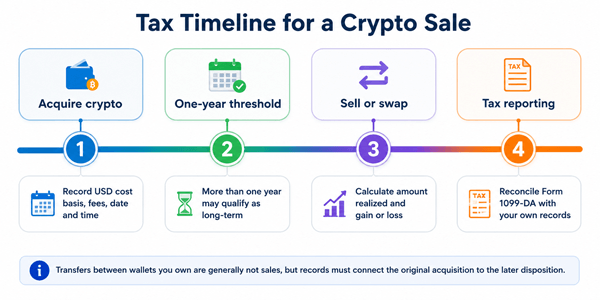
Figure 4. The holding period and record trail affect tax calculation and reporting.
7.7 Common tax forms
| Form or schedule | Typical purpose |
|---|---|
| Form 1099-DA | Broker reports digital-asset proceeds and, for certain transactions, basis information |
| Form 8949 | Reports sales and other dispositions of capital assets, with transaction-level details or permitted summaries |
| Schedule D (Form 1040) | Summarizes capital gains and losses |
| Schedule 1, Schedule C, or other forms | May apply to rewards, compensation, mining, business activity, or other income depending on facts |
8. Risks of Selling Cryptocurrency
| Risk | What can go wrong | Risk reduction |
|---|---|---|
| Price volatility | Price changes sharply before or during execution | Set a plan; use liquid markets and suitable order types |
| Slippage and liquidity | Large order consumes available bids at progressively lower prices | Check order-book depth; split or use an OTC desk |
| Platform insolvency or freeze | Withdrawals may be delayed or assets inaccessible | Minimize unnecessary platform balances; review custody and financial disclosures |
| Account takeover | Attacker sells or withdraws assets | Use unique credentials, hardware-key MFA, allowlists, and secure email |
| Wrong network or address | Transfer becomes unrecoverable | Verify network, memo, and address; send a test amount |
| P2P fraud or chargeback | Buyer reverses payment or provides fake proof | Use escrow and final payment methods; never bypass platform rules |
| Tax underreporting | Missing basis or trades leads to errors, tax, penalties, or interest | Export records regularly and reconcile wallets and accounts |
| Bank or compliance hold | Large or unusual transfer is delayed for review | Use accounts in your name and keep source-of-funds documentation |
| Smart-contract or bridge failure | On-chain funds are exploited or stuck | Avoid unnecessary complexity; assess contracts and bridge exposure |
| Scams and impersonation | Fake support or recovery service steals credentials | Use official channels; never disclose seed phrases or remote access |
FINRA warns that crypto assets can be exceptionally risky and volatile and that service providers can introduce additional risks. Crypto markets may also offer fewer protections than traditional securities markets, depending on the asset and service. [8][9]
9. Best Practices for a Safer, Lower-Cost Sale
- Calculate the minimum acceptable net proceeds before placing the order.
- Compare the actual quote with a reputable reference price, not only the listed commission.
- Use limit orders when price control is more important than immediate execution.
- Sell through a liquid USD pair when available rather than making unnecessary intermediate swaps.
- Test deposits and withdrawals before moving a life-changing amount.
- Complete security upgrades and bank linking before the day you urgently need to sell.
- Avoid logging in through links in emails, texts, search advertisements, or social-media messages.
- Download monthly transaction records instead of relying on permanent platform access.
- Estimate federal and state taxes and set aside cash rather than reinvesting every dollar.
- For complex histories, DeFi activity, inherited crypto, gifts, mining, business use, or large gains, consult a crypto-aware CPA or enrolled agent.
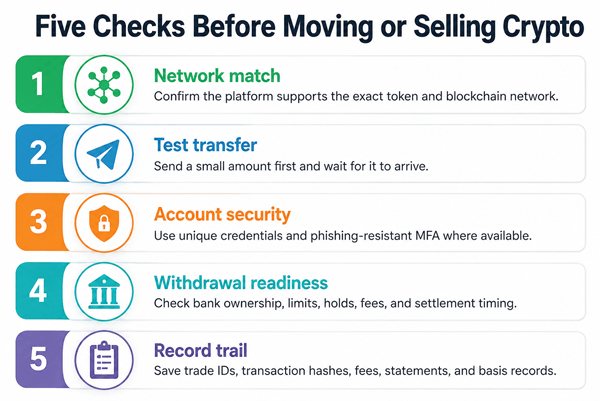
Figure 5. A practical pre-sale security and documentation checklist.
10. Which Selling Method Should You Choose?
| Your situation | Likely starting point | Why |
|---|---|---|
| Beginner selling a common coin for USD | Established U.S.-available centralized exchange | Straightforward execution, bank withdrawal, and records |
| Small balance already inside a payment app | Sell within the app after comparing quote | Convenient, though spread may be higher |
| Large position that could move the market | Reputable OTC desk or carefully staged limit orders | May reduce slippage and market impact |
| Token not supported by a cash-out platform | Carefully plan a supported conversion and off-ramp | May require on-chain swap and additional tax records |
| Need physical cash immediately | ATM only after checking total cost and limits | Convenient but often expensive |
| Unknown buyer offers unusually high price | Do not proceed outside protected escrow | Premium may signal fraud, stolen funds, or chargeback risk |
11. Common Mistakes to Avoid
Assuming “no commission” means the sale is free.
Using a market order in an illiquid token without checking order-book depth.
Sending crypto on the wrong network or omitting a memo or tag.
Selling before checking bank withdrawal limits or holds.
Keeping the entire portfolio on an exchange simply because selling may happen later.
Releasing P2P escrow based on a screenshot or pending payment.
Ignoring crypto-to-crypto trades when preparing taxes.
Treating a missing or incomplete tax form as permission not to report.
Failing to preserve cost-basis records after moving assets between wallets.
Letting fear or hype replace a written selling plan.
12. Frequently Asked Questions
12.1 Can I sell cryptocurrency for cash in the US?
Yes. Common methods include selling on a centralized exchange or brokerage app and withdrawing USD to a bank, using a P2P marketplace with escrow, using a supported crypto ATM, or working with an OTC desk for a large transaction.
12.2 Is it legal to sell cryptocurrency in the United States?
Generally, individuals may sell lawful digital assets, but platform availability, asset treatment, sanctions, money-transmission rules, securities and commodities laws, and state requirements can affect how services operate. Use a provider that lawfully serves your state and follow tax and compliance requirements.
12.3 Do I pay taxes when I sell crypto?
A sale generally creates a capital gain or loss when the crypto is held as a capital asset. The gain or loss depends on amount realized, cost basis, fees, and holding period. Federal and possibly state taxes may apply.
12.4 Do I owe tax if I sell crypto but leave the dollars on the exchange?
Generally yes. The taxable disposition occurs when the crypto is sold, not when the cash is later withdrawn to a bank.
12.5 Is swapping one cryptocurrency for another taxable?
Generally yes. A crypto-to-crypto exchange is usually a disposition of the asset given up, even though no dollars are received.
12.6 Is transferring crypto between my own wallets taxable?
A transfer in which ownership does not change is generally not a sale, but network fees and records need careful treatment. Preserve evidence that both wallets belong to you.
12.7 What is the cheapest way to sell crypto?
For many users, a liquid exchange with a transparent fee schedule, a direct USD pair, an appropriate limit order, and a low-cost ACH withdrawal can be economical. The cheapest method depends on spread, liquidity, trade size, network fee, and withdrawal method.
12.8 Why is the amount I receive lower than the displayed crypto price?
The displayed price may be a last trade or midpoint rather than your executable bid. Trading fees, spread, slippage, and withdrawal charges can reduce net proceeds.
12.9 Should I use a market order or limit order?
Use a market order when fast execution matters most and the market is liquid. Use a limit order when you need a minimum price and can accept that the order may not fill.
12.10 How long does it take to sell crypto and receive money?
The trade itself can execute in seconds, but crypto deposits require blockchain confirmations and bank withdrawals can take from minutes to several business days depending on method, holds, and compliance review.
12.11 Can a bank reject money from a crypto sale?
A bank may delay, review, or reject a transfer under its policies or compliance obligations. Use an account in your name, sell through a reputable provider, and retain evidence of the source of funds.
12.12 What is Form 1099-DA?
It is an IRS information return used by brokers to report proceeds from certain digital-asset dispositions and, in some cases, basis. Reporting began for covered transactions occurring in 2025. You must still report correctly even if no form arrives.
12.13 Can I deduct crypto losses?
Capital losses generally offset capital gains. Subject to tax rules, an individual may use up to $3,000 of net capital losses against other income annually and carry excess losses forward.
12.14 Are stablecoin sales taxable?
A disposition of a stablecoin can be reportable even when the gain or loss is small. Fees or price deviations may create a gain or loss, and broker reporting rules can apply.
12.15 Are crypto exchange balances FDIC insured?
Crypto assets are not FDIC-insured. Cash may or may not be eligible for pass-through coverage depending on how a provider structures and documents the relationship. Verify the specific arrangement rather than assuming coverage.
12.16 What should I do before selling a large amount?
Check liquidity, withdrawal limits, account verification, bank readiness, tax impact, custody risk, and source-of-funds documentation. Consider staged sales or a reputable OTC desk and obtain professional tax advice.
12.17 Can I sell anonymously?
Most regulated U.S.-facing cash-out services require identity verification. Attempts to bypass lawful controls can increase fraud, account-freeze, and legal risk. Privacy is not the same as anonymity from tax or compliance obligations.
12.18 What happens if I send crypto to the wrong address?
Blockchain transfers are generally irreversible. Contact the receiving platform immediately, but recovery may be impossible. Always verify the network and address and use a test transfer.
12.19 How do I prove my cost basis?
Keep exchange statements, trade confirmations, wallet records, bank statements, transaction hashes, and documentation of fees. Reconcile transfers so the acquisition history follows assets moved between accounts.
12.20 When should I seek professional help?
Seek help for large gains, missing basis, many wallets, DeFi transactions, mining or staking, gifts, inheritance, business activity, foreign platforms, state residency changes, or an IRS notice.
13. Final Checklist Before You Sell
| Check | Done |
|---|---|
| The platform serves my state and supports the exact asset/network | ☐ |
| I compared net proceeds, not only the headline fee | ☐ |
| My account and email use strong, unique security | ☐ |
| I verified the deposit address, network, and memo/tag | ☐ |
| I selected the right order type for my priorities | ☐ |
| I checked withdrawal method, limits, fees, and timing | ☐ |
| I understand the expected federal and state tax impact | ☐ |
| I saved basis, sale, fee, transaction, and bank records | ☐ |
14. Conclusion
Selling cryptocurrency in the U.S. is safest when treated as a financial process rather than a one-click conversion. Choose a lawful and reputable route, secure the account before transferring funds, verify every network detail, compare total costs, control execution with the right order type, and preserve complete tax records. For a large or complex sale, the cost of professional advice can be small compared with the consequences of a pricing mistake, lost transfer, frozen withdrawal, or incorrect tax return.
14.1 Reader Advice
This article is provided for educational and informational purposes only and is not personalized financial, investment, legal, or tax advice or a recommendation to buy, sell, or hold any cryptocurrency. Cryptocurrency prices are volatile, and selling, transferring, or using digital assets can involve market, liquidity, custody, fraud, technology, tax, and loss risks. Platform rules, fees, availability, laws, regulations, policies, and statistics can change over time and vary by state, country, and individual circumstances. Before acting, verify current information with the relevant platform and official government or regulatory sources, review your own financial and tax situation, and seek advice from a qualified professional when appropriate.
14.2 Sources Consulted and Checked
The following official sources were consulted and checked while preparing this article and reviewing its accuracy:
- [1] IRS — Digital assets
- [2] IRS — Frequently asked questions on digital asset transactions
- [3] IRS — About Form 1099-DA
- [4] IRS — Understanding your Form 1099-DA
- [5] IRS — Frequently asked questions about broker reporting
- [6] FDIC — Financial products that are not insured by the FDIC
- [7] IRS — Taxpayers need to report crypto and other digital asset transactions
- [8] FINRA — Crypto assets: risks
- [9] FINRA — Crypto assets