Crypto Debit Cards in the US: Complete Guide to Payments, Fees & Risks
Quick answer: A crypto debit card usually lets you spend from a crypto-platform account wherever its card network is accepted. In most cases, the provider converts your selected asset to US dollars before settlement, so the merchant receives dollars—not Bitcoin or another token. Spending appreciated crypto can create a reportable capital gain, and the advertised rewards may be outweighed by spreads, subscription costs, staking requirements, ATM fees or tax-recordkeeping work.
Crypto cards can make digital assets feel as easy to spend as money in a checking account. That convenience is real, but it can hide several moving parts: asset conversion, card-network authorization, custody, tax lots, rewards rules and multiple layers of consumer protection. This guide explains those parts in plain English so US consumers can decide whether a crypto card is genuinely useful or simply adds cost and complexity.
1. What Is a Crypto Debit Card?
A crypto debit card is a payment card linked to a platform that holds crypto, cash, stablecoins or a combination of these assets. At checkout, the card works through a traditional network such as Visa or Mastercard. Depending on the product and your selected funding source, the provider may spend a US-dollar balance, draw from a prepaid balance, or sell/convert crypto into dollars to cover the purchase.
The label “crypto debit card” is used loosely. A product may legally and operationally be a prepaid card, a bank-issued debit card, or a credit card that only pays rewards in crypto. Those differences affect fees, credit impact, dispute rights, taxes and insolvency risk.
| Card type | How purchases are funded | Typical tax effect | Debt or credit check? |
|---|---|---|---|
| Crypto-linked debit/prepaid card | Cash balance, stablecoin or crypto converted to USD | Selling or converting crypto may create gain/loss | Usually no revolving debt; often no credit check |
| Traditional debit card with crypto features | Bank or app cash balance; crypto may be bought separately | Ordinary card purchase usually not a crypto disposal | No revolving debt |
| Crypto rewards credit card | Issuer lends for purchases; rewards are delivered in crypto | Purchase is not a crypto sale; later sale of rewards may be taxable | Yes—APR, credit limit and credit reporting apply |
| Direct on-chain crypto payment | You transfer tokens to a merchant wallet or processor | Usually a taxable disposal of the crypto used | No card debt, but network and wallet risks apply |
1.1 Crypto card vs. paying a merchant directly in crypto
With a card, the merchant normally sees an ordinary card transaction and receives fiat settlement. With a direct crypto payment, tokens move on a blockchain to the merchant or its payment processor. Direct payments can avoid card rails, but they may be irreversible, require network fees and provide fewer familiar dispute mechanisms. The FTC warns that cryptocurrency payments typically are not reversible and generally lack the same legal protections as credit and debit card transactions. [6]
2. How Crypto Debit Card Payments Work
- You select a funding source. This may be USD, USDC or another stablecoin, Bitcoin, Ether or a prioritized list of assets.
- The merchant sends an authorization request through Visa, Mastercard or another network.
- The issuer or program manager checks your available balance, spending limits and fraud controls.
- If crypto is the funding source, the platform converts enough crypto into dollars. The exchange rate may include a spread even when the card advertises “no transaction fee.”
- The transaction is authorized and the merchant is paid through normal card settlement.
- The platform records the conversion and purchase. You remain responsible for maintaining tax records when the conversion is a taxable disposal.
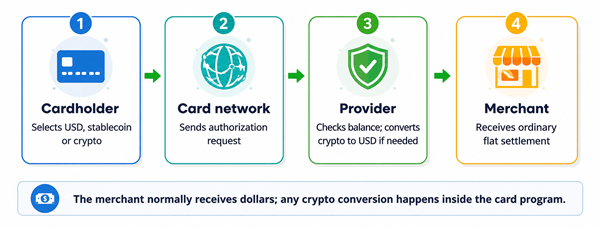
Figure 1. Typical crypto-card payment flow. The merchant usually receives fiat currency, not crypto.
Important: “The merchant accepts Visa” does not mean the merchant accepts cryptocurrency. In a typical crypto card transaction, the card provider—not the merchant—handles conversion.
2.1 Authorization, clearing and final settlement
The amount initially authorized can differ from the final amount. Restaurants, hotels, car-rental companies, gas stations and other merchants may place a temporary hold. If your crypto price moves or your available balance is tight, the hold can cause declines or temporarily lock more value than the final bill. Refunds can also take time and may return as dollars rather than restoring the exact amount of crypto originally sold.
2.2 Can a crypto card spend stablecoins?
Many platforms allow a stablecoin balance to serve as the spending source, but the exact mechanics vary. A stablecoin is designed to track a reference asset such as the US dollar, but it is not automatically the same thing as an insured bank deposit. The coin can depeg, the issuer can face reserve or operational problems, and the platform holding it can fail. Even when a stablecoin is converted near $1, records are still important because fees or small price differences may create a gain or loss.
3. Main Benefits
| Potential benefit | Why it may matter | What to verify |
|---|---|---|
| Convenient spending | Use a familiar card instead of arranging a separate sale and bank transfer | Whether purchases draw from cash, stablecoin or volatile crypto |
| Broad merchant acceptance | Card-network acceptance can be far wider than direct crypto acceptance | Excluded merchant categories, countries and transaction types |
| Crypto rewards | Earn Bitcoin, stablecoins or other assets on eligible purchases | Variable rate, caps, exclusions, token value and subscription/staking costs |
| Fast conversion | The provider handles crypto-to-dollar conversion at checkout | Spread, rate source, slippage and timing |
| Budget control | Debit/prepaid structure can avoid revolving card debt | Overdraft behavior, reload rules, holds and daily limits |
| Digital wallet access | Virtual card numbers may support immediate mobile-wallet use | Device security, account recovery and freeze controls |
3.1 When a crypto card can be genuinely useful
- You already hold a modest amount of crypto on the same platform and want occasional liquidity without a separate withdrawal workflow.
- You prefer crypto-denominated rewards and can pay any credit-card balance in full each month.
- The card lets you spend a dollar or stablecoin balance without conversion costs, while still earning useful rewards.
- You travel and have confirmed that foreign-transaction, exchange-rate and ATM terms are competitive.
4. Fees and Hidden Costs
A “no annual fee” or “zero spending fee” claim does not prove that the card is free. The largest cost may be embedded in conversion pricing or in requirements needed to unlock the advertised reward rate.
| Cost | How it appears | Why it is easy to miss |
|---|---|---|
| Crypto conversion spread | Difference between market price and the platform’s execution price | Often not labeled as a card transaction fee |
| Trading or liquidation fee | Fee charged when crypto is sold to fund a purchase | May sit in the exchange fee schedule, not the card page |
| Subscription fee | Monthly or annual plan required for enhanced rewards | Rewards headline may assume paid membership |
| Token lockup or staking opportunity cost | Assets must be held or locked to qualify for a tier | The token can fall in value or become unavailable during the lock |
| ATM operator fee | Charge imposed by the ATM owner | Card provider can truthfully charge $0 while the ATM still charges |
| Foreign transaction or FX fee | Percentage applied to non-USD purchases/withdrawals | May vary by tier or monthly allowance |
| Inactivity fee | Monthly charge after a period without card activity | Common in some prepaid-card programs |
| Replacement/expedited shipping | Charge for replacing or rushing a card | May apply after a free first replacement |
| Tax-preparation cost | Software or professional help to reconcile many disposals | Not charged by the card, but created by how it is used |
| Credit-card interest | APR on unpaid balances for crypto rewards credit cards | Can erase years of rewards quickly |
4.1 A simple break-even test
Net annual value = rewards received − membership fees − conversion costs − ATM/FX fees − tax-compliance costs − interest.
Example: Suppose you spend $12,000 a year and earn 2% in crypto rewards ($240). A $10 monthly subscription costs $120. If conversion spreads and miscellaneous fees total $90, the net value is only $30 before taxes and before considering volatility. If you carry a credit-card balance even briefly, interest can turn the result negative.
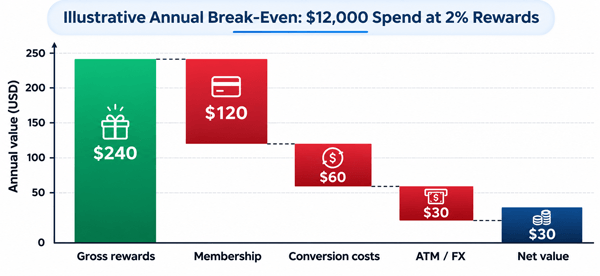
Figure 2. Illustrative break-even analysis. Even modest fees can reduce a headline reward to a small net benefit.
5. US Tax Rules for Crypto Card Spending
Core federal rule: The IRS treats digital assets as property, not currency, for federal income-tax purposes. Using appreciated crypto to buy goods or services generally creates a taxable disposal. [1][2]
When the platform sells or converts crypto to fund a card purchase, calculate:
- Amount realized: generally the US-dollar value of what you purchased, adjusted for applicable transaction costs.
- Cost basis: what you paid for the crypto, including qualifying acquisition fees.
- Capital gain or loss: amount realized minus adjusted basis.
- Holding period: generally short-term if held one year or less; long-term if held more than one year.
5.1 Tax example: buying groceries with Bitcoin
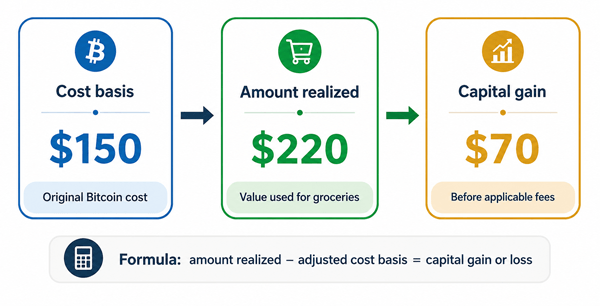
Figure 3. Simplified federal tax illustration. Actual results depend on fees, lot selection and individual circumstances.
You bought Bitcoin for $150. It is worth $220 when your card provider sells it to cover a $220 grocery purchase. Ignoring fees, you have a $70 capital gain. The groceries are not deductible merely because crypto funded the purchase. If the Bitcoin had fallen to $120, you would generally have a $30 capital loss, subject to the normal rules and limitations for capital losses.
5.2 What if the card spends US dollars?
If the purchase draws from a true USD cash balance and no crypto is sold, the purchase itself normally does not create a crypto gain or loss. However, selling crypto earlier to build that USD balance remains a taxable transaction. Moving dollars between accounts is not the same as avoiding the tax event—it may simply occur at a different time.
5.3 What if the card spends a dollar-pegged stablecoin?
A stablecoin transaction can still be a disposal of property for federal tax purposes. If basis and value are both exactly $1 per token, the gain or loss may be zero. Spreads, fees or a depeg can produce a nonzero result. Coinbase notes that USDC spending should not result in a taxable gain or loss when USDC trades at par with USD, while still advising users to evaluate their own tax situation. [11]
5.4 Are crypto card rewards taxable?
The answer depends on the program and facts. Purchase-based card rewards are often treated in practice as rebates or purchase-price adjustments rather than immediate taxable income, but crypto-specific programs can include bonuses, referrals, staking yield, promotional awards or other payments that may be income. The provider’s tax form does not determine the full tax result. Keep the date, quantity and fair market value of each reward because that value generally becomes basis when you later sell or spend the reward.
Recordkeeping tip: Export transaction history regularly. Preserve timestamps, asset quantities, USD values, fees, reward records and the tax-lot method used. A card that creates hundreds of small crypto disposals can be disproportionately difficult to reconcile.
5.5 Information reporting is evolving
Digital-asset information reporting is now being phased in. For transactions on or after January 1, 2025, certain brokers report gross proceeds on Form 1099-DA. The IRS stated in January 2026 that many 2025 forms would not include cost basis, so taxpayers may still need to calculate basis and gain or loss themselves. Do not assume that receiving no form means nothing is reportable, or that a form contains every figure needed for an accurate return. Verify current IRS instructions and consult a qualified tax professional for complex activity.
6. Consumer Protection, FDIC Insurance and Regulation
6.1 Card protections may apply to the card transaction
Registered prepaid accounts and debit-card transactions may receive federal error-resolution and unauthorized-transfer protections under Regulation E, depending on the product and facts. The CFPB explains that registered prepaid-card users generally have protections for errors or unauthorized transactions and may receive provisional credit when an investigation takes longer than 10 business days. [3][4] Read the cardholder agreement and report loss or unauthorized activity immediately.
6.2 Those protections do not automatically cover the crypto itself
A successful card dispute is different from recovering crypto stolen from an exchange account or sent on-chain. The legal framework can differ based on whether the loss occurred through a card transaction, an electronic funds transfer, an account takeover, a blockchain transfer or a platform insolvency.
6.3 FDIC insurance: cash deposits are not the same as crypto assets
The FDIC does not insure crypto assets and does not protect customers against the failure of a nonbank crypto company. Some program cash may be placed at an FDIC-insured partner bank and may qualify for pass-through deposit insurance if legal and recordkeeping requirements are satisfied. Coverage is against the failure of the insured bank—not losses caused by token price declines, hacks or the crypto company’s bankruptcy. [5]
6.4 Who regulates crypto payment providers?
The answer is fragmented. FinCEN administers federal anti-money-laundering rules for money services businesses. Its guidance states that a person who obtains convertible virtual currency and uses it to buy goods or services is generally a user, while businesses that accept and transmit or exchange convertible virtual currency may be money transmitters. [7][8] State money-transmitter laws, banking regulators, the CFPB, FTC, securities and commodities regulators, card-network rules and state consumer-protection laws can also be relevant.
7. Current US Examples and How to Read Them
Product terms change frequently. The examples below are for comparison—not endorsements—and reflect official public information reviewed on August 2, 2026. Always check the current cardholder agreement and fee schedule before applying.
| Product | Structure / notable feature | Key points to investigate |
|---|---|---|
| Coinbase Card | Visa debit card; spends cash or supported crypto; variable optional crypto rewards | Available in all US states except Hawaii. Coinbase says crypto is automatically converted to USD; reward rates vary, and other fees or spreads may apply. |
| Crypto.com Prepaid Card | US prepaid Visa card with tiers; separate US credit-card offer also exists | Review tier or subscription requirements, reward caps, top-up rules and the current fee schedule. The published US schedule shows a $4.95 inactivity fee after 12 months, increasing to $5.95 effective September 1, 2026. |
| Gemini Credit Card | Mastercard credit card that pays rewards in selected crypto | No annual fee is advertised. Compare category caps, promotional merchant offers, APR and late fees; 4% category rewards apply only up to a monthly spending cap. |
| Venmo Credit Card: Cash Back to Crypto | Converts ordinary cash-back rewards into a selected cryptocurrency | Cash Back to Crypto automatically uses eligible cash back of at least $1 to purchase the selected crypto asset. Compare the card APR and current crypto terms. |
| Direct wallet or merchant processor | On-chain payment from a self-custody or custodial wallet | May provide crypto-native settlement but can be irreversible and may involve network fees, address risk and limited dispute rights. [6] |
Do not compare rewards alone: A 4% headline rate with a low monthly cap may be worth less than a flat 2% rate. A reward paid in a volatile or illiquid token can fall sharply before you sell it.
8. How to Choose a Crypto Card
Decide what you actually want: spending crypto, earning crypto rewards, avoiding bank transfers, traveling, or simply experimenting.
Identify the legal card type: debit, prepaid or credit. Do not rely on the word “card” in marketing.
Confirm the funding sequence: USD first, stablecoin first, or automatic sale of volatile crypto.
Calculate total cost using realistic annual spending, not the maximum advertised reward rate.
Review custody and insurance disclosures. Identify the issuing bank, program manager, exchange and card network.
Check tax-data quality. Look for downloadable transaction files, cost-basis tools and clear timestamps.
Read limits and exclusions: daily spend, ATM, cash-like transactions, gambling, money orders, bill pay, fuel-pump holds and international use.
Evaluate security controls: two-factor authentication, card freeze, withdrawal allowlists, passkeys and account-recovery procedures.
For a credit card, compare APR and fees exactly as you would for any other credit product—and plan to pay in full.
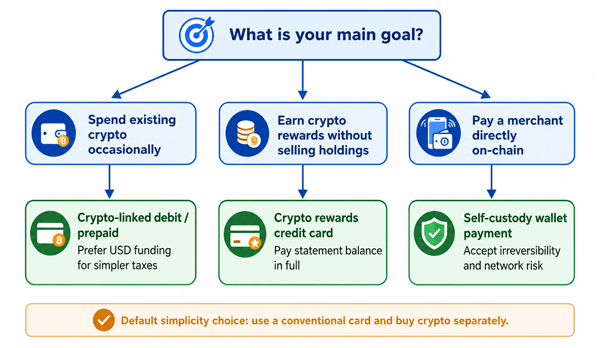
Figure 4. Choose the payment structure by goal—not by the highest advertised reward rate.
8.1 Decision matrix
| Your situation | Likely better fit | Reason |
|---|---|---|
| You want simplicity and clean tax records | Traditional cash-back debit/credit card | No crypto disposal on every purchase; buy crypto separately if desired |
| You hold crypto but do not want to trigger frequent gains/losses | Spend USD or a carefully managed stablecoin balance | Separates everyday spending from volatile tax lots |
| You want crypto rewards and always pay in full | Crypto rewards credit card | Earns crypto without selling existing crypto for each purchase |
| You carry credit-card balances | Debit/prepaid or traditional debit | Avoids high revolving interest |
| You value self-custody and direct settlement | On-chain payment where accepted | Avoids centralized card conversion, but requires stronger wallet discipline |
| You need strong dispute familiarity | Mainstream credit card | Credit-card dispute and chargeback processes are generally more familiar and robust |
9. Major Risks
9.1 Market and timing risk
Selling crypto for ordinary expenses can lock in losses or unexpected gains. A sharp price move between funding and settlement can affect how much crypto is consumed or whether the transaction is approved.
9.2 Custody and platform risk
A card often requires assets to remain on a centralized platform. You may face withdrawal freezes, cyberattacks, operational outages, insolvency proceedings or changing terms. FDIC insurance does not cover the crypto asset itself.
9.3 Security and account-takeover risk
A compromised email, phone number or exchange login can expose both your card and crypto account. SIM-swap attacks, phishing sites, fake support representatives and malicious wallet approvals remain important threats.
9.4 Irreversibility and scam risk
Direct crypto transfers are usually irreversible. Scammers often create urgency and demand payment in crypto because recovery is difficult. Never send crypto to “verify” a card, unlock a refund, pay taxes, protect an account or satisfy a government demand.
9.5 Rewards risk
Rewards can be cut, capped or paid in a token that falls in value. Some programs require holding a platform token, creating concentration risk: you are exposed to both the card provider and its ecosystem asset.
9.6 Privacy and data risk
Crypto cards can combine exchange history, wallet activity, location, merchant category and spending behavior. Review privacy policies, data-sharing practices and permissions granted to budgeting or tax apps.
9.7 Regulatory and availability risk
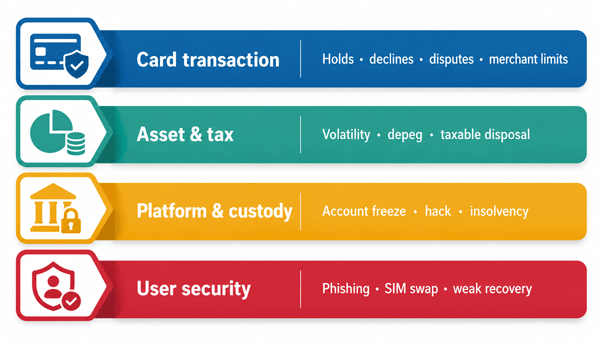
Figure 5. Crypto-card risk is layered: a card dispute does not automatically solve a platform, token or account-security loss.
Products can be withdrawn from a state, paused, migrated to a new issuer or materially repriced. Cardholder agreements and fee schedules—not old reviews—control current terms.
10. Security Checklist
- Use a unique password stored in a reputable password manager.
- Enable phishing-resistant authentication such as a passkey or hardware security key where supported.
- Secure the email account connected to the crypto platform with equally strong authentication.
- Set card alerts for every transaction and freeze the card when not needed.
- Use withdrawal allowlists and delays if the platform offers them.
- Keep only the amount needed for near-term spending on the card platform.
- Never share a seed phrase, private key, one-time code or remote-access session with “support.”
- Type the provider’s website address yourself or use a saved bookmark.
- Review authorized devices, API keys and linked applications regularly.
- Export records before closing an account or switching providers.
11. Common Mistakes to Avoid
| Mistake | Why it causes problems | Better approach |
|---|---|---|
| Spending appreciated crypto without tracking basis | Creates unrecorded taxable gains | Use USD for daily purchases or automate tax-lot tracking |
| Choosing by reward headline | Caps, tiers and fees can erase value | Calculate net rewards at your own spending level |
| Assuming “FDIC insured” covers the platform | Crypto and nonbank failure are not insured deposits | Identify exactly which cash balance sits at which insured bank |
| Treating stablecoins as risk-free dollars | Depeg, issuer, custody and regulatory risks remain | Limit exposure and understand redemption mechanics |
| Using a credit rewards card while carrying debt | Interest overwhelms rewards | Pay the statement balance in full or use debit/prepaid |
| Keeping large balances on the card platform | Increases custody and account-takeover exposure | Maintain a limited spending balance |
| Ignoring merchant holds | Hotels and fuel pumps can lock extra funds | Keep a cash buffer and know hold policies |
| Relying on old reviews | Terms change quickly | Read current official fee schedules and agreements |
12. Alternatives to Crypto Debit Cards
| Alternative | Best for | Trade-off |
|---|---|---|
| Traditional 2% cash-back card | Simple, predictable rewards | No automatic crypto exposure; requires separate purchase |
| Bank debit card | Spending only available cash | Usually fewer rewards |
| Sell crypto periodically and transfer USD | Lower transaction count and easier tax reconciliation | Less instant access |
| Stablecoin wallet payment | Crypto-native or cross-border transfers | Merchant acceptance and consumer protections vary |
| Merchant gift card purchased with crypto | Limited merchants and budgeting | Extra intermediary; refund and fee complications |
| Crypto rewards credit card | Earning crypto without selling holdings | Debt, APR and credit-score consequences |
13. Frequently Asked Questions
13.1 Are crypto debit cards legal in the US?
They are generally available when offered through compliant issuers and program partners, but availability and rules can differ by state. Providers may need federal money-services compliance and state licenses, while the card itself is issued under banking and card-network frameworks.
13.2 Does a crypto debit card build credit?
Usually not. Debit and prepaid cards do not normally report payment history as revolving credit. A crypto rewards credit card can affect your credit like any other credit card.
13.3 Do merchants receive cryptocurrency?
Usually no. The provider converts or draws dollars and the merchant receives standard card-network settlement.
13.4 Is every crypto card purchase taxable?
Not necessarily. Spending USD generally is not a crypto disposal. Selling or converting crypto to fund the purchase generally is. Stablecoin use can still be a disposal even when the economic gain is zero.
13.5 Can I avoid tax by buying small items?
US federal law does not currently provide a broad everyday de minimis exemption for personal crypto purchases. Small transactions can still be reportable.
13.6 Are crypto card rewards taxable?
Purchase rebates may not be immediate income, but bonuses, referrals, yield and other awards can be treated differently. Keep basis records and consult a tax professional for your program.
13.7 Are crypto debit cards FDIC-insured?
The crypto is not FDIC-insured. Certain cash balances held at partner banks may qualify for pass-through coverage if requirements are met.
13.8 What happens if my card is stolen?
Freeze it immediately and notify the issuer. Card protections may apply to unauthorized card transactions, but they do not guarantee recovery of crypto transferred out of your account.
13.9 Can I use a crypto card at an ATM?
Many cards permit ATM withdrawals, but provider, operator, conversion and foreign-exchange fees or limits may apply. ATM withdrawals funded by crypto can trigger a taxable disposal.
13.10 Why was my crypto card declined?
Common reasons include insufficient available balance, merchant-category restrictions, geographic limits, fraud controls, offline terminals, cash-like transactions or a larger-than-expected merchant hold.
13.11 Is a crypto card better than a normal credit card?
It depends. A conventional card may offer simpler records, stronger rewards and less platform risk. A crypto card may suit users who value crypto rewards or integrated conversion and accept the extra complexity.
13.12 Should I spend Bitcoin or stablecoins?
Spending Bitcoin can create gains/losses and reduce long-term exposure. Stablecoins may simplify price volatility but still involve issuer, custody, depeg and tax-record risks. USD is usually simplest for daily expenses.
13.13 Can I earn rewards and immediately sell them?
Usually yes if the platform allows it, but selling creates a tax transaction and may involve spreads or fees. The reward value at receipt is important for basis.
13.14 Do crypto cards have chargebacks?
Card-network purchases may support disputes or chargebacks under applicable rules. Direct blockchain payments generally do not have card-style chargebacks.
13.15 What is the safest way to use one?
Use a small spending balance, spend USD when practical, enable strong authentication and alerts, keep complete records, and verify current terms directly with the issuer.
14. Conclusion: Convenience Is Not the Same as Simplicity
Crypto debit cards can bridge digital assets and everyday commerce, but the bridge is built on traditional payment rails, centralized custody and tax-sensitive conversions. The best product is not necessarily the one with the highest advertised crypto reward. It is the one whose funding mechanics, total costs, protections, recordkeeping and risk fit your real behavior.
For most US consumers, the cleanest approach is to keep daily spending in dollars, treat crypto as a separate high-risk asset allocation, and choose a crypto-linked card only when its specific convenience or rewards produce a clear net benefit. Recheck official terms before applying because fees, availability, reward rates and regulations can change.
14.1 Reader Advice
This article is for educational and informational purposes only and is not personalized financial, investment, tax, legal, or other professional advice or a recommendation of any card, platform, token, or payment method. Crypto assets and crypto-linked services can involve volatility, loss of principal, custody or platform failure, fraud, tax consequences, and changing product terms. Rules, policies, laws, fees, protections, and statistics can change over time and vary by state, country, and region, so please verify current details through official sources and consult a qualified professional before making a decision based on your circumstances.
14.2 Sources Consulted and Checked
The following sources were consulted and checked while preparing this article and reviewing its accuracy:
- IRS — Digital assets (updated June 28, 2026)
- IRS — Frequently asked questions on digital asset transactions
- CFPB — New protections for prepaid accounts
- CFPB — Prepaid cards: know your rights
- FDIC — Crypto assets and deposit insurance fact sheet / advisory
- FTC — What to know about cryptocurrency and scams
- FinCEN — Application of regulations to persons administering, exchanging or using virtual currencies
- FinCEN — 2019 guidance on convertible virtual currency business models
- CFPB — Electronic Fund Transfers FAQs
- Coinbase — Coinbase Card and official card help pages (reviewed August 2, 2026)
- Coinbase Help — Card fees and taxes
- Crypto.com Help — US prepaid card fees and limits (including announced September 1, 2026 fee changes)
- Crypto.com Help — Applying for a prepaid card
- Gemini — Gemini Credit Card
- Venmo Help — Cash Back to Crypto