Stocks vs Bonds: Risk, Returns, and Key Differences Explained
Stocks and bonds are two of the most common building blocks of investing. A stock makes you a partial owner of a company. A bond makes you a lender to a company or government. Stocks usually offer higher long-term growth potential, but their prices can rise and fall sharply. Bonds usually offer steadier income and lower volatility, but they still carry risks such as interest-rate risk, inflation risk, and credit risk.
For beginners, the real question is not “Are stocks better than bonds?” The better question is: “What mix of stocks and bonds fits my goal, timeline, and ability to stay calm when markets move?”
| Quick answer | Stocks | Bonds |
|---|---|---|
| What you are doing | Buying ownership in a company | Lending money to a company, city, or government |
| Main way you may earn | Price growth and sometimes dividends | Interest payments and return of principal at maturity |
| Typical risk level | Higher | Lower to moderate, depending on issuer and maturity |
| Best used for | Long-term growth | Income, stability, and diversification |
| Big beginner mistake | Buying only because the price is rising | Assuming every bond is safe |
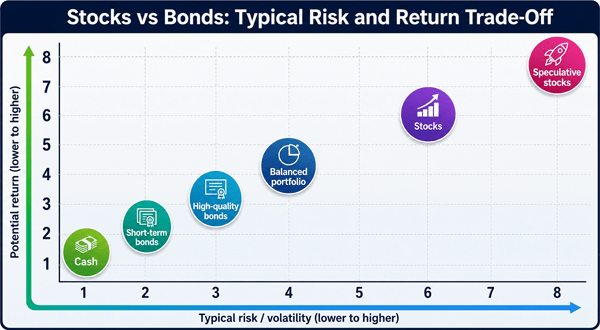
Figure 1. Typical Risk and Return Trade-Off
2. What Are Stocks?
A stock is a share of ownership in a business. When you buy a stock, you are buying a small piece of that company. If the company grows, earns more profit, and investors become more confident about its future, the stock price may rise. Some companies also pay dividends, which are cash payments to shareholders.
Think of stocks like owning a tiny slice of a restaurant. If the restaurant becomes popular, opens new branches, and earns more money, your slice may become more valuable. But if sales fall or management makes poor decisions, the value of your slice can fall too.
2.1 How Stocks Work in Real Life
Companies issue shares to raise money for expansion, research, debt repayment, acquisitions, or other business needs. After shares trade publicly, investors buy and sell them through stock exchanges and brokerage platforms. The price changes constantly because buyers and sellers are reacting to earnings, interest rates, news, competition, economic data, and expectations about the future.
A beginner should understand this clearly: a stock price is not just today’s business performance. It is the market’s changing opinion about what the company may be worth in the future.
3. What Are Bonds?
A bond is a loan. When you buy a bond, you are lending money to the bond issuer. The issuer may be a government, municipality, or company. In return, the issuer usually promises to pay interest and repay the bond’s face value at maturity. Because many bonds pay a fixed interest rate, bonds are often called fixed income investments.
Think of a bond like lending money to a reliable borrower under written rules: how much interest will be paid, when payments arrive, and when the original amount should be returned.
3.1 How Bonds Work in Real Life
Suppose a company issues a 10-year bond with a 5% coupon. If you buy $1,000 of that bond, the company may pay you $50 per year in interest and return $1,000 when the bond matures, assuming it does not default. But if you sell the bond before maturity, the price can be higher or lower than $1,000. Bond prices move when interest rates, credit quality, inflation expectations, and market demand change.
4. Stocks vs Bonds: Key Differences at a Glance
| Feature | Stocks | Bonds | Beginner takeaway |
|---|---|---|---|
| Legal role | You are an owner/shareholder. | You are a lender/creditor. | Ownership can grow more, but lenders are usually paid before shareholders if a company fails. |
| Return source | Capital gains and dividends. | Interest income and possible price gains/losses. | Stocks focus more on growth; bonds focus more on income and stability. |
| Risk | Business risk, market risk, valuation risk, emotional selling risk. | Interest-rate risk, inflation risk, credit/default risk, liquidity risk. | Bonds can lose money too, especially when rates rise or credit weakens. |
| Volatility | Usually higher. | Usually lower than stocks, but varies by bond type. | Lower volatility can help investors stay invested. |
| Time horizon | Often better suited to long-term goals. | Often useful for short- to medium-term goals and income needs. | Longer timelines can handle more stock volatility. |
| Cash flow | Dividends are optional and can be cut. | Coupon payments are usually contractual unless default occurs. | Bond income is generally more predictable. |
| Inflation protection | Good companies may raise prices and grow earnings over time. | Fixed payments may lose purchasing power when inflation is high. | Stocks may help long-term inflation protection; bonds may protect short-term stability. |
| Tax treatment | Depends on dividends, capital gains, account type, and country. | Depends on bond type and account type; municipal bonds may have tax advantages in some jurisdictions. | Taxes can change net return, so after-tax return matters. |
5. Risk and Return: The Trade-Off Beginners Must Understand
Investing is never risk-free. Even “safe” choices can have inflation risk, meaning your money may not grow fast enough to maintain purchasing power. The U.S. SEC’s Investor.gov describes asset allocation and diversification as key strategies for managing investment risk, while FINRA notes that all investments carry some degree of risk, including stocks, bonds, mutual funds, and ETFs.
The reason stocks often have higher expected returns is simple: stock investors accept more uncertainty. A company can grow rapidly, stagnate, fail, be disrupted, or become overvalued. Bonds usually sit higher in the repayment order and have scheduled payments, so they often have less uncertainty, but less upside.
| Risk type | How it affects stocks | How it affects bonds | Practical beginner response |
|---|---|---|---|
| Market risk | A broad stock market decline can pull down even strong companies. | Bond prices can also fall in stressed markets. | Use diversification instead of betting on one company or sector. |
| Interest-rate risk | Higher rates can pressure stock valuations. | When rates rise, existing bond prices often fall. | Match bond duration to your goal timeline. |
| Inflation risk | Companies may offset inflation by raising prices, but not always. | Fixed interest payments lose purchasing power when inflation rises. | Avoid putting all long-term money into low-yield fixed income. |
| Credit/default risk | A weak company’s stock can collapse. | A weak borrower may miss interest or principal payments. | Check bond ratings, issuer quality, and fund holdings. |
| Behavior risk | Panic selling after a crash can lock in losses. | Chasing high yields can lead to hidden credit risk. | Create rules before investing, not during market stress. |
6. Practical Example: Three Beginners, Three Different Portfolios
A 28-year-old investing for retirement in 35 years may choose a stock-heavy portfolio because time can help them ride through market downturns. A 45-year-old saving for a goal eight years away may use a more balanced mix. A 62-year-old planning to use money in the next three years may prefer more bonds and cash because a large stock market drop right before withdrawal could be damaging.
| Investor | Goal | Possible stock-bond mix | Why it may fit |
|---|---|---|---|
| Ayesha, age 28 | Retirement in 35 years | 80% stocks / 20% bonds | Long timeline gives more room to accept volatility for growth. |
| Bilal, age 45 | Children’s education in 8 years | 60% stocks / 40% bonds | Needs growth but also wants to reduce the chance of a major loss near the goal. |
| Sara, age 62 | Retirement income soon | 30% stocks / 70% bonds and cash | Stability and income matter more because withdrawals may begin soon. |
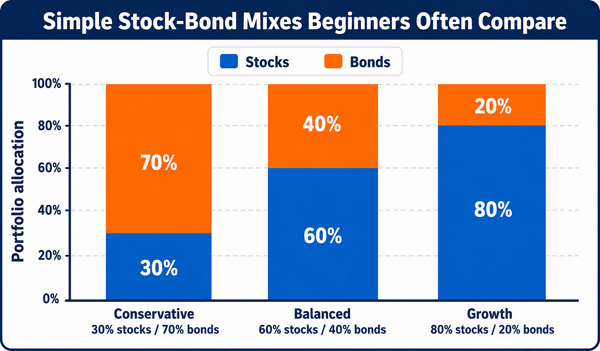
Figure 2. Illustrative Stock-Bond Portfolio Mixes
7. How Beginners Can Use Stocks and Bonds Together
7.1 Start with the Goal, Not the Investment
Before choosing stocks or bonds, define the job of the money. Is it for retirement, a house deposit, emergency savings, education, or income? Money needed soon should usually take less risk than money for a goal decades away.
7.2 Use Stocks for Growth
Stocks are usually the growth engine of a portfolio. Broad stock index funds or diversified ETFs can help beginners avoid the danger of putting too much money into one company. Individual stocks can be educational and rewarding, but they require more research, patience, and emotional control.
7.3 Use Bonds for Stability and Income
Bonds can reduce portfolio swings and provide income. High-quality government bonds and investment-grade bond funds are often used for stability. High-yield bonds may pay more income, but they behave more like risky credit investments and can fall sharply in recessions.
7.4 Rebalance Instead of Guessing
If your target mix is 60% stocks and 40% bonds, a strong stock market may push you to 70% stocks. Rebalancing means bringing the portfolio back to the target. This can force disciplined behavior: trimming what has grown and adding to what has lagged.
7.5 Keep Costs and Taxes Low
Expense ratios, trading costs, bid-ask spreads, and taxes can quietly reduce returns. For many beginners, low-cost diversified funds are easier to manage than frequent trading. In taxable accounts, pay attention to capital gains, dividend taxes, and bond interest taxation.
8. Common Types of Stocks
| Type | What it means | Beginner note |
|---|---|---|
| Growth stocks | Companies expected to grow faster than average. | Can deliver strong gains but may fall hard if expectations disappoint. |
| Dividend stocks | Companies that pay regular dividends. | Useful for income, but dividends are not guaranteed. |
| Value stocks | Stocks trading at lower prices relative to earnings, assets, or cash flow. | Can be rewarding if the market undervalues them, but cheap can stay cheap. |
| Blue-chip stocks | Large, established companies with long operating histories. | Often more stable than smaller companies, but still not risk-free. |
| Small-cap stocks | Shares of smaller companies. | Can grow faster, but tend to be more volatile. |
9. Common Types of Bonds
| Type | What it means | Beginner note |
|---|---|---|
| Government bonds | Issued by national governments. | Often considered high quality, but still exposed to interest-rate and inflation risk. |
| Treasury bonds | U.S. government debt securities. | Generally viewed as low credit risk because they are backed by the U.S. government. |
| Municipal bonds | Issued by states, cities, or local authorities. | May offer tax advantages in some countries, but credit quality varies. |
| Corporate bonds | Issued by companies. | Usually pay more than government bonds because they carry corporate credit risk. |
| High-yield bonds | Lower-rated corporate bonds. | Higher income potential, but higher default risk. |
| Bond funds/ETFs | Pooled funds that hold many bonds. | Easy diversification, but the fund may not mature like an individual bond. |
10. Beginner Mistakes to Avoid
Thinking bonds cannot lose money: Bond prices can fall when interest rates rise, when inflation expectations change, or when credit risk increases. A bond fund can lose value even if it holds high-quality bonds.
Buying stocks because everyone is talking about them: Popularity is not a valuation method. A good company can still be a bad investment if the price already assumes perfection.
Chasing the highest bond yield: A very high yield may be a warning sign. It can mean the issuer is risky or the market expects trouble.
Ignoring your time horizon: Money needed within a few years should usually not be heavily exposed to stock market swings.
Checking the portfolio too often: Daily checking can turn normal volatility into emotional stress. Beginners often make worse decisions when they react to every market move.
Confusing diversification with owning many random things: Owning ten similar tech stocks is not the same as owning a diversified portfolio across asset classes, sectors, countries, and maturities.
11. Which Is Better: Stocks or Bonds?
Neither is automatically better. Stocks are usually better for long-term growth. Bonds are usually better for stability, income, and reducing portfolio volatility. Most long-term investors use both because they solve different problems.
| Choose more stocks when... | Choose more bonds when... |
|---|---|
| Your goal is more than 10 years away. | Your goal is within a few years. |
| You can stay invested during market crashes. | You would panic if your portfolio fell sharply. |
| You need long-term growth above inflation. | You need steadier income or capital preservation. |
| You have stable income and emergency savings. | Your income is uncertain or withdrawals are coming soon. |
| You understand that losses may be temporary but painful. | You value smoother returns more than maximum growth. |
12. Frequently Asked Questions
12.1 Are Stocks Riskier Than Bonds?
Usually, yes. Stocks typically move more sharply because shareholders are owners and company profits are uncertain. Bonds are often less volatile, especially high-quality bonds, but they still have risks.
12.2 Can You Lose Money in Bonds?
Yes. You can lose money if you sell before maturity at a lower price, if interest rates rise, if inflation reduces purchasing power, or if the issuer defaults.
12.3 Do Bonds Always Go Up When Stocks Go Down?
No. Bonds can help cushion stock market declines, but they do not always move in the opposite direction. In some periods, both stocks and bonds can fall together.
12.4 What Is a Good Stock-Bond Mix for Beginners?
There is no universal mix. A common starting point is to compare conservative, balanced, and growth allocations, such as 30/70, 60/40, and 80/20. The right mix depends on time horizon, risk tolerance, income stability, and the purpose of the money.
12.5 Should Beginners Buy Individual Stocks or Funds?
Many beginners start with diversified index funds or ETFs because they spread risk across many holdings. Individual stocks require more research and can create concentrated risk.
12.6 Should Beginners Buy Individual Bonds or Bond Funds?
Bond funds are easier and more diversified. Individual bonds can be useful when matching a specific maturity date, but beginners must understand credit quality, duration, liquidity, and pricing.
12.7 Are Dividend Stocks the Same as Bonds?
No. Dividend stocks can provide income, but dividends are not guaranteed and the share price can fall. Bonds usually have contractual interest payments, unless the issuer defaults.
12.8 What Matters More: Picking Stocks or Asset Allocation?
For many investors, asset allocation matters more than trying to pick the perfect security. The stock-bond mix influences risk, return, and emotional comfort.
13. Beginner Checklist Before Investing
- Build an emergency fund before investing money you may need suddenly.
- Define the goal and timeline for each pool of money.
- Choose an asset allocation that you can stick with during bad markets.
- Prefer broad diversification unless you have the skill and time to research individual securities.
- Understand fees, taxes, and account rules before buying.
- For bonds, check duration, credit quality, yield, maturity, and whether you own an individual bond or a bond fund.
- For stocks, check business quality, valuation, profitability, debt, competition, and concentration risk.
- Review and rebalance periodically instead of reacting to news every day.
14. Final Takeaway
Stocks and bonds are not enemies. They are tools. Stocks help your money grow by giving you ownership in businesses. Bonds help add income and stability by making you a lender. The best portfolio is not the one that sounds smartest online; it is the one that matches your real life and that you can hold through both good and bad markets.
For beginners, the safest honest practice is to learn the basics, diversify, keep costs low, avoid hype, and invest according to a written plan. Over time, disciplined behavior often matters more than finding the perfect investment.
Sources Consulted and Checked
The following authoritative sources were consulted and checked while preparing this article and reviewing its accuracy. Readers should use the latest official guidance because laws, tax treatment, product terms, and market conditions may change.
- SEC Investor.gov - Introduction to Investing - https://www.investor.gov/introduction-investing
- SEC Investor.gov - Stocks FAQ - https://www.investor.gov/introduction-investing/investing-basics/investment-products/stocks
- SEC Investor.gov - Bonds FAQ - https://www.investor.gov/introduction-investing/investing-basics/investment-products/bonds-or-fixed-income-products/bonds
- SEC Investor.gov - Beginner’s Guide to Asset Allocation, Diversification, and Rebalancing - https://www.investor.gov/additional-resources/general-resources/publications-research/info-sheets/beginners-guide-asset
- FINRA - Risk - https://www.finra.org/investors/investing/investing-basics/risk
- FINRA - Bond Investing and Due Diligence - https://www.finra.org/investors/insights/bond-investing-due-diligence
- Vanguard - Model Portfolio Allocation - https://investor.vanguard.com/investor-resources-education/education/model-portfolio-allocation
Reader Advice
This article is provided solely for educational and informational purposes and does not constitute financial, investment, legal, tax, or accounting advice. It does not recommend any particular security, fund, bond, portfolio allocation, brokerage, or course of action. Before making a financial decision, readers should evaluate their own goals, time horizon, risk tolerance, liquidity needs, tax position, and local laws, and should consider consulting an appropriately qualified and licensed professional. Investment values and income can rise or fall, and losses are possible. Rules, tax treatment, product features, interest rates, market conditions, and regulatory requirements may change over time and may differ by country or jurisdiction. Readers should therefore verify material facts, figures, eligibility requirements, fees, and current rules directly from official regulators, issuers, financial institutions, and other primary sources before acting.