How to Invest in Stocks: A Step-by-Step Guide for Complete Beginners
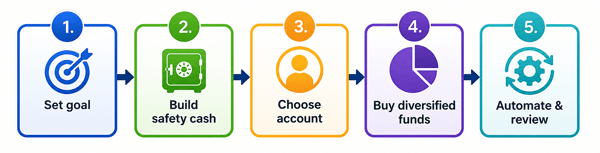
Figure 1: A beginner-friendly stock investing roadmap.
1. Introduction: What Stock Investing Really Means
Investing in stocks means buying a small ownership stake in a company or in a fund that owns many companies. When the business grows, earns profits, pays dividends, or becomes more valuable in the market, your investment may grow. When business results disappoint or the market becomes fearful, your investment can fall. That is the basic trade-off: stocks can build wealth over time, but they do not move in a straight line.
A beginner often imagines stock investing as watching a screen all day and trying to guess tomorrow's price. That is trading, and it is much harder than it looks. Long-term stock investing is different. It is about choosing a sensible mix of investments, adding money regularly, keeping costs low, and staying patient through normal market ups and downs.
The cleanest way to start is not to ask, 'Which stock will double?' A better first question is, 'What financial goal am I investing for, how long do I have, how much risk can I emotionally and financially handle, and what simple portfolio can I keep buying even when the news looks scary?'
According to Investor.gov, stocks are securities that give stockholders a share of ownership in a company, and investors may earn through price appreciation, dividends, or voting rights. Investor.gov also emphasizes that all investments involve risk and that diversification can help reduce losses when one area of the market falls.
Important educational note: This article is for general educational and informational purposes only. It does not recommend a specific stock, broker, fund, account, or tax strategy for your personal situation. Investing involves risk, including the possible loss of principal. Consider your goals, financial circumstances, risk tolerance, and time horizon, and consult a qualified financial, tax, or legal professional before making major decisions.
2. The Simple Step-by-Step Process
2.1 Decide why you are investing
Before choosing stocks, define the goal. Are you investing for retirement, a house down payment, a child’s education, or long-term wealth? Money needed in the next one to three years usually does not belong mostly in stocks because a market decline can happen at the wrong time. Longer-term goals can usually tolerate more stock exposure.
2.2 Build a safety cushion first
A beginner mistake is investing every spare dollar while having no emergency fund. If your car breaks down or income drops, you may be forced to sell stocks during a bad market. Many people start with at least a small emergency fund, then invest consistently while continuing to improve their cash reserve.
2.3 Learn the basic investment choices
You can buy individual stocks, stock mutual funds, ETFs, index funds, target-date funds, or use a robo-advisor. Most beginners are better served by diversified funds before they try to select individual stocks.
2.4 Choose the right account type
A brokerage account is flexible. A retirement account, such as an IRA or employer plan where available, may offer tax advantages but can have rules on withdrawals. The best account depends on your country, tax situation, time horizon, and purpose.
2.5 Choose a broker or investing platform
Look for low fees, strong security, easy-to-understand tools, educational resources, fractional shares if you want to start small, and access to diversified ETFs or index funds. Avoid choosing a platform only because it looks exciting or pushes frequent trading.
2.6 Create a beginner portfolio
A simple starting portfolio might use one broad stock market index fund plus a bond or cash portion based on risk tolerance. A younger long-term investor may hold more stocks; someone close to needing the money may hold less.
2.7 Place your first order carefully
For beginners, a market order is simple but does not guarantee the exact price. A limit order lets you set the maximum price you are willing to pay. For less-liquid stocks or volatile markets, limit orders can help avoid unpleasant surprises.
2.8 Automate contributions
Many successful investors do not rely on motivation. They automate monthly investing. This can support dollar-cost averaging, where you buy more shares when prices are lower and fewer shares when prices are higher.
2.9 Review, rebalance, and keep learning
Review your portfolio a few times per year, not every hour. Rebalancing means bringing your portfolio back to your target mix. For example, if stocks grow from 70% to 80% of your portfolio, you may redirect new contributions or sell a little stock to restore balance.
2.10 Avoid emotional decisions
Real investors often say the hardest part is not opening the account. It is staying calm when the market falls, resisting hot tips, ignoring hype, and keeping a long-term plan when everyone else sounds panicked or greedy.
3. Beginner Investment Options Compared
| Option | What it is | Best for | Main risk | Beginner note |
|---|---|---|---|---|
| Individual stock | One company’s shares | Learning, small satellite positions | Company-specific losses | Do not build your whole plan around one company. |
| ETF | A fund traded like a stock | Low-cost diversified investing | Market risk and tracking error | Often useful for beginners because many ETFs hold hundreds of stocks. |
| Index fund | A fund that tracks a market index | Long-term, low-cost investing | Falls when the market falls | Simple and historically popular for passive investors. |
| Mutual fund | Pooled investment managed by a fund company | Retirement plans and automatic investing | Fees, manager risk, market risk | Check expense ratio, minimum investment, and strategy. |
| Target-date fund | A diversified fund that gets more conservative over time | Hands-off retirement investing | May not match your exact risk tolerance | Can be a one-fund solution when chosen carefully. |
| Robo-advisor | Automated portfolio service | Beginners wanting guidance | Advisory fees and model limitations | Good for simplicity, but still understand the portfolio. |
4. How Stocks Make Money
There are two common ways a stock investment can make money. The first is capital appreciation: you buy at one price and the value rises over time. The second is dividends: some companies distribute part of their earnings to shareholders. Not every company pays dividends, and dividend payments can be reduced or stopped.
Example: Suppose you buy 10 shares at $50 each, so your investment is $500. If the price rises to $60, your shares are worth $600 before any taxes or fees. If the company also pays a $1 annual dividend per share, you receive $10 in dividend income for that year. If the stock falls to $40, the shares are worth $400, even if the business is still operating.
The important lesson is that stock returns are not guaranteed. Price gains, dividend income, and losses are all part of the same system. A strong plan respects both upside and downside.
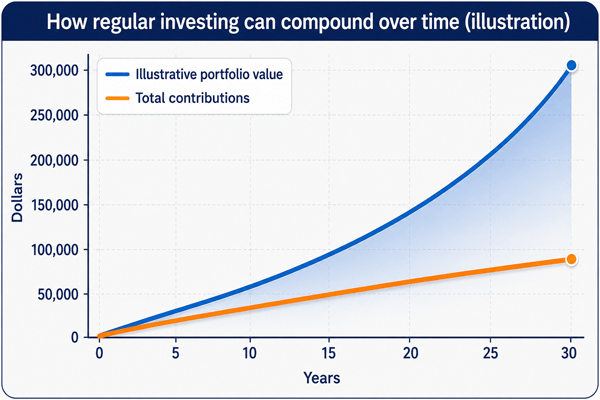
Figure 2: A simplified compounding illustration, not a promise of future returns.
5. Brokerage Account, Retirement Account, or Robo-Advisor?
A brokerage account is the basic account used to buy and sell stocks, ETFs, mutual funds, and other investments. It is flexible, but taxable in many countries. A retirement account may provide tax advantages, but usually has contribution limits and withdrawal rules. A robo-advisor uses software to recommend and manage a diversified portfolio, usually for a fee.
The practical choice depends on your goal. For retirement, many investors first look at employer retirement plans or IRA-style accounts where available. For general wealth-building, a taxable brokerage account can be useful. For someone who feels overwhelmed, a robo-advisor may reduce decision fatigue, but it is still important to understand fees, asset allocation, and tax treatment.
| Account type | Strength | Weakness | Practical use case |
|---|---|---|---|
| Taxable brokerage account | Flexible access and broad investment choices | Potential yearly taxes on dividends and realized gains | Money for long-term goals outside retirement |
| Retirement account | Potential tax benefits | Contribution and withdrawal rules | Retirement investing |
| Robo-advisor account | Automated portfolio and rebalancing | Advisory fee and less control | Hands-off beginner investing |
| Employer plan | Payroll deductions and possible employer match | Limited menu of investments | Often a strong retirement starting point |
6. How Much Money Do You Need to Start?
You do not need to be rich to start investing. Many brokers now offer no-commission stock and ETF trades and fractional shares, allowing beginners to invest small amounts. What matters more than the first deposit is consistency, risk control, and avoiding expensive mistakes.
A practical beginner example: A person earns steady income, has paid high-interest debt down, keeps a small emergency fund, and invests $100 to $300 per month into a diversified ETF or index fund. The amount is not dramatic, but the habit is powerful. Over years, regular contributions can matter more than trying to perfectly time the market.
Before investing, high-interest debt deserves attention. If a credit card charges 20% interest, paying it down may be a more reliable financial improvement than hoping the stock market earns more. This is why investing should sit inside a complete money plan, not replace one.
7. Market Orders vs. Limit Orders: What Beginners Should Know
FINRA and Investor.gov describe market orders as orders designed for immediate execution, while limit orders specify a price or better. The trade-off is simple: market orders prioritize execution; limit orders prioritize price.
| Order type | What it means | Pros | Risks |
|---|---|---|---|
| Market order | Buy or sell immediately at the available market price | Simple and likely to execute | Final price can differ from the last quoted price |
| Limit order | Buy only at or below your limit, or sell only at or above your limit | More control over price | May not execute |
| Stop order | Becomes a market order after a stop price is reached | Can help manage downside or trigger entry | Execution price is not guaranteed after trigger |
8. Risk Management: The Part Beginners Usually Skip
Risk is not just the chance that a line on a chart goes down. Risk is also needing cash at the wrong time, owning too much of one company, buying something you do not understand, paying high fees, panicking during a downturn, or taking tax consequences you did not expect.
Diversification is the basic defense. Instead of betting on one company, you spread money across many companies, sectors, and sometimes countries. This does not remove risk, but it can reduce the damage if one company or sector performs badly.
A beginner-friendly rule is to avoid any single stock position that could seriously hurt your future if it went to zero. People often learn this after a painful experience: the stock looked safe, the story sounded obvious, and then earnings disappointed, regulations changed, competition increased, or management failed.
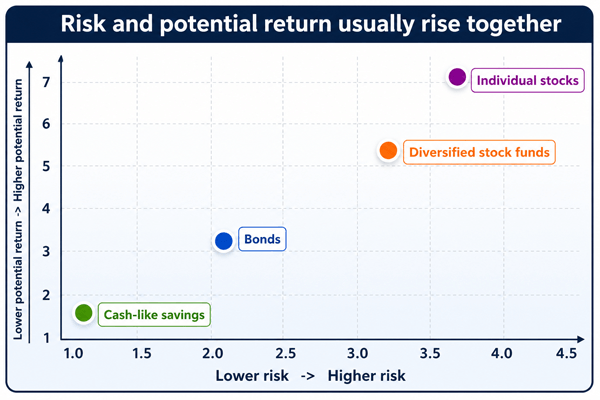
Figure 3: Higher potential return normally comes with higher uncertainty.
9. A Practical Beginner Portfolio Example
This is an educational example, not a recommendation. It shows how a beginner might think about structure rather than stock picking.
| Investor profile | Possible portfolio idea | Why it may fit | What to watch |
|---|---|---|---|
| Long time horizon, high risk tolerance | 80% broad stock index fund / 20% bonds or cash-like assets | Growth-focused but not 100% stock | Large declines can still happen |
| Moderate risk tolerance | 60% broad stock funds / 40% bonds or cash-like assets | Balances growth and stability | May grow slower than all-stock portfolio |
| Very nervous beginner | Small monthly contributions to diversified fund plus stronger cash reserve | Builds habit while reducing emotional pressure | Too much cash may lag inflation over long periods |
| Interested in individual stocks | Core diversified fund plus 5-10% individual stock learning bucket | Keeps speculation limited | Do not let the learning bucket become the whole portfolio |
10. How to Research a Stock Without Getting Lost
If you decide to buy individual stocks, research the business first, not the chart first. Ask: What does the company sell? How does it make money? Is revenue growing? Is it profitable? How much debt does it carry? Who are the competitors? What could go wrong? Why might the market already know the good news?
Read the company’s annual report, quarterly reports, investor presentations, and earnings call summaries. Compare the company with competitors. Look at valuation metrics, but do not treat one number as magic. A low price-to-earnings ratio can mean a bargain, or it can mean the business is shrinking. A high valuation can be justified by strong growth, or it can be a sign of overexcitement.
A useful beginner test is the one-page thesis: write why you are buying, what would prove you wrong, how much you are willing to lose, and when you will review. If you cannot explain the investment in plain language, you probably do not understand it well enough yet.
10.1 Individual Stock Research Checklist
- I understand how the company makes money.
- I know the major risks, not just the exciting story.
- I have compared it with at least two competitors.
- I know whether the company is profitable or still speculative.
- I understand the valuation well enough to explain it simply.
- The position size is small enough that a bad outcome will not damage my financial life.
- I am not buying only because of social media, a friend, or fear of missing out.
11. Taxes, Dividends, and Records
Taxes can affect your real return. In the United States, the IRS explains that capital gains are generally taxed at different rates depending on your income and how long you held the asset. Dividends may be ordinary or qualified, and qualified dividends may receive lower capital-gain-style tax rates. Tax rules vary by country and change over time, so this is an area where professional advice can be worth it.
Keep records of purchases, sales, dividends, reinvestments, and fees. If your broker provides tax forms, still review them for accuracy. Reinvested dividends are not 'free money' from a tax perspective in many taxable accounts; they can still be reportable income even if you used them to buy more shares.
Tax-advantaged accounts can be valuable, but do not choose an account only because someone online says it is best. Withdrawal rules, contribution limits, employer matches, and local tax law matter.
12. Common Beginner Mistakes and Better Alternatives
| Mistake | Why it hurts | Better habit |
|---|---|---|
| Trying to time the perfect bottom | You may wait forever or buy after the rebound | Invest gradually on a schedule |
| Buying only hot stocks | Hype often peaks before beginners arrive | Use diversified core holdings |
| Ignoring fees | Small percentages compound against you | Check expense ratios, advisory fees, and trading costs |
| Panic selling | Turns temporary declines into permanent losses | Hold a portfolio you can emotionally tolerate |
| Using margin too early | Borrowed money can magnify losses | Avoid leverage until you are highly experienced |
| Confusing trading with investing | Frequent activity can increase mistakes and taxes | Focus on long-term process |
| No written plan | Every headline becomes a decision point | Write target allocation, contribution schedule, and rules |
13. A Realistic 30-Day Action Plan
| Timeline | Action |
|---|---|
| Days 1-3 | Write your goal, time horizon, monthly amount, and emergency fund status. |
| Days 4-7 | Learn the difference between stocks, ETFs, index funds, mutual funds, and bonds. |
| Days 8-10 | Compare brokerage accounts or investing platforms based on fees, security, fund access, usability, and support. |
| Days 11-14 | Choose account type: taxable brokerage, retirement account, employer plan, or robo-advisor. |
| Days 15-18 | Create a simple target allocation based on time horizon and risk tolerance. |
| Days 19-21 | Open the account, enable two-factor authentication, and link funding source carefully. |
| Days 22-24 | Make a small first investment using a diversified fund or a tiny learning position. |
| Days 25-27 | Set up recurring contributions if your cash flow supports it. |
| Days 28-30 | Write your review rules: when to rebalance, when to add, and what not to do during market stress. |
14. Beginner FAQ
14.1 Is stock investing safe?
No investment in stocks is completely safe. Diversification, long time horizons, sensible position sizing, and avoiding leverage can reduce certain risks, but losses are still possible.
14.2 Should I buy individual stocks or ETFs first?
Many beginners start with diversified ETFs or index funds because they reduce company-specific risk. Individual stocks can be used later as a small learning portion if you understand the risks.
14.3 How often should I check my portfolio?
For long-term investing, monthly or quarterly checks are usually enough. Checking constantly can encourage emotional decisions.
14.4 Can I lose more than I invest?
In a normal cash account buying stocks without margin, losses are generally limited to the amount invested. With margin, options, short selling, or leveraged products, losses can be larger and more complex.
14.5 Are dividend stocks better than growth stocks?
Not automatically. Dividends can provide income, but companies that pay dividends can still decline. Growth stocks may reinvest profits instead of paying dividends. The better choice depends on goals, valuation, quality, and risk.
14.6 What is dollar-cost averaging?
It means investing a fixed amount at regular intervals. It does not guarantee profit, but it can reduce the stress of trying to pick the perfect entry price.
14.7 What is rebalancing?
Rebalancing means adjusting your holdings back to your target mix. It helps control risk after one part of the portfolio grows or falls more than the rest.
14.8 What should I do when the market crashes?
Return to your written plan. If your emergency fund is intact and your time horizon is long, a market decline may be a time to continue regular contributions rather than panic. But if your portfolio decline reveals that you took too much risk, adjust thoughtfully rather than emotionally.
15. Final Takeaway
The best beginner stock investing plan is usually simple, boring, and repeatable. Learn the basics, protect your cash flow, use diversified investments, keep fees low, invest consistently, and avoid decisions driven by fear or hype.
You do not need to predict the next winning stock to become a better investor. You need a process you can follow when markets are calm and when they are uncomfortable. That process - not luck, noise, or social media confidence - is what gives beginners a real chance to build wealth over time.
Sources Consulted and Checked
The following authoritative sources were consulted and checked when preparing this article and reviewing its accuracy. Readers should verify current rules, limits, and guidance directly with the relevant official source before acting.
- Investor.gov - Introduction to Investing
- Investor.gov - Stocks FAQs
- Investor.gov - Asset Allocation and Diversification
- Investor.gov - Types of Orders
- FINRA - Order Types
- IRS - Topic No. 409: Capital Gains and Losses
- IRS - Topic No. 404: Dividends and Other Corporate Distributions
- Investor.gov - Compound Interest Calculator
Reader Advice
This article is provided solely for general educational and informational purposes and is not personalized financial, investment, tax, accounting, or legal advice. Investments can rise or fall in value, and past performance does not guarantee future results. Examples, portfolio allocations, contribution amounts, tax discussions, and illustrations are simplified and should not be treated as recommendations or promises of return. Laws, tax rules, account limits, broker features, fees, market conditions, and regulatory requirements may change and may differ by country, state, institution, and individual circumstances.
Before investing or making another financial decision, assess your goals, time horizon, liquidity needs, debt, emergency savings, ability to bear losses, and personal circumstances. Verify material facts, figures, eligibility rules, fees, and regulatory information through current official sources, and consider advice from appropriately qualified and regulated professionals. Use only properly authorized financial institutions and independently check the registration and disciplinary history of brokers or investment professionals through the relevant regulator.