How to Open a Stock Brokerage Account for Stock Market Investing
1. Introduction: What a Brokerage Account Actually Is
A stock brokerage account is the account you use to buy, sell, and hold investments such as stocks, exchange-traded funds (ETFs), mutual funds, bonds, and sometimes options. Think of it as a practical doorway between your bank account and the stock market. Your bank account is mainly for saving, spending, and receiving money. A brokerage account is for putting money into investment products that can go up or down in value.
For a beginner, the most important point is simple: opening the account is not the same as becoming a successful investor. Opening the account only gives you access. What you do next - choosing safe habits, understanding risk, comparing fees, avoiding hype, and investing only money you can afford to leave invested - matters much more.
This guide explains the process in plain language, from choosing a broker to placing your first order. It also explains common terms beginners see inside brokerage apps, the mistakes many people make, and the questions you should ask before trusting any platform with your money.
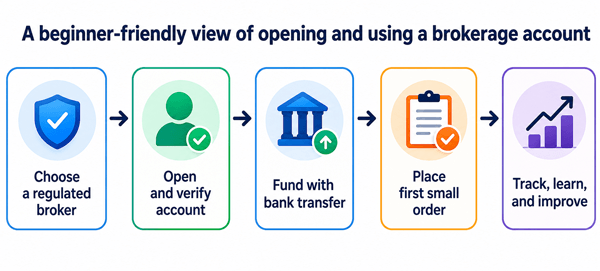
Figure 1. The basic journey from choosing a broker to managing your first investments.
Quick answer
To open a stock brokerage account, choose a regulated broker, compare fees and account features, complete the online application, verify your identity, connect a bank account, deposit money, and place your first order only after you understand the investment, costs, and risks.
2. How a Stock Brokerage Account Works
When you open a brokerage account, the broker acts as the platform that receives your order and routes it so you can buy or sell securities. In everyday use, you log in, search for a stock or ETF, choose the number of shares or dollar amount, select an order type, review the estimated cost, and submit the order. After the trade settles, the investment appears in your account holdings.
The broker usually provides account statements, tax documents where applicable, charts, market data, research tools, watchlists, alerts, and customer support. Some brokers are designed for long-term investors, some for active traders, some for beginners, and some for people who want human advice. The right choice depends on your goal, experience, country, and investing style.
2.1 Cash Account vs Margin Account: The First Big Decision
Many beginners should understand the difference before signing up because the choice affects risk. In a cash account, you buy investments with your own available cash. In a margin account, the broker may lend you money using your investments as collateral. Margin can increase buying power, but it can also magnify losses and may lead to forced selling if the account value falls too much.
| Feature | Cash brokerage account | Margin brokerage account | Beginner takeaway |
|---|---|---|---|
| How purchases are paid | With settled cash you deposit | With cash plus money borrowed from broker | Cash is simpler and usually safer for beginners |
| Risk level | Investment risk only | Investment risk plus borrowing risk, interest, and margin calls | Do not use margin until you fully understand it |
| Best for | Long-term investors, new investors, disciplined investing | Experienced investors who understand leverage | Start simple; avoid borrowing to invest |
| Possible costs | Trading fees, fund fees, account fees depending on broker | All cash-account costs plus margin interest | Margin interest can quietly reduce returns |
A practical beginner rule: if you do not understand exactly how margin interest, collateral, and margin calls work, choose a cash account first. You can learn the platform and investing basics without adding borrowed-money risk.
3. Who Needs a Brokerage Account?
You need a brokerage account if you want direct access to stock market investments instead of only keeping money in a bank account. It can be useful for people who want to build long-term wealth, invest for retirement, buy ETFs, hold dividend stocks, diversify beyond local savings products, or learn investing in a controlled way.
You may not need one immediately if you have high-interest debt, no emergency fund, unstable income, or money you will need very soon. Stock market investing works best when you can leave money invested through ups and downs. If you may need the money next month, it probably does not belong in stocks.
4. Step-by-Step: How to Open a Stock Brokerage Account
4.1 Decide your investing goal first
Before choosing a broker, write down why you are investing. Are you saving for retirement, building long-term wealth, learning the market, earning dividends, or investing small monthly amounts? A person buying broad ETFs for 20 years needs different tools than someone day trading. Beginners usually benefit from a simple, low-cost online brokerage account with clear educational resources.
4.2 Choose a regulated and reputable broker
Do not choose a broker only because an influencer mentions it or because the app looks exciting. Check whether the firm is registered with the appropriate regulator in your country. In the United States, investors can use Investor.gov and FINRA BrokerCheck to review registration, licenses, and disciplinary history. In other countries, use your local securities regulator or stock exchange resources.
4.3 Compare fees, not just commissions
Many brokers advertise commission-free stock trades, but that does not mean the account is free in every way. Look for account maintenance fees, inactivity fees, withdrawal fees, currency conversion fees, margin interest, options contract fees, mutual fund transaction fees, ETF expense ratios, advisory fees, and transfer-out fees. Small fees can become meaningful over time.
4.4 Check the investment menu
A beginner-friendly broker should offer the investments you actually need: stocks, ETFs, mutual funds, bonds, or retirement products where available. More products are not always better. Access to complex products like options, futures, CFDs, crypto, or margin trading can tempt beginners into risks they do not understand.
4.5 Review platform usability and support
A good brokerage platform should make it easy to find positions, cash balance, order status, cost basis, account statements, and fees. Customer support matters because account opening, bank transfers, tax forms, and login issues can be stressful when real money is involved.
4.6 Complete the application
Most online brokerage applications ask for your legal name, date of birth, address, phone number, email, tax identification or national ID details, employment status, income range, net worth range, investment experience, and risk tolerance. These questions help the broker verify identity and understand account suitability. Answer honestly.
4.7 Verify your identity
The broker may ask for a government ID, proof of address, selfie check, bank verification, or additional documents. This is normal for regulated financial accounts. Avoid any platform that lets you invest large sums without serious identity checks, because weak verification can be a red flag.
4.8 Link a bank account and fund carefully
After approval, connect your bank account or use another allowed funding method. Beginners should start with a small amount they can afford to risk. Do not borrow money, use rent money, or invest your emergency fund.
4.9 Learn the order screen before buying
Before placing a trade, understand the ticker symbol, bid and ask price, number of shares, order type, estimated cost, time-in-force, and fees. Review everything before clicking submit. Many beginner mistakes happen because the investor typed the wrong ticker, selected a market order in a fast-moving stock, or bought far more shares than intended.
4.10 Keep records and review regularly
Save confirmations, monthly statements, and tax documents. Review your account, but do not obsessively check prices every hour. For long-term investors, a monthly or quarterly review is often more useful than emotional daily checking.
5. Why Fees Matter More Than Beginners Think
Fees do not only cost you money today; they can reduce the amount that stays invested and compounds. A trading commission, account fee, fund expense ratio, advisory fee, or margin interest charge can all reduce your return. This does not mean the cheapest broker is always the best. It means you should know what you are paying and why.
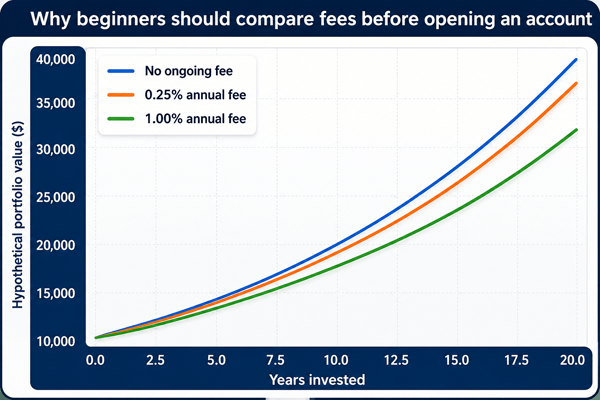
Figure 2. Hypothetical fee comparison. Actual investment returns are not guaranteed.
Practical example
Suppose you invest $200 every month into an ETF. Broker A has no account fee and offers low-cost ETFs. Broker B charges a monthly account fee, currency conversion spread, and higher fund expenses. Even if both apps look similar, Broker B may quietly reduce your long-term returns. Always compare total cost, not just the headline commission.
6. How to Choose the Best Brokerage Account for Beginners
The best brokerage account is not the one with the loudest marketing. It is the one that fits your goal, protects your information, explains costs clearly, and helps you make fewer emotional mistakes.
| What to compare | Why it matters | Beginner-friendly question |
|---|---|---|
| Regulation and protection | Is the broker registered with the relevant authority? Is there investor protection if the broker fails? What is and is not covered? | Can I explain this feature in one sentence before I deposit money? |
| Costs | What are commissions, account fees, withdrawal fees, currency conversion fees, fund expense ratios, and margin interest rates? | Can I explain this feature in one sentence before I deposit money? |
| Ease of use | Can a beginner understand the dashboard, holdings, order ticket, statements, and support pages? | Can I explain this feature in one sentence before I deposit money? |
| Investment selection | Does it offer the stocks, ETFs, funds, and account types you need without pushing complex products? | Can I explain this feature in one sentence before I deposit money? |
| Education | Does it teach risk, diversification, fees, and order types instead of only promoting trading? | Can I explain this feature in one sentence before I deposit money? |
| Customer support | Can you reach support by chat, phone, or email? Are response times reasonable? | Can I explain this feature in one sentence before I deposit money? |
| Security | Does it offer two-factor authentication, login alerts, device management, and strong account recovery? | Can I explain this feature in one sentence before I deposit money? |
7. Placing Your First Stock Order: Market, Limit, and Stop Orders
A brokerage account becomes real when you place an order. The order type tells the broker how you want the trade handled. Beginners do not need every advanced order type, but they should understand the common ones.
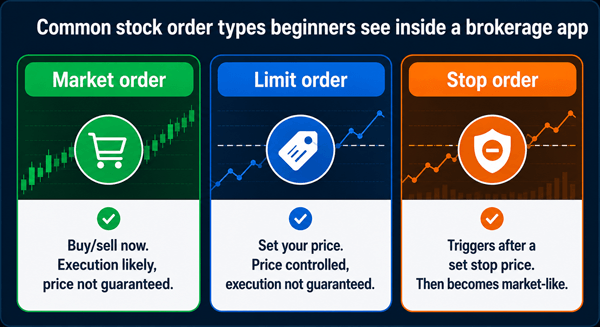
Figure 3. Simple overview of common order types in a stock trading platform.
A market order is designed to execute quickly at the best available price, but the final price is not guaranteed. A limit order lets you set the maximum price you are willing to pay when buying or the minimum price you will accept when selling, but the order may not execute. A stop order becomes active after a stop price is reached and then generally behaves like a market order.
Beginner example
You want to buy shares of XYZ, currently quoted around $50. A market order may execute near $50, but in a fast market it could fill higher. A buy limit order at $50 means you will not pay more than $50, but you may not get the shares if the price does not reach your limit. For beginners, limit orders can reduce surprise prices, especially in volatile stocks.
8. What Every Beginner Should Know Before Investing
- Stocks can lose value. A brokerage account gives access to opportunity, not a guarantee of profit.
- Diversification matters. Owning one hot stock is very different from owning a broad ETF or diversified portfolio.
- Your time horizon matters. Money needed soon should usually be kept safer than money invested for many years.
- Fees and taxes matter. Two investors can earn the same market return but keep different amounts after costs and taxes.
- Risk tolerance is real. If a 20% drop would make you panic-sell, start smaller and learn first.
- Influencer tips are not a strategy. A stock tip without research, valuation, and risk management is speculation.
- Account security is part of investing. Use a strong password, two-factor authentication, and withdrawal alerts.
9. A Practical First-Month Plan for a New Brokerage Account
- Week 1: Open the account, enable two-factor authentication, learn the dashboard, and read the broker fee schedule.
- Week 2: Build a watchlist of broad ETFs and a few companies you understand. Do not buy yet; learn how prices move.
- Week 3: Decide your first small investment amount and write down why you are buying. Prefer simple, diversified investments over hype.
- Week 4: Place one small order, save the trade confirmation, and review how the investment appears in your holdings.
10. Real-World Beginner Mistakes and How to Avoid Them
10.1 Depositing too much too quickly
Start with an amount small enough that a temporary loss will not affect your life. Confidence should come from knowledge, not excitement.
10.2 Confusing account cash with profit
Seeing cash in the account does not mean you made money. Track deposits, withdrawals, fees, dividends, and investment gains separately.
10.3 Buying because the chart is going up
Rising prices can attract beginners near the top. Ask what the company does, how it makes money, whether the price is reasonable, and what could go wrong.
10.4 Ignoring currency risk
If you invest in foreign stocks or ETFs, exchange rates can affect your return. Currency conversion fees can also be expensive.
10.5 Using margin too early
Borrowed money can make losses larger. Many beginners should learn with a cash account first.
10.6 Not reading account statements
Statements help you catch errors, unauthorized activity, fees, and tax information. Do not rely only on the app home screen.
11. How to Check Whether a Broker Is Legitimate
Before opening a brokerage account, check the broker through official sources. In the United States, Investor.gov can direct users to registration and disciplinary information, and FINRA BrokerCheck can help research brokerage firms and individual brokers. Outside the United States, use your local securities regulator, stock exchange, or official investor-protection website. Do not rely only on app-store ratings or social media comments.
- Confirm the exact legal name of the brokerage firm, not only the brand name.
- Check whether the firm and professional are registered or licensed where required.
- Read disciplinary history, complaints, and regulatory actions when available.
- Confirm investor protection details and understand what is not protected.
- Avoid platforms that guarantee profits, pressure you to deposit quickly, or hide fees.
12. Investor Protection: What It Does and Does Not Cover
Investor protection is often misunderstood. For example, SIPC protection in the United States is meant to help customers if a SIPC-member brokerage firm fails and customer cash or securities are missing. It does not protect you from market losses. If you buy a stock and the stock price falls, investor protection does not reimburse that loss. Similar rules in other countries also have limits and exclusions, so always read the exact local protection scheme.
Simple explanation
Broker failure protection is not the same as investment profit protection. It may help if the broker fails and assets are missing, but it will not rescue a bad investment decision, a falling stock price, or losses from normal market risk.
13. How to Use a Brokerage Account the Right Way
A good brokerage account should become part of a calm financial routine, not a gambling screen. Beginners often do better when they create rules before emotions appear.
- Create an investing budget after covering basic expenses and emergency savings.
- Use automatic deposits only if you understand what will be bought and why.
- Keep a simple investment journal: date, investment, reason, risk, and review date.
- Prefer diversification over trying to find one perfect stock.
- Review fees annually and compare them with other available options.
- Use educational resources from regulators and reputable financial institutions, not just social media.
- Set a rule against panic selling, revenge trading, or doubling down without analysis.
14. Practical Example: Opening and Using an Account as a Complete Beginner
Imagine Sara is 27, has a stable income, no high-interest debt, and an emergency fund. She wants to start stock market investing but knows very little. She decides her goal is long-term wealth building, not day trading.
Sara compares three online brokerage accounts. One has flashy trading tools but higher currency conversion fees. One has excellent research but charges an account maintenance fee. One offers low-cost ETF investing, clear statements, strong security, and beginner education. Sara chooses the third broker because it matches her goal.
She opens a cash account, verifies her identity, connects her bank, deposits a small amount, and spends a week learning the dashboard. Instead of buying a trending stock from social media, she starts with a diversified ETF after reading its expense ratio, holdings, risks, and past performance disclaimer. She uses a limit order, saves the confirmation, and writes in her journal: “I bought this because it gives broad market exposure, not because I expect quick profit.”
This example is not a recommendation to buy any specific ETF. The lesson is the process: goal first, broker comparison second, small deposit third, research fourth, order review fifth.
15. Brokerage Account Opening Checklist
☐ Regulated broker verified through official source
☐ Clear fee schedule reviewed
☐ Cash vs margin account decision understood
- Investment products match your goal
- Two-factor authentication enabled
- Bank funding method confirmed
- Minimum deposit and withdrawal rules checked
- Order types understood before first trade
- Statements and tax documents location known
- Personal investing rules written down
16. Frequently Asked Questions
16.1 Is a brokerage account the same as a bank account?
No. A bank account is mainly for deposits, payments, and savings. A brokerage account is for holding investments that can rise or fall in value.
16.2 How much money do I need to start?
It depends on the broker, country, and investments. Some online brokers allow small deposits or fractional shares, while others have minimums. Start only with money you can afford to leave invested and potentially lose.
16.3 Can I lose more than I invest?
In a normal cash account, losses are generally limited to the amount invested in the security, though the investment can fall sharply. In margin or leveraged products, losses can be larger and more complicated.
16.4 Should beginners use margin?
Most beginners should avoid margin until they understand borrowing costs, collateral, margin calls, forced liquidation, and the possibility of larger losses.
16.5 What is the safest first investment?
There is no universally safest investment for everyone. Many beginners study diversified funds or ETFs because they spread risk across many holdings, but they still carry market risk.
16.6 Do brokerage accounts charge taxes?
Taxes depend on your country, account type, dividends, capital gains, holding period, and tax treaties. Keep records and consult qualified tax guidance for your situation.
16.7 Can I open more than one brokerage account?
Often yes, but multiple accounts can make tracking, taxes, and security more complicated. Beginners usually benefit from keeping things simple.
16.8 What should I do after my first trade?
Check the trade confirmation, confirm the holding appears correctly, record your reason for buying, and continue learning. Do not judge success by one day of price movement.
17. Honest Investing Practices This Article Encourages
Good financial content should not promise guaranteed returns, push risky behavior, or make beginners feel they must act immediately. A trustworthy brokerage-account guide should encourage readers to compare regulated firms, understand fees, avoid borrowed money unless experienced, protect their login credentials, and invest according to their own goals and risk capacity.
The right message for beginners is not “open an account and get rich.” The right message is: open the account carefully, learn the rules, start small, diversify, avoid scams, and make decisions you can explain in plain language.
18. Conclusion: Open the Account Slowly, Then Invest Deliberately
Opening a stock brokerage account is easier than ever, but easy access does not remove risk. A beginner should treat the account like a serious financial tool. Choose a regulated broker, understand cash and margin accounts, compare total fees, secure your login, start small, and learn order types before buying.
The best brokerage account for beginners is not simply the cheapest or most popular one. It is the one that helps you invest with clarity, control, and honest expectations. When you understand how the account works, what fees apply, what protections exist, and what risks remain, you are already ahead of many new investors.
Sources Consulted and Checked
The following official and reputable sources were consulted and checked while preparing this document and reviewing its accuracy. Readers should use the most current version of each source and, where relevant, consult the regulator or tax authority in their own country.
- U.S. SEC Investor.gov - Investor Bulletin: How to Open a Brokerage Account: https://www.investor.gov/introduction-investing/general-resources/news-alerts/alerts-bulletins/investor-bulletins-43
- U.S. SEC Investor.gov - Types of Orders: https://www.investor.gov/introduction-investing/investing-basics/how-stock-markets-work/types-orders
- U.S. SEC Investor.gov - Understanding Fees: https://www.investor.gov/introduction-investing/getting-started/understanding-fees
- U.S. SEC Investor.gov - Check Out Your Investment Professional: https://www.investor.gov/introduction-investing/getting-started/working-investment-professional/check-out-your-investment-professional
- FINRA - About BrokerCheck: https://www.finra.org/investors/investing/working-with-investment-professional/about-brokercheck
- FINRA - Regulation Best Interest: https://www.finra.org/rules-guidance/key-topics/regulation-best-interest
- SIPC - What SIPC Protects / Investor Resources: https://www.sipc.org/
- Pakistan Stock Exchange - Open an Account / Investor Resources: https://www.psx.com.pk/psx/resources-and-tools/investors/open-an-account-invest
Reader Advice
This article is provided solely for educational and informational purposes. It is not personalized financial, investment, legal, tax, or brokerage advice, and it does not recommend any particular broker, security, fund, account type, strategy, or transaction.
Brokerage rules, eligibility requirements, fees, taxes, investor-protection arrangements, available products, minimum deposits, and trading features may differ by country, regulator, broker, account type, and individual circumstances. They may also change over time. Before opening or funding an account or making any investment decision, verify all material facts, figures, fees, terms, risks, and regulatory details directly with the relevant broker and official regulator. Consider obtaining advice from a suitably qualified and licensed financial, legal, or tax professional where appropriate.
Investing involves risk, including the possible loss of principal. Past performance does not guarantee future results. Never invest money you cannot afford to lose, and do not rely on social-media claims, promotional material, or this article as a substitute for independent research and professional judgment.