Common Stock Market Mistakes Beginners Should Avoid
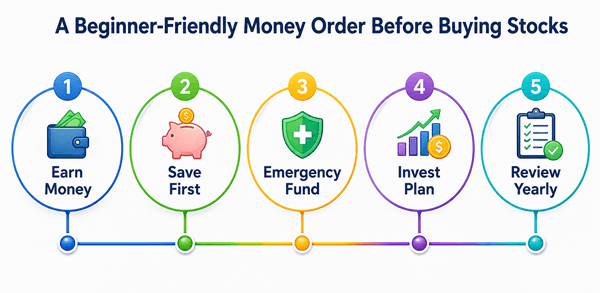
Figure 1. A simple order of operations before buying stocks.
1. What Is the Stock Market? A Simple Explanation
The stock market is not a magic money machine. It is a marketplace. Companies sell small pieces of ownership, called shares or stocks, and investors buy and sell those shares. If a company grows, earns more profit, and the market believes its future is strong, the stock price may rise. If the company disappoints, faces competition, carries too much debt, or the economy weakens, the stock price may fall.
When you buy a stock, you are not just buying a number on an app. You are buying a tiny ownership claim in a real business. That business has customers, employees, competitors, costs, debts, opportunities, and risks. A beginner who understands this one idea already has an advantage over people who treat stocks like lottery tickets.
The stock market works through exchanges and brokers. A broker is the platform or company that lets you place buy and sell orders. The exchange is where those orders are matched. Prices move because buyers and sellers constantly disagree about what a company is worth. Good news, bad news, interest rates, earnings reports, inflation, global events, and investor emotions can all move prices.
2. How Stock Investing Works for Beginners
A beginner usually opens a brokerage account, deposits money, chooses an investment, and places an order. But the important part happens before the order: deciding why you are investing, how long the money can stay invested, and what kind of losses you can tolerate without panicking.
For example, money needed for rent next month should not be placed into a volatile stock. Money intended for a goal 10 or 20 years away may have more time to recover from market ups and downs. This is why time horizon matters. The same investment can be sensible for one person and dangerous for another depending on when they need the money.
Beginners can invest in individual stocks, stock mutual funds, exchange-traded funds, retirement accounts, or a mix. Individual stocks can offer ownership in specific companies, but they require more research and carry company-specific risk. Broad funds can hold many companies at once, which can reduce the damage if one company performs badly.
3. Why Beginners Make Costly Stock Market Mistakes
Most beginners do not lose money because they are unintelligent. They lose money because the market is emotional. A rising stock makes people feel safe exactly when the price may already be expensive. A falling stock makes people feel scared exactly when long-term opportunity may be improving. Social media makes this worse by showing success stories and hiding losses.
Another reason beginners struggle is that the market gives quick feedback, but investing success often needs slow judgment. A good decision can look bad for several months. A bad decision can look good for a few weeks. That confusion makes people chase, panic, overtrade, and change plans too often.
The solution is not to remove emotion completely. That is impossible. The solution is to build rules before emotions arrive. Rules such as “I will not invest my emergency fund,” “I will not buy a stock I cannot explain,” and “I will not put most of my money into one company” can protect beginners from their own worst moments.
Practical note: Before buying any stock, a beginner should be able to answer: What does this company do? How does it make money? Why might it grow? What could go wrong? Is the price reasonable compared with the risk?
4. Common Stock Market Mistakes Beginners Should Avoid
4.1 Investing Without a Clear Goal
A beginner may say, “I just want to make money.” That is natural, but it is not a plan. Investing for a house down payment in two years is different from investing for retirement in 30 years. Without a goal, every market dip feels like an emergency and every hot stock feels tempting.
Beginner-friendly fix: Write one sentence before investing: “I am investing for ___, and I do not need this money for ___ years.” This simple sentence helps you choose the right level of risk.
4.2 Using Money Needed for Bills or Emergencies
One of the most painful beginner mistakes is investing money that should stay safe. Stocks can fall suddenly. If you invest your rent money and the market drops, you may be forced to sell at a loss.
Beginner-friendly fix: Keep an emergency fund separate from your brokerage account. A common practical target is several months of essential expenses, adjusted to your job stability and family needs.
4.3 Thinking Stocks Only Go Up
Over long periods, stock markets have historically rewarded patient investors, but individual stocks and entire markets can fall sharply. A beginner who expects constant gains is more likely to panic during normal volatility.
Beginner-friendly fix: Expect red days, red weeks, and sometimes red years. A plan that only works when prices rise is not a real plan.
4.4 Trying to Get Rich Quickly
Fast-profit thinking pushes beginners into risky trades, leverage, penny stocks, rumors, and speculative options. The problem is not ambition; the problem is confusing gambling with investing.
Beginner-friendly fix: Judge success by process, not excitement. A boring plan that survives for 20 years is usually better than an exciting idea that blows up in 20 days.
4.5 Following Social Media Hype
A stock trending online may already be inflated by the time beginners hear about it. People often post wins loudly and hide losses quietly. Beginners then compare themselves with a highlight reel.
Beginner-friendly fix: Treat every online tip as an advertisement until proven otherwise. Ask: What is the source? What is the evidence? Does the person benefit if I buy?
4.6 Buying a Stock Without Understanding the Business
A stock symbol is not a business explanation. Beginners may buy because they like a product, but a popular product does not automatically mean a profitable, fairly valued company.
Beginner-friendly fix: Use the “explain it to a friend” test. If you cannot explain how the company earns money in plain language, wait and research more.
4.7 Putting Too Much Money Into One Stock
Concentration can create big gains, but it can also create life-changing losses. Beginners often overtrust one company because it is famous, local, or recently performed well.
Beginner-friendly fix: Avoid letting one stock decide your financial future. Diversification does not remove risk, but it can reduce the impact of one bad decision.
4.8 Confusing a Good Company With a Good Investment
A wonderful company can still be a poor investment if the price is too high. Beginners sometimes buy famous brands without asking whether the current price already reflects years of expected growth.
Beginner-friendly fix: Separate business quality from stock price. Ask: “What expectations are already built into this price?”
4.9 Ignoring Fees, Spreads, and Taxes
Small costs can quietly reduce returns. Frequent trading may create transaction costs, bid-ask spread costs, and taxable events depending on the investor’s country and account type.
Beginner-friendly fix: Before trading often, understand the fee schedule, tax rules, and whether a lower-cost long-term method would fit your goal better.
4.10 Trading Too Often
Overtrading feels productive, but constant buying and selling often comes from boredom, fear, or the desire to control uncertainty. Many beginners mistake activity for skill.
Beginner-friendly fix: Set a review schedule. For long-term investments, reviewing weekly or monthly may be enough; checking prices every hour can increase anxiety without improving decisions.
4.11 Panic Selling During Market Drops
Market declines are emotionally difficult. Beginners often sell after a big fall because they want the pain to stop. The risk is turning a temporary paper loss into a permanent realized loss.
Beginner-friendly fix: Before selling, ask whether the original reason for owning the investment is broken, or whether the price is simply down with the market.
4.12 Averaging Down Without a Reason
Buying more after a stock falls can be sensible if the long-term case is stronger than the price suggests. But beginners may average down just because they hate admitting a mistake.
Beginner-friendly fix: Do not add money only to reduce your average cost. Add only if you would happily buy the stock today as a new investment.
4.13 Copying Someone Else’s Portfolio
A portfolio that fits one person may be wrong for another. Age, income, debt, family needs, country, tax situation, job security, and risk tolerance all matter.
Beginner-friendly fix: Use other people’s portfolios for learning, not copying. Build around your own goals and constraints.
4.14 Not Knowing Risk Tolerance
Risk tolerance is not what you claim during a bull market. It is what you can handle when your account is down and the news is frightening.
Beginner-friendly fix: Start smaller if you are unsure. A beginner can learn their emotional reaction with an amount that will not damage their life.
4.15 Ignoring Asset Allocation
Some beginners think investing means 100% individual stocks. Others keep everything in cash because they fear loss. Asset allocation is the mix of investments that matches goals and risk.
Beginner-friendly fix: Think in layers: emergency cash, broad diversified core, and only then smaller individual stock positions if appropriate.
4.16 Believing Dividends Are Free Money
Dividends can be useful, but they are not magic. A company paying a dividend is distributing cash that could otherwise stay in the business. A high dividend yield can also be a warning sign if the company is under stress.
Beginner-friendly fix: Look at the whole business, not only the dividend percentage. Ask whether earnings and cash flow can support the payout.
4.17 Using Leverage Too Early
Margin and leveraged products can magnify gains, but they also magnify losses. Beginners can lose more quickly than expected, especially in volatile markets.
Beginner-friendly fix: Avoid leverage until you fully understand worst-case outcomes. Many beginners do not need leverage at all to build wealth over time.
4.18 Falling for Scams and “Guaranteed Return” Claims
No legitimate stock investment can guarantee high returns with no risk. Fraudsters use urgency, secrecy, fake testimonials, and pressure to make beginners act before thinking.
Beginner-friendly fix: Slow down when someone says “limited time,” “risk-free,” or “guaranteed profit.” Verify registration, read official warnings, and never send money to unknown people online.
4.19 Not Keeping Records
Beginners often forget why they bought something, what price they paid, and what would make them sell. Without records, decisions become emotional memories instead of evidence-based reviews.
Beginner-friendly fix: Keep a simple investing journal: date, investment, reason, risks, expected holding period, and review date.
4.20 Expecting Perfect Timing
Many beginners wait for the “perfect” entry price and never start, or they jump in all at once because they fear missing out. Both behaviors are timing traps.
Beginner-friendly fix: Consider gradual investing when appropriate. Spreading purchases over time can reduce the emotional pressure of choosing one perfect day.
4.21 Not Learning From Mistakes
Every investor makes mistakes. The real beginner mistake is refusing to study them. A loss can be tuition if it teaches process; it becomes waste if repeated.
Beginner-friendly fix: After any loss, write down whether it came from bad research, bad risk sizing, bad timing, bad luck, or breaking your own rules.
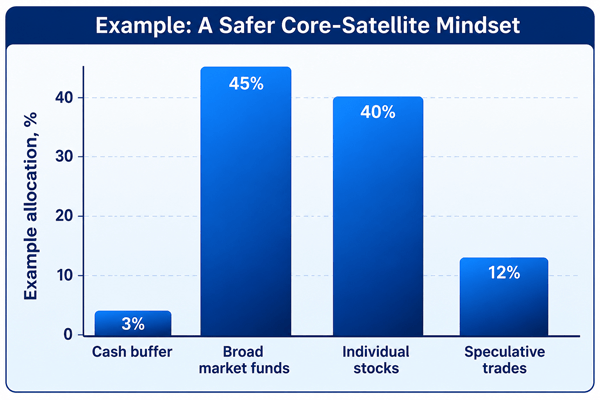
Figure 2. Example of separating broader market exposure from smaller speculative decisions. This illustration is not a recommendation.
5. Investor vs. Trader: A Beginner Comparison
| Question | Long-term investor mindset | Short-term trading mindset |
|---|---|---|
| Main focus | Business quality, diversification, time, risk control | Price movement, timing, speed, technical setups |
| Typical holding period | Years or decades | Minutes, days, or weeks |
| Main beginner risk | Getting impatient or ignoring valuation | Overtrading, leverage, emotional losses |
| Knowledge needed | Company basics, funds, asset allocation, costs, taxes | Market structure, order types, risk sizing, psychology |
| Best for beginners? | Often easier to understand and build gradually | Higher learning curve and more stressful |
6. A Practical Beginner Investing Checklist
- Pay off or control high-interest debt before taking unnecessary stock market risk.
- Build a basic emergency fund separate from your investing account.
- Define your goal and time horizon in writing.
- Learn the difference between a stock, ETF, mutual fund, bond, dividend, market order, limit order, and expense ratio.
- Choose a reputable broker and understand fees, order types, account protections, and tax documents.
- Start with a diversified core before buying many individual stocks.
- Limit any single stock or speculative idea to an amount you can emotionally and financially survive losing.
- Keep a written reason for every investment you buy.
- Review periodically, not obsessively.
- Be skeptical of guaranteed returns, secret strategies, celebrity promotions, and urgent online tips.
Experience-based rule: A useful beginner rule: never buy because the price is moving fast. Buy only when the investment fits your written plan and you understand the main risks.
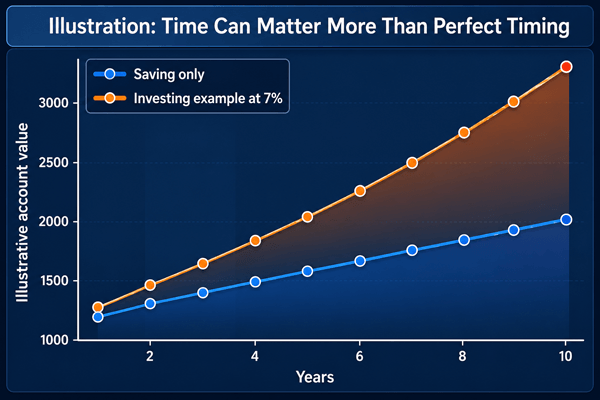
Figure 3. Simplified illustration of why patience and consistency can matter. Actual returns are not guaranteed.
7. Practical Examples Beginners Can Understand
7.1 The “Hot Stock” Mistake
A beginner sees a stock rising quickly on social media. Everyone says it will “go to the moon.” The beginner buys without checking the company’s earnings, debt, valuation, or news. A week later the hype fades, early buyers sell, and the stock falls. The beginner now has no plan: sell, hold, or buy more? The real mistake happened before the purchase. They bought excitement, not an investment thesis.
Better approach: write down the business case first. If the only reason is “people online are excited,” do not buy.
7.2 The One-Stock Portfolio
A beginner puts most savings into one famous technology company because it has performed well for years. The company may still be excellent, but the portfolio is fragile. If regulations, competition, valuation, or earnings disappoint, the beginner’s entire account suffers.
Better approach: use diversification. A broad fund plus a smaller individual stock position can let the beginner learn without making one company responsible for the whole future.
7.3 The Panic Sale
A beginner invests for a 15-year goal but checks prices daily. The market drops 12%. News headlines sound scary. The beginner sells everything, then watches the market recover months later. The mistake was not feeling fear; fear is normal. The mistake was having no written rule for downturns.
Better approach: decide in advance what would justify selling. A price drop alone is not always a reason. A broken investment thesis may be.
8. FAQs: Common Questions Beginners Ask
8.1 Is the stock market safe for beginners?
It can be used responsibly, but stocks involve risk. Beginners should start with education, emergency savings, diversification, and realistic expectations rather than rushing into hot tips.
8.2 How much money do I need to start investing?
Many platforms allow small starting amounts, but the better question is whether your basic finances are ready. Do not invest money needed for bills, debt payments, or emergencies.
8.3 Should beginners buy individual stocks or funds?
Many beginners find broad funds easier because they provide diversification in one investment. Individual stocks can be educational, but they require more research and careful position sizing.
8.4 What is the biggest stock market mistake?
The biggest mistake is investing without a plan. Almost every other mistake, including panic selling, chasing hype, and overconcentration, becomes more likely when there is no written plan.
8.5 Can I lose all my money in stocks?
An individual company can fail and its stock can become nearly worthless. A diversified portfolio reduces single-company risk, but it cannot eliminate market risk.
8.6 How often should a beginner check investments?
For long-term goals, constant checking is usually unnecessary and can encourage emotional decisions. A monthly or quarterly review may be enough for many beginners.
8.7 Is day trading good for beginners?
Day trading is difficult, stressful, and risky. It requires skills that most beginners do not yet have, including risk sizing, discipline, and understanding market mechanics.
8.8 What should I do before buying my first stock?
Learn the basics, write your goal, understand risk, choose a reputable broker, start small, diversify, and keep records of why you bought.
9. Conclusion: The Best Beginner Advantage Is Patience
Beginners often believe the stock market rewards the smartest prediction. In reality, many successful long-term investors are not trying to predict every move. They are trying to avoid destructive mistakes: investing money they need soon, chasing hype, ignoring risk, overtrading, concentrating too much, and selling in panic.
The stock market can help people build wealth, but only when it is treated with respect. Start with education. Protect your emergency money. Diversify. Understand what you own. Keep costs low. Be honest about risk. Ignore promises that sound too good to be true. Most importantly, build a plan you can follow on both good days and bad days.
Sources Consulted and Checked
The following sources were consulted and checked while preparing this article to support accuracy and provide reliable further reading.
- U.S. Securities and Exchange Commission (SEC), “Ten Things to Consider Before You Make Investing Decisions.”
- Investor.gov, “Introduction to Investing.”
- Investor.gov, “Beginner’s Guide to Asset Allocation, Diversification, and Rebalancing.”
- Investor.gov glossary, “Diversification,” “Risk Tolerance,” and “Compound Interest.”
- FINRA, “Investing Basics” and “Risk.”
Reader Advice
This article is provided solely for educational and informational purposes and does not constitute personal financial, investment, tax, legal, or brokerage advice. Investing in stocks and other securities involves risk, including the possible loss of principal, and past performance does not guarantee future results. Readers should assess their own goals, financial circumstances, time horizon, and risk tolerance and, where appropriate, consult a qualified and licensed professional before making any financial decision. Laws, tax rules, account types, fees, market conditions, investor protections, and regulatory requirements may vary by country and may change over time. Before acting, readers should verify current facts, figures, product terms, and legal or regulatory requirements through official sources and reputable financial institutions. No investment, return, or outcome is guaranteed.