How to Build a Diversified Stock Market Portfolio: A Simple Beginner Guide
Building a diversified stock market portfolio sounds complicated, but the basic idea is simple: do not depend on one company, one industry, one country, or one type of investment to carry your whole financial future. A diversified portfolio spreads your money across different investments so one bad result does not damage everything.
For a beginner, diversification is not about looking clever. It is about reducing avoidable risk. You still take market risk, because stocks can fall. But you avoid the extra risk of betting your savings on one hot stock, one trend, or one prediction that may turn out wrong.
This guide explains portfolio diversification in plain language. You will learn what it is, how it works, why beginners need it, how to choose an asset allocation, how ETFs and index funds can help, how to rebalance, and what mistakes to avoid. The goal is to help you build an investment portfolio that is simple, realistic, low-cost, and easier to stick with during both good and bad markets.
| Quick answer | What it means for a beginner |
|---|---|
| What is a diversified stock portfolio? | A mix of investments spread across many companies, sectors, countries, and sometimes asset classes like bonds and cash. |
| Why does it matter? | It lowers the damage that any single bad investment can cause. It does not remove risk, but it can make risk more manageable. |
| Easiest beginner method | Use broad, low-cost index funds or ETFs instead of trying to pick many individual stocks. |
| Most important habit | Choose a plan you can stay with, add money regularly, keep costs low, and rebalance when the mix drifts too far. |
1. What Is a Diversified Stock Market Portfolio?
A diversified stock market portfolio is a collection of investments designed so your money is not concentrated in one place. Instead of buying only one company, you may own hundreds or thousands of companies through index funds or ETFs. Instead of holding only technology stocks, you may own healthcare, consumer goods, financials, industrials, energy, utilities, and other sectors. Instead of investing only in your home country, you may include international stocks too.
The easiest way to understand it is with a grocery basket. If you carry only eggs and the basket drops, everything breaks. If the basket includes bread, rice, fruit, vegetables, and canned food, one damaged item does not ruin the whole trip. Investing works similarly. Diversification means you build a basket that can survive surprises.
A beginner should think of diversification at two levels: between asset classes and within asset classes. Between asset classes means deciding how much to hold in stocks, bonds, and cash. Within asset classes means spreading the stock part across many companies, industries, sizes, and countries. This two-level idea is also emphasized in investor education from the SEC and Investor.gov.
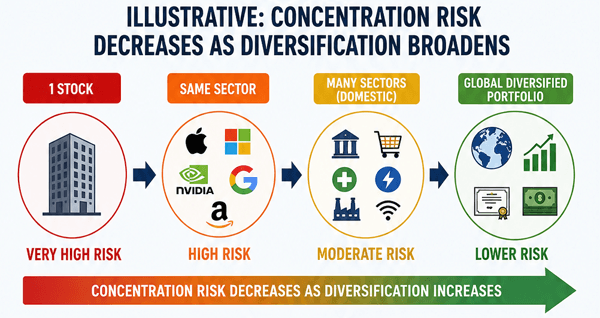
Figure 1. Illustrative concentration risk decreases as diversification broadens.
2. How Diversification Works in Real Life
Diversification works because different investments do not always move in the same direction at the same time. One year large U.S. companies may lead. Another year international stocks may do better. Sometimes growth stocks outperform. Sometimes value stocks, dividend stocks, or small companies have their turn. Bonds may help when stocks are under pressure, although bonds can also lose value when interest rates rise.
The point is not to predict the winner every year. The point is to accept that you probably cannot know the winner in advance, so you own a sensible mix. A good diversified portfolio is less exciting than chasing the hottest stock, but it is often more durable.
Imagine two beginners. Sarah invests all her money in one electric vehicle stock because everyone online is talking about it. Omar invests in a broad stock market ETF that owns hundreds of companies, plus a bond fund and a small cash reserve. If the EV company disappoints, Sarah may lose a large part of her money. Omar may still lose money if the whole market falls, but one company failure will not destroy his entire plan.
| Portfolio type | What it owns | Main risk | Beginner-friendly lesson |
|---|---|---|---|
| Single stock portfolio | One company | Company-specific risk: bad earnings, lawsuits, competition, management mistakes | Too much depends on one story being right. |
| Sector portfolio | Many companies in one industry, such as technology or energy | Sector risk: the entire industry can fall together | More diversified than one stock, but still concentrated. |
| Domestic stock index portfolio | Many companies in one country | Country risk and currency/economic concentration | A strong starting point, but may miss global opportunities. |
| Global stock and bond portfolio | Stocks across countries and sectors, plus bonds or cash | Still exposed to market risk, inflation, interest rates, and currency moves | Usually more balanced and easier for beginners to manage. |
3. Why Beginners Should Care About Diversification
Beginners often enter the market after hearing about a stock that already went up a lot. That creates a dangerous habit: buying what feels popular instead of building what fits their life. Diversification protects you from turning investing into gambling.
Here is what diversification helps with:
- It reduces single-company risk. One bankrupt or struggling company cannot wipe out the whole portfolio.
- It reduces sector risk. If technology, banks, real estate, or energy stocks struggle, other areas may help balance the damage.
- It reduces timing pressure. You do not need to guess exactly which stock will win next month.
- It supports emotional discipline. A smoother ride can make it easier to stay invested during downturns.
- It makes investing simpler. Broad funds can give you instant exposure to many companies with one purchase.
Important: diversification does not guarantee profit and does not prevent loss. A diversified stock portfolio can still fall sharply during bear markets. Its job is not to remove all risk. Its job is to remove unnecessary concentration risk.
4. The Building Blocks of a Diversified Portfolio
Before choosing investments, understand the main pieces that can go into a portfolio.
| Building block | Simple meaning | Common examples | Role in a portfolio |
|---|---|---|---|
| Stocks | Ownership in companies | Individual stocks, stock mutual funds, stock ETFs | Growth potential, but higher ups and downs. |
| Bonds | Loans to governments or companies | Treasury bonds, bond funds, corporate bond ETFs | Income and stability, though prices can fall. |
| Cash or cash equivalents | Money kept safe and available | Savings account, money market fund, short-term Treasury bills | Emergency needs and short-term goals. |
| International investments | Companies outside your home country | Global stock ETFs, international index funds | Reduces dependence on one country. |
| Alternative assets | Assets outside traditional stocks and bonds | REITs, commodities, sometimes private funds | Optional; can add complexity and fees. Beginners should be careful. |
5. Start With Your Goal, Not With a Stock Tip
A portfolio should begin with a personal goal. Are you investing for retirement in 25 years, a house down payment in 5 years, or general wealth building? The answer changes how much risk you can reasonably take.
Money needed soon should usually not be heavily invested in stocks, because the market may fall right when you need the cash. Money for long-term goals can usually accept more stock exposure because it has more time to recover from downturns.
| Goal | Time horizon | Possible approach | Why |
|---|---|---|---|
| Emergency fund | 0-12 months | Cash or high-quality cash equivalent | You need safety and access, not market risk. |
| House deposit | 1-5 years | Mostly cash and short-term high-quality bonds | A stock market drop could delay the goal. |
| Retirement for a young worker | 20+ years | Higher stock allocation, diversified globally | Long time horizon may absorb market volatility. |
| Retirement income soon | 0-5 years | Balanced mix of stocks, bonds, and cash | Needs growth and stability. |
6. Understand Risk Tolerance and Risk Capacity
Risk tolerance is how much market movement you can emotionally handle. Risk capacity is how much risk your financial situation can actually afford. A young investor may have high risk capacity because retirement is far away, but low risk tolerance if they panic and sell during every drop. An older investor may have high confidence, but lower risk capacity because they need the money soon.
A practical way to test yourself is to ask: “If my portfolio fell 25% this year, would I keep investing, stop investing, or sell everything?” Your honest answer matters more than an online quiz. The best portfolio is not the one with the highest expected return. It is the one you can realistically hold through difficult markets.
7. Choose an Asset Allocation
Asset allocation is the percentage of your portfolio placed in major categories such as stocks, bonds, and cash. Investor.gov describes asset allocation as dividing investments among categories like stocks, bonds, and cash, based on factors such as time horizon and risk tolerance. In plain English, it is your portfolio recipe.
For example, a beginner with a long time horizon might choose 80% stocks and 20% bonds. A more cautious investor might choose 60% stocks, 35% bonds, and 5% cash. Someone already retired might use a more conservative mix. There is no perfect allocation for everyone.
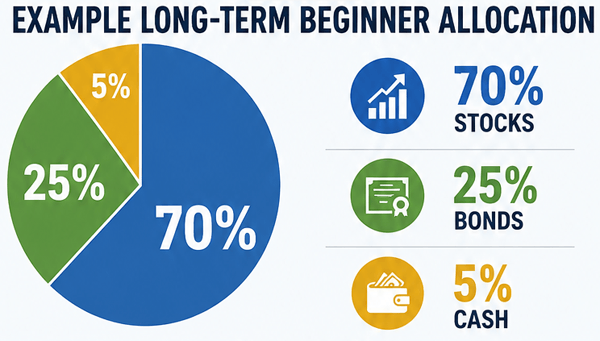
Figure 2. Example long-term beginner allocation: 70% stocks, 25% bonds, and 5% cash.
| Investor profile | Example allocation | What it may suit | Main tradeoff |
|---|---|---|---|
| Aggressive beginner | 90% stocks / 10% bonds or cash | Long time horizon, stable income, strong stomach for volatility | Higher growth potential, larger temporary losses. |
| Growth-focused beginner | 80% stocks / 20% bonds | Long-term goals but wants some balance | Still volatile, but less concentrated in stocks. |
| Balanced beginner | 60% stocks / 35% bonds / 5% cash | Moderate risk tolerance or medium-long goals | Less growth potential than stock-heavy mix. |
| Conservative investor | 40% stocks / 50% bonds / 10% cash | Shorter time horizon or lower risk tolerance | More stability, but inflation and low growth can be concerns. |
8. Diversify Within Stocks
Once you decide how much of the portfolio goes into stocks, the next question is what kind of stocks. A strong stock allocation is usually diversified across company size, sector, geography, and investment style.
- Company size: large companies can be more established; small companies may grow faster but can be more volatile.
- Sector: technology, healthcare, financials, consumer staples, energy, industrials, utilities, real estate, and other sectors behave differently.
- Geography: your home market may be familiar, but global diversification reduces dependence on one economy.
- Style: growth stocks, value stocks, dividend stocks, and broad market funds can perform differently over time.
The simplest way to do this is through a total stock market fund or a global stock market ETF. Instead of picking 30 individual stocks yourself, one broad ETF may give you exposure to hundreds or thousands of companies.
9. Decide Between Individual Stocks, Mutual Funds, ETFs, and Robo-Advisors
Beginners often ask whether they should buy individual stocks or funds. The honest answer is that broad funds are usually easier for beginners because diversification is built in. Individual stocks can be educational and exciting, but they require research, patience, position sizing, and emotional control.
| Option | Best for | Pros | Cons |
|---|---|---|---|
| Individual stocks | People willing to research companies deeply | Control, no fund expense ratio, potential to outperform | High concentration risk, time-consuming, easy to overtrade. |
| Index mutual funds | Long-term investors using retirement accounts | Broad diversification, simple automatic investing | May have minimums or trade only once daily. |
| ETFs | Investors using online brokerage accounts or investment apps | Low cost, diversified, easy to buy, tax-efficient in many markets | Can encourage frequent trading if misused. |
| Robo-advisors | Beginners who want automated portfolio management | Automatic asset allocation, rebalancing, and sometimes tax features | Advisory fees; less control over exact holdings. |
| Financial advisor | People with complex finances or big decisions | Personal planning, behavior coaching, tax/estate coordination | Cost varies; quality and incentives should be checked. |
10. Keep Costs Low
Fees are one of the few things investors can control. A fund charging 1% per year may not sound expensive, but over decades it can take a large bite out of returns. Beginners should compare expense ratios, trading commissions, advisory fees, spreads, account fees, and tax costs.
Low cost does not always mean best, and expensive does not always mean bad. But a beginner should ask a simple question before buying any product: “What am I paying, and what am I getting in return?” If the answer is unclear, slow down.
| Cost type | Where it appears | Why it matters |
|---|---|---|
| Expense ratio | Mutual funds and ETFs | Taken from fund assets every year; lower costs leave more return for investors. |
| Trading commission | Brokerage account or investment platform | Many platforms offer zero-commission stock/ETF trades, but check the full fee schedule. |
| Bid-ask spread | ETF trading | The hidden difference between buying and selling prices; usually smaller for liquid ETFs. |
| Advisory fee | Robo-advisor or human advisor | Can be worth it for planning and discipline, but should be transparent. |
| Tax drag | Taxable accounts | Frequent trading and inefficient funds may create avoidable taxes. |
11. Use Position Sizing If You Buy Individual Stocks
If you want to own individual stocks, use position sizing. This means limiting how much of your portfolio goes into one company. For example, a beginner may decide that no single stock should be more than 5% of the total portfolio. Some investors use even lower limits, especially when learning.
This rule protects you from overconfidence. Even strong companies can disappoint. A famous brand, a beautiful app, or a persuasive CEO does not make a stock risk-free. A position size limit gives you a safety fence.
12. Build the Portfolio With a Simple Example
Let us create a practical beginner example. Suppose Ayesha is 30 years old, has an emergency fund, has no high-interest debt, and wants to invest for retirement over the next 30 years. She can handle market ups and downs, but she does not want to spend every week researching stocks.
A simple starting portfolio could look like this:
| Investment | Allocation | Purpose |
|---|---|---|
| U.S. or home-country total stock market ETF | 45% | Core growth from a broad domestic market. |
| International stock ETF | 25% | Global diversification outside the home country. |
| Total bond market ETF or high-quality bond fund | 25% | Stability and income potential. |
| Cash or money market fund | 5% | Short-term flexibility and comfort. |
This is not a recommendation for every reader. It is an example of how a beginner can translate the idea of diversification into an actual structure. A more aggressive investor may reduce bonds. A more cautious investor may increase bonds or cash. A person investing for a short-term goal may avoid heavy stock exposure.
13. Add Money Regularly Instead of Waiting for the Perfect Time
Many beginners delay investing because they want to buy at the perfect moment. The problem is that perfect timing is only obvious later. A practical habit is dollar-cost averaging: investing a fixed amount regularly, such as every month. This does not guarantee profit, but it removes the pressure of guessing the best day to buy.
For example, someone investing $300 per month into a diversified ETF portfolio will buy more shares when prices are lower and fewer shares when prices are higher. More importantly, they build the habit of consistent investing.
14. Rebalance the Portfolio
Rebalancing means bringing your portfolio back to its target mix. Suppose your target is 70% stocks and 30% bonds. After a strong stock market year, stocks may rise to 78% of the portfolio. Rebalancing means selling some stocks or adding new contributions to bonds until the mix is closer to the original plan.
Rebalancing is useful because it turns discipline into a process. You are not making emotional decisions based on headlines. You are following a rule.
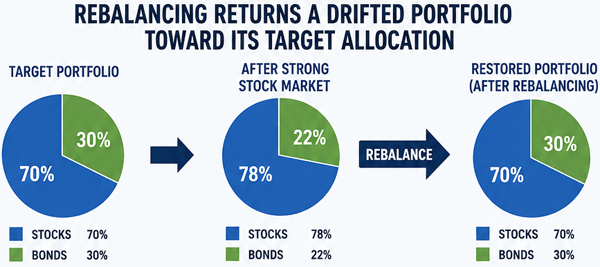
Figure 3. Rebalancing returns a drifted portfolio toward its target allocation.
| Rebalancing method | How it works | Good for beginners? |
|---|---|---|
| Calendar rebalancing | Check the portfolio once or twice a year. | Yes. Simple and prevents overchecking. |
| Threshold rebalancing | Rebalance when an asset class moves more than a set amount, such as 5 percentage points. | Yes, if you can follow rules calmly. |
| Contribution rebalancing | Use new money to buy the underweight part of the portfolio. | Yes. Often tax-friendly and easy. |
15. Common Beginner Mistakes to Avoid
- Confusing many investments with real diversification. Owning 20 technology stocks is still heavily exposed to technology.
- Chasing recent winners. Last year’s best fund or stock may not be next year’s winner.
- Ignoring fees. High costs quietly reduce long-term returns.
- Checking the portfolio too often. Daily checking can turn normal market movement into emotional stress.
- Selling during panic. A plan is most valuable when the market is uncomfortable.
- Investing emergency money. Money needed soon should not depend on stock market performance.
- Using leverage too early. Margin, options, and complex products can increase losses quickly.
- Copying someone else’s allocation. Your goals, income, age, tax situation, and risk tolerance are personal.
16. Focused Comparison: Diversified ETF Portfolio vs. Stock Picking
| Question | Diversified ETF portfolio | Individual stock picking |
|---|---|---|
| How much research is needed? | Low to moderate. Focus on asset allocation, costs, and fund quality. | High. You need to understand businesses, valuation, competition, and risk. |
| How diversified is it? | Often highly diversified with one or a few funds. | Depends on how many stocks and sectors you own. |
| Can it outperform? | It aims to capture market returns, not beat every investor. | Possible, but difficult and inconsistent. |
| Behavior risk | Lower if automated and simple. | Higher because emotions attach to favorite stocks. |
| Best beginner use | Core portfolio. | Small “learning” portion after core portfolio is built. |
17. How Many Funds Do You Really Need?
A beginner does not need a complicated portfolio. In many cases, two to four broad funds can provide enough diversification. More funds do not automatically mean better diversification. Sometimes more funds simply duplicate the same holdings and make the portfolio harder to manage.
| Simple model | Example structure | Who might like it |
|---|---|---|
| One-fund portfolio | Target-date fund or all-in-one balanced fund | Beginners who want maximum simplicity. |
| Two-fund portfolio | Global stock fund + bond fund | Investors who want control over stock/bond mix. |
| Three-fund portfolio | Domestic stock fund + international stock fund + bond fund | Classic simple structure with more control. |
| Core-satellite portfolio | Broad ETF core + small individual stock or thematic positions | Investors who want simplicity plus limited personal choices. |
18. Practical Checklist Before You Invest
- I have an emergency fund or a plan for short-term cash needs.
- I understand that stocks can lose money, especially in the short term.
- I know my goal and time horizon.
- I chose an asset allocation I can emotionally handle.
- I checked fund fees and account fees.
- I understand what each investment owns.
- I have a rule for rebalancing.
- I will not invest money needed soon in a high-risk portfolio.
- I will review my plan periodically, not react to every headline.
19. A Simple Beginner Action Plan
- Write your goal: retirement, wealth building, education, house, or another purpose.
- Separate short-term money from long-term money. Keep short-term money safer.
- Choose a stock/bond/cash mix based on your time horizon and risk tolerance.
- Pick broad, low-cost funds or ETFs for the core portfolio.
- Open a reputable online brokerage account, retirement account, investment app, robo-advisor, or other regulated investment platform that fits your location and needs.
- Set up regular contributions if possible.
- Rebalance once or twice a year, or when the portfolio drifts too far.
- Keep learning, but avoid changing the plan every time you read a new prediction.
20. Frequently Asked Questions
20.1 What is the easiest way to build a diversified stock portfolio?
For many beginners, the easiest way is to use broad, low-cost index funds or ETFs. A total stock market fund, an international stock fund, and a bond fund can create a simple diversified foundation.
20.2 Can I diversify with only $100?
Yes. Many brokerages and investment apps allow fractional shares or low-minimum funds. Even a small monthly amount can be diversified through ETFs or index funds.
20.3 How many stocks should a beginner own?
If buying individual stocks, owning only a few companies is risky. Many beginners are better served by broad funds that already own hundreds or thousands of stocks. If you buy individual stocks, keep them as a limited part of the portfolio until you have experience.
20.4 Is diversification better than picking winning stocks?
Diversification is not designed to find the single best stock. It is designed to reduce the risk of being wrong. Stock picking can outperform, but it is difficult and requires skill, discipline, and time.
20.5 Should I invest only in my country?
A home-country focus may feel familiar, but it can leave you exposed to one economy and currency. Global diversification can reduce that dependence, although it may add currency and international market risks.
20.6 How often should I rebalance?
Many beginners can review once or twice a year. Another approach is to rebalance when an asset class drifts more than a set amount, such as five percentage points from target.
20.7 Can diversification protect me from a market crash?
It can reduce certain risks, but it cannot fully protect you from broad market declines. In a severe bear market, many stocks can fall together.
20.8 Are ETFs good for beginners?
ETFs can be useful because they offer broad diversification, low costs, and easy access through many brokerage platforms. Beginners should still understand what the ETF owns and how much it costs.
20.9 What is a good portfolio for a beginner?
A good beginner portfolio is simple, diversified, low-cost, goal-based, and easy to maintain. The exact mix depends on the person’s time horizon, risk tolerance, and financial situation.
20.10 Do I need a financial advisor?
Not always. Simple portfolios can be built independently, especially with broad funds or robo-advisors. But an advisor can be helpful for complex taxes, retirement planning, estate issues, business ownership, or behavior coaching.
21. Conclusion: Build a Portfolio You Can Actually Hold
A diversified stock market portfolio is not about owning everything randomly. It is about owning the right mix on purpose. You decide your goal, choose an asset allocation, spread the stock portion across many companies and markets, control costs, invest regularly, and rebalance when needed.
For a beginner, the winning move is usually simplicity. A few broad, low-cost funds can be more powerful than a complicated collection of trendy investments. The best portfolio is not the one that sounds impressive at a dinner table. It is the one that fits your life, manages risk honestly, and gives you the confidence to stay invested through normal market ups and downs.
Reader Advice
No article can tell every reader exactly what to buy. A diversified portfolio should be personal. Taxes, retirement account rules, currency exposure, local brokerage access, inflation, income stability, debt, and family responsibilities all matter.
Be careful with anyone promising guaranteed returns, secret stock picks, risk-free high income, or “once-in-a-lifetime” opportunities. Honest investing usually sounds less exciting: diversify, keep costs reasonable, manage risk, invest consistently, and give compounding time to work.
Also remember that diversification can feel disappointing in strong bull markets. When one hot stock is rising fast, a diversified portfolio may look boring. But the purpose of diversification is not to win every month. It is to help you stay in the game for many years.
This article is provided solely for educational and informational purposes and does not constitute personal financial, investment, tax, or legal advice. Before making any decision, consider your goals, time horizon, risk tolerance, financial circumstances, costs, taxes, and applicable laws, and seek advice from a suitably qualified professional where appropriate.
Investment products, platform features, fees, tax rules, account regulations, and market conditions may change over time and may differ by country or jurisdiction. Readers should verify current facts, figures, eligibility requirements, and regulatory information through official and reliable sources before acting. Past performance does not guarantee future results, diversification does not ensure a profit or prevent loss, and all investments involve risk, including possible loss of principal.
Sources Consulted and Checked
The following sources were consulted and checked while preparing this article and reviewing its accuracy. Readers should refer to the latest versions of these official or established resources for current information.
- Investor.gov / SEC - Asset Allocation and Diversification: "https://www.investor.gov/introduction-investing/getting-started/asset-allocation">https://www.investor.gov/introduction-investing/getting-started/asset-allocation
- Investor.gov / SEC - Beginners Guide to Asset Allocation, Diversification, and Rebalancing: "https://www.investor.gov/additional-resources/general-resources/publications-research/info-sheets/beginners-guide-asset">https://www.investor.gov/additional-resources/general-resources/publications-research/info-sheets/beginners-guide-asset
- FINRA - Asset Allocation and Diversification: "https://www.finra.org/investors/investing/investing-basics/asset-allocation-diversification">https://www.finra.org/investors/investing/investing-basics/asset-allocation-diversification
- Vanguard - Portfolio Diversification: "https://investor.vanguard.com/investor-resources-education/portfolio-management/diversifying-your-portfolio">https://investor.vanguard.com/investor-resources-education/portfolio-management/diversifying-your-portfolio
- S&P Dow Jones Indices - SPIVA Research: "https://www.spglobal.com/spdji/en/research-insights/spiva/">https://www.spglobal.com/spdji/en/research-insights/spiva/