How to Create a Personal Budget Step by Step
Creating a personal budget is one of the most useful money skills you can learn. A budget helps you understand where your money goes, decide what matters most, avoid unnecessary debt, and make steady progress toward financial goals. It does not have to be complicated. At its core, a personal budget is simply a plan for how you will use your income before it disappears into bills, spending, and surprise costs.
This guide explains how to create a personal budget step by step, even if you have never budgeted before. You will learn what to include, how to choose a budgeting method, how to deal with irregular income, how to track spending, and how to adjust your budget when life changes.
1. What Is a Personal Budget?
A personal budget is a written plan that compares your income with your expenses, savings, debt payments, and financial goals. It shows how much money comes in, how much goes out, and what you want each dollar to do.
A good budget is not meant to punish you or stop all enjoyable spending. It is meant to help you make intentional choices. When your budget is realistic, it gives you more control, not less freedom.
| Budgeting Term | Simple Meaning | Example |
|---|---|---|
| Income | Money you receive | Salary, wages, freelance income, business income |
| Fixed expenses | Costs that are usually the same each month | Rent, loan payments, insurance |
| Variable expenses | Costs that change from month to month | Groceries, fuel, dining out, utilities |
| Savings | Money set aside for future use | Emergency fund, house deposit, travel fund |
| Debt payments | Money paid toward borrowed money | Credit cards, student loans, personal loans |
| Net cash flow | Income minus expenses | If income is $3,000 and expenses are $2,700, cash flow is $300 |
2. Why Creating a Personal Budget Matters
Many people earn money but still feel unsure where it goes. A budget gives your money direction. It helps you see patterns, reduce waste, prepare for emergencies, and make better decisions before problems become stressful.
- It helps you avoid spending more than you earn.
- It makes bills, savings, and debt payments easier to manage.
- It shows which expenses are necessary and which can be reduced.
- It helps you prepare for irregular costs such as car repairs, school fees, medical expenses, or annual subscriptions.
- It gives you a practical plan for goals like building an emergency fund, paying off debt, buying a home, or investing for the future.
- It can reduce financial stress because you know what money is available before you spend it.
3. How to Create a Personal Budget Step by Step
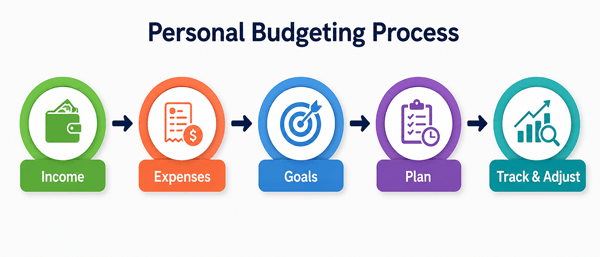
Step 1: Choose a Budgeting Period
Most people budget monthly because rent, utilities, loan payments, and salaries often follow a monthly cycle. However, if you are paid weekly, biweekly, or irregularly, you can still build a monthly budget and then break it into smaller pay-period plans.
- Monthly budget: useful for overall planning.
- Weekly budget: useful for daily spending control.
- Paycheck budget: useful if income arrives on different dates.
Step 2: Calculate Your Total Monthly Income
Write down your reliable after-tax income. Use take-home pay, not gross salary, because your budget should be based on the money you can actually spend. Include only income you can reasonably expect.
- Salary or wages after tax
- Freelance or business income after business expenses
- Rental income after property costs
- Side income
- Regular support payments or benefits
Step 3: List Your Fixed Expenses
Fixed expenses are the bills that stay mostly the same each month. These are often easier to plan because the amount and due date are predictable.
- Rent or mortgage
- Loan payments
- Insurance
- Phone and internet
- Subscriptions
- Childcare or school fees
- Minimum debt payments
Step 4: List Your Variable Expenses
Variable expenses change from month to month. These are important because they are often where overspending happens, even when each purchase looks small on its own.
- Groceries
- Fuel or transport
- Electricity, gas, and water
- Dining out
- Clothing
- Entertainment
- Personal care
- Gifts and family support
Step 5: Include Irregular and Annual Expenses
A common budgeting mistake is forgetting costs that do not happen every month. These expenses feel like surprises, but many of them are predictable if you plan ahead.
- Car maintenance
- Annual insurance premiums
- Medical or dental visits
- School supplies
- Holiday spending
- Home repairs
- Professional fees
- Birthdays and weddings
Step 6: Set Clear Financial Goals
A budget works better when it is connected to goals. Goals give your budget a reason. Start with a few practical goals instead of trying to fix everything at once.
- Build a starter emergency fund
- Pay off high-interest debt
- Save for a major purchase
- Create a retirement or investment contribution habit
- Stop living paycheck to paycheck
Step 7: Compare Income and Expenses
Now subtract your total planned expenses, savings, and debt payments from your monthly income. This shows whether your budget balances.
- If income is higher than expenses, assign the extra money to savings, debt payoff, or future costs.
- If expenses are higher than income, reduce flexible spending, renegotiate bills, increase income, or adjust goals.
- If the budget is exactly balanced, make sure you still have room for small unexpected costs.
Step 8: Choose a Budgeting Method
There is no single best budgeting method for everyone. The best method is the one you can actually follow. Beginners should choose a simple method first and improve it over time.
Step 9: Create Spending Limits for Each Category
Set realistic limits for each category based on your income, needs, goals, and past spending. Do not guess too low just to make the numbers look good. An unrealistic budget usually fails within a few weeks.
- Use your last one to three months of spending as a starting point.
- Separate needs from wants, but leave some room for enjoyment.
- Give irregular expenses their own monthly sinking fund.
- Use round numbers at first, then refine them.
Step 10: Track Your Spending
Tracking is what turns a budget from a wish into a working system. You do not need to track forever in extreme detail, but beginners should track closely for at least the first 30 to 90 days.
- Use a notebook, spreadsheet, budgeting app, bank alerts, or envelopes.
- Record spending as soon as possible.
- Review categories weekly, not only at the end of the month.
- Notice patterns without blaming yourself.
Step 11: Review and Adjust Every Month
Your first budget will not be perfect. That is normal. A useful budget improves as you learn your real spending habits.
- Move money between categories when needed.
- Increase underfunded categories if they are consistently too low.
- Cut or pause expenses that do not match your priorities.
- Update your budget when income, bills, or goals change.
4. Popular Personal Budgeting Methods Compared
Different budgeting methods work for different personalities, incomes, and goals. Here is a beginner-friendly comparison.
| Method | How It Works | Best For | Pros | Cons |
|---|---|---|---|---|
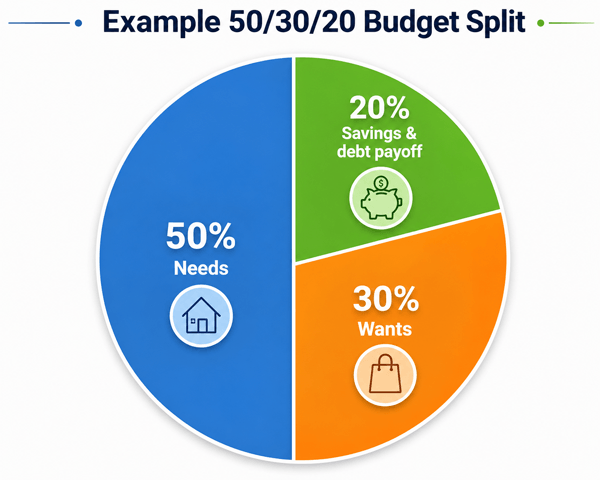
| 50/30/20 budget | 50% needs, 30% wants, 20% savings/debt payoff | Beginners who want simple structure | Easy to understand; flexible | May not fit high-cost areas or heavy debt |
| Zero-based budget | Every dollar is assigned a job until income minus planned spending equals zero | People who want full control | Very detailed; great for debt payoff | Requires more tracking |
| Envelope method | Spending money is divided into categories, often with cash or digital envelopes | People who overspend in variable categories | Strong spending control | Can feel restrictive |
| Pay-yourself-first budget | Savings and investments happen before spending | People focused on saving consistently | Builds wealth habits | Can ignore spending leaks if not monitored |
| Percentage-based budget | Income is divided by customized percentages | People with changing income | Flexible and scalable | Needs periodic review |
5. Example: A Simple Monthly Personal Budget
Here is a practical example for a beginner with $3,000 in monthly take-home income. The exact numbers are only examples. Your own budget should reflect your income, city, family situation, debt, and goals.
| Category | Monthly Amount | Notes |
|---|---|---|
| Income | $3,000 | Take-home pay after tax |
| Rent | $900 | Fixed expense |
| Utilities | $180 | Variable but predictable |
| Groceries | $420 | Can be adjusted with meal planning |
| Transport | $250 | Fuel, public transport, parking |
| Insurance | $150 | Health, car, or other insurance |
| Phone and internet | $90 | Fixed or semi-fixed |
| Debt payments | $250 | Minimums plus extra if possible |
| Emergency fund | $250 | Starter savings goal |
| Dining and entertainment | $180 | Wants category |
| Clothing/personal care | $130 | Variable |
| Irregular expenses fund | $150 | Car repairs, gifts, annual fees |
| Remaining buffer | $50 | Small cushion for unexpected costs |
6. How to Budget With Irregular Income
Budgeting can feel harder if your income changes every month, but it is still possible. The key is to build your budget around a conservative income estimate and prioritize essentials first.
- Find your average monthly income from the last six to twelve months.
- Use your lowest realistic monthly income as your starting budget number.
- List essentials first: housing, food, utilities, transport, insurance, and minimum debt payments.
- Create a buffer fund during higher-income months.
- Delay nonessential spending until the income is actually received.
- Use percentages for savings, taxes, business costs, and personal spending if you are self-employed.
- Review tax, benefit, or local reporting requirements from official sources if your income source changes.
7. How Much Should You Save in Your Budget?
A common beginner goal is to save something consistently, even if the amount is small. Start with what is realistic, then increase it over time. For many people, the first priority is a starter emergency fund that can cover small unexpected costs without using credit cards or loans.
| Goal | Beginner Target | Why It Matters |
|---|---|---|
| Starter emergency fund | $500 to $1,000 or one month of basic expenses | Helps handle small emergencies |
| Full emergency fund | 3 to 6 months of essential expenses | Provides stronger protection against job loss or major disruptions |
| Debt payoff | At least minimum payments, then extra toward high-interest debt | Reduces interest costs and financial pressure |
| Retirement/investing | Start small and increase gradually | Builds long-term wealth through consistency |
| Sinking funds | Monthly amount for predictable future expenses | Prevents annual or irregular costs from becoming emergencies |
8. Needs vs Wants: How to Make Better Spending Decisions
A need is something required for basic living, work, safety, or important responsibilities. A want improves comfort or enjoyment but can be delayed, reduced, or replaced. The line is not always perfect. For example, food is a need, but frequent restaurant meals may be a want. Transportation may be a need, but the most expensive option may not be.
| Expense | Need, Want, or Both? | Budgeting Tip |
|---|---|---|
| Groceries | Need | Plan meals and reduce waste |
| Dining out | Want | Set a monthly limit instead of banning it completely |
| Housing | Need | Keep it affordable relative to income where possible |
| Streaming subscriptions | Want | Keep only the ones you use regularly |
| Phone service | Both | Choose a plan that fits actual usage |
| Transportation | Need | Compare fuel, public transport, maintenance, and insurance costs |
9. Common Budgeting Mistakes to Avoid
- Making the budget too strict and leaving no room for real life.
- Forgetting irregular expenses such as repairs, gifts, taxes, or annual fees.
- Using gross income instead of take-home income.
- Not tracking small purchases because they seem harmless.
- Treating savings as optional instead of planning for it.
- Ignoring debt interest rates and only looking at monthly payments.
- Quitting after one bad month instead of adjusting the plan.
- Copying someone else's budget without adapting it to your own life.
10. Practical Tips to Make Your Budget Easier to Follow
- Automate important payments and savings where possible.
- Use separate accounts or digital envelopes for bills, spending, and savings.
- Review your budget once a week for 10 to 15 minutes.
- Keep a small buffer category for forgotten or unexpected expenses.
- Plan for fun money so the budget does not feel like punishment.
- Use cash or a separate debit card for categories where you tend to overspend.
- Celebrate progress, not perfection. A budget is a tool, not a test.
- Add calendar reminders for annual or semiannual expenses so they do not surprise you.
11. A Simple Personal Budget Template
You can copy this structure into a notebook, spreadsheet, or budgeting app.
| Section | Budgeted Amount | Actual Amount | Difference |
|---|---|---|---|
| Income | |||
| Fixed expenses | |||
| Variable expenses | |||
| Savings goals | |||
| Debt payments | |||
| Irregular expenses fund | |||
| Remaining balance |
12. How Often Should You Review Your Budget?
For beginners, a weekly review is usually best. It prevents small problems from becoming large ones. At the end of each month, compare your planned budget with your actual spending. Then adjust next month's budget based on what you learned.
| Review Frequency | What to Check |
|---|---|
| Daily or every few days | Record recent spending and check balances |
| Weekly | Compare category spending with limits |
| Monthly | Review income, expenses, savings, debt, and goals |
| Quarterly | Check bigger patterns and adjust goals |
| Annually | Review insurance, subscriptions, income changes, taxes, and long-term goals |
■ Frequently Asked Questions
1. What is the first step in creating a personal budget?
The first step is to choose a budgeting period and calculate your take-home income. Once you know how much money you actually have available, you can plan expenses, savings, and debt payments realistically.2. What is the easiest budget method for beginners?
The 50/30/20 budget is often the easiest starting point because it uses broad categories: needs, wants, and savings or debt payoff. However, if you need more control, a zero-based budget may work better.3. How do I create a budget if I am already behind on bills?
Start with essentials: housing, food, utilities, transportation, insurance, and minimum debt payments. Contact creditors or service providers early, avoid taking on new debt if possible, and create a short-term survival budget until you stabilize.4. Should I budget every dollar?
You can, but you do not have to. A zero-based budget assigns every dollar a job, including savings and a small buffer. Some people prefer this structure, while others do better with broader spending limits.5. How much money should I leave for fun?
There is no perfect number. The right amount depends on your income, responsibilities, debt, and goals. The important point is to include some realistic personal spending so the budget is easier to maintain.6. Why does my budget fail every month?
Budgets often fail because they are too strict, based on guesses, or missing irregular expenses. Track your actual spending, adjust the categories, and make the plan realistic instead of perfect.7. Can budgeting help me save money?
Yes. Budgeting helps you find spending leaks and make savings intentional. It does not create income by itself, but it helps you use your income more effectively.8. Do I need a budgeting app?
No. A notebook, spreadsheet, or simple bank statement review can work. Budgeting apps can help with automation and tracking, but the best tool is the one you will use consistently.9. What is the best way to start a budget with no savings?
Start with a small emergency fund target and a realistic spending plan. Even saving a small amount each month can build momentum and reduce the need to borrow for minor surprises.■ Final Thoughts
Creating a personal budget step by step is not about controlling every tiny detail of your life. It is about building a clear plan for your money so you can cover your needs, enjoy some wants, prepare for the unexpected, and move toward your goals. Start simple, track honestly, review regularly, and improve your budget one month at a time. A realistic budget you actually use is far better than a perfect budget you abandon.
Reader Advice: This article is for educational and informational purposes only and should not be taken as personal financial, tax, legal, or investment advice. Please check the latest information from official sources or a qualified professional, as rules, policies, and personal circumstances can change over time.