Student Budgeting Guide: How to Budget, Save Money & Avoid Debt
Student life often comes with limited money, irregular income, rising expenses, and many small spending decisions. A student budget helps you decide where your money should go before it disappears. It is not about living cheaply all the time. It is about using your money on purpose so you can cover essentials, avoid unnecessary debt, and still enjoy your student years.
This guide explains student budgeting in simple language. You will learn what a student budget is, why it matters, how to create one step by step, how to manage common student expenses, how to save money as a student, and how to avoid mistakes that can create money stress later.
1. What Is Budgeting for Students?
Budgeting for students means making a clear plan for how you will use your money during a week, month, semester, or school year. It helps you match your spending with your income and priorities.
A student budget usually includes money coming in, fixed expenses, variable expenses, savings, debt payments, and a small amount for fun or personal choices. The goal is not perfection. The goal is awareness and control.
| Budget Part | What It Means | Student Example |
|---|---|---|
| Income | Money you receive or earn | Part-time job, allowance, scholarship refund, tutoring income |
| Fixed expenses | Costs that are predictable | Rent, hostel fee, phone plan, internet, monthly transport pass |
| Variable expenses | Costs that change each week or month | Food, fuel, printing, clothing, social events |
| Savings | Money set aside before spending everything | Emergency fund, semester fees, laptop replacement |
| Debt payments | Money owed to lenders or others | Student loan payments, credit card balance, borrowed money |
2. Why Budgeting Matters for Students
Many students do not have a full-time income, but they still face real financial decisions. Without a budget, small daily purchases can quietly use up money meant for rent, transport, food, books, or fees.
- It reduces stress because you know what you can afford.
- It helps you avoid running out of money before the month ends.
- It makes borrowing less likely because you plan for needs first.
- It helps you notice wasteful spending, such as unused subscriptions.
- It builds long-term habits that are useful after graduation.
- It helps you plan for semester costs, not just monthly spending.
3. Common Student Income Sources
Before you can budget, you need to know how much money you actually have available. Students often receive money from different sources, and some of it may not arrive every month.
| Income Source | How to Budget It | Tip |
|---|---|---|
| Part-time job | Use your average monthly take-home pay, not your best month | If hours change, budget from the lowest realistic income |
| Family support or allowance | Add the amount and expected date | Discuss timing clearly so you do not overspend early |
| Scholarship or grant | Divide semester money across the months it must cover | Do not treat a large payment as extra spending money |
| Student loan refund | Plan it across the full term | Remember that loans usually must be repaid later |
| Freelance or tutoring income | Use a conservative estimate | Save extra income for irregular expenses |
| Savings from previous work | Use only the monthly amount you planned | Avoid draining savings for everyday wants |
4. Common Student Expenses
Student expenses vary by country, city, school, and living arrangement. A student living at home may spend less on housing but more on commuting. A student living in a hostel or apartment may need to manage rent, utilities, groceries, and household supplies.
| Expense Category | Examples | Need, Want, or Mixed? |
|---|---|---|
| Housing | Rent, dorm fee, hostel fee, utilities | Need |
| Food | Groceries, cafeteria meals, snacks, eating out | Mixed |
| Transport | Bus, train, fuel, rideshare, parking | Need or mixed |
| Education | Books, software, printing, lab fees, exam fees | Need |
| Phone and internet | Mobile plan, data, home internet | Need or mixed |
| Personal care | Toiletries, laundry, basic clothing | Need or mixed |
| Social life | Coffee, events, movies, trips, gifts | Want |
| Subscriptions | Streaming, apps, cloud storage, memberships | Mostly want |
| Emergency costs | Medical visit, device repair, travel home | Need |
■ How to Create a Student Budget Step by Step
The easiest student budget is one you can update in 10 to 15 minutes each week. You do not need advanced software. A notebook, spreadsheet, budgeting app, or notes app can work.

Diagram: A simple student budgeting flow from income to weekly review.
Step 1: Write Down All Money Coming In
List every income source and when you expect to receive it. If your income changes, use a cautious estimate. It is safer to budget from a lower number and treat extra income as a bonus.
| Income Item | Amount | Date Expected |
|---|---|---|
| Part-time job | $320 | Monthly |
| Family support | $150 | 1st of month |
| Tutoring | $80 | Varies |
| Total planned income | $550 | Monthly estimate |
Step 2: List Fixed Expenses First
Fixed expenses are the bills or costs that are difficult to avoid. Put these in your budget before spending on wants.
- Rent or hostel fee
- Utilities
- Phone plan
- Internet
- Transport pass
- Minimum debt payment
- Required course subscriptions or software
Step 3: Estimate Flexible Expenses
Flexible expenses change from week to week. These are often the easiest places to overspend because they happen in small amounts.
- Groceries and snacks
- Eating out
- Coffee or tea
- Rideshare or fuel
- Clothes
- Entertainment
- Printing and stationery
Step 4: Set Aside Savings Before Spending the Rest
Even small savings matter. A student emergency fund can protect you from borrowing for minor problems, such as a phone repair, medicine, lost transport card, or unexpected trip home.
Step 5: Give Yourself a Realistic Fun Allowance
A budget that ignores fun usually fails. Instead of saying you will spend nothing on social life, choose an amount you can afford after essentials and savings.
Step 6: Review Your Budget Weekly
A weekly check helps you catch problems early. Look at what you spent, compare it with your plan, and adjust before the month gets out of control.
- Did I pay or reserve money for essentials?
- Which category is going over budget?
- Can I reduce spending this week?
- Do I need to change next month’s plan?
- Did I save something, even a small amount?
■ Example Monthly Budget for a Student
Here is a simple example. The numbers are only for illustration. Replace them with your real amounts and local currency. The split below is not a rule; students with high rent, tuition, or transport costs may need different percentages.
| Category | Planned Amount | Notes |
|---|---|---|
| Income | $550 | Part-time job, family support, tutoring |
| Rent or housing contribution | $180 | Fixed |
| Food and groceries | $130 | Mix of groceries and campus meals |
| Transport | $50 | Bus pass and occasional ride |
| Phone and internet | $35 | Monthly plan |
| Education supplies | $35 | Books, printing, software |
| Personal care and laundry | $30 | Toiletries and washing |
| Savings | $50 | Emergency fund and future costs |
| Fun and social spending | $40 | Coffee, outings, entertainment |
| Buffer | $0 | If possible, add a small buffer next month |
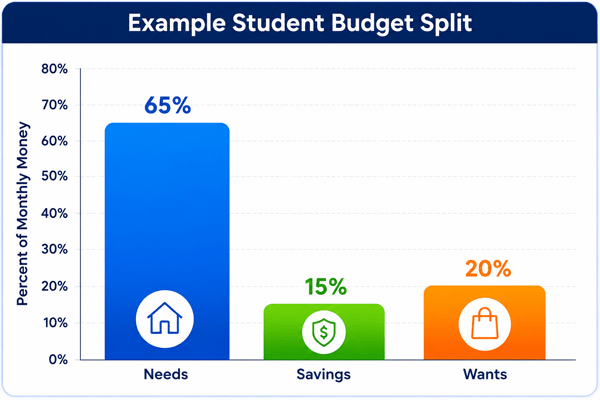
Chart: One possible budget split for a student with limited monthly income.
5. Best Budgeting Methods for Students
There is no single perfect budgeting method. The best choice depends on your income pattern, personality, and how much detail you want to track.
| Method | How It Works | Best For | Possible Limitation |
|---|---|---|---|
| 50/30/20 budget | Divide money into needs, wants, and savings/debt | Students with steady income | May not fit high rent or very low income |
| Zero-based budget | Every dollar gets a job before the month begins | Students who want control | Needs more planning |
| Envelope method | Set spending limits by category using cash or digital categories | Students who overspend on food or fun | Can feel restrictive |
| Pay-yourself-first budget | Save first, then spend what remains | Students building emergency savings | Does not track detailed spending by itself |
| Weekly budget | Break monthly money into weekly spending limits | Students who run out of money early | Requires weekly review |
Which method should a beginner choose? For most students, a weekly budget combined with pay-yourself-first savings is the easiest starting point. Set aside essentials and savings first, then divide the remaining spending money into weekly limits.
6. How to Budget When Income Is Irregular
Many students do not earn the same amount every month. Work hours may change, freelance payments may arrive late, or family support may not always be predictable. In this situation, budget using your lowest realistic income, not your highest possible income.
- Calculate your essential monthly expenses.
- Use your lowest expected income as the base budget.
- Create a small buffer for weeks with less income.
- Put extra money from good months into savings or upcoming costs.
- Avoid taking on new monthly bills unless you can afford them during a low-income month.
7. How to Save Money as a Student Without Feeling Miserable
Saving money as a student is not about cutting everything enjoyable. It is about reducing waste and choosing better-value options.
Food
- Plan simple meals for three or four days at a time.
- Carry snacks or water to avoid expensive impulse buys.
- Use student meal plans carefully if they are cheaper than eating out.
- Cook with roommates when possible to reduce waste.
- Limit food delivery to planned occasions, not boredom spending.
Transport
- Compare monthly passes with pay-per-ride costs.
- Walk, cycle, or carpool when safe and practical.
- Avoid rideshare for routine trips unless necessary.
- Plan errands together to reduce extra travel.
Books and Study Materials
- Check the library before buying.
- Buy used books when allowed.
- Ask whether older editions are acceptable.
- Share non-personal resources legally when permitted.
- Sell books you no longer need.
Subscriptions and Apps
- Cancel anything you have not used in the last month.
- Use student discounts where available.
- Avoid paying for several services that do the same thing.
- Set calendar reminders before free trials renew.
8. Needs vs Wants for Students
One of the most useful budgeting skills is knowing the difference between needs and wants. Some expenses are clearly needs, such as basic food and housing. Others are wants, such as frequent restaurant meals. Many student expenses are mixed and depend on the situation.
| Expense | Need Version | Want Version |
|---|---|---|
| Food | Groceries or affordable cafeteria meals | Daily takeout or expensive snacks |
| Clothing | Basic clothes for school, work, or weather | Trendy purchases you do not need |
| Transport | Bus pass to campus or work | Rideshare because you left late |
| Phone | Reliable basic plan | Premium plan with unused data |
| Laptop | Functional device for coursework | High-end upgrade beyond your course needs |
| Social life | Affordable planned outing | Frequent unplanned spending to keep up with friends |
9. Managing Student Debt and Credit Cards
Debt can be useful when it helps pay for education, but it becomes risky when used for lifestyle spending or when repayment is unclear. Students should be especially careful with credit cards, buy-now-pay-later plans, and informal borrowing from friends.
- Borrow only what you truly need for education and essentials.
- Understand whether interest starts immediately or after graduation.
- Avoid using credit cards for purchases you cannot pay off soon.
- Pay at least the minimum on time to avoid fees and damage to your credit history where credit reporting applies.
- Do not use one form of debt to pay another unless you understand the cost and risk.
- Before signing a loan, check repayment terms, grace periods, fees, and official student support guidance in your country.
Practical rule: If you would not buy it with cash from your budget, think carefully before buying it with debt.
10. Emergency Fund for Students
An emergency fund is money kept for unexpected but necessary expenses. It is not for sales, vacations, or routine social spending. Even a small fund can prevent a bad week from becoming a debt problem.
| Emergency Fund Stage | Target | Use It For |
|---|---|---|
| Starter fund | $50 to $100 or local equivalent | Minor medicine, urgent transport, small repairs |
| Basic fund | $100 to $300 or local equivalent | Phone repair, short income gap, emergency travel |
| Stronger fund | One month of essential expenses | Bigger income gaps or family emergencies |
11. Budgeting for a Semester Instead of Only a Month
Students often face large costs at the beginning of a semester. Monthly budgeting is useful, but semester budgeting helps you prepare for bigger expenses that do not happen every month.
| Semester Expense | When It Happens | How to Prepare |
|---|---|---|
| Tuition or fees | Start or middle of term | Divide expected amount by months remaining |
| Books and supplies | First few weeks | Save before the term begins |
| Exam or lab fees | Varies | Add to irregular expense category |
| Travel home | Breaks or holidays | Save a small amount each month |
| Device repairs or replacement | Unexpected | Use emergency fund and tech savings |
12. Student Budget Template
Use this simple template each month. Keep it realistic and update it weekly.
| Category | Planned | Actual | Difference |
|---|---|---|---|
| Income | |||
| Housing | |||
| Food | |||
| Transport | |||
| Education | |||
| Phone/internet | |||
| Personal care | |||
| Savings | |||
| Debt payment | |||
| Fun/social | |||
| Other | |||
| Total |
13. Common Student Budgeting Mistakes
| Mistake | Why It Causes Problems | Better Habit |
|---|---|---|
| Budgeting from memory | Small purchases are easy to forget | Track spending for at least two weeks |
| Ignoring irregular costs | Fees and repairs feel like emergencies | Create a semester expense list |
| Spending loan refunds too quickly | Money must last for months | Divide lump sums by the number of months |
| No fun money at all | The budget feels impossible to follow | Plan a realistic social spending limit |
| Copying someone else’s budget | Their rent, income, and priorities are different | Build your budget from your real numbers |
| Using credit for wants | Small balances can become expensive debt | Use cash or debit limits for wants |
14. Budgeting Tips for Different Types of Students
Students Living at Home
- Use the lower housing cost as a chance to save.
- Contribute to household costs if expected.
- Budget for commuting and meals outside home.
Students Living in a Dorm or Hostel
- Track food spending carefully if meals are not fully included.
- Plan laundry, supplies, and small shared expenses.
- Keep a small fund for moving or storage costs.
Students Renting an Apartment
- Budget for rent, utilities, internet, cleaning supplies, and repairs.
- Agree with roommates on shared bills in writing.
- Keep rent money separate from everyday spending.
International Students
- Understand exchange rates and bank fees.
- Check work-hour rules before relying on job income.
- Keep extra savings for visa, travel, medical, or document costs.
- Avoid comparing your spending with students whose family support is different.
15. How Parents Can Help Without Taking Over
Parents or guardians can support student budgeting by helping students plan, not by controlling every small purchase. The goal is to build confidence and responsibility.
- Agree on how much support will be given and when.
- Discuss which expenses the student must cover.
- Encourage tracking instead of criticizing every mistake.
- Review the budget together once a month if the student wants help.
- Use mistakes as learning opportunities, not as proof the student cannot manage money.
16. Simple Weekly Money Routine for Students
A weekly routine keeps budgeting simple. Choose one day each week and spend a few minutes reviewing your money.
| Weekly Task | Time Needed | Purpose |
|---|---|---|
| Check account balances | 2 minutes | Know what is available |
| Record recent spending | 5 minutes | See where money went |
| Compare spending to budget | 3 minutes | Catch overspending early |
| Plan the next week | 5 minutes | Decide food, transport, and fun limits |
| Move money to savings | 1 minute | Build the habit consistently |
17. Pros and Cons of Budgeting as a Student
| Pros | Cons or Challenges |
|---|---|
| Less money stress and fewer surprises | Requires honesty about spending |
| Better control over food, transport, and social costs | Can feel restrictive at first |
| Helps avoid unnecessary debt | Irregular income can make planning harder |
| Builds strong habits for adult life | Needs regular review to stay useful |
| Makes big semester costs easier to manage | Unexpected expenses can still happen |
18. When Your Budget Does Not Work
If your budget keeps failing, do not assume you are bad with money. Usually, the budget is missing information or is too unrealistic.
- Track your spending for two weeks without judging it.
- Look for the category that is causing the biggest problem.
- Check whether your income estimate is too high.
- Check whether your essentials are higher than you expected.
- Reduce one or two flexible expenses instead of cutting everything.
- Ask for help early if you cannot cover basic needs or debt payments.
19. Final Practical Advice
Budgeting for students works best when it is simple, honest, and flexible. Start with your real income, cover essentials first, save a small amount, and give yourself a realistic spending limit for wants. Review your money weekly and adjust when life changes.
The strongest student budget is not the one that looks perfect on paper. It is the one you can actually follow while studying, working, and living your life.
■ Frequently Asked Questions
1. How much should a student save each month?
A student should save whatever is realistic after covering essentials. Even a small amount, such as 5% to 10% of available income, can build the habit. If income is very low, start with a small fixed amount.
2. What is the best budget rule for students?
Many students can start with a weekly budget or a modified 50/30/20 rule. If rent or tuition is high, the exact percentages may need to change.
3. Should students use budgeting apps?
Budgeting apps can help, but they are not required. A spreadsheet, notebook, or notes app can work just as well if the student updates it regularly.
4. How can students stop overspending on food?
Plan simple meals, carry snacks, limit delivery apps, set a weekly eating-out amount, and avoid shopping when hungry.
5. Is it okay for students to use credit cards?
A credit card can be useful if used carefully and paid on time. It becomes risky when used for wants that are not already affordable within the budget.
6. How do students budget scholarship or loan money?
Divide the total amount by the number of months it must cover. Set aside money for tuition, books, rent, and semester costs before using any for flexible spending.
7. What should a student do after running out of money?
First cover basic needs and avoid more unnecessary debt. Review recent spending, reduce non-essential costs, speak with family or student support services if needed, and adjust the next budget.
8. How often should a student review a budget?
A weekly review is ideal because it catches overspending early. A monthly review is still useful for planning bigger costs.
9. What should be included in a student budget?
A student budget should include income, housing, food, transport, education costs, phone and internet, personal care, savings, debt payments, fun spending, and irregular semester costs.
10. How can international students budget better?
International students should budget for exchange rates, bank fees, visa costs, travel, health cover, document fees, and any work-hour limits before relying on part-time income.
Reader Advice: This article is for educational and information purposes only and should not be taken as personal financial, legal, tax, or professional advice. Please check the latest information from your school, lender, bank, government, or other official sources, because rules, fees, policies, and financial support options can change over time.