How to Buy Bitcoin Safely: Step-by-Step Beginner Guide
1. Quick Answer: The Safest Way to Buy Bitcoin as a Beginner
The safest beginner approach is to use a reputable, regulated cryptocurrency exchange, secure your account before depositing money, start with a small amount, review all fees, buy Bitcoin only through the official app or website, and store it in a way that matches your experience level. Most beginners should avoid unknown brokers, social media offers, Bitcoin ATMs with high fees, leverage, and anyone who pressures them to send Bitcoin quickly.
- Decide why you are buying Bitcoin and how much risk you can tolerate.
- Choose a reputable exchange available in your country.
- Set up account security before adding money.
- Deposit a small amount using a traceable payment method.
- Buy a small amount of Bitcoin and confirm the total cost.
- Choose safe storage: leave small amounts on a reputable exchange or move larger long-term holdings to a wallet you understand.
- Keep records for taxes and never share your password, 2FA codes, private keys, or recovery phrase.
2. What Is Bitcoin?
Bitcoin is a digital asset that can be sent between people over the internet without relying on a traditional bank to approve each transaction. It runs on a public network of computers that maintain a shared record called the blockchain. The Bitcoin network is open-source and not owned by one company or government.
When people say they are “buying Bitcoin,” they are usually buying a fraction of one bitcoin. Bitcoin is divisible, so you do not need to buy a whole coin. For example, if one bitcoin costs $60,000, a $30 purchase would buy 0.0005 BTC before fees.
3. How Bitcoin Works in Simple Terms
A Bitcoin transaction is a transfer of value from one Bitcoin address to another. A wallet uses a private key or seed to sign the transaction. That signature proves the owner authorized the transfer and helps prevent the transaction from being changed after it is sent. Once a transaction is confirmed on the blockchain, it is usually irreversible.
| Term | Beginner Meaning | Why It Matters |
|---|---|---|
| Bitcoin (BTC) | The digital asset you are buying. | BTC is the ticker symbol used on most exchanges. |
| Blockchain | A public record of Bitcoin transactions. | It lets the network verify ownership and transfers. |
| Wallet | Software or hardware that manages your keys and addresses. | A wallet helps you receive, send, and secure Bitcoin. |
| Private key / seed phrase | The secret information that controls access to Bitcoin. | Anyone with it can move your Bitcoin. Never share it. |
| Exchange | A marketplace or app where you buy and sell Bitcoin. | Most beginners buy Bitcoin through an exchange. |
| Network fee | A fee paid to process a blockchain transaction. | Fees vary and matter when withdrawing or sending Bitcoin. |
4. Should Beginners Buy Bitcoin?
Bitcoin may be useful for people who want exposure to a scarce digital asset, want to learn about cryptocurrency, or want an alternative asset outside the traditional banking system. But it is not a guaranteed investment, not a savings account, and not a quick way to get rich. Its price can rise or fall sharply, sometimes in a single day.
| Potential Benefits | Important Risks |
|---|---|
| You can buy small fractions instead of a whole bitcoin. | The price is highly volatile and losses can be large. |
| Bitcoin can be transferred globally without a bank intermediary. | Transactions are usually irreversible if sent to the wrong address. |
| You can self-custody Bitcoin if you learn wallet security. | Self-custody means you are responsible for backups and mistakes. |
| The supply rules are transparent in the Bitcoin protocol. | Future regulation, taxes, exchange failures, and scams can affect users. |
5. Before You Buy: A Safety Checklist
Before creating an account or depositing money, go through this checklist. It may feel slower, but it prevents the most common beginner mistakes.
- Use money you can afford to lose. Do not use rent money, emergency savings, borrowed funds, or credit card debt.
- Decide your maximum purchase amount before opening an exchange app.
- Use the official exchange website or app. Avoid links from ads, texts, DMs, and emails.
- Create a unique password and store it in a reputable password manager.
- Enable two-factor authentication, preferably with an authenticator app or security key rather than SMS.
- Verify the exchange’s fees, withdrawal rules, support channels, and security settings.
- Learn how your country taxes Bitcoin sales, swaps, income, and payments.
- Ignore anyone promising guaranteed profits or asking you to send Bitcoin to unlock a reward, protect your money, or pay a government bill.
6. Step-by-Step: How to Buy Bitcoin Safely
6.1 Step 1: Choose a Safe Place to Buy Bitcoin
Most beginners should use a well-known cryptocurrency exchange or brokerage that operates legally in their country. A good platform should have identity verification, clear fees, security features, customer support, and a history of operating under applicable regulations. Avoid random “investment managers,” Telegram groups, WhatsApp offers, fake celebrity promotions, and websites that promise unusually high returns.
6.2 Step 2: Compare Fees Before You Deposit
Bitcoin purchases can include trading fees, spread, deposit fees, withdrawal fees, card fees, and network fees. The price shown on a simple “buy now” screen may include a spread, meaning you pay slightly more than the market price. Beginners should compare the final preview screen, not just the advertised fee.
6.3 Step 3: Create Your Account Using the Official Website or App
Type the website address yourself or use the official app store listing from the company. Bookmark the correct site. Many crypto scams begin with fake exchange websites, phishing emails, or sponsored search results that imitate real brands.
6.4 Step 4: Verify Your Identity
Reputable platforms often require know-your-customer identity checks. This can include your name, address, date of birth, ID document, and sometimes a selfie. Verification may feel inconvenient, but it is normal for many regulated financial platforms.
6.5 Step 5: Secure the Account Before Adding Money
Turn on two-factor authentication, set withdrawal allowlists if available, enable anti-phishing codes if offered, and review account recovery settings. Do this before depositing funds. A secure account matters more than buying quickly.
6.6 Step 6: Add a Payment Method
Bank transfer is often cheaper than debit or credit cards, but it can be slower. Cards can be faster but may have higher fees or cash-advance treatment from some issuers. Use a payment method in your own name and avoid sending money to individuals claiming they will buy Bitcoin for you.
6.7 Step 7: Make a Small First Purchase
Start with a small test amount, such as $10, $25, or another amount that is meaningful but not stressful for you. This helps you learn the interface, fees, and confirmation process without risking too much.
6.8 Step 8: Review the Order Preview Carefully
Before clicking buy, check the amount of Bitcoin, total cost, exchange rate, fee, spread if shown, and payment method. If anything looks unclear, cancel and review the fee page or help center.
6.9 Step 9: Decide Where to Store Your Bitcoin
For a small beginner amount, leaving Bitcoin on a reputable exchange may be simpler while you learn. For larger or long-term holdings, many users prefer a non-custodial wallet or hardware wallet. The safest choice depends on your knowledge, discipline, and ability to protect backups.
6.10 Step 10: Keep Records and Review Your Plan
Save purchase confirmations, fees, dates, and the amount of BTC bought. These records help with taxes and personal tracking. Decide whether you are buying once, using dollar-cost averaging, or waiting until you understand more.
7. Safe Bitcoin Buying Flow Diagram
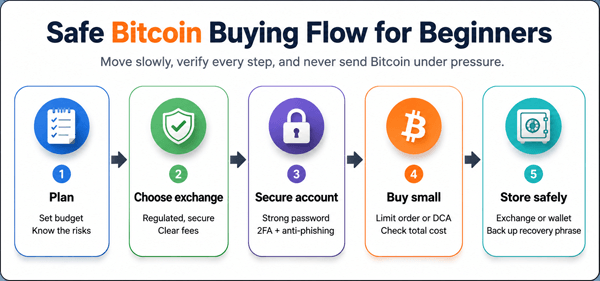
Figure: A beginner-friendly flow for buying Bitcoin safely.
8. Best Ways to Buy Bitcoin: Comparison for Beginners
| Method | Best For | Pros | Cons / Risks |
|---|---|---|---|
| Regulated crypto exchange | Most beginners who want direct ownership of Bitcoin. | Wide availability, transparent account history, buy/sell tools, security settings. | Exchange accounts can be hacked; fees and withdrawal rules vary. |
| Traditional brokerage or payment app | People who want a simple interface. | Easy to use, familiar payment methods. | May have limited withdrawal options or higher spreads. |
| Bitcoin ATM | People who need local cash access. | Fast in some areas. | Often high fees; heavily used in scams; irreversible transfers. |
| Peer-to-peer marketplace | Experienced users in specific markets. | Flexible payment options. | Higher fraud risk; requires careful escrow and counterparty checks. |
| Spot Bitcoin ETF or fund | Investors who want price exposure in a brokerage account, not self-custody. | No wallet management; easier tax documents in some accounts. | You do not hold actual BTC; fund fees and market tracking differences may apply. |
9. How Much Bitcoin Should a Beginner Buy?
There is no universal right amount. A safer beginner rule is to start small enough that a 50% drop would be disappointing but not financially damaging. Bitcoin is volatile, so your first purchase should be more like a learning exercise than a life-changing investment.
| Beginner Situation | Practical Approach |
|---|---|
| Just learning how Bitcoin works | Buy a very small test amount or use a demo/education mode first. |
| Interested in long-term holding | Consider small recurring purchases only after you understand fees, storage, and taxes. |
| Trying to make quick profit | Pause. Short-term trading is risky and often beginner-unfriendly. |
| Using borrowed money | Avoid it. Debt plus Bitcoin volatility can create serious financial stress. |
10. What Is Dollar-Cost Averaging?
Dollar-cost averaging means buying a fixed amount on a regular schedule, such as $25 weekly or $100 monthly. It can reduce the stress of trying to pick the perfect price. However, it does not eliminate risk. If Bitcoin falls for a long period, recurring buyers can still lose money.
Example: Instead of buying $1,200 at once, a beginner might buy $100 per month for 12 months. This spreads the entry price over time and helps avoid emotional all-in decisions.
11. Where Should You Store Bitcoin?
Bitcoin storage is called custody. The big question is who controls the private keys: a third party, such as an exchange, or you. Crypto wallets do not literally store coins; they store the keys needed to access and move coins recorded on the blockchain.
| Storage Option | How It Works | Good For | Main Risk |
|---|---|---|---|
| Exchange custody | The platform holds the keys for you. | Small amounts, active buyers, beginners still learning. | Account hacks, platform freezes, exchange failure, withdrawal limits. |
| Software wallet | An app on your phone or computer controls your keys. | Users ready to manage backups and test transactions. | Malware, phone loss, phishing, bad backups. |
| Hardware wallet | A physical device keeps keys offline. | Larger or long-term holdings. | Losing recovery phrase, buying tampered devices, setup mistakes. |
| Multisignature wallet | Multiple keys are required to move funds. | Advanced users or higher-value holdings. | More complex setup and recovery. |
11.1 Beginner Wallet Safety Rules
- Never type your recovery phrase into a website, Google form, chat, email, or support ticket.
- Write the recovery phrase offline and store it somewhere private, durable, and protected from fire, water, theft, and accidental disposal.
- Do not store a plain photo of your seed phrase in cloud storage.
- Send a tiny test transaction before moving a large amount.
- Verify the first and last characters of the receiving address, and use address book/whitelist features when available.
- Buy hardware wallets from the manufacturer or a trusted official reseller, not unknown marketplace sellers.
- Understand recovery before relying on self-custody. A wallet you cannot recover is not safe.
12. Common Bitcoin Fees Beginners Should Understand
| Fee Type | Where You See It | How to Reduce It |
|---|---|---|
| Trading fee | When buying or selling on an exchange. | Use the lower-cost trading interface if you understand it. |
| Spread | Built into the buy/sell price. | Compare the final quote with the market price. |
| Deposit fee | When adding cash to the exchange. | Use cheaper bank transfer options when available. |
| Withdrawal fee | When moving BTC off the platform. | Check the fee before withdrawing; avoid many tiny withdrawals. |
| Network fee | When sending Bitcoin on-chain. | Wait for calmer network conditions if the transfer is not urgent. |
13. How to Avoid Bitcoin Scams
A safe Bitcoin purchase is not just about choosing an exchange. It is also about refusing unsafe requests. The FTC warns that only scammers demand payment in cryptocurrency. The FBI also warns about cryptocurrency investment fraud where criminals build trust, show fake profits, and then steal deposits.
13.1 Red Flags That Usually Mean “Stop”
- Someone says you must pay a bill, fine, tax, utility charge, bail, or government fee in Bitcoin.
- A stranger, romantic interest, coach, or “investment manager” promises guaranteed returns.
- You are told to keep the transaction secret or stay on the phone while buying Bitcoin.
- A website shows huge profits but asks for more deposits before withdrawals.
- Someone offers to recover stolen crypto for an upfront fee.
- A support agent asks for your recovery phrase, password, or 2FA code.
- You are rushed, threatened, or told the opportunity will disappear immediately.
Practical rule: If someone else is telling you exactly where to send Bitcoin, stop and verify independently. Once Bitcoin is sent to a scammer, recovery is difficult and often impossible.
14. Real-World Beginner Scenarios
14.1 Scenario 1: Buying $50 of Bitcoin for the First Time
A beginner chooses a reputable exchange, creates a unique password, enables two-factor authentication, deposits $50 by bank transfer, reviews the quote, and buys Bitcoin. They leave it on the exchange while they learn about wallets. This is not risk-free, but it is more sensible than rushing into self-custody without understanding recovery phrases.
14.2 Scenario 2: Moving Bitcoin to a Hardware Wallet
A user with a larger long-term amount buys a hardware wallet from an official source, writes the recovery phrase offline, updates the device safely, and sends a small test transaction first. Only after confirming the test do they move a larger amount.
14.3 Scenario 3: The “Guaranteed Profit” Message
A person receives a message from someone claiming to be a crypto trader who can double their money. The trader sends a link to a platform with fake profit screenshots. The safe response is to ignore and report it, not to test it with a small deposit. Scams often begin with small deposits and escalate.
15. Mistakes Beginners Should Avoid
- Buying because of fear of missing out instead of a clear plan.
- Keeping all funds on an exchange without using available security tools.
- Moving Bitcoin to a wallet before understanding recovery phrases.
- Sending Bitcoin to the wrong network, wrong address, or scam address.
- Ignoring fees until after the purchase.
- Using leverage, futures, or margin as a beginner.
- Assuming Bitcoin profits are tax-free.
- Trusting influencers, fake support accounts, or private messages.
- Taking screenshots of private keys or recovery phrases.
- Believing “safe” means “guaranteed.” Bitcoin can still lose value.
16. Taxes and Records: What Beginners Need to Know
In the United States, the IRS says income from digital assets is taxable and that people may need to report digital asset transactions on their tax returns. Selling Bitcoin, trading it, receiving it as payment, or using it to buy goods can create tax reporting obligations. Rules vary by country, so check your local tax authority or a qualified tax professional.
Keep records of purchase date, sale date, amount of BTC, value in local currency, fees, exchange name, wallet transfers, and transaction IDs. Good records are much easier to keep from the start than to reconstruct later.
17. Privacy and Security Limitations
Bitcoin is not fully anonymous. The blockchain is public, meaning transactions can be viewed by anyone, even though names are not directly printed on addresses. Exchanges may also collect identity information. Good privacy habits matter, but beginners should not assume Bitcoin hides all activity.
Security also has trade-offs. Exchange custody is easier but requires trusting the platform. Self-custody gives more control but makes you responsible for backups, device security, and transaction accuracy.
18. Beginner Buying Checklist
- I know why I am buying Bitcoin and how much I can afford to lose.
- I selected a reputable platform available in my country.
- I am using the official website or app, not a link from a message.
- My password is unique and stored safely.
- Two-factor authentication is enabled.
- I checked deposit, trading, spread, and withdrawal fees.
- I started with a small test purchase.
- I understand where my Bitcoin will be stored.
- I know that no legitimate person or agency should demand Bitcoin payment under pressure.
- I saved transaction records for taxes.
19. FAQs About Buying Bitcoin Safely
19.1 Is Bitcoin safe for beginners?
Bitcoin can be used safely from a technical perspective if you use strong security habits, but it is financially risky because the price is volatile and scams are common. Beginners should start small and learn before committing meaningful money.
19.2 Do I need to buy a whole bitcoin?
No. You can buy a small fraction of a bitcoin. Most beginners start with a modest dollar amount rather than a whole BTC.
19.3 What is the safest app to buy Bitcoin?
There is no single safest app for everyone. Look for a reputable platform that operates legally in your country, has strong security tools, clear fees, a real support process, and a history of reliability.
19.4 Should I keep Bitcoin on an exchange or in my own wallet?
Small amounts may be simpler on a reputable exchange while you learn. Larger long-term holdings may be better in self-custody if you understand recovery phrases and transaction safety. The wrong self-custody setup can be more dangerous than exchange custody.
19.5 Can I lose Bitcoin if I forget my password?
If your Bitcoin is on an exchange, account recovery may be possible if you pass identity checks. If you use a non-custodial wallet and lose the recovery phrase, your Bitcoin may be permanently inaccessible.
19.6 Are Bitcoin transactions reversible?
Usually no. Once confirmed, Bitcoin transactions are generally irreversible. This is why address checking and scam avoidance are essential.
19.7 Is using a Bitcoin ATM safe?
Bitcoin ATMs can be legitimate, but they often have high fees and are commonly used in scams. Be very cautious if anyone tells you to use an ATM to pay a bill, protect money, or avoid legal trouble.
19.8 What is the best time to buy Bitcoin?
No one can reliably predict the best time. Beginners often reduce timing stress by buying small amounts slowly or waiting until they understand the market better.
19.9 Can I buy Bitcoin with a credit card?
Some platforms allow it, but card purchases can be expensive and may be treated as cash advances. Avoid buying Bitcoin with debt.
19.10 Do I have to pay taxes on Bitcoin?
In many countries, including the United States, selling, trading, earning, or using Bitcoin can create tax obligations. Buying and holding may not create tax due immediately, but recordkeeping is still important.
19.11 What should I do if I think I was scammed?
Stop sending money, save all messages, transaction IDs, websites, wallet addresses, phone numbers, and emails, then report the incident to the relevant authorities and the platform involved. Be cautious of “recovery” services that ask for upfront payment.
19.12 What is the biggest misconception about buying Bitcoin?
The biggest misconception is that buying Bitcoin safely means the investment itself is safe. Security can reduce theft and mistake risk, but it cannot remove price volatility or guarantee profit.
20. Final Takeaway
Buying Bitcoin safely is mostly about slowing down. Choose a reputable platform, secure your account, start small, understand fees, avoid pressure, and learn custody before moving serious money. Bitcoin gives users more control than many traditional payment systems, but that control comes with responsibility. The safest beginner is not the fastest buyer; it is the buyer who verifies every step and knows when to stop.
Sources Consulted and Checked
These sources were consulted and checked while preparing this document to support accuracy and clarity.
- Investor.gov / SEC, “Crypto Asset Custody Basics for Retail Investors” - explains custody, wallets, and private keys.
- FTC, “What To Know About Cryptocurrency and Scams” - warns that only scammers demand payment in cryptocurrency.
- FBI, “Cryptocurrency Investment Fraud” and IC3 cryptocurrency resources - explains common crypto investment fraud patterns and reporting.
- FINRA, “Crypto Assets” and “Crypto Assets - Risks” - explains volatility, risk, and investor-protection limitations.
- IRS, “Digital Assets” and virtual currency FAQs - explains that digital asset income and transactions may need to be reported.
- Bitcoin.org, “How does Bitcoin work?” - explains transactions, wallets, private keys, and the blockchain.
Reader Advice
This article is provided for educational and informational purposes only and is not personalized financial, investment, tax, or legal advice or a recommendation to buy, sell, or hold Bitcoin. Bitcoin prices can change sharply, transactions may be irreversible, scams and security failures can cause permanent loss, and you should never risk money you cannot afford to lose. Rules, policies, laws, tax requirements, platform features, fees, and statistics can change over time and vary by country or region, so verify important information through current official sources and consider guidance from a suitably qualified professional before making decisions for your circumstances.