Bitcoin ETFs in the US: How Spot BTC ETFs Affect the Crypto Market
The arrival of US spot Bitcoin exchange-traded products changed how investors can access Bitcoin. Instead of opening a crypto exchange account, moving coins to a wallet, and protecting private keys, an investor can now buy shares through a familiar brokerage account. For institutions, the change is even more important: Bitcoin exposure can fit more easily into established custody, compliance, reporting, portfolio-management, and risk-control systems.
But a spot Bitcoin ETF does not make Bitcoin safe, stable, or suitable for every portfolio. It changes the wrapper, not the underlying asset. Bitcoin can still experience sharp drawdowns, trade around the clock while ETF shares are closed, face regulatory and operational risks, and behave differently from stocks, bonds, cash, or gold.
This guide explains how US spot Bitcoin ETFs work, why they accelerated institutional participation, how fund flows can influence the crypto market, what risks remain, how taxes may differ from direct ownership, and how investors can evaluate whether an ETF is the right way to obtain Bitcoin exposure.
1. Key Takeaways
The SEC approved exchange rule changes for multiple spot Bitcoin ETPs on January 10, 2024, but explicitly did not endorse Bitcoin itself.[1][2]
Spot products hold Bitcoin or obtain direct spot exposure, unlike futures funds that rely primarily on derivatives.
ETFs reduce operational friction for institutions by fitting within brokerage, custody, compliance, and reporting systems.
ETF inflows can create spot buying demand; outflows can create selling pressure, but price is also driven by global liquidity, derivatives, macroeconomics, leverage, regulation, and sentiment.
In July 2025, the SEC permitted in-kind creations and redemptions for crypto ETPs, potentially improving efficiency and reducing trading frictions.[3]
An ETF removes private-key responsibility from the shareholder, but it introduces sponsor, custodian, market-structure, tracking, fee, and brokerage risks.
US tax treatment can be more complex than many investors assume because several spot Bitcoin products are structured as grantor trusts. Investors should review fund tax documents and consult a qualified professional.[8][9]
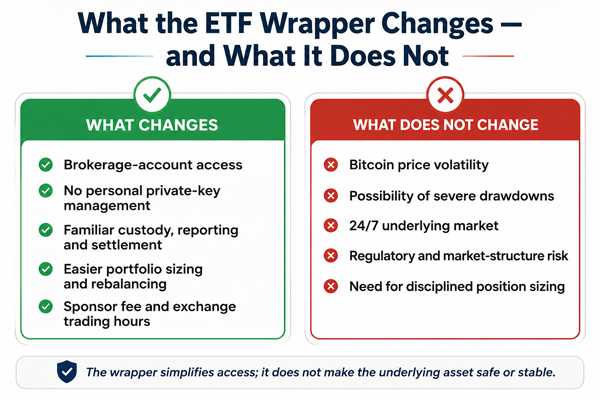
Figure 1. The ETF changes access and operations, not Bitcoin’s underlying risk.
2. What Is a Spot Bitcoin ETF?
A spot Bitcoin exchange-traded product is a publicly traded security designed to track the price of Bitcoin by holding Bitcoin or maintaining direct exposure to it. Investors buy and sell shares on a stock exchange, while the trust or fund handles custody of the underlying Bitcoin.
In everyday conversation, these products are usually called “spot Bitcoin ETFs.” Technically, many US products are exchange-traded products or grantor trusts rather than conventional investment-company ETFs registered under the Investment Company Act of 1940. That distinction matters because investor protections, tax treatment, governance, and operational rules may differ from those of a typical stock or bond ETF.
2.1. Spot vs futures: the essential difference
| Feature | Spot Bitcoin ETF/ETP | Bitcoin Futures ETF |
|---|---|---|
| Primary exposure | Bitcoin held by a trust or direct spot-linked exposure | Regulated Bitcoin futures contracts |
| Main return driver | Spot Bitcoin price, less fees and expenses | Futures prices, collateral returns, roll costs, and fees |
| Tracking risk | Fees, cash balances, execution, and market frictions | All spot-product risks plus futures basis and contract roll effects |
| Potential contango drag | Usually limited | Can be meaningful when later-dated futures trade above near-term contracts |
| Typical use | Longer-term price exposure through a brokerage account | Tactical exposure, regulated derivatives access, or strategies using futures |
A spot product generally provides cleaner exposure to Bitcoin’s market price than a futures fund. A futures ETF can outperform or underperform spot Bitcoin depending on the shape of the futures curve, collateral yield, leverage, and the cost of replacing expiring contracts.
Plain-English Definition A spot Bitcoin ETF is a stock-exchange-traded share that gives investors economic exposure to Bitcoin without requiring them to personally buy, transfer, or store Bitcoin.
3. Why the US Approval Was a Turning Point
On January 10, 2024, the US Securities and Exchange Commission approved exchange rule changes that allowed multiple spot Bitcoin ETPs to list and trade. The approval followed years of rejected or delayed applications and a major court decision involving Grayscale. The SEC emphasized that approval of the listings was not approval or endorsement of Bitcoin and warned investors about crypto-related risks.[1][2]
The practical impact was larger than the legal wording. For the first time, major US asset managers could offer spot Bitcoin exposure through the same distribution channels used for stocks, bonds, mutual funds, and conventional ETFs. That opened the door to registered investment advisers, broker-dealers, family offices, hedge funds, corporate treasuries, and other institutions that had been unwilling or unable to hold Bitcoin directly.
3.1. What changed for the market?
- Access expanded. Investors could buy Bitcoin exposure through ordinary brokerage and retirement accounts where permitted.
- Operational barriers fell. Institutions no longer needed to build their own wallet, key-management, exchange, and blockchain-accounting processes.
- Price discovery became more connected. US equity-market trading, institutional derivatives, and global crypto markets became more tightly linked.
- Competition reduced fees. Large sponsors competed on price, liquidity, brand, custody, and distribution.
- Bitcoin became easier to include in model portfolios. Advisers could size, rebalance, report, and monitor exposure using familiar securities infrastructure.
3.2. The 2025 in-kind milestone
The initial US spot crypto products generally used cash creations and redemptions. On July 29, 2025, the SEC approved orders permitting in-kind creations and redemptions for crypto ETP shares.[3] In an in-kind process, authorized participants can deliver or receive the underlying asset rather than forcing the fund to buy or sell it for cash. This can reduce market impact, spreads, slippage, and operational costs, although the exact benefit depends on each product’s procedures and market conditions.
4. How a Spot Bitcoin ETF Works
4.1. The core participants
| Participant | Role |
|---|---|
| Sponsor | Creates and oversees the product, disclosures, service providers, and fee structure |
| Trust or fund | Issues shares and holds the economic interest in Bitcoin |
| Bitcoin custodian | Safeguards private keys and executes custody controls |
| Authorized participants (APs) | Create or redeem large blocks of shares, usually called baskets |
| Market makers | Quote bid and ask prices and help keep shares liquid |
| Exchange | Lists shares and provides the trading venue |
| Index or benchmark provider | Calculates the reference price used for NAV or performance measurement |
| Brokerage firm | Holds ETF shares for investors and processes trades |
4.2. Creation and redemption, step by step
- Investor demand pushes ETF shares above their underlying value or creates a need for more shares.
- An authorized participant assembles the required cash or Bitcoin and delivers it to the trust under the product’s approved process.
- The trust issues a large block of new shares to the authorized participant.
- The authorized participant sells those shares into the market, increasing supply and helping reduce the premium.
- When shares trade below underlying value, the process can reverse: shares are accumulated, redeemed, and removed from circulation.
- Arbitrage incentives help keep the ETF’s market price close to its net asset value, though the relationship can weaken during stressed or illiquid markets.
4.3. Why ETF prices can differ from Bitcoin prices
- The ETF trades only during exchange hours, while Bitcoin trades 24/7.
- The fund charges an annual sponsor fee and may incur operating expenses.
- The market price can trade at a premium or discount to net asset value.
- The benchmark may use a specified pricing window rather than the latest global Bitcoin price.
- Cash balances, transaction costs, and timing differences can create tracking error.
- Weekend or overnight Bitcoin moves can appear as a gap when the ETF market reopens.
Practical trading note: Compare the ETF’s bid-ask spread and premium or discount before placing an order. Limit orders can reduce execution surprises, especially near the market open or after a large overnight Bitcoin move.
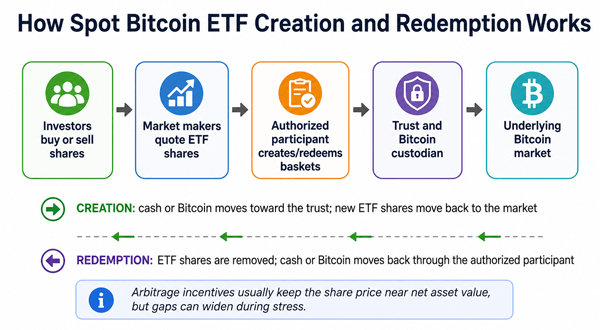
Figure 2. Creation and redemption connect ETF share demand with the underlying Bitcoin market.
5. Why Institutions Prefer the ETF Wrapper
Institutional adoption is not simply a matter of large investors deciding that Bitcoin is attractive. Institutions operate under legal mandates, investment policies, custody rules, accounting systems, risk limits, committee approvals, and reporting requirements. The ETF wrapper solves several practical problems at once.
5.1. Familiar custody and settlement
An institution can hold ETF shares through an established securities custodian rather than directly safeguarding Bitcoin private keys. This can simplify account reconciliation, trade settlement, audit evidence, and internal controls. The underlying Bitcoin still requires specialized custody, but that responsibility is delegated to the product’s service providers.
5.2. Easier compliance and governance
Many investment policies allow listed securities but prohibit direct ownership of digital assets. An exchange-traded product may fit within existing approval frameworks, although each institution must still evaluate product structure, legal status, liquidity, concentration, valuation, and risk.
5.3. Standardized reporting
ETF positions appear in brokerage statements, portfolio accounting systems, risk dashboards, and client reports. Large institutional managers may also disclose reportable holdings on Form 13F. The SEC states that institutional investment managers exercising investment discretion over at least $100 million in Section 13(f) securities generally must file quarterly reports.[4]
5.4. Portfolio implementation
- Position sizing can be expressed as a portfolio percentage.
- Exposure can be rebalanced alongside stocks and bonds.
- Advisers can use limit orders, tax lots, model portfolios, and managed accounts.
- Risk teams can monitor volatility, value at risk, drawdown, and correlation within existing systems.
- Options and futures can support hedging, income, or basis strategies where appropriate.
5.5. Reputation and due diligence
Major asset managers, regulated exchanges, public prospectuses, audited financial statements, and institutional custodians do not eliminate risk. They do, however, create a due-diligence environment that many boards and investment committees find more workable than direct participation on offshore or lightly regulated crypto platforms.
Important Distinction Institutional access is not the same as institutional conviction. A reported ETF position may represent a long-term allocation, a client hedge, market-making inventory, an options strategy, or one side of a basis trade.
6. How ETF Flows Affect Bitcoin and Crypto Markets
6.1. The direct demand channel
When net investor demand creates new ETF shares, the product or its authorized participants may need to acquire Bitcoin. All else equal, sustained net creations increase demand for available Bitcoin. When redemptions dominate, Bitcoin may be sold or transferred out of the trust. Because Bitcoin’s liquid supply is smaller than its total circulating supply, large persistent flows can have an outsized price impact. Remember that a reported “net flow” is an estimate of net creations or redemptions, not simply the day’s ETF trading volume.
6.2. The reflexivity channel
ETF flows can influence price, and price can influence ETF flows. Rising Bitcoin prices attract attention, improve recent performance, increase media coverage, and may draw new buyers. Those inflows can support further buying. The process can reverse during a decline, when losses, risk reductions, and redemptions reinforce selling pressure.
6.3. The liquidity channel
Spot ETFs can improve liquidity by attracting market makers, authorized participants, options traders, arbitrageurs, and institutional hedgers. More liquidity can tighten spreads and improve execution during normal markets. Yet liquidity is not guaranteed. During severe stress, spreads can widen, market makers can reduce risk, and the underlying Bitcoin market can move faster than ETF arbitrage can respond.
6.4. The derivatives and basis-trade channel
Institutions may buy spot ETF shares and short Bitcoin futures to capture the difference between spot and futures prices. CME has described how spot ETFs helped expand crypto basis trading, while its futures market provides regulated tools for hedging and price discovery.[5][6] This activity can increase both ETF assets and futures open interest without representing a simple bullish bet on Bitcoin.
6.5. The correlation channel
As Bitcoin becomes more integrated with traditional financial markets, it may respond more strongly to interest rates, the US dollar, equity volatility, liquidity conditions, and institutional risk appetite. Some academic research after the ETF launch found stronger co-movement with US equities, though correlations remain unstable and vary across market regimes.[12][13]
6.6. Why daily ETF flows do not explain everything
- Bitcoin trades globally and continuously, while US ETF trading is limited to exchange hours.
- Offshore spot markets, stablecoin liquidity, miners, corporations, sovereign actors, and long-term holders also affect supply and demand.
- Futures liquidations and leverage can dominate short-term price moves.
- Macroeconomic news can move all risk assets simultaneously.
- Flow estimates can be revised and may not reveal the investor’s strategy.
- A large inflow can coincide with a price decline if other sellers are larger.
Expert Insight Treat ETF flows as one market signal, not a complete trading system. The most useful analysis combines flows with price trend, realized and implied volatility, futures basis, funding rates, options positioning, liquidity, and macroeconomic conditions.
7. Institutional Adoption: What It Really Means
Institutional adoption is best understood as a spectrum rather than a single event.
| Stage | What it looks like | Market implication |
|---|---|---|
| Access | A broker or custodian allows clients to trade the product | Removes a distribution barrier |
| Research | An institution begins formal due diligence | Signals growing legitimacy but no capital commitment |
| Pilot allocation | Small position, often below 1% | Tests operations, volatility, and client response |
| Strategic allocation | Policy-approved target with rebalancing rules | Can create recurring demand and disciplined selling |
| Portfolio integration | Included in models, alternatives sleeves, or multi-asset mandates | Broadens recurring use |
| Market infrastructure | Options, lending, financing, futures, and structured products develop | Deepens liquidity and institutional strategies |
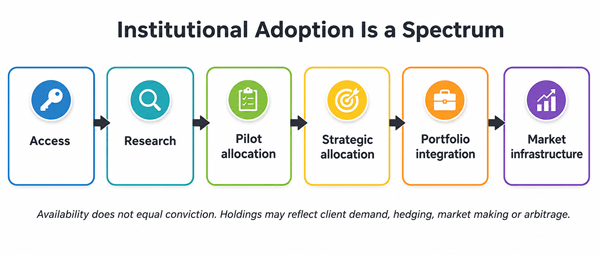
Figure 4. Institutional adoption progresses from access to full market infrastructure.
7.1. Who is using spot Bitcoin ETFs?
- Retail investors seeking convenience and familiar brokerage access.
- Registered investment advisers managing client portfolios.
- Family offices and high-net-worth investors.
- Hedge funds running directional, relative-value, arbitrage, or options strategies.
- Banks and broker-dealers providing execution, custody, research, or client access.
- Corporate or nonprofit investment committees evaluating alternative assets.
- Pensions and endowments in limited cases, subject to strict fiduciary and policy constraints.
7.2. How to interpret 13F filings
Form 13F filings are useful but incomplete. They are quarterly, delayed, and generally show long positions in reportable securities—not the entire portfolio, short positions, derivatives exposure, client-level ownership, or the investment thesis. A manager that reports a large Bitcoin ETF holding may be economically neutral after hedges. Conversely, some institutions may have exposure that is not visible in a simple ETF holdings list.
8. Spot ETF vs Direct Bitcoin vs Futures ETF
| Decision factor | Spot Bitcoin ETF | Direct Bitcoin | Bitcoin Futures ETF |
|---|---|---|---|
| Private keys | No personal key management | Investor or custodian must secure keys | No Bitcoin keys |
| Trading hours | Exchange hours | 24/7 | Exchange/futures hours |
| Use in many brokerage/retirement accounts | Often available, subject to platform rules | Usually limited | Often available |
| Ability to withdraw Bitcoin | No | Yes | No |
| Annual product fee | Yes | No fund fee, but trading/custody costs may apply | Yes |
| Tracking quality | Generally close to spot less fees | Direct exposure | Can diverge because of futures basis and roll costs |
| Tax paperwork | May involve grantor-trust reporting complexities | Digital-asset transaction reporting | ETF/futures tax rules vary by structure |
| Counterparty structure | Sponsor, custodian, APs, brokerage | Exchange/custodian or self-custody risks | Fund, futures clearing, collateral, brokerage |
| Best suited for | Convenient portfolio exposure | Ownership, transferability, self-custody, on-chain use | Tactical or derivatives-based exposure |
8.1. When a spot ETF may be preferable
- You want price exposure inside a conventional brokerage or eligible retirement account.
- You do not want to manage wallets, seed phrases, or blockchain transfers.
- You value consolidated statements, tax lots, and portfolio reporting.
- You plan to rebalance Bitcoin alongside other investments.
- Your institution’s policies permit listed securities but not direct crypto assets.
8.2. When direct Bitcoin may be preferable
- You want the ability to transfer or self-custody Bitcoin.
- You need 24/7 trading or settlement.
- You want to use Bitcoin on-chain or hold it outside the traditional financial system.
- You understand private-key security and accept the operational responsibility.
- You want to avoid an ongoing sponsor fee and can manage custody efficiently.
9. Benefits, Drawbacks, Fees, and Hidden Costs
9.1. Main benefits
- Convenience: buy and sell through a brokerage account.
- Operational simplicity: no wallet setup, blockchain transfers, or seed-phrase storage.
- Institutional-grade infrastructure: public disclosures, service providers, audits, and exchange trading.
- Potentially strong liquidity: leading products can trade with tight spreads under normal conditions.
- Portfolio compatibility: easier sizing, rebalancing, reporting, and adviser oversight.
- Competitive fees: sponsor competition has reduced annual costs relative to many earlier crypto investment vehicles.
9.2. Main drawbacks
- No direct ownership rights: shareholders cannot withdraw or use the underlying Bitcoin.
- Annual fee drag: the amount of Bitcoin represented by each share generally declines over time as expenses are paid.
- Trading-hour mismatch: Bitcoin can move sharply while the ETF market is closed.
- Tracking differences: market price and NAV may diverge temporarily.
- Concentration risk: the product typically holds one highly volatile asset.
- Structural complexity: sponsor, custodian, AP, benchmark, and brokerage risks remain.
- Tax complexity: grantor-trust treatment can create reporting details that differ from a conventional equity ETF.
9.3. The full cost stack
| Cost | What it means | How to reduce it |
|---|---|---|
| Sponsor fee | Annual percentage deducted from trust assets | Compare current, not promotional, fee schedules |
| Bid-ask spread | Difference between purchase and sale quotes | Trade liquid products during normal market hours; use limit orders |
| Premium/discount | ETF market price differs from NAV | Check indicative value and avoid disorderly markets |
| Broker commission | Trading charge, if any | Use a low-cost brokerage and review order-routing quality |
| Market impact | Large orders move price | Split orders or use professional execution |
| Tax cost | Capital gains and trust-level reporting effects | Use tax-aware account placement and professional advice |
| Opportunity cost | Capital cannot be used elsewhere | Set a clear portfolio role and rebalancing rule |
Leading US products have often charged sponsor fees near 0.25%, although fee waivers, asset thresholds, and product terms can change. For example, official BlackRock and Fidelity materials listed 0.25% sponsor or expense ratios for IBIT and FBTC in 2026.[7][10] Investors should verify the current prospectus before trading.
10. Security, Custody, and Counterparty Risk
A spot Bitcoin ETF moves private-key risk away from the shareholder, but it does not make custody risk disappear. Instead, risk is concentrated within institutional service providers and legal agreements.
10.1. Key security questions to investigate
- Who is the Bitcoin custodian?
- How much Bitcoin is held in cold storage versus systems used for trading liquidity?
- Are private keys geographically and operationally segregated?
- What insurance exists, and what exclusions or limits apply?
- How are forks, airdrops, or network disruptions handled?
- Does the trust use one custodian or multiple providers?
- How are authorized participant transactions executed and reconciled?
- What happens if the sponsor, custodian, or key service provider fails?
10.2. Brokerage protection is not price protection
SIPC may help restore missing customer cash and securities if a SIPC-member brokerage fails, subject to legal limits and eligibility. It does not protect against market losses, falling Bitcoin prices, poor investment decisions, or losses inside the trust caused by events outside SIPC’s scope.[11] The ETF itself is not FDIC-insured.
10.3. Custody concentration
When several large products rely on a small number of custodians, operational concentration can become a system-level concern. Strong controls may reduce the probability of loss, but a major custodian disruption, cyber incident, legal freeze, or execution outage could affect multiple products at once.
Warning Do not equate “regulated product” with “guaranteed asset.” Regulation improves disclosure and market structure, but investors can still lose most or all of their investment.
11. US Regulation and Investor Protection
US spot Bitcoin ETPs sit at the intersection of securities-market rules and an underlying Bitcoin market that operates globally across venues with different regulatory standards. The SEC’s approval focused on exchange listing standards and surveillance arrangements; it did not transform Bitcoin into a security or endorse the underlying asset.[1][2]
11.1. What regulation can improve
- Prospectus disclosure and periodic reporting.
- Exchange trading rules and market surveillance.
- Audited financial statements and defined service-provider roles.
- Rules governing creations, redemptions, custody, and benchmark use.
- Broker-dealer supervision and customer-account controls.
- Public visibility into fees, holdings, and material risks.
11.2. What regulation cannot eliminate
- Bitcoin price volatility and drawdowns.
- Global market manipulation or fragmented liquidity.
- Cybersecurity threats and operational failures.
- Regulatory change in the US or abroad.
- Network-level risks, including forks, congestion, or software vulnerabilities.
- Investor behavior, leverage, concentration, and panic selling.
12. US Tax Considerations
Tax treatment is one of the most misunderstood parts of spot Bitcoin ETF investing. The IRS generally treats digital assets as property.[8] Many spot Bitcoin products state that they intend to be treated as grantor trusts for US federal income tax purposes, meaning shareholders may be treated as owning a proportional interest in the trust’s Bitcoin rather than shares in a conventional corporation or regulated investment company.[9][10]
12.1. Potential taxable events
- Selling ETF shares for more or less than your adjusted tax basis.
- The trust selling a small amount of Bitcoin to pay fees and expenses, which may affect shareholder basis and reporting.
- Redemptions or structural events, depending on product terms and tax treatment.
- Using options or other derivatives on ETF shares.
- Holding the product in a taxable account versus a tax-advantaged account.
12.2. Capital gains holding period
Gains on interests held for more than one year are generally eligible for long-term capital-gains treatment, while shorter holding periods generally produce short-term gains taxed at ordinary-income rates. Because many spot Bitcoin products are grantor trusts, investors should rely on the sponsor’s annual tax package rather than assume reporting will match a conventional equity ETF. Wash-sale rules generally apply to securities, including ETF shares; direct Bitcoin has historically been treated differently, but legislation and IRS guidance can change.
12.3. Tax checklist
- Download the sponsor’s annual tax information statement.
- Reconcile cost basis with any trust-level Bitcoin sales used to pay expenses.
- Confirm how your broker reports proceeds and basis.
- Keep records of purchases, sales, transfers between brokers, and corporate actions.
- Ask a tax professional how the product fits your federal, state, and retirement-account situation.
13. Portfolio Construction and Decision Framework
13.1. Start with the portfolio role
Before choosing a product, decide why Bitcoin belongs in the portfolio. Possible roles include a high-risk growth asset, a small alternative allocation, a tactical trade, an inflation or monetary-system hedge, or a diversifier. Each thesis has different evidence, risks, and holding periods. Bitcoin should not be added merely because an ETF makes it easy.
13.2. Position sizing
Because Bitcoin has historically experienced extreme volatility and deep drawdowns, position size often matters more than precise entry price. A small allocation can still contribute meaningfully to risk. For example, if Bitcoin volatility is several times that of a balanced portfolio, a 5% capital allocation may contribute far more than 5% of total portfolio volatility.
13.3. A practical decision matrix
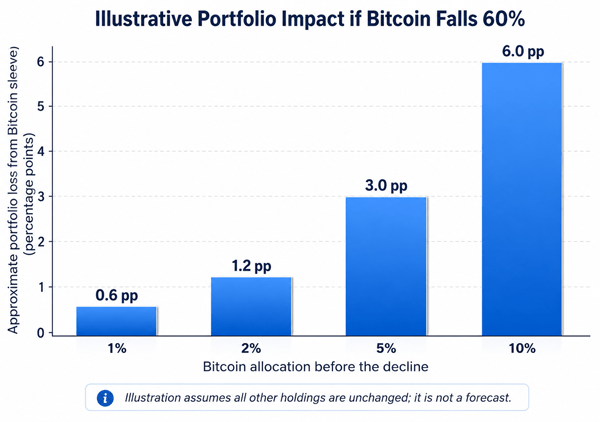
Figure 6. Even a modest allocation can materially affect portfolio losses during a severe Bitcoin decline.
| Question | If “yes” | If “no” |
|---|---|---|
| Can you tolerate a 50%–70% drawdown in this position? | Continue due diligence | Reduce size or avoid |
| Do you understand the product structure and tax treatment? | Compare funds | Read prospectus and tax documents first |
| Is your time horizon at least several years? | A strategic allocation may be considered | Treat as tactical or avoid |
| Do you have an emergency fund and manageable debt? | Proceed to portfolio analysis | Strengthen financial foundation first |
| Will the position remain small enough to avoid emotional decisions? | Set rebalancing rules | Lower the allocation |
| Do you need to withdraw or use actual Bitcoin? | Direct ownership may be better | ETF may be suitable |
13.4. How to compare spot Bitcoin ETFs
- Expense ratio: compare the permanent fee after any waiver expires.
- Liquidity: examine average trading volume, bid-ask spread, and depth.
- Assets and operating scale: larger funds may have lower closure risk and stronger secondary-market liquidity.
- Tracking: compare NAV performance with the stated benchmark after fees.
- Custody: review custodian, security controls, insurance disclosures, and concentration.
- Creation/redemption method: understand whether the product uses cash, in-kind, or both.
- Benchmark methodology: review pricing venues, calculation windows, and governance.
- Tax reporting: inspect annual tax packages and broker support.
- Sponsor strength: consider experience, compliance resources, and product commitment.
- Share price: it affects trading convenience, not the underlying economic value.
13.5. Rebalancing example
Suppose an investor sets a 2% Bitcoin ETF target with a 1%–3% rebalancing band. If Bitcoin rises and the position reaches 3%, the investor sells back toward 2%. If it falls to 1%, the investor buys only if the original thesis remains valid. This rule turns volatility into a disciplined process and limits the risk that a small speculative position becomes a dominant portfolio exposure.
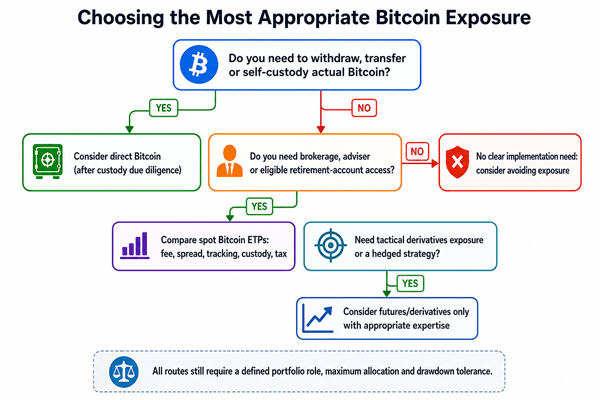
Figure 5. A practical decision tree for choosing spot ETF, direct Bitcoin, derivatives, or no exposure.
14. Common Mistakes
| Mistake | Why it is dangerous | Better practice |
|---|---|---|
| Assuming ETF approval means Bitcoin is safe | Approval concerns listing and disclosure, not price stability | Evaluate Bitcoin risk independently |
| Buying based only on recent inflows | Flows can reverse and may reflect hedged trades | Use a multi-factor framework |
| Ignoring fees and spreads | Small recurring costs compound over time | Compare total cost, not only headline fee |
| Using market orders in volatile periods | Execution can occur far from expected price | Use limit orders and liquid trading hours |
| Overallocating after a rally | Concentration magnifies drawdowns and emotional decisions | Set a maximum allocation in advance |
| Confusing shares with Bitcoin | ETF shares cannot be withdrawn to a wallet | Choose direct ownership when transferability matters |
| Ignoring tax documents | Grantor-trust reporting can affect basis | Keep sponsor statements and consult a tax adviser |
| Reading 13F holdings as pure bullish bets | Positions may be hedged or client-driven | Consider the manager’s entire strategy |
15. What to Watch Next
- Net creations and redemptions across leading spot products.
- Concentration of assets among the largest sponsors and custodians.
- Bid-ask spreads, premium/discount behavior, and tracking during stressed markets.
- Growth of options, futures, lending, and structured products tied to ETF shares.
- Changes to adviser-platform access and retirement-account availability.
- Institutional disclosures, while recognizing the limitations of 13F data.
- SEC, IRS, banking, custody, stablecoin, and market-structure rule changes.
- Bitcoin’s correlation with equities, the dollar, real yields, and global liquidity.
- Whether in-kind processes reduce costs and improve tax or trading efficiency in practice.
- Fund closures or fee changes among smaller products.
The long-term question is not whether institutions will participate—they already do. The more important questions are how much capital becomes strategic rather than tactical, how deeply Bitcoin becomes integrated into diversified portfolios, and whether market infrastructure makes Bitcoin more resilient or more tightly connected to traditional financial-system stress.
16. Frequently Asked Questions
16.1. Is a spot Bitcoin ETF the same as owning Bitcoin?
No. You own shares in a trust or exchange-traded product that holds or tracks Bitcoin. You generally cannot withdraw the underlying Bitcoin or use it on-chain.
16.2. Did the SEC approve Bitcoin?
No. The SEC approved exchange rule changes permitting certain spot Bitcoin ETP shares to list and trade. The agency explicitly stated that it did not approve or endorse Bitcoin.[1]
16.3. How do spot Bitcoin ETF inflows affect price?
Net creations can require Bitcoin purchases, increasing demand. The price effect depends on flow size, available liquidity, investor positioning, derivatives, macroeconomic conditions, and selling elsewhere in the market.
16.4. Can ETF outflows crash Bitcoin?
Large, persistent outflows can add selling pressure, but they are only one source of market supply. Bitcoin trades globally, and other buyers, sellers, derivatives, and liquidity conditions can offset or amplify the effect.
16.5. Why can a Bitcoin ETF rise less than Bitcoin?
Sponsor fees, expenses, tracking error, benchmark timing, cash balances, and premiums or discounts can cause differences.
16.6. Can I buy a spot Bitcoin ETF in an IRA?
Many brokerage platforms allow eligible Bitcoin ETPs in certain IRAs, but availability and suitability rules vary by broker, employer plan, and account type.
16.7. Are Bitcoin ETFs insured by the FDIC?
No. ETF shares are investments, not bank deposits. SIPC protection at a member brokerage addresses certain missing-customer-asset situations, not market losses.[11]
16.8. What happens if the custodian is hacked?
The outcome depends on the custody agreement, security controls, insurance, legal recovery, and the scale of the loss. Prospectuses warn that custody failures could materially harm shareholders.
16.9. Are spot Bitcoin ETFs safer than crypto exchanges?
They may reduce some operational and platform risks for the shareholder, but they still expose investors to Bitcoin price risk and to sponsor, custodian, brokerage, market, and structural risks.
16.10. Which Bitcoin ETF is best?
There is no universally best fund. Compare permanent fee, spread, liquidity, tracking, custody, tax reporting, sponsor quality, and closure risk based on your needs.
16.11. Do institutions buying Bitcoin ETFs prove the price will rise?
No. Institutional participation improves access and can support demand, but institutions also sell, hedge, arbitrage, rebalance, and reduce risk.
16.12. Do 13F filings show all institutional Bitcoin exposure?
No. They are delayed and incomplete and generally do not show short positions, many derivatives, direct Bitcoin, or the purpose of a holding.
16.13. Are Bitcoin ETF gains taxed like stock gains?
Sales commonly generate capital gains or losses, but many spot products use grantor-trust structures that can add reporting complexity. Review product tax materials and professional advice.
16.14. Can a spot Bitcoin ETF trade at a premium or discount?
Yes. Arbitrage usually keeps the gap small, but it can widen during volatile, illiquid, or closed-market periods.
16.15. What is in-kind creation and redemption?
It is a process in which authorized participants deliver or receive the underlying asset rather than cash when creating or redeeming large share baskets. The SEC permitted this for crypto ETPs in July 2025.[3]
16.16. Can Bitcoin ETFs make the crypto market less volatile?
They can deepen liquidity and broaden participation, but they can also transmit institutional risk-on/risk-off flows more quickly. The net effect varies by market regime.
16.17. Is Bitcoin a good portfolio diversifier after ETF adoption?
Sometimes, but correlations are unstable. Bitcoin can behave independently in one period and move with growth stocks in another. Diversification should be measured, not assumed.
16.18. How much should a beginner invest?
There is no universal amount. Any allocation should be small enough that a severe drawdown does not threaten essential goals or cause panic selling.
17. Conclusion
US spot Bitcoin ETFs changed the crypto market by connecting Bitcoin to the infrastructure of traditional investing. They made access easier, reduced private-key and operational burdens for shareholders, widened institutional participation, and strengthened the links among spot Bitcoin, equity markets, futures, options, advisers, and large asset managers.
Their influence is real but often oversimplified. ETF inflows can create demand and outflows can create supply, yet Bitcoin remains a global, leveraged, macro-sensitive, 24-hour market. Institutional holdings can represent long-term conviction, client demand, market making, hedging, or arbitrage. A regulated wrapper improves access and disclosure; it does not eliminate volatility, custody risk, tax complexity, or the possibility of permanent loss.
For investors, the right question is not “Will institutions make Bitcoin go up?” It is “What role, if any, should Bitcoin play in my plan, and which ownership structure best matches my goals, risk tolerance, tax situation, and operational needs?” A carefully sized spot ETF allocation may be a practical answer for some investors. For others, direct ownership—or no Bitcoin exposure at all—may be more appropriate.
17.1. Actionable Checklist
Before investing: define the portfolio role; set a maximum allocation; compare fee, spread, liquidity, tracking, custody, and tax reporting; read the prospectus; use limit orders; create a rebalancing rule; and assume the position can experience a severe drawdown.
17.2. Sources Consulted and Checked
These sources were consulted and checked while preparing this article to support its accuracy and reliability.
- [1] US Securities and Exchange Commission, “Statement on the Approval of Spot Bitcoin Exchange-Traded Products,” January 10, 2024.
- [2] US Securities and Exchange Commission, Release No. 34-99306, order approving proposed exchange rule changes for Bitcoin-based commodity trust shares, January 10, 2024.
- [3] US Securities and Exchange Commission, “SEC Permits In-Kind Creations and Redemptions for Crypto ETPs,” July 29, 2025.
- [4] US Securities and Exchange Commission, “Frequently Asked Questions About Form 13F,” including the $100 million reporting threshold.
- [5] CME Group, “Spot ETFs Give Rise to Crypto Basis Trading,” November 5, 2025.
- [6] CME Group, Bitcoin futures market information and open-interest resources.
- [7] BlackRock, iShares Bitcoin Trust ETF (IBIT) official product page and fact sheet, accessed August 2026.
- [8] Internal Revenue Service, “Digital assets” and digital-asset tax guidance; digital assets are generally treated as property.
- [9] iShares Bitcoin Trust ETF tax information identifying the trust as a grantor trust for US federal income-tax purposes.
- [10] Fidelity Wise Origin Bitcoin Fund official product, prospectus, and tax materials, accessed 2026.
- [11] Securities Investor Protection Corporation, “What SIPC Protects.”
- [12] Wu, Di, “Institutional Adoption and Correlation Dynamics: Bitcoin’s Evolving Role in Financial Markets,” 2025.
- [13] Hong, Yihan et al., “The Impact of Bitcoin ETF Approval on Bitcoin’s Hedging Properties Against Traditional Assets,” 2025.
- [14] Wu, Di, “Bitcoin ETF: Opportunities and Risk,” 2024, on premium/discount and liquidity risks.
- [15] Mallory, Mindy L., “Implied ETF Carry Rates and the Limits of Arbitrage in Segmented Bitcoin Markets,” 2026.
17.3. Reader Advice
This article is provided for educational and informational purposes only. It is not personalized financial, investment, legal, tax, or other professional advice, and it is not a recommendation to buy, sell, or hold Bitcoin, a Bitcoin ETF, or any other financial product.
Financial products, fees, tax treatment, laws, regulations, policies, market conditions, and statistics can change over time and may vary by country, state, region, account type, and individual circumstances. Before making a decision, verify current information through official regulators, the latest prospectus and sponsor materials, and other authoritative sources. Consider consulting a qualified financial adviser, tax professional, or legal professional where appropriate.
Bitcoin and cryptocurrency-related investments are highly volatile and involve substantial risks, including tracking, liquidity, custody, operational, regulatory, tax, and market risks, as well as the possible loss of some or all invested capital. Past performance does not guarantee future results. Base any decision on your goals, time horizon, financial position, and ability to tolerate severe losses.