How to Buy Bitcoin Safely in the US: Step-by-Step Beginner Guide
1. Quick Answer: The Safest Beginner Process
For most U.S. beginners, the safest practical route is to use a reputable platform legally available in their state, secure the account before funding it, start with a small bank transfer, buy bitcoin with a simple market or limit order, and decide deliberately whether to leave a small amount with the platform or move it to a wallet they control.
- Confirm that buying bitcoin fits your finances and risk tolerance.
- Choose a platform available in your state and review its legal entity, licenses, custody terms, fees, withdrawal policy, and security controls.
- Create the account using a unique password and phishing-resistant multifactor authentication where available.
- Complete identity verification only through the official app or website.
- Link a bank account rather than using debt when practical; compare deposit and trading costs.
- Make a small test purchase before committing a larger amount.
- Review the order preview, spread, fee, total dollars spent, and bitcoin received.
- Choose custody: platform custody for convenience, or self-custody only after learning seed-phrase security.
- Keep transaction and cost-basis records from day one.
- Ignore unsolicited “help,” guaranteed returns, recovery agents, and requests to send bitcoin to protect an account.
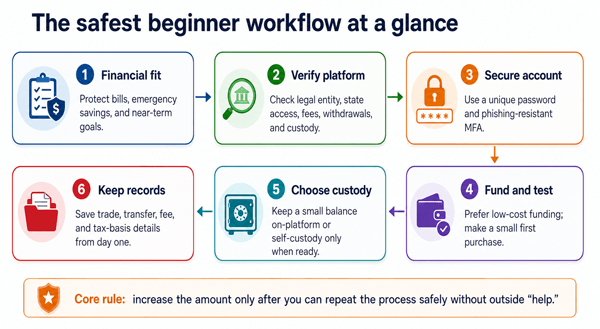
Figure 1. A six-control workflow that keeps financial, platform, security, custody, and recordkeeping decisions in the right order.
1.1 Bitcoin Buying Checklist
| Before you buy | What to verify |
|---|---|
| Financial readiness | Emergency fund is intact; high-interest debt and essential expenses are covered; loss would not derail goals. |
| Platform legitimacy | Correct legal name, U.S. availability, state availability, transparent terms, real support channels, and no regulatory red flags. |
| Total cost | Deposit fee + trading fee + spread + withdrawal fee + Bitcoin network fee. |
| Account security | Unique password, MFA or security key/passkey, withdrawal allowlist if offered, anti-phishing code if offered. |
| Purchase plan | Dollar amount, market vs. limit order, maximum allocation, and whether recurring purchases are appropriate. |
| Storage plan | Platform custody or self-custody; tested receiving address; seed phrase stored offline and never shared. |
| Tax records | Date, time, dollars paid, bitcoin quantity, fees, platform, wallet address, and later disposition records. |
2. What Bitcoin Is and What You Actually Own
Bitcoin is a digital asset transferred on a public blockchain. The blockchain is a shared record of transactions maintained by a decentralized network rather than a single bank. One bitcoin can be divided into 100 million units called satoshis, so you do not need to buy a whole bitcoin.
When you buy bitcoin, you acquire an economic interest in a quantity of BTC. Control depends on custody. If a platform holds the private keys, the platform controls the on-chain bitcoin on your behalf. If you move bitcoin to a self-custody wallet, you control it through private keys represented by a recovery phrase or other backup method.
Simple distinction An account balance is not the same as direct control. “Not your keys, not your coins” captures custody risk, but self-custody also creates a new risk: if you lose the keys or recovery phrase, there may be no company able to restore access.
3. Is Bitcoin Legal to Buy in the United States?
U.S. individuals can generally buy, own, and sell bitcoin. The rules that matter most to a beginner usually apply to the businesses providing exchange, brokerage, transmission, and custody services. Federal money-transmission obligations can require qualifying businesses to register with the Financial Crimes Enforcement Network (FinCEN) as money services businesses, while state licensing or charter requirements may also apply. New York has a particularly specific virtual-currency licensing framework.
A platform saying it is “registered” does not mean the government has approved bitcoin as safe, guaranteed the platform, or insured your crypto. Registration and licensing are compliance signals to investigate, not substitutes for due diligence.
New York residents Check that the exact platform and product are authorized for New York. A service available elsewhere in the United States may not be available to New York customers.
4. Before You Buy: Decide Whether Bitcoin Fits Your Finances
4.1 Protect the financial basics first
- Keep an emergency fund appropriate for your situation.
- Pay required bills and minimum debt payments on time.
- Give priority to high-interest debt, especially credit-card balances.
- Capture valuable employer retirement-plan matching contributions when available.
- Avoid borrowing to buy bitcoin or using cash advances, margin, or leveraged products as a beginner.
4.2 Choose a loss limit, not a profit target
Bitcoin can rise or fall sharply, trade 24 hours a day, and experience long drawdowns. A practical allocation begins with the maximum dollar loss you can tolerate without changing your life. For many beginners, that means a small single-digit percentage of investable assets or less, but there is no universal “right” percentage.
4.3 Define why you are buying
| Goal | Better approach | Main warning |
|---|---|---|
| Learn how Bitcoin works | Use a very small amount and practice secure buying and transfer steps. | Treat the learning cost as money that could be lost. |
| Long-term speculative exposure | Use a written allocation cap and consider periodic purchases. | A long holding period does not remove volatility or custody risk. |
| Short-term trading | Usually unsuitable for beginners. | Frequent trading increases execution mistakes, fees, and tax recordkeeping. |
| Portfolio diversification | Evaluate correlation, volatility, and total speculative exposure. | Bitcoin can fall at the same time as other risk assets. |
| Payments | Confirm merchant acceptance, tax consequences, fees, and irreversibility. | Spending appreciated bitcoin can create a taxable disposition. |
5. How to Choose a Safe Bitcoin Platform in the US
The “best” platform is not simply the one with the lowest advertised trading fee. A beginner should compare legal availability, custody structure, security, withdrawal access, total cost, usability, customer support, and tax records.
5.1 Platform due-diligence scorecard
| Check | Good sign | Warning sign |
|---|---|---|
| Identity and legal entity | Clear U.S. legal entity, address, terms, and regulatory disclosures. | Anonymous operators, unclear ownership, or copied legal pages. |
| State availability | A current state list and product restrictions are disclosed. | The site accepts sign-up but hides state restrictions. |
| Registration/licensing | Verifiable registrations or licenses relevant to offered services. | “Fully regulated” with no regulator, license number, or legal entity named. |
| Custody | Explains who holds private keys, how assets are segregated, and what happens in insolvency. | Vague promises that funds are “100% safe.” |
| Security | MFA, passkeys/security keys, withdrawal controls, login alerts, and a security history page. | SMS is the only MFA option; weak recovery process; no security documentation. |
| Withdrawals | Bitcoin withdrawals are allowed with clear limits, holds, and fees. | You can buy but cannot withdraw, or withdrawal rules are difficult to find. |
| Pricing | Fee schedule and order preview show fees and spread. | “Zero fee” claims with a wide or unexplained spread. |
| Support | Official in-app support and clear escalation process. | Support moves conversations to Telegram, WhatsApp, or direct messages. |
| Tax records | Downloadable transaction history and tax documents. | No export tools or incomplete trade records. |
| Business resilience | Transparent risk disclosures and proof-of-reserves information where relevant—without treating it as a full audit. | Guaranteed solvency claims or pressure to keep all assets on-platform. |
FinCEN provides an MSB registration search, but registration alone does not establish financial health, cybersecurity quality, consumer suitability, or protection from loss. State regulator databases and enforcement notices can add context. Search the exact legal entity - not just the brand name - and confirm that the specific product is available in your state.
6. Ways to Buy Bitcoin: Which Is Safest for a Beginner?
| Method | Advantages | Disadvantages | Best fit |
|---|---|---|---|
| Centralized crypto exchange | Broad functionality, withdrawals, recurring buys, order types. | Custody and platform risk; fee structures can be complex. | Most beginners who want actual BTC and possible self-custody. |
| Crypto broker or investing app | Simple interface and familiar funding. | May use spreads; withdrawal features may be limited or unavailable. | Convenience-focused users who verify transfer rights. |
| Bitcoin ATM | Cash access and speed. | Often high fees/spreads; scam risk; transaction errors are hard to reverse. | Limited cases—not the default beginner option. |
| Peer-to-peer purchase | Payment flexibility and direct transactions. | Counterparty, fraud, personal-safety, and compliance risks. | Experienced users using robust escrow—not typical beginners. |
| Spot bitcoin ETP in brokerage account | No wallet or private-key handling; fits retirement/brokerage workflows. | You do not own withdrawable bitcoin; management fees and market-hours limitations. | Investors seeking price exposure rather than usable BTC. |
| Mining | Produces bitcoin through specialized operations. | Capital, power, technical, tax, and operating complexity. | Businesses or specialists—not a simple buying method. |
Bitcoin ETP vs. bitcoinA spot bitcoin exchange-traded product may provide price exposure in a brokerage account, but it is not the same as owning bitcoin you can withdraw to a wallet. These products also have their own fees, structure, tracking, and regulatory risks.
7. How to Buy Bitcoin Safely: Step by Step
7.1 Step 1: Create a clean, secure setup
- Use a device with current operating-system and browser updates.
- Go to the platform through a bookmarked official address or verified app-store listing; do not use a sponsored search ad for first access.
- Use a dedicated email address if practical, protected by strong MFA.
- Create a long, unique password with a password manager.
- Prefer a passkey, hardware security key, or authenticator app over SMS when available.
- Never allow remote-access software at the request of “support.”
7.2 Step 2: Complete identity verification safely
Reputable U.S.-serving platforms commonly request identity information to meet know-your-customer and anti-money-laundering obligations. You may be asked for your legal name, date of birth, address, Social Security number or tax identification information, and a government-issued ID.
- Upload documents only inside the authenticated official app or website.
- Check the privacy policy, data-retention terms, and identity-verification provider.
- Do not send ID images through email, social media, or chat to an unofficial agent.
- Pause if anyone pressures you to bypass verification or create an account for another person.
7.3 Step 3: Lock down the account before adding money
- Enable the strongest MFA available.
- Save backup codes offline in a secure location.
- Turn on login, password-change, device, trade, and withdrawal alerts.
- Enable a withdrawal address allowlist or time delay if offered.
- Use an anti-phishing code if the platform supports one.
- Review active sessions and approved devices.
- Add a verbal or account PIN for support interactions if available.
7.4 Step 4: Choose a funding method
| Funding method | Typical strengths | Typical costs/risks | Beginner view |
|---|---|---|---|
| ACH bank transfer | Usually low cost; familiar. | May have settlement or withdrawal holds. | Often the best starting option. |
| Bank wire | Fast final settlement for larger amounts. | Bank and platform wire fees; irreversible if misdirected. | Useful after testing details carefully. |
| Debit card | Fast and convenient. | Higher fee or spread; fraud controls may block purchase. | Use only after comparing total cost. |
| Credit card | Potentially immediate. | Often unsupported; cash-advance fees, interest, and debt risk. | Generally avoid. |
| Payment app balance | Convenient where supported. | Features, spreads, and withdrawal rights vary. | Verify actual BTC withdrawal capability. |
| Cash/Bitcoin ATM | Cash access. | High total cost, scams, limits, and irreversible mistakes. | Not preferred for beginners. |
A bank transfer can be cheap but not always instant. Platforms may let you trade credited funds before allowing withdrawal. Read the hold period before buying if you plan to move bitcoin to a wallet quickly.
7.5 Step 5: Decide how much to buy
You can buy a fraction of a bitcoin. Start with a small test amount—large enough to understand the process but small enough that a mistake would be manageable. Set a hard maximum in dollars before viewing live price movement.
Example A beginner with a $200 learning budget might first deposit $50, buy $20 to $25 of bitcoin, inspect the receipt, and—after the funding hold clears—practice a small wallet transfer. The exact amounts should fit the platform’s minimums and fees.
7.6 Step 6: Choose a market or limit order
| Order type | How it works | Main benefit | Main risk |
|---|---|---|---|
| Market order | Executes promptly at the best available prices. | Simple and likely to fill. | Final price can differ from the quote, especially during volatility or with poor liquidity. |
| Limit order | Executes only at your chosen price or better. | Controls maximum purchase price. | May fill partially or not at all. |
| Recurring buy | Automatically buys on a schedule. | Supports disciplined dollar-cost averaging. | Convenience pricing can be higher; does not guarantee profit. |
For a small beginner purchase on a liquid platform, a market order may be acceptable if the order preview clearly shows the total. A limit order provides more price control but requires understanding that the order may not execute.
7.7 Step 7: Review the order preview
- Bitcoin quantity you will receive.
- Reference price and whether it is locked temporarily.
- Trading fee or commission.
- Embedded spread or price markup, where disclosed.
- Total U.S. dollars debited.
- Any recurring-purchase setting that may have been selected.
- Availability for withdrawal and any holding period.
7.8 Step 8: Confirm and save records
After execution, download or save the trade confirmation. Record the date and time, quantity of BTC, total dollars paid, transaction fee, payment method, and platform. These records establish cost basis and help resolve discrepancies.
7.9 Step 9: Decide where to store the bitcoin
Do not transfer automatically just because self-custody sounds more advanced. First understand the tradeoff between counterparty risk and key-management risk. For a very small learning balance, temporary platform custody may be reasonable. For larger or long-term holdings, many users consider self-custody but only after practicing backups and transfers.
8. Understanding Every Cost of Buying Bitcoin
The total cost can be larger than the advertised “trading fee.” Compare platforms using the all-in amount of bitcoin received for the same dollar outlay at the same time.
| Cost | What it means | How to reduce it |
|---|---|---|
| Deposit fee | Charge to add dollars. | Use low-cost ACH where appropriate. |
| Trading fee | Commission based on order size, tier, or maker/taker status. | Compare fee tiers and simple-buy vs. advanced-trade screens. |
| Spread | Difference between market price and the price offered to you. | Compare quotes and use transparent order books where comfortable. |
| Card markup | Extra fee for debit/credit convenience. | Prefer bank funding when practical. |
| Withdrawal fee | Platform charge for sending BTC out. | Check current fee and minimum; batch less frequently without accumulating excessive platform risk. |
| Network fee | Fee paid to Bitcoin miners for an on-chain transfer. | Choose timing/fee settings carefully when the wallet allows it; do not underpay when time matters. |
| Wallet cost | Hardware wallet purchase or backup materials. | Buy directly from a reputable manufacturer; treat security as part of ownership cost. |
| Tax/accounting cost | Software or professional help for records and returns. | Maintain clean records from the first transaction. |
| Opportunity cost | Money in bitcoin is unavailable for other goals. | Use an allocation policy tied to your financial plan. |
8.1 A simple all-in cost calculation
Suppose you place a $500 purchase, pay a $5 trading fee, incur an estimated $4 spread cost (0.8% of $500), and later pay a $4 withdrawal fee. The visible commission is only part of the cost: the illustrated total friction is $13, or 2.6% of the purchase amount, before any network, wallet, or tax-recordkeeping cost.
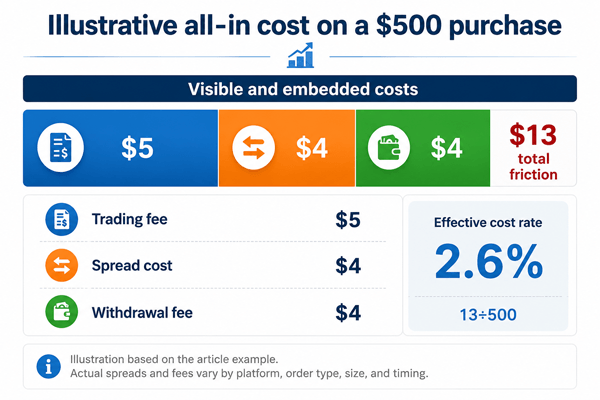
Figure 2. Illustrative cost breakdown using the article’s $500 example; actual platform pricing varies.
All-in cost = trading fee + estimated spread cost + deposit/card charges + withdrawal fee + network fee + any wallet or tax-recordkeeping cost.
9. Where to Store Bitcoin: Platform, Hot Wallet, or Cold Wallet?
| Storage option | Who controls keys? | Advantages | Risks |
|---|---|---|---|
| Platform custody | Platform or its custodian. | Easy recovery and trading; no seed phrase. | Platform failure, freeze, hack, insolvency, or account takeover. |
| Hot self-custody wallet | You; keys are on an internet-connected device. | Convenient for small transfers and spending. | Malware, phishing, device compromise, bad backups. |
| Hardware wallet/cold storage | You; signing keys remain on a dedicated offline-oriented device. | Stronger isolation for long-term holdings. | Loss, seed exposure, supply-chain risk, user error, inheritance complexity. |
| Multisignature setup | You and/or multiple key holders. | Reduces single-key failure and can improve governance. | More setup, coordination, backup, and recovery complexity. |
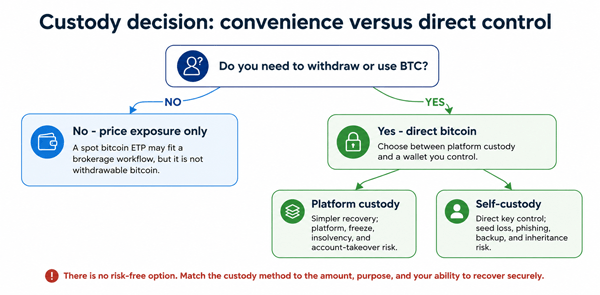
Figure 3. Custody is a tradeoff between platform risk and key-management risk, not a simple “safe versus unsafe” choice.
9.1 Self-custody safety rules
- Buy hardware wallets from the manufacturer or a trusted authorized seller; inspect packaging and initialize the device yourself.
- Never use a wallet that arrives with a prewritten recovery phrase.
- Write the recovery phrase offline; do not photograph it, email it, store it in cloud notes, or type it into a website.
- Never share the recovery phrase with support, family members through chat, an “investment manager,” or a recovery service.
- Create at least one durable backup protected from theft, fire, water, and accidental disposal.
- Test recovery procedures with a small amount before relying on the wallet for meaningful value.
- Plan inheritance access without exposing keys prematurely.
Critical warning Anyone who obtains your seed phrase can usually take the bitcoin. Anyone who asks for it is either confused or attempting theft.
10. How to Transfer Bitcoin to Your Own Wallet Safely
- Open the receiving wallet and select Bitcoin—not a similarly named asset or incompatible network.
- Generate a fresh receive address and verify it on the wallet device screen when possible.
- Copy the address carefully; malware can replace clipboard contents.
- Compare the first and last characters and, for meaningful transfers, verify the entire address through an independent method.
- Send a small test transaction first.
- Wait for the test transaction to appear and receive appropriate confirmations.
- Send the remaining amount only after confirming the destination is correct.
- Save the platform withdrawal record and transaction ID.
- Bitcoin transfers are generally irreversible. A typo, wrong network, scam address, or compromised clipboard can cause a permanent loss. The test transaction is not wasted effort; it is a control.
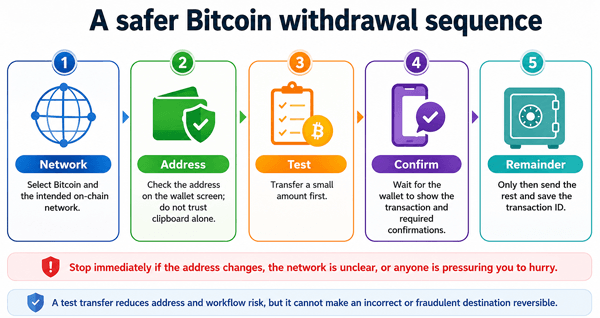
Figure 4. A test transaction is a practical control before sending the full amount.
11. Bitcoin Taxes in the US
For U.S. federal tax purposes, the IRS treats digital assets as property rather than currency. Buying bitcoin with U.S. dollars and simply holding it generally does not by itself create a capital gain or loss. Selling, exchanging, or spending bitcoin can create a taxable disposition. Receiving bitcoin as compensation, mining income, staking rewards, or other income can have different treatment.
11.1 Common tax events
| Action | Usually taxable? | Record needed |
|---|---|---|
| Buy BTC with U.S. dollars | Generally no immediate gain/loss. | Date, quantity, dollars paid, fees, and account. |
| Hold BTC | Generally no event solely from price change. | Continue preserving basis records. |
| Transfer between your own wallets | Generally not a sale; fees may require special basis analysis. | Both wallet records, transaction ID, and proof of ownership. |
| Sell BTC for dollars | Yes—capital gain or loss if held as a capital asset. | Proceeds, basis, fees, dates, and holding period. |
| Trade BTC for another crypto | Generally yes. | Fair market value of what was received and basis of BTC disposed. |
| Spend BTC on goods/services | Generally yes. | Fair market value, basis, and merchant transaction. |
| Receive BTC for work | Generally ordinary income at fair market value when received; later disposition can create gain/loss. | Income value, date/time, quantity, and later basis. |
| Gift BTC | Special gift-basis and reporting rules may apply. | Donor basis, fair market value, date, and recipient details. |
| Donate BTC | Potential charitable deduction rules and substantiation requirements. | Qualified charity records, appraisal where required, basis, and fair market value. |
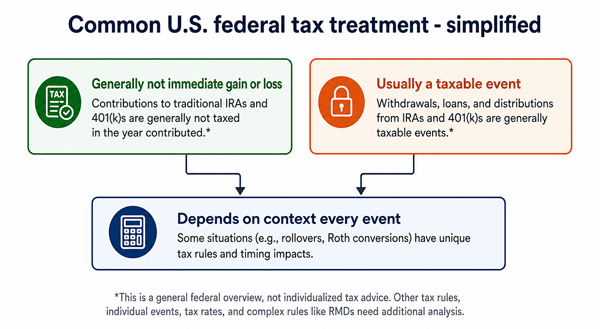
Figure 5. Simplified federal tax-event map; special situations require additional analysis.
11.2 Form 1099-DA and your records
Brokers began reporting certain digital-asset dispositions on Form 1099-DA for transactions on or after January 1, 2025. For 2025 transactions, many forms report proceeds without basis. Basis reporting applies to certain covered transactions beginning in 2026. A form may still omit information needed to compute tax when assets were acquired elsewhere or transferred between platforms. You remain responsible for reporting taxable income, gains, and losses even when no form arrives.
- Export transaction history at least annually and before closing an account.
- Keep records from every exchange and wallet, including failed or reversed transactions.
- Track fees and the specific units disposed under the identification method you use.
- Reconcile transfers so they are not mistakenly treated as income or sales.
- Use a qualified tax professional for material holdings, business activity, gifts, losses, inherited crypto, mining, or complex wallet histories.
Tax example You buy 0.01 BTC for $600 plus a $6 fee, creating a simplified basis of $606. Later you sell the 0.01 BTC for $800 and pay an $8 selling fee, producing simplified net proceeds of $792. The resulting gain is $186 before considering any special facts: $792 − $606.
12. Security Threats and Scams Beginners Must Recognize
| Threat | How it appears | Safe response |
|---|---|---|
| Impersonation scam | A “bank,” “government agent,” exchange employee, or police officer tells you to buy/send bitcoin to protect money. | Stop. Contact the institution using an independently verified number. Do not send crypto. |
| Investment/romance scam | A new online contact offers coaching, guaranteed returns, or access to a special platform. | Do not deposit. Search the domain and report the account. |
| Fake exchange or wallet | A convincing website/app copies a real brand or shows fabricated profits. | Use bookmarked official sites and verified app-store publishers. |
| Phishing | Email/text creates urgency around login, withdrawal, or verification. | Open the app independently; never follow the link. |
| SIM swap | Phone service suddenly stops and attacker intercepts SMS codes. | Use non-SMS MFA and a carrier port-out PIN. |
| Clipboard malware | A copied Bitcoin address changes before pasting. | Verify address on the wallet device and send a test. |
| Seed-phrase theft | “Support” asks for 12 or 24 words to fix or sync a wallet. | Never share or type the phrase into a website. |
| Recovery scam | Someone claims they can recover stolen bitcoin for an upfront fee. | Assume a second scam; report through official channels. |
| Giveaway scam | Celebrity or company promises to send back more bitcoin. | Never send crypto to receive a larger return. |
| Bitcoin ATM scam | Caller keeps you on the phone and directs you to scan a QR code at an ATM. | Hang up. No legitimate agency requires this. |
| Address poisoning/dusting | A look-alike address appears in transaction history. | Do not copy destinations from history; use verified saved addresses. |
| Remote-access scam | Support asks to install screen-sharing software. | Refuse and contact official support inside the platform. |
The FTC’s core warning is simple: only scammers guarantee profits, and legitimate businesses or government agencies do not require you to send cryptocurrency to solve a problem or protect your money.
13. What to Do If Something Goes Wrong
13.1 If your platform account may be compromised
- Use a safe device and change the platform password and email password.
- Revoke active sessions, API keys, and unknown devices.
- Enable or reset strong MFA.
- Contact the platform through official in-app support and request an account lock if needed.
- Contact your bank immediately for unauthorized fiat transfers.
- Preserve screenshots, emails, phone numbers, transaction IDs, and wallet addresses.
- Report identity theft or fraud through relevant official channels.
13.2 If bitcoin was sent to a scammer
Act immediately, but be realistic: blockchain transfers are generally irreversible. Contact the sending platform, provide the transaction ID and destination address, and ask whether the receiving service can be identified or frozen. File reports with the FTC, FBI Internet Crime Complaint Center, local law enforcement when appropriate, and relevant state regulators. Do not pay a “recovery expert” who guarantees return of funds.
13.3 If you sent to your own wrong address or network
Do not send another transaction until the destination is understood. If the address belongs to another service you control, contact that service. Recovery may be technically possible in limited situations, but nobody can reverse a valid Bitcoin transaction by authority alone.
14. Common Beginner Mistakes
| Mistake | Why it is dangerous | Better practice |
|---|---|---|
| Buying from a social-media link | High risk of phishing or impersonation. | Navigate independently to the official service. |
| Using the same password everywhere | A breach elsewhere can expose the account. | Use a password manager and unique password. |
| Relying only on SMS MFA | SIM swaps and interception can defeat it. | Use passkeys, security keys, or authenticator apps. |
| Buying with borrowed money | Losses remain while interest compounds. | Use only disposable investment capital. |
| Ignoring the spread | “No commission” can still be expensive. | Compare all-in BTC received. |
| Skipping the test transfer | One address mistake can lose the full amount. | Test small first. |
| Storing a seed phrase digitally | Cloud or device compromise exposes funds. | Keep offline backups. |
| Telling others how much BTC you own | Creates social-engineering and physical-security risk. | Practice financial privacy. |
| Trading constantly | Fees, taxes, and emotional errors accumulate. | Use a written plan and lower activity. |
| Assuming regulation means insurance | Licensing does not guarantee reimbursement. | Read custody, insolvency, FDIC, and SIPC disclosures. |
| Failing to track basis | Tax reporting becomes expensive and error-prone. | Record every acquisition and disposition. |
| Sending bitcoin to “unlock” withdrawals | Classic fake-platform scam. | Never pay a tax or fee to a private wallet to release funds. |
15. A Practical Decision Framework
15.1 Choose direct bitcoin when:
- You want the ability to withdraw and use BTC on the Bitcoin network.
- You are willing to learn platform and wallet security.
- You understand that custody mistakes can be irreversible.
- You can maintain detailed tax and transaction records.
15.2 Consider a spot bitcoin ETP instead when:
- You only want investment price exposure—not spendable or withdrawable BTC.
- You prefer a conventional brokerage or retirement-account workflow.
- You do not want to manage private keys.
- You have compared the product’s management fee, structure, tracking, trading spread, and tax treatment.
15.3 Do not buy yet when:
- You need the money within the next few years.
- You are carrying expensive debt or lack emergency savings.
- You are acting because of fear of missing out.
- You cannot explain how you will secure the account and store the bitcoin.
- You are following instructions from a stranger, romantic contact, “mentor,” or support caller.
- You believe the investment is guaranteed or government-insured.
16. Beginner Example: A Safe First Purchase Workflow
Maria wants to learn with $100. She confirms that her emergency savings and bills are covered. She chooses a platform available in her state, checks the legal entity and fee schedule, and confirms that bitcoin withdrawals are supported.
- She creates a dedicated password with a password manager and enables a passkey plus backup codes.
- She completes identity verification inside the official app.
- She links her bank account and reads the withdrawal-hold policy.
- She deposits $100 but initially buys only $25.
- She reviews the fee, spread, BTC quantity, and total before confirming.
- She saves the trade receipt and records basis.
- After the hold clears, she practices sending a very small amount to a wallet she initialized herself.
- She verifies the address, sends a test, waits for confirmation, and then decides whether to leave the remainder on-platform or withdraw it.
- She does not increase the amount until she can repeat the process without help from strangers.
- The value of this workflow is not market timing. It creates controls before the financial stakes increase.
17. Frequently Asked Questions
17.1 How much money do I need to buy Bitcoin?
You can buy a fraction of a bitcoin. Platform minimums vary, but many allow small dollar purchases. Start with an amount small enough that a complete loss or operational mistake would not harm your finances.
17.2 Do I need to buy one whole bitcoin?
No. Bitcoin is divisible into 100 million satoshis. You can purchase a small fraction.
17.3 What is the safest way to buy Bitcoin in the US?
For many beginners: use a reputable platform legally available in your state, secure the account with strong MFA, fund by bank transfer, make a small test purchase, verify all fees, and use a planned custody method.
17.4 Can I buy Bitcoin without ID?
Some methods may advertise limited privacy, but U.S.-serving regulated platforms commonly require identity verification. Avoid services that encourage evasion or ask you to transact for someone else.
17.5 Can I buy Bitcoin with a credit card?
Some services may permit it, but issuers can treat it as a cash advance, adding fees and immediate interest. Buying a volatile asset with debt is generally a poor beginner practice.
17.6 Is my Bitcoin FDIC-insured?
Bitcoin itself is not an FDIC-insured deposit. A platform may hold some U.S. dollar balances at insured banks under specific arrangements, but coverage depends on the account structure and records. Read the platform’s exact disclosure.
17.7 Is Bitcoin protected by SIPC?
Direct bitcoin generally is not a security protected in the same way as covered securities held by a SIPC-member brokerage. Do not assume SIPC protection; review the specific product and account disclosures.
17.8 Should I leave Bitcoin on an exchange?
Small balances may be convenient on-platform, but you assume platform and account risks. Self-custody removes some counterparty risk but adds key-loss and user-error risk. Choose deliberately.
17.9 What is the safest Bitcoin wallet?
No wallet is universally safest. Security depends on amount, purpose, device hygiene, backup method, recovery plan, and user skill. Hardware wallets can improve key isolation but do not protect against seed-phrase theft or bad transactions.
17.10 What happens if I lose my recovery phrase?
If you still have access to the wallet, create a new wallet and transfer funds. If access is lost and no valid backup exists, recovery may be impossible.
17.11 Why is my Bitcoin withdrawal pending?
Possible reasons include a funding hold, security review, withdrawal allowlist delay, platform maintenance, or network processing. Check official status and support—not social-media “agents.”
17.12 How long does a Bitcoin transfer take?
Wallets can detect a broadcast quickly, but recipients may require one or more confirmations. Timing depends on network demand, fee rate, and recipient policy.
17.13 Can a Bitcoin transaction be reversed?
A confirmed valid transaction normally cannot be reversed like a card chargeback. This is why address verification and a test transfer matter.
17.14 Is buying Bitcoin taxable?
Buying with U.S. dollars and holding generally does not create a capital gain or loss. Selling, trading, or spending can. Income received in bitcoin can also be taxable.
17.15 Do I owe tax if I transfer Bitcoin between my own wallets?
A transfer between wallets you own is generally not a sale, but maintain records and analyze transaction fees. Poor records can cause a broker or tax tool to misclassify the transfer.
17.16 What is dollar-cost averaging?
It means buying a fixed dollar amount at regular intervals. It can reduce the pressure to time the market, but it cannot prevent losses and recurring-buy fees may be higher.
17.17 Should I use a market or limit order?
A market order prioritizes execution; a limit order prioritizes price. Beginners should understand the preview, liquidity, spread, and possibility that a limit order will not fill.
17.18 Are Bitcoin ATMs safe?
The machine may be legitimate, but fees can be high and scammers frequently direct victims to ATMs. Never use one because a caller says you must pay, protect money, or resolve an account issue.
17.19 Can I buy Bitcoin in an IRA?
Exposure may be available through brokerage products or specialized arrangements. Compare fees, custody, prohibited-transaction rules, and tax consequences with a qualified professional.
17.20 Is Bitcoin a good investment?
Bitcoin is a speculative, volatile asset that may fit only a limited portion of some investors’ portfolios. Suitability depends on goals, time horizon, finances, risk tolerance, and ability to secure and account for it.
18. Final Takeaway
Buying bitcoin is easy; buying it safely requires a system. The strongest beginner process combines financial restraint, platform due diligence, account security, transparent execution, cautious custody, complete tax records, and a refusal to act under pressure. Start small, test every unfamiliar step, and treat irreversible transfers as seriously as cash leaving your hands.
Your safest next move Before depositing money, complete the Bitcoin Buying Checklist in this guide and write down your maximum purchase amount, platform choice, custody plan, and recordkeeping method.
18.1 Sources Consulted and Checked
The following sources were consulted and checked while preparing this article and reviewing its accuracy.
- Internal Revenue Service, “Digital assets”
- Internal Revenue Service, “Understanding your Form 1099-DA”
- Internal Revenue Service, final digital-asset broker reporting regulations summary
- SEC Investor.gov, “Crypto Asset Custody Basics for Retail Investors”
- SEC Investor.gov, “Exchange-Traded Products Providing Exposure to Bitcoin and Ether”
- Federal Trade Commission, “What To Know About Cryptocurrency and Scams”
- Financial Crimes Enforcement Network, “Money Services Business Registration”
- Federal Deposit Insurance Corporation, crypto deposit-insurance fact sheet
- New York Department of Financial Services, “Virtual Currency Business Licensing”
- Cybersecurity and Infrastructure Security Agency, “More than a Password”
Source review date: August 2, 2026. Official IRS, Investor.gov, FTC, FinCEN, FDIC, NYDFS, and CISA guidance was rechecked for this revision.
18.2 Reader Advice
This article is for educational and informational purposes only. It is not personalized financial, investment, legal, tax, or other professional advice or a recommendation to buy, sell, or hold Bitcoin. Bitcoin is highly volatile and speculative, is not a bank deposit, and the bitcoin itself is not protected by FDIC deposit insurance. Never use money needed for rent, bills, emergencies, debt payments, or near-term goals.
Crypto laws, regulations, tax rules, platform availability, fees, forms, policies, security practices, and statistics can change over time and may vary by state, country, or other region. This guide reflects publicly available U.S. federal guidance reviewed through August 2, 2026, but readers should verify current requirements and details through official government, regulator, tax-authority, and platform sources before making a decision.
Buying, selling, transferring, and storing Bitcoin can involve market loss, scams, platform failure, account compromise, irreversible transactions, and loss of private keys or recovery phrases. Consider your finances and risk tolerance carefully, start small, and seek advice from a qualified financial, legal, or tax professional when your circumstances require personalized guidance.