VTI vs QQQ: Diversification vs Growth - Which ETF Fits Your Portfolio?
1. Quick answer: VTI is the foundation; QQQ is the growth tilt
VTI and QQQ are both popular U.S. stock ETFs, but they are not designed for the same job. VTI is like buying almost the whole U.S. stock market in one fund. QQQ is like buying a concentrated basket of large Nasdaq-listed, non-financial companies, with a strong tilt toward technology, innovation, and growth stocks.
For many beginners, VTI is easier to use as a core holding because it spreads money across thousands of companies. QQQ can be useful, but it is usually better treated as a satellite position: an extra growth exposure added around a diversified base, not a complete portfolio by itself.
The real question is not, “Which ETF will make more money?” Nobody knows that in advance. The better question is: “Which ETF fits the role I need in my portfolio, and can I hold it calmly when markets fall?”
| Investor situation | More natural fit | Why |
|---|---|---|
| New investor building a first long-term portfolio | VTI | Broad exposure, very low fee, simpler to understand |
| Investor wants extra exposure to large growth and innovation companies | QQQ as a tilt | Can add growth potential but also adds volatility and concentration |
| Investor wants one U.S. stock ETF for retirement account | Usually VTI | Covers large, mid, small, value, and growth stocks |
| Investor already owns broad market funds and wants to overweight Nasdaq leaders | QQQ | Adds a focused bet on Nasdaq-100 companies |
| Investor cannot handle large drops | Neither alone; add bonds/cash | Both are stock ETFs and can decline sharply |
2. What is an ETF in simple words?
An ETF, or exchange-traded fund, is a basket of investments that trades on the stock market like a single stock. Instead of buying 50 or 500 companies one by one, you buy one ETF share and get exposure to the companies inside it.
For example, buying VTI does not mean you bought only Vanguard. It means you bought shares of a Vanguard ETF that owns thousands of U.S. companies. Buying QQQ does not mean you bought Nasdaq itself. It means you bought an Invesco ETF that tracks the Nasdaq-100 Index.
ETFs are popular because they are easy to buy in a brokerage account, usually transparent, often low-cost, and simple to automate through recurring investing. But “easy to buy” does not mean “risk-free.” A stock ETF can fall when the stock market falls.
3. What is VTI?
VTI stands for Vanguard Total Stock Market ETF. Its goal is to track the CRSP U.S. Total Market Index, which represents nearly the entire investable U.S. stock market. That includes giant companies, mid-sized companies, and smaller companies.
Think of VTI as the “whole U.S. stock market” choice. You are not trying to guess whether technology, healthcare, banks, industrials, small caps, or mega-cap growth stocks will win next. You are simply buying the broad U.S. market and letting market capitalism do the work over time.
According to Vanguard’s March 31, 2026 fact sheet, VTI had a 0.03% expense ratio, 3,507 stocks, a 25.4x price/earnings ratio, and a top-ten concentration of 33.4% of net assets. Its largest sectors included technology, consumer discretionary, industrials, financials, and health care. Source: Vanguard VTI fact sheet, March 31, 2026.
3.1 Beginner translation
VTI is broad, cheap, and boring in a good way. It does not try to be the hottest ETF. Its strength is that it owns many types of companies, so your result is less dependent on one sector staying popular forever.
4. What is QQQ?
QQQ is the Invesco QQQ Trust. It tracks the Nasdaq-100 Index, which is designed to measure 100 of the largest Nasdaq-listed non-financial companies. The fund and index are rebalanced quarterly and reconstituted annually.
QQQ is often described as a technology ETF, but that is only partly true. It is not a pure technology sector fund. It can hold companies from technology, communication services, consumer discretionary, health care, industrials, consumer staples, and other non-financial industries. Still, in practice, it is heavily influenced by mega-cap technology and innovation-related companies.
Invesco lists QQQ’s total expense ratio as 0.18%. Invesco also emphasizes that QQQ gives investors access to leading innovative companies, but the fund’s own disclosures warn that investments focused in a particular sector, such as technology, may be more affected by market volatility than more diversified investments. Source: Invesco QQQ pages and risk disclosures, 2026.
4.1 Beginner translation
QQQ is not “the whole market.” It is a growth-focused, Nasdaq-heavy fund. It can do very well when large growth companies lead, but it can also hurt more when those same companies fall out of favor.
5. VTI vs QQQ side-by-side comparison
| Feature | VTI | QQQ | Why it matters |
|---|---|---|---|
| Issuer | Vanguard | Invesco | Both are large asset managers, but the fund design is what matters most. |
| Index tracked | CRSP U.S. Total Market Index | Nasdaq-100 Index | VTI tracks the broad U.S. market; QQQ tracks large Nasdaq-listed non-financial companies. |
| Main portfolio role | Core U.S. stock holding | Growth/innovation tilt | Core funds are usually bigger positions; tilts are usually smaller. |
| Expense ratio | 0.03% | 0.18% | Lower fees leave more of the return to the investor, all else equal. |
| Approx. holdings | 3,507 stocks | About 100-103 stocks | More holdings usually means less single-company dependence. |
| Style bias | Blend of growth and value | Large-growth bias | QQQ is more sensitive to growth-stock cycles. |
| Small-cap exposure | Yes | Very little/none | VTI includes smaller companies; QQQ focuses on large Nasdaq names. |
| Financial sector exposure | Yes | Generally excluded by the Nasdaq-100 methodology | QQQ can miss banks, insurers, and other financial companies. |
| Best use | Long-term diversified U.S. equity base | Add-on for investors seeking higher growth exposure | Use the ETF according to its actual job. |
Visual: annual expense ratio comparison
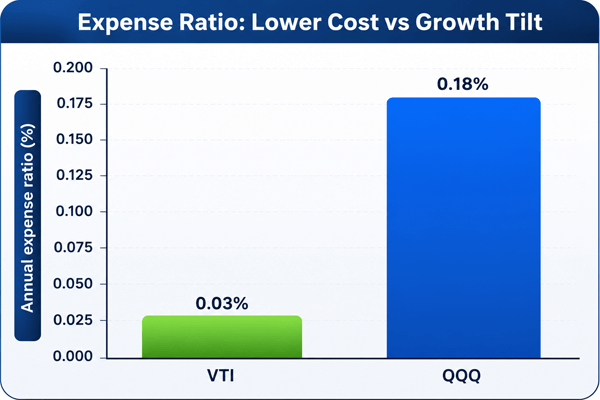
Figure 1: annual expense ratio comparison
Visual: approximate number of holdings
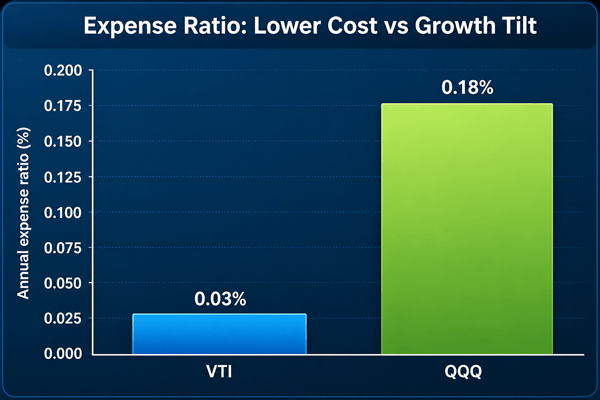
Figure 2: approximate number of holdings
6. How VTI and QQQ actually work
Both ETFs are passive index funds. The fund manager is not trying to pick the “best” stocks every week. Instead, the ETF attempts to track a rules-based index. When the index changes, the ETF adjusts its holdings.
Both ETFs are market-cap weighted or modified market-cap weighted. In simple words, larger companies usually receive larger weights. That is why a handful of mega-cap stocks can still matter a lot, even inside a diversified ETF. VTI has thousands of holdings, but its top ten still represented about one-third of net assets in Vanguard’s March 2026 fact sheet. QQQ is even more concentrated because it starts with only about 100 companies.
When you buy an ETF, you buy it at the market price through a brokerage. The ETF also has a net asset value, or NAV, based on the value of the securities inside it. In normal conditions, large ETFs usually trade close to NAV, but investors should still use sensible trading habits: avoid market orders at the open or close, use limit orders for larger trades, and avoid panic buying during volatile headlines.
7. Diversification: why VTI usually feels safer for beginners
Diversification means spreading money across many companies and sectors so one mistake does not ruin the entire plan. It does not guarantee a profit, and it does not eliminate losses, but it can reduce the damage from being too concentrated in one theme.
VTI diversifies across the U.S. stock market. If large technology stocks struggle but banks, industrials, energy, healthcare, or small caps perform better, VTI has at least some exposure to those areas. QQQ, by contrast, is more dependent on large Nasdaq growth companies continuing to lead.
Many beginner investors discover this only after buying several popular ETFs and realizing they own the same big companies again and again. For example, someone might own VTI, QQQ, a growth ETF, and a technology ETF. On paper that looks diversified because there are four tickers. In reality, the portfolio may be heavily exposed to the same mega-cap stocks.
7.1 Practical rule
Do not count tickers; count exposures. Owning five ETFs is not automatically diversified if all five are loaded with the same companies and sectors.
8. Growth: why QQQ attracts investors
QQQ attracts investors because it has historically captured major growth trends: cloud computing, semiconductors, software, e-commerce, digital advertising, streaming, and artificial intelligence. When these themes are leading the market, QQQ can look like the obvious winner.
But the same feature that creates excitement also creates risk. A growth-heavy ETF can trade at higher valuations and can be more sensitive to interest rates, earnings expectations, regulation, and investor sentiment. If investors suddenly decide growth stocks are too expensive, QQQ can fall harder than a broader market fund.
This is why experienced investors often use QQQ as a tilt rather than an all-in bet. A tilt means you keep your diversified core and then add a smaller position to express a belief. For example, a portfolio might use VTI as 70% of the U.S. equity allocation and QQQ as 10% to 20%, depending on risk tolerance. That is very different from putting 100% of a retirement account into QQQ because recent returns looked strong.
9. Performance: do not chase the chart without understanding the risk
QQQ has delivered strong long-term periods, especially when large growth and technology companies dominated market returns. Invesco states that QQQ has typically outperformed broad equity benchmarks like the S&P 500 over long periods, while also warning that past performance is not a guarantee of future results and that unusually high returns cannot be sustained indefinitely.
VTI will usually look less exciting when the market is being led by a narrow group of mega-cap growth stocks. But that is not a weakness if your goal is a durable core portfolio. VTI is built to capture the return of the overall U.S. market, not to maximize exposure to the hottest segment of the market.
A simple way to think about it: QQQ may win big in some growth-led periods, while VTI may be easier to hold through different market regimes. The best ETF is not always the one with the highest recent return; it is the one you can hold consistently without abandoning your plan at the worst possible time.
10. Practical portfolio examples
These examples are educational illustrations only. They are not recommendations, because the right allocation depends on age, income stability, emergency savings, debts, tax situation, and comfort with losses.
| Portfolio type | Example allocation | Who might understand this approach | Main risk |
|---|---|---|---|
| Simple U.S. stock portfolio | 100% VTI | Beginner who wants one broad U.S. equity fund | Still fully exposed to U.S. stock market downturns |
| Core plus growth tilt | 80% VTI / 20% QQQ | Investor wants broad market exposure with extra Nasdaq growth | More mega-cap growth concentration than VTI alone |
| Aggressive growth tilt | 60% VTI / 40% QQQ | Investor with high risk tolerance and long horizon | Can underperform badly if growth stocks lag |
| Balanced investor | 60% stock ETFs / 40% bond or cash equivalents | Investor who wants lower volatility than all-stock portfolios | Lower expected upside during strong bull markets |
Example: A 28-year-old investing in a Roth IRA may choose VTI as the core because they want broad U.S. exposure and decades to compound. If they strongly believe large technology companies will remain long-term winners, they might add a small QQQ allocation. A 55-year-old close to retirement may still use VTI, but they may pair it with bonds, cash, or other lower-volatility assets. QQQ may still have a place, but position size becomes more important because there is less time to recover from large drawdowns.
11. How beginners can use VTI and QQQ step by step
Step 1: Decide the job of the ETF: Use VTI when you need a broad U.S. stock market building block. Use QQQ when you intentionally want extra exposure to Nasdaq-100 growth companies.
Step 2: Choose an account type: A taxable brokerage account gives flexibility. A Roth IRA or traditional IRA can be useful for retirement investing if eligible. Consider tax rules before trading frequently.
Step 3: Start with an allocation you can hold: A smaller QQQ position may be easier to stick with than a large one. If a 30% drop would make you sell, the position is probably too large.
Step 4: Automate carefully: Recurring investments can help reduce the temptation to time the market. Automation works best when paired with an emergency fund and realistic expectations.
Step 5: Rebalance: If QQQ grows from 15% to 30% of your portfolio, decide whether that is still intentional. Rebalancing means trimming back to your target, not reacting emotionally.
12. Costs, taxes, and trading details beginners should know
Expense ratio is the annual fund cost. VTI’s 0.03% expense ratio is extremely low. QQQ’s 0.18% expense ratio is still low compared with many actively managed funds, but it is six times VTI’s fee. On $10,000, a 0.03% fee is about $3 per year, while a 0.18% fee is about $18 per year, before considering market movement. That difference seems small at first, but over decades, every basis point matters.
Taxes matter too. ETFs are generally tax-efficient, but investors in taxable accounts can still owe taxes on dividends and realized capital gains when they sell. Frequent trading can also turn investing into a tax and behavior problem. Long-term investors usually benefit from having a clear plan before buying.
Liquidity is strong in both ETFs, especially QQQ, which Invesco identifies as one of the most heavily traded ETFs. Still, beginners should avoid treating liquidity as a reason to trade constantly. The fact that you can buy and sell every second does not mean you should.
13. Common mistakes to avoid
| Mistake | Why it hurts | Better approach |
|---|---|---|
| Buying QQQ only because it recently outperformed | Chasing performance often leads investors to buy high and sell low. | Understand why it outperformed and whether you can handle the risk. |
| Thinking VTI has no risk | VTI is diversified, but it is still a stock ETF and can decline sharply. | Match stock exposure to your time horizon and need for stability. |
| Owning too many overlapping ETFs | Multiple tickers can hide concentration in the same mega-cap names. | Review top holdings and sector weights at least once or twice a year. |
| Ignoring bonds or cash | A 100% stock portfolio can be hard to hold during recessions and bear markets. | Keep emergency savings separate and consider bonds/cash for stability. |
| Using market orders in volatile periods | You may get a worse execution price than expected. | Use limit orders, especially for larger trades. |
14. Which ETF fits your portfolio?
Choose VTI if you want a simple, low-cost U.S. stock market core. It is usually the cleaner starting point for beginners because it avoids making a big sector or style bet. You are saying, “I want to own the U.S. market,” not “I know which sector will win.”
Choose QQQ if you already understand the concentration risk and you intentionally want more exposure to large Nasdaq growth companies. QQQ can be a powerful tool, but it should be sized like a focused tool. The more QQQ you add, the more your portfolio depends on mega-cap growth leadership continuing.
Use both if you want broad diversification plus a growth tilt. This is a common approach: VTI forms the base, QQQ adds targeted exposure. The key is not to pretend the combination is risk-free. It increases overlap in large growth companies, so the QQQ slice should be intentional and reviewed over time.
| Question to ask yourself | If your answer is yes | If your answer is no |
|---|---|---|
| Do I need one simple U.S. stock ETF? | Lean toward VTI. | Consider whether QQQ is a tilt, not a core. |
| Am I comfortable with technology/growth concentration? | A modest QQQ allocation may fit. | Keep QQQ small or skip it. |
| Can I hold through a 30%-50% stock decline? | Stock ETFs may fit your risk tolerance. | Reduce equity exposure or add stabilizing assets. |
| Do I already own growth or tech ETFs? | Check overlap before adding QQQ. | QQQ may be cleaner if you want that exposure. |
| Am I investing for 10+ years? | Both ETFs can be considered within a plan. | Be cautious with all-stock exposure for short-term goals. |
15. Frequently asked questions
15.1 Is VTI better than QQQ?
VTI is better for broad diversification. QQQ may be better for investors who specifically want a growth-heavy Nasdaq-100 tilt. “Better” depends on the portfolio role.
15.2 Is QQQ too risky for beginners?
QQQ is not automatically unsuitable, but beginners should understand that it is concentrated compared with VTI. A small position is very different from making it the whole portfolio.
15.3 Can I hold VTI and QQQ together?
Yes, but understand the overlap. QQQ will increase your exposure to many companies that are already among VTI’s largest holdings.
15.4 Is VTI enough for retirement?
VTI can be a strong U.S. stock core, but a complete retirement portfolio may also include international stocks, bonds, cash reserves, or other assets depending on the investor.
15.5 Does QQQ pay dividends?
QQQ may pay dividends from underlying holdings, but income is not its main purpose. It is primarily used for growth exposure.
15.6 Which is better for a Roth IRA?
Both can be used in a Roth IRA. VTI is often simpler as a core holding; QQQ can be used as a growth tilt if the investor accepts the added volatility.
16. Final verdict
For a beginner who wants a simple long-term U.S. stock ETF, VTI is usually the more natural first choice. It is broader, cheaper, and easier to explain. It gives exposure to thousands of companies instead of asking one group of large growth stocks to carry the portfolio.
QQQ is not “bad.” It is a different tool. It can add growth potential and exposure to many influential companies, but it also adds concentration risk. The honest way to use QQQ is to size it deliberately, understand why you own it, and accept that it can lag the broad market for long periods.
A strong portfolio is not built by chasing the ETF with the best recent chart. It is built by matching each holding to a clear job, keeping costs low, staying diversified, and choosing an allocation you can live with during both bull markets and bear markets.
Sources Consulted and Checked
The following sources were consulted and checked while preparing this article to support accuracy, clarity, and factual reliability. Readers should verify time-sensitive figures and current fund information directly from official sources.
- Vanguard Total Stock Market ETF (VTI) profile and fact sheet, including expense ratio, holdings count, top holdings, sector diversification, and ETF risk notes. Vanguard, fact sheet dated March 31, 2026.
- Invesco QQQ ETF official pages, including overview, expense ratio, ETF education, liquidity discussion, historical-performance warnings, and risk disclosures. Invesco, accessed June 2026.
- Nasdaq-100 Index methodology and overview, including description as 100 of the largest Nasdaq-listed non-financial companies and modified market-cap weighting. Nasdaq, 2026 methodology materials.
- ETF Research Center fund-overlap resources, used for portfolio-overlap concept and reminder that holding multiple ETFs can duplicate exposures.
- Current market quote references for VTI and QQQ were checked on June 22, 2026. Prices change constantly and should not be treated as evergreen article content.
Reader Advice
This article is provided solely for educational and informational purposes and does not constitute personalized investment, financial, legal, accounting, or tax advice. Exchange-traded funds and other investments can lose value, and past performance does not guarantee future results. Before making any investment or financial decision, readers should consider their objectives, time horizon, risk tolerance, financial circumstances, tax position, and need for liquidity, and should seek advice from appropriately qualified professionals where necessary.
Fund fees, holdings, index methodologies, tax rules, regulations, market conditions, and other facts or figures may change over time or vary by jurisdiction and individual circumstances. Readers should therefore confirm current information through official fund documents, regulators, tax authorities, and other reliable primary sources before acting. No return, outcome, or suitability is guaranteed.