IVV vs VOO: Expense Ratios, Holdings, and Performance Compared
1. Quick Answer: IVV vs VOO in One Minute
IVV and VOO are two of the most popular S&P 500 ETFs. IVV is the iShares Core S&P 500 ETF from BlackRock. VOO is the Vanguard S&P 500 ETF from Vanguard. Both try to track the S&P 500, which is a basket of roughly 500 large U.S. companies. In simple words, buying either fund gives you a small piece of companies such as NVIDIA, Apple, Microsoft, Amazon, Alphabet, Broadcom, Meta, Tesla, and many other major U.S. businesses.
The honest answer is simple: for most beginners, IVV and VOO are almost interchangeable. They track the same index, charge the same headline expense ratio, hold almost the same companies, and have delivered nearly identical long-term results. The right choice usually comes down to small practical details: your brokerage platform, whether you can buy fractional shares, bid-ask spread, account type, and personal preference for BlackRock or Vanguard.
Bottom line
If you are building a long-term, diversified portfolio and want low-cost S&P 500 exposure, either IVV or VOO can work. Do not overthink the ticker. Spend more time on your asset allocation, emergency fund, contribution consistency, tax planning, and behavior during market drops.
2. IVV vs VOO Comparison Table
| Feature | IVV | VOO | What it means for a beginner |
|---|---|---|---|
| Full name | iShares Core S&P 500 ETF | Vanguard S&P 500 ETF | Both are plain-vanilla S&P 500 index ETFs. |
| Issuer | BlackRock / iShares | Vanguard | Both are large, established ETF providers. |
| Index tracked | S&P 500 Index | S&P 500 Index | They are designed to follow the same benchmark. |
| Expense ratio | 0.03% | 0.03% | Same headline annual fund cost: $3 per $10,000 invested per year before trading spreads and taxes. |
| Launch date | May 15, 2000 | Sept. 7, 2010 | IVV has the longer public track record; VOO has grown extremely large. |
| Number of holdings | About 504, reported by iShares as of Jun. 19, 2026 | About 505, reported by Vanguard-related source as of May 31, 2026 | S&P 500 ETFs can hold slightly more than 500 securities due to share classes and cash/derivative positions. |
| Distribution frequency | Quarterly | Quarterly | Dividends are usually paid every three months. |
| Best use case | Core U.S. large-cap exposure | Core U.S. large-cap exposure | Either can be a core holding, not a short-term gamble. |
| Main risk | Stock market risk and concentration in largest companies | Stock market risk and concentration in largest companies | Neither ETF is “safe” in the short term. They can fall sharply in bear markets. |
3. What Are IVV and VOO?
An ETF, or exchange-traded fund, is a fund that trades on a stock exchange like a regular stock. When you buy one share of an ETF, you are buying a slice of a whole portfolio. IVV and VOO are ETFs that hold the stocks in the S&P 500. Instead of trying to pick the next winning stock, they try to own the market segment represented by the index.
Think of it like buying a basket instead of one fruit. If you buy only one company, your result depends heavily on that company. If you buy an S&P 500 ETF, your result depends on a broad group of large U.S. companies. That does not remove risk, but it spreads company-specific risk across many businesses.
The S&P 500 is widely used as a gauge of large-cap U.S. equities. S&P Dow Jones Indices describes it as including 500 leading companies and covering about 80% of available U.S. market capitalization. This is why many investors use an S&P 500 ETF as the U.S. stock core of a portfolio.
4. How IVV and VOO Work
Both funds follow the same basic process. The index provider decides which companies belong in the S&P 500 and how much weight each company gets. Because the index is market-cap weighted, larger companies get larger weights. The ETF manager then holds stocks in a way that aims to match that index as closely as possible after fees and trading costs.
Market-cap weighting is important. It means the fund does not put the same amount of money into every company. If NVIDIA, Apple, or Microsoft becomes a larger part of the total U.S. market, it becomes a larger part of the ETF. If a company shrinks in market value, its weight usually shrinks too.
- You buy IVV or VOO through a brokerage account, retirement account, robo-advisor, or investing app that offers U.S.-listed ETFs.
- The ETF price moves during the trading day, just like a stock price.
- The fund owns the underlying stocks and passes through dividends after expenses.
- Authorized participants help keep the ETF trading price close to the value of its underlying holdings, though small premiums or discounts can happen.
- The fund periodically adjusts holdings when the S&P 500 changes.
5. Expense Ratios: Why 0.03% Matters, but Should Not Be Overhyped
Both IVV and VOO currently list a 0.03% expense ratio. That means the annual fund-level cost is about $3 per $10,000 invested. This fee is not usually charged as a separate bill. It is built into the fund’s net return.
| Investment amount | Annual cost at 0.03% | Plain-English meaning |
|---|---|---|
| $1,000 | $0.30 per year | Less than the price of a cup of coffee over a year. |
| $10,000 | $3 per year | Very low for broad U.S. stock exposure. |
| $100,000 | $30 per year | Still low, but costs matter more as balances grow. |
| $500,000 | $150 per year | Small percentage, meaningful dollars. |
Because the expense ratios are the same, fees do not create a clear winner between IVV and VOO. A beginner should also look at trading commissions, bid-ask spread, fractional-share availability, tax situation, and whether the ETF is easy to automate on their platform.
Practical example
Suppose two investors each put $10,000 into an S&P 500 ETF. One picks IVV and the other picks VOO. Since both funds charge 0.03% and track the same index, the fee difference is effectively zero. Their long-term difference is more likely to come from purchase timing, dividend reinvestment settings, taxes, and behavior during market volatility than from the ETF choice itself.
6. Holdings: Are IVV and VOO Really the Same?
They are not legally the same fund, but they are extremely similar because both track the S&P 500. The top holdings usually overlap almost completely. Current comparison data shows the leading positions for both include NVIDIA, Apple, Microsoft, Amazon, Alphabet, Broadcom, Meta Platforms, Tesla, and other large U.S. companies. The weights can differ by a few hundredths of a percent because of timing, cash positions, dividend flows, and index-rebalancing mechanics.
| Common top holding | Why it matters inside IVV and VOO |
|---|---|
| NVIDIA | Large weight means AI and semiconductor performance can strongly influence returns. |
| Apple | A major consumer technology and services company with a large index weight. |
| Microsoft | Cloud, software, and AI exposure make it a core driver of the index. |
| Amazon | Consumer discretionary and cloud exposure. |
| Alphabet Class A / C | Search, advertising, cloud, and AI exposure. |
| Broadcom | Semiconductor and infrastructure software exposure. |
| Meta Platforms | Social media, advertising, AI infrastructure, and metaverse-related spending. |
| Tesla | Electric vehicles and high-growth expectations, but with higher volatility. |
A beginner should understand one key point: an S&P 500 ETF is diversified across many companies, but it is not equally diversified. The largest companies can drive a big part of the return. If mega-cap technology stocks rise, IVV and VOO often benefit. If those stocks fall together, both funds can feel the pain.
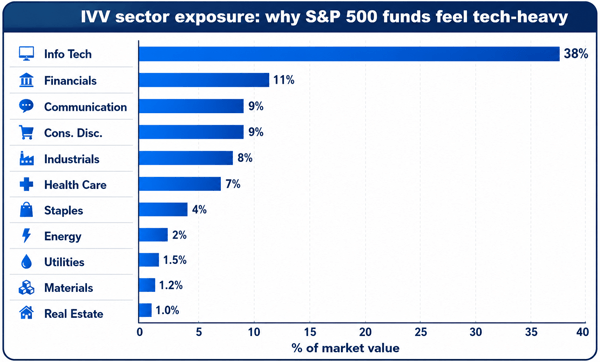
Figure 1: Original chart based on iShares sector exposure data for IVV as of June 18, 2026. VOO sector exposure is normally very similar because both funds track the S&P 500.
7. Performance Compared: Why the Lines Almost Overlap
When two funds track the same index and charge the same expense ratio, their performance should be very close. That is exactly what investors usually see with IVV and VOO. Over short periods, one fund may lead by a tiny amount. Over long periods, the difference is usually too small to matter for most real-world investors.
| Period | IVV total return | VOO total return | Difference |
|---|---|---|---|
| 1 year | 26.80% | 26.79% | IVV ahead by 0.01 percentage point |
| 3 years annualized | 18.32% | 18.30% | IVV ahead by 0.02 percentage point |
| 5 years annualized | 14.07% | 14.06% | IVV ahead by 0.01 percentage point |
| 10 years annualized | 15.62% | 15.63% | VOO ahead by 0.01 percentage point |
These return snapshots are useful for context, but they should not be treated as a promise. Past performance does not guarantee future results. The more useful lesson is that IVV and VOO have behaved like near-twins because they are built to do nearly the same job.
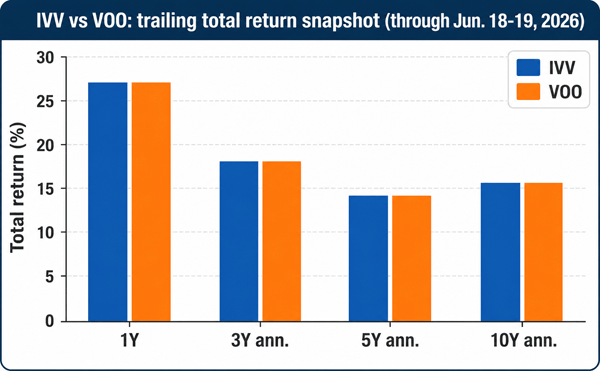
Figure 2: Original chart using trailing return data through mid-June 2026. Small differences are normal and usually not decision-changing.
8. Which ETF Is Better for Beginners?
For a beginner, the best answer is not “IVV always wins” or “VOO always wins.” The better ETF is the one you can buy easily, cheaply, and consistently inside your chosen account. If your platform offers commission-free trading and fractional shares for both, either is fine. If one is easier to automate, that may be the practical winner.
| Investor situation | Practical choice |
|---|---|
| You use Vanguard and want a simple Vanguard portfolio | VOO may feel more natural. |
| You use a brokerage where IVV is easier to buy fractionally | IVV may be more convenient. |
| You already own one of them | Usually no need to switch just because the other ticker exists. |
| You are making a new long-term contribution | Choose the one with better execution and easier automation on your platform. |
| You are tax-sensitive and already have gains in one ETF | Think carefully before selling. Switching can create taxable gains. |
| You care about trading large amounts | Check bid-ask spread and liquidity at the time of trade, not just expense ratio. |
9. Real Beginner Examples
9.1 Example 1: The first-time investor
A beginner has $500 and wants to start investing for retirement. The biggest decision is not whether IVV or VOO is slightly better. The bigger decisions are: Can they afford to invest after keeping emergency savings? Are they investing for at least 5 to 10 years? Are they comfortable seeing the account fall during bear markets? Are they using a tax-advantaged account if available?
For this investor, either ETF can be a simple first U.S. stock market holding. Fractional shares matter because the full share price of these ETFs can be high. A platform that allows $50 or $100 recurring purchases can make the investing habit easier.
9.2 Example 2: The investor with $50,000 in a taxable brokerage account
This investor already owns VOO with unrealized gains but reads that IVV is also excellent. Selling VOO just to buy IVV may create a tax bill without improving the portfolio. In many cases, the practical move is to keep the existing ETF and direct new contributions wherever it makes sense. Tax drag can matter more than tiny tracking differences.
9.3 Example 3: The long-term retirement investor
A retirement investor may use IVV or VOO as the U.S. large-cap stock portion of a portfolio, then add international stocks, bonds, cash, or other assets based on risk tolerance and time horizon. IVV or VOO alone is not a complete portfolio for every person, especially someone near retirement who needs stability and income planning.
10. How to Buy IVV or VOO Step by Step
- Open a brokerage or retirement account that allows ETF trading.
- Search for the ticker: IVV or VOO. Double-check the full fund name before buying.
- Decide whether you want a market order or limit order. Beginners placing larger trades may prefer a limit order to control the maximum price paid.
- Avoid trading at the exact market open or close if spreads are wider. Midday trading can sometimes provide cleaner execution.
- Choose whether to reinvest dividends automatically, if your platform allows it.
- Set a contribution schedule. Consistent investing often matters more than trying to guess the perfect day to buy.
- Review your allocation periodically, but avoid checking so often that normal volatility pushes you into emotional decisions.
11. Risk: What Beginners Often Miss
IVV and VOO are simple, but simple does not mean risk-free. They are stock funds. A sharp market decline can reduce the value of your investment quickly. During the COVID-19 crash in 2020, broad stock indexes fell rapidly before recovering. Future bear markets may be faster, slower, deeper, or longer.
- Market risk: If the U.S. stock market falls, both IVV and VOO can fall.
- Concentration risk: The biggest companies have the biggest influence because the index is market-cap weighted.
- Valuation risk: Strong past returns can leave stocks expensive, which may lower future returns.
- Behavior risk: Investors often hurt themselves by buying after big rallies and selling after declines.
- Currency risk for non-U.S. investors: If your spending currency is not the U.S. dollar, exchange rates can affect your real return.
- Tax risk: Dividends and sales can create taxable events depending on your country and account type.
Honest warning
Do not buy IVV or VOO with money you may need soon for rent, tuition, medical expenses, a home down payment, or emergency savings. A low expense ratio does not protect you from short-term stock market losses.
12. Tax Notes: Why ETFs Can Be Efficient, but Taxes Still Matter
ETFs are often tax-efficient because of the in-kind creation and redemption process. This structure can reduce the need for the fund to sell appreciated holdings and pass taxable gains to shareholders. However, investors can still owe taxes on dividends and on gains when they sell shares. Tax rules also depend on your country, account type, holding period, and personal situation.
In retirement accounts such as IRAs or 401(k)-type accounts, the ETF’s tax efficiency may matter less than in a taxable brokerage account. In taxable accounts, avoid unnecessary selling unless the benefit clearly outweighs the tax cost. For personalized tax decisions, use a qualified tax professional.
13. IVV vs VOO: Common Questions
13.1 Is IVV safer than VOO?
No. They carry almost the same market risk because they track the same index.
13.2 Does VOO beat IVV?
Sometimes VOO is ahead by a tiny amount, sometimes IVV is. The gap is usually too small to drive the decision.
13.3 Can I own both IVV and VOO?
Yes, but it is usually unnecessary. Owning both does not meaningfully diversify you because they hold nearly the same stocks.
13.4 Which is better for dividend income?
Neither is mainly an income ETF. They pay dividends, but the main purpose is broad stock market growth, not high income.
13.5 Are IVV and VOO good for dollar-cost averaging?
They can be, because both are broad, low-cost funds. The key is matching contributions to your plan and risk tolerance.
13.6 Should I switch from IVV to VOO or from VOO to IVV?
Usually not if switching triggers taxes or trading costs. New contributions can go to the fund that best fits your platform.
13.7 Are IVV and VOO better than SPY?
For long-term buy-and-hold investors, IVV and VOO often look attractive because their expense ratios are lower than SPY. SPY may still appeal to active traders because of its liquidity and options market.
13.8 Can non-U.S. investors buy IVV or VOO?
Many can, depending on their broker and local rules. Non-U.S. investors should check withholding tax, estate tax, currency risk, and whether Ireland-domiciled alternatives are more suitable.
14. Decision Framework: Pick IVV or VOO in Five Minutes
| Question | If yes | If no |
|---|---|---|
| Does your broker offer commission-free trades for both? | Move to the next question. | Use the cheaper-to-trade ETF or consider a different platform. |
| Do you need fractional shares? | Pick the ticker your broker supports for fractional purchases. | Either full-share ETF can work. |
| Do you already own one with taxable gains? | Usually keep it unless you have a strong reason to sell. | Choose based on convenience and execution. |
| Are spreads tight when you trade? | Either ETF is fine. | Use limit orders and avoid poor trading times. |
| Do you prefer Vanguard or iShares ecosystem? | Choose the ecosystem you will stick with. | Flip a coin; focus on allocation and behavior. |
15. What to Pair With IVV or VOO
IVV or VOO gives exposure to large U.S. companies. Depending on your goals, that may not be enough. A more complete portfolio may include international stocks, U.S. small/mid-cap stocks, bonds, cash reserves, or inflation-protected assets. The right mix depends on your age, job stability, income needs, risk tolerance, taxes, and time horizon.
| Portfolio need | Possible addition | Why it may help |
|---|---|---|
| Global diversification | International stock ETF | Reduces reliance on only U.S. companies. |
| Lower volatility | Bond ETF or cash allocation | Can reduce portfolio swings and support near-term needs. |
| Small-company exposure | U.S. extended market ETF | Adds companies not heavily represented in the S&P 500. |
| Retirement simplicity | Target-date fund | Automatically blends stocks and bonds based on time horizon. |
| Taxable account planning | Tax-efficient asset location | Helps manage dividend and capital gains taxes. |
16. Article Summary: IVV vs VOO
- IVV and VOO are both low-cost ETFs that track the S&P 500.
- Both currently show a 0.03% expense ratio, so fees do not create a meaningful winner.
- Their holdings and sector exposure are nearly identical because both follow the same index.
- Performance differences are usually tiny and not predictable enough to base a long-term decision on.
- VOO has recently become the first ETF to exceed $1 trillion in assets, while IVV remains one of the largest S&P 500 ETFs.
- Beginners should focus on account type, contribution consistency, risk tolerance, taxes, and investment horizon.
- Either ETF can be a strong core U.S. stock holding, but neither is a guaranteed-return investment.
Sources Consulted and Checked
The following sources were consulted and checked while preparing this article and verifying its accuracy. Fact-check date: June 22, 2026. ETF data, including expense ratios, assets, holdings, yields, and performance, can change; readers should confirm current figures on official fund and regulatory sources before acting.
| Source | Used for | URL |
|---|---|---|
| iShares official IVV fund page | Expense ratio 0.03%, IVV objective, net assets, holdings count, sector exposure, launch date, and returns. | https://www.ishares.com/us/products/239726/ishares-core-sp-500-etf |
| Vanguard official VOO fund page | VOO profile, objective, expense ratio, holdings, performance, and risk details. | https://investor.vanguard.com/investment-products/etfs/profile/voo |
| Reuters, June 3, 2026 | VOO surpassed $1 trillion in assets; IVV reported around $860 billion by VettaFi; both cited with 0.03% fee. | https://www.reuters.com/legal/transactional/vanguard-index-product-becomes-first-etf-top-1-trillion-assets-2026-06-03/ |
| S&P Dow Jones Indices | S&P 500 description: 500 leading companies and about 80% of available U.S. market capitalization. | https://www.spglobal.com/spdji/en/indices/equity/sp-500/ |
| SEC Investor.gov ETF guide | ETF basics: liquidity, low minimum investment, and tax characteristics of in-kind redemptions. | https://www.investor.gov/introduction-investing/investing-basics/investment-products/mutual-funds-and-exchange-traded-2 |
| TotalRealReturns | Trailing total return comparison snapshot for IVV and VOO through June 18, 2026. | https://totalrealreturns.com/n/VOO%2CIVV |
| ETF.com IVV vs VOO comparison | Supplementary performance and comparison data; provider notes that returns are total returns unless stated. | https://www.etf.com/tools/etf-comparison/IVV-vs-VOO |
| Yahoo Finance IVV and VOO quote/performance pages | Supplementary current quote, expense ratio, and trailing return data as of June 2026. | https://finance.yahoo.com/quote/IVV/ and https://finance.yahoo.com/quote/VOO/performance/ |
Reader Advice
This article is provided solely for educational and informational purposes and does not constitute personalized financial, investment, tax, legal, or other professional advice. IVV, VOO, and other investments involve risk, including possible loss of principal, and past performance does not guarantee future results.
Fund fees, holdings, performance, tax treatment, brokerage features, market conditions, and applicable rules may change based on time, jurisdiction, account type, and individual circumstances. Before making any decision, review the latest official prospectus and fund information, verify facts and figures through authoritative sources, assess your goals, time horizon, financial position, and risk tolerance, and consult an appropriately qualified financial, tax, or legal professional where needed.