VOO vs SPY: Fees, Performance, and Which ETF Is Better in 2026?
1. Quick answer: VOO is usually better for long-term investors; SPY is usually better for active traders
VOO and SPY are extremely similar because both aim to track the S&P 500 Index. That means they both give you exposure to hundreds of large U.S. companies, including technology, healthcare, financials, consumer brands, industrials, and other major sectors. The real difference is not the companies you own. The real difference is cost, fund structure, trading liquidity, and how you plan to use the ETF.
- For most long-term buy-and-hold investors, VOO has the edge because it charges a lower expense ratio: 0.03% versus SPY at 0.0945%.
- For active traders, institutions, and options traders, SPY often has the edge because it is one of the most heavily traded ETFs in the world and has a deep options market.
- For a beginner building a retirement portfolio, VOO is usually the simpler and cheaper default choice.
- For someone trading intraday, hedging a portfolio, or using options strategies, SPY may be more practical despite its higher fee.
- Performance should be very close over time because both funds track the same index. Small differences usually come from fees, trading spreads, dividend handling, and tracking details.
| Feature | VOO | SPY | Beginner takeaway |
|---|---|---|---|
| Full name | Vanguard S&P 500 ETF | SPDR S&P 500 ETF Trust | Both are S&P 500 ETFs. |
| Index tracked | S&P 500 Index | S&P 500 Index | Same core market exposure. |
| Expense ratio | 0.03% | 0.0945% | VOO is cheaper to hold. |
| Launch year | 2010 | 1993 | SPY is older; VOO is newer but massive. |
| Best known for | Low-cost long-term investing | High liquidity and options trading | Use case matters more than brand. |
| Typical investor fit | Buy-and-hold investors, retirement accounts, dollar-cost averaging | Active traders, institutions, hedgers, options users | Most beginners lean VOO; traders lean SPY. |
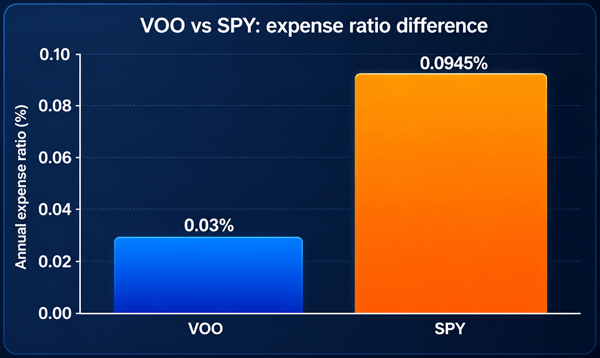
Figure 1. VOO has a lower stated expense ratio than SPY. Expense ratios can change, so investors should verify the latest fund page before buying.
2. What are VOO and SPY in plain English?
VOO and SPY are exchange-traded funds, or ETFs. An ETF is a basket of investments that trades on a stock exchange like a stock. Instead of buying 500 individual stocks one by one, you can buy one ETF share and get broad exposure to the companies inside the fund.
Both VOO and SPY are designed to follow the S&P 500. The S&P 500 is a market-cap-weighted index of leading large U.S. companies. “Market-cap-weighted” means bigger companies have a bigger effect on performance. If NVIDIA, Apple, Microsoft, Amazon, or other giant companies move sharply, the S&P 500 usually feels it more than if a smaller S&P 500 company moves.
A simple way to think about it: buying VOO or SPY is like buying a slice of the large-cap U.S. stock market. You are not betting on one company. You are betting that a broad group of major U.S. companies can grow earnings and business value over time.
| Term | Plain-English meaning | Why it matters |
|---|---|---|
| ETF | A fund you can buy and sell through a brokerage account during market hours. | Easy access, transparent pricing, and low-cost diversification. |
| S&P 500 | A well-known index of leading large U.S. companies. | Both VOO and SPY try to follow it. |
| Expense ratio | The annual fund fee taken from fund assets. | Lower fees leave more of the return for you. |
| Bid-ask spread | The small gap between the buy price and sell price. | Matters most for frequent trading. |
| Tracking error | How closely the ETF follows its index. | Lower tracking error is better for index investors. |
| Dividend yield | Income paid from the stocks in the ETF. | Useful, but total return matters more than yield alone. |
3. How VOO and SPY work
Both ETFs hold the stocks in the S&P 500 in roughly the same weights as the index. If a company becomes a larger part of the index, it becomes a larger part of the ETF. If a company is removed from the index, the ETF manager adjusts the portfolio. This is why VOO and SPY do not require you to pick stocks yourself.
The process is mostly rules-based. The fund provider does not wake up each morning and decide whether Tesla, Amazon, or JPMorgan is a “good buy.” The fund’s job is to track the index, not to beat it. That makes these ETFs passive index funds, which is why they are popular in long-term investment portfolios, retirement accounts, Roth IRAs, 401(k) rollovers, and taxable brokerage accounts.
However, “passive” does not mean “risk-free.” If the U.S. stock market falls, both VOO and SPY can fall. In a bear market, broad index ETFs can still lose 20%, 30%, or more before recovering. Beginners should not confuse diversification with a guarantee.
4. VOO vs SPY fees: the most important difference for long-term investors
Fees are one of the few investment variables you can control. You cannot control next year’s stock market return, interest rates, inflation, earnings growth, or investor sentiment. But you can control whether you pay 0.03% or 0.0945% for almost the same S&P 500 exposure.
VOO’s expense ratio is 0.03%. That means the fund costs about $3 per year for every $10,000 invested, before any brokerage commissions or account-specific costs. SPY’s expense ratio is 0.0945%, or about $9.45 per year for every $10,000 invested. The difference sounds tiny, but it grows with account size and time.
| Investment amount | Approx. annual VOO fund cost at 0.03% | Approx. annual SPY fund cost at 0.0945% | Approx. yearly difference |
|---|---|---|---|
| $10,000 | $3.00 | $9.45 | $6.45 |
| $50,000 | $15.00 | $47.25 | $32.25 |
| $100,000 | $30.00 | $94.50 | $64.50 |
| $500,000 | $150.00 | $472.50 | $322.50 |
| $1,000,000 | $300.00 | $945.00 | $645.00 |
For a small account, this may not feel meaningful. For a serious long-term portfolio, it can matter. A $64.50 yearly difference on $100,000 is not life-changing in one year, but over decades it compounds. That is why low-cost ETF investing is emphasized by many experienced index investors.
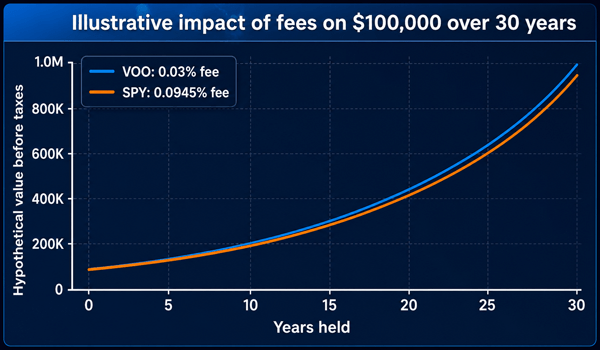
Figure 2. Hypothetical illustration only. Assumes an 8% gross annual return before fund expenses and ignores taxes, spreads, commissions, and market volatility. Actual returns will vary.
5. VOO vs SPY performance: why returns are almost the same
Because VOO and SPY track the same S&P 500 Index, their long-term performance is usually very close. When the S&P 500 has a strong year, both funds usually rise. When the S&P 500 falls, both usually fall. Over long periods, VOO can have a small advantage because of its lower expense ratio, but the difference is usually not dramatic year to year.
Beginners often ask, “Which one has better returns?” A better question is: “Which ETF fits how I will actually use it?” If you invest monthly and plan to hold for 10 to 30 years, cost and simplicity matter. If you trade actively or use options, liquidity and options depth can matter more than the fee difference.
| Performance factor | How it affects VOO vs SPY | Practical meaning |
|---|---|---|
| Same index | Both track the S&P 500. | The return path should be very similar. |
| Expense ratio | VOO has lower annual costs. | VOO may keep a tiny long-term edge after expenses. |
| Trading spread | SPY often has extremely tight spreads because of heavy trading. | SPY can be efficient for large or frequent trades. |
| Dividends | Both distribute dividends, but fund structure can affect handling and timing. | Dividend yield should not be the only decision factor. |
| Taxes | Both can be tax-efficient ETFs, but your account type matters. | A taxable brokerage account is different from an IRA or 401(k). |
6. VOO vs SPY holdings: do they own different companies?
In practical terms, no. VOO and SPY own nearly the same companies because they both follow the S&P 500. The top holdings can move as market prices change, but the biggest positions are usually the mega-cap leaders that dominate the index. As of mid-June 2026, State Street’s SPY page showed NVIDIA, Apple, Microsoft, Amazon, Alphabet, Broadcom, Micron, Meta, and Tesla among the top holdings. VOO should look very similar because it tracks the same index.
| Company example | Why it matters inside S&P 500 ETFs | Beginner note |
|---|---|---|
| NVIDIA | Large market value and AI-related growth have made it a major index weight. | A big move in NVIDIA can affect both VOO and SPY. |
| Apple | One of the largest U.S. companies by market value. | You get Apple exposure without buying Apple stock directly. |
| Microsoft | Major software, cloud, and AI business. | A core holding in both ETFs. |
| Amazon | Large consumer and cloud business. | Part of the consumer discretionary/technology ecosystem. |
| Alphabet | Search, advertising, cloud, and AI exposure. | Usually appears through multiple share classes. |
This is important: if your goal is to own a different set of companies, choosing between VOO and SPY will not solve that. You would need a different ETF category, such as total U.S. stock market ETFs, international ETFs, dividend ETFs, bond ETFs, small-cap ETFs, or sector ETFs. VOO vs SPY is not really a holdings debate. It is mainly a cost, liquidity, and use-case debate.
7. Liquidity, trading, and options: where SPY still shines
SPY is famous for liquidity. It was launched in 1993 and became one of the main tools used by institutions, hedge funds, active traders, and options traders to get fast S&P 500 exposure. SPY’s high trading volume can help keep bid-ask spreads very tight, especially during normal market conditions.
For a long-term investor buying a few shares every month, this may not matter much. For a trader moving large amounts of money, entering and exiting quickly, or using covered calls, protective puts, spreads, or hedging strategies, SPY’s liquidity and options market can be a real advantage.
| Investor type | More likely better fit | Why |
|---|---|---|
| Beginner investing monthly | VOO | Lower fee, simple long-term S&P 500 exposure. |
| Roth IRA or retirement account investor | VOO | Cost matters over decades and trading frequency is usually low. |
| Taxable brokerage buy-and-hold investor | VOO | Lower cost and ETF tax efficiency can be useful. |
| Active day trader | SPY | Deep liquidity and tight spreads are useful. |
| Options trader | SPY | Large options market and many expirations/strike prices. |
| Institutional portfolio hedge | SPY | Widely used as a short-term hedging instrument. |
8. How beginners can use VOO or SPY in a real portfolio
A beginner does not need a complicated portfolio to start learning. Many investors use an S&P 500 ETF as a core holding because it provides broad exposure to U.S. large-cap stocks. The keyword is “core,” not “entire financial life.” A good portfolio can also include emergency savings, cash for short-term goals, bonds, international stocks, and tax-aware planning depending on the investor.
Here are practical examples, not personal recommendations:
| Example situation | Possible approach | Why it may make sense | Important caution |
|---|---|---|---|
| 25-year-old investing for retirement | Use VOO as a core U.S. stock ETF inside a Roth IRA or brokerage account. | Low fee and long time horizon help compounding. | Stock-heavy portfolios can be volatile. |
| 40-year-old with 401(k), IRA, and taxable account | Use VOO or a similar S&P 500 fund as part of the U.S. equity allocation. | Simple, diversified large-cap exposure. | Avoid overlap if other funds already own the same stocks. |
| Active trader hedging a portfolio | Use SPY for short-term trades or options strategies. | Liquidity and options depth can reduce execution friction. | Trading mistakes and taxes can erase advantages. |
| Investor saving for a house in 2 years | Probably avoid relying only on VOO or SPY. | Short time horizon needs stability. | The S&P 500 can fall sharply right when money is needed. |
| Investor building taxable wealth | Use low-turnover ETFs and think about tax-loss harvesting rules. | ETFs can be tax-efficient compared with many funds. | Wash-sale rules and tax details require care. |
9. A simple beginner strategy: dollar-cost averaging
Dollar-cost averaging means investing a fixed amount on a schedule, such as $100, $250, or $500 every month. You buy more shares when prices are lower and fewer shares when prices are higher. This does not guarantee profits, but it can help beginners avoid trying to perfectly time the market.
Example: Suppose Maria invests $300 per month into VOO in a retirement account. She is not checking the price every hour. She is using VOO as a low-cost S&P 500 building block. Her main decisions are her savings rate, asset allocation, and whether she can stay consistent during market drops. For Maria, VOO’s lower fee matters more than SPY’s trading volume.
Example: Suppose Daniel manages a large taxable portfolio and sometimes buys protective put options when markets are volatile. He may prefer SPY for certain trades because of the options market. Daniel might still use VOO for long-term holdings and SPY for short-term hedging. Many experienced investors separate “core holdings” from “trading tools.”
10. Tax and account considerations
The account you use can matter as much as the ETF. Buying VOO in a Roth IRA is different from buying SPY in a taxable brokerage account. Taxes can affect dividends, capital gains, rebalancing, tax-loss harvesting, and trading frequency.
| Account type | How VOO/SPY may be used | Tax note |
|---|---|---|
| Traditional IRA / 401(k) | Long-term growth holding. | Taxes are generally deferred until withdrawal, subject to account rules. |
| Roth IRA | Long-term growth holding. | Qualified withdrawals may be tax-free, subject to rules. |
| Taxable brokerage account | Core equity ETF, rebalancing, tax-aware investing. | Dividends may be taxable; selling at a gain may trigger capital gains tax. |
| Trading account | Short-term SPY trades or options strategies. | Short-term gains can be taxed at less favorable rates. |
| College or goal-based account | May be part of a diversified plan. | Time horizon should guide risk level. |
Tax rules depend on country, account type, income, holding period, and personal situation. For U.S. investors, qualified dividends, capital gains, wash-sale rules, and retirement account rules may all matter. For non-U.S. investors, withholding taxes, estate tax exposure, and local rules may be major issues. A qualified tax professional can be worth the cost for larger portfolios.
11. Risks beginners should understand before buying either ETF
- Market risk: If the S&P 500 drops, both VOO and SPY can drop.
- Concentration risk: The S&P 500 is diversified by company count, but mega-cap stocks can dominate the index.
- U.S.-only risk: These ETFs do not give broad international stock exposure.
- Valuation risk: If the largest companies become expensive, future returns may be lower.
- Behavior risk: Many investors underperform their own funds because they panic-sell during downturns or chase performance after rallies.
- Opportunity risk: An S&P 500 ETF may miss smaller companies, international stocks, bonds, real estate, or other assets that could fit a diversified plan.
- Tax risk: Frequent trading in taxable accounts can create unwanted tax bills.
The biggest beginner mistake is not choosing SPY instead of VOO. The bigger mistakes are investing money needed soon, panic selling during a normal bear market, overconcentrating in one asset class, ignoring debt and emergency savings, or buying without understanding risk.
12. Which ETF is better in 2026?
For 2026, the better choice depends on the job you want the ETF to do.
| If your priority is... | Likely better choice | Reason |
|---|---|---|
| Lowest long-term holding cost | VOO | Lower expense ratio. |
| Simple S&P 500 exposure | VOO | Beginner-friendly and cost-efficient. |
| Long-term retirement investing | VOO | Costs compound over decades. |
| Most liquid trading vehicle | SPY | Very high trading volume and institutional usage. |
| Options trading | SPY | Deep options market. |
| Nearly identical S&P 500 holdings | Either | Both track the same index. |
| Switching from SPY to VOO in taxable account | It depends | Selling may trigger taxes; the fee savings may not justify realizing gains. |
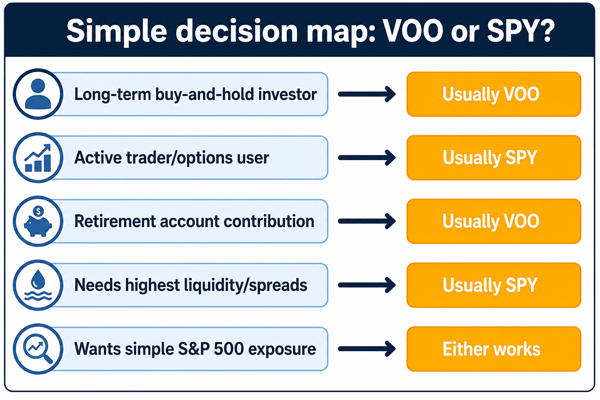
Figure 3. A practical decision map. The right answer depends on investing behavior, not just fund popularity.
13. Should you switch from SPY to VOO?
If you are starting fresh and plan to buy and hold, VOO often makes more sense because it is cheaper. But if you already own SPY, switching is not always automatic. In a tax-advantaged account, switching may be simple. In a taxable brokerage account, selling SPY could create a capital gain, and the tax cost may be larger than the fee savings.
Before switching, ask:
- Is the account taxable or tax-advantaged?
- Would selling create a capital gain?
- How large is the position?
- How long do I plan to hold?
- Do I use SPY options or liquidity for a specific reason?
- Would new contributions to VOO solve the fee issue without selling old SPY shares?
A practical middle path: some investors keep existing SPY shares, especially in taxable accounts, and direct new long-term contributions to VOO or another lower-cost S&P 500 ETF. That can reduce future costs without triggering an unnecessary taxable sale. This is not a universal rule, but it is a common tax-aware way to think about the decision.
14. Common beginner mistakes with VOO and SPY
| Mistake | Why it hurts | Better practice |
|---|---|---|
| Buying because “everyone online says so” | Popularity is not a financial plan. | Understand your time horizon, risk tolerance, and account type. |
| Checking daily performance obsessively | Daily volatility can trigger emotional decisions. | Use a written investment plan. |
| Thinking 500 stocks means no risk | The whole market can fall together. | Keep emergency cash and diversify appropriately. |
| Ignoring fees completely | Small fees compound. | Use low-cost funds when the exposure is similar. |
| Trading too much in taxable accounts | Taxes and spreads can reduce returns. | Trade less unless you have a clear strategy. |
| Comparing only dividend yield | Total return includes price growth and dividends. | Evaluate total return, risk, taxes, and fit. |
15. Frequently asked questions
15.1 Is VOO safer than SPY?
Not meaningfully. They track the same S&P 500 Index, so their market risk is very similar. VOO is cheaper; SPY is more liquid. Neither is risk-free.
15.2 Is VOO better than SPY for beginners?
Usually yes for a long-term beginner investor because VOO is simple and lower cost. But SPY can be better for trading or options strategies.
15.3 Do VOO and SPY pay dividends?
Yes. Both distribute dividends from the companies they hold. Dividend amounts vary and are not guaranteed.
15.4 Can I own both VOO and SPY?
Yes, but it is usually redundant because they hold nearly the same stocks. Owning both does not create meaningful extra diversification.
15.5 Which ETF is better for a Roth IRA?
For many long-term Roth IRA investors, VOO is usually preferred because of the lower expense ratio. Still, asset allocation matters more than the ticker alone.
15.6 Which ETF is better for day trading?
SPY is often preferred by active traders because of liquidity and options activity.
15.7 Is SPY worth the higher fee?
It can be worth it for traders, institutions, and options users. For a passive buy-and-hold investor, the higher fee usually has less justification.
15.8 What is the biggest difference between VOO and SPY?
VOO is cheaper to hold. SPY is more established as a trading and options vehicle.
15.9 Will VOO outperform SPY in 2026?
No one can know future returns. Because both track the same index, performance should be close. VOO may have a small cost advantage; SPY may have trading advantages.
15.10 What should a beginner do before buying?
Build emergency savings, understand risk, choose an appropriate account, compare fees, and decide whether the investment matches your time horizon.
16. Final verdict: VOO vs SPY in 2026
For most long-term investors in 2026, VOO is the better default S&P 500 ETF because it offers the same broad market exposure at a lower expense ratio. It is especially attractive for beginners, retirement investors, dollar-cost averaging, and people building a simple low-cost investment portfolio.
SPY is not “bad.” It is one of the most important ETFs ever created and remains extremely useful for traders, institutions, hedgers, and options investors. Its higher fee is easier to justify when liquidity and options access are the main reasons for using it.
The honest answer is: VOO is usually better as a long-term investment holding; SPY is usually better as a trading tool. Both are strong ETFs. The best choice is the one that fits your behavior, account type, and investment plan.
Sources Consulted and Checked
The following sources were consulted and cross-checked while preparing this article to support accuracy, clarity, and current fund information.
- Vanguard official fund profile: Vanguard S&P 500 ETF (VOO), used for fund objective, expense ratio, holdings, performance, and risk details. https://investor.vanguard.com/investment-products/etfs/profile/voo
- State Street Global Advisors official fund profile: SPDR S&P 500 ETF Trust (SPY), used for fund objective, expense ratio, holdings, liquidity context, and index top holdings as of June 18, 2026. https://www.ssga.com/us/en/intermediary/etfs/state-street-spdr-sp-500-etf-trust-spy
- State Street SPY materials and SEC filings describe SPY as seeking results that correspond generally to the S&P 500 Index before expenses and note the 0.0945% ordinary operating expense limit in filings.
- Market data snapshot checked June 22, 2026: VOO and SPY current prices were verified through live finance data during article preparation.
- Morningstar and Yahoo Finance were used as secondary cross-checks for performance/holdings context. Official issuer pages should be treated as primary for current fund details.
- All fees, holdings, prices, and yields can change. Readers should verify the latest data on issuer pages before investing.
Reader Advice
This article is provided solely for educational and informational purposes and does not constitute personalized investment, financial, tax, accounting, or legal advice. Exchange-traded funds can lose value, and past performance does not guarantee future results. Before making any decision, readers should consider their objectives, risk tolerance, time horizon, financial circumstances, account type, costs, and applicable tax rules, and should seek advice from a qualified professional where appropriate.
Fund fees, holdings, yields, market prices, tax rules, regulations, and other facts may change due to market conditions, issuer decisions, jurisdiction, account type, or changes in law. Readers should therefore verify all material facts and figures through current official issuer pages, regulatory filings, tax authorities, and other authoritative sources before acting.