Is Cryptocurrency Legal in the US? Complete Guide to Laws, Regulations & Risks
Quick answer
Yes. Buying, owning, selling, transferring, mining and using cryptocurrency are generally legal in the United States. However, cryptocurrency is not the same as U.S. legal tender, and particular tokens, transactions and businesses may be regulated under securities, commodities, banking, money-transmission, tax, anti-money-laundering, consumer-protection and sanctions laws. State rules also matter. “Crypto is legal” therefore does not mean every crypto product, platform or activity is lawful or protected.
- Cryptocurrency is generally legal to own and trade in the U.S.; there is no nationwide ban on ordinary possession or lawful spot transactions.
- Bitcoin and other crypto assets are not U.S. legal tender. A private business can usually decide whether to accept them, subject to contracts and applicable law.
- The legal classification depends on the asset and activity. A token may be treated as property for tax, a commodity for certain purposes, a security when offered through an investment contract, or a payment stablecoin under a specialized framework.
- Federal law is only part of the picture. Crypto businesses may need state money-transmitter licenses or special authorization, including New York’s BitLicense or a qualifying charter.
- Tax reporting is mandatory. Selling, swapping or spending crypto can create taxable gain or loss; mining, staking rewards and compensation can create income.
- Crypto held at a nonbank platform is generally not FDIC-insured, and transactions are usually irreversible. Fraud, hacks, insolvency and loss of private keys remain major risks.
- As of August 2026, the GENIUS Act is law and establishes a federal framework for payment stablecoins. Broader market-structure legislation remained under congressional consideration as of August 2, 2026, so readers should verify its current status before relying on proposed rules.
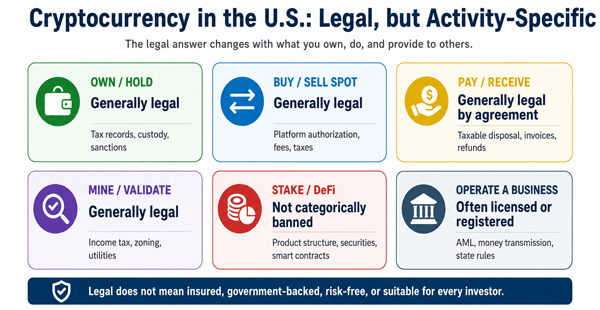
Figure 1. Cryptocurrency is generally legal in the U.S., but the applicable rules depend on the activity.
3. What Does “Legal” Mean for Cryptocurrency?
A legal answer requires more precision than a simple yes or no. In the United States, an asset can be lawful to own while the way it is issued, marketed, traded, transmitted, taxed or used remains regulated. Crypto also sits across several legal categories instead of one unified rulebook.
| Question | Practical meaning |
|---|---|
| Is it legal to own crypto? | Generally yes, provided the asset and funds are not connected to prohibited conduct or sanctioned persons. |
| Is it legal to buy and sell crypto? | Generally yes through lawful channels, but the platform, product and transaction may be subject to federal and state requirements. |
| Is crypto legal tender? | No. U.S. legal tender is designated by federal law. Crypto can still be accepted voluntarily as payment. |
| Is every token legal? | No. A token may be unlawfully offered, fraudulent, sanctioned, unregistered where registration is required, or tied to illegal activity. |
| Is every exchange legal? | No. Exchanges and brokers may need registrations, licenses, compliance programs and state approvals. |
| Are crypto profits tax-free? | No. Digital-asset income and gains are generally taxable and reportable. |
Important distinctionLegal does not mean government-backed, guaranteed, insured, stable in value or suitable for every investor. Regulation may reduce certain risks, but it does not remove market, custody, technology or fraud risk.
4. The Current U.S. Legal Framework
The U.S. regulates cryptocurrency through overlapping federal and state laws. Different agencies focus on different risks, and the same transaction can trigger more than one regime.
| Authority | Primary role in crypto | What it means for users or businesses |
|---|---|---|
| Securities and Exchange Commission (SEC) | Federal securities laws; token offerings, securities intermediaries and investment products | Some token offers or arrangements may be securities transactions. Registration or an exemption may be required. |
| Commodity Futures Trading Commission (CFTC) | Commodity derivatives; fraud and manipulation authority in spot digital-commodity markets | Bitcoin and Ether have commonly been treated as commodities for CFTC purposes. Futures, options and leveraged retail products face specialized rules. |
| Financial Crimes Enforcement Network (FinCEN) | Bank Secrecy Act, money services businesses, AML reporting | Administrators and exchangers that transmit convertible virtual currency may be money transmitters and must meet registration and compliance duties. |
| Internal Revenue Service (IRS) | Federal tax treatment and information reporting | Digital assets are generally treated as property. Sales, swaps, spending, mining and rewards can have tax consequences. |
| Office of Foreign Assets Control (OFAC) | Economic sanctions | Sanctions obligations apply to virtual-currency transactions just as they do to fiat transactions. |
| Federal banking regulators | Safety, soundness and permissible bank activities | Banks may conduct permissible crypto activities subject to risk management and applicable supervision. |
| State regulators | Money transmission, virtual-currency licensing, securities and consumer protection | Requirements vary by state. A platform available in one state may be restricted in another. |
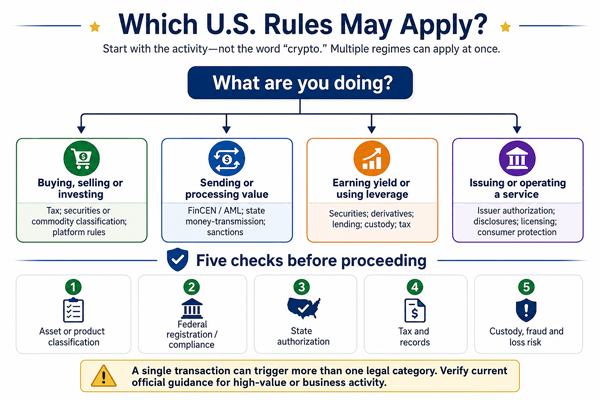
Figure 2. A practical activity-first framework for identifying which federal and state rules may apply.
4.1 Is Bitcoin Legal in the US?
Yes. It is generally legal to buy, hold, sell, transfer, mine and use Bitcoin in the United States. The CFTC describes virtual currencies such as Bitcoin as commodities and has authority over derivatives plus enforcement authority involving fraud and manipulation in spot digital-commodity markets. For federal tax purposes, the IRS treats digital assets as property rather than foreign currency.
Bitcoin’s legal status does not exempt a business that exchanges or transmits it from licensing, anti-money-laundering, recordkeeping, tax or sanctions obligations. Nor does commodity status mean the CFTC regulates every spot-market detail in the same way it regulates futures markets.
4.2 Are Other Cryptocurrencies Legal?
Many are lawful to own and trade, but classification is fact-specific. A decentralized network asset, a token sold to finance a project, a stablecoin, a governance token and a tokenized share can raise different legal issues. The name “cryptocurrency” does not decide the outcome; regulators and courts examine the economic reality, rights, promises, marketing and manner of sale.
5. When Can a Crypto Asset Be a Security?
A crypto asset or transaction may fall under federal securities laws when it involves a recognized security or an “investment contract.” The traditional Howey analysis asks whether there is an investment of money in a common enterprise with a reasonable expectation of profits derived from the entrepreneurial or managerial efforts of others. The analysis depends on the full facts and circumstances, not merely the token’s label.
5.1 Common signals that may increase securities-law risk
- Funds are raised to build a network, platform or business that does not yet function as promised.
- Buyers are led to expect profit from a central team’s future work, marketing, listings or token-price support.
- The issuer emphasizes investment returns more than consumptive use.
- Token holders rely heavily on one identifiable group to create essential value.
- The product represents stock, debt, a profit share, a fund interest or another instrument already defined as a security.
A token can also be packaged inside a separate investment arrangement that is a security. Conversely, not every blockchain-based asset or transaction is automatically a security. In March 2026, the SEC and CFTC issued an interpretation clarifying application of federal securities laws to certain crypto assets and transactions; because classifications and implementation can evolve, issuers and intermediaries should obtain current legal advice.
For ordinary buyersYou do not need to perform a courtroom-level classification before every small purchase, but you should check whether a platform is permitted to serve your state, whether the asset is subject to regulatory action, and whether promotional claims depend on a centralized team delivering future profits.
6. When Is Crypto Treated as a Commodity?
The Commodity Exchange Act defines “commodity” broadly. Bitcoin and Ether have long been treated by the CFTC as commodities. This matters most for derivatives such as futures and options, leveraged retail transactions, and the CFTC’s enforcement authority over fraud and manipulation involving spot digital commodities.
A frequent misunderstanding is that commodity status automatically places every spot exchange under comprehensive CFTC supervision. Historically, the CFTC has had full regulatory authority over derivatives markets but more limited authority in ordinary spot commodity markets, principally including enforcement against fraud and manipulation. Market-structure legislation could change this allocation, so current official sources should be checked.
7. Stablecoins: Legal Status After the GENIUS Act
Payment stablecoins are crypto assets designed to maintain a stable value, commonly one U.S. dollar. On July 18, 2025, the GENIUS Act became federal law, creating the first federal regulatory framework specifically for payment stablecoins. The law includes reserve, disclosure, supervision and issuer requirements, with implementation occurring through the statute and related rules.
| Issue | What readers should understand |
|---|---|
| Backing | The federal framework requires qualifying payment stablecoins to be backed by permitted liquid reserve assets on a one-for-one basis. |
| Disclosure | Issuers face public reserve-composition disclosure requirements and other transparency obligations. |
| Issuer authorization | Issuance is not simply an unregulated software activity; eligible issuers must operate within federal or qualifying state pathways. |
| Redemption risk | Even a regulated stablecoin can face operational, liquidity, cyber, custodial or market stress. “Stable” is a design objective, not a guarantee. |
| Not a bank deposit | A stablecoin is not automatically an FDIC-insured deposit. Protection depends on the legal structure and where any underlying cash is held. |
The GENIUS Act does not turn all cryptocurrencies into legal tender or create a blanket approval for every stablecoin. Users should verify whether an issuer is authorized, how redemption works, what reserves are permitted, who holds them and what rights apply if the issuer fails.
8. Is It Legal to Buy and Sell Cryptocurrency?
Generally yes. Individuals may buy and sell cryptocurrency for investment or personal use. The legal risk usually arises from how the transaction is conducted, what product is involved and whether the provider is authorized.
8.1 A practical compliance checklist before using a platform
- Confirm the platform is available to residents of your state and review its state-license disclosures.
- Identify the legal entity - not only the brand name - holding your assets or taking your order.
- Check whether the product is spot crypto, a security, a futures contract, an option, a leveraged product or a lending arrangement.
- Read custody, bankruptcy, withdrawal, fee and dispute-resolution terms.
- Understand whether dollars are held at an insured bank and whether pass-through insurance conditions are actually met.
- Keep records of deposits, purchases, sales, swaps, transfers, fees and wallet addresses for taxes and fraud recovery.
9. Are Decentralized Exchanges and DeFi Legal?
Using decentralized-finance software is not categorically illegal in the United States. However, “decentralized” does not automatically remove legal obligations. Developers, operators, governance participants, front-end providers, liquidity providers or other persons can face different issues depending on control, fees, communications and services offered.
DeFi transactions can involve unregistered securities offerings, derivatives, money transmission, sanctions exposure, tax reporting, hacks, smart-contract failures and misleading yield claims. A protocol being accessible on the internet does not prove that every feature is lawful for every U.S. person.
10. Is Crypto Mining Legal?
Crypto mining is generally legal under federal law. A person mining for personal use is not automatically a money transmitter merely because newly created cryptocurrency is later used or sold. Yet miners must still consider income tax, capital gains, business expenses, local zoning, electricity contracts, environmental rules, noise restrictions and utility policies.
| Mining situation | Possible legal or financial issue |
|---|---|
| Home mining | Lease restrictions, electrical safety, noise, heat and local ordinances. |
| Commercial mining farm | Zoning, permits, utility contracts, environmental review, employment and business taxes. |
| Mining for others or operating a pool | Contract, custody, fee, money-transmission or securities questions depending on structure. |
| Receiving mining rewards | Ordinary income when received under federal tax principles; later disposal may create capital gain or loss. |
11. Is Staking Legal?
Holding proof-of-stake crypto and participating directly in network validation is not subject to a general federal ban. The legal analysis becomes more complex when a centralized platform pools customer assets, promises a return, exercises discretion, issues a receipt token or markets staking as an investment program. Securities, custody, tax, consumer-protection and state-law questions may arise.
Tax treatment can depend on the facts and current guidance. Taxpayers should track when rewards become under their control, their fair market value, related fees and the basis used when rewards are later sold.
12. Can You Use Cryptocurrency to Pay for Goods and Services?
Yes, when both parties agree and the transaction does not violate another law. A merchant is generally not required to accept cryptocurrency merely because it has monetary value. The parties should define the exchange rate, payment time, network, confirmation standard, refund method and responsibility for transaction fees.
Tax trapSpending crypto is generally a disposal for federal tax purposes. If the coin increased in value after you acquired it, buying a product can generate a taxable capital gain, even though no dollars were received.
12.1 Example: buying a laptop with Bitcoin
Suppose Maya bought Bitcoin for $1,200 and later used that Bitcoin—then worth $1,800—to purchase a laptop. She generally has a $600 taxable gain, subject to applicable rules and adjustments. The laptop purchase and the crypto disposal are economically one transaction but can have separate sales-tax, income-tax and recordkeeping consequences.
13. Cryptocurrency Taxes in the US
The IRS generally treats digital assets as property. Income from digital assets is taxable, and taxpayers must answer the digital-asset question on applicable federal returns. Beginning with transactions on or after January 1, 2025, broker reporting on Form 1099-DA has been phased in under Treasury and IRS rules. A form from a broker does not replace the taxpayer’s duty to maintain accurate basis and transaction records.
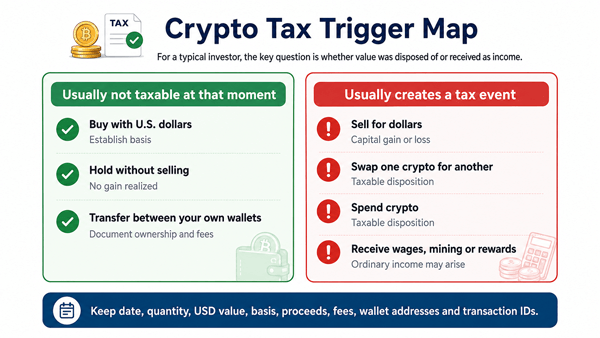
Figure 3. Common federal tax triggers for individual crypto users. Special facts can change the result.
| Activity | Typical federal tax treatment |
|---|---|
| Buying crypto with U.S. dollars and holding it | Usually not taxable at purchase; establish cost basis including eligible fees. |
| Selling crypto for dollars | Capital gain or loss for an investor; ordinary treatment may apply to dealers or business inventory. |
| Swapping one crypto asset for another | Generally a taxable disposition of the asset given up. |
| Paying for goods or services with crypto | Generally a taxable disposition; gain or loss equals value received minus adjusted basis. |
| Receiving crypto as wages or contractor pay | Generally ordinary income based on fair market value; payroll or self-employment rules may apply. |
| Mining rewards | Generally income when received; business mining may trigger self-employment and expense issues. |
| Staking or other rewards | Often income questions arise when rewards are received or become controllable; facts and current guidance matter. |
| Airdrops or forks | May create income when the taxpayer has dominion and control, depending on facts. |
| Gifts | Giving may trigger gift-reporting rules; recipient generally receives carryover basis subject to special loss rules. |
| Donations to qualified charities | Potential deduction and no capital-gain recognition, subject to appraisal and substantiation requirements. |
| Loss from theft, scam or platform failure | Deductibility is limited and highly fact-specific; investment losses are not automatically deductible. |
13.1 Records you should keep
- Date and time acquired and disposed
- Quantity and type of digital asset
- Fair market value in U.S. dollars
- Cost basis and acquisition fees
- Proceeds and selling fees
- Wallet addresses and transaction IDs
- Purpose of transfers between your own wallets
- Forms 1099-DA or other tax statements
- Evidence of gifts, donations, theft or worthless assets
State income-tax treatment may differ. High-volume traders, miners, businesses, NFT creators, DeFi users and taxpayers with foreign accounts or entities should consult a qualified tax professional.
14. Anti-Money-Laundering and Money-Transmission Rules
FinCEN applies the Bank Secrecy Act to certain cryptocurrency activities. A person who merely uses convertible virtual currency to buy goods or services is generally treated differently from an administrator or exchanger engaged as a business in accepting and transmitting value.
14.1 Businesses that may face money-transmitter obligations
- Centralized exchanges and hosted-wallet providers
- Crypto payment processors
- Certain kiosks and crypto ATM operators
- Some peer-to-peer exchangers operating as a business
- Administrators or issuers with redemption or transmission functions
- Foreign-located businesses serving U.S. customers when FinCEN rules apply
Covered businesses may need to register as money services businesses, establish a risk-based anti-money-laundering program, identify customers, keep records, file suspicious activity and currency transaction reports where required, and comply with travel-rule and other information obligations. State money-transmitter licensing can apply separately.
15. Sanctions and Prohibited Transactions
OFAC sanctions rules apply to virtual currency and fiat currency alike. U.S. persons generally may not transact with blocked persons or prohibited jurisdictions unless authorized. Crypto businesses should screen customers, counterparties and relevant wallet information using a risk-based program; individuals should be cautious when receiving unsolicited assets or interacting with services linked to sanctioned activity.
Sanctions compliance is not avoided because a wallet is pseudonymous, a protocol is decentralized or settlement occurs outside normal banking hours. Blocked virtual currency may need to be reported and retained in accordance with OFAC requirements.
16. State Laws: Why Your Location Matters
States regulate money transmission, virtual-currency businesses, securities offerings, consumer protection, unclaimed property and taxation. Requirements are not uniform. A company may need licenses in many states, and product availability can differ by residence.
16.1 New York example: BitLicense
New York requires businesses conducting specified virtual-currency business activity involving New York or New York residents to obtain a BitLicense or operate under an approved banking-law charter, unless an exemption applies. This is a business-licensing rule; ordinary individuals do not need a BitLicense merely to own or use cryptocurrency for personal purposes.
16.2 Other state-level issues to check
- Whether an exchange has a money-transmitter license or other authorization
- Crypto ATM disclosures, limits, fees and fraud-warning requirements
- State securities registration or enforcement notices
- Rules for custody, reserves and permissible investments
- State income, sales and franchise-tax treatment
- Unclaimed-property rules for dormant customer accounts
- Local restrictions on mining, electricity use, zoning or noise
Best practice
Use the regulator’s own license-search tool where available. A company’s marketing statement that it is “regulated” is not enough; identify the regulator, license number, legal entity and permitted activity.
17. What Crypto Activities Are Illegal?
Cryptocurrency can be used lawfully, but ordinary criminal and civil laws still apply. Blockchain technology does not legalize conduct that would be unlawful with cash, securities or bank transfers.
| Illegal or potentially illegal conduct | Examples |
|---|---|
| Fraud and misrepresentation | Fake investment platforms, guaranteed-return schemes, false reserve claims, rug pulls and manipulated performance results. |
| Theft and unauthorized access | Stealing private keys, hacking wallets, SIM swapping, malware and unauthorized transfers. |
| Money laundering | Moving criminal proceeds, structuring transactions, using mixers or intermediaries to conceal unlawful sources when legal elements are met. |
| Sanctions evasion | Transacting with blocked persons or prohibited jurisdictions without authorization. |
| Unlicensed regulated activity | Operating a money-transmission, securities, derivatives or other regulated business without required approvals. |
| Insider trading or market manipulation | Trading on misappropriated material information, wash trading, spoofing, pump-and-dump schemes and deceptive promotion. |
| Tax evasion | Concealing taxable income or gains, falsifying basis, or failing to report required transactions. |
| Illegal purchases | Using crypto to buy prohibited goods or services. |
18. Crypto Fraud, Consumer Protection and Enforcement
Federal and state authorities can pursue deceptive or unfair practices even when a product falls outside a traditional category. The Federal Trade Commission, state attorneys general, securities regulators, banking departments and criminal law-enforcement agencies may have authority depending on the facts.
18.1 Major warning signs
- Guaranteed profits or claims of “zero risk.”
- Pressure to act immediately or keep the investment secret.
- A romantic interest, online friend or “mentor” directing you to a specific platform.
- Requests to pay taxes or release fees before withdrawals are allowed.
- Customer support asking for a seed phrase, private key or remote access to your device.
- A platform whose balance rises on screen but cannot be withdrawn independently.
- Celebrity images, regulator logos or news articles that cannot be verified at the original source.
- Recovery agents promising to retrieve stolen crypto for an advance fee.
19. Is Cryptocurrency FDIC-Insured or Government-Guaranteed?
Crypto assets are not FDIC-insured. FDIC insurance protects qualifying deposits at insured banks, generally up to applicable limits and ownership categories. It does not protect the value of cryptocurrency or cover the failure of a nonbank crypto company. A platform’s cash-sweep arrangement may provide pass-through insurance only if all legal and recordkeeping conditions are satisfied; that protection applies to eligible cash deposits, not to crypto price losses.
| Asset or account | Typical protection |
|---|---|
| Bitcoin or other crypto held at an exchange | Not FDIC-insured; subject to platform custody and insolvency terms. |
| Stablecoin balance | Not automatically a bank deposit or FDIC-insured. |
| U.S. dollars directly deposited at an FDIC-insured bank | Potentially insured within limits and subject to account-ownership rules. |
| Cash held by a crypto company through partner banks | May qualify for pass-through coverage only if the arrangement and records satisfy FDIC requirements; verify the structure. |
| Securities account at an SIPC member | SIPC protection is different from FDIC insurance and does not protect market value; crypto coverage depends on legal status and custody arrangement. |
20. Key Legal and Financial Risks
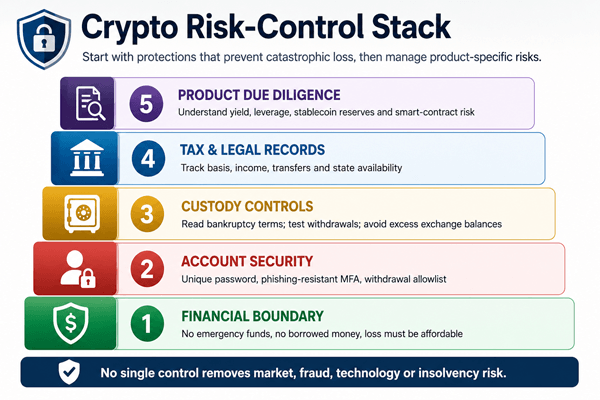
Figure 4. A layered approach to reducing avoidable crypto losses; it cannot eliminate risk.
| Risk | Why it matters | Risk-reduction step |
|---|---|---|
| Regulatory classification | A token or product may be restricted, delisted or subject to enforcement. | Use established providers; review official notices; avoid products you do not understand. |
| Platform insolvency | Customer assets may become tied up in bankruptcy and ownership rights may be disputed. | Read custody terms; avoid keeping unnecessary balances on a platform. |
| Private-key loss | Self-custody transfers control and responsibility to you. Lost keys may be unrecoverable. | Use tested backups, hardware wallets and inheritance planning. |
| Fraud and social engineering | Transactions are often irreversible and scammers exploit urgency. | Verify independently; never share seed phrases; use withdrawal allowlists. |
| Price volatility | Large and rapid losses are common. | Limit allocation, avoid borrowed money and plan for downside. |
| Stablecoin depegging | A stablecoin can trade below its target or face redemption stress. | Assess issuer, reserves, redemption rights and concentration. |
| Smart-contract risk | Code bugs, oracle failures and governance attacks can drain funds. | Use audited protocols cautiously; diversify and cap exposure. |
| Tax complexity | Swaps, payments and rewards can create many reportable events. | Use reliable records and crypto-aware tax software or advice. |
| Sanctions or illicit-funds exposure | Interacting with blocked addresses can create compliance and asset-freeze risk. | Use reputable services and investigate suspicious counterparties. |
| No deposit insurance | Crypto losses are not covered like insured bank deposits. | Keep emergency savings in appropriate insured accounts. |
21. Real-World Legal Examples
21.1 Example 1: Long-term Bitcoin investor
Daniel buys Bitcoin on a platform authorized to serve his state, transfers some to a personal wallet and later sells at a profit. The activity is generally legal. He must protect his credentials, retain basis records and report the gain. His Bitcoin is not FDIC-insured.
21.2 Example 2: Small business accepting USDC
A design studio accepts a dollar-referenced stablecoin from clients. This can be lawful, but the studio should document invoice value in dollars, recognize income, track any gain or loss before conversion, confirm sanctions compliance and understand the stablecoin issuer’s redemption framework. Accepting crypto for its own invoices is not automatically money transmission; transmitting funds for others can be different.
21.3 Example 3: Influencer promotes a token
An influencer receives tokens and cash to promote a new project but hides the compensation and claims returns are guaranteed. The promotion can trigger anti-fraud, advertising and potentially securities-law problems. Disclosure of compensation does not cure false or misleading claims.
21.4 Example 4: Friend operates a cash-for-crypto business
Priya regularly takes customers’ cash, sends crypto to their wallets and charges a fee. Calling the activity “peer to peer” does not necessarily make it personal use. She may be operating a money-transmission business and could need FinCEN registration, an AML program and state licenses.
21.5 Example 5: DeFi yield product
A U.S. user deposits tokens into a protocol advertising 20% yield. Access may be technically possible, but legality and risk depend on the arrangement, persons operating it, asset classification, sanctions exposure and any derivatives or securities features. The user also faces smart-contract, liquidation, tax and stablecoin risks.
22. How to Use Cryptocurrency Legally and More Safely
- Define the activity. Know whether you are buying spot crypto, lending, staking, trading derivatives, using DeFi or operating a business.
- Check the provider. Confirm legal entity, state availability, licenses, registrations and disciplinary history through official databases.
- Read the customer agreement. Focus on asset ownership, custody, rehypothecation, withdrawals, bankruptcy, arbitration and fees.
- Secure your account. Use a unique password, phishing-resistant multi-factor authentication and a dedicated email address.
- Test withdrawals. Send a small amount first, confirm the network and address, and avoid copying addresses from untrusted sources.
- Maintain tax records from day one. Do not rely solely on year-end forms or exchange history.
- Avoid leverage and guaranteed-yield claims. Complex products can create losses greater than the initial margin or hide counterparty risk.
- Keep emergency savings separate. Crypto should not replace insured cash needed for near-term obligations.
- Plan for incapacity or death. Create secure instructions that allow trusted heirs to locate and lawfully access assets without exposing keys today.
- Recheck rules before major transactions. Laws, agency interpretations, tax forms and state product availability can change.
23. Decision Framework: Is This Crypto Activity Appropriate?
| Question | If “yes” | If “no” |
|---|---|---|
| Can you explain how the asset or product creates value? | Continue to legal and risk checks. | Do not invest yet. |
| Is the provider authorized to serve your state? | Verify scope and legal entity. | Do not use the provider. |
| Can you afford a total loss without harming essential goals? | Set a strict allocation limit. | Avoid the exposure. |
| Do you understand custody and withdrawal rights? | Test with a small transaction. | Read terms or choose a simpler option. |
| Can you track basis, income and taxable disposals? | Maintain records continuously. | Use appropriate software or professional help first. |
| Are returns dependent on recruiting, secrecy or guaranteed profits? | Treat as a severe fraud warning. | Still perform normal due diligence. |
| Would an insured bank account or regulated traditional investment meet the goal with less risk? | Compare costs and protections objectively. | Proceed only after remaining checks. |
24. Common Misunderstandings
| Myth | Reality |
|---|---|
| “Crypto is unregulated.” | Multiple federal and state laws apply, although coverage and classifications can be fragmented. |
| “Bitcoin is legal tender.” | Bitcoin is generally lawful but is not U.S. legal tender. |
| “A decentralized project is outside the law.” | Control, services, economic reality and participant conduct can still create legal obligations. |
| “Swapping coins is not taxable because no cash was received.” | A crypto-to-crypto exchange is generally a taxable disposition. |
| “Stablecoins are the same as insured dollars.” | Stablecoins can have reserve and redemption frameworks but are not automatically insured bank deposits. |
| “An exchange license guarantees my funds.” | Licensing may impose standards, but it does not eliminate market, fraud, operational or bankruptcy risk. |
| “A Form 1099 is the complete tax answer.” | Taxpayers remain responsible for basis, income and accurate reporting even when forms are incomplete. |
25. Frequently Asked Questions
25.1 Is cryptocurrency banned in the United States?
No. There is no general federal ban on owning or lawfully transacting in cryptocurrency. Specific assets, products, platforms or uses may be restricted or unlawful.
25.2 Is Bitcoin legal in all 50 states?
Personal ownership is generally legal nationwide, but exchanges, money transmission, crypto ATMs and other business activities face state-specific requirements.
25.3 Can the U.S. government make cryptocurrency illegal?
Congress and regulators can impose restrictions within constitutional and statutory limits. A future law could change how particular activities are treated, but current legality should be assessed under existing federal and state rules.
25.4 Do I need a license to buy Bitcoin?
An ordinary individual buying for personal investment generally does not need a money-transmitter license. Businesses exchanging or transmitting crypto for others may need federal registration and state licenses.
25.5 Can banks legally hold or offer crypto services?
Banks may engage in permissible activities subject to applicable law, risk management and supervision. Product availability depends on the institution and regulator.
25.6 Is it legal to send crypto to another person?
Generally yes, but transfers connected to fraud, money laundering, sanctions violations, illegal purchases or unlicensed business activity may be unlawful.
25.7 Is using a VPN to access a restricted exchange legal?
Circumventing geographic restrictions can violate platform terms and may expose you to legal, sanctions, tax and recovery problems. Do not misrepresent your location to access a product unavailable in your jurisdiction.
25.8 Is a crypto mixer illegal?
The technology is not answered by one blanket rule, but operating or using mixing services can raise serious money-transmission, AML, sanctions and criminal issues. Some services or addresses have been sanctioned or prosecuted.
25.9 Are privacy coins legal?
There is no universal federal ban on possessing privacy-focused coins, but platforms may restrict them and their use can increase compliance scrutiny. Sanctions and criminal laws still apply.
25.10 Are NFTs legal?
Generally, but an NFT offering can involve securities, intellectual-property, consumer-protection, tax, gambling or money-transmission issues depending on its structure and marketing.
25.11 Is crypto gambling legal?
Online gambling is heavily regulated by federal, state and tribal law. Paying with crypto does not make an otherwise illegal gambling service lawful.
25.12 Can I be paid in cryptocurrency?
Yes, if lawful and agreed, but wage-and-hour, payroll-tax, withholding and state payment-of-wages laws must be satisfied. Employers should value compensation in dollars and keep records.
25.13 Do I pay taxes if I only hold crypto?
Simply buying and holding generally does not create a taxable sale, although reporting questions and other circumstances may apply. Income, rewards, sales, swaps and spending can be taxable.
25.14 Do I pay tax when transferring crypto between my own wallets?
A genuine transfer between wallets you own is generally not a sale, but fees and recordkeeping must be handled carefully. Document ownership and transaction IDs.
25.15 Can the IRS see cryptocurrency transactions?
Public blockchains are traceable, and exchanges and brokers may collect identity information and report transactions. Taxpayers should assume records can be matched to them.
25.16 What happens if my exchange goes bankrupt?
Access can be frozen and recovery depends on customer agreements, custody arrangements, bankruptcy law and available assets. Crypto is not protected like an insured bank deposit.
25.17 Is self-custody legal?
Generally yes. Self-custody gives you control of keys but also responsibility for security, taxes, sanctions compliance and estate planning.
25.18 Is crypto lending legal?
It is not categorically banned, but lending products can trigger securities, banking, consumer-credit, state lending and custody laws. Risks include borrower default, rehypothecation and platform insolvency.
25.19 Are crypto futures legal?
Regulated crypto futures and options can be offered on properly regulated markets. Offshore or unregistered leveraged products may be unlawful to offer to U.S. persons.
25.20 Where should I verify the latest rules?
Use official sources from the SEC, CFTC, IRS, FinCEN, OFAC, FDIC, federal banking regulators and your state financial or securities regulator.
26. Conclusion
Cryptocurrency is generally legal in the United States, but it operates within a dense and evolving legal framework. The most useful question is not only “Is crypto legal?” but “Which asset, transaction, provider, state and legal category apply?” Ordinary ownership differs from operating an exchange; buying Bitcoin differs from purchasing a token sold to finance a project; holding a stablecoin differs from holding an insured bank deposit; and accessing a DeFi protocol differs from proving that every feature is lawful or safe.
For most individuals, the practical path is straightforward: use providers authorized for your state, understand custody and product terms, avoid leverage and guaranteed returns, maintain complete tax records, follow sanctions and fraud warnings, and keep money needed for essential goals in appropriately protected accounts. Businesses, issuers, miners, payment processors and high-volume traders should obtain legal and tax advice tailored to their activities.
26.1 Sources Consulted and Checked
The following sources were consulted and checked while preparing this document to support its accuracy. Accessed August 2, 2026.
- Internal Revenue Service. Digital assets. Updated June 28, 2026. Official source
- Internal Revenue Service. Frequently asked questions on digital asset transactions. Current guidance. Official source
- Internal Revenue Service. Final regulations and related IRS guidance for reporting by brokers on sales and exchanges of digital assets. June 28, 2024. Official source
- Commodity Futures Trading Commission. Digital Assets. Current resource. Official source
- Commodity Futures Trading Commission. Digital Asset Frauds. Current resource. Official source
- Securities and Exchange Commission. Framework for “Investment Contract” Analysis of Digital Assets. April 3, 2019. Official source
- Securities and Exchange Commission. SEC Clarifies the Application of Federal Securities Laws to Crypto Assets. March 17, 2026. Official source
- Financial Crimes Enforcement Network. Application of FinCEN’s Regulations to Persons Administering, Exchanging, or Using Virtual Currencies. March 18, 2013. Official source
- Financial Crimes Enforcement Network. Application of FinCEN’s Regulations to Certain Business Models Involving Convertible Virtual Currencies. May 9, 2019. Official source
- Office of Foreign Assets Control. Sanctions Compliance Guidance for the Virtual Currency Industry. October 15, 2021. Official source
- Federal Deposit Insurance Corporation. Fact Sheet: What the Public Needs to Know About FDIC Deposit Insurance and Crypto Companies. July 28, 2022. Official source
- Federal Deposit Insurance Corporation. Financial Products That Are Not Insured by the FDIC. Updated May 12, 2026. Official source
- New York State Department of Financial Services. Virtual Currency Business Licensing. Current resource. Official source
- The White House. President Signs S. 1582, the GENIUS Act, into Law. July 18, 2025. Official source
26.2 Reader Advice
This article is provided for educational and informational purposes only and should not be considered legal, tax, financial, or investment advice. Cryptocurrency laws, regulations, tax rules, and regulatory guidance in the United States can change over time, and their application may vary depending on your state, circumstances, and the specific digital assets or activities involved.
While every effort has been made to ensure the information in this guide is accurate and up to date at the time of publication, no guarantee is made regarding its completeness or continued accuracy. Before making any financial, investment, tax, or legal decisions, always verify the latest requirements through official government agencies, financial regulators, and tax authorities, and consider seeking advice from a qualified professional when appropriate.
Remember that investing in cryptocurrencies involves significant risk, including market volatility, fraud, cybersecurity threats, and the potential loss of some or all of your investment. Never invest more than you can afford to lose, and conduct your own research before buying, selling, or using any cryptocurrency or related financial product.