What Is a Recession? Causes, Effects and What Investors Should Know
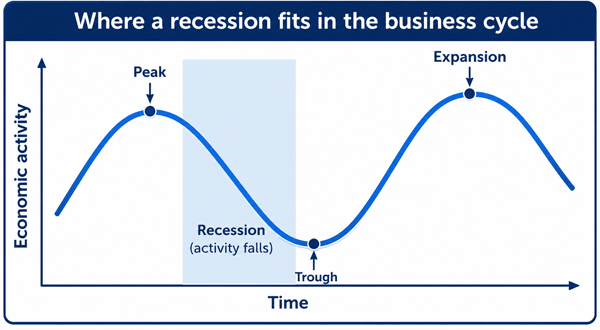
Figure 1. A recession within the business cycle.
1. What is a recession in simple words?
A recession is a period when the economy shrinks or slows sharply enough that many parts of life start to feel it: companies sell less, profits fall, hiring slows, workers worry about layoffs, banks become more careful, and families spend less. It is like a household that suddenly decides to cut expenses because income feels uncertain. When millions of households and businesses do this at the same time, the whole economy loses speed.
In the United States, the National Bureau of Economic Research describes a recession as a significant decline in economic activity that is spread across the economy and lasts more than a few months. The IMF explains the same idea: recessions usually show up in production, employment, real income and other major indicators. GDP is important because it measures the value of goods and services produced, but GDP alone does not tell the whole story.
Many people hear that a recession means “two quarters of negative GDP growth.” That rule is easy to remember, but it is only a shortcut. Real recessions are judged by depth, diffusion and duration: how deep the slowdown is, how widely it spreads, and how long it lasts.
| Simple phrase | What it really means | Beginner example |
|---|---|---|
| Economic activity falls | The country produces and sells less than before | Factories get fewer orders, restaurants have fewer customers, online stores see lower sales |
| Spread across the economy | Weakness is not limited to one company or one sector | Housing, retail, manufacturing, travel and finance all slow together |
| Lasts more than a few months | It is more than a bad week or one weak data point | Layoffs, lower spending and lower profits continue for a meaningful period |
| Visible in data | The slowdown appears in jobs, income, production, GDP and sales | Unemployment rises, wage growth slows and company earnings fall |
2. How a recession works: the chain reaction
Recessions often become painful because one person’s spending is another person’s income. When consumers spend less, businesses earn less. When businesses earn less, they cut costs. Cost cutting can mean fewer hours, delayed hiring, lower bonuses or layoffs. That reduces household confidence, which causes even more cautious spending. This loop can continue until lower prices, lower interest rates, government support, business adjustments or renewed confidence help the economy recover.
A practical example: Imagine a city where home sales slow because mortgage rates are high. Builders stop new projects. Furniture stores sell fewer sofas. Real estate agents earn less commission. Local restaurants near construction sites lose lunch traffic. A bank becomes more careful with small-business loans. None of these things alone proves a recession, but when the pattern spreads widely, the downturn becomes real for ordinary people.
3. Common causes of recessions
| Cause | How it can trigger a recession | Real-life explanation for beginners |
|---|---|---|
| High inflation and high interest rates | Central banks raise rates to slow borrowing and spending. If the slowdown goes too far, demand falls sharply. | Credit cards, car loans, mortgages and business loans become expensive, so people delay purchases. |
| Financial crisis or credit crunch | Banks and lenders become scared to lend. Businesses and households cannot get affordable credit. | Even healthy companies may struggle to refinance debt or fund payroll. |
| Asset bubble bursting | Stocks, housing or another asset becomes overpriced, then falls quickly. Wealth and confidence drop. | People who felt rich on paper suddenly cut spending after home or stock prices fall. |
| External shock | War, pandemic, oil shock or supply disruption raises costs or stops normal activity. | A sudden jump in fuel prices can hurt consumers, airlines, delivery companies and manufacturers. |
| Falling consumer confidence | People fear job loss or lower income and reduce spending before the data looks terrible. | Families postpone vacations, appliances and new cars, which hurts businesses. |
| Policy mistakes or uncertainty | Unclear rules, taxes, tariffs or excessive tightening can reduce investment. | Companies delay hiring because they cannot estimate future costs. |
4. What happens during a recession?
The experience is not the same for everyone. A retired person with a paid-off home and a diversified portfolio may feel market volatility but keep living normally. A young worker in a cyclical industry may face layoffs. A business owner may see revenue fall and customers pay late. An investor with too much leverage may be forced to sell assets at the worst time.
| Area of life | Typical recession effect | What people often experience |
|---|---|---|
| Jobs | Hiring slows and unemployment can rise | More competition for roles, fewer promotions, reduced overtime |
| Household budgets | Families become cautious | Cutting subscriptions, delaying travel, buying cheaper brands |
| Businesses | Sales and profits decline | Discounts, inventory reductions, hiring freezes |
| Banks and credit | Lending standards tighten | Harder loan approvals and higher credit spreads |
| Stock market | Prices often fall before or during recessions | Portfolio losses, fear, panic selling and bargain-hunting |
| Real estate | Demand can weaken, but local markets differ | Slower sales, price cuts in weaker areas, rent pressure |
| Government policy | Support may increase | Stimulus, unemployment benefits, rate cuts or public spending |
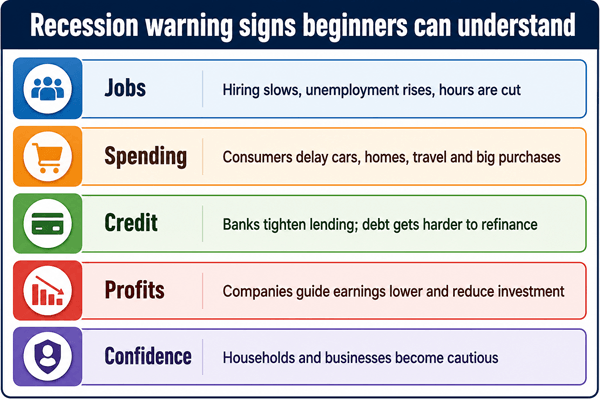
Figure 2. Common warning signs that may accompany a recession.
5. Recession vs depression vs slowdown: important differences
| Term | Meaning | Severity |
|---|---|---|
| Slowdown | Growth continues but at a weaker pace. | Mild: the economy is still expanding, just more slowly. |
| Recession | Economic activity declines broadly and meaningfully. | Moderate to severe: jobs, income, production and profits are affected. |
| Depression | A very deep and prolonged collapse in economic activity. | Extreme: long-lasting unemployment, business failures and financial stress. |
| Stagflation | Weak growth plus high inflation. | Difficult: households face slow income growth and rising prices together. |
6. How investors should think about recessions
For beginner investors, the biggest recession mistake is thinking the market and the economy are the same thing. They are connected, but they do not move perfectly together. The stock market often starts falling before the recession is officially announced because investors try to price in future earnings. It may also begin recovering while economic news still sounds terrible. This is why waiting for “everything to look safe” can cause investors to miss part of the recovery.
A recession can create risk and opportunity at the same time. The risk is that job loss, forced selling, high debt or panic can permanently damage your finances. The opportunity is that strong businesses, broad index funds and high-quality assets may become cheaper. The right response depends on your cash needs, time horizon, debt level and emotional tolerance for volatility.
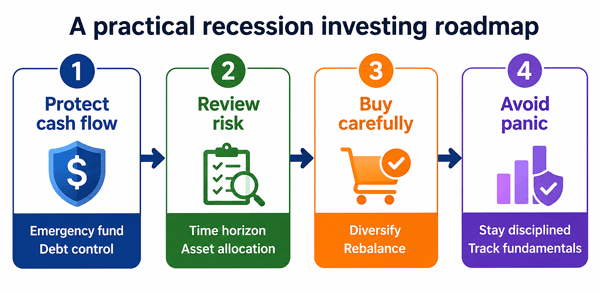
Figure 3. A practical four-step roadmap for recession investing.
7. Beginner investor checklist before and during a recession
| Action | Why it matters | Practical rule of thumb |
|---|---|---|
| Build an emergency fund | It prevents forced selling when markets are down. | Aim for 3-6 months of essential expenses; more if income is unstable. |
| Pay attention to high-interest debt | Credit-card interest can destroy returns. | Prioritize expensive debt before chasing risky investments. |
| Review asset allocation | A portfolio that felt fine in a bull market may feel unbearable in a downturn. | Match stocks, bonds and cash to your time horizon and risk tolerance. |
| Diversify | One company, sector or country can suffer more than the broad market. | Use broad funds or a mix of assets instead of betting everything on one idea. |
| Rebalance | Recessions can make your portfolio drift away from your plan. | Sell a little of what became too large and buy what became too small, if appropriate. |
| Keep investing gradually | Timing the exact bottom is almost impossible. | Consider dollar-cost averaging for long-term money you do not need soon. |
| Avoid leverage | Borrowed money can force bad decisions. | Do not invest with money you may need for rent, debt payments or emergencies. |
8. What investments may hold up better?
No investment is truly recession-proof. A better phrase is recession-resilient. Historically, investors often look at high-quality bonds, cash equivalents, defensive sectors, dividend-paying companies with strong balance sheets and broad diversified funds. But every recession is different. In an inflation-driven recession, long-term bonds may behave differently than in a deflationary recession. In a banking crisis, financial stocks may be hit harder. In a pandemic shock, travel and hospitality may suffer while technology or home-related businesses may do better.
| Investment type | Potential benefit | Main risk |
|---|---|---|
| Cash and money market funds | Stability and flexibility | Inflation can reduce purchasing power. |
| High-quality bonds | Income and potential cushion when rates fall | Bond prices can fall when rates rise or credit risk increases. |
| Broad stock index funds | Diversified ownership of many companies | Can still decline sharply in a bear market. |
| Defensive sectors | Demand may be steadier for essentials like food, utilities and healthcare | Valuations can become expensive; not guaranteed safe. |
| Dividend stocks | Income and quality signal when supported by cash flow | Dividends can be cut if profits weaken. |
| Real estate/REITs | Income potential and inflation sensitivity in some cases | Rate sensitivity, debt refinancing and local market risk. |
9. Recession indicators beginners can watch
Do not rely on one magic signal. A good recession dashboard combines labor market data, consumer spending, business activity, credit conditions, inflation, interest rates and corporate earnings. The New York Fed’s yield-curve model, for example, uses the term spread to estimate recession probability, but even respected indicators can give early or false signals. Use indicators as a weather report, not as a trading command.
| Indicator | What to watch | Why it matters |
|---|---|---|
| Unemployment rate and jobless claims | Rising claims and slower hiring | Jobs are the bridge between the economy and household spending. |
| Real GDP | Negative or weak inflation-adjusted growth | Shows whether total output is expanding or contracting. |
| Consumer spending and retail sales | Weak spending on discretionary items | Consumers drive a large share of many economies. |
| Industrial production | Falling factory and utility output | Shows pressure in the goods-producing economy. |
| Credit spreads | Riskier borrowers paying much more than safe borrowers | Signals stress in lending and default expectations. |
| Yield curve | Short-term rates above long-term rates for a sustained period | Can reflect expectations of future slowdown and rate cuts. |
| Corporate earnings guidance | Companies lowering forecasts | Markets often react before official recession data arrives. |
10. Practical examples: what different people should do
| Reader type | Main priority | Best practical move |
|---|---|---|
| New investor with small savings | Survival first, investing second | Create an emergency fund and invest slowly in diversified funds. |
| Long-term retirement investor | Avoid panic selling | Keep contributions steady if income is secure; rebalance according to plan. |
| Person near retirement | Sequence-of-return risk | Hold enough safer assets to cover near-term withdrawals. |
| High-debt household | Cash flow protection | Pay down expensive debt and avoid new risky commitments. |
| Business owner | Liquidity and customer demand | Stress-test revenue, reduce waste and protect essential staff/clients. |
| Active stock picker | Quality control | Focus on balance sheets, cash flow, debt maturity and durable demand. |
11. Mistakes to avoid during a recession
- Do not sell everything just because headlines are scary. Panic selling turns temporary volatility into permanent damage.
- Do not assume every cheap stock is a bargain. Some companies are cheap because their earnings power is permanently weakening.
- Do not ignore your job and income risk. Your career is often your largest financial asset.
- Do not overuse “recession-proof” claims. Be honest: every investment carries risk.
- Do not take financial advice from fear-based social media posts, viral predictions or anyone promising guaranteed returns.
- Do not invest emergency money. Money needed within the next 1-3 years should usually be treated more conservatively.
12. How to use a recession as a learning opportunity
A downturn reveals the truth about your financial habits. It shows whether your budget is flexible, whether your portfolio is too risky, whether you understand what you own and whether your investment plan depends on perfect conditions. Beginners should use recessions to build durable habits: track spending, improve skills, reduce fragile debt, invest consistently, learn valuation basics and understand the difference between volatility and permanent loss.
A useful question is: “If the market fell 25% and my income became uncertain, what would I wish I had done six months earlier?” The answer usually points to emergency savings, lower debt, better diversification and a written investment plan.
13. Frequently Asked Questions
13.1. Is a recession always bad for investors?
No. It is painful for the economy, but long-term investors with cash, discipline and diversification may find better valuations. The danger is being forced to sell because of job loss, debt or panic.
13.2. How long does a recession last?
There is no fixed length. Some are short and sharp; others are longer and slower. The official start and end are often identified after the fact.
13.3. Can you predict a recession?
You can watch warning signs, but no indicator is perfect. Investors should prepare rather than pretend they can forecast every turning point.
13.4. Should I stop investing during a recession?
Not automatically. If your emergency fund is healthy, debt is manageable and your time horizon is long, steady investing can make sense. If your income is at risk, cash protection may come first.
13.5. What is the safest investment during a recession?
Safety depends on purpose. Cash is useful for near-term needs, high-quality bonds may reduce volatility, and diversified funds can suit long-term goals. None is risk-free in every environment.
13.6. What businesses do well in a recession?
Businesses selling essentials, low-cost substitutes, repairs, discount retail, healthcare or recurring services may be more resilient, but company debt and valuation still matter.
13.7. What is a recession-proof portfolio?
A more honest term is recession-resilient portfolio: diversified, aligned with time horizon, supported by cash reserves and not dependent on leverage or one sector.
14. Conclusion: the smart way to think about recessions
A recession is a broad decline in economic activity, but for real people it feels like uncertainty: job risk, tighter budgets, lower confidence and volatile markets. For investors, the best response is not fear and not blind optimism. It is preparation. Build liquidity, control debt, diversify, understand your risk, keep a long-term view and avoid promises that sound too certain. Recessions are part of the economic cycle. A strong financial plan accepts that downturns will happen and prepares before they arrive.
Sources Consulted and Checked
These authoritative sources were consulted when preparing this article and checking its factual accuracy. Readers should review the latest official publications because definitions, data, policies and market conditions may change over time.
- NBER Business Cycle Dating: recession definition based on depth, diffusion and duration.
- IMF Finance & Development: explanation of recession as broad decline visible in production, employment and real income.
- U.S. Bureau of Economic Analysis: GDP as a comprehensive measure of economic activity and output.
- New York Fed: yield curve as a leading indicator model based on the term spread.
- CFTC investor education: diversification spreads money among investments to reduce overall investment risk.
- FINRA investor education: investing basics and risk-aware investor guidance.
Reader Advice
This article is provided solely for general educational and informational purposes. It does not constitute personalized financial, investment, tax, accounting or legal advice, and it is not a recommendation to buy, sell or hold any security or financial product. Economic conditions, recession indicators, laws, regulations, tax rules, interest rates, product terms and market data can change, and their application may differ according to country, jurisdiction and individual circumstances.
Before making a financial or investment decision, readers should verify current facts and figures through relevant official sources, review the terms and risks of any product, consider their goals, time horizon, income stability and tolerance for loss, and seek advice from appropriately qualified professionals. Past performance and historical recession patterns do not guarantee future results, and all investments involve risk, including possible loss of principal.