How Fed Meetings Impact Stocks and Market Trends
1. Introduction: why Fed meetings matter even if you do not trade
A Fed meeting is one of the few scheduled events that can move stocks, bonds, mortgage rates, savings rates, the U.S. dollar, and investor confidence on the same day. Beginners often hear phrases like “the Fed stayed hawkish” or “markets rallied after the Fed decision” and assume it is only Wall Street language. In reality, the idea is simple: the Federal Reserve influences the price of money. When the price of money changes, almost every investment has to be revalued.
This guide explains how Federal Reserve meetings affect stocks and market trends in plain English. It is written for readers who may have no background in economics, trading, investment strategy, retirement planning, wealth management, or portfolio risk. The goal is not to predict every Fed decision. The goal is to understand the practical chain reaction so you can read market news more clearly, avoid emotional decisions, and build a more informed investing process.
2. What is a Fed meeting?
A Fed meeting usually refers to a meeting of the Federal Open Market Committee, often shortened to FOMC. The FOMC is the part of the Federal Reserve that sets the target range for the federal funds rate and guides monetary policy. The Fed’s broader policy goal is to support maximum employment and stable prices, often called its dual mandate. The Federal Reserve explains that monetary policy influences short-term interest rates and overall financial conditions to move the economy toward those goals.
Most years, the FOMC meets eight times. After many meetings, the Fed releases a statement at 2:00 p.m. Eastern Time, followed by a Chair press conference around 2:30 p.m. Some meetings also include updated economic projections, including the famous “dot plot,” where policymakers show their expectations for future interest rates. The official FOMC calendar and meeting materials are published by the Federal Reserve.
For investors, the meeting is important because it updates the market on three things: what the Fed did, what the Fed thinks, and what the Fed may do next. Stocks often react not just to the decision itself, but to the gap between the decision and what investors expected before the announcement.
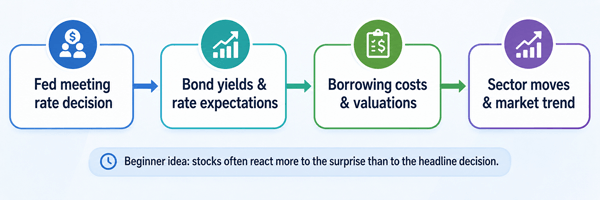
Figure 1: The basic chain from Fed decision to stock-market trend. Image created for this article.
3. The simple version: how Fed meetings impact stocks
Stocks represent ownership in companies. A company’s stock price is influenced by expected future profits and the value investors place on those future profits today. Fed meetings affect both sides of that equation.
| Fed signal | What it often means | Why stocks may react |
|---|---|---|
| Higher-for-longer rates | Borrowing stays expensive | Future profits may be discounted more heavily; debt-heavy companies feel pressure. |
| Rate cut expectations | Money may become cheaper | Growth stocks and risk assets may benefit if cuts are seen as supportive, not recession-driven. |
| Hawkish tone | Fed sounds more worried about inflation | Bond yields can rise; stocks may fall if investors expected easier policy. |
| Dovish tone | Fed sounds more worried about slowing growth or ready to ease | Stocks may rally if investors believe lower rates will support earnings. |
| No change, but surprise language | Headline decision unchanged, message shifts | Markets may move sharply because expectations changed. |
The key beginner lesson is this: the market does not wait for the economy to change. It moves when expectations change. If everyone expected the Fed to cut rates but the Fed says inflation is still too high, stocks can drop even if the rate was not changed. If everyone feared a tough message but the Fed sounds calmer, stocks can rise even if rates remain high.
4. What exactly does the Fed decide?
The most watched decision is the target range for the federal funds rate. This is the overnight rate banks charge each other for reserve balances. Most consumers never borrow directly at the federal funds rate, but it influences many other rates across the economy: Treasury yields, credit card APRs, auto loans, business loans, mortgage rates, money-market yields, and discount rates used by investors.
The Fed also communicates through its statement, implementation note, projections, minutes, speeches, and press conference. Sometimes the words move markets more than the rate decision. A single phrase about inflation, employment, or future policy can change investor expectations for the next several months.
| Fed item | Beginner meaning | Why investors watch it |
|---|---|---|
| Rate decision | Cut, hike, or hold | Changes the expected cost of money. |
| Statement | Short official summary | Shows what risks the Fed is focused on. |
| Press conference | Chair explains the decision | Markets interpret tone, confidence, and flexibility. |
| Economic projections | Fed officials’ forecasts | Shows expected inflation, unemployment, GDP, and rate path. |
| Dot plot | Officials’ rate expectations | Can shift bond yields and stock valuations quickly. |
| Minutes | Detailed meeting discussion, released later | Reveals debate inside the Fed and policy risks. |
5. Why stocks can jump or fall within minutes
Fed days can feel confusing because the first market reaction is not always the final reaction. Stocks may rally at 2:00 p.m. after the statement, reverse during the press conference, and then move again the next day after bond traders digest the message. This happens because different investors focus on different clues.
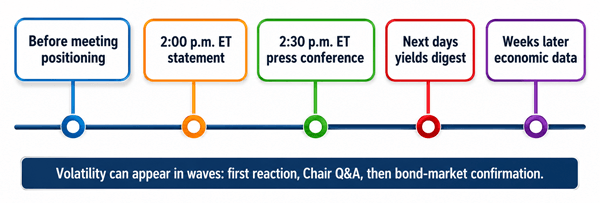
Figure 2: Typical market-reaction timeline around an FOMC day. Image created for this article.
Professional traders compare the Fed’s message with futures-market pricing, analyst forecasts, Treasury yields, inflation data, and earnings expectations. Beginners can simplify this by asking one question: did the meeting make investors expect money to be tighter or easier than they expected yesterday?
6. The surprise factor: the most important idea for beginners
A Fed decision does not move markets simply because it is good or bad. It moves markets because it is better or worse than expected. This is why stocks may rise after a rate hike or fall after a rate cut.
| Scenario | Why the reaction may surprise beginners |
|---|---|
| Fed hikes rates and stocks rise | Investors may have expected a larger hike, or the Fed may signal fewer future hikes. |
| Fed cuts rates and stocks fall | Investors may worry the Fed is cutting because the economy is weakening fast. |
| Fed holds rates and stocks fall | The hold may be expected, but the message may sound more hawkish. |
| Fed holds rates and stocks rise | The hold may come with softer inflation language or lower future-rate projections. |
Think of the stock market like a student waiting for exam results. If the student expected a D and receives a C, they may feel relieved. If they expected an A and receive a B, they may feel disappointed. The same idea applies to Fed meetings: the result matters, but expectations matter more.
7. How interest rates change stock valuations
A stock price is partly based on expected future cash flows. When interest rates are higher, those future cash flows are usually worth less today because investors can earn more from lower-risk assets such as Treasury bills or money-market funds. This is one reason high-growth stocks often become more sensitive during periods of rising rates: much of their expected value may depend on profits far in the future.
Lower rates can make future profits look more valuable, reduce borrowing costs, and encourage investors to take more risk. But rate cuts are not automatically bullish. If rates fall because the economy is moving toward recession, earnings expectations may decline, and stocks can struggle. The context matters.
| Rate environment | Possible stock-market effect | Beginner interpretation |
|---|---|---|
| Rates rising because economy is strong | Mixed: earnings may be good, valuations may compress | Quality matters; strong companies may handle it better. |
| Rates rising because inflation is stubborn | Often negative for broad markets | Higher costs and lower valuation multiples can pressure stocks. |
| Rates falling because inflation is cooling | Often supportive | Cheaper money and stable growth can help risk assets. |
| Rates falling because recession risk is rising | Mixed to negative | Lower rates help, but falling earnings may hurt stocks. |
8. Which sectors are usually most affected?
Fed meetings do not affect every stock the same way. A utility company, a regional bank, a software company, a homebuilder, and a discount retailer may all react differently to the same rate decision. Beginners should focus on interest-rate sensitivity, debt levels, customer financing, and valuation.
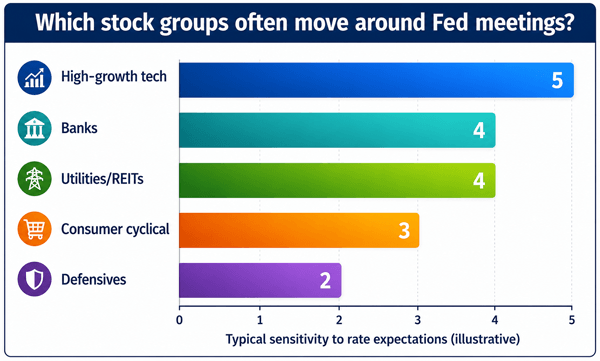
Figure 3: Illustrative sector sensitivity. Actual performance depends on earnings, valuation, credit conditions, and economic context.
| Sector/group | Why Fed meetings matter | Typical beginner takeaway |
|---|---|---|
| High-growth technology | Valuations depend heavily on future profits | More sensitive to discount-rate changes. |
| Banks and financials | Net interest margins and loan demand matter | Can benefit from higher rates up to a point, but credit risk matters. |
| Utilities and REITs | Often carry debt and compete with bond yields | Higher yields can make dividends less attractive. |
| Homebuilders and real estate | Mortgage rates affect affordability | Rate expectations can move demand quickly. |
| Consumer discretionary | Big purchases often need financing | Higher borrowing costs can slow spending. |
| Defensive sectors | Demand is more stable | May hold up better when Fed fears hurt risk appetite. |
9. Practical example: reading a Fed day like an investor
Imagine the market expects the Fed to keep rates unchanged. Before the announcement, investors expect the Fed to say inflation is improving and rate cuts may come later. At 2:00 p.m., the Fed holds rates steady, but the statement says inflation remains elevated and policymakers need more evidence before easing. Treasury yields rise. Growth stocks fall. Banks are mixed. Defensive stocks outperform.
A beginner may ask, “Why did stocks fall if the Fed did not raise rates?” The answer is that the decision was unchanged, but expectations changed. Investors moved from “cuts may be coming soon” to “rates may stay high longer.” That shift can lower the price investors are willing to pay for future earnings.
Now imagine a different meeting. The Fed holds rates steady and says inflation has made further progress. The Chair says policy is still restrictive but the Committee is watching labor-market risks. Bond yields fall. Growth stocks rally. Small caps rise because lower borrowing costs could help financing. In both examples, the rate decision is the same. The message is different.
10. What beginners should watch before, during, and after Fed meetings
10.1 Before the meeting
- Check what markets already expect. Financial news often reports whether investors expect a cut, hike, or hold.
- Look at recent inflation data, jobs data, wage growth, consumer spending, and Treasury yields.
- Notice market positioning. If stocks rallied strongly before the meeting, expectations may already be optimistic.
10.2 During the meeting day
- Read the headline decision first: cut, hike, or hold.
- Compare the statement language with the previous statement. The change in wording is often more important than repeated phrases.
- Watch the press conference tone. Does the Chair sound confident, cautious, worried about inflation, or worried about jobs?
10.3 After the meeting
- Watch Treasury yields. If yields move opposite to stocks, yields may be driving the trend.
- Check sector leadership. A broad rally is stronger than a rally led by only a few mega-cap stocks.
- Avoid overreacting to the first 30 minutes. Fed-day reversals are common.
11. A simple Fed-meeting checklist for investors
| Question | Why it matters |
|---|---|
| What did the Fed do? | The headline decision sets the first reaction. |
| Was it expected? | Surprises usually create volatility. |
| What changed in the statement? | Language changes reveal policy direction. |
| Did projections shift? | The dot plot can move yields and stock valuations. |
| What did bond yields do? | Yields often confirm or challenge the stock reaction. |
| Which sectors led? | Leadership shows what kind of market trend is forming. |
| Is the move supported by earnings? | Fed optimism without earnings support can fade. |
| Does this change my long-term plan? | Most investors should not change strategy based on one meeting. |
12. How long does the Fed impact last?
Fed meetings can affect markets in three time frames. The first is the immediate reaction, which can happen within seconds. The second is the short-term trend over days or weeks as investors adjust positions. The third is the economic impact over months, as higher or lower rates affect loans, spending, business investment, hiring, and earnings. Market prices can move quickly, while the real economy usually responds with a lag.
This lag is why Fed policy can feel strange. Stocks may rise months before rate cuts happen if investors believe easier policy is coming. Stocks may also decline before the economy looks weak because investors are forecasting slower earnings ahead.
13. How to use Fed meetings without trying to predict them
Beginners do not need to become Fed forecasters. A practical approach is to use Fed meetings as risk-awareness events, not gambling events. The goal is to understand whether the investing environment is becoming easier, tighter, more uncertain, or more supportive for your portfolio.
- Long-term investors can use Fed days to review allocation, not chase headlines.
- Dividend investors can compare dividend yields with Treasury and money-market yields.
- Growth investors can watch whether falling yields are supporting valuations.
- Retirement investors can review whether their bond duration, cash yield, and equity exposure still match their time horizon.
- Active traders can define risk before the announcement, because Fed volatility can be fast and emotional.
A disciplined investor asks, “Does this meeting change the long-term earnings outlook, rate environment, or risk level enough to adjust my plan?” In many cases, the honest answer is no. In some cases, the answer may be yes, especially if the Fed clearly changes direction from tightening to easing or from easing to tightening.
14. Common mistakes beginners make around Fed meetings
| Mistake | Better practice |
|---|---|
| Buying or selling based only on the headline rate decision | Compare the decision with expectations and the Fed’s tone. |
| Assuming rate cuts are always good for stocks | Ask why rates are being cut: cooling inflation or recession risk? |
| Ignoring bond yields | Treasury yields often explain stock reactions better than the headline decision. |
| Trading too large on Fed day | Volatility can reverse quickly; manage position size. |
| Confusing one-day moves with long-term trends | Wait for confirmation from yields, earnings, and breadth. |
| Following social media predictions blindly | Use official Fed releases and reputable data sources. |
15. Fed meetings vs inflation reports vs earnings: what matters more?
| Event | Main focus | Market impact style |
|---|---|---|
| Fed meeting | Policy direction and rate expectations | Can reset the entire market’s valuation framework. |
| CPI / inflation report | Price pressure in the economy | Can change what investors expect the Fed to do next. |
| Jobs report | Labor-market strength or weakness | Can shift recession and inflation expectations. |
| Company earnings | Business performance | Moves individual stocks and sectors; can confirm or challenge macro trends. |
The best analysis connects these events. Inflation and jobs data shape Fed expectations. Fed policy shapes financial conditions. Financial conditions influence company earnings and investor risk appetite. Earnings ultimately decide whether stock prices are justified.
16. Actionable strategies for different investor types
16.1 For long-term investors
Stay focused on asset allocation, diversification, cost control, and time horizon. Fed meetings can affect short-term prices, but long-term returns are usually driven by earnings growth, valuation, dividends, productivity, and investor discipline. Rebalancing after large Fed-driven moves can be more sensible than reacting emotionally during the announcement.
16.2 For dividend and income investors
Compare stock dividends with safer income alternatives. When Treasury bills and money-market funds offer attractive yields, some dividend stocks face competition. Look at payout safety, debt costs, and whether the business can grow dividends through different rate cycles.
16.3 For growth investors
Watch real yields and long-term Treasury yields. Growth stocks often benefit when yields fall, but valuation still matters. A lower-rate story cannot fix weak revenue, poor margins, or unrealistic expectations forever.
16.4 For active traders
Plan before the event. Know your entry, exit, stop level, and maximum loss. Fed announcements can create slippage and sudden reversals. Many experienced traders reduce size or wait until after the press conference because the first move can be misleading.
16.5 For beginners with retirement accounts
Avoid making retirement decisions based on one Fed meeting. A 401(k), IRA, or long-term index portfolio should usually be managed around decades, not one press conference. Use Fed meetings to learn, review risk, and understand why your account moved that day.
17. Helpful facts readers should know
18. Frequently asked questions
18.1 Do stocks always fall when the Fed raises rates?
No. Stocks often dislike higher rates, but they do not always fall. If the hike was expected, if the economy is strong, or if the Fed signals fewer future hikes, stocks can rise. The surprise and the message matter.
18.2 Do stocks always rise when the Fed cuts rates?
No. Stocks may rise if cuts are seen as supportive and inflation is cooling. But stocks may fall if cuts signal that the Fed is worried about a recession or financial stress.
18.3 Which stocks benefit most from lower rates?
Rate-sensitive growth stocks, small caps, homebuilders, real estate, and some consumer discretionary companies may benefit when lower rates improve financing conditions. But company fundamentals still matter.
18.4 Should beginners trade Fed meetings?
Most beginners should be careful. Fed days can be volatile and emotionally difficult. It is usually better to observe, learn, and manage long-term risk than to make large short-term bets.
18.5 What is the dot plot?
The dot plot is a chart of individual Fed officials’ projections for the federal funds rate. It is not a promise, but markets watch it because it shows how policymakers are thinking about future rates.
18.6 Why do Treasury yields matter for stocks?
Treasury yields influence the return investors can earn from lower-risk assets and the discount rate used to value future company profits. Rising yields can pressure stock valuations, while falling yields can support them, depending on the reason yields are moving.
19. Final takeaway
Fed meetings impact stocks because they change expectations about interest rates, inflation, economic growth, liquidity, and risk appetite. Beginners should not treat every Fed decision as a buy-or-sell signal. A better approach is to understand the story behind the market reaction: Did the Fed sound tighter or easier than expected? Did yields confirm the move? Which sectors led? Did the message change the earnings outlook?
Once you understand those questions, Fed-day market moves become less mysterious. You may still not predict every reaction, and that is normal. The practical advantage is not perfect prediction. The advantage is better interpretation, calmer decision-making, and a more disciplined investment process.
Sources Consulted and Checked
The following sources were consulted and checked while preparing this article to support accuracy, clarity, and factual reliability.
- Federal Reserve, FOMC Meeting Calendars and Information: https://www.federalreserve.gov/monetarypolicy/fomccalendars.htm
- Federal Reserve, The Fed Explained - Monetary Policy: https://www.federalreserve.gov/aboutthefed/fedexplained/monetary-policy.htm
- Federal Reserve, June 16-17, 2026 FOMC Meeting Materials: https://www.federalreserve.gov/monetarypolicy/fomcpresconf20260617.htm
- Federal Reserve, News & Events / FOMC Press Conference materials: https://www.federalreserve.gov/newsevents.htm
- IMF, Monetary Policy: Stabilizing Prices and Output: https://www.imf.org/en/publications/fandd/issues/series/back-to-basics/monetary-policy
- U.S. Bank, How Changing Interest Rates Affect the Stock Market: https://www.usbank.com/investing/financial-perspectives/market-news/how-do-rising-interest-rates-affect-stock-market.html
- Investopedia, How Interest Rates Impact Stock Market Trends: https://www.investopedia.com/investing/how-interest-rates-affect-stock-market/
Reader Advice
This article is provided solely for educational and informational purposes. It does not constitute personalized financial, investment, legal, tax, accounting, or other professional advice, and it should not be treated as a recommendation to buy, sell, or hold any security or financial product. Before making any financial decision, readers should consider their objectives, financial circumstances, risk tolerance, and time horizon and, where appropriate, seek advice from a suitably qualified professional. Federal Reserve policies, meeting schedules, market conditions, interest rates, laws, regulations, tax rules, data, and other facts or figures may change over time and may also vary according to jurisdiction and individual circumstances.
Readers should therefore verify current information through official Federal Reserve publications, government sources, regulated institutions, and other reliable primary sources. Market performance is uncertain, past performance does not guarantee future results, and all investing involves risk, including possible loss of principal.