Why Do Stocks React to Inflation Reports? Explained for Beginners
Inflation reports can make the stock market jump, drop, or swing wildly within minutes. To a beginner, this can feel confusing: how can a government price report about groceries, rent, gas, and medical bills suddenly move technology stocks, banks, real estate companies, and retirement portfolios?
The simple answer is this: stocks react to inflation reports because inflation changes what investors expect about interest rates, company profits, consumer spending, and the value of future earnings. The market is always trying to price the future. Inflation reports are one of the clearest clues about that future.
This guide explains the topic in plain English. It is written for readers who may not know what CPI, inflation, the Federal Reserve, bond yields, or valuation multiples mean. By the end, you should understand what an inflation report is, why stocks care so much, how different sectors react, what mistakes beginners make, and how to use inflation data without gambling on one news release.
1. Quick answer: why stocks move after inflation reports
Stocks move after inflation reports because investors compare the new inflation number with what they expected. If inflation is higher than expected, investors may believe interest rates will stay higher for longer. Higher rates can reduce stock valuations, increase borrowing costs, slow consumer spending, and make bonds more attractive compared with stocks. If inflation is lower than expected, investors may expect easier monetary policy, lower bond yields, and better conditions for many stocks.
| Inflation report outcome | Typical market interpretation | Possible stock reaction |
|---|---|---|
| Hotter than expected | The Fed may keep rates high or raise rates; bond yields may rise. | Growth stocks and rate-sensitive areas often feel pressure. |
| Cooler than expected | The Fed may have more room to pause or cut rates; bond yields may fall. | Broad stocks may rally, especially long-duration growth stocks. |
| In line with expectations | No major change to rate expectations. | Reaction may be muted, but details still matter. |
| Headline hot, core cooler | Energy or food may be driving prices, while underlying inflation looks softer. | Mixed reaction; investors study details before deciding. |
| Headline cool, core sticky | Gas or food may help the headline, but services or shelter remain firm. | Initial rally can fade if core inflation worries investors. |
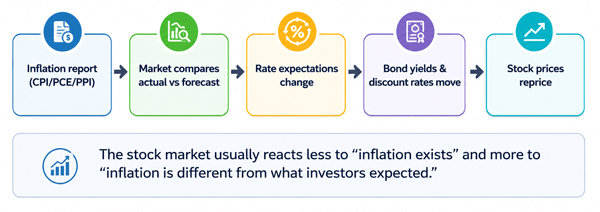
Figure 1: Inflation reports affect stocks mainly through expectations about interest rates, yields, earnings, and risk appetite.
2. What is an inflation report?
An inflation report is an official update that shows how prices are changing across the economy. In the United States, the most watched report is the Consumer Price Index, usually called CPI. CPI measures changes in prices paid by consumers for goods and services. The U.S. Bureau of Labor Statistics explains that CPI reflects spending patterns for all urban consumers and for urban wage earners and clerical workers. The all-urban consumer group represents more than 90% of the U.S. population.
Think of CPI as a large shopping basket. The basket includes things such as housing, food, transportation, fuel, medical care, apparel, and services. If the basket costs more than it did last month or last year, inflation is rising. If the basket rises more slowly, inflation is cooling. If prices broadly fall, that is deflation, although deflation is less common and can create its own economic problems.
The market watches several inflation-related reports, but beginners should know these first:
| Report | What it measures | Why investors watch it |
|---|---|---|
| CPI | Prices consumers pay for everyday goods and services. | It is the most famous inflation report and can quickly change rate-cut or rate-hike expectations. |
| Core CPI | CPI excluding food and energy. | Food and energy prices can jump around; core CPI helps investors see underlying inflation pressure. |
| PCE Price Index | Consumer inflation measure watched closely by the Federal Reserve. | The Fed often focuses on PCE inflation when judging progress toward price stability. |
| PPI | Prices producers receive for goods and services. | It can hint at future consumer prices if higher business costs are passed on. |
| Inflation expectations | What consumers, businesses, or markets expect inflation to be. | Expected inflation can influence wages, pricing behavior, bond yields, and policy decisions. |
3. Why the market cares about inflation so much
A stock is not just a ticker symbol moving on a screen. A stock represents ownership in a business. The value of that business depends on expected future profits and the price investors are willing to pay for those profits. Inflation touches both sides of that equation.
First, inflation changes costs. A restaurant may pay more for ingredients, wages, rent, utilities, and packaging. A manufacturer may pay more for raw materials, shipping, and financing. If the business cannot raise prices enough to cover those costs, profit margins shrink. Lower expected profits can hurt the stock price.
Second, inflation changes customer behavior. If households spend more on rent, fuel, and groceries, they may have less money for travel, electronics, restaurants, subscriptions, and discretionary shopping. That can reduce sales for some companies.
Third, inflation changes interest rates. When inflation is too high, central banks often use higher interest rates to slow demand and bring price growth under control. The Federal Reserve describes U.S. monetary policy as actions and communications designed to promote maximum employment, stable prices, and moderate long-term interest rates. Because inflation threatens stable prices, inflation reports can quickly change what investors expect the Fed to do next.
Fourth, inflation changes valuation. Stocks are often valued based on profits that will arrive in the future. When interest rates rise, future profits become less valuable in today’s dollars. This is why high-growth companies, whose profits are expected far in the future, can react sharply to inflation surprises.
4. The beginner-friendly chain reaction
- The inflation number is released. Traders immediately compare the actual number with economists’ forecasts.
- If the number is hotter or cooler than expected, investors update their view of future Federal Reserve policy.
- Bond yields move because bonds are directly tied to interest-rate expectations and inflation compensation.
- Stock valuation models adjust because the discount rate, expected earnings, and risk appetite change.
- Sectors and individual stocks move differently depending on their sensitivity to interest rates, margins, and consumer demand.
Beginner translation
The report itself does not “push a button” that moves stocks. The surprise in the report changes expectations. Stock prices move because millions of investors, traders, algorithms, pension funds, hedge funds, and portfolio managers reprice risk at the same time.
5. Actual vs forecast: the part beginners often miss
Beginners often ask, “Inflation was high, so why did stocks go up?” The answer is that markets move on surprises, not just headlines. If investors expected inflation to be very high and the report is only slightly high, stocks may rise because the result was better than feared.
For example, imagine economists expected CPI to rise 0.4% month over month, but the report comes in at 0.2%. Inflation is still rising, but it rose less than expected. Investors may treat that as good news. Now imagine economists expected 0.2%, but the result is 0.4%. The exact same 0.4% number may create a sell-off because it is worse than expected.
| Forecast | Actual result | Beginner interpretation | Possible market mood |
|---|---|---|---|
| 0.4% | 0.2% | Inflation is still rising, but less than feared. | Relief |
| 0.2% | 0.4% | Inflation is rising faster than investors expected. | Worry |
| 0.3% | 0.3% | No major surprise; details matter more. | Neutral or mixed |
| 0.1% | 0.1% headline, 0.4% core | Headline looks fine, but underlying inflation may be sticky. | Mixed or negative |
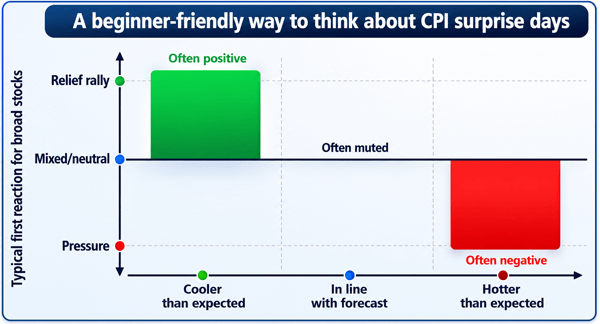
Figure 2: A simplified view of how stocks often react to CPI surprises. Real markets can behave differently.
6. How inflation affects stock prices in practical terms
6.1 Higher interest rates can lower stock valuations
When inflation runs hot, investors may expect higher interest rates. Higher rates can make bonds and cash-like investments more attractive. If a Treasury bill or high-quality bond offers a better yield, some investors demand a lower price or higher expected return to own stocks. That can compress valuation multiples, such as the price-to-earnings ratio.
A simple example: suppose a company is expected to earn $5 per share. If investors are willing to pay 25 times earnings, the stock might trade around $125. If inflation fears push rates higher and investors now pay only 18 times earnings, the same $5 of earnings supports a price around $90. The company did not disappear; the price investors are willing to pay changed.
6.2 Borrowing becomes more expensive for businesses
Many companies borrow money to expand factories, buy inventory, invest in software, finance real estate, or refinance old debt. Higher rates can raise interest expense. Companies with heavy debt, variable-rate debt, or frequent refinancing needs may be more vulnerable.
6.3 Consumer spending can slow
Inflation reduces purchasing power. If a household spends more on essentials, it may delay buying furniture, a car, a vacation, a phone upgrade, or a restaurant meal. That matters because many publicly traded companies depend on discretionary spending.
6.4 Profit margins can shrink
Some companies can raise prices without losing many customers. Others cannot. If costs rise faster than selling prices, profit margins fall. Investors watch earnings calls for comments like “input cost pressure,” “pricing power,” “wage inflation,” and “margin compression.”
6.5 Currency and global earnings can move
Hot inflation can support a stronger currency if investors expect higher rates. A stronger dollar can reduce the value of overseas sales when multinational U.S. companies convert foreign revenue back into dollars. This is one reason large global companies sometimes discuss currency effects in their earnings reports.
7. Why growth stocks often react more than value stocks
Growth stocks, especially technology and innovation-focused companies, are often valued on profits expected many years in the future. When rates rise, those distant profits are discounted more heavily. This does not mean all growth stocks are bad during inflation. It means their valuations can be more sensitive to changes in interest-rate expectations.
Value stocks often have more current earnings, dividends, tangible assets, and lower valuation multiples. Some value sectors may benefit from inflation if they have pricing power or direct exposure to rising commodity prices. But value stocks are not automatically safe. Banks, industrials, retailers, energy companies, and real estate firms each react differently depending on the type of inflation and the policy response.
| Stock type/sector | Why inflation reports matter | Beginner watch point |
|---|---|---|
| High-growth technology | Valuation depends heavily on future earnings and interest rates. | Watch bond yields and guidance about demand. |
| Banks | Higher rates can help lending margins, but recessions and credit losses can hurt. | Watch yield curve, loan growth, and defaults. |
| Consumer discretionary | Customers may cut non-essential purchases when costs rise. | Watch same-store sales, inventory, and margins. |
| Consumer staples | People still buy essentials, but margins depend on pricing power. | Watch whether price increases hurt volume. |
| Energy | Can benefit when energy prices drive inflation, but commodity cycles are volatile. | Watch oil/gas prices and capital discipline. |
| Real estate/REITs | Higher rates can pressure property values and financing costs. | Watch debt maturities and occupancy. |
| Utilities | Often defensive, but bond-like dividends compete with higher yields. | Watch regulated returns and debt costs. |
8. Headline CPI vs core CPI: which one matters more?
Headline CPI includes everything in the basket, including food and energy. Core CPI excludes food and energy because those categories can be volatile. Beginners should not think core inflation is “fake” inflation. People really do pay for food and fuel. The reason investors watch core inflation is that central banks often care about persistent inflation trends, not only temporary jumps in gasoline or food prices.
A hot headline number caused by gasoline may hurt consumers and certain companies, but investors may treat it differently from hot services inflation that suggests broad, sticky price pressure. Shelter, wages, insurance, medical services, and other service categories can matter a lot because they may not reverse quickly.
| Metric | Includes food and energy? | Why it matters |
|---|---|---|
| Headline CPI | Yes | Shows the inflation people feel in daily life. |
| Core CPI | No | Helps investors judge underlying inflation pressure. |
| Month-over-month CPI | Yes or core version | Shows recent momentum. |
| Year-over-year CPI | Yes or core version | Shows how prices changed compared with a year earlier. |
| Supercore/services measures | Usually focuses on services excluding certain categories | Used by some analysts to judge sticky services inflation. |
9. A real-world style example: why a single CPI morning can be noisy
Suppose a CPI report is released at 8:30 a.m. Eastern Time. The headline number is higher than last month, but exactly in line with forecasts. Core inflation is slightly cooler. Shelter inflation is still sticky. Used car prices fall. Energy prices rise. Bond yields initially jump, then reverse as traders decide the core data matters more than the headline.
In the first five minutes, stock-index futures may drop. Thirty minutes later, they may recover. By the closing bell, the market may be up because investors believe the details were less scary than the headline. This is why beginners should be careful about reacting to the first move. The first market reaction is often emotional, algorithmic, and incomplete.
Helpful rule
Do not judge an inflation report only by the headline number. Compare actual vs forecast, then read core inflation, shelter, services, wages context, bond yields, and the market’s rate expectations.
10. How beginners can use inflation reports without overtrading
Most beginners should not try to day trade CPI reports. Inflation-release mornings can be fast, emotional, and full of false moves. A better use is to understand the macro environment and make calmer portfolio decisions.
- Know the release calendar. CPI is usually released monthly by the BLS at 8:30 a.m. Eastern Time. Put major inflation dates on your investing calendar so you are not surprised by volatility.
- Read expectations before the report. The market cares about the gap between actual and forecast, so the forecast matters.
- Watch bond yields. If the 10-year Treasury yield rises sharply after CPI, rate-sensitive stocks may face pressure. If yields fall, growth stocks may get relief.
- Look beyond one month. One report can be noisy. A three-to-six-month trend is usually more useful than one data point.
- Review your sector exposure. A portfolio concentrated in high-growth stocks, real estate, or consumer discretionary names may react differently from a diversified portfolio.
- Check company quality. Companies with pricing power, strong balance sheets, recurring revenue, and manageable debt are often better positioned than fragile companies during inflation stress.
- Avoid making permanent decisions from temporary panic. If your investment plan is long term, one CPI print should rarely be the only reason to buy or sell.
- Beginner checklist before reacting to an inflation report
| Question | Why it matters | Beginner action |
|---|---|---|
| Was CPI above, below, or in line with forecast? | This explains the surprise. | Compare actual, forecast, and previous. |
| Was core inflation also hot or cool? | Core can show sticky inflation pressure. | Do not stop at headline CPI. |
| Which category drove the move? | Energy, shelter, services, and goods tell different stories. | Identify the driver before drawing conclusions. |
| How did bond yields react? | Yields show rate expectations in real time. | Watch 2-year and 10-year yields. |
| What did the Fed recently say? | Policy context changes the market reaction. | Read recent Fed statements and speeches. |
| Does this change my time horizon? | Long-term investors should avoid overreacting. | Update assumptions, not emotions. |
12. Common beginner mistakes
12.1 Thinking high inflation always means stocks must fall
Stocks can rise during inflation if companies grow earnings faster than costs, if inflation was expected, or if investors believe the Fed will not tighten further. The direction depends on expectations, policy, earnings, and valuation.
12.2 Ignoring the bond market
The bond market often gives the clearest immediate signal after inflation data. If yields rise, the market may be pricing tighter policy. If yields fall, it may be pricing softer inflation or slower growth.
12.3 Buying or selling only because of a headline
Headlines are designed to be quick. Investing requires context. A headline may say inflation rose, but the details may show improvement in the categories investors care about most.
12.4 Confusing trading with investing
Trading a CPI release is a short-term speculation. Investing is owning assets based on goals, valuation, quality, diversification, and time horizon. Both involve risk, but they are not the same activity.
12.5 Forgetting personal risk tolerance
A young investor adding to a retirement account may handle volatility differently from someone needing cash in six months. Inflation reports affect markets, but your financial plan should decide how much risk you can take.
13. Practical portfolio lessons from inflation-sensitive markets
Experienced investors often learn that inflation does not affect all assets equally. A diversified portfolio may include stocks from different sectors, high-quality bonds with different maturities, cash reserves, inflation-aware assets, and international exposure. Diversification does not guarantee profits or prevent losses, but it can reduce dependence on one type of macro outcome.
For stock investors, the practical lesson is to focus on business quality. Companies that can raise prices without losing customers, keep debt under control, protect margins, and generate real cash flow tend to be more resilient. During inflation scares, the market often separates durable businesses from story stocks that depend mainly on cheap money and optimistic forecasts.
For long-term investors, dollar-cost averaging can help reduce the temptation to guess every inflation report. Instead of trying to predict each CPI print, investors can contribute regularly, rebalance periodically, and keep enough cash for near-term needs. This is usually more realistic than trying to outsmart professional traders on release day.
14. How inflation reports affect different investors
| Investor type | Main concern | Better approach |
|---|---|---|
| Long-term retirement investor | Volatility may feel scary but time horizon is long. | Keep allocation aligned with goals; avoid panic selling from one report. |
| Dividend investor | Inflation can reduce real income; higher yields can pressure dividend stocks. | Check dividend coverage, debt, and pricing power. |
| Growth investor | Higher rates can compress valuations. | Focus on profitable growth, free cash flow, and reasonable valuation. |
| Short-term trader | CPI days can create opportunity and risk. | Use strict risk controls; avoid oversized bets. |
| Beginner with small portfolio | May overreact to headlines. | Learn the process, diversify, and build an emergency fund first. |
15. Frequently Asked Questions
15.1 Do stocks go down when inflation goes up?
Not always. Stocks often struggle when inflation is higher than expected because investors expect higher interest rates and pressure on profit margins. But stocks can rise if inflation was already expected, if company earnings are strong, or if the report suggests inflation is peaking.
15.2 Why does CPI affect the stock market?
CPI affects the stock market because it influences expectations for Federal Reserve policy, bond yields, business costs, consumer spending, and valuation multiples.
15.3 Is lower inflation always good for stocks?
Lower inflation is often supportive, but not always. If inflation is falling because the economy is weakening quickly, investors may worry about recession and lower earnings.
15.4 What is more important: CPI or interest rates?
They are connected. CPI is one of the reports that shapes interest-rate expectations. Stocks often react to CPI because investors believe it changes what the central bank may do with rates.
15.5 Should beginners buy stocks before a CPI report?
Beginners should be cautious. Buying before CPI is a short-term bet on a data surprise. A long-term investor is usually better served by a diversified plan than by guessing one monthly report.
15.6 Which stocks benefit from inflation?
Companies with pricing power, low debt, essential products, or commodity exposure may handle inflation better. However, there is no guaranteed winner because policy response, valuation, and demand also matter.
15.7 Why do tech stocks react so strongly to inflation?
Many tech and growth stocks are valued on future earnings. Higher interest rates reduce the present value of those future earnings and can pressure high valuation multiples.
15.8 What should I watch on CPI day?
Watch actual vs forecast, core CPI, shelter and services inflation, energy prices, Treasury yields, stock-index futures, and commentary about Federal Reserve expectations.
16. Final takeaway
Stocks react to inflation reports because inflation changes the market’s view of the future. A CPI report can affect interest-rate expectations, bond yields, company costs, profit margins, consumer spending, currency movements, and investor confidence. The key is not simply whether inflation is high or low. The key is whether inflation is hotter or cooler than expected, whether the details show sticky pressure, and how the report changes the path of monetary policy and earnings.
For beginners, the best approach is not to panic or gamble on one report. Use inflation data as a map. It can help you understand why the market is moving, which parts of your portfolio are sensitive to rates, and whether your investment plan is built for different economic conditions. The goal is not to predict every CPI reaction. The goal is to become a calmer, better-informed investor.
Sources Consulted and Checked
The following authoritative sources were consulted and checked while preparing this article to support factual accuracy and provide readers with reliable reference points.
- U.S. Bureau of Labor Statistics, Consumer Price Index homepage and release schedule: https://www.bls.gov/cpi/ and https://www.bls.gov/schedule/news_release/cpi.htm
- U.S. Bureau of Labor Statistics, Consumer Price Index Summary, May 2026 release: https://www.bls.gov/news.release/cpi.nr0.htm
- Federal Reserve Board, Monetary Policy overview: https://www.federalreserve.gov/monetarypolicy.htm
- Federal Reserve Board, Monetary Policy: What are its goals? How does it work?: https://www.federalreserve.gov/monetarypolicy/monetary-policy-what-are-its-goals-how-does-it-work.htm
- Federal Reserve Bank of St. Louis FRED, CPIAUCSL series notes: https://fred.stlouisfed.org/series/CPIAUCSL
- International Monetary Fund research on stock returns and inflation, for broader context: https://www.imf.org/
Reader Advice
This article is provided solely for educational and general informational purposes. It does not constitute personal financial, investment, legal, tax, or professional advice, and it is not a recommendation or solicitation to buy, sell, or hold any security or financial product. Financial markets can be volatile and may react unpredictably to inflation reports, interest-rate expectations, economic conditions, company-specific developments, and other factors.
Before making any financial decision, readers should consider their goals, time horizon, financial circumstances, and risk tolerance, and should seek advice from an appropriately qualified professional when needed. Inflation data, release schedules, policies, market practices, rules, facts, and figures may change over time or differ by jurisdiction and circumstance. Readers should therefore verify current information directly from official and authoritative sources before acting. Past performance and historical market reactions do not guarantee future results.