How Inflation Affects Stocks and Investment Returns
Quick answer: Inflation affects stocks by changing company costs, consumer spending, interest rates, valuation multiples, and the real buying power of your returns. A stock can rise 8% in a year, but if inflation is 5%, your real return is closer to 3% before taxes and fees. The goal is not to “beat inflation” every month. The goal is to build a diversified, low-cost, long-term portfolio that has a realistic chance of protecting and growing purchasing power over time.
1. What inflation means in simple
Inflation means the general price level is rising. The same money buys fewer goods and services than before. If groceries, rent, school fees, fuel, insurance, and medical bills keep getting more expensive, your money is losing purchasing power even if the number in your bank account stays the same.
The most common U.S. inflation gauge is the Consumer Price Index, or CPI. The U.S. Bureau of Labor Statistics describes CPI as the average change over time in prices paid by urban consumers for a market basket of consumer goods and services. That market basket includes everyday spending categories such as food, energy, shelter, transportation, and medical care. In May 2026, for example, CPI-U was reported as 4.2% higher than a year earlier, showing how inflation data can change over time and why investors should check current numbers rather than rely on memory.
For investors, inflation matters because investing is not only about making more dollars. It is about keeping and growing buying power. If your investment account grows from $10,000 to $10,600, that looks like a 6% gain. But if prices also rose 6%, your real-world buying power did not improve much.
1.1 Nominal return vs. real return
A nominal return is the return you see on paper. A real return is what remains after inflation. Beginners often focus only on nominal gains, but real return is what pays for future groceries, housing, tuition, retirement, travel, and healthcare.
| Item | Meaning | Simple example | Why it matters |
|---|---|---|---|
| Nominal return | Your investment gain before inflation | Portfolio rises 8% | Looks good on a statement |
| Inflation rate | How much general prices rose | Prices rise 5% | Raises your cost of living |
| Real return | Your gain after inflation | 8% - 5% ≈ 3% | Shows actual purchasing-power growth |
| After-tax real return | Your gain after inflation and taxes | 3% real return may become lower after tax | Closer to what you truly keep |
A more accurate real-return formula is:
real return = [(1 + nominal return) / (1 + inflation rate)] - 1.
For everyday understanding, subtracting inflation from nominal return is usually close enough when rates are not extreme.
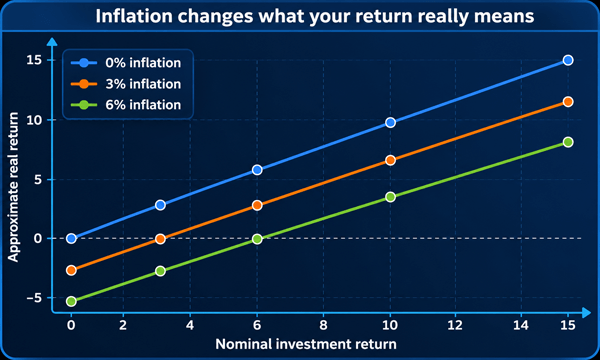
Figure 1: A positive nominal return can become a much smaller real return when inflation is high.
2. How inflation affects stocks
Stocks represent ownership in businesses. Inflation affects businesses through costs, sales, wages, interest rates, taxes, customer behavior, and investor expectations. This is why the relationship between inflation and the stock market is not one-size-fits-all. Sometimes stocks rise during inflation because companies can raise prices. Sometimes stocks fall because costs rise faster than sales, interest rates increase, and investors become less willing to pay high prices for future profits.
2.1 The five main channels
| Inflation channel | What happens | Stock market effect |
|---|---|---|
| Company costs | Raw materials, wages, rent, shipping, and borrowing costs may rise | Profit margins can shrink if prices cannot be raised enough |
| Consumer spending | Households spend more on essentials and less on non-essential items | Defensive sectors may hold up better than discretionary sectors |
| Interest rates | Central banks may raise or keep rates restrictive to cool inflation | Higher discount rates can reduce stock valuations, especially growth stocks |
| Revenue pricing power | Strong brands or essential services may pass costs to customers | Companies with pricing power may be more resilient |
| Investor expectations | Markets reprice future earnings, risk, and economic growth | Volatility often rises when inflation surprises investors |
2.2 Why higher rates often pressure stock prices
Central banks use monetary policy to influence short-term interest rates and broader financial conditions with the aim of supporting stable prices and employment. When inflation is too high, policy may become more restrictive. Higher interest rates can make bonds and cash-like instruments more attractive, increase borrowing costs, and reduce the present value investors place on future corporate profits. That combination can pressure stock prices, even when companies are still profitable.
This effect is often strongest in expensive growth stocks, because much of their expected value comes from profits projected far into the future. When the discount rate rises, those future profits are worth less today. Value stocks, dividend-paying companies, banks, energy firms, and companies selling necessities may behave differently, but no sector is guaranteed to win.
3. Inflation does not hurt every stock the same way
A beginner should avoid the simple rule “inflation is bad for stocks.” The better rule is: inflation changes which businesses are strong, which are fragile, and what price investors are willing to pay for earnings.
| Business type | Possible inflation advantage | Possible inflation problem | Beginner takeaway |
|---|---|---|---|
| Companies with pricing power | Can raise prices without losing many customers | May still face political or customer pushback | Look for durable demand, not just high prices |
| Commodity producers | Revenue may rise when commodity prices rise | Profits can reverse quickly when prices fall | Cyclical, not a permanent inflation cure |
| Banks and lenders | May earn more on lending spreads in some rate environments | Loan losses can rise if economy weakens | Rate sensitivity can cut both ways |
| Consumer staples | Sell essentials like food and household products | Input costs and private-label competition can hurt margins | Often defensive, but valuation matters |
| High-growth tech | Long-term growth can be attractive | Higher rates can compress valuations | Great business can still be a poor buy at too high a price |
| Utilities and REITs | May have regulated pricing or real assets | Debt costs can rise; rate sensitivity may hurt valuations | Income is useful, but leverage matters |
3.1 The practical question: can the company protect margins?
Inflation is a margin test. If a company’s costs rise 8% but it can raise prices only 3%, profits may suffer. If it can raise prices 8% without losing demand, profits may be protected. If it can improve productivity while raising prices, profits may even grow. This is why experienced investors often study gross margin, operating margin, debt levels, inventory costs, customer loyalty, and pricing power during inflationary periods.
4. How inflation affects your investment returns
Inflation affects investors in two ways. First, it can change market prices. Second, it reduces the future buying power of whatever return you earn. The second effect is quiet but powerful.
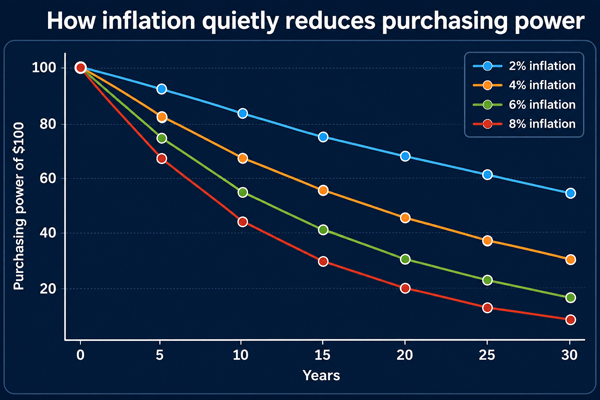
Figure 2: The higher inflation stays, the faster cash loses purchasing power.
4.1 Example: two investors with the same nominal return
| Investor | Portfolio return | Inflation | Approx. real return | What it feels like |
|---|---|---|---|---|
| A | 8% | 2% | 6% | Clear purchasing-power growth |
| B | 8% | 7% | 1% | Account is up, but life still feels expensive |
This is why many people feel confused during inflation. Their salary or investment account may rise, but rent, food, insurance, school fees, and medical costs rise too. The real improvement can be much smaller than the headline number suggests.
5. What beginners should know before investing during inflation
5.1 Cash feels safe, but it has inflation risk
Cash is important for emergencies and short-term goals. However, the SEC warns that inflation risk is a key concern for cash equivalents because inflation can outpace and erode returns over time. For money needed soon, cash may still be the right choice. For long-term wealth building, holding too much cash can quietly reduce buying power.
5.2 Stocks can be an inflation fighter over long periods, but not every year
Businesses can raise prices, grow earnings, innovate, and own productive assets. That gives stocks a better long-term chance than idle cash to grow purchasing power. But stocks are volatile. They can fall sharply during inflation shocks, recessions, rate hikes, or valuation corrections. Beginners should not expect stocks to perfectly hedge inflation month by month.
5.3 Bonds are affected by inflation and interest rates
Traditional bonds can lose market value when interest rates rise. Inflation also reduces the real value of fixed coupon payments. Inflation-linked bonds, such as U.S. Treasury Inflation-Protected Securities, are designed to protect against inflation by adjusting principal based on inflation, but they still have interest-rate risk and can fluctuate in market price if sold before maturity.
5.4 Fees and taxes matter more than beginners think
If inflation is 5%, a nominal 7% return leaves about 2% before taxes and fees. A high expense ratio, frequent trading costs, or tax-inefficient behavior can consume a large part of the real return. Low-cost diversified funds, tax-aware investing, and disciplined rebalancing can make a meaningful difference over time.
5.5 Your personal inflation rate may differ from official inflation
CPI is useful, but your life may not match the average basket. A renter, homeowner, student, retiree, parent, frequent driver, or person with high medical costs may experience inflation differently. Good planning uses official inflation data as a guide, then adjusts for your own spending reality.
6. Practical inflation-aware investing strategies
The goal is not to guess next month’s inflation number. The goal is to build a portfolio that can survive different inflation environments without forcing emotional decisions.
6.1 Keep an emergency fund separate from investments
Before investing aggressively, keep enough cash for emergencies, near-term bills, and planned expenses. This prevents you from selling stocks during a bad market just to pay rent, tuition, repairs, or medical costs. Inflation may reduce cash’s long-term purchasing power, but liquidity has its own value.
6.2 Use broad diversification
Diversification means not putting all your money in one stock, sector, country, or asset class. The SEC explains diversification with the classic idea of not putting all your eggs in one basket. During inflation, diversification matters because different assets react differently to rates, growth, commodity prices, currencies, and consumer behavior.
6.3 Prefer quality businesses over inflation stories
A common beginner mistake is buying whatever is marketed as an “inflation hedge” after inflation is already in the news. Instead, focus on quality: strong balance sheets, consistent cash flow, sensible debt, durable demand, and honest management. A company with pricing power and low leverage may handle inflation better than a trendy stock with weak finances.
6.4 Watch valuation, not just growth
Inflation often increases the importance of valuation. A great company bought at an extreme price can deliver poor returns if interest rates rise or earnings disappoint. Beginners should learn simple valuation measures such as price-to-earnings ratio, free cash flow yield, dividend yield, and revenue growth quality. These tools do not predict the future perfectly, but they reduce blind speculation.
6.5 Consider inflation-linked assets carefully
Inflation-linked bonds, certain real assets, infrastructure, commodities, and real estate can help in some inflation environments. But every hedge has trade-offs. Commodities can be volatile. Real estate can be hurt by higher mortgage rates. TIPS can fluctuate with real interest rates. The right mix depends on time horizon, liquidity needs, tax situation, and risk tolerance.
6.6 Invest regularly instead of trying to time inflation
Dollar-cost averaging means investing a fixed amount at regular intervals. It does not guarantee profit, but it reduces the pressure to pick the perfect day. This is useful during inflation because markets often react quickly to new CPI data, central bank comments, earnings updates, and recession fears. A rules-based plan helps reduce emotional buying and selling.
7. Inflation indicators investors should watch
Beginners do not need to become economists, but they should understand the main indicators that can move markets.
| Indicator | What it tells you | Why stocks care | Beginner use |
|---|---|---|---|
| CPI | Consumer price inflation | Affects real returns, rates, wages, and sentiment | Track trend, not one month only |
| Core inflation | Inflation excluding volatile food and energy | Shows underlying pressure | Useful for policy expectations |
| Interest rates | Cost of borrowing and return on safer assets | Affects valuations and company debt costs | Understand rate-sensitive sectors |
| Wage growth | Labor cost and consumer income | Can support spending but pressure margins | Watch alongside productivity |
| Oil and commodity prices | Input costs for many businesses | Can boost energy stocks and hurt cost-sensitive firms | Do not assume all stocks benefit |
| Earnings guidance | Company view of demand and margins | Shows inflation impact at business level | Read management commentary |
8. Beginner mistakes to avoid
- Confusing nominal gains with real wealth. A positive account return can still be weak after inflation, fees, and taxes.
- Chasing hot inflation trades. Buying commodities, energy stocks, or real estate only after big price moves can create poor timing risk.
- Keeping too much long-term money in cash. Cash is useful, but it may not protect long-term purchasing power.
- Ignoring debt. Companies and households with floating-rate or refinancing needs can suffer when rates rise.
- Thinking one asset always hedges inflation. Inflation can come with strong growth, recession, supply shocks, currency weakness, or policy mistakes. Different environments produce different winners.
- Panic selling because prices feel high. Inflation is uncomfortable, but emotional decisions often lock in losses. Use a plan.
9. A simple inflation-ready portfolio framework
There is no universal perfect portfolio. A reasonable beginner framework starts with goals and time horizon, then chooses assets accordingly.
| Goal | Time horizon | Main risk | Practical approach |
|---|---|---|---|
| Emergency fund | 0-12 months | Need money quickly | Cash or high-quality liquid savings, even if real return is low |
| Near-term purchase | 1-3 years | Market loss before spending date | Cash, short-term deposits, short-duration high-quality bonds |
| Medium-term goal | 3-7 years | Inflation plus volatility | Balanced mix; avoid extreme stock concentration |
| Retirement/wealth building | 7+ years | Inflation eroding lifestyle over decades | Diversified stocks, bonds, and possibly inflation-aware assets; rebalance regularly |
9.1 A practical checklist before buying anything
- What is this money for, and when will I need it?
- What inflation rate would make my plan uncomfortable?
- What is my expected real return after fees and taxes?
- Does this investment depend on rates falling, inflation staying high, or one company performing perfectly?
- Can I hold through a 20-40% stock market decline without selling in panic?
- Am I diversified across businesses, sectors, and asset types?
- Do I understand the product, fees, liquidity, and risks?
10. Practical examples
10.1 The salary saver
A worker saves $300 per month in cash because stock markets feel risky. Inflation is 5%. After one year, the worker has $3,600, which is good discipline. But the buying power of that money has fallen if prices rose. A better plan may be to keep emergency savings in cash and invest long-term surplus gradually into a diversified portfolio.
10.2 The growth stock buyer
A beginner buys an expensive growth stock because revenue is rising fast. Inflation stays high and interest rates rise. The company still grows, but the stock falls because investors no longer want to pay such a high valuation for future profits. Lesson: business growth and stock returns are related, but valuation and rates matter.
10.3 The dividend investor
A retiree buys a stock yielding 4%. Inflation is 6%. The income feels helpful, but unless the dividend grows, the real income is shrinking. Dividend investors should look beyond current yield and study dividend safety, payout ratio, debt, and whether the business can grow cash flow faster than inflation.
10.4 The disciplined long-term investor
An investor holds a diversified portfolio, keeps emergency cash, invests monthly, reviews allocation yearly, and avoids prediction-based trading. Some years inflation hurts returns. Other years stocks recover. Over time, the investor’s biggest advantage is not forecasting; it is consistency, diversification, low costs, and avoiding panic decisions.
11. Helpful facts and comparisons
| Question | Beginner-friendly answer | Practical takeaway |
|---|---|---|
| Is inflation always bad for stocks? | No. It depends on level, speed, expectations, interest rates, margins, and valuation. | Study the type of inflation, not only the headline number. |
| Can stocks beat inflation? | Over long periods, diversified equities have a better chance than cash, but they can lag inflation for shorter periods. | Use a long-term plan and avoid short-term promises. |
| Are TIPS risk-free? | They are backed by the U.S. government and adjust for inflation, but market prices can move with real rates. | Match them to time horizon and understand liquidity. |
| Should I buy gold or commodities? | They may help in some inflation shocks but can be volatile and produce no guaranteed income. | Use carefully, not as an all-in solution. |
| What is the biggest beginner risk? | Reacting emotionally to inflation headlines and market volatility. | Create rules before stress arrives. |
12. How to use this knowledge as a beginner
Here is a simple step-by-step way to apply the topic without pretending to predict the economy perfectly:
- Calculate your personal inflation pressure. List your biggest expenses and compare them with last year.
- Separate short-term money from long-term money. Do not invest rent, tuition, or emergency funds in volatile assets.
- Measure returns in real terms. Ask: after inflation, fees, and taxes, am I actually growing buying power?
- Build a diversified core. Broad stock funds, quality bonds, and cash reserves are usually better starting points than concentrated bets.
- Add inflation-aware assets only if you understand them. TIPS, real assets, and commodities can play roles, but they are tools, not magic.
- Rebalance instead of panic. If one asset rises sharply, trim back to your target; if stocks fall, review whether your long-term plan still makes sense.
- Keep learning from company reports. Inflation shows up in revenue, margins, wages, debt costs, inventory, and customer demand.
13. Conclusion
Inflation affects stocks and investment returns by changing business costs, consumer behavior, interest rates, valuations, and the real value of money. For beginners, the most important lesson is simple: do not judge your progress only by nominal returns. Judge it by purchasing power.
A smart inflation-aware investor keeps emergency cash, invests long-term money in a diversified way, pays attention to valuation and fees, understands real returns, and avoids emotional reactions to headlines. Inflation is not something investors can control. But with a practical plan, they can reduce its damage and improve their chance of building real wealth over time.
Sources Consulted and Checked
The following sources were consulted and checked while preparing this article to support accuracy and reliability. Readers should use the latest official publications when verifying time-sensitive information.
- U.S. Bureau of Labor Statistics, Consumer Price Index information and CPI FAQ: CPI measures average price changes for a market basket of consumer goods and services.
- U.S. Bureau of Labor Statistics, Consumer Price Index Summary, May 2026: CPI-U increased 4.2% over the prior 12 months.
- Federal Reserve, The Fed Explained: Monetary policy influences short-term interest rates and financial conditions to support stable prices and maximum employment.
- U.S. Securities and Exchange Commission, Beginners’ Guide to Asset Allocation, Diversification, and Rebalancing: inflation risk can erode returns, and diversification helps manage risk.
- TreasuryDirect, Treasury Inflation-Protected Securities: TIPS are designed to protect against inflation and are issued in 5-, 10-, and 30-year terms.
- International Monetary Fund Working Paper, Stock Returns and Inflation Redux: empirical relationship between inflation and real stock returns varies by policy regime and conditions.
- CFA Institute commentary and professional learning material: inflation assumptions matter in asset return expectations and portfolio construction.
Reader Advice
This article is provided solely for educational and informational purposes and does not constitute personal financial, investment, tax, accounting, or legal advice. It does not recommend or endorse any particular stock, fund, security, strategy, or course of action. Investment decisions should be based on your objectives, time horizon, financial circumstances, liquidity needs, risk tolerance, fees, taxes, and applicable local laws and regulations.
Inflation figures, interest rates, market conditions, product terms, and regulatory rules can change, sometimes quickly. Before acting, verify current facts and figures through official or otherwise authoritative sources, read the relevant product documents, and consider obtaining advice from a suitably qualified and regulated professional. All investments involve risk, including possible loss of principal, and past performance does not guarantee future results.