What Is a Bear Market? Definition, Causes & Examples
1. What Is a Bear Market?
A bear market is a period when stock prices fall sharply and investors become pessimistic about the future. In simple words, it is the opposite of a hot market. Instead of people rushing to buy because prices keep rising, many people become afraid, sell investments, and wait on the sidelines.
The common bear market definition is a decline of 20% or more from a recent high in a broad market index, such as the S&P 500, Dow Jones Industrial Average, Nasdaq Composite, or another major stock market benchmark. Investor.gov, the U.S. Securities and Exchange Commission's investor education site, describes a bear market as a time when stock prices are declining and sentiment is pessimistic, generally involving a broad market index falling 20% or more over at least two months.
A bear market does not mean every single stock falls exactly 20%. Some companies may fall much more. Some defensive companies may fall less. A few may even rise. The key idea is that the overall market trend has turned negative.
1.1 Bear Market Meaning in simple words
Imagine a shopping mall where almost every store suddenly has fewer customers. Some stores still do okay, but the mood is weak. Store owners cut prices, people worry about jobs, and shoppers delay big purchases. A bear market is similar, but in financial markets. Investors worry about earnings, inflation, interest rates, recessions, wars, banking problems, or overvalued stocks. As confidence drops, prices drop too.
For a beginner, the most important point is this: a bear market is not just a bad day in the stock market. It is a meaningful decline that can last weeks, months, or sometimes longer. It changes investor behavior.
1.2 Simple Definition
Bear market: A broad market decline of about 20% or more from a recent high, usually accompanied by fear, pessimism, weaker economic expectations, and lower investor confidence.
Bull market: A period when prices generally rise and investor confidence is strong.
Correction: A smaller decline, often around 10% to less than 20%, that may happen inside a longer bull market.
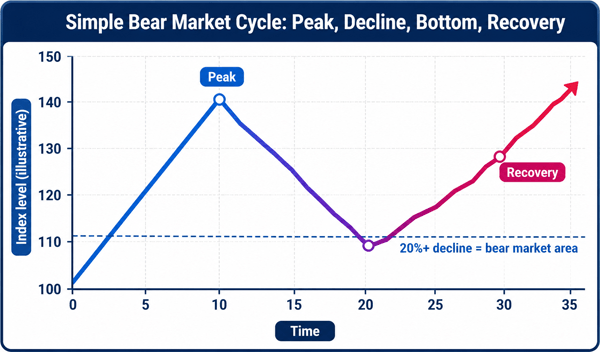
Figure 1: A simplified market cycle showing how a normal rising market can turn into a bear market and later recover.
| Term | Typical decline | What it usually means | Beginner takeaway |
|---|---|---|---|
| Pullback | About 5% to 10% | A short-term drop that can happen often. | Do not overreact to every red week. |
| Correction | About 10% to less than 20% | A meaningful decline, often caused by valuation concerns or temporary fear. | Review your plan, but avoid panic selling. |
| Bear market | 20% or more | A deeper, broader decline with negative sentiment. | Focus on risk, cash needs, quality, diversification, and timeline. |
| Crash | Very fast and sharp decline | A sudden market shock, sometimes inside a bear market. | Avoid forced decisions during extreme fear. |
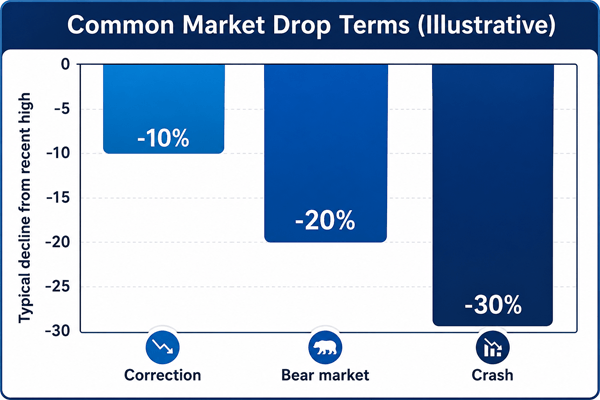
Figure 2: A correction and a bear market are not the same. The 20% level is a common rule of thumb, not a magic signal.
2. How a Bear Market Works
Bear markets often develop through a chain reaction. First, investors begin to doubt the future value of companies. That doubt may come from slowing earnings, high interest rates, high inflation, falling consumer demand, geopolitical risk, or an asset bubble bursting. Then selling pressure increases. As prices fall, more investors become nervous. Some sell to avoid further losses. Others sell because they use margin or need cash. News headlines become more negative, which can push sentiment even lower.
This cycle can feed on itself for a while. Lower prices reduce confidence. Lower confidence creates more selling. More selling creates lower prices. Eventually, prices become attractive enough, economic conditions stabilize, or investors begin to see better future earnings. That is when the market starts building a bottom, although the bottom is usually obvious only after it has already happened.
3. Main Causes of Bear Markets
Bear markets can have one major cause or several causes working together. The most common causes are explained below.
| Cause | How it can trigger a bear market | Practical example |
|---|---|---|
| Recession risk | Investors expect lower company profits, layoffs, and weaker consumer spending. | If households buy fewer cars, phones, homes, and services, company earnings can fall. |
| High inflation | Costs rise, consumers feel squeezed, and central banks may raise rates. | A company may sell the same number of products but earn less profit because wages, energy, and materials cost more. |
| Rising interest rates | Bonds and cash become more attractive, borrowing costs rise, and stock valuations may fall. | A growth stock valued on profits expected far in the future may fall when discount rates rise. |
| Overvaluation | Prices run far ahead of earnings, then investors reset expectations. | A popular sector trades at extreme prices, then drops when growth slows. |
| Credit or banking stress | Lenders become cautious, businesses struggle to access capital, and fear spreads. | Banks tighten lending standards, making it harder for companies and consumers to borrow. |
| Geopolitical shock | Wars, sanctions, supply disruptions, or trade conflicts create uncertainty. | Oil prices spike after a conflict, raising costs for consumers and businesses. |
| Panic and forced selling | Investors sell because others are selling, or because margin calls force them to. | A leveraged trader must sell good assets to cover losses elsewhere. |
4. Bear Market vs Bull Market
The easiest way to understand a bear market is to compare it with a bull market. A bull market is when prices trend higher and investors generally feel confident. A bear market is when prices trend lower and fear dominates.
The difference is not only price. It is psychology. In a bull market, bad news is often ignored because investors believe the future will be better. In a bear market, even good news may be doubted because investors expect more pain.
| Feature | Bull market | Bear market |
|---|---|---|
| Price trend | Generally rising | Generally falling |
| Investor mood | Optimistic, confident, risk-seeking | Fearful, cautious, pessimistic |
| Common behavior | Buying dips, chasing growth, taking more risk | Selling rallies, holding cash, reducing risk |
| Media tone | New highs, booming sectors, success stories | Losses, recession fears, layoffs, market stress |
| Beginner risk | Overconfidence and buying too late | Panic selling and giving up too early |
5. Real Bear Market Examples
- Dot-com bear market: After internet and technology stocks became extremely expensive in the late 1990s, the bubble burst. Many companies with weak business models collapsed. The lesson for beginners is simple: a popular story is not the same as a strong business.
- Global financial crisis bear market: The 2007-2009 crisis was tied to housing, excessive leverage, credit stress, and banking system weakness. Many investors learned that diversification, emergency cash, and avoiding too much debt matter just as much as choosing investments.
- COVID-19 bear market: In early 2020, markets fell extremely quickly as the pandemic shocked the global economy. The decline was sharp, but the recovery was also unusually fast after major policy support. The lesson: the market can move faster than emotions can process.
- 2022 bear market: High inflation, rising interest rates, expensive growth stocks, and recession worries pushed major indexes lower. This period reminded investors that even high-quality companies can fall when valuations are too high or interest rates rise.
These examples show that bear markets do not all look the same. Some come from bubbles. Some come from recessions. Some come from sudden shocks. Some recover quickly; others take years.
| Bear market period | Main trigger | Beginner lesson |
|---|---|---|
| Dot-com crash, 2000-2002 | Technology bubble and unrealistic growth expectations | Do not buy only because a sector is popular. |
| Global financial crisis, 2007-2009 | Housing bubble, leverage, banking and credit stress | Understand debt, diversification, and liquidity risk. |
| COVID-19 crash, 2020 | Pandemic shock and economic shutdown fears | Fast crashes can also have fast rebounds; panic timing is dangerous. |
| 2022 market decline | Inflation, rising rates, valuation reset | Interest rates affect stock valuations, especially growth stocks. |
6. What Beginners Should Know First
A beginner should know five things about bear markets. First, they are normal. They feel abnormal when you are living through them, but long-term stock investors have always faced downturns. Second, your personal timeline matters more than the headline. Money needed next month should not be treated like money you will not need for 20 years. Third, losses are not equal for everyone. A retiree withdrawing from a portfolio faces different risks than a young investor adding money every month. Fourth, quality matters. Strong balance sheets, durable cash flows, and diversified funds usually matter more during stress. Fifth, the market usually turns before the news feels good. Waiting for perfect comfort can mean missing part of the recovery.
7. How Investors Can Use a Bear Market
A bear market is not pleasant, but it can be useful if approached carefully. Long-term investors may use lower prices to buy quality assets gradually. People with taxable accounts may review tax-loss harvesting opportunities with a qualified tax professional. Investors may rebalance by selling assets that held up better and buying assets that fell below their target allocation. Younger investors may increase retirement contributions if their job and emergency fund are stable.
8. What Not to Do in a Bear Market
Do not sell everything just because headlines are scary. Do not use emergency money to buy risky assets. Do not borrow money to catch a falling market. Do not chase complicated products because they promise protection. Do not assume that a stock is cheap only because it fell 50%. A weak company can fall 50% and then fall another 50%.
9. Beginner Bear Market Action Plan
- Separate short-term money from long-term money. Cash needed for rent, bills, tuition, medical needs, or a house down payment should not be exposed to major stock risk.
- Check your emergency fund. A bear market often overlaps with job and business uncertainty. Cash reserves reduce the chance that you must sell investments at low prices.
- Review your asset allocation. If your portfolio makes you unable to sleep, it may have been too aggressive before the bear market began.
- Rebalance carefully. If stocks fell and bonds or cash held up better, rebalancing can bring the portfolio back to target.
- Keep investing if your plan supports it. Regular contributions to retirement accounts can buy more shares when prices are lower.
- Document your decisions. Write down why you are buying, holding, or selling. This reduces impulsive moves.
| Investor situation | Main risk | Practical response |
|---|---|---|
| New investor with stable income | Panic selling before learning market cycles | Start small, use diversified funds, automate contributions. |
| Investor saving for a home in 1-3 years | Money may be needed before recovery | Keep short-term goals mostly in cash or low-risk options. |
| Retirement saver with 20+ years | Stopping contributions after prices fall | Review risk, but consider continuing disciplined contributions. |
| Retiree taking withdrawals | Selling assets at depressed prices | Use cash buckets, reduce unnecessary withdrawals, review income plan. |
| Business owner | Income and investments may fall together | Build liquidity before adding risk. |
10. Dollar-Cost Averaging During a Bear Market
Dollar-cost averaging means investing a fixed amount at regular intervals instead of trying to invest everything at the perfect bottom. For example, instead of investing $12,000 on one day, an investor may invest $1,000 per month for 12 months. This does not guarantee profit or prevent loss, but it can reduce the pressure of timing the market.
For beginners, dollar-cost averaging works best when paired with diversified investments, a long time horizon, and money that is not needed soon.
11. Should You Buy Stocks in a Bear Market?
Buying during a bear market can be smart for long-term investors, but only when the basics are in place. You should have emergency savings, manageable debt, a clear timeline, and a portfolio that matches your risk tolerance. Buying just because prices are down is not enough. The investment still needs to fit your goals.
A practical rule: Buy assets you would still be willing to own if the market fell another 15% after you bought them. If that thought terrifies you, your position size may be too large.
12. Bear Market and Recession: Are They the Same?
No. A bear market is a financial market decline. A recession is an economic decline. They are related, but not identical. A bear market can happen before a recession, during a recession, or without an official recession. Stock markets often move based on expectations, so they may start falling before economic data looks terrible. They may also recover before the economy feels healthy again.
| Question | Bear market | Recession |
|---|---|---|
| What declines? | Stock or asset prices | Economic activity |
| Measured by | Market indexes and investor sentiment | GDP, employment, income, production, sales and other economic indicators |
| Who declares it? | No single official authority; market convention is often 20%+ decline | In the U.S., NBER identifies recession periods |
| Can one happen without the other? | Yes | Yes |
13. How Long Does a Bear Market Last?
There is no fixed length. Some bear markets are short and violent. Others are slow and exhausting. The most honest answer is that nobody knows in advance. That is why a plan matters more than a prediction.
13.1 How to Tell If a Bear Market May Be Ending
14. Best Investments During a Bear Market
There is no single best investment for every person. For many beginners, broad low-cost index funds or ETFs are simpler than trying to pick individual winners. Conservative investors may prefer more cash, Treasury bills, high-quality bonds, or diversified balanced funds. More experienced investors may evaluate quality companies with strong cash flow and manageable debt.
14.1 Risk Management Checklist
Before making any investment move in a bear market, ask: Do I need this money within the next three years? Do I have emergency savings? Is my job or business income stable? Am I diversified across companies, sectors, and asset classes? Do I understand what I own? Would I still hold this investment if it dropped further? Have I considered taxes, fees, and account type?
15. Common Myths About Bear Markets
- A bear market means the economy is doomed. Reality: markets and economies are connected, but markets often price in fear before the worst data arrives.
- You should sell and wait for the bottom. Reality: bottoms are usually clear only after the market has already moved up.
- Every fallen stock is a bargain. Reality: some companies fall because their business is permanently damaged.
- Young investors should ignore risk. Reality: young investors may have more time, but they still need emergency savings and emotional discipline.
- Financial advisors can predict the bottom. Reality: good advisors focus more on planning, risk management, taxes, and behavior than on perfect market timing.
| Myth | Better way to think |
|---|---|
| I will buy when the news is good. | Markets often recover before headlines feel comfortable. |
| Cash is always safest. | Cash protects short-term needs, but inflation can reduce long-term purchasing power. |
| A 50% drop means a 50% recovery gets me even. | A 50% loss requires a 100% gain to recover. |
| Diversification failed if everything fell. | Diversification does not prevent losses; it aims to reduce concentration risk. |
16. Practical Example: Two Beginner Investors
Aisha and Bilal both invest $500 per month. A bear market begins and their portfolios fall 25%. Aisha stops investing, sells half her portfolio, and waits for confidence to return. Bilal checks his emergency fund, confirms he does not need the money for 15 years, and continues investing monthly into a diversified index fund.
17. Frequently Asked Questions
- What is a bear market in simple terms? A bear market is when the overall market falls a lot, commonly 20% or more from a recent high, and investors become pessimistic.
- Is a bear market bad? It can be painful, especially for people who need money soon or carry too much risk. But for long-term investors with stable finances, it can also create better future buying opportunities.
- Can you make money in a bear market? Some investors can, but it is difficult and risky. Beginners should focus first on protecting their plan, avoiding panic, and investing gradually if appropriate.
- Should I sell during a bear market? Not automatically. Selling may make sense if your goals changed, you need to reduce risk, or you own weak investments. Selling only because of fear can lock in losses and create the challenge of when to buy again.
- How often do bear markets happen? They happen repeatedly across market history, but not on a fixed schedule. Investors should assume downturns are part of the journey.
- What is the safest move in a bear market? The safest move depends on your situation. For many people, it is to keep enough cash for short-term needs, avoid forced selling, stay diversified, and make investment decisions based on a written plan rather than emotion.
18. Final Takeaway
A bear market is one of the hardest parts of investing because it tests both your portfolio and your emotions. The definition is simple: a broad decline of about 20% or more with pessimistic sentiment. But living through one is not simple. Prices fall, news gets louder, and confidence disappears.
Sources Consulted and Checked
The following sources were consulted and checked while preparing this article to support factual accuracy and clarity.
- Investor.gov, Bear Market glossary: https://www.investor.gov/introduction-investing/investing-basics/glossary/bear-market
- FINRA, Key Terms for Tough Times: The Vocabulary of Stressed Markets: https://www.finra.org/investors/insights/key-terms-tough-times-vocabulary-stressed-markets
- Fidelity, Bear Markets and the Business Cycle: https://www.fidelity.com/viewpoints/market-and-economic-insights/bear-markets-the-business-cycle-explained
- Charles Schwab, How to Invest During a Bear Market: https://www.schwab.com/learn/story/how-to-invest-bear-market
- NBER Business Cycle Dating information: https://www.nber.org/research/business-cycle-dating
Reader Advice
This article is provided solely for educational and informational purposes. It does not constitute personalized investment, tax, legal, accounting, or other professional advice, and it should not be treated as a recommendation to buy, sell, or hold any investment. Financial markets involve risk, including the possible loss of principal.
Before making a financial decision, readers should consider their own objectives, time horizon, financial position, and risk tolerance and, where appropriate, seek advice from qualified professionals. Market definitions, regulations, tax rules, economic data, product terms, and other facts may change over time or vary by country, institution, and individual circumstances. Readers should therefore verify material facts, figures, rules, and current requirements through relevant official or primary sources before acting.