What Is a Bull Market? Definition, Causes, and Examples
1. Quick Answer: What Is a Bull Market?
A bull market is a period when investment prices are generally rising and investors feel confident about the future. In the stock market, many professionals use a practical rule of thumb: a broad market index, such as the S&P 500, is often called a bull market when it rises 20% or more from a recent low. The idea is not that every stock goes up every day. It means the overall trend is upward, optimism is improving, and more investors are willing to buy.
For a beginner, think of a bull market like a season of strong tailwind. Good companies may find it easier to raise capital, investors may feel more comfortable taking risk, and account balances may grow. But a tailwind is not a guarantee. Some stocks can still fall, overhyped investments can crash, and buying blindly after prices already rose can lead to painful losses.
Simple Definition A bull market means prices are rising across a market for a sustained period, usually because investors expect better earnings, stronger economic growth, lower interest rates, or improving business conditions.
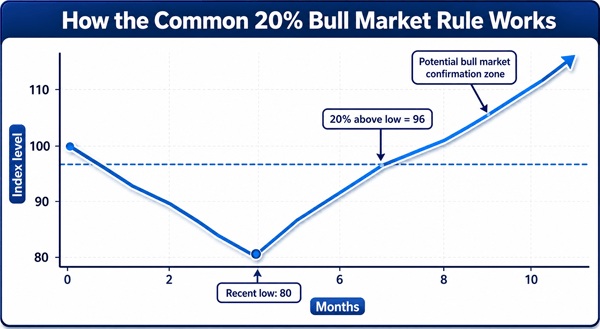
Figure 1: A simple illustration of the common 20% bull market rule. This is a teaching example, not a prediction.
2. Bull Market Meaning in Simple Words
The word “bull” is used because a bull attacks by thrusting its horns upward. In market language, “bullish” means someone expects prices to rise. A “bull run” is a strong, extended rise. A “bull trap” is when prices appear to start a new uptrend but quickly reverse lower.
Bull markets can happen in stocks, real estate, bonds, commodities, crypto, or a single sector such as technology or energy. However, when most people say “the market is in a bull market,” they usually mean a broad stock index is rising.
Term |
Easy meaning |
Beginner example |
|---|---|---|
Bull market |
A broad, sustained rise in prices |
The S&P 500 rises 20% from a recent low and continues trending higher. |
Bullish |
Expecting prices to rise |
An investor is bullish on bank stocks because profits are improving. |
Bull run |
A long, strong upward move |
Technology stocks rise for several years as earnings grow. |
Market rally |
A shorter upward move |
Stocks bounce 8% after a sharp fall. It may or may not become a bull market. |
Bull trap |
A fake-looking recovery that reverses |
Beginners buy after a quick jump, but prices fall again. |
3. How a Bull Market Works
A bull market usually starts before the news feels perfect. This surprises beginners. Prices often begin rising when investors believe the worst is ending, not when the economy already looks strong. As confidence improves, more buyers enter, companies may report better earnings, and rising prices attract even more attention.
A typical bull-market chain looks like this:
- Bad news starts becoming “less bad.” Inflation may cool, job losses may slow, or central banks may stop raising rates.
- Professional investors begin buying earlier than the crowd because they expect future improvement.
- Broad indexes rise and break above important levels. Media coverage becomes more positive.
- Retail investors notice account balances recovering and begin adding money.
- Late in the cycle, excitement can turn into overconfidence. People may chase hot stocks, use too much leverage, or ignore valuation.
Practical insight from investor behavior Many beginners feel safest after prices have already risen a lot, because the news looks better. Experienced investors know this is also when discipline becomes more important. A rising market can reward patience, but it can punish emotional chasing.
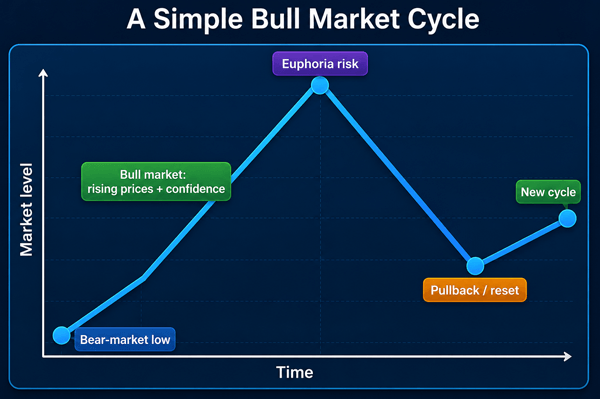
Figure 2: Bull markets often move through recovery, optimism, stronger participation, and sometimes overconfidence.
4. What Causes a Bull Market?
No single cause creates every bull market. Most bull markets are powered by a mix of better earnings, easier financial conditions, investor optimism, and improving economic expectations. Below are the most common drivers.
Cause |
Why it can push markets higher |
What beginners should watch |
|---|---|---|
Strong corporate earnings |
If companies earn more, investors may be willing to pay higher prices for their shares. |
Revenue growth, profit margins, earnings guidance, sector leadership. |
Economic growth |
A healthy economy can support consumer spending, hiring, investment, and business expansion. |
GDP trends, employment data, consumer confidence, manufacturing and services activity. |
Lower or stable interest rates |
Lower rates can make borrowing cheaper and make stocks more attractive versus cash or bonds. |
Central bank policy, bond yields, mortgage rates, credit conditions. |
Falling inflation |
Lower inflation can improve consumer purchasing power and reduce pressure on companies. |
Inflation reports, wage growth, commodity prices. |
New technology or productivity boom |
Innovation can create new profit pools and raise expectations for future growth. |
AI, cloud computing, semiconductors, healthcare innovation, energy transition themes. |
Investor psychology |
Optimism itself can attract more buying, especially after a painful bear market. |
Sentiment surveys, fund flows, media narratives, IPO activity. |
Government or central-bank support |
Stimulus, tax changes, liquidity support, or rate cuts can improve market confidence. |
Policy announcements, fiscal spending, liquidity conditions. |
5. Bull Market vs Bear Market vs Correction
Beginners often mix up these three terms. The difference is mainly direction, size, and mood.
Market condition |
Common rule of thumb |
Investor mood |
Best beginner response |
|---|---|---|---|
Bull market |
Prices rise 20% or more from a recent low and keep trending higher. |
Confidence, optimism, sometimes greed. |
Stay invested according to plan, rebalance, avoid chasing. |
Bear market |
A broad index falls 20% or more from a recent high, often with pessimism. |
Fear, uncertainty, panic selling. |
Review risk, keep emergency cash, avoid forced selling, consider dollar-cost averaging. |
Correction |
A decline of about 10% from a recent high. |
Concern, but usually less panic than a bear market. |
Check whether your plan still fits; do not assume every dip is a bargain. |
Pullback |
A smaller short-term drop. |
Normal nervousness. |
Expect volatility; avoid overtrading. |
6. Real-World Bull Market Examples
Historical examples help readers understand that bull markets are not all the same. Some are driven by innovation, some by recovery after crisis, and some by easier financial conditions. Here are practical examples.
Example |
What happened |
Main lesson |
|---|---|---|
Post-2009 U.S. bull market |
After the global financial crisis, U.S. stocks entered a long recovery supported by low interest rates, earnings growth, and improving confidence. |
The best buying opportunities often feel uncomfortable at the beginning. |
2020 pandemic rebound |
After a rapid crash, markets recovered as policy support, reopening expectations, and technology demand boosted confidence. |
Markets can turn before everyday life feels normal. Timing the exact bottom is extremely difficult. |
2022 low to 2024-2025 rally |
After inflation and rate-hike fears pressured stocks in 2022, enthusiasm around earnings resilience, artificial intelligence, and future rate cuts helped lift major indexes. |
New bull markets often begin when expectations improve, but leadership may be concentrated in a few sectors. |
Sector bull market |
A sector such as technology, energy, or healthcare can experience a bull market even if the broader market is mixed. |
Do not confuse a hot sector with a healthy whole-market trend. Concentration risk matters. |
7. How Beginners Can Use a Bull Market
The goal is not to “beat everyone” during a bull market. For most beginners, the goal is to use the favorable environment to build wealth without developing bad habits. A bull market can help you grow your portfolio, but it can also tempt you into overconfidence.
- Build a written investing plan before buying. Decide your goal, timeline, monthly contribution, asset allocation, and risk limit.
- Prefer diversified funds for your core portfolio. Broad index funds and ETFs can reduce single-company risk compared with betting everything on one stock.
- Use dollar-cost averaging if you are nervous. Investing a fixed amount regularly can reduce the pressure to guess the perfect entry point.
- Rebalance periodically. If stocks rise and become too large a share of your portfolio, rebalancing helps bring risk back to your target.
- Keep an emergency fund separate. Money needed for rent, medical needs, tuition, or short-term bills should not depend on a bull market continuing.
- Avoid leverage as a beginner. Margin loans, options, and leveraged ETFs can magnify losses quickly.
- Write down why you bought each investment. This helps you avoid holding a weak investment simply because the market mood is positive.
Beginner goal |
Suitable approach |
Avoid |
|---|---|---|
Long-term wealth building |
Broad stock index funds, diversified ETFs, retirement accounts, regular contributions. |
Trying to predict daily market moves. |
Learning stock investing |
Small satellite positions after research, while keeping a diversified core. |
Putting most savings into one “hot” stock. |
Retirement planning |
Age-appropriate asset allocation, tax-advantaged accounts, periodic review. |
Changing the whole plan based on headlines. |
Short-term goal under 3 years |
Cash, high-quality short-duration savings/income tools depending on country and risk needs. |
Investing money you cannot afford to see fall. |
8. Bull Market Investment Strategies: Practical but Honest
A responsible bull-market strategy balances participation with protection. The market may be rising, but risk has not disappeared.
8.1 Buy and hold quality assets
Buy-and-hold means owning investments through normal ups and downs instead of reacting to every headline. This often works best with diversified funds or high-quality companies whose earnings and balance sheets can support long-term growth.
8.2 Dollar-cost averaging
Dollar-cost averaging means investing a fixed amount at regular intervals, such as monthly. In a bull market, it can feel frustrating because prices keep rising, but it prevents paralysis. It also reduces the risk of investing all your money right before a pullback.
8.3 Rebalancing
Rebalancing is the habit of trimming what has grown too large and adding to what is underweight. Example: if your target is 70% stocks and 30% bonds/cash-like assets, a strong bull market may push you to 82% stocks. Rebalancing brings risk back under control.
8.4 Sector awareness, not sector obsession
Every bull market has leaders. In one cycle, banks may lead; in another, technology, energy, or industrials. It is fine to notice leadership, but beginners should avoid building a portfolio around only one popular theme. The more exciting a story becomes, the more important valuation and risk become.
8.5 Tax-aware investing
Bull markets can create taxable gains. Before selling winners, investors should understand capital gains taxes, holding periods, and account types in their country. This is one reason many long-term investors prefer low-turnover funds and retirement accounts where available.
9. What Not to Do in a Bull Market
Mistake |
Why it hurts |
Better habit |
|---|---|---|
Chasing after a stock already doubled |
You may be buying after expectations are already priced in. |
Ask: what must happen next for this price to make sense? |
Confusing luck with skill |
A rising market can make risky decisions look smart temporarily. |
Track decisions, not just profits. |
Using too much margin or leverage |
A normal pullback can force you to sell at the worst time. |
Use position sizing and avoid borrowed money as a beginner. |
Ignoring valuation |
Great companies can become poor investments if bought at extreme prices. |
Compare price to earnings, cash flow, growth, and realistic expectations. |
Selling all defensive assets |
You may have no cushion when volatility returns. |
Keep emergency cash and maintain a balanced allocation. |
Taking tips from social media |
Viral excitement may hide pump-and-dump behavior or conflicts of interest. |
Use primary sources, filings, reputable research, and risk checks. |
10. Signs a Bull Market May Be Healthy
A healthy bull market is usually broader and better supported than a speculative rally. No signal is perfect, but these clues help beginners judge quality.
- More sectors participate, not only one or two mega-cap stocks.
- Company earnings are improving, not only stock prices.
- Credit conditions are stable and financing is available.
- Inflation and interest-rate expectations are not surprising investors negatively.
- Market gains are supported by revenue growth and productivity, not only hype.
- Valuations are not extreme compared with realistic future growth.
11. Signs a Bull Market May Be Becoming Risky
- Beginners believe losses are impossible.
- People borrow money to buy speculative assets.
- Unprofitable companies rise sharply only because of a theme or story.
- IPOs and meme stocks become more popular than fundamentals.
- Valuations rise much faster than earnings.
- Friends and influencers discuss quick profits more than risk management.
Experience-based warning Many investors lose money near the exciting part of a bull market, not the scary part of a bear market. The reason is simple: optimism feels safe, so people take bigger risks just when prices may already reflect good news.
12. A Practical Example for a Beginner Investor
Imagine Sara is 28, has stable income, no high-interest debt, and wants to invest for retirement. She hears that the market is in a bull market and wants to start.
Step |
Sara’s practical action |
Why it helps |
|---|---|---|
1. Emergency fund |
Keeps 3-6 months of expenses in savings before investing aggressively. |
She will not be forced to sell during a pullback. |
2. Goal and timeline |
Retirement money has a 25+ year timeline. |
A long horizon can tolerate more volatility than short-term money. |
3. Core portfolio |
Uses diversified stock and bond/index funds based on her risk tolerance. |
She participates in the bull market without relying on one company. |
4. Monthly investing |
Invests a fixed amount every month. |
She avoids waiting forever for the “perfect” price. |
5. Review rule |
Reviews allocation twice a year, not every day. |
She reduces emotional trading. |
6. Learning budget |
Uses a small portion for individual stocks after research. |
She can learn without risking her whole future. |
13. Bull Market and Portfolio Diversification
Diversification means spreading money across different investments so one bad outcome does not destroy the whole portfolio. It cannot eliminate losses, but it can reduce the damage from being wrong about a single company, sector, or country.
Portfolio type |
What it looks like |
Risk |
|---|---|---|
Concentrated |
80%-100% in one stock, one sector, or one theme. |
Can rise fast in a bull market but can fall hard when leadership changes. |
Moderately diversified |
Broad stock funds plus some bonds/cash or multiple sectors. |
Still volatile, but less dependent on one idea. |
Goal-based diversified |
Allocation based on time horizon: growth assets for long-term goals, safer assets for short-term needs. |
More practical for real life because money is matched to purpose. |
14. How Long Do Bull Markets Last?
There is no fixed length. Some bull markets last months; others last years. Historical averages vary depending on the index and method used. The important lesson for beginners is that bull markets are usually longer than bear markets, but they are not permanent. A successful investor plans for both rising and falling markets.
Helpful fact Market-history studies commonly show that bear markets have occurred many times, but bull markets have historically lasted longer on average. This supports long-term planning, not blind optimism.
15. Is a Bull Market Good or Bad?
A bull market is generally good for investors who already own assets because prices rise. It can also help companies raise money, hire workers, and expand. But it can be bad for beginners who become careless. Higher prices mean future returns may be lower if expectations become too optimistic.
Good side |
Risky side |
|---|---|
Portfolio values may rise. |
Investors may overpay for popular assets. |
Confidence improves. |
Confidence can turn into greed. |
Companies may grow faster. |
Weak companies may rise with the market and later collapse. |
Long-term investors are rewarded for staying disciplined. |
Short-term traders may confuse a rising market with personal skill. |
16. Checklist Before Investing During a Bull Market
- I have paid off or planned for high-interest debt.
- I have emergency savings for unexpected expenses.
- I know whether this money is for 1 year, 5 years, 10 years, or retirement.
- I understand that a 10%-20% drop can happen even inside a long-term uptrend.
- I am not investing only because social media says everyone is getting rich.
- I know what I own: stock, ETF, mutual fund, bond, crypto, real estate, or another asset.
- I have decided how much loss I can emotionally and financially tolerate.
- I know when I will rebalance or review my portfolio.
- I understand taxes, fees, and brokerage costs before trading.
17. Common Beginner Questions
17.1 Does a bull market mean every stock goes up?
No. A bull market means the broad trend is upward. Some stocks, sectors, or countries can still perform poorly.
17.2 Should I invest all my money during a bull market?
Usually no. Invest based on your plan, time horizon, and risk tolerance. Money needed soon should not depend on the market staying up.
17.3 Can a bull market happen during a weak economy?
Yes. Markets look forward. Stocks may rise when investors believe the economy will improve later, even if current news still looks weak.
17.4 How do I know when a bull market will end?
No one knows exactly. Watch earnings, valuations, interest rates, market breadth, and investor behavior, but avoid pretending any indicator is perfect.
17.5 Are index funds good in a bull market?
For many beginners, broad index funds or ETFs are a practical way to participate without betting on a single company. They still carry market risk.
17.6 What is the safest strategy in a bull market?
There is no completely safe stock-market strategy. A disciplined plan, diversification, dollar-cost averaging, emergency savings, and rebalancing can reduce avoidable mistakes.
17.7 What is the difference between a bull market and a bubble?
A bull market is a broad rise in prices. A bubble is when prices become detached from realistic value because speculation dominates. A bull market can contain bubbles in specific areas.
17.8 Should retirees invest during a bull market?
Retirees often still need growth to fight inflation, but they also need income planning, liquidity, and risk control. The right mix depends on spending needs and time horizon.
18. Key Takeaways
- A bull market is a sustained period of rising prices, commonly identified by a 20% or greater rise from a recent low in a broad index.
- Bull markets are driven by improving earnings, economic expectations, interest rates, liquidity, innovation, and investor confidence.
- Beginners can benefit by staying disciplined, investing regularly, diversifying, and avoiding emotional chasing.
- Risk does not disappear in a bull market. Pullbacks, corrections, bubbles, and leadership changes are normal.
- The best practical approach is not to predict every turn, but to build a plan that can survive both bull and bear markets.
Sources Consulted and Checked
The following sources were consulted and checked while preparing this article and reviewing its accuracy:
- FINRA investor education resources on volatility, dollar-cost averaging, and avoiding market timing: https://www.finra.org/investors/insights/world-investor-week-2025
- SEC Investor.gov alert on short-term trading risks and social-media-driven hot stocks: https://www.investor.gov/introduction-investing/general-resources/news-alerts/alerts-bulletins/investor-alerts/investor-alert-thinking-about-investing-latest-hot-stock-understand-significant-risks-short-term
- Investor.gov glossary definition of bear markets for comparison with bull-market thresholds: https://www.investor.gov/introduction-investing/investing-basics/glossary/bear-market
- Fidelity Learning Center explanation of bull markets and long-term investing concepts: https://www.fidelity.com/learning-center/smart-money/bull-market
- Hartford Funds market-history resource comparing bull and bear market length: https://www.hartfordfunds.com/practice-management/client-conversations/managing-volatility/bear-markets.html
- Yardeni Research historical S&P 500 bull and bear market tables: https://yardeni.com/wp-content/uploads/BullBearTables.pdf
- Reuters reporting and commentary on market cycles and current bull-market context: https://www.reuters.com/
- First Trust history of U.S. bull and bear markets chart: https://www.ftportfolios.com/
Reader Advice
This article is provided solely for educational and informational purposes and does not constitute personalized financial, investment, tax, accounting, or legal advice. Investing involves risk, including the possible loss of principal, and market conditions can change rapidly. Before making any financial or investment decision, readers should consider their goals, time horizon, financial circumstances, emergency savings, and risk tolerance, and should seek advice from an appropriately licensed professional when needed.
Definitions, market thresholds, tax rules, regulations, product features, fees, and historical figures may vary by country, institution, methodology, and date. Readers should therefore verify all material facts, figures, rules, and current requirements through official regulators, government publications, fund or company disclosures, and other authoritative primary sources. No return, outcome, or market timing result is guaranteed, and references to any asset, strategy, or historical example should not be treated as a recommendation to buy, sell, or hold a particular investment.