U.S. Stocks vs International Stocks: Which Is Better for Long-Term Investing?
1. Quick Answer: Which Is Better?
For most long-term investors, the better question is not “Should I buy U.S. stocks or international stocks?” The more useful question is: “How much of each should I own?”
U.S. stocks have delivered excellent long-term results and include many of the world’s most profitable companies. But international stocks give investors exposure to thousands of companies outside the United States, different currencies, different economic cycles, and markets that may perform well when the U.S. market is expensive or temporarily weak.
A beginner-friendly answer is this: U.S. stocks can be the core of a portfolio, but international stocks can make the portfolio more diversified. Many investors use a simple mix such as 70% U.S. stocks and 30% international stocks, or they follow global market weight, where the U.S. is roughly two-thirds of the global stock market and the rest is international. The exact split depends on your country, currency, time horizon, risk tolerance, and how much tracking-error discomfort you can handle.
2. What Are U.S. Stocks?
U.S. stocks are shares of companies listed in the United States, such as companies in the S&P 500, Nasdaq Composite, Dow Jones Industrial Average, or total U.S. stock market indexes. When you buy a U.S. stock fund, you are usually buying a basket of American companies across sectors such as technology, healthcare, financial services, consumer goods, industrials, energy, and communication services.
A simple example is an S&P 500 index fund. It owns about 500 of the largest publicly traded U.S. companies. A total U.S. stock market fund is broader because it usually includes large, mid-sized, and smaller companies.
The important beginner point is this: a U.S. stock fund is not a guaranteed investment. It can go down sharply. But over long periods, stocks have historically rewarded patient investors because companies can grow sales, profits, dividends, and market value.
3. What Are International Stocks?
International stocks are shares of companies outside the United States. They may include companies in developed markets such as Japan, the United Kingdom, Canada, Germany, France, Switzerland, and Australia. They may also include emerging markets such as India, Taiwan, Brazil, South Korea, China, Mexico, Indonesia, and South Africa.
International stock funds are usually grouped into three categories:
- Developed international stocks: Companies in mature economies outside the U.S., such as Japan, Europe, Canada, and Australia.
- Emerging market stocks: Companies in faster-growing but often more volatile markets, such as India, Brazil, China, Taiwan, and parts of Southeast Asia.
- Total international stock funds: Funds that combine developed and emerging markets outside the U.S. in one package.
For beginners, a total international stock market ETF or index fund is often simpler than trying to pick individual countries. It spreads money across many companies and countries, reducing the risk of betting too heavily on one foreign market.
4. How U.S. and International Stocks Work in a Portfolio
A stock portfolio is like a team. U.S. stocks may be the strongest player in some decades, while international stocks may lead in others. The difficulty is that investors rarely know the next leader in advance. That is why diversification exists: it accepts that the future is uncertain and spreads risk across multiple sources of return.
When you own only U.S. stocks, your portfolio depends heavily on U.S. corporate earnings, U.S. valuations, the U.S. dollar, U.S. interest rates, U.S. political and regulatory conditions, and the biggest sectors inside the U.S. market. When you add international stocks, you also participate in foreign earnings, foreign currencies, foreign valuations, and different sector mixes.
This does not mean international stocks always reduce losses. In a global crisis, many markets fall together. But over a full investing lifetime, international diversification can reduce dependence on one country and one market cycle.
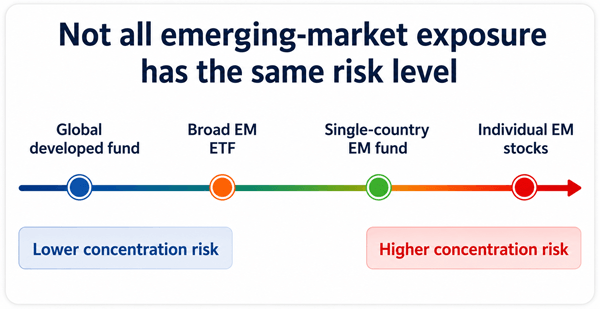
Figure 1. The U.S. is a very large part of the global stock market, but it is not the whole market. Source: MSCI ACWI country weights, July 2026 factsheet data accessed via MSCI.
5. U.S. Stocks vs International Stocks: Detailed Comparison
| Factor | U.S. Stocks | International Stocks | Beginner Takeaway |
|---|---|---|---|
| Main exposure | Companies listed in the United States. | Companies listed outside the United States. | Owning both gives wider global exposure. |
| Common funds | S&P 500 index fund, total U.S. stock market ETF. | Total international ETF, developed markets ETF, emerging markets ETF. | Beginners often do best with broad, low-cost funds. |
| Recent investor experience | Strong performance in many recent years, especially driven by large technology and growth companies. | Lagged U.S. stocks for long stretches, but leadership has historically rotated. | Do not assume the recent winner will always win. |
| Diversification | Broad within one country, but still country-concentrated. | Diversifies across countries, currencies, sectors, and economic cycles. | International stocks can reduce single-country dependence. |
| Currency impact | Usually tied to the U.S. dollar for U.S.-based investors. | Returns can be helped or hurt by foreign currency moves. | Currency is a real risk, but also a diversification source. |
| Valuation risk | Can become expensive when investor expectations are high. | Often trades at different valuations than the U.S. market. | Valuation matters more over long periods than over months. |
| Simplicity | Very easy to understand and buy. | Can feel more complex due to countries, currencies, and politics. | Use diversified funds instead of picking countries. |
| Best use | Core growth engine for many U.S.-based investors. | Diversifier and additional source of long-term return. | A practical portfolio can use both. |
6. Why U.S. Stocks Have Been So Popular
Many beginners hear that “U.S. stocks are the best” because recent experience often supports that feeling. The U.S. market has benefited from several powerful advantages: world-class companies, deep capital markets, shareholder-friendly business culture, strong innovation, a large consumer economy, and dominant technology firms. Many global investors also trust U.S. accounting standards, market liquidity, and legal protections.
This strength is real. But good investing requires separating a good market from an overconfident assumption. A country can have excellent companies and still produce disappointing future returns if investors pay too high a price. Stock returns come not only from business growth, but also from the price you pay for that growth.
6.1 Key reasons U.S. stocks have led in recent years
- Large U.S. technology companies became global profit machines, not just local businesses.
- The U.S. dollar has often been strong, which helps dollar-based returns for U.S. investors.
- U.S. companies generally produced strong earnings growth and high margins.
- Index funds and retirement accounts pushed large amounts of money into U.S. equity funds.
- Global investors often treat the U.S. market as a safe, liquid place to invest.
However, the same popularity can create concentration risk. If a small number of giant companies drive a large share of the market, investors may think they are diversified when they are actually heavily dependent on a few mega-cap stocks.
7. Why International Stocks Still Matter
International stocks matter because the world economy is bigger than the U.S. market. Many leading companies in banking, semiconductors, luxury goods, industrial equipment, pharmaceuticals, autos, energy, materials, and consumer products are based outside the United States. A U.S.-only investor may miss them or own them only indirectly through U.S. companies that sell abroad.
International stocks also help with humility. No investor knows which country will lead over the next 10, 20, or 30 years. Market leadership has historically moved in cycles. Long periods of U.S. outperformance can be followed by periods where non-U.S. stocks do better. The problem is that the turn usually becomes obvious only after it has already started.
7.1 Practical benefits of international stocks
- Diversification beyond one country: Your financial future is not tied only to the U.S. market.
- Exposure to different sectors: International indexes often have more weight in financials, industrials, materials, energy, and healthcare than U.S. growth-heavy indexes.
- Valuation balance: International markets may sometimes be cheaper than U.S. stocks, although cheaper does not guarantee better returns.
- Currency diversification: Foreign currency exposure can help or hurt, but it means all returns are not tied to one currency.
- Behavioral discipline: A global allocation can stop investors from chasing yesterday’s winning country.
8. The Real Risk: Chasing the Recent Winner
One of the most common beginner mistakes is performance chasing. This happens when investors buy what has recently gone up and sell what has recently disappointed them. It feels logical because the recent winner looks safer. But investing often punishes that behavior.
Imagine two investors. Investor A buys only U.S. stocks after years of U.S. outperformance. Investor B buys a diversified mix of U.S. and international stocks. If the U.S. continues to lead, Investor A may feel smart. But if international markets recover, the dollar weakens, or U.S. valuations fall, Investor B may be more comfortable because the portfolio is not built on one prediction.
The point is not that international stocks must outperform next. The point is that you do not need to predict the winner to build a sensible portfolio.
9. Major Risks Beginners Should Know
| Risk | What It Means | How to Handle It |
|---|---|---|
| Market risk | Stocks can fall 20%, 30%, or more during bear markets. | Invest only money meant for long-term goals. Keep emergency cash separate. |
| Country risk | A single country can face poor growth, political stress, regulation, or valuation declines. | Avoid putting all stock money in one country unless you consciously accept that risk. |
| Currency risk | Foreign stock returns change when currencies move against your home currency. | Use broad funds and long holding periods; consider hedged funds only if you understand the tradeoff. |
| Valuation risk | An expensive market can deliver lower future returns even if companies are good. | Diversify and avoid assuming recent high returns are normal. |
| Concentration risk | A few mega-cap companies may dominate an index. | Review fund holdings and use broader total-market funds when possible. |
| Behavior risk | Investors often panic during losses or chase hot markets. | Create a written allocation plan and rebalance on a schedule. |
| Fee and tax risk | High fees and taxes reduce long-term returns. | Prefer low-cost funds and understand tax rules before trading. |
10. Practical Portfolio Allocation Examples
There is no perfect U.S.-international split. A good allocation is one you can understand, stick with, and rebalance through good and bad markets. Below are practical examples, not personal recommendations.
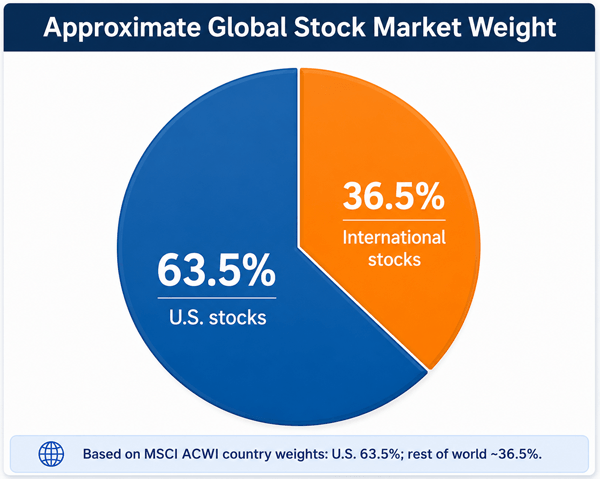
Figure 2. Example stock allocation mixes. These are educational examples, not personalized advice.
| Investor Type | Possible Stock Split | Why It Might Fit | Main Tradeoff |
|---|---|---|---|
| U.S.-only beginner | 100% U.S. / 0% international | Simple, familiar, easy to maintain. | No direct international diversification. |
| U.S.-tilted global investor | 70% U.S. / 30% international | Common compromise for investors who trust U.S. stocks but want global exposure. | May still lag a fully global portfolio if international leads strongly. |
| Market-weight investor | About 64% U.S. / 36% international | Roughly follows the global stock market’s current weight. | U.S. weight changes over time; some investors may feel overexposed to international. |
| Balanced global investor | 50% U.S. / 50% international | Stronger non-U.S. diversification and less dependence on one country. | Can feel uncomfortable when U.S. stocks dominate headlines. |
10.1 A Simple Beginner Formula
A beginner who wants a practical starting framework can think in three steps:
- Decide how much of your total investment portfolio belongs in stocks versus bonds or cash. This is your risk level.
- Inside the stock portion, decide how much should be U.S. and how much should be international.
- Use low-cost index funds or ETFs, automate contributions, and rebalance once or twice a year.
For example, suppose a 30-year-old investor has $10,000 for long-term retirement investing and chooses an 80% stock / 20% bond portfolio. If the stock allocation is 70% U.S. and 30% international, the portfolio might look like this:
| Asset | Allocation | Dollar Amount on $10,000 |
|---|---|---|
| U.S. stock index fund | 56% | $5,600 |
| International stock index fund | 24% | $2,400 |
| Bond fund or cash-like conservative investment | 20% | $2,000 |
This example shows an important point: the U.S.-international decision is only one part of investing. Your stock-bond mix may matter even more for how much your portfolio rises and falls.
11. Best Ways to Invest in U.S. and International Stocks
Most beginners do not need to pick individual stocks. A low-cost index fund or ETF can provide broad exposure, instant diversification, and lower maintenance. The goal is not to find a perfect fund. The goal is to avoid unnecessary complexity and high fees.
| Goal | Simple Fund Type | What to Look For |
|---|---|---|
| Own large U.S. companies | S&P 500 index fund or ETF | Low expense ratio, high liquidity, long track record. |
| Own the full U.S. market | Total U.S. stock market index fund or ETF | Includes large, mid, and small companies. |
| Own non-U.S. companies | Total international stock market index fund or ETF | Developed + emerging markets, broad country exposure. |
| Own everything in one stock fund | Global stock index fund or ETF | Includes U.S. and international stocks in one fund. |
| Hands-off retirement investing | Target-date fund | Automatically mixes stocks and bonds and adjusts over time. |
11.1 What Beginners Should Check Before Buying a Fund
- Expense ratio: Lower costs leave more of the return for you. A tiny fee difference can compound over decades.
- Index tracked: Know whether the fund follows the S&P 500, total U.S. market, developed international, emerging markets, or total world market.
- Country exposure: Check how much is in the U.S., Japan, Europe, Canada, emerging markets, and other regions.
- Sector concentration: Look at whether the fund is heavily dependent on technology, financials, energy, or a few mega-cap companies.
- Tax location: In taxable accounts, dividends, foreign tax credits, and turnover may matter. Tax rules vary by investor and country.
- Your ability to stay invested: The best fund is not useful if you sell it during normal volatility.
12. U.S. Stocks vs International Stocks: Which Performs Better?
There is no permanent winner. U.S. stocks have had long periods of powerful outperformance, especially in the post-2008 era. International stocks have also had periods where they led. The practical lesson is that recent performance should inform your understanding, not control your entire strategy.
A portfolio decision should consider four questions:
- What could go wrong if the U.S. market disappoints for 10 years?
- What could go wrong if international stocks keep lagging for several years?
- Which allocation would I actually hold without panic-selling?
- How much simplicity do I need to stay consistent?
For many beginners, the honest answer is a moderate mix. Too much international exposure may feel frustrating during U.S.-led markets. Too little international exposure may create regret if global leadership rotates. The best allocation is often the one that balances logic with behavior.
13. How Currency Affects International Stock Returns
Currency is one reason international investing feels confusing. If a U.S.-based investor owns a Japanese stock fund, the return depends on both the Japanese stocks and the exchange rate between the yen and the U.S. dollar. A foreign stock can rise in local currency but deliver a smaller return to a U.S. investor if the foreign currency weakens. The opposite can also happen.
Beginners should not obsess over currency forecasts. Currency moves are hard to predict. Instead, understand that currency can add short-term volatility. Over long periods, broad diversification across many currencies can be more manageable than betting on one foreign currency or one country.
14. Tax and Account Considerations
Taxes can change the best implementation. For U.S.-based investors, international funds may pay foreign taxes that may or may not be partly creditable in a taxable brokerage account. In retirement accounts, tax treatment can differ. Dividend yields, fund structure, and local tax rules matter. Because tax rules are personal and change over time, this article should not be treated as tax advice.
A practical approach is to choose the allocation first, then choose the tax-efficient fund placement with help from reliable tax guidance or a qualified professional. Do not let small tax details push you into a portfolio you do not understand.
15. Common Beginner Mistakes
| Mistake | Why It Hurts | Better Practice |
|---|---|---|
| Choosing based only on last 5-year returns | Recent winners can become expensive and future returns can be lower. | Build a long-term allocation before looking at recent charts. |
| Owning too many overlapping funds | Multiple funds can hold the same mega-cap stocks and create false diversification. | Check holdings and use simple broad funds. |
| Ignoring fees | Fees compound against you every year. | Use low-cost index funds or ETFs when appropriate. |
| Trying to time countries | It is hard to know when leadership will rotate. | Rebalance instead of making emotional all-in moves. |
| Confusing global companies with global diversification | U.S. companies may sell globally, but they are still U.S.-listed and U.S.-market priced. | Own direct international exposure if global diversification is the goal. |
| Selling international after it lags | This locks in frustration and can miss a rebound. | Set a target allocation and rebalance patiently. |
16. People’s Real-World Experience: Why This Debate Feels Emotional
The U.S. versus international debate is emotional because investors judge strategies by lived experience. Someone who started investing heavily in U.S. stocks during a U.S.-led decade may see international stocks as dead weight. Someone who lived through a period when international markets beat the U.S. may see global diversification as obvious.
Both reactions are understandable. The danger is turning personal experience into a universal law. Markets do not care what worked best during your first investing decade. A strong process should survive different market environments.
A practical investor can say: “I do not know which region will win next. I will own more of the market rather than betting everything on one region.” That mindset is simple, humble, and usually healthier than trying to win every performance contest.
17. Action Plan for Beginners
- Write your goal: retirement, house down payment, education, wealth building, or another long-term purpose.
- Choose your time horizon. If the money is needed within a few years, stocks may be too risky for that portion.
- Pick your stock-bond mix first. This controls much of the portfolio’s volatility.
- Choose a U.S.-international split you can hold for at least 10 years.
- Use broad, low-cost funds instead of trying to pick winning countries or individual stocks.
- Automate monthly contributions if possible.
- Rebalance once or twice a year, or when the allocation drifts far from target.
- Review your plan after major life changes, not after every market headline.
18. Final Verdict: U.S. Stocks or International Stocks?
U.S. stocks are excellent long-term investments for many people, but they are not the only sensible stock investment. International stocks are not automatically better, but they can make a portfolio more complete. The strongest beginner conclusion is this: do not treat global investing like a contest where you must pick one winner forever.
If you want maximum simplicity and are comfortable with country concentration, a U.S.-heavy portfolio may be reasonable. If you want broader diversification and are willing to tolerate periods of underperformance, adding international stocks can be wise. If you want a balanced and disciplined approach, use both and rebalance.
18.1 Are international stocks worth it if U.S. companies already sell globally?
Yes, they can be. A U.S. company earning revenue overseas still trades as a U.S. stock and is influenced by U.S. market valuations, U.S. investor sentiment, and U.S. index concentration. International stocks add direct exposure to foreign companies and markets.
18.2 What percentage of my portfolio should be international stocks?
There is no universal number. Many investors use 20% to 40% of their stock allocation internationally. A global market-weight approach may be around one-third international, depending on current market weights.
18.3 Are international stocks riskier than U.S. stocks?
Some are, especially emerging markets. But risk depends on the fund, countries, currencies, valuations, and time period. A broad international fund is usually less risky than betting on one foreign country.
18.4 Should beginners buy emerging markets?
Beginners can get emerging markets through a total international fund. Buying a separate emerging markets fund can add complexity and volatility, so it should be done only with a clear plan.
18.5 Is an S&P 500 fund enough?
It can be enough for some investors who value simplicity, but it is not globally diversified. It excludes thousands of non-U.S. companies and smaller U.S. companies.
18.6 How often should I rebalance?
Once or twice a year is enough for many long-term investors. Rebalancing too often can increase taxes and trading activity; never rebalancing can allow the portfolio to drift far from the plan.
18.7 Should I use a financial advisor?
A financial advisor can be helpful if you need personalized asset allocation, tax planning, retirement planning, estate planning, or behavioral coaching. Look for transparent fees and fiduciary standards where applicable.
Sources Consulted and Checked
These sources were consulted and checked while preparing this article to support its accuracy, context, and reliability. Readers should review the latest official versions where available.
- Vanguard, Capital Markets Model forecasts, April 22, 2026. Notes that U.S. equity valuations remained significantly above long-term fair value and discusses return outlook changes.
- Vanguard Economic and Market Outlook for 2026. Highlights diversification and projected risk-return profiles for U.S. and ex-U.S. equities.
- MSCI ACWI Index factsheet and index description. MSCI ACWI captures large- and mid-cap representation across developed and emerging markets and covers approximately 85% of the global investable equity opportunity set. The factsheet showed United States country weight around 63.5%.
- S&P Dow Jones Indices, SPIVA research. Long-running scorecards compare actively managed funds with indexes and support the importance of low-cost indexing for many investors.
- Hartford Funds, “Could International Markets Be Gaining Momentum?” 2026. Discusses long cycles of U.S. and international equity leadership.
- Capital Group, “5 charts on what’s powering international stocks,” 2025. Notes lower concentration in MSCI ACWI ex USA versus the S&P 500 and different sector exposures.
- BlackRock iShares MSCI ACWI ETF product page. Describes a fund that seeks to track an index composed of large- and mid-cap developed and emerging market equities globally.
Reader Advice
This article is provided solely for educational and informational purposes. It is not personalized financial, investment, tax, accounting, or legal advice, and it should not be treated as a recommendation to buy, sell, or hold any security, fund, or asset. Investing involves risk, including the possible loss of principal, and past performance does not guarantee future results.
Before making any decision, readers should consider their goals, financial circumstances, risk tolerance, time horizon, country of residence, currency exposure, account type, fees, and tax position, and should consult appropriately qualified professionals where needed. Market data, index weights, fund features, laws, tax rules, regulations, and other facts may change over time or differ by jurisdiction. Readers should therefore verify material facts and current requirements through official regulators, index providers, fund issuers, tax authorities, and other primary sources. Examples and allocation figures in this article are illustrative only and may not be suitable for every investor.