Emerging Markets Investing: Opportunities, Risks, and Best Strategies
1. Quick Answer: What Is Emerging Markets Investing?
Emerging markets investing means putting money into companies, bonds, funds, or ETFs connected to countries that are growing fast but are not yet as financially mature as the United States, Japan, the United Kingdom, or other developed markets. Examples often include countries such as India, Brazil, Mexico, South Africa, Saudi Arabia, Taiwan, South Korea, and China, depending on the index provider and the investment product.
The simple idea is this: many emerging economies have younger populations, expanding middle classes, rising consumption, improving infrastructure, and growing technology adoption. Investors hope these forces can create attractive long-term returns. The trade-off is that these markets can also bring higher volatility, currency swings, political risk, weaker corporate governance, and periods when prices fall harder than developed-market investments.
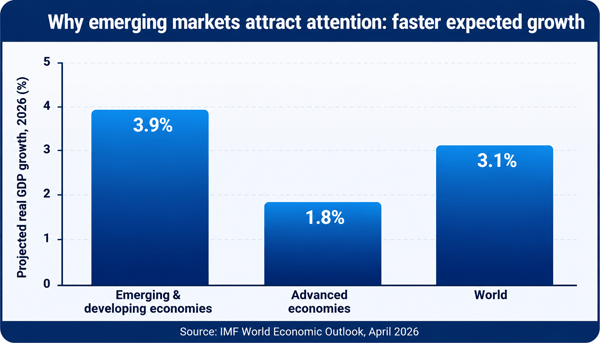
Figure 1. Emerging markets often attract investors because their economies may grow faster, but faster GDP growth does not automatically mean higher stock returns.
| In plain English | What it means for a beginner |
|---|---|
| Emerging market | A country with growing businesses and financial markets, but still more uncertainty than developed markets. |
| Emerging-market ETF | A basket of many emerging-market stocks traded like one investment. Often easier than picking individual stocks. |
| Currency risk | Your investment can fall because the local currency weakens against your home currency. |
| Political risk | Changes in government policy, capital controls, taxes, regulation, or conflict can affect markets. |
| Liquidity risk | Some assets may be harder to buy or sell at a fair price during stress. |
| Diversification | Spreading money across countries, sectors, and asset types so one bad event does not ruin the whole portfolio. |
2. How Emerging Markets Investing Works
Emerging-market investing works by giving you exposure to businesses, governments, currencies, and consumers in developing economies. A U.S.-based investor, for example, might buy an emerging-market ETF. That ETF may hold semiconductor companies in Taiwan, banks in India, internet companies in China, miners in Brazil, retailers in Mexico, and telecom companies in the Middle East. Instead of researching every company one by one, the investor buys a diversified basket.
Behind the scenes, index providers such as MSCI classify countries based on market accessibility, liquidity, foreign investor access, settlement systems, and other investability factors. This matters because many ETFs and mutual funds follow these indexes. If a country is added, removed, upgraded, or downgraded, large flows of money can move in or out of that market.
Beginners should understand one key point: “emerging markets” is not one single thing. It is a label for many very different economies. Taiwan and South Korea may be heavily linked to technology exports. Brazil can be influenced by commodities. India is driven by domestic consumption, services, infrastructure, and financial inclusion. Saudi Arabia is affected by energy and state-led reforms. A broad fund blends all these stories together.
3. Why Investors Look at Emerging Markets
Investors usually look at emerging markets for five reasons: growth, diversification, valuation, income, and access to future consumer trends. The growth case is easy to understand. When more people move into cities, open bank accounts, buy insurance, use smartphones, travel, and shop online, companies can grow with that demand. But a smart article must be honest: strong economic growth is helpful, not a guarantee.
The diversification case is also important. Emerging-market stocks do not always move exactly like U.S. or European stocks. During some periods they lag badly; during others they lead. A small, sensible allocation can add a different source of return to a long-term portfolio. The problem begins when investors chase last year’s winning country or put too much money into one hot theme.
Valuation can be attractive when emerging-market companies trade at lower prices than developed-market peers. But lower valuation can be a bargain or a warning sign. It may reflect currency risk, weak governance, lower profitability, legal uncertainty, or poor shareholder protection. Beginners should avoid thinking “cheap” automatically means “safe.”
4. The Main Opportunities in Emerging Markets
The first opportunity is demographic growth. Many emerging economies have large working-age populations and rising household income. This can support banks, insurers, retailers, telecoms, housing, healthcare, and education businesses. The second opportunity is technology leapfrogging. In some countries, people skipped older infrastructure and moved directly to mobile payments, digital banking, e-commerce, and online services.
The third opportunity is infrastructure. Roads, ports, electricity grids, data centers, railways, airports, water systems, and renewable energy projects can create long cycles of investment. The fourth opportunity is supply-chain diversification. As companies reduce dependence on a single country, markets such as India, Mexico, Vietnam, Indonesia, and others may benefit from manufacturing shifts, though not every listed company will benefit equally.
The fifth opportunity is commodities and resources. Countries rich in oil, copper, lithium, iron ore, agricultural products, or other resources can benefit when global demand rises. But commodity-driven markets can be very cyclical. A country can look strong when commodity prices rise and weak when prices fall.
5. The Real Risks Beginners Must Know
Emerging-market risk is not just “prices go up and down.” The risks are broader and sometimes more sudden. Currency risk can reduce returns even if local stocks perform well. Political risk can appear through elections, sanctions, capital controls, tax changes, nationalization, corruption investigations, or sudden regulatory action. Liquidity risk means the exit door can get narrow when everyone wants to sell.
Corporate governance matters a lot. In some markets, controlling shareholders, state ownership, related-party transactions, weak disclosure, or limited minority-shareholder rights can hurt outside investors. Index classification news can also affect markets. For example, recent MSCI concerns about Indonesia’s transparency show how governance and market-access issues can directly influence investor confidence and capital flows.
Another risk is concentration. Many broad emerging-market funds are heavily weighted toward a few countries and sectors. A beginner may think they own “the whole developing world,” but the portfolio may actually depend heavily on technology firms, banks, or a small group of large countries. Always check the fund factsheet before buying.
| Opportunity | Why it matters | Beginner-friendly way to use it | Main risk |
|---|---|---|---|
| Rising middle class | More demand for banking, shopping, healthcare, travel, and digital services. | Use a broad emerging-market equity fund rather than one consumer stock. | Economic slowdown, inflation, unemployment, currency weakness. |
| Technology adoption | Mobile payments, e-commerce, cloud, chips, and digital services can scale quickly. | Prefer diversified funds with technology exposure but not only technology exposure. | Valuation bubbles, regulation, export controls, geopolitical risk. |
| Infrastructure buildout | Long-term spending on transport, energy, data centers, and utilities. | Consider broad EM funds or specialist funds only after understanding fees and concentration. | Debt stress, delays, political interference, corruption. |
| Commodity demand | Some EM countries benefit from energy, metals, and agriculture cycles. | Avoid treating commodity countries as permanently safe; size positions modestly. | Commodity price crashes, fiscal dependence, currency shocks. |
| Supply-chain shifts | Manufacturing may move to lower-cost or strategically located countries. | Look for diversified regional exposure, not just one factory story. | Execution risk, infrastructure gaps, trade policy changes. |
6. Emerging Markets vs Developed Markets vs Frontier Markets
A beginner often gets confused by the labels. The easiest way to understand them is to think about maturity, access, and risk. Developed markets usually have deeper exchanges, stronger regulation, greater liquidity, and more stable currencies. Emerging markets are in the middle. Frontier markets are generally smaller, less liquid, and more difficult for international investors to access.
| Feature | Developed markets | Emerging markets | Frontier markets |
|---|---|---|---|
| Typical examples | United States, Japan, Germany, United Kingdom. | India, Brazil, Mexico, South Africa, China, Taiwan, South Korea, Saudi Arabia depending on index. | Smaller or less accessible markets; classification varies by provider. |
| Market liquidity | Usually high. | Mixed: good in large names, weaker in smaller stocks. | Often low. |
| Currency stability | Usually stronger but still variable. | Can swing sharply against the dollar or euro. | Can be very volatile. |
| Governance and disclosure | Generally stronger. | Varies greatly by country and company. | Often weaker or less transparent. |
| Beginner suitability | Core portfolio building block. | Satellite allocation for long-term investors. | Usually not suitable for most beginners. |
7. Best Ways for Beginners to Invest in Emerging Markets
For most beginners, the practical path is not individual stock picking. A broad, low-cost ETF or mutual fund is usually easier to understand, easier to diversify, and easier to manage. Individual stocks require local accounting knowledge, currency awareness, legal understanding, and the ability to judge management quality across different markets.
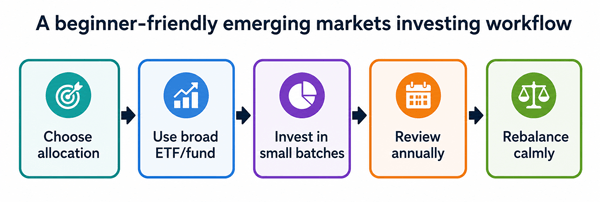
Figure 2. A simple workflow helps beginners avoid emotional buying, overconcentration, and market-timing mistakes.
| Strategy | How it works | Best for | Watch out for |
|---|---|---|---|
| Broad EM ETF | Buys hundreds or thousands of stocks across emerging countries. | Most beginners who want simple exposure. | Country concentration, expense ratio, tracking error. |
| Global ex-US fund with EM included | Combines developed international and emerging-market stocks. | Investors who want one international fund. | Lower EM exposure than a pure EM fund. |
| Active EM mutual fund | Manager selects countries and companies instead of following an index. | Investors willing to pay more for professional selection. | Higher fees, manager risk, underperformance. |
| Single-country ETF | Focuses on one country such as India, Brazil, Mexico, or China. | Experienced investors with a strong country thesis. | High concentration, political and currency risk. |
| EM bonds | Lends to governments or companies in hard currency or local currency. | Income-focused investors who understand credit and currency risk. | Defaults, rate changes, currency losses. |
| Individual EM stocks | Buy specific companies directly or via ADRs. | Advanced investors only. | Disclosure, liquidity, governance, foreign tax, legal risk. |
Practical allocation idea for a beginner
A cautious beginner might start with a small emerging-market allocation inside a diversified portfolio, such as 5% to 10% of total investments, then learn over time. A younger investor with high risk tolerance may choose more, while someone near retirement may choose less or none. The right amount depends on goals, time horizon, income stability, debt, emergency savings, and comfort with volatility.
8. A Practical Example: How a Beginner Might Start
Imagine Sara, age 30, has a long-term retirement portfolio. She already has an emergency fund, no high-interest debt, and a diversified core portfolio. She wants emerging-market exposure but does not want to guess which country will win. Instead of buying one “hot” stock, she chooses a broad emerging-market ETF with a low expense ratio and decides that emerging markets will be 8% of her portfolio.
She invests in monthly batches rather than all at once. This does not guarantee profit, but it reduces the emotional pressure of picking the perfect day. Once a year, she checks whether her emerging-market allocation has drifted far away from 8%. If it rises to 12%, she trims it back. If it falls to 5%, she may add more during rebalancing. This is boring, but boring is often better than panic trading.
| Month | Action | Why it helps |
|---|---|---|
| Month 1 | Choose one broad EM ETF after comparing expense ratio, holdings, country weights, and fund size. | Avoids buying based only on a social-media tip. |
| Months 1-6 | Invest the planned amount gradually. | Reduces regret if the market falls right after the first purchase. |
| Every quarter | Read the fund factsheet and check top countries/sectors. | Keeps the investor aware of hidden concentration. |
| Once a year | Rebalance back to target allocation. | Forces discipline: buy lower, trim higher, avoid emotional extremes. |
9. How to Research an Emerging-Market Fund Before Buying
A beginner does not need to read a 200-page institutional report, but they should read the fund factsheet and understand the basics. Do not buy an emerging-market ETF only because it has “emerging markets” in the name. Two funds can sound similar but have different country weights, costs, liquidity, tracking indexes, dividend policies, and tax treatment.
| Checklist item | Question to ask | Why it matters |
|---|---|---|
| Expense ratio | How much does the fund charge each year? | High costs reduce long-term returns. |
| Country weights | Which countries dominate the fund? | A “global EM” fund may be heavily concentrated in a few markets. |
| Sector weights | Is it mostly technology, banks, commodities, or balanced? | Sector concentration changes risk. |
| Index methodology | Which index does it track and what countries are included? | Different providers classify markets differently. |
| Fund size and liquidity | Is the fund large and actively traded? | Small illiquid funds can have wider spreads. |
| Currency exposure | Are assets in local currency, U.S. dollars, or hedged? | Currency can help or hurt returns. |
| Distribution policy | Does it pay dividends or accumulate them? | Important for taxes and cash-flow planning. |
| Tax treatment | Are there withholding taxes or local rules? | After-tax return matters more than headline return. |
10. Common Beginner Mistakes and How to Avoid Them
10.1 Mistake 1: Chasing the hottest country
A country can look attractive after a strong rally, but the easy gains may already be priced in. Use broad exposure unless you have a researched reason for a country bet.
10.2 Mistake 2: Ignoring currency risk
A local stock market can rise while the investor still earns poor returns because the local currency weakens. Review performance in your own currency, not only local currency.
10.3 Mistake 3: Believing GDP growth equals stock returns
Stock returns depend on valuation, earnings, governance, currency, and shareholder treatment. Fast-growing economies can still produce disappointing stock returns.
10.4 Mistake 4: Taking too large a position
Emerging markets can underperform for years. Keep the allocation small enough that you can hold it during bad periods without panic selling.
10.5 Mistake 5: Buying complex products too early
Leveraged ETFs, thin single-country funds, structured notes, and illiquid private deals can be risky. Beginners should understand simple funds first.
10.6 Mistake 6: Not checking what the fund owns
A fund name can hide concentration. Always review top holdings, countries, sectors, and fees before investing.
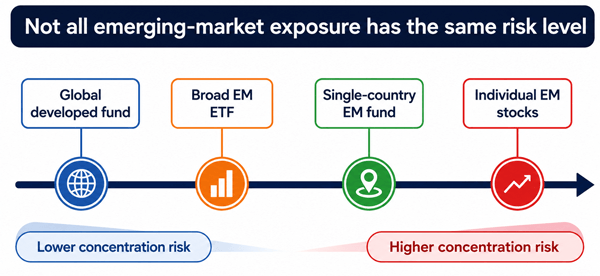
Figure 3. Broad exposure is usually simpler for beginners; concentrated investments require more research and stronger risk control.
11. What “Good Strategy” Looks Like in Real Life
A good emerging-market strategy is not about predicting the next miracle economy. It is about building rules that protect you from your own emotions. Experienced investors often say their biggest mistakes came from overconfidence: buying too much after a strong run, ignoring political warning signs, or assuming a cheap market could not get cheaper.
| Rule | Practical version | Why it works |
|---|---|---|
| Use position sizing | Decide a maximum EM allocation before buying. | Prevents one theme from dominating your portfolio. |
| Prefer diversification | Use broad funds for core exposure. | Reduces single-company and single-country damage. |
| Rebalance annually | Trim when EM becomes too large; add when it becomes too small. | Creates discipline without constant trading. |
| Read fund factsheets | Check top holdings, countries, sectors, fees, and index changes. | Avoids hidden concentration and stale assumptions. |
| Use a long horizon | Think in 7-10 year periods, not weeks. | Emerging markets can be volatile over short periods. |
| Keep cash needs separate | Do not invest money needed soon. | Avoids forced selling after a downturn. |
12. Frequently Asked Questions
12.1 Is emerging markets investing good for beginners?
It can be suitable for beginners only when used carefully as part of a diversified portfolio. A broad, low-cost emerging-market ETF or mutual fund is usually simpler than individual stocks. Beginners should start small, understand volatility, and avoid chasing hot countries.
12.2 What is the safest way to invest in emerging markets?
There is no completely safe way. The more beginner-friendly route is usually a diversified fund with many countries and companies, low costs, and clear index exposure. Safety improves through diversification, sensible allocation, long time horizon, and avoiding leverage.
12.3 How much should I invest in emerging markets?
There is no universal number. Many beginners use emerging markets as a satellite allocation rather than the core of the portfolio. The right amount depends on risk tolerance, age, goals, investment horizon, and existing exposure.
12.4 Are emerging markets better than developed markets?
Not always. Emerging markets may offer faster growth and diversification, but developed markets often have deeper liquidity, stronger governance, and more stable currencies. A balanced investor compares opportunity and risk rather than treating one as automatically better.
12.5 Do emerging markets pay dividends?
Some emerging-market companies and funds pay dividends, especially in sectors such as banking, energy, telecoms, and materials. Dividend yields can be attractive, but they may be unstable and affected by currency moves, taxes, and economic cycles.
12.6 What are the biggest risks of emerging-market ETFs?
The biggest risks include market volatility, currency weakness, country concentration, sector concentration, governance problems, liquidity stress, geopolitical events, and index reclassification or regulatory changes.
12.7 Can I lose all my money in emerging markets?
A diversified fund is unlikely to go to zero, but it can still fall significantly. Individual stocks, highly concentrated country funds, leveraged products, or investments in unstable markets can suffer severe losses. Risk control matters.
13. Final Takeaway
Emerging markets investing can be a useful part of a long-term portfolio, but it should be handled with humility. The opportunity is real: faster-growing economies, younger consumers, digital adoption, infrastructure spending, and global supply-chain changes. The risk is also real: currency losses, political shocks, governance problems, liquidity stress, and long periods of underperformance. For beginners, the best strategy is usually simple: learn the basics, use diversified low-cost funds, start with a sensible allocation, avoid concentrated bets, review factsheets, and rebalance with discipline.
Sources Consulted and Checked
The following sources were consulted and checked while preparing this article to support accuracy and reliability.
- IMF World Economic Outlook, April 2026: Emerging market and developing economies projected around 3.9% real GDP growth in 2026, advanced economies around 1.8%, and world growth around 3.1%.
- World Bank Global Economic Prospects, 2026: Global growth and emerging-market outlook remain exposed to downside risks including energy shocks, inflation, policy uncertainty, and geopolitical disruption.
- MSCI Emerging Markets Index factsheet and index description: MSCI EM captures large- and mid-cap representation across 24 emerging-market countries and approximately 85% of free-float-adjusted market capitalization in each country.
- SPDR MSCI Emerging Markets UCITS ETF factsheet, May 2026: Example country weights show how broad EM exposure can still be concentrated in Taiwan, Korea, China, India, Brazil, South Africa, Saudi Arabia, and others.
- iShares MSCI Emerging Markets ETF factsheet, March 2026: Example of a broad ETF designed to track large- and mid-cap emerging-market equities.
- Vanguard international investing education: International investing may improve diversification but involves currency, political, and market risks.
- Reuters/Financial Times market reporting, June 2026: MSCI transparency concerns around Indonesia illustrate how governance, disclosure, and market-access issues can affect investor confidence and index-related flows.
Reader Advice
This article is provided solely for educational and informational purposes and does not constitute personal financial, investment, tax, or legal advice. Emerging-market investments involve substantial risks, including market volatility, currency movements, political and regulatory changes, liquidity constraints, governance concerns, and possible loss of principal.
Before making any decision, readers should assess their own objectives, financial circumstances, time horizon, and risk tolerance and, where appropriate, consult a qualified financial adviser or other relevant professional. Market conditions, laws, tax rules, index classifications, fund holdings, fees, forecasts, and other facts or figures may change over time and may vary by country, provider, and investor circumstances. Readers should therefore verify current information directly from official regulators, fund providers, index publishers, and other authoritative sources.