Currency Risk in Investing: How Exchange Rates Affect Your Returns
Currency risk is one of those investing risks that beginners often discover only after it has already affected their returns. You may buy a foreign stock, an international ETF, a global bond fund, or even a U.S. dollar fund from outside the United States and think your profit depends only on the investment price. In reality, your final return also depends on what happens between your home currency and the currency of the asset.
In simple words, currency risk is the possibility that exchange rate movements will reduce, increase, or make your investment return more volatile when you convert the investment back into your own currency.
This guide explains currency risk in an easy, practical way. You will learn how exchange rates affect returns, where currency exposure hides, when currency hedging is useful, when it is not worth overthinking, and how beginners can make better decisions without turning investing into forex trading.
1. What is currency risk in investing?
Currency risk, also called exchange rate risk or foreign exchange risk, happens when you own an investment connected to a currency different from the currency you use in daily life. If the exchange rate moves against you, your return in your home currency can be lower than the return shown in the foreign market. If the exchange rate moves in your favor, your return can be higher.
Think of it like this: an investment has two moving parts. The first part is the asset itself, such as a stock, ETF, bond, or mutual fund. The second part is the currency translation back into your home currency. Most beginner investors focus on the first part and ignore the second.
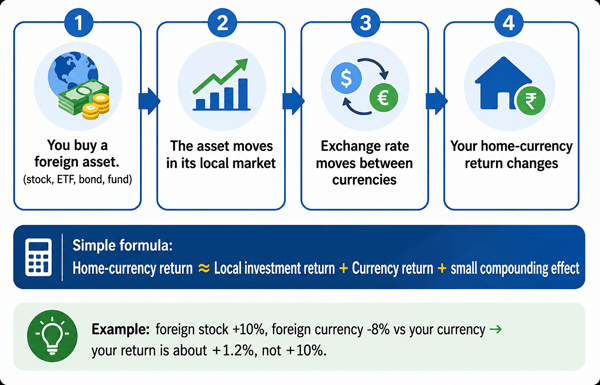
Figure 1: How exchange rates flow into your final investment return.
| Term | Plain-English meaning | Investor example |
|---|---|---|
| Home currency | The currency you spend, save, and measure wealth in | A Pakistani investor may think in PKR; a U.S. investor in USD; a UK investor in GBP. |
| Foreign currency | The currency attached to the investment or its underlying assets | A European stock may be priced in EUR; a U.S. ETF may hold USD assets. |
| Currency appreciation | A currency becomes stronger versus another currency | If USD strengthens versus your home currency, USD investments may be worth more when converted back. |
| Currency depreciation | A currency becomes weaker versus another currency | If EUR weakens versus your home currency, a euro investment may lose value after conversion. |
| Unhedged investment | You accept currency movements as part of the return | Most global stock ETFs are unhedged unless the fund name says hedged. |
| Currency-hedged investment | The fund or investor tries to reduce currency impact | A currency-hedged ETF may use forward contracts to reduce exchange-rate swings. |
2. The simple formula: local return + currency return
The easiest way to understand currency risk is to separate the local investment return from the currency return. The exact math includes compounding, but beginners can use this practical formula:
Home-currency return ≈ local investment return + currency movement
The exact formula is: (1 + local return) x (1 + currency return) - 1. This matters because a small exchange-rate movement can meaningfully change your final result, especially when investing internationally over months or years.
| Scenario | Local investment return | Foreign currency move vs your currency | Approx final return | What it means |
|---|---|---|---|---|
| Foreign stock rises, currency stable | +10% | 0% | +10.0% | You capture the stock return. |
| Foreign stock rises, foreign currency weakens | +10% | -8% | +1.2% | Most of the stock gain disappears after conversion. |
| Foreign stock falls, foreign currency strengthens | -5% | +12% | +6.4% | Currency gain more than offsets market loss. |
| Foreign stock flat, foreign currency weakens | 0% | -10% | -10.0% | You lose money even though the asset price did not move. |
| Foreign stock rises, foreign currency strengthens | +10% | +8% | +18.8% | Both the investment and currency help you. |
Practical example: Suppose you live in Country A and invest the equivalent of $10,000 in a U.S. stock ETF. The ETF rises 12% in U.S. dollars, so it becomes $11,200. But during the same period, the U.S. dollar falls 7% against your home currency. Your home-currency return is not 12%. It is roughly 4.2%. That is still a gain, but it is much lower than the fund chart may make it look.
3. Why exchange rates move in the first place
Exchange rates are prices. Like stock prices, they move because buyers and sellers constantly react to interest rates, inflation, trade flows, economic growth, government policy, market fear, and global capital movement. A currency can strengthen even when its country has problems, and it can weaken even when the stock market is rising. This is why currency forecasting is difficult even for professionals.
| Driver | How it can affect currencies | Beginner takeaway |
|---|---|---|
| Interest rates | Higher interest rates can attract capital, but only if investors trust the economy and currency. | Do not assume higher yield is free money; currency losses can erase it. |
| Inflation | High inflation often weakens purchasing power and can pressure a currency over time. | Nominal returns can look good while real value falls. |
| Economic growth | Stronger growth can support a currency, but markets may price it in early. | A good economy does not guarantee a rising currency. |
| Trade balance | Export-heavy countries may benefit when their currency is competitive. | Company profits and currency moves can interact. |
| Political and policy risk | Elections, tariffs, capital controls, debt stress, or central-bank surprises can cause volatility. | Never treat currency as risk-free cash. |
| Global risk sentiment | In crises, investors may rush into perceived safe-haven currencies. | Currency can sometimes cushion or amplify stock-market losses. |
4. Where currency risk hides in a beginner portfolio
Currency risk is not limited to people trading forex. Many ordinary investors have currency exposure without realizing it. It can appear in retirement accounts, brokerage accounts, ETFs, mutual funds, foreign stocks, global bonds, real estate funds, gold funds, and even local companies that earn revenue abroad.
| Investment type | Currency risk level | Why it matters |
|---|---|---|
| Foreign individual stocks | High | The share price and the exchange rate both affect your return. |
| International equity ETF or mutual fund | Medium to high | You own many foreign companies, often in multiple currencies. |
| Global bond fund | Often high for conservative investors | Bond returns are usually lower than equity returns, so currency moves can dominate the result. |
| U.S.-listed ETF bought by non-U.S. investor | Depends on underlying holdings | The ETF may trade in USD, but the real exposure depends on what it owns. |
| Local company with foreign revenue | Indirect | A strong or weak currency can affect export sales, imported costs, and reported earnings. |
| Gold or commodity fund | Indirect to direct | Many commodities are priced globally in USD, so local currency movements matter. |
| Foreign cash deposit | High | You are directly holding another currency. |
5. A common beginner mistake: confusing trading currency with investment currency
Many investors believe that if an ETF trades on their local exchange, currency risk disappears. That is not always true. The trading currency is only the currency used to buy and sell the fund. The real currency exposure usually comes from the fund’s underlying assets.
For example, a global equity ETF may have a local-currency share class, a U.S. dollar share class, and a euro share class. These share classes can make buying easier, but unless the fund is explicitly currency hedged, the investor may still be exposed to the currencies of the stocks inside the fund.
| What you see | What beginners may assume | What to check |
|---|---|---|
| ETF trades in your local currency | No currency risk | Read the factsheet: what countries and currencies are the holdings exposed to? |
| ETF name includes “USD” | Only U.S. dollar risk | Check whether USD is just the trading currency or the base currency. |
| ETF says “hedged” | All risk is removed | Hedging reduces currency impact but may have cost, tracking error, and imperfect results. |
| Fund reports returns in USD | My personal return is the same | Your return depends on the exchange rate between USD and your home currency. |
6. How currency risk affects stocks vs bonds
Currency risk feels different depending on the asset. For global stocks, currency movements can be important, but equity returns are often volatile enough that currency is only one part of the journey. For foreign bonds and cash-like investments, currency can become the main source of risk because bond returns are usually smaller.
| Asset | Why currency matters | Practical view |
|---|---|---|
| Foreign stocks | Stock return and currency return both move. Currency can help or hurt, but long-term company growth may matter more. | For long-term growth portfolios, many investors accept some unhedged currency exposure for diversification. |
| Foreign bonds | Bond coupons may be modest, so a currency move can overwhelm the yield. | For conservative portfolios, hedged bond funds are often easier to justify. |
| Foreign cash | There is no business growth to offset currency moves. | Holding foreign cash is closer to a currency bet unless you need that currency for spending. |
| Emerging-market assets | Currencies can be more volatile and may weaken during stress. | Position size, diversification, and liquidity matter more. |
7. Hedged vs unhedged investments: what is the difference?
An unhedged investment allows exchange rates to affect your return. A currency-hedged investment tries to reduce that effect, usually through derivatives such as forward contracts. The goal of a hedged fund is not to make a forex profit. The goal is to make your return closer to the return of the underlying assets in their local markets.
Currency hedging is often compared to insurance. That comparison is useful, but not perfect. Hedging may reduce unwanted currency volatility, but it can also cost money and may prevent you from benefiting when currency moves in your favor.
| Feature | Unhedged ETF/fund | Currency-hedged ETF/fund |
|---|---|---|
| Main goal | Own foreign assets and accept currency movements. | Own foreign assets while reducing currency swings. |
| Best suited for | Long-term equity diversification, investors comfortable with volatility. | Shorter goals, foreign bonds, conservative portfolios, or investors who cannot tolerate currency swings. |
| Potential benefit | Can gain when foreign currency strengthens vs your home currency. | Can reduce return surprises caused by exchange rates. |
| Potential drawback | Can lose when foreign currency weakens. | Can underperform when foreign currency strengthens; may cost more. |
| What to compare | Total return in your own currency. | Expense ratio, hedging method, tracking difference, tax impact, and liquidity. |
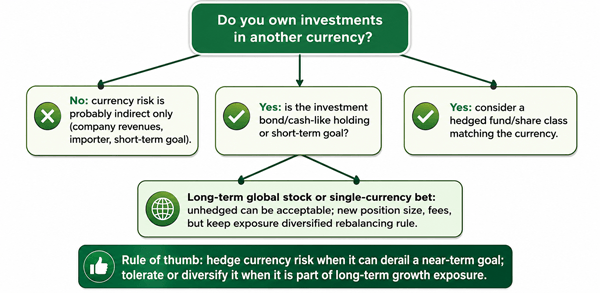
Figure 2: A simple decision path for thinking about hedged vs unhedged exposure.
8. When should beginners consider currency hedging?
Currency hedging can be useful, but it should solve a real problem. It is not automatically better. A beginner should think about hedging when the currency movement could damage a specific goal, create too much volatility, or turn a conservative investment into a risky one.
- You have a short-term or medium-term goal in your home currency. If you need the money for tuition, a house deposit, or retirement spending soon, a large exchange-rate move can hurt at the wrong time.
- You are buying foreign bonds or money-market funds. A bond fund that looks conservative in local currency may feel risky after currency conversion.
- Your portfolio is too concentrated in one foreign currency. Many non-U.S. investors accidentally become heavily exposed to the U.S. dollar through U.S. stocks, U.S. ETFs, and dollar cash.
- You cannot emotionally tolerate currency-driven losses. The best portfolio is not the mathematically perfect one; it is the one you can actually hold through volatility.
- The hedged product is cheap, liquid, transparent, and tax-efficient in your country. Hedging costs and taxes can turn a good idea into a poor result.
9. When hedging may not be worth it
Hedging is not always needed. Many long-term investors choose unhedged global equities because currency movements can diversify returns, because hedging costs can add up, and because long-term stock returns are driven mainly by business performance, valuation, dividends, and economic growth.
- You are investing for decades and can tolerate volatility.
- Your global stock exposure is already diversified across many countries and currencies.
- The only available hedged fund is expensive, illiquid, or poorly tracked.
- You are trying to predict short-term currency moves. That is speculation, not risk management.
- You may need the foreign currency in the future, such as for overseas education, travel, immigration, or retirement abroad.
10. Real-life style examples beginners can relate to
10.1 Example 1: The “my ETF is up, but I made less” surprise
A beginner investor buys an international ETF after seeing that global stocks are rising. One year later, the ETF’s foreign-market return is positive, but the investor’s home-currency return is much smaller. The reason is not fraud or a broken ETF. The foreign currency weakened against the investor’s home currency. The lesson: always check returns in the currency you actually spend.
10.2 Example 2: The foreign bond that behaved like a risky asset
An investor buys a foreign bond fund because it has a higher yield than local bonds. The bond prices are stable, but the foreign currency falls sharply. The investor loses more from currency than they earned from yield. The lesson: foreign bond yield should be judged after currency risk and hedging cost, not just by the headline coupon.
10.3 Example 3: The investor who benefited from currency weakness at home
A local currency weakens during an inflationary period. The investor’s foreign stock ETF rises in home-currency terms even though foreign stock prices were only moderately positive. The lesson: foreign assets can sometimes protect purchasing power when the home currency loses value, but this benefit is uncertain and can reverse.
11. How to measure your own currency exposure
You do not need advanced software to make a useful first estimate. Start with a simple currency exposure map. The goal is not perfect precision; the goal is to avoid accidental concentration.
- List every investment you own: stocks, ETFs, mutual funds, bonds, cash, retirement funds, and foreign bank deposits.
- Write the currency you use to measure your life goals. This is usually your home currency, but not always.
- Check each fund factsheet for country exposure, currency exposure, base currency, and whether it is hedged.
- Separate trading currency from underlying exposure. A local-currency share class does not always mean local-currency exposure.
- Add up your rough exposure to major currencies such as USD, EUR, GBP, JPY, CHF, CAD, AUD, and emerging-market currencies.
- Compare the result with your future spending needs. If your future expenses are mostly local, too much foreign currency exposure may create risk. If you expect future foreign expenses, some foreign currency exposure may be useful.
| Question to ask | Why it matters | Where to find it |
|---|---|---|
| What currency do I spend and save in? | This is the currency that defines your real-life return. | Your budget and financial goals. |
| What currency is the asset priced in? | It affects buy/sell conversion and brokerage costs. | Broker screen and exchange listing. |
| What currencies are inside the fund? | This is often the true exposure. | ETF or mutual fund factsheet. |
| Is the fund hedged? | Hedging changes how exchange rates affect returns. | Fund name, factsheet, prospectus. |
| What are the conversion fees? | Fees quietly reduce returns, especially for small or frequent trades. | Broker fee schedule and FX spread disclosure. |
| What currency will I need later? | Matching future expenses can reduce risk. | Financial plan, retirement plan, education plan. |
12. Currency conversion fees: the hidden drag beginners forget
Currency risk is not only about exchange-rate movement. Investors also pay conversion costs. These costs may appear as a clear commission, a hidden spread, or a less favorable exchange rate offered by a broker, bank, card provider, or platform. Over time, frequent conversions can quietly reduce returns.
| Cost type | What it looks like | How to reduce it |
|---|---|---|
| FX spread | The buy rate and sell rate are different. | Compare broker rates; avoid unnecessary conversions. |
| Conversion commission | A stated percentage or flat fee. | Use platforms with transparent pricing. |
| Multiple currency conversions | Home currency to USD to EUR, or similar chains. | Choose the most efficient trading route when available. |
| Fund-level hedging cost | Built into fund performance and tracking difference. | Compare hedged and unhedged share classes over time. |
| Tax cost | Currency gains, hedge gains, or distributions may be taxed differently. | Check local tax rules before switching products. |
13. Currency risk and retirement investing
Retirement planning makes currency risk more personal. The key question is: what currency will pay your future bills? If your retirement spending will be in your home country, a portfolio that is too heavily exposed to foreign currency can create income uncertainty. If you expect to retire abroad or support children studying overseas, foreign currency exposure may be useful.
A practical retirement approach is to match safer assets with future spending currency. For example, cash, short-term bonds, and near-term retirement withdrawals may be better aligned with the currency of upcoming expenses. Growth assets, such as global equities, can remain more diversified if the investor can tolerate volatility.
14. Currency risk and emerging markets
Emerging-market investing can offer diversification and growth potential, but currency risk is often stronger. Emerging-market currencies can fall during global stress, when investors move money toward perceived safer markets. A falling local currency can reduce foreign-investor returns even when local stock prices look attractive.
Beginners should be careful with position size. A small emerging-market allocation inside a diversified portfolio is very different from putting a large portion of savings into one country, one currency, or one high-yield bond market.
15. Should you use currency movements to make investment decisions?
Currency matters, but it should not become the only reason you invest. Many beginners make the mistake of turning a long-term portfolio into a short-term currency prediction game. It is reasonable to manage currency risk. It is usually dangerous to build an investment plan around guessing where exchange rates will go next month.
A better question is not “Which currency will rise?” but “What currency exposure can I live with if I am wrong?” This keeps the focus on risk management, diversification, time horizon, and goal matching.
16. Practical strategies to manage currency risk
| Strategy | How it works | Best for | Main caution |
|---|---|---|---|
| Diversify across currencies | Own assets from multiple countries instead of one foreign currency. | Long-term global investors. | Diversification reduces concentration but does not remove risk. |
| Match assets to future spending | Keep money for near-term goals in the currency you will spend. | Tuition, home purchase, retirement withdrawals. | May reduce global opportunity for that portion. |
| Use currency-hedged ETFs or funds | Fund uses hedging tools to reduce exchange-rate impact. | Foreign bonds, short-term goals, cautious investors. | Costs, taxes, and imperfect hedging. |
| Keep a natural hedge | Hold some foreign assets if you have future foreign expenses. | Families planning overseas education or retirement abroad. | Needs may change. |
| Rebalance periodically | Bring currency and asset exposures back to target weights. | Disciplined long-term investors. | Trading too often can increase costs. |
| Avoid overconcentration | Limit exposure to one country, currency, or high-yield opportunity. | All beginners. | Requires honest review of the whole portfolio. |
17. Beginner checklist before buying a foreign investment
- What is my home currency for this goal?
- What currency is the investment priced in?
- What currencies are the underlying assets exposed to?
- Is the product hedged, unhedged, or partially hedged?
- What are the expense ratio, FX spread, brokerage fee, and tax implications?
- How would my return change if the foreign currency fell 10%, 20%, or 30%?
- Am I buying this for long-term diversification or because I am chasing a currency prediction?
- Does this investment match my time horizon and risk tolerance?
- Do I already have too much exposure to the same currency through other funds, salary, business income, or property?
- Can I explain this investment in one simple sentence without using hype?
18. Common mistakes to avoid
| Mistake | Why it hurts | Better habit |
|---|---|---|
| Looking only at foreign-market returns | Your actual return is in your own currency. | Track performance in your home currency. |
| Assuming USD share class means USD-only exposure | Share class currency may not equal underlying exposure. | Read the holdings and currency exposure section. |
| Buying foreign bonds only for higher yield | Currency losses can exceed the extra yield. | Compare yield after hedging cost and FX risk. |
| Over-hedging long-term stocks | You may add cost and lose beneficial diversification. | Hedge only when it supports a goal. |
| Ignoring conversion spreads | Small fees compound over time. | Use transparent brokers and reduce unnecessary conversions. |
| Trying to time currencies | Short-term FX forecasts are unreliable. | Use rules, diversification, and rebalancing. |
19. Quick comparison: currency risk vs market risk
| Risk type | What moves | Example | How to manage |
|---|---|---|---|
| Market risk | The price of the investment itself. | A stock ETF falls because company earnings disappoint. | Diversification, asset allocation, time horizon. |
| Currency risk | The exchange rate between currencies. | A foreign ETF rises in local currency but falls after conversion. | Hedging, currency diversification, goal matching. |
| Inflation risk | The purchasing power of your money. | Your portfolio rises 5%, but living costs rise 9%. | Real assets, inflation-aware planning, long-term growth. |
| Liquidity risk | Ability to buy or sell at fair prices. | A niche foreign ETF has a wide bid-ask spread. | Use liquid funds and avoid oversized positions. |
20. A simple framework: Accept, reduce, or avoid
Every currency decision can fit into three choices: accept the risk, reduce the risk, or avoid the risk. You do not need to eliminate every risk. You need to decide which risks are worth taking.
| Choice | Use when | Example |
|---|---|---|
| Accept | The exposure supports long-term diversification and you can handle volatility. | A young investor holds an unhedged global equity ETF for retirement. |
| Reduce | The risk is too large for the goal, but you still want the asset. | A retiree uses a hedged global bond fund for stable income. |
| Avoid | The investment adds complexity without a clear benefit. | A beginner avoids a high-yield foreign bond in a volatile currency. |
21. Helpful facts for readers
- A stronger home currency generally reduces the home-currency return of foreign investments.
- A weaker home currency generally increases the home-currency return of foreign investments.
- Currency-hedged ETFs can reduce exchange-rate impact, but they can also reduce upside from favorable currency moves.
- Foreign bonds usually deserve more currency-risk attention than foreign stocks because bond returns are often smaller.
- The currency shown on your broker screen may not be the same as the economic currency exposure of the investment.
- Currency diversification can protect against one currency doing badly, but it cannot guarantee profit.
- Conversion fees and bid-ask spreads are real investment costs, even when they are not shown as a separate bill.
22. Frequently asked questions
22.1 Is currency risk always bad?
No. Currency risk can hurt or help. If the foreign currency strengthens against your home currency, it can increase your return. The problem is uncertainty, not the existence of currency exposure itself.
22.2 Can I avoid currency risk completely?
Only in limited situations. You can reduce it by holding assets in the currency of your future spending or using hedged products, but most global investing involves some direct or indirect currency exposure.
22.3 Are currency-hedged ETFs better?
Not automatically. They are useful when currency volatility conflicts with your goal, especially for foreign bonds or shorter time horizons. For long-term global equities, unhedged funds may still be reasonable.
22.4 Should beginners trade forex to offset investment currency risk?
Usually no. Forex trading adds leverage, complexity, and behavioral risk. Most beginners are better served by choosing appropriate funds, position sizes, and currency exposure rather than trading currencies directly.
22.5 Does a U.S. dollar ETF protect me from my local currency falling?
It may, but only to the extent the ETF or its underlying assets are exposed to USD or other foreign currencies. You still need to check what the fund owns and how returns translate back into your home currency.
22.6 How often should I review currency exposure?
Review it when you add a major investment, change countries, change future spending plans, approach retirement, or rebalance your portfolio. For most long-term investors, a periodic review is enough.
22.7 What is the biggest currency-risk mistake?
The biggest mistake is measuring performance in the wrong currency. Your real return should be measured in the currency that pays your future expenses.
23. Final takeaway
Currency risk is not an advanced topic reserved for forex traders. It affects ordinary investors who buy foreign stocks, international ETFs, global bond funds, U.S.-listed funds, foreign cash, or companies with overseas revenue. The core idea is simple: your final return depends on both the investment and the exchange rate.
Beginners do not need to predict currencies. They need to understand exposure, avoid accidental concentration, compare hedged and unhedged choices, watch conversion costs, and match safer money with the currency of future spending. Used wisely, international investing and global portfolio diversification can still be powerful. The goal is not to fear currency risk. The goal is to know when you are taking it, why you are taking it, and how much of it you can afford.
Sources Consulted and Checked
The following sources were consulted and checked while preparing this article to support clarity and accuracy. Readers should review the latest official or primary-source information where available.
- Vanguard Investor UK: How currency movements can affect your investments - https://www.vanguardinvestor.co.uk/articles/latest-thoughts/how-it-works/how-currency-movements-affect-returns
- MSCI: Why Currency Returns and Currency Hedging Matters - https://www.msci.com/documents/10199/f9afb146-7d14-4911-8903-3ca19c8e1247
- WisdomTree: Currency Hedging - https://www.wisdomtree.com/us/strategies/currency-hedging
- DWS Xtrackers: Currency-Hedged ETFs - https://etf.dws.com/en-us/etf-knowledge/focus-topics-etf-investment-strategies/currency-hedged-etfs-mitigating-currency-risks-from-international-equities/
- RBC Global Asset Management: How to manage currency risk in a portfolio - https://www.rbcgam.com/en/ca/learn-plan/investment-strategies/how-to-manage-currency-risk-in-a-portfolio/detail
- Bogleheads Wiki: Currency risk for non-US investors - https://www.bogleheads.org/wiki/Currency_risk_for_non-US_investors
- justETF: ETF currency risk: How to handle it - https://www.justetf.com/en/news/etf/the-effect-of-currencies-on-etfs.html
- Investopedia: Currency Risk Explained - https://www.investopedia.com/terms/c/currencyrisk.asp
Reader Advice
This article is provided solely for educational and informational purposes. It is not personalized investment, financial, tax, legal, accounting, retirement, or other professional advice, and it should not be treated as a recommendation to buy, sell, hold, or avoid any investment, fund, currency, or financial product.
Investment rules, tax treatment, product features, fees, exchange rates, market conditions, and regulatory requirements may change and may differ by country, platform, investor status, and personal circumstances. Before making any decision, verify current facts and figures through official sources, review the relevant fund factsheet and prospectus, consider applicable local laws and taxes, and seek advice from a suitably qualified professional where appropriate. All investments involve risk, and past performance does not guarantee future results.