Best Brokers for International Investors in 2026
| Best for | Broker | Why it stands out | Watch out for |
|---|---|---|---|
| Best overall for serious global access | Interactive Brokers (IBKR) | Very broad market access, multi-currency account, professional tools, generally low commissions. | Interface can feel complex; market data and product permissions need attention. |
| Best for simple U.S. market access | Charles Schwab International | Strong brand, $0 online U.S. stock/ETF commissions for eligible clients, thinkorswim platform. | Mainly U.S.-market focused; international account availability varies. |
| Best premium European/global platform | Saxo | Wide product range, strong research/tools, global stocks/ETFs/bonds/funds. | Minimum commissions and FX/custody details can matter for smaller investors. |
| Best low-cost ETF option in Europe | DEGIRO | Low-cost access to many exchanges; ETF Core Selection can be very cheap. | Not available everywhere; €1 handling/core ETF rules and exchange connectivity costs. |
| Best beginner app experience | Trading 212 | Commission-free stocks/ETFs, fractional shares, demo account, simple app. | FX fee on currency conversions; product availability varies by entity. |
| Best social/copy-investing style platform | eToro | Easy app, social features, demo portfolio, ETFs and stocks in many regions. | Flat stock fees/FX/withdrawal/inactivity or CFD costs can reduce returns. |
| Best Swiss/private-banking style choice | Swissquote | Bank-backed platform, broad market access, strong Swiss brand. | Often costlier for small trades; fee table differs by entity and country. |
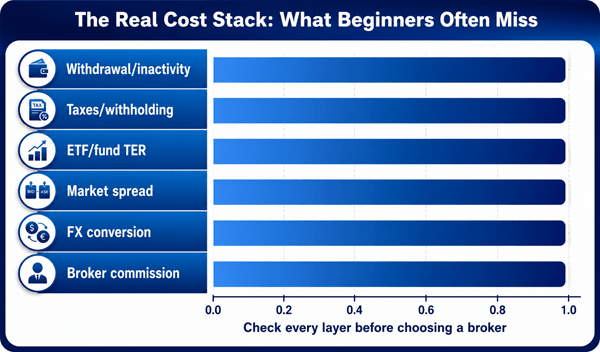
Figure 1: A beginner should compare total cost, not only advertised commission.
1. What is an international broker?
An international broker is an online brokerage platform that lets you buy and sell investments outside your home market or from outside the broker’s home country. In plain English: it is the app or website that connects your money to stock exchanges, ETFs, bonds, funds, options, and sometimes currencies around the world.
For example, a Pakistani, UAE, European, Singaporean, or Latin American investor may want to buy a U.S.-listed S&P 500 ETF, a London-listed global ETF, a Japanese stock, or a European dividend stock. The broker handles the account, order routing, custody, statements, tax forms, and currency conversion. The investor chooses what to buy and accepts the market risk.
The key difference from a local broker is reach. A local broker may only offer domestic stocks. A global broker may offer U.S., European, Asian, and other exchanges from one account. But more access also means more decisions: currency, taxes, trading hours, exchange fees, product restrictions, and customer support.
2. How international investing works, step by step
| Step | What happens | Beginner example |
|---|---|---|
| 1. Open account | You submit identity, address, tax residency, source of funds, and risk questions. | A UAE resident opens an IBKR account and selects base currency USD. |
| 2. Fund account | You send money by bank transfer or other supported method. | You deposit USD, EUR, GBP, or your local currency if supported. |
| 3. Convert currency | If your cash currency differs from the investment currency, the broker converts it or lets you convert manually. | You hold EUR but buy a U.S. ETF in USD, so EUR is converted to USD. |
| 4. Place order | You choose ticker, quantity, order type, and review estimated fees. | You buy 2 shares of an Ireland-domiciled global ETF on the London Stock Exchange. |
| 5. Broker executes | The order is routed to an exchange or venue. Execution price may differ slightly from the last displayed price. | A market order fills immediately, but a limit order waits for your chosen price. |
| 6. Custody and reporting | The broker records your ownership and provides statements, tax forms, and transaction history. | You see your ETF shares, cash balance, dividends, and realized gains/losses. |
3. The most important things beginners should know
3.1 Broker commission is only one cost
Many brokers advertise “zero commission,” but the real cost can still include FX conversion, exchange fees, spreads, custody fees, inactivity fees, withdrawal fees, product expense ratios, and tax leakage. A low-cost broker for U.S. stocks may be expensive for European ETFs, and a broker that looks costly per trade may be cheaper for large portfolios if it offers better FX rates and stronger market access.
3.2 Currency can help or hurt your return
International investors often think only about the stock price. But your final return is also affected by currency movement. If your home currency weakens against USD, your USD investments may look better in local terms. If your home currency strengthens, the opposite can happen. This is not a small detail; for cross-border investors it can be one of the biggest return drivers.
3.3 Investor protection is not the same as market protection
Investor compensation schemes generally protect against a broker failure or missing client assets, not against bad investments, market crashes, currency losses, or risky trading decisions. U.S. SIPC protection, for example, is designed for customer securities and cash at a failed SIPC-member brokerage and has limits. UK FSCS coverage also has eligibility rules and limits. Always confirm which legal entity holds your account.
3.4 Taxes can matter more than trading fees
A beginner may save $2 on commission but lose much more through avoidable tax drag. U.S. dividends paid to many non-U.S. investors may be subject to withholding tax. Estate tax, treaty eligibility, fund domicile, capital gains rules, and local reporting requirements vary by country. For long-term ETF investors outside the U.S., Ireland-domiciled UCITS ETFs are often discussed because of treaty and estate-planning considerations, but the right answer depends on the investor’s tax residence and goals.
3.5 Do not start with leverage, CFDs, options, or margin
Many broker apps make risky products look easy. Beginners should understand ordinary cash investing before using margin loans, leveraged ETFs, options, futures, forex, crypto, or contracts for difference. A platform that offers advanced tools is not a signal that a beginner should use every product on the menu.
4. Broker comparison for international investors in 2026
| Broker | Typical strengths | Fees to inspect closely | Best-fit user |
|---|---|---|---|
| Interactive Brokers | 170+ markets, multi-currency funding, stocks, ETFs, options, futures, bonds, funds, strong execution tools. | Tiered vs fixed commissions, FX conversion, market data subscriptions, exchange fees, margin interest. | Investors who want broad global access and are willing to learn a more advanced platform. |
| Charles Schwab International | U.S.-market access for eligible international clients, $0 online U.S. stock/ETF commissions, thinkorswim tools. | Options contract fees, broker-assisted fees, wire/transfer costs, availability by country. | Non-U.S. investors mainly focused on U.S. stocks, ETFs, Treasuries, and a strong U.S. broker brand. |
| Saxo | Premium global platform, broad stocks/ETFs/funds/bonds/options/futures access, research and multi-asset tools. | Minimum commissions, custody/service fees where applicable, FX spread/markup, bond and fund charges. | Investors who want a polished multi-asset platform and accept higher minimum trade costs. |
| DEGIRO | Low-cost European broker, many exchanges, ETF Core Selection with low handling fee. | €1 handling fee, connectivity fees, FX costs, exchange/product restrictions, no full-service advice. | European investors building simple stock/ETF portfolios with small to medium trade sizes. |
| Trading 212 | Very easy app, fractional shares, commission-free stocks/ETFs, demo account, multi-currency features. | 0.15% FX fee in many Invest/ISA/SIPP accounts, card deposit rules, CFD risks, entity-specific protections. | Beginners who want simple recurring investments and fractional shares. |
| eToro | Beginner-friendly interface, social feed, CopyTrader-style experience, demo portfolio, stocks/ETFs/crypto/CFDs depending on region. | Flat stock fee in many regions, FX conversion, withdrawal/inactivity, spreads, overnight CFD fees. | Learners who value a simple app and social investing features, but avoid copying blindly. |
| Swissquote | Swiss bank brand, broad market access, strong platform, stocks/ETFs/bonds/funds/structured products/crypto in some entities. | Minimum commissions, custody/admin fees, FX spreads, country/entity-specific pricing. | Investors who prioritize Swiss banking infrastructure and broad product access over lowest cost. |
5. Practical fee examples
5.1 Example A: Beginner buys a $500 U.S. ETF every month
Assume the investor’s home currency is not USD. The trade may look free, but the investor should ask: What is the FX fee? Is there a minimum commission? Is there a withdrawal fee? Are fractional shares available?
| Cost item | Why it matters on a $500 monthly investment | What to look for |
|---|---|---|
| Commission | A $1 commission is 0.20% of a $500 trade. Paid monthly, it adds up. | Zero or very low commission; no high minimum ticket charge. |
| FX conversion | A 0.15% FX fee is $0.75 per $500 conversion; a wider FX spread can cost more. | Transparent FX quote and ability to hold multiple currencies. |
| ETF expense ratio | A 0.07% ETF TER costs about $0.35 per year on $500, then grows with the portfolio. | Low-cost broad-market ETFs with good liquidity. |
| Spread | Thinly traded ETFs may cost more through bid-ask spread than through commission. | Use liquid ETFs and avoid trading when the market is closed or volatile. |
5.2 Example B: Investor buys €10,000 of a European ETF once per quarter
For larger trades, a broker with a slightly higher commission may still be attractive if FX is excellent and custody is strong. The investor should compare total cost in euros, not only the headline commission. A €5 minimum commission is only 0.05% on €10,000, but a 0.50% FX spread would cost €50.
5.3 Example C: Active trader uses options or margin
Active traders should compare options contract fees, margin rates, data packages, order routing, and execution quality. A platform built for long-term ETF investing may be cheap for buy-and-hold users but weak for advanced order types, options chains, or tax-lot management.
6. Detailed broker notes
6.1 Interactive Brokers (IBKR)
IBKR is usually the first broker serious international investors compare because of its global reach. It is designed for investors who want one account for many markets and currencies. The main advantage is flexibility: stocks, ETFs, bonds, options, futures, funds, and currency conversion are available in many jurisdictions. The main drawback is complexity. A new user can feel overwhelmed by permissions, data subscriptions, multiple platforms, order types, and account settings.
- Good for: global diversification, multi-currency cash, low-cost active trading, direct exchange access, larger portfolios.
- Less ideal for: people who want the simplest possible app and never want to learn order types or currency settings.
6.2 Charles Schwab International
Schwab International is attractive for eligible non-U.S. investors who mainly want U.S. market access. The biggest appeal is a strong U.S. brokerage brand, $0 online U.S. stock and ETF commissions, and the thinkorswim platform suite. It is not the same as having broad direct access to every global market, so it is best compared as a U.S.-market broker for international clients rather than a fully global exchange-access broker.
- Good for: U.S. stocks, U.S. ETFs, U.S. Treasuries, investors who value a large U.S. broker.
- Less ideal for: investors who want direct access to many non-U.S. exchanges from the same account.
6.3 Saxo
Saxo is a premium multi-asset broker with strong tools and broad investment coverage. It often suits investors who want a polished platform, research, and access to stocks, ETFs, funds, bonds, options, futures, and more. The trade-off is cost: minimum commissions and FX spreads can be more important for small investors than headline “from” prices suggest.
- Good for: investors who want broad products with a bank-style, professional platform feel.
- Less ideal for: tiny monthly trades where minimum commissions may be proportionally high.
6.4 DEGIRO
DEGIRO is popular in Europe because it offers low-cost access to many exchanges and a cheap ETF Core Selection structure. It can be a strong choice for European investors building a simple ETF portfolio. The important detail is that the low ETF pricing comes with rules, a handling fee, and a changing selection. Investors should also check connectivity fees and currency costs.
- Good for: European stock/ETF investors who want low trading costs and can work within the available products.
- Less ideal for: non-European investors or people needing advanced research, advice, or every global product.
6.5 Trading 212
Trading 212 is one of the easiest platforms for beginners in supported countries. Fractional shares and commission-free stock/ETF trading make it friendly for small recurring investments. The main thing to watch is currency conversion. A small FX fee can be fair and transparent, but it still matters when investing every month or switching currencies often.
- Good for: beginners, fractional shares, recurring deposits, simple stock/ETF portfolios.
- Less ideal for: advanced traders needing deep market access or complex order routing.
6.6 eToro
eToro is best known for social investing, an easy interface, and copy-style features. It can help beginners learn how markets are discussed, but copy investing should never be treated as a shortcut to expertise. A copied investor can change strategy, take hidden risks, use leverage, or suffer a large drawdown. The platform may also offer CFDs and crypto in some regions, which adds risk.
- Good for: learners who like a simple app, demo portfolio, and social investing features.
- Less ideal for: investors who want the lowest possible total cost or advanced portfolio control.
6.7 Swissquote
Swissquote appeals to investors who want a bank-backed platform with broad product access and a Swiss brand. It may be suitable for investors who value banking infrastructure, account reputation, and product breadth more than the absolute lowest trade cost. For small trades, minimum commissions can be a disadvantage, so it is important to calculate real trade cost.
- Good for: investors who value Swiss banking infrastructure and broad market access.
- Less ideal for: very small monthly investors who need ultra-low minimum fees.
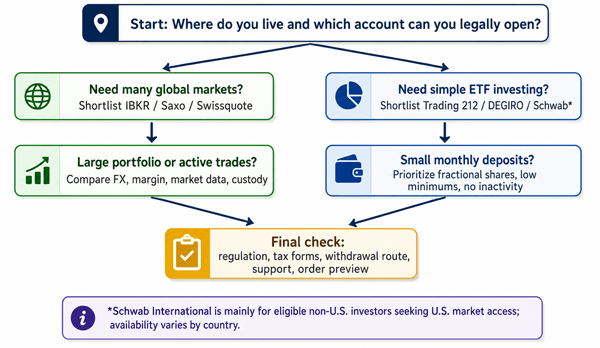
Figure 2: A simple decision path for choosing a broker.
7. How to choose the best broker: a practical checklist
| Question | Why it matters | Best answer for beginners |
|---|---|---|
| Can I legally open the account from my country? | Many brokers restrict countries because of regulation, sanctions, tax reporting, or operational risk. | Use the broker’s official country list and account-opening page. |
| Which legal entity holds my account? | Protection, regulator, complaint process, and tax forms depend on the entity. | Know whether it is U.S., UK, EU, Swiss, Australian, etc. |
| What markets do I actually need? | More markets sound impressive but may add complexity and data fees. | Most beginners only need broad ETFs and maybe a few stocks. |
| What is the all-in fee for my real trade size? | A $1 fee is tiny on $10,000 but expensive on $50. | Calculate commission + FX + spread + product TER + tax. |
| Can I hold multiple currencies? | Repeated forced conversions can quietly reduce returns. | Prefer multi-currency balances if you invest globally. |
| Is the platform easy enough to avoid mistakes? | A cheap broker is not cheap if you place the wrong order. | Use demo mode, order preview, and limit orders. |
| How will I withdraw money? | Some brokers support deposits more easily than withdrawals in certain countries. | Test with a small deposit and withdrawal before sending large funds. |
8. Beginner mistakes to avoid
- Choosing the broker only because a YouTuber or forum recommended it. Your country, tax status, currency, and trade size may be different.
- Ignoring FX costs. Currency conversion can cost more than stock commission, especially for frequent small trades.
- Buying U.S.-domiciled ETFs without understanding withholding tax, estate-tax exposure, or local reporting.
- Using market orders in illiquid ETFs or outside normal trading hours.
- Keeping too much idle cash in a broker without understanding where cash is held and what protection applies.
- Trying CFDs, options, margin, or leveraged products before understanding plain ETF investing.
- Not downloading monthly statements and trade confirmations. Good recordkeeping makes tax reporting easier.
- Confusing “regulated broker” with “risk-free investment.” Regulation reduces operational risk; it does not remove market risk.
9. A simple beginner portfolio example
A new international investor does not need a complicated portfolio. A simple structure could be:
| Goal | Example approach | Why it is beginner-friendly |
|---|---|---|
| Global stock growth | One broad global equity ETF or a U.S. total-market/S&P 500 ETF plus international ETF. | Diversified, low maintenance, easier to understand. |
| Lower volatility | Add a bond ETF or cash-like allocation depending on country, currency, and risk tolerance. | Reduces the pressure to sell stocks during a crash. |
| Monthly habit | Invest the same amount every month using low-fee recurring purchases. | Builds discipline and reduces the stress of timing the market. |
| Learning account | Keep 5% or less for individual stocks only after the core ETF plan is funded. | Allows learning without risking the whole portfolio on single stocks. |
Example: An investor with $300 per month might put all of it into a broad global ETF for the first year while learning taxes, statements, and market behavior. After the account reaches a meaningful size, they can decide whether to add bonds, regional ETFs, or individual stocks. This is often better than buying ten random stocks in the first week.
10. FAQ: common questions readers ask
10.1 What is the best broker for international investors in 2026?
For broad global access, Interactive Brokers is usually the strongest starting point. For simple U.S. market access, eligible international investors often compare Charles Schwab International. For European low-cost ETF investing, DEGIRO and Trading 212 are popular. For premium multi-asset platforms, Saxo and Swissquote are worth comparing. The best choice depends on country eligibility, account size, products, tax needs, and total fees.
10.2 Which broker has the lowest fees?
There is no single lowest-fee broker for every investor. Trading 212 may be very cheap for small stock/ETF trades in supported countries. DEGIRO may be cheap for European ETF investors using its Core Selection. IBKR may be cheaper for larger or more global portfolios because of FX and market access. Always compare your own trade size and currency route.
10.3 Can non-U.S. investors buy U.S. stocks?
Yes, many non-U.S. investors can buy U.S. stocks through international brokers if their country is supported and they complete tax documentation such as Form W-8BEN where required. However, dividend withholding tax, estate tax, and local reporting may apply.
10.4 Are international brokers safe?
A regulated broker can be safer than an unregulated platform, but no broker makes investments risk-free. Check the legal entity, regulator, investor compensation scheme, segregation of client assets, two-factor authentication, statements, and withdrawal process.
10.5 Should beginners use ETFs or individual stocks?
Most beginners are better served by diversified, low-cost ETFs before buying individual stocks. ETFs spread risk across many companies. Individual stocks require more research and can fall sharply even when the broad market is doing well.
10.6 Is copy trading a good idea?
Copy trading can be educational, but it is risky if used blindly. Past performance does not prove skill, and copied traders may use leverage, change strategy, or take concentrated bets. Beginners should understand every investment they own, even if someone else selected it.
11. Final verdict
The best broker for international investors in 2026 is not simply the broker with the lowest advertised commission. It is the broker that legally accepts you, gives access to the markets and ETFs you need, keeps total costs low, handles currency transparently, provides reliable statements, and fits your skill level.
For most readers, the practical shortlist is simple: start with IBKR if you need serious global access, Schwab International if you mainly want U.S. markets and are eligible, Saxo or Swissquote if you prefer a premium multi-asset/bank-style platform, DEGIRO if you are in Europe and want low-cost ETF access, and Trading 212 or eToro if you want a very simple app experience. Then compare total cost using your own country, currency, trade size, and tax situation.
The honest beginner rule is this: choose a broker you understand, start small, avoid leverage, buy diversified assets, keep records, and review fees before every trade. A good broker helps you invest efficiently; it does not replace patience, discipline, or research.
Sources Consulted and Checked
The following official sources were consulted and checked while preparing this article to support accuracy. Readers should still verify current fees, eligibility, protection rules, and product availability directly with the relevant official source.
| Source area | Used for | URL |
|---|---|---|
| Interactive Brokers | Official global access and commissions pages | https://www.interactivebrokers.com/en/whyib/global-access.php ; https://www.interactivebrokers.com/en/pricing/commissions-home.php |
| Charles Schwab International | Official international and pricing pages | https://international.schwab.com/ ; https://international.schwab.com/pricing |
| Saxo | Official pricing overview | https://www.home.saxo/rates-and-conditions/pricing-overview |
| DEGIRO | Official fees and 2026 fee schedule | https://www.degiro.com/uk/fees ; https://www.degiro.com/uk/data/pdf/uk/UK_Feeschedule.pdf |
| Trading 212 | Official fee/help pages | https://helpcentre.trading212.com/hc/en-us/articles/11471996799517-What-are-the-fees-in-the-Invest-ISAs-and-SIPP ; https://www.trading212.com/multi-currency |
| eToro | Official fee and ETF education pages | https://www.etoro.com/trading/fees/ ; https://www.etoro.com/investing/etf/ |
| Swissquote | Official stock/ETF pricing pages | https://www.swissquote.com/en-lu/private/trade/pricing/securities/stocks-etfs ; https://www.swissquote.com/en-ch/private/trade/pricing/securities/stocks |
| SIPC | Investor protection limits | https://www.sipc.org/for-investors/what-sipc-protects |
| FSCS | UK investment compensation limits | https://www.fscs.org.uk/what-we-cover/investments/ |
| SEC / Investor.gov | International investing and ADR education | https://www.sec.gov/investor/alerts/internationalinvestingbulletin.pdf ; https://www.investor.gov/introduction-investing/investing-basics/glossary/american-depositary-receipts-adrs |
Reader Advice
This article is provided only for educational and general information purposes and does not constitute personal financial, investment, tax, legal, or accounting advice. Broker availability, fees, commissions, foreign-exchange costs, account minimums, tax treatment, investor-protection coverage, and product access can vary by country, legal entity, account type, trade size, and time. Rules, prices, platform features, and eligibility requirements may change after publication.
Before opening an account, transferring funds, buying or selling an investment, or making any other financial decision, readers should independently verify all relevant facts and figures through the broker’s official website, the applicable regulator, and current local laws. Where appropriate, seek advice from a qualified professional who understands your personal circumstances. Investing involves risk, including possible loss of principal, and past performance does not guarantee future results.