Dividend Growth Stocks: What They Are and How They Build Wealth
1. What Are Dividend Growth Stocks?
Dividend growth stocks are shares of companies that not only pay dividends, but have a habit of raising those dividends over time. A dividend is a portion of a company's profit paid to shareholders. A dividend growth stock is different from a stock that simply has a high dividend yield. The focus is not just “How much does it pay today?” but “Can this company keep paying and increase the payment year after year?”
Think of it like a fruit tree. A normal dividend stock gives you fruit. A dividend growth stock is a tree that, if healthy, may give you more fruit as the years pass. The tree still needs care, the weather can be bad, and nothing is guaranteed. But the goal is to own strong businesses that generate enough cash to share with investors while still growing.
For beginners, dividend growth investing is attractive because it is easy to understand: buy quality businesses, receive dividends, reinvest them or use them as income, and let time and compounding do the heavy lifting. But the real skill is knowing the difference between a reliable dividend grower and a risky stock that only looks attractive because the yield is high.
| Term | Simple meaning | Why it matters |
|---|---|---|
| Dividend | Cash paid by a company to shareholders | Creates income without selling shares |
| Dividend yield | Annual dividend divided by share price | Shows today's income rate, but can be misleading |
| Dividend growth | The rate at which dividends increase over time | Helps income fight inflation |
| Payout ratio | Dividend as a share of earnings or cash flow | Shows whether the dividend is affordable |
| DRIP | Dividend reinvestment plan | Automatically buys more shares using dividends |
| Total return | Price gains plus dividends | The real measure of investment results |
2. How Dividend Growth Investing Works
The basic process has four parts: a company earns money, the board approves a dividend, shareholders receive the dividend, and investors decide whether to spend it or reinvest it. When the dividend rises over time, the investor's income can rise even if no new money is added.
Example: Suppose you buy 100 shares of a company at $50 per share. Your investment is $5,000. The company pays $1.50 per share in annual dividends, so you receive $150 in the first year. If the company raises the dividend by 6%, the next annual dividend becomes $1.59 per share. Your income rises to $159 without buying more shares. If you reinvest dividends, you may own more than 100 shares, so your income can grow from two sources: dividend increases and additional shares.
2.1 The three engines of wealth
Dividend growth stocks can build wealth through three engines working together: share price appreciation, growing dividend income, and reinvested dividends. Beginners often focus only on the dividend payment. Experienced investors focus on total return, business quality, and the durability of the cash flow that funds the dividend.
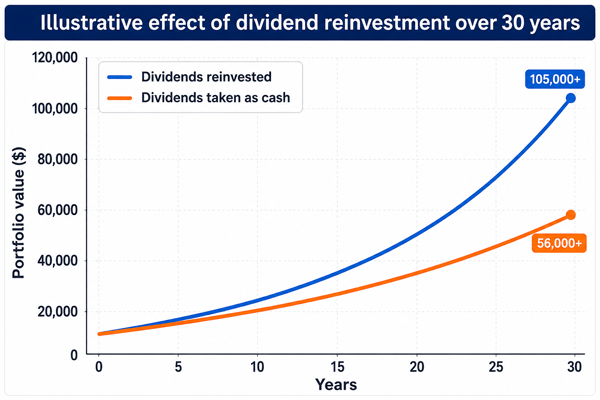
Figure 1. Illustration only: reinvesting dividends can compound ownership over time. Actual investment results depend on market prices, dividend policy, taxes, fees, and business performance.
| Engine | What happens | Beginner takeaway |
|---|---|---|
| Business growth | Revenue, earnings, and cash flow grow over time | Dividends are stronger when the business is stronger |
| Dividend increases | The company raises its payment per share | Your income may rise without selling shares |
| Reinvestment | Dividends buy more shares or fractional shares | More shares can produce more future dividends |
3. Why People Use Dividend Growth Stocks
Many real-world investors like dividend growth stocks because the strategy feels concrete. Instead of depending only on stock prices, they can see cash entering the account. Retirees may use dividends for living expenses. Younger investors may reinvest dividends to grow future income. Conservative investors may like companies that have proved they can return cash through different business cycles.
The emotional benefit is important. During a market decline, a portfolio value may fall on screen. But if the underlying companies keep earning money and raising dividends, some investors find it easier to stay disciplined. This does not remove risk, but it can improve behavior. In investing, behavior often matters as much as stock selection.
3.1 Common investor experiences
People who stick with dividend growth investing often describe the same pattern: the first few years feel slow, then the compounding becomes more visible. A $20 quarterly dividend may not feel exciting at first. But after years of reinvestment and dividend raises, the payment can become meaningful. This is why dividend growth investing is usually better suited to patient investors than short-term traders.
| Investor type | How they may use dividend growth stocks | Main caution |
|---|---|---|
| Beginner | Build a simple long-term portfolio and learn business fundamentals | Do not chase the highest yield |
| Working professional | Reinvest dividends while adding monthly contributions | Diversify across sectors and avoid overconcentration |
| Retiree | Use dividends as part of retirement income | Keep cash reserves; dividends are not guaranteed |
| Taxable-account investor | Favor qualified dividends where appropriate | Understand tax rules before making assumptions |
| ETF investor | Use dividend growth ETFs for diversification | Review fees, yield, holdings, and index methodology |
4. Dividend Growth vs High Dividend Yield
A high yield can look tempting. But a high yield is not automatically a good deal. Dividend yield rises when the dividend goes up, but it also rises when the stock price falls. Sometimes a stock yields 8%, 10%, or more because the market expects trouble. This is called a yield trap.
Dividend growth investing usually prefers a reasonable starting yield plus reliable growth. For example, a company yielding 2.5% and raising its dividend 7% per year may be more attractive than a company yielding 9% with weak earnings, heavy debt, and a possible dividend cut.
| Feature | Dividend growth stock | High-yield stock |
|---|---|---|
| Main appeal | Rising income over time | Higher income today |
| Typical yield | Often moderate | Often high |
| Best sign | Dividend supported by earnings and free cash flow | High yield supported by stable cash flow |
| Biggest risk | Overpaying for a “quality” stock | Dividend cut or yield trap |
| Good for | Long-term wealth building and inflation-fighting income | Income-focused portfolios when risk is understood |
| Beginner rule | Quality first, yield second | Investigate why the yield is high |
5. What Beginners Should Check Before Buying
A dividend growth stock should be analyzed like a business, not like a coupon. The dividend is only as safe as the company behind it. Beginners can use the following checklist before buying any individual stock.
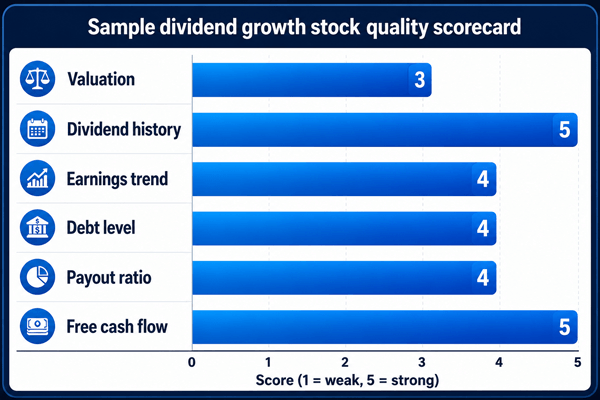
Figure 2. A simple scorecard helps beginners compare dividend quality instead of buying based only on yield.
| Metric | What to look for | Why it matters |
|---|---|---|
| Revenue trend | Stable or growing sales over several years | Falling sales can pressure future dividends |
| Earnings trend | Consistent profitability, not one good year | Dividends ultimately need profits |
| Free cash flow | Cash left after operating needs and capital spending | Many dividends are paid from cash flow |
| Payout ratio | Often safer when moderate, not stretched | A very high payout leaves little room for trouble |
| Debt level | Manageable debt and interest costs | High debt can compete with dividends |
| Dividend history | Years of steady payments and increases | Shows management commitment, but does not guarantee future payments |
| Dividend growth rate | Consistent raises, not just one large increase | Helps income keep up with inflation |
| Valuation | Reasonable price versus earnings, cash flow, and peers | Even great companies can be poor investments if bought too expensively |
Practical rule
A beginner should be suspicious when dividend yield is very high, payout ratio is stretched, debt is rising, earnings are falling, and management still promises everything is fine. The market often spots dividend risk before the cut is announced.
6. A Simple 7-Step Dividend Growth Investing Strategy
6.1 Start with the goal
Ask: do you want income today, income later, or a balance of income and growth? A 25-year-old reinvesting dividends may choose lower yield and higher dividend growth. A retiree may prefer more current income, but still needs quality and diversification.
6.2 Choose stocks, ETFs, or both
Individual dividend growth stocks offer control, but require research. Dividend growth ETFs offer diversification and convenience, but they charge fees and may hold companies you would not choose individually. Many beginners start with a broad index fund or dividend growth ETF, then add a small number of individual stocks only after learning how to analyze them.
6.3 Screen, but do not blindly trust screens
A stock screen can help find companies with dividend growth, moderate payout ratios, and reasonable yields. But a screen cannot read the story behind the numbers. Always check why the dividend is growing and whether the business can support it.
6.4 Read the dividend record
Look at how many consecutive years the company has raised its dividend. The S&P 500 Dividend Aristocrats are S&P 500 companies that have increased dividends every year for at least 25 consecutive years, which is a strict test of consistency. Still, even long histories can end if the business weakens.
6.5 Check dividend safety
Compare dividends with earnings and free cash flow. If a company earns $2 per share and pays $1 per share, the payout ratio is 50%. If it earns $2 and pays $2.20, the dividend may be funded by cash reserves, borrowing, asset sales, or temporary accounting differences. That deserves deeper review.
6.6 Buy in a disciplined way
Instead of investing all money at once, many beginners use dollar-cost averaging: investing a fixed amount regularly. This can reduce the stress of trying to pick the perfect price. It does not guarantee profit, but it supports discipline.
6.7 Monitor, but do not obsess
A dividend growth investor does not need to check prices every hour. More useful is a quarterly or semiannual review: Did the company raise the dividend? Are earnings and cash flow stable? Has debt changed? Is the original reason for buying still true?
7. Practical Example: How Dividend Growth Builds Income
Imagine an investor buys $10,000 of a dividend growth stock at a 3% starting yield. The first-year dividend is $300. If the dividend grows 6% per year, the dividend per share roughly doubles in about 12 years. If dividends are reinvested, the investor may own more shares too, so income can grow faster than the dividend rate alone.
This example is simplified. It assumes the dividend keeps growing, the business remains healthy, and reinvestment happens without major tax or fee drag. Real life is uneven. Some companies raise dividends slowly, some pause increases, and some cut dividends. That is why diversification matters.
| Year | Estimated annual dividend on original $10,000 at 6% annual growth | What it shows |
|---|---|---|
| 1 | $300 | Starting income |
| 5 | $379 | Income growth begins to show |
| 10 | $507 | The dividend stream is meaningfully higher |
| 15 | $678 | Long holding periods matter |
| 20 | $908 | Income can compound if the company keeps growing |
8. What Is a DRIP and Should Beginners Use It?
A dividend reinvestment plan, often called a DRIP, automatically uses cash dividends to buy additional shares of the same investment. Investor.gov describes DRIPs as plans that let investors automatically reinvest dividends by purchasing more shares, often including fractional shares. Many brokers now offer automatic dividend reinvestment for stocks and ETFs.
DRIPs are useful because they remove friction. The investor does not need to manually place small trades every quarter. Over time, reinvestment can increase share count, and a higher share count can produce more future dividends. This is the snowball effect dividend investors talk about.
8.1 When reinvestment makes sense
Reinvestment often makes sense for long-term investors who do not need the income now, who are still building wealth, and who want a simple automated process. It can be especially helpful in retirement accounts where taxes on reinvested dividends may be deferred or managed differently, depending on account type and jurisdiction.
8.2 When taking cash may make sense
Taking dividends as cash may make sense for retirees, for investors who want to rebalance, or when the stock has become overvalued. Some investors collect dividends in cash and then reinvest into whichever holding is most attractively valued.
| Choice | Best for | Trade-off |
|---|---|---|
| Automatic DRIP | Hands-off compounding and long time horizons | Can buy more shares even when the stock is expensive |
| Take cash | Income needs or flexible reinvestment | Requires discipline to reinvest instead of spend |
| Hybrid | Use some dividends, reinvest the rest | Needs more tracking |
9. Risks Beginners Must Understand
Dividend growth stocks are still stocks. They can fall sharply in price. A company can reduce or stop its dividend. A popular dividend stock can become overpriced. A “safe” sector can face new competition, regulation, technology disruption, or interest-rate pressure.
9.1 Dividend cuts
A dividend cut can hurt twice: income falls and the stock price may drop because investors lose confidence. Warning signs include falling earnings, negative free cash flow, rising debt, a payout ratio above sustainable levels, and management using optimistic language without matching numbers.
9.2 Yield traps
A yield trap happens when investors buy a stock because the yield is high, but the yield is high because the stock price has collapsed. The dividend may soon be cut. A beginner should ask: “Why is the market offering such a high yield?”
9.3 Sector concentration
Dividend portfolios can become too concentrated in utilities, banks, telecoms, energy, consumer staples, or real estate. These sectors can be useful, but too much concentration creates hidden risk. Diversification across sectors and business models is important.
9.4 Inflation risk
A flat dividend loses purchasing power over time. This is one reason dividend growth matters. A 4% yield with no growth may be less attractive than a 2.5% yield that grows consistently, depending on the investor's needs and the company's quality.
9.5 Tax drag
In taxable accounts, dividends may create annual taxes even when reinvested. Qualified dividends in the U.S. are generally taxed at favorable long-term capital gains rates for eligible investors, while ordinary dividends are taxed at ordinary income rates. Rules vary by country and personal situation, so tax advice should come from a qualified tax professional.
| Red flag | Why it matters | Beginner response |
|---|---|---|
| Yield far above peers | Market may expect a cut | Investigate before buying |
| Payout ratio too high | Dividend may not be affordable | Check cash flow and debt |
| Debt rising fast | Interest costs can squeeze dividends | Compare debt to peers |
| Earnings declining | Business may be weakening | Do not rely only on history |
| No dividend growth | Income may lag inflation | Ask why growth stopped |
| Management promises without numbers | Story may be covering weakness | Trust financial statements more than slogans |
10. Dividend Taxes: Beginner-Friendly Explanation
Taxes can change the real return from dividend investing. In the U.S., qualified dividends are generally taxed at lower long-term capital-gains rates when eligibility requirements are met, while non-qualified dividends are generally taxed as ordinary income. The applicable rate depends on taxable income, filing status, current law, and other individual circumstances. Some higher-income investors may also face additional taxes.
A common beginner mistake is assuming reinvested dividends are not taxable. In many taxable accounts, a dividend can be taxable even if it is automatically reinvested. The investor did receive income; they simply used it to buy more shares.
Tax treatment depends on account type, holding period, the type of dividend, the investor's income, and local law. Tax rules and thresholds can change, so readers should verify current requirements through official tax authorities or consult a qualified tax professional.
| Account/location | Potential benefit | Important note |
|---|---|---|
| Taxable brokerage account | Qualified dividends may receive favorable rates for eligible investors | Taxes may be due each year |
| Traditional retirement account | May defer taxes until withdrawal, depending on rules | Withdrawals may be taxed as ordinary income |
| Roth-style retirement account | Qualified withdrawals may be tax-free under rules | Contribution and income limits may apply |
| Non-U.S. investor | May access global dividend companies or ETFs | Withholding taxes and local rules matter |
11. How to Build a Beginner Dividend Growth Portfolio
A simple dividend growth portfolio should be diversified, understandable, and easy to maintain. Beginners do not need dozens of complicated positions. They need a clear framework.
11.1 Option A: ETF-first approach
This approach uses one or more dividend growth ETFs as the foundation. It is simple, diversified, and easier to manage. The investor should compare expense ratios, index methodology, number of holdings, sector exposure, dividend growth record, and yield.
11.2 Option B: Core-and-satellite approach
Use broad market index funds or dividend growth ETFs as the core, then add a small number of individual dividend growth stocks as satellites. This gives diversification while allowing learning and customization.
11.3 Option C: Individual-stock approach
This approach can work for investors who enjoy research and can monitor companies. It requires discipline. A beginner should avoid putting too much money into one company, even if it looks safe.
| Approach | Pros | Cons | Who it fits |
|---|---|---|---|
| ETF-first | Simple, diversified, low maintenance | Less control over holdings | Most beginners |
| Core-and-satellite | Balanced, educational, customizable | Needs some research | Beginners who want to learn |
| Individual stocks | Full control, no ETF expense ratio | Higher research burden and company-specific risk | Experienced investors |
| High-yield income portfolio | More income today | Higher dividend-cut risk if quality is weak | Income-focused investors who understand risk |
12. Common Dividend Growth Investing Mistakes
12.1 Mistake 1: Buying only for yield
Yield is only one number. A dividend is attractive only if it is sustainable. A 10% yield that gets cut to 0% is not income; it is a warning sign that was ignored.
12.2 Mistake 2: Ignoring total return
A stock can pay dividends but still be a poor investment if the business shrinks and the share price falls for years. Always evaluate total return: dividends plus price changes.
12.3 Mistake 3: Confusing history with safety
A long dividend record is useful evidence, not a guarantee. Businesses change. Debt costs rise. Consumer habits shift. Technology disrupts old models.
12.4 Mistake 4: Over-diversifying into weak ideas
Owning 50 stocks does not help if many are low quality. Diversification should reduce risk, not become an excuse to buy companies you do not understand.
12.5 Mistake 5: Selling just because the price drops
A price decline is not automatically a sell signal. Ask whether the business thesis is broken. If the business remains strong and the dividend remains well covered, a lower price may be an opportunity. If fundamentals are deteriorating, it may be a warning.
13. Actionable Beginner Workflow
Here is a simple process a beginner can follow before buying a dividend growth stock. It is designed to slow down emotional decisions and focus on evidence.
| Step | Question to answer | Pass/fail guide |
|---|---|---|
| 1 | Do I understand how this company makes money? | If not, skip it |
| 2 | Has revenue and earnings been stable or growing? | Avoid businesses in long-term decline unless you are highly experienced |
| 3 | Is free cash flow enough to cover the dividend? | Prefer a comfortable margin of safety |
| 4 | Is debt manageable? | Compare debt and interest coverage with peers |
| 5 | Has the dividend grown consistently? | Look for a pattern, not one special payment |
| 6 | Is valuation reasonable? | Great company + bad price can still disappoint |
| 7 | How much of my portfolio will this be? | Limit single-stock risk |
| 8 | What would make me sell? | Write the reason before buying |
14. Dividend Growth Stocks vs Growth Stocks vs Bonds
Dividend growth stocks are not automatically better than growth stocks or bonds. They serve different purposes. Growth stocks may reinvest profits instead of paying dividends, which can create strong capital appreciation if the business succeeds. Bonds may offer more predictable income but less long-term growth potential. Dividend growth stocks sit between these ideas: they aim for both income and business growth.
| Investment type | Main goal | Income | Growth potential | Key risk |
|---|---|---|---|---|
| Dividend growth stocks | Rising income + total return | Moderate and growing | Moderate to high | Dividend cuts and stock volatility |
| High-growth stocks | Capital appreciation | Low or none | High but uncertain | Valuation crashes and business risk |
| Bonds | Stability and income | Usually fixed | Usually lower | Interest-rate and credit risk |
| High-yield stocks | Income now | High | Varies | Yield traps and cuts |
| Dividend ETFs | Diversified dividend exposure | Varies | Varies | Index rules, fees, sector concentration |
15. Best Practices for Honest, Sustainable Dividend Investing
The best dividend growth strategy is not about finding a magic list of the best dividend growth stocks. It is about building a repeatable process. Focus on companies with durable competitive advantages, manageable debt, consistent cash flow, shareholder-friendly management, and reasonable valuations.
Avoid promises like “guaranteed passive income” or “safe 10% yield.” Good investing content should be honest: dividends are useful, but not guaranteed; compounding is powerful, but slow; income can grow, but only if the underlying businesses remain healthy.
A practical target for beginners is not perfection. It is avoiding big mistakes: chasing yield, concentrating too heavily, ignoring debt, misunderstanding taxes, and selling in panic.
One-sentence summary
Dividend growth investing works best when you buy financially strong businesses at reasonable prices, reinvest or wisely use the dividends, diversify properly, and give compounding enough time to matter.
16. Frequently Asked Questions
16.1 Are dividend growth stocks safe?
They can be lower-risk than speculative stocks, but they are not risk-free. Prices can fall and dividends can be cut.
16.2 What is a good dividend yield?
It depends on the sector, interest rates, growth rate, and business quality. For beginners, a sustainable 2% to 4% yield with consistent growth may be healthier than an unusually high yield with weak fundamentals.
16.3 Can I live off dividends?
Some investors do, but it usually requires a large portfolio, diversification, tax planning, and realistic spending. Dividends should be one part of a broader retirement income plan.
16.4 Should beginners buy individual dividend stocks or ETFs?
Many beginners are better served by starting with diversified funds or ETFs, then learning individual stock analysis slowly.
16.5 Do dividend stocks outperform the market?
Sometimes they do and sometimes they do not. Dividend growth stocks may offer quality, income, and lower volatility in some periods, but broad market funds may outperform in growth-led markets.
16.6 Are Dividend Aristocrats always good buys?
No. The 25-year dividend growth record is impressive, but valuation and future business quality still matter.
16.7 What is better: dividend growth or high yield?
For long-term wealth building, dividend growth often provides a healthier balance. For current income, high yield may help, but only when the payout is sustainable.
16.8 How many dividend stocks should I own?
There is no perfect number. Enough to diversify company-specific risk, but not so many that you cannot monitor them. ETFs can solve this problem for many beginners.
17. Final Takeaway
Dividend growth stocks are not a shortcut to wealth. They are a patient strategy built on business quality, growing cash flow, disciplined reinvestment, and time. For beginners, the most important lesson is simple: do not buy a dividend; buy a business that can support and grow that dividend.
Used wisely, dividend growth investing can help create a passive income portfolio, support retirement income planning, and make long-term investing feel more tangible. Used carelessly, it can lead to yield traps, tax surprises, and poor diversification. The difference is process.
A good beginner plan is to start simple, diversify, reinvest when appropriate, study dividend safety, and review holdings with calm discipline. Wealth from dividend growth investing is usually built quietly, one dividend raise and one reinvested payment at a time.
Sources Consulted and Checked
The following authoritative and reputable sources were consulted and checked while preparing this article and reviewing its accuracy. Readers should use the latest official guidance because rules, tax thresholds, methodologies, and market information may change.
- Investor.gov, “Dividend Reinvestment Plans (DRIPs)” - https://www.investor.gov/introduction-investing/investing-basics/glossary/dividend-reinvestment-plans-drips
- FINRA, “Stocks” investor education page - https://www.finra.org/investors/investing/investment-products/stocks
- S&P Dow Jones Indices, “S&P 500 Dividend Aristocrats” - https://www.spglobal.com/spdji/en/indices/dividends-factors/sp-500-dividend-aristocrats/
- S&P Dow Jones Indices, “S&P Dividend Aristocrats Indices Methodology” - https://www.spglobal.com/spdji/pt/documents/methodologies/methodology-sp-dividend-aristocrats-indices.pdf
- IRS, “Topic no. 409, Capital gains and losses” - https://www.irs.gov/taxtopics/tc409
- Fidelity, “Capital gains tax rates 2026” - https://www.fidelity.com/learning-center/smart-money/capital-gains-tax-rates
- Charles Schwab, “Why and How to Invest in Dividend-Paying Stocks” - https://www.schwab.com/learn/story/it-may-be-time-to-consider-dividend-paying-stocks
Reader Advice
This article is provided solely for educational and informational purposes and does not constitute personal financial, investment, tax, accounting, or legal advice. Dividend-paying stocks and funds can lose value, and dividends may be reduced, suspended, frozen, or cancelled. Examples, figures, yields, growth rates, tax treatments, and other facts are illustrative or general in nature and may not apply to every reader.
Before making any decision, readers should assess their objectives, financial circumstances, risk tolerance, time horizon, diversification needs, fees, and tax position. Laws, regulations, tax thresholds, index rules, company policies, and market conditions may change and may also differ by country, account type, and personal circumstances. Readers should therefore verify important facts and figures through the latest official sources and, where appropriate, seek advice from suitably qualified financial, tax, or legal professionals.