10 Best Dividend Growth Stocks for Long-Term Investing
1. Quick Answer: What Are Dividend Growth Stocks?
Dividend growth stocks are shares of companies that not only pay dividends but also have a habit of increasing those dividends over time. Instead of chasing the highest yield today, dividend growth investors look for businesses that can keep raising payments because their earnings, free cash flow, balance sheet, and competitive advantages are strong enough to support future increases.
For a beginner, the easiest way to understand this is simple: a normal dividend stock may pay you income; a dividend growth stock tries to make that income larger over time. If the company also grows in value, the investor can benefit from both cash dividends and capital appreciation.
The best dividend growth stocks are usually not exciting in the same way as high-flying growth stocks. They tend to be boring, profitable, repeat-purchase businesses: healthcare, consumer staples, restaurants, payroll software, retailers, and industrial or semiconductor companies with durable cash flow. Boring can be powerful when the goal is long-term investing, retirement income, or building a passive income portfolio slowly and responsibly.
2. How Dividend Growth Investing Works
A dividend is a portion of a company’s profit paid to shareholders. Public companies often pay dividends on a fixed schedule, commonly quarterly in the U.S. A dividend growth strategy focuses on companies that have enough financial strength to raise those payments year after year.
Here is the basic cycle. You buy shares of a dividend-paying company. The company earns profits and generates cash. Management decides how much cash to reinvest in the business, how much to use for debt reduction or buybacks, and how much to pay as dividends. If the company’s profits and cash flow grow, the board may raise the dividend. If you reinvest those dividends, you buy more shares, which can create a compounding effect over many years.
Dividend growth is different from high-yield investing. A 7% or 9% yield may look attractive, but a very high yield can be a warning sign if the share price has fallen because the market expects trouble. A 2% to 4% yield from a strong business that raises its dividend consistently can sometimes be healthier than a 9% yield from a weak company that may cut the payout.
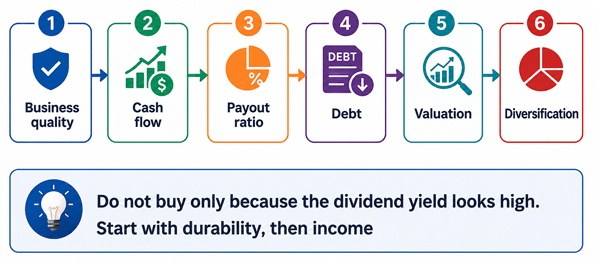
Figure 1. A beginner-friendly dividend stock screening process.
3. Key Dividend Terms Beginners Must Know
| Term | Plain-English meaning | Why it matters |
|---|---|---|
| Dividend yield | Annual dividend divided by stock price. | Shows income rate, but a high yield can be a trap. |
| Dividend growth rate | How fast the dividend rises over time. | A lower yield with faster growth may beat a stagnant high yield. |
| Payout ratio | Dividends divided by earnings, or dividends divided by free cash flow. | A very high payout ratio may be hard to sustain. |
| Free cash flow | Cash left after normal capital spending. | Dividends are paid with cash, not accounting headlines. |
| Dividend Aristocrat | S&P 500 company with at least 25 straight years of dividend increases. | A useful quality screen, not an automatic buy signal. |
| Dividend King | Company with at least 50 straight years of dividend increases. | Shows unusual consistency, but valuation and future growth still matter. |
| DRIP | Dividend reinvestment plan. | Automatically uses dividends to buy more shares, helping compounding. |
| Ex-dividend date | The cutoff date for receiving the next dividend. | Buying after this date means you do not receive the next scheduled payment. |
4. How This List Was Built
This list is designed for educational research, not as a personal buy list. The focus is on quality dividend growth stocks with long operating histories, durable business models, recognizable competitive advantages, and shareholder-return records. The list intentionally mixes sectors because a beginner should not build a dividend portfolio from only one industry.
The 10 names below were screened for: dividend growth history, business durability, cash-flow profile, balance-sheet discipline, dividend culture, and usefulness in a long-term portfolio. Approximate yields use market prices available on June 22, 2026 and the latest annualized dividend information available from company announcements or investor-relations materials. Yields move every day as stock prices change.
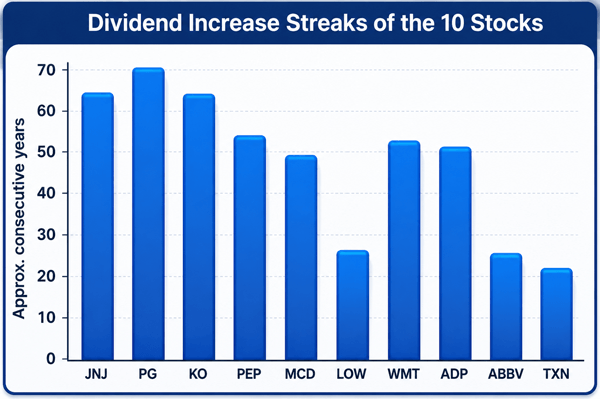
Figure 2. Dividend streaks show consistency, but they are only the starting point, not the full investment case.
5. Comparison Table: 10 Dividend Growth Stocks to Research
Use this as a research watchlist, not as a buy list. The dividend yield changes daily with the stock price, so recheck figures before investing.
| Ticker | Company | Sector | Dividend streak | Annual dividend | Approx. yield |
|---|---|---|---|---|---|
| JNJ | Johnson & Johnson | Healthcare | 64 years | $5.36 | ~2.3% |
| PG | Procter & Gamble | Consumer staples | 70 years | $4.354 | ~2.9% |
| KO | Coca-Cola | Beverages | 64 years | $2.12 | ~2.7% |
| PEP | PepsiCo | Snacks & beverages | 54 years | ~$5.69 | ~4.0% |
| MCD | McDonald's | Restaurants | 49 years | $7.44 | ~2.7% |
| LOW | Lowe's | Home improvement retail | 25+ years | $5.00 | ~2.3% |
| WMT | Walmart | Retail | 53 years | $0.99 | ~0.8% |
| ADP | Automatic Data Processing | Payroll & HCM software | 51 years | $6.80 | ~3.2% |
| ABBV | AbbVie | Biopharma | 25+ years | $6.92 | ~3.0% |
| TXN | Texas Instruments | Semiconductors | 22 years | $5.68 | ~1.7% |
6. What Makes Each Stock Attractive - and What Could Go Wrong
| Ticker | Why dividend investors like it | Main risk to monitor |
|---|---|---|
| JNJ | Defensive healthcare scale; broad medicines and medtech exposure | Patent, litigation, regulatory and drug pipeline risk |
| PG | Household brands, repeat purchases, strong cash generation | Slow volume growth and private-label competition |
| KO | Global brand portfolio and high-margin concentrate model | Currency, sugar/health trends and valuation risk |
| PEP | Snacks plus beverages; strong distribution and brand shelf space | North America growth pressure and input-cost risk |
| MCD | Franchise-heavy model, global scale, cash returns | Consumer slowdown, franchisee costs, food inflation |
| LOW | Home repair/remodel demand and disciplined buybacks | Housing cycle, big-ticket discretionary spending |
| WMT | Scale, grocery traffic, e-commerce and advertising growth | Thin retail margins and high valuation |
| ADP | Sticky payroll clients, recurring revenue, strong balance sheet | Employment cycle and software competition |
| ABBV | Large immunology pipeline and shareholder-return focus | Patent cliffs, acquisitions and trial/regulatory risk |
| TXN | Analog chip scale, long product cycles, capital discipline | Cyclical chip demand and high capex/valuation risk |
6.1 Johnson & Johnson (JNJ)
Best for: defensive healthcare dividend growth
Johnson & Johnson is often used as a core dividend growth example because healthcare demand does not disappear during recessions. The company has medicines and medical technology businesses, and its dividend record shows a strong internal culture of returning cash to shareholders.
Beginner watchout: A beginner should not buy JNJ only because it is famous. The key questions are whether new medicines and medical devices can offset patent expirations, pricing pressure, litigation costs, and regulatory risk. For long-term investors, JNJ can be a stabilizer, but it still needs valuation discipline.
6.2 Procter & Gamble (PG)
Best for: household-brand stability
P&G sells everyday products that people buy repeatedly: grooming, cleaning, baby care, fabric care, and personal care. That repeat demand is why many dividend investors like consumer staples. P&G is not usually a fast-growth stock, but it can be a useful income compounder when purchased at a reasonable price.
Beginner watchout: The risk is slow growth. If consumers trade down to cheaper private-label brands or if input costs rise faster than pricing power, dividend growth can slow. PG is often valued richly because investors respect its safety, so beginners should avoid overpaying for comfort.
6.3 Coca-Cola (KO)
Best for: global brand power and simple business economics
Coca-Cola is a classic blue-chip dividend stock. Its concentrate and bottling system gives it global scale, strong brand recognition, and exposure to many markets. The stock appeals to investors who want predictable cash flow rather than dramatic growth.
Beginner watchout: KO is not risk-free. Currency swings, health concerns around sugar, changing consumer habits, and high valuation can all hurt returns. The practical lesson: a wonderful brand can still be a poor investment if bought at too high a price.
6.4 PepsiCo (PEP)
Best for: snacks plus beverage diversification
PepsiCo is more diversified than many people realize. Its snack brands are a major part of the business, and snacks can be resilient because they are low-ticket, repeat purchases. The 2026 dividend increase continued a long record of shareholder returns.
Beginner watchout: The current investor concern is growth pressure in North America, price sensitivity, and the need to refresh the product portfolio. PEP can be useful in a dividend portfolio, but investors should watch organic sales growth, margins, and debt after acquisitions or restructuring.
6.5 McDonald’s (MCD)
Best for: franchise economics and global restaurant scale
McDonald’s is not just a burger chain; it is a global franchise and real estate system. Franchise-heavy restaurants can generate strong cash flow because franchisees carry much of the store-level operating cost. This is why McDonald’s has been able to keep raising dividends for decades.
Beginner watchout: Risks include weak consumer spending, wage inflation, food inflation, franchisee profitability, and brand execution. The stock can also become expensive when investors treat it like a defensive bond substitute.
6.6 Lowe’s (LOW)
Best for: home improvement dividend growth
Lowe’s benefits from repair, maintenance, remodeling, and long-term housing needs. A homeowner may delay a luxury purchase, but broken appliances, roofing issues, and maintenance still create demand. Lowe’s has also used buybacks aggressively, which can lift per-share results when done wisely.
Beginner watchout: The business is cyclical. Higher mortgage rates, weak home sales, and pressure on big-ticket projects can hurt revenue. Beginners should understand that LOW can be a strong dividend growth stock but may feel more volatile than a consumer-staples company.
6.7 Walmart (WMT)
Best for: defensive retail scale
Walmart is one of the largest retailers in the world and benefits from grocery traffic, value pricing, supply-chain scale, e-commerce, membership, and advertising opportunities. The dividend yield is low, but the dividend streak is long, which makes Walmart more of a stability and total-return candidate than a high-income stock.
Beginner watchout: Walmart’s main challenge is that retail margins are thin. A small mistake in inventory, wages, logistics, or pricing can affect profit. Also, a low yield means investors need earnings growth and valuation support for attractive total returns.
6.8 Automatic Data Processing (ADP)
Best for: recurring software-like cash flow
ADP processes payroll and provides human capital management services. Payroll is mission-critical; businesses do not casually switch providers because errors can create tax, employee, and compliance problems. That stickiness supports recurring revenue and a long dividend growth record.
Beginner watchout: ADP is still linked to the employment cycle. If job growth slows, payroll volumes can weaken. It also faces technology competition. Investors should watch client retention, margins, new bookings, and whether valuation already reflects the quality of the business.
6.9 AbbVie (ABBV)
Best for: higher-yield healthcare income with pipeline upside
AbbVie is attractive to many income investors because its dividend yield is higher than many blue-chip stocks and management has shown a strong commitment to dividends since the company separated from Abbott. Its newer immunology drugs and pipeline are central to the long-term story.
Beginner watchout: Biopharma dividends depend on successful drug pipelines. Patent cliffs, failed trials, regulation, pricing pressure, and large acquisitions can all change the outlook. ABBV may be useful for income, but it requires more monitoring than a simple consumer-staples stock.
6.10 Texas Instruments (TXN)
Best for: semiconductor dividend growth with industrial exposure
Texas Instruments makes analog and embedded chips used in industrial, automotive, and electronic applications. Its products often have long life cycles, and the company has a culture of returning cash to shareholders through dividends and buybacks.
Beginner watchout: The biggest risk is cyclicality. Semiconductor demand can rise and fall sharply, and TXN has invested heavily in manufacturing capacity. Dividend investors should watch free cash flow, inventory cycles, and whether capital spending eventually produces the expected return.
7. How a Beginner Can Use Dividend Growth Stocks
A beginner should start with process, not excitement. Dividend growth investing works best when it is boring, repeatable, and diversified. The goal is not to find a magic stock. The goal is to build a portfolio of durable businesses, buy them at fair prices over time, reinvest dividends when appropriate, and avoid permanent capital loss from weak companies or dividend traps.
A simple starting approach is to create a watchlist, not immediately buy everything. Track each company’s yield, payout ratio, free cash flow, debt, dividend increase history, and valuation. When the market sells off a high-quality company for a temporary reason, that can create a better entry point. When the market overpays for safety, patience may be smarter.
7.1 Practical Example: Reinvesting Dividends
Imagine an investor puts $10,000 into a diversified basket of dividend growth stocks with a starting yield of 3%. The first-year dividend income is about $300. If the dividends grow by 6% per year and the investor reinvests them, the income stream can grow faster than the original yield suggests. This is not guaranteed, but it shows why dividend growth investors focus on time, patience, and reinvestment rather than quick income.
| Year | Estimated annual dividend income | What changed | Beginner lesson |
|---|---|---|---|
| 1 | $300 | Starting 3% yield | Income begins small. |
| 5 | ~$379 | 6% yearly dividend growth | Growth matters more over time. |
| 10 | ~$507 | Dividends keep rising | Patience starts to show. |
| 20 | ~$905 | Long compounding period | Time is the real engine. |
This example is simplified. Real returns depend on stock prices, dividend changes, taxes, fees, reinvestment prices, and whether any company cuts its dividend.
8. Dividend Growth Stock Checklist
- Is the company profitable through different economic cycles?
- Has revenue, earnings, and free cash flow grown over time?
- Is the dividend covered by earnings and free cash flow?
- Is debt reasonable for the industry?
- Does management clearly prioritize sustainable dividends, not just buybacks?
- Is the stock valuation reasonable compared with its growth rate?
- Would you still want to own the business if the stock market closed for five years?
- Does the stock diversify your portfolio, or are you buying too much of one sector?
9. Common Dividend Mistakes Beginners Should Avoid
| Mistake | Why it hurts | Better practice |
|---|---|---|
| Chasing the highest yield | The yield may be high because the stock price is falling before a dividend cut. | Ask why the yield is high and check payout ratio, debt, and cash flow. |
| Ignoring valuation | A great company can produce weak returns if bought too expensively. | Compare P/E, free cash flow yield, growth rate, and history. |
| Owning one sector only | Many dividend investors overload utilities, banks, REITs, or consumer staples. | Diversify across sectors and include ETFs if needed. |
| Thinking dividends are free money | The stock price adjusts around dividends and the company uses cash to pay them. | Focus on total return: dividends plus price growth. |
| Never reviewing holdings | Businesses change, debt rises, patents expire, and competition appears. | Review earnings, cash flow, and dividend safety at least quarterly or annually. |
| Confusing a long streak with safety | Even long-time dividend payers can stumble. | Use dividend history as a starting filter, not a final answer. |
10. Sample Portfolio Ideas for Different Beginners
These are educational frameworks, not recommended portfolios. They show how a beginner might think about position sizing and diversification.
| Investor type | Possible structure | Why it may fit | Main caution |
|---|---|---|---|
| Very new beginner | 70% broad-market ETF, 20% dividend-growth ETF, 10% individual dividend stocks | Reduces single-stock risk while learning. | Less exciting, but safer for skill-building. |
| Income-focused learner | 50% dividend-growth ETF, 30% blue-chip dividend stocks, 20% bonds/cash equivalents | Balances income with diversification. | May lag growth-heavy markets. |
| Experienced long-term investor | 10-25 individual dividend growth stocks across sectors plus core ETFs | More control over quality and valuation. | Requires research and emotional discipline. |
11. Frequently Asked Questions
11.1 Are dividend growth stocks good for beginners?
They can be, if used with diversification and basic research. Beginners should not buy individual stocks before understanding volatility, payout ratios, taxes, and valuation.
11.2 Is a high dividend yield always better?
No. A high yield can signal danger. A sustainable 2% to 4% yield with steady dividend growth may be healthier than an 8% yield that gets cut.
11.3 Should I reinvest dividends?
For long-term wealth building, reinvesting can help compounding. For retirees or income investors, taking dividends as cash may make sense. The right choice depends on goals and tax situation.
11.4 How many dividend growth stocks should I own?
Many beginners are better served by ETFs first. If using individual stocks, 10 to 25 companies across sectors is often more sensible than concentrating in only a few names.
11.5 Can dividend stocks lose money?
Yes. Stock prices can fall sharply, and dividends can be reduced or suspended. Dividend growth stocks reduce some risks but do not remove market risk.
11.6 What is better: dividend stocks or dividend ETFs?
Dividend ETFs offer diversification and simplicity. Individual stocks offer control but require research. Many investors use both.
12. Final Takeaway
Dividend growth investing is not about getting rich quickly. It is about owning durable businesses that can share more cash with shareholders over time. The best dividend growth stocks usually combine reliable demand, strong cash generation, reasonable debt, disciplined management, and a realistic valuation. A beginner should focus less on the biggest yield and more on the quality and sustainability of the dividend.
The 10 stocks in this article are strong research candidates, not automatic buys. Use them as a watchlist, compare them with dividend growth ETFs, and build slowly. In long-term investing, the investor’s behavior often matters as much as the stocks selected. Patience, diversification, reinvestment, and risk control are what turn dividend growth from a headline into a practical wealth-building strategy.
Sources Consulted and Checked
The following official and reputable sources were consulted when preparing this article and checking its accuracy. Readers should review the latest information directly from these sources because company data, market prices, dividend policies, and regulations can change.
- SEC Investor.gov, Introduction to Investing and dividend glossary: investor.gov
- FINRA investor education pages on stocks and investment risk: finra.org
- Johnson & Johnson investor relations dividend announcement, April 14, 2026: investor.jnj.com
- Procter & Gamble investor relations dividend announcement, April 14, 2026: pginvestor.com
- Coca-Cola investor relations dividend announcement, February 19, 2026: investors.coca-colacompany.com
- PepsiCo dividend announcement, May 6, 2026 and 2026 results materials: pepsico.com / investors.pepsico.com
- McDonald’s dividend announcement, October 22, 2025 and SEC filing for 2025 dividend history: corporate.mcdonalds.com / sec.gov
- Lowe’s dividend announcement, May 29, 2026: corporate.lowes.com / prnewswire.com
- Walmart dividend announcement, February 19, 2026: corporate.walmart.com
- ADP dividend announcement, November 12, 2025: investors.adp.com
- AbbVie dividend and stock information, 2026: news.abbvie.com / investors.abbvie.com
- Texas Instruments dividend announcement and investor overview, 2025-2026: investor.ti.com
- Microsoft dividend history referenced for comparison of dividend growth technology companies: microsoft.com/investor
- Market price snapshot for approximate yield calculations: web finance data, June 22, 2026.
Reader Advice
This article is provided solely for educational and informational purposes and does not constitute financial, investment, tax, legal, or other professional advice. It is not a recommendation to buy, sell, or hold any security. The inclusion of any company or stock in this “10 Best Dividend Growth Stocks for Long-Term Investing” list reflects the author’s research and editorial assessment for informational purposes only and should not be interpreted as an endorsement, ranking guarantee, or prediction of future performance. The term “best” is subjective and does not mean that any featured stock is suitable for every investor or will deliver positive returns or continued dividend growth.
Dividend payments, yields, share prices, company fundamentals, tax treatment, market conditions, and applicable rules may change at any time, and past performance or dividend growth does not guarantee future results. Before making any decision, readers should conduct independent research, verify all facts and figures through current official sources and company filings, consider their objectives, risk tolerance, time horizon, diversification, and personal circumstances, and seek advice from an appropriately qualified and regulated professional where necessary. Investing involves risk, including the possible loss of principal.