Best Total Stock Market ETFs for Long-Term Investors in 2026
1. What is a total stock market ETF?
A total stock market ETF is a fund that lets you buy a large slice of the U.S. stock market in one trade. Instead of choosing one company, you buy a basket that can include large companies, mid-sized companies, and smaller public companies. For a beginner, this is one of the simplest ways to start investing because the fund does the stock selection and rebalancing for you.
The key idea is simple: you are not trying to guess the next winning stock. You are buying the market. If U.S. businesses grow over decades, the investor participates through broad ownership. Some years can be painful, but the strategy is built around patience, low costs, and diversification rather than prediction.
Beginner translation
A total stock market ETF is like buying a tiny piece of thousands of U.S. companies at once. You still have stock market risk, but you avoid betting your entire plan on a few individual stocks.
2. How total stock market ETFs work
- The ETF tracks an index. Each ETF follows a rules-based benchmark, such as the CRSP U.S. Total Market Index, S&P Total Market Index, Dow Jones U.S. Broad Stock Market Index, or S&P Composite 1500 Index.
- The fund owns stocks in proportions set by the index. Most broad U.S. market ETFs are market-cap weighted, so bigger companies naturally receive bigger weights.
- You buy ETF shares through a brokerage account. ETFs trade during market hours like stocks, but they hold many securities inside the fund.
- The fund distributes dividends. Most broad U.S. stock ETFs pay dividends quarterly, although the amount can change.
- The fund updates itself. As companies grow, shrink, enter, or leave the index, the ETF adjusts according to the index rules.
According to Investor.gov, ETFs are investment products available to retail investors and can provide benefits such as professional management, diversification, and a low minimum investment. Investor.gov also notes that ETF shares trade throughout the day on exchanges and most ETFs publish holdings daily. FINRA similarly explains that exchange-traded products can be bought and sold during the trading day like stocks, while some provide cost-effective diversification and others do not.
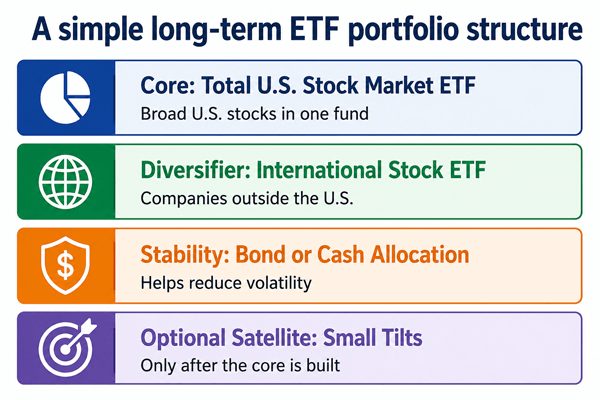
Figure 1. A total market ETF often works best as a core holding, not as a trading toy.
3. Best total stock market ETFs for long-term investors in 2026
The best total stock market ETF for most long-term investors is usually the one that is broad, cheap, liquid, tax-efficient, easy to hold at your broker, and simple enough that you can stick with it. The four ETFs below are strong core candidates because they are low-cost, diversified, and issued by large asset managers.
| Ticker | ETF | Index | Expense ratio | Approx. holdings | Best for |
|---|---|---|---|---|---|
| VTI | Vanguard Total Stock Market ETF | CRSP U.S. Total Market Index | 0.03% | About 3,500 stocks | Best all-around choice for broadest U.S. market exposure |
| ITOT | iShares Core S&P Total U.S. Stock Market ETF | S&P Total Market Index | 0.03% | About 2,500 holdings | Excellent choice for BlackRock/iShares users and taxable accounts |
| SCHB | Schwab U.S. Broad Market ETF | Dow Jones U.S. Broad Stock Market Index | 0.03% | About 2,500 largest U.S. companies | Best fit for Schwab users who want a simple core ETF |
| SPTM | SPDR Portfolio S&P 1500 Composite Stock Market ETF | S&P Composite 1500 Index | 0.03% | About 1,500 holdings | Good low-cost option with quality-screened S&P 1500 exposure |
Data note: ETF facts change over time. The figures above use issuer information available in June and July 2026. Official issuer pages continued to list a 0.03% expense ratio for VTI, ITOT, SCHB, and SPTM in July 2026. The approximate holding counts shown are rounded because portfolio holdings change as indexes rebalance and markets evolve. Readers should verify current fees, holdings, assets, yields, and other fund details directly with each issuer before investing.
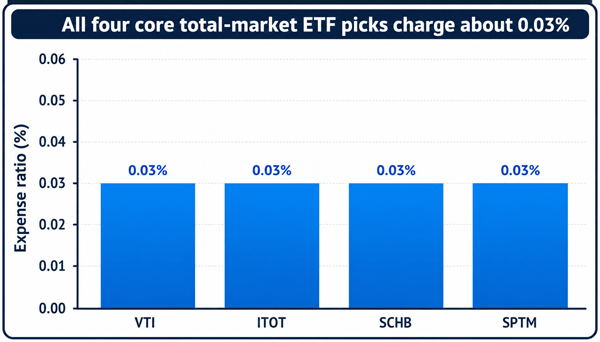
Figure 2. At this fee level, the decision is less about cost and more about index coverage, broker preference, tax details, and investor behavior.
3.1 VTI: Vanguard Total Stock Market ETF: best overall broad-market pick
- Why investors like it: VTI is one of the most popular total U.S. stock market ETFs and tracks the CRSP U.S. Total Market Index.
- Practical strength: very broad exposure, very low fee, large asset base, and long track record.
- Watch point: because it is market-cap weighted, large technology companies can still dominate the top holdings. Broad does not mean equally weighted.
3.2 ITOT: iShares Core S&P Total U.S. Stock Market ETF: best iShares alternative
- Why investors like it: ITOT is cheap, liquid, and designed as a core portfolio building block.
- Practical strength: useful for investors already using iShares ETFs, model portfolios, or brokers with strong BlackRock research tools.
- Watch point: it may hold fewer stocks than VTI, but its long-term return pattern can still be very similar because the biggest companies drive most of the market weight.
3.3 SCHB: Schwab U.S. Broad Market ETF: best Schwab ecosystem pick
- Why investors like it: SCHB is simple, low-cost, and fits naturally for investors who already use Schwab.
- Practical strength: broad access to large-, mid-, and small-cap U.S. stocks with a very low expense ratio.
- Watch point: Schwab also has mutual fund choices, so investors should decide whether they prefer ETF trading flexibility or automatic mutual fund investing.
3.4 SPTM: SPDR Portfolio S&P 1500 Composite Stock Market ETF: best S&P 1500-style pick
- Why investors like it: SPTM tracks the S&P Composite 1500 Index, which combines large-, mid-, and small-cap S&P indexes.
- Practical strength: it is inexpensive and covers a rules-based U.S. equity universe with about 1,500 holdings.
- Watch point: it is not as broad as VTI by number of holdings, but it can still be a solid one-fund U.S. stock core.
4. VTI vs ITOT vs SCHB vs SPTM: which one should a beginner choose?
For most beginners, the difference between these ETFs is smaller than the difference between starting and not starting, staying invested and panic-selling, or paying 0.03% versus paying 0.50% or more for a similar broad-market fund. A practical rule is to choose one main U.S. total market ETF and avoid owning several overlapping funds unless you have a clear reason.
| Investor situation | Practical pick | Reason |
|---|---|---|
| You want the broadest and most recognized one-ticket U.S. stock market ETF | VTI | Very broad holdings, low cost, long record, strong investor familiarity |
| You use iShares model portfolios or like BlackRock tools | ITOT | Low fee, large asset base, strong liquidity, core-building-block design |
| Your brokerage and financial life are mostly at Schwab | SCHB | Simple integration, low cost, and broad U.S. exposure |
| You prefer an S&P index family approach | SPTM | Low-cost S&P 1500 exposure across large, mid, and small companies |
| You already own one of these in a taxable account | Usually keep it | Switching may create taxes; new contributions can be directed to your preferred ETF |
5. What beginners should know before buying
- A total market ETF is diversified, but it is still mostly stock risk. It can fall sharply during bear markets.
- Low fees matter because every dollar saved in expenses stays invested for you.
- Market-cap weighting means the largest companies have the biggest impact on returns.
- Dividends are not free money. The ETF price typically adjusts when dividends are paid, and dividends may be taxable in a taxable brokerage account.
- ETFs trade like stocks, so use limit orders when bid-ask spreads are wider or markets are volatile.
- Do not confuse total U.S. stock market with global stock market. These funds are mainly U.S. equity exposure, not a complete worldwide portfolio.
- Avoid using broad ETFs as short-term trading bets. Their best use is usually patient, long-term compounding.
6. Practical example: how a beginner might use a total stock market ETF
Imagine Sarah is 30, has a stable emergency fund, no high-interest credit card debt, and wants to invest for retirement over 30 years. She opens a Roth IRA or taxable brokerage account, chooses a low-cost total U.S. stock market ETF as her U.S. stock core, and sets a monthly contribution. She does not check the price every day because her plan depends on decades, not weeks.
| Portfolio type | Example allocation | Who it may fit |
|---|---|---|
| Aggressive long-term | 80% total U.S. stock ETF + 20% international stock ETF | Younger investors with high risk tolerance and long time horizon |
| Balanced growth | 60% total U.S. stock ETF + 20% international stock ETF + 20% bonds/cash | Investors who want growth but need less volatility |
| Conservative growth | 40% total U.S. stock ETF + 20% international stock ETF + 40% bonds/cash | Investors closer to needing the money or uncomfortable with deep drawdowns |
Action step
Before choosing the ETF, choose the account: workplace retirement plan, IRA/Roth IRA, or taxable brokerage account. The account type can matter as much as the ETF because it affects taxes, contribution limits, and withdrawal rules.
7. How much can fees matter?
A 0.03% expense ratio means the fund costs about $3 per year for every $10,000 invested, before any trading costs, taxes, or advisory fees. A 0.50% fund costs about $50 per year per $10,000. The yearly difference seems small, but over decades it can become meaningful because fees reduce the money left to compound.
| Investment amount | Annual cost at 0.03% | Annual cost at 0.50% | Annual difference |
|---|---|---|---|
| $10,000 | $3 | $50 | $47 |
| $50,000 | $15 | $250 | $235 |
| $100,000 | $30 | $500 | $470 |
| $500,000 | $150 | $2,500 | $2,350 |
8. Tax basics: what new investors often miss
In retirement accounts, taxes may be deferred or treated under special rules depending on the account. In a taxable brokerage account, ETF investors usually face taxes on dividends and realized gains when they sell for a profit. Broad index ETFs can be tax-efficient, but tax-efficient does not mean tax-free.
- Qualified dividends may receive favorable tax treatment for U.S. taxpayers, but rules depend on holding periods and personal tax situation.
- Selling one ETF to buy another in a taxable account can trigger capital gains taxes.
- Tax-loss harvesting can be useful, but it must be done carefully to avoid wash-sale issues.
- Non-U.S. investors may face withholding taxes, estate tax issues, currency risk, and local regulations when buying U.S.-domiciled ETFs.
9. Common mistakes to avoid
| Mistake | Why it hurts | Better behavior |
|---|---|---|
| Owning many overlapping U.S. ETFs | You may think you are diversified, but you may simply own the same top stocks repeatedly. | Use one total market ETF as the core, then add only intentional exposures. |
| Selling during every market drop | Long-term returns often require sitting through uncomfortable declines. | Write an investment plan before the next bear market. |
| Chasing last year’s winner | Recent winners can become expensive and then underperform. | Choose a strategy you can hold through different markets. |
| Ignoring taxes in taxable accounts | Unnecessary selling can create avoidable tax bills. | Use new contributions to adjust allocation when possible. |
| Using market orders in fast markets | You may get a worse price than expected. | Use limit orders, especially near market open/close or volatile periods. |
| Thinking total market means no risk | The whole stock market can decline together. | Keep emergency cash and add bonds/cash when your time horizon is shorter. |
10. Are total stock market ETFs better than S&P 500 ETFs?
A total stock market ETF usually owns the S&P 500 companies plus additional mid-cap and small-cap stocks. An S&P 500 ETF focuses on around 500 large U.S. companies. In practice, their returns can be similar because the largest companies dominate both portfolios. The total market option is more complete, while the S&P 500 option is simpler and extremely familiar.
| Feature | Total stock market ETF | S&P 500 ETF |
|---|---|---|
| Coverage | Large, mid, and small U.S. companies | Large U.S. companies |
| Number of holdings | Often 1,500 to 3,500+ | About 500 |
| Small-cap exposure | Included | Mostly excluded |
| Best use | One-fund U.S. stock market core | Large-cap U.S. stock core |
| Main limitation | Still U.S.-only and market-cap weighted | Less complete U.S. market coverage |
11. How to buy a total stock market ETF step by step
- Choose the right account. For retirement, compare workplace plans, traditional IRA, Roth IRA, and taxable brokerage accounts.
- Pick one core ETF. Choose VTI, ITOT, SCHB, SPTM, or another low-cost broad-market ETF based on your broker and preferences.
- Decide your allocation. Do not put short-term money in stock ETFs. Money needed soon usually belongs in cash or high-quality short-term fixed income.
- Place the trade carefully. Use a limit order and avoid trading during very volatile moments when spreads may widen.
- Set an investing schedule. Monthly investing can reduce decision stress and build discipline.
- Rebalance occasionally. Once or twice a year is enough for many long-term investors.
- Keep records. Track cost basis, dividends, and tax forms if investing in a taxable brokerage account.
12. What real investors often experience
People often start ETF investing because it sounds simple, but the emotional part is harder than the mechanical part. The hard moments usually come when the market falls, headlines are frightening, or a friend appears to be making quick money in a trendier investment. Long-term investors who succeed with total market ETFs usually build systems that reduce emotion: automatic contributions, simple allocations, written rules, and limited portfolio checking.
- The first market drop feels personal. It helps to know in advance that declines are normal, not a sign that the ETF is broken.
- Simple portfolios are easier to maintain. A one-ETF U.S. stock core plus international and bond exposure can be enough for many people.
- Behavior beats tiny optimization. Choosing between VTI and ITOT matters less than saving consistently, keeping costs low, and avoiding panic trades.
- Cash reserves protect the investment plan. Without emergency savings, investors are more likely to sell ETFs at bad times.
13. Final verdict: the best total stock market ETF in 2026
For most long-term investors, VTI is the best overall total U.S. stock market ETF because it offers very broad coverage, a very low 0.03% fee, strong scale, and wide recognition. ITOT and SCHB are excellent alternatives with similarly low costs and strong issuer backing. SPTM is also a strong low-cost choice for investors who prefer the S&P Composite 1500 approach.
The best answer is not to own all four. The better answer is to pick one high-quality total market ETF, pair it with the right account type and risk level, and hold it through market cycles. For a beginner, that simple discipline can be more valuable than trying to find the perfect ETF.
14. FAQ: Total stock market ETFs for beginners
14.1 Can I lose money in a total stock market ETF?
Yes. These ETFs own stocks, and stocks can fall sharply. They are diversified, but they are not guaranteed or insured against loss.
14.2 Is one total market ETF enough?
For U.S. stock exposure, often yes. For a complete portfolio, many investors also consider international stocks and bonds or cash based on goals and risk tolerance.
14.3 Should I buy VTI, ITOT, SCHB, or SPTM?
VTI is the strongest all-around pick for broad U.S. coverage. ITOT and SCHB are excellent alternatives, especially if they fit your broker ecosystem. SPTM is a good S&P 1500-based option.
14.4 Do total stock market ETFs pay dividends?
Yes, most broad U.S. stock ETFs distribute dividends, commonly quarterly. Dividend amounts can change and may be taxable in a taxable account.
14.5 Are these ETFs good for a Roth IRA?
They can be useful in a Roth IRA for long-term investors, but the right allocation depends on your age, goals, contribution rules, and risk tolerance.
14.6 What is the biggest hidden risk?
The biggest hidden risk is often investor behavior. A low-cost ETF cannot help if the investor sells during every downturn or keeps changing strategies.
Sources Consulted and Checked
The following official issuer and investor-education sources were consulted when preparing this article and checking its accuracy. Fund data can change, so readers should verify current figures on the linked official sources before acting.
- Vanguard Total Stock Market ETF (VTI), Vanguard fund profile and March 31, 2026 fund profile/fact sheet.
- iShares Core S&P Total U.S. Stock Market ETF (ITOT), BlackRock/iShares fund page, June 2026 data.
- Schwab U.S. Broad Market ETF (SCHB), Schwab Asset Management fund page, June 2026 data.
- SPDR Portfolio S&P 1500 Composite Stock Market ETF (SPTM), State Street Global Advisors fund page, June 2026 data.
- Investor.gov, Updated Investor Bulletin: Exchange-Traded Funds (ETFs), February 23, 2023.
- FINRA, Exchange-Traded Funds and Products investor education page.
Reader Advice
This article is provided only for educational and general informational purposes. It is not personalized investment, financial, tax, accounting, or legal advice, and it does not recommend that any particular reader buy, sell, or hold a security. Any use of terms such as “best,” and any rankings, comparisons, or assessments of total stock market ETFs, reflect the criteria and methodology used for this analysis and should not be considered definitive or universally applicable. References to “long-term investors” are general in nature and do not imply that any ETF discussed is suitable for every investor with a long-term investment horizon; individual circumstances and objectives may differ.
Investments can lose value, past performance does not guarantee future results, and an ETF that is suitable for one investor may be unsuitable for another. Before making a decision, consider your objectives, risk tolerance, time horizon, liquidity needs, tax position, account type, costs, and applicable laws. Fees, holdings, yields, assets, index methodologies, tax rules, brokerage practices, and regulations may change. Verify material facts and figures with the fund issuer, regulator, tax authority, brokerage, or another appropriate official source, and seek advice from a qualified professional where necessary.