Best Technology ETFs to Watch in 2026: Simple Guide for Beginners
Technology is no longer just about computers and smartphones. In 2026, it reaches into artificial intelligence, cloud computing, chips, cybersecurity, software, digital payments, data centers, automation and many everyday business tools. That is why many investors look at technology ETFs when they want exposure to the growth side of the stock market without choosing one single company.
A technology ETF is a basket of tech-related stocks that trades on an exchange like a normal stock. Instead of buying Nvidia, Apple, Microsoft, Broadcom or semiconductor stocks one by one, a tech ETF lets you own many companies through one ticker. This can make investing easier, but it does not remove risk. Tech ETFs can rise quickly when growth stocks are strong, and they can fall sharply when valuations, interest rates, earnings or AI expectations disappoint.
This guide explains the best technology ETFs to watch in 2026 in a simple, practical way. You will learn what they are, how they work, which funds are popular, how they differ, what beginners should check before buying, and how to use them responsibly inside a broader portfolio.
Quick answer: For broad low-cost U.S. tech exposure, beginners often compare VGT, XLK and FTEC. For Nasdaq-100 style growth exposure, QQQM is popular. For semiconductor exposure, SMH and SOXX are widely watched. For broader expanded tech or AI themes, IGM and AIQ may be worth researching, but they usually carry higher fees or more theme-specific risk.
1. What Is a Technology ETF?
A technology ETF is an exchange-traded fund that holds shares of technology companies or companies closely tied to technology trends. The ETF pools investor money and owns a portfolio of stocks. You buy and sell shares of the ETF through a brokerage account during the trading day, similar to a stock.
The SEC describes ETFs as exchange-traded investment products that register as open-end investment companies or unit investment trusts and hold a portfolio of securities. FINRA explains that ETFs are pooled investment funds like mutual funds, but their shares trade during the day at changing market prices.
In plain English: a technology ETF is a shortcut. It gives you one ticker, one price, one expense ratio and one diversified basket focused on tech.
| Investment type | What you own | Main risk | Best used for |
|---|---|---|---|
| Stock | You own one company | High company-specific risk | You believe in one business and can handle volatility |
| Technology ETF | You own many tech companies | Sector risk remains, but company risk is spread out | You want tech exposure without picking individual winners |
| Broad market ETF | You own many sectors, not just tech | More diversified than a sector ETF | You want a core long-term portfolio holding |
2. How Technology ETFs Work
Most technology ETFs track an index. The index decides which companies are included and how much weight each company receives. The ETF provider then tries to follow that index as closely as possible.
| Method | How it works | What beginners should know |
|---|---|---|
| Market-cap weighted | Bigger companies get bigger weights. If Nvidia, Apple or Microsoft becomes larger, it can dominate the fund. | Simple, low-cost, liquid, but can become concentrated. |
| Equal weighted | Each company gets roughly the same weight at rebalance dates. | Reduces mega-cap concentration, but can cost more and may lag when mega-caps lead. |
| Thematic | The fund targets a theme such as AI, robotics, cybersecurity or semiconductors. | More focused, but usually more volatile and sometimes more expensive. |
| Global tech | The fund includes non-U.S. technology companies as well. | Adds international exposure, currency and country risk. |
Two prices matter when you trade an ETF: the bid and the ask. The bid is what buyers are willing to pay, and the ask is what sellers are willing to accept. The difference is called the bid-ask spread. The SEC warns that this spread is a real trading cost, especially for less liquid ETFs. Beginners should usually use limit orders and avoid trading right at the market open or close when spreads can be wider.
3. Best Technology ETFs to Watch in 2026: Comparison Table
The table below focuses on popular, easy-to-understand ETFs that investors commonly research for technology exposure. Fees and holdings can change, so readers should always check the latest fund page before investing.
| Ticker | ETF | Expense ratio | Holdings | Focus |
|---|---|---|---|---|
| XLK | Technology Select Sector SPDR Fund | 0.08% | 74 | Large-cap S&P 500 technology sector |
| FTEC | Fidelity MSCI Information Technology Index ETF | 0.084% | ~280+ | Broad U.S. information technology |
| VGT | Vanguard Information Technology ETF | 0.09% | 400+ | Broad U.S. information technology |
| QQQM | Invesco NASDAQ 100 ETF | 0.15% | 100 | Nasdaq-100, non-financial large companies |
| SOXX | iShares Semiconductor ETF | 0.34% | 30 | Semiconductor industry |
| SMH | VanEck Semiconductor ETF | 0.35% | 25 | Semiconductor production and equipment |
| IGM | iShares Expanded Tech Sector ETF | 0.39% | 296 | Expanded North American tech plus select communication services |
| RSPT | Invesco S&P 500 Equal Weight Technology ETF | 0.40% | 73 | Equal-weight S&P 500 technology |
| AIQ | Global X Artificial Intelligence & Technology ETF | 0.68% | Theme-based | AI and big data theme |
| Ticker | Plain-English use case | Main caution |
|---|---|---|
| XLK | Low-cost sector exposure with very strong liquidity. | Excludes some famous tech-like names classified outside technology. |
| FTEC | Very low-fee broad U.S. technology exposure. | Can still be dominated by mega-cap leaders. |
| VGT | Low-cost broad information technology exposure. | More holdings does not mean equal weighting. |
| QQQM | Nasdaq-style growth exposure at a lower fee than QQQ. | Not a pure technology sector ETF. |
| SOXX | Focused semiconductor exposure. | More concentrated than broad tech ETFs. |
| SMH | AI chip supply-chain exposure. | High single-industry and top-holding concentration. |
| IGM | Expanded definition of North American technology. | Not directly comparable with strict sector ETFs. |
| RSPT | Reduces mega-cap concentration through equal weighting. | Higher fee and may lag when mega-caps lead. |
| AIQ | AI theme exposure through one ticker. | Higher fee and theme risk; better as a small satellite. |
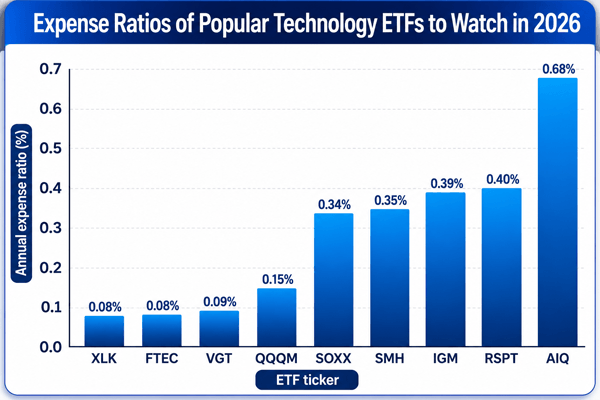
Figure 1: Expense ratios matter because they are deducted every year. Lower is not automatically better, but fees are one of the few investing variables you can control.
3.1 XLK - Technology Select Sector SPDR Fund
XLK is one of the most established technology sector ETFs. It tracks the Technology Select Sector Index, which represents the technology sector inside the S&P 500. As of July 2026, State Street listed a 0.08% gross expense ratio, assets under management of approximately $120 billion, and top holdings such as Nvidia, Apple, Microsoft, Broadcom and Advanced Micro Devices. Holdings and weights change over time.
Why investors watch it: XLK is cheap, liquid and focused on large U.S. technology companies. For many investors, it is the “simple sector ETF” choice.
What to watch: XLK follows sector classification rules. Some companies that many people think of as technology, such as Alphabet, Meta or Amazon, may not be included because they sit in other sectors. This is why beginners should always look at holdings, not just the ETF name.
Practical example: A beginner who already owns an S&P 500 ETF may use XLK as a small technology tilt. But using XLK as the entire portfolio would mean taking heavy sector risk.
3.2 VGT - Vanguard Information Technology ETF
VGT is a broad U.S. information technology ETF from Vanguard. It is known for low costs and wider coverage than some narrower sector funds. Current public fund data shows an expense ratio around 0.09%. ETF databases list more than 400 holdings, while top holdings are still dominated by mega-cap names such as Nvidia, Apple and Microsoft.
Why investors watch it: VGT is popular with long-term investors who want simple, low-cost exposure to U.S. information technology without building a stock portfolio manually.
What to watch: More holdings do not automatically mean balanced exposure. A market-cap weighted ETF can still have a large share of assets in its biggest companies.
3.3 FTEC - Fidelity MSCI Information Technology Index ETF
FTEC is another low-cost broad U.S. technology ETF. Fidelity fund materials and market data show an expense ratio around 0.084%, with hundreds of holdings and top names such as Nvidia, Apple, Microsoft, Broadcom and Micron.
Why investors watch it: FTEC is often compared with VGT because both are broad, low-cost technology ETFs. For cost-sensitive investors using Fidelity or another brokerage, it can be a practical research candidate.
What to watch: As with VGT, FTEC can be heavily influenced by a few large companies. Compare the top 10 holdings and overlap with any other ETFs you already own.
3.4 QQQM - Invesco NASDAQ 100 ETF
QQQM is not technically a pure technology ETF. It tracks the Nasdaq-100, which includes 100 of the largest non-financial companies listed on Nasdaq. Because many of those companies are technology and growth businesses, investors often compare QQQM with tech ETFs. Invesco lists a 0.15% total expense ratio. Fund size and portfolio characteristics change over time, so readers should check the current issuer page before investing.
Why investors watch it: QQQM gives exposure to well-known growth leaders across technology, communication services and consumer companies. It is a lower-cost version designed for buy-and-hold investors compared with the older QQQ trust structure.
What to watch: Because QQQM is Nasdaq-100 based, it is not the same as “the technology sector.” It may hold companies that are not classified as tech, and it may exclude some companies simply because they are not listed on Nasdaq.
3.5 SMH - VanEck Semiconductor ETF
SMH focuses on semiconductor companies, including chip designers, manufacturers and equipment firms. VanEck describes semiconductors as central to modern technology and lists a 0.35% expense ratio. Its holdings are concentrated in companies linked to chip demand, AI infrastructure and advanced computing.
Why investors watch it: In the AI era, chips are often seen as the “picks and shovels” of the technology economy. SMH is one of the most watched semiconductor ETFs because it gives direct exposure to that supply chain.
What to watch: Semiconductor ETFs can be much more volatile than broad technology ETFs. Chip cycles, export rules, customer concentration, factory capacity and valuation expectations can all affect returns.
3.6 SOXX - iShares Semiconductor ETF
SOXX is another major semiconductor ETF. BlackRock lists a 0.34% expense ratio and describes the fund as a way to access U.S.-listed semiconductor companies. It typically has fewer holdings than broad tech ETFs, which makes it more concentrated.
Why investors watch it: SOXX is widely used by investors who want targeted semiconductor exposure but prefer a basket instead of choosing individual chip stocks.
What to watch: Compare SOXX with SMH before choosing either. Their holdings, weights and index rules differ. A fund with slightly lower fee is not always better if it gives a different exposure than you intended.
3.7 IGM - iShares Expanded Tech Sector ETF
IGM follows an expanded definition of technology. BlackRock says it tracks an index composed of U.S. and Canadian technology and select communication services companies, with exposure to hardware, software and interactive media industries. As of July 2026, BlackRock listed a 0.39% expense ratio. Net assets, holdings counts and portfolio weights change over time.
Why investors watch it: IGM can include companies that strict technology sector funds may miss. This can appeal to readers who think modern technology includes digital platforms, interactive media and communication services.
What to watch: The broader definition can be helpful, but it also means IGM is not directly comparable with a strict tech-sector ETF like XLK.
3.8 RSPT - Invesco S&P 500 Equal Weight Technology ETF
RSPT is an equal-weight technology ETF. Instead of letting the largest companies dominate the fund, it gives each S&P 500 technology constituent a more similar weight at rebalance. Invesco lists a 0.40% total expense ratio. The number of holdings can change at rebalancing dates.
Why investors watch it: RSPT is useful for investors worried that market-cap weighted tech ETFs are too dependent on a handful of mega-cap winners.
What to watch: Equal weighting is not magic. It can outperform when smaller or mid-sized tech stocks do well, but it can lag when mega-cap leaders dominate. It also typically costs more than the cheapest cap-weighted ETFs.
3.9 AIQ - Global X Artificial Intelligence & Technology ETF
AIQ is a thematic ETF focused on artificial intelligence and technology. Global X lists a 0.68% total expense ratio. Net assets and holdings can change as markets and investor flows change. Unlike broad technology ETFs, AIQ is built around a specific AI and big data theme.
Why investors watch it: AI remains one of the biggest technology narratives of 2026. AIQ gives investors a way to research the theme through a basket instead of betting on one AI company.
What to watch: Thematic ETFs can be expensive and may attract attention after a trend has already become popular. Beginners should be careful not to chase a theme just because recent performance looks exciting.
4. Broad Tech vs Semiconductor vs AI ETFs
| Category | Examples | Main risk | Practical use |
|---|---|---|---|
| Broad tech ETFs | VGT, XLK, FTEC | Lower than thematic funds; diversified across software, hardware, chips and IT services | Core tech sleeve for long-term investors |
| Nasdaq growth ETF | QQQM | Not pure tech; includes broader Nasdaq growth exposure | Growth-oriented investors who want more than strict tech |
| Semiconductor ETFs | SMH, SOXX | Higher volatility and industry cycle risk | Satellite position for investors who understand chip demand |
| Expanded tech ETF | IGM | Broader “tech-like” definition | Investors who want platforms and communication-services exposure |
| AI thematic ETF | AIQ | Higher fee and theme risk | Small satellite for readers who understand thematic investing |
5. How Beginners Can Use Technology ETFs
A beginner should not start with the question, “Which tech ETF will go up the most?” A better question is, “How much technology exposure is reasonable for my goals and risk tolerance?”
| Step | Actionable advice |
|---|---|
| 1. Build a core first | Many investors start with a broad market ETF before adding a sector ETF. A broad market fund already contains technology companies, so adding a tech ETF increases concentration. |
| 2. Decide the role | Use a broad tech ETF as a tech sleeve, a semiconductor ETF as a focused satellite, or an AI ETF as a small thematic position. |
| 3. Check overlap | If you own an S&P 500 ETF, Nasdaq-100 ETF and VGT, you may own the same mega-cap stocks several times. |
| 4. Use limit orders | ETFs trade during the day, so beginners should learn bid-ask spreads and avoid careless market orders. |
| 5. Rebalance | If tech rises sharply, it may become too large in your portfolio. Rebalancing helps control risk. |
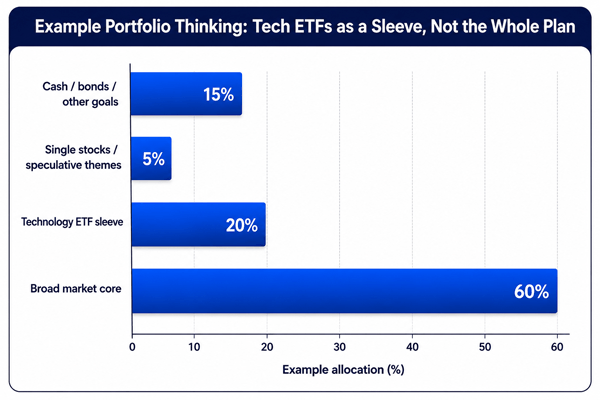
Figure 2: Example only. A technology ETF can be a portfolio sleeve, not a complete financial plan.
6. Practical Example: Investing $10,000 in a Tech ETF
Suppose a beginner has $10,000 and wants technology exposure. Here are three possible approaches. These are educational examples, not personal recommendations.
| Investor type | Possible approach | Why it may be sensible |
|---|---|---|
| Conservative beginner | Keep most money in a broad market fund, add a small 5% to 10% tech ETF sleeve | Better diversification; less regret if tech falls |
| Growth-focused investor | Use 10% to 20% of the equity portfolio in a broad tech ETF | More upside if tech leads, but larger drawdowns are possible |
| Aggressive thematic investor | Use a small satellite position in semiconductors or AI, such as 2% to 5% | Focused exposure without letting one theme dominate the plan |
7. Expense Ratio Example: Why Fees Matter
An expense ratio is the annual cost of operating the ETF. If an ETF charges 0.10%, that is about $10 per year on $10,000 before market movement. If it charges 0.68%, that is about $68 per year on $10,000. That difference may look small for one year, but it compounds over time.
| Investment | Expense ratio | Approximate annual fund cost |
|---|---|---|
| $10,000 | 0.08% | $8 per year |
| $10,000 | 0.15% | $15 per year |
| $10,000 | 0.40% | $40 per year |
| $10,000 | 0.68% | $68 per year |
8. What to Check Before Buying a Technology ETF
| Checklist item | Beginner-friendly explanation |
|---|---|
| Expense ratio | Lower fees help, especially for long-term holdings. Compare similar ETFs. |
| Top 10 holdings | If the top 10 are more than half the fund, understand concentration risk. |
| Index methodology | Check whether it is market-cap weighted, equal weighted, thematic or global. |
| Assets and trading volume | Larger, heavily traded ETFs often have tighter spreads, but always check the actual bid-ask spread. |
| Overlap with current portfolio | Avoid accidentally owning the same mega-cap stocks through multiple ETFs. |
| Valuation and expectations | Great companies can still be poor investments if expectations are too high. |
| Tax account choice | A brokerage account, Roth IRA, traditional IRA or 401(k) may produce different tax outcomes. |
| Personal risk tolerance | Tech can fall hard. Do not use money needed for near-term bills or emergencies. |
9. Common Mistakes Beginners Make With Tech ETFs
| Mistake | Better practice |
|---|---|
| Buying after hype | AI and chip ETFs often attract attention after large price moves. Research the holdings and valuation, not just the headline trend. |
| Thinking ETFs cannot lose money | A tech ETF can lose value like stocks. Diversification reduces single-company risk, not market risk. |
| Ignoring overlap | Owning QQQM, VGT and an S&P 500 fund can create heavy exposure to the same mega-cap companies. |
| Using leveraged or inverse ETFs as long-term holdings | These products are complex and can behave very differently from a normal ETF over time. |
| Confusing “best” with “best for me” | The best ETF depends on goals, time horizon, risk tolerance, account type and existing holdings. |
10. Pros and Cons of Technology ETFs
| Side | Details |
|---|---|
| Pros | Easy diversification, lower company-specific risk, simple trading, transparent holdings, often lower fees than active funds, useful access to AI and semiconductor trends. |
| Cons | Sector concentration, valuation risk, high volatility, overlap with broad market ETFs, thematic hype risk, possible bid-ask spread costs, no guarantee of outperformance. |
11. How to Choose Between Similar Tech ETFs
When two ETFs look similar, do not choose only by recent performance. Use this simple decision process:
Compare the index first. The index tells you what the ETF is actually trying to own.
Compare the top holdings. If two ETFs own almost the same stocks, the cheaper and more liquid one may be more practical.
Compare the weighting method. Market-cap weighted ETFs ride mega-cap winners; equal-weight ETFs spread exposure more evenly.
Compare costs beyond the expense ratio. Bid-ask spread, tracking difference and taxes can also matter.
Compare your current portfolio. The ETF that looks best alone may not be best when combined with what you already own.
12. Frequently Asked Questions
12.1 Are technology ETFs good for beginners?
They can be useful for beginners who understand that tech ETFs are still stock-market investments and can be volatile. A broad tech ETF is usually easier to understand than a narrow theme ETF.
12.2 What is the safest technology ETF?
No technology ETF is truly safe. Broad, low-cost, diversified tech ETFs may be less risky than narrow semiconductor or AI ETFs, but they can still decline sharply.
12.3 Is QQQM a technology ETF?
QQQM is not a pure technology ETF. It tracks the Nasdaq-100, which is heavily exposed to technology and growth companies, so investors often compare it with tech ETFs.
12.4 Should I buy VGT or XLK?
VGT is broader within information technology, while XLK focuses on S&P 500 technology sector companies. Compare holdings, costs, concentration and your existing portfolio before deciding.
12.5 Are semiconductor ETFs better than broad tech ETFs?
Not automatically. Semiconductor ETFs can benefit when chip demand is strong, but they are more concentrated and can be more volatile.
12.6 How much of my portfolio should be in tech ETFs?
There is no universal answer. Many beginners use technology ETFs as a small satellite allocation around a diversified core, not as their entire portfolio.
13. Bottom Line: Best Technology ETFs to Watch in 2026
The best technology ETF is not simply the one with the highest recent return. For many beginners, the most practical starting point is a broad, low-cost ETF such as XLK, VGT or FTEC. Investors who want Nasdaq-style growth may compare QQQM. Those who understand chip cycles may research SMH or SOXX. Investors who want a broader definition of tech may look at IGM, while investors interested in AI themes may research AIQ carefully and keep position sizes modest.
A smart technology ETF strategy is honest and controlled: know what the fund owns, understand the fee, check overlap, avoid hype, use limit orders, rebalance regularly and keep the investment aligned with your real financial goals.
Sources Consulted and Checked
The following official and reputable sources were consulted and checked while preparing this article and reviewing its accuracy. Fund data can change, so the issuer pages should be checked again on the publication date.
| Source | Used for |
|---|---|
| SEC Investor.gov | Exchange-Traded Funds page and ETF Investor Bulletin for ETF structure, bid-ask spread and general investor-risk explanations. |
| FINRA | Exchange-Traded Funds and Products investor education page for ETF basics and stock-like trading description. |
| State Street Global Advisors | Technology Select Sector SPDR Fund (XLK) fund page, data as of June 2026: expense ratio, assets, holdings, sector allocation and ETF risk notes. |
| Invesco | Invesco NASDAQ 100 ETF (QQQM) and Invesco S&P 500 Equal Weight Technology ETF (RSPT) fund pages for expense ratios, assets and holdings counts. |
| Vanguard | Vanguard Information Technology ETF (VGT) fund page and current market/fund data for expense ratio and broad information-technology exposure. |
| BlackRock iShares | iShares Semiconductor ETF (SOXX) and iShares Expanded Tech Sector ETF (IGM) fund pages for expense ratios, net assets, holdings counts and fund objectives. |
| VanEck | VanEck Semiconductor ETF (SMH) fund page for semiconductor focus, expense ratio and fund description. |
| Global X | Global X Artificial Intelligence & Technology ETF (AIQ) fund page for AI theme, expense ratio and net assets. |
| ETF.com/ETFdb/Morningstar/Yahoo Finance | Supplemental market data checks for holdings counts, expense ratios and category context where issuer pages were limited. |
Data note: ETF fees, holdings, assets, yields and performance change frequently. All fund-specific figures should be refreshed immediately before publication. Past performance is not a guarantee of future results.
Reader Advice
This article is provided only for educational and informational purposes. It is not personalized investment, financial, tax or legal advice, and it does not recommend that every reader buy any particular ETF or security. Any use of terms such as “best” or “to watch,” and any rankings, comparisons or assessments of technology ETFs presented in this article, reflect the criteria and methodology used for this analysis and should not be interpreted as definitive rankings, personalized recommendations, or predictions of future performance. Other analyses using different criteria, assumptions or methodologies may reach different conclusions. References to “beginners” or a “simple guide” are intended only to describe the general audience and presentation of the article and do not imply that any ETF discussed is suitable, appropriate or low-risk for every new or inexperienced investor.
Before making a decision, readers should consider their objectives, time horizon, risk tolerance, tax position, current holdings and ability to absorb losses. Technology-focused ETFs may involve sector concentration and other risks and can experience significant volatility or losses. ETF fees, holdings, classifications, assets, yields, market prices, regulations and tax rules can change because of market conditions, issuer decisions, index rebalancing, jurisdiction and other factors. Readers should therefore verify all facts and figures through current official fund pages, prospectuses, regulator publications and other authoritative sources. Past performance does not guarantee future results. Anyone who needs advice suited to their personal circumstances should consult an appropriately qualified and licensed financial, tax or legal professional.