Best S&P 500 ETFs to Buy in 2026: VOO, SPY, IVV, and More
Choosing an S&P 500 ETF looks simple at first: buy a fund that tracks the S&P 500 and hold it. But when a beginner sees VOO, SPY, IVV, SPYM, mutual fund alternatives, dividend yields, bid-ask spreads, tax language, and different share prices, the choice can feel confusing. This guide explains the topic in plain English, then gives a practical comparison so a reader can make a more informed decision.
The most important idea is this: VOO, SPY, IVV, and SPYM all aim to give exposure to the same basic thing - the S&P 500, which is a basket of about 500 leading U.S. large-cap companies. The differences are mostly cost, trading liquidity, structure, brand, account fit, and how the investor plans to use the fund.
1. Quick answer: the best S&P 500 ETFs in 2026
| Investor type | Best fit | Why it may fit |
|---|---|---|
| Most long-term beginners | VOO or IVV | Very low 0.03% expense ratio, huge scale, broad S&P 500 exposure, simple buy-and-hold use. |
| Active traders and options users | SPY | Oldest and extremely liquid S&P 500 ETF, with a deep options market; higher expense ratio than VOO/IVV. |
| Cost-focused small account investors | SPYM | Tracks the S&P 500 with an even lower listed expense ratio and a lower share price, which can feel easier for smaller accounts. |
| Retirement account investors | VOO, IVV, or SPYM | Fees and long-term discipline matter more than tiny daily trading differences. |
| Investors using a specific brokerage ecosystem | Any major low-cost S&P 500 ETF | When commissions are zero and fractional shares are available, convenience can matter. |
Bottom line: For a long-term investor who wants a simple S&P 500 ETF, VOO and IVV are usually the cleanest default choices. SPY is excellent for trading and options but is not usually the cheapest long-term choice. SPYM is a strong low-cost alternative, especially for investors who care about the smallest expense ratio difference or prefer a lower share price.
2. What is an S&P 500 ETF?
An ETF, or exchange-traded fund, is a fund that holds many investments inside one ticker. You buy and sell it on a stock exchange through a brokerage account, just like a stock. An S&P 500 ETF is an ETF designed to track the S&P 500 Index.
The S&P 500 is widely used as a gauge of U.S. large-cap stocks. S&P Dow Jones Indices describes the index as including 500 leading companies and covering about 80% of available U.S. market capitalization. In everyday language, it is a broad snapshot of many of the biggest publicly traded U.S. companies.
When you buy one share of VOO, SPY, IVV, or another S&P 500 ETF, you are not buying one company. You are buying a slice of a fund that owns hundreds of companies. That is why many beginners use S&P 500 ETFs as a first core investment: they are simple, diversified, low-cost, and easy to understand.
| Term | Plain-English meaning |
|---|---|
| ETF | A basket of investments that trades like a stock. |
| S&P 500 | An index of about 500 leading U.S. large-cap companies. |
| Expense ratio | The annual fund cost taken from the fund assets, not a separate bill. |
| Dividend yield | Income paid by the fund from dividends received from companies, usually paid quarterly for these ETFs. |
| Tracking error | How closely the ETF follows the index after fees and small operational differences. |
| Bid-ask spread | The small gap between what buyers offer and sellers ask when the ETF trades. |
3. How S&P 500 ETFs work in real life
Imagine the S&P 500 as a recipe. The recipe says which companies belong in the index and how much each company should count. An S&P 500 ETF manager follows that recipe by holding the stocks in similar weights. If a company becomes more valuable, it naturally becomes a bigger part of the index. If a company falls or is removed, the fund adjusts over time.
For beginners, the most useful point is that an S&P 500 ETF is not trying to find the next hot stock. It is trying to match the index. That means it accepts the market return of U.S. large-cap stocks, minus tiny fund costs. This is why S&P 500 ETFs are often called passive index funds.
Retail investors buy ETF shares in the market. Behind the scenes, large financial institutions called authorized participants can create and redeem ETF shares directly with the fund. That mechanism helps keep the ETF market price close to the value of the stocks it holds.
- You place an order through a brokerage app or retirement account.
- The ETF price moves during the trading day, like a stock.
- The fund owns the underlying companies in the index.
- You may receive dividends, typically paid quarterly for major S&P 500 ETFs.
- Your return comes from price growth plus dividends, minus fund costs and any taxes or trading costs.
4. Best S&P 500 ETFs for 2026: detailed comparison
| ETF | Issuer | Expense ratio | Best for | Main trade-off |
|---|---|---|---|---|
| VOO | Vanguard | 0.03% | Long-term buy-and-hold investors | Not as dominant as SPY for options trading. |
| IVV | iShares / BlackRock | 0.03% | Long-term investors who prefer iShares or use BlackRock tools | Similar to VOO, so choice often depends on platform preference. |
| SPY | State Street SPDR | 0.0945% | High-volume traders, institutions, options users | Higher annual cost than VOO, IVV, and SPYM. |
| SPYM | State Street SPDR Portfolio | 0.02% | Fee-focused investors and smaller accounts | Less famous than SPY, though still a major low-cost ETF. |
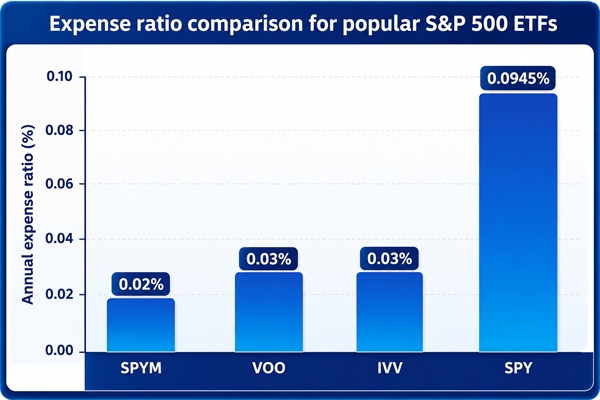
Figure 1. Expense ratios of major S&P 500 ETFs.
The difference between 0.02%, 0.03%, and 0.0945% looks tiny, but fees matter more as time and account size grow.
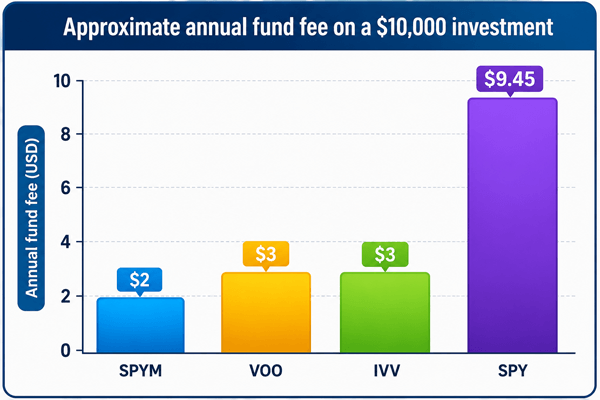
Figure 2. Approximate annual fund fee on $10,000.
Example only. Actual return, tax treatment, spreads, and dividend reinvestment can affect investor results.
4.1 VOO - Vanguard S&P 500 ETF
VOO is the simple, popular choice for many long-term investors. It tracks the S&P 500, has a very low expense ratio, and is backed by Vanguard, a brand strongly associated with low-cost index investing. In 2026, VOO also reached a major scale milestone, becoming the first ETF reported to top $1 trillion in assets. For a beginner who wants one broad U.S. stock ETF and does not plan to trade options, VOO is easy to understand.
4.2 IVV - iShares Core S&P 500 ETF
IVV is very similar to VOO in purpose and cost. It tracks the S&P 500, has a 0.03% expense ratio, and is one of the largest ETFs in the world. Investors who already use iShares tools, BlackRock model portfolios, or a brokerage platform that highlights iShares products may prefer IVV. For most buy-and-hold investors, the practical difference between IVV and VOO is small.
4.3 SPY - SPDR S&P 500 ETF Trust
SPY is the original U.S.-listed ETF and remains one of the most heavily traded funds in the market. Its main strength is liquidity. Traders, institutions, and options users often choose SPY because it has tight spreads and a very active options market. The downside is cost: its expense ratio is higher than VOO, IVV, and SPYM. For a long-term beginner, that extra fee is usually not necessary unless SPY has a specific trading or platform advantage.
4.4 SPYM - SPDR Portfolio S&P 500 ETF
SPYM is a low-cost State Street S&P 500 ETF designed more for buy-and-hold investors than for high-volume trading. Its expense ratio is lower than the big three in many current listings, and its share price is usually lower than VOO, SPY, or IVV, which can feel friendlier to small accounts. With fractional shares, share price matters less, but investors still like the psychological simplicity of buying whole shares.
5. VOO vs SPY vs IVV: which one should a beginner choose?
For a beginner, the best choice usually depends on use case, not on which ticker sounds better. These funds are designed to track the same index, so their long-term performance should be very close before differences in fees, taxes, and trading costs.
| Question | Likely answer |
|---|---|
| Do you want a simple long-term core holding? | VOO or IVV. |
| Do you trade frequently or use options? | SPY. |
| Do you want the lowest listed expense ratio among popular S&P 500 ETFs? | SPYM may be worth comparing. |
| Do you already use Vanguard? | VOO may fit naturally. |
| Do you already use iShares/BlackRock or a model portfolio using iShares? | IVV may fit naturally. |
| Are you investing in a taxable brokerage account? | Focus on low cost, tax efficiency, and not overtrading. |
A practical rule: If two ETFs track the same index and both are large, liquid, and cheap, do not overthink tiny differences. Pick one, understand it, and build a disciplined plan around it. Jumping between similar ETFs usually creates more confusion than benefit.
6. Practical fee example: why expense ratios matter
Suppose two investors each put $10,000 into an S&P 500 ETF. One uses a 0.03% expense ratio fund, and the other uses a 0.0945% expense ratio fund. The annual difference is about $6 per $10,000. That sounds small, and for one year it is small. But as the account grows to $100,000, the difference becomes about $60 per year. At $500,000, it becomes about $300 per year. Fees also reduce compounding over time.
| Portfolio size | 0.03% fund cost per year | 0.0945% fund cost per year | Difference |
|---|---|---|---|
| $10,000 | $3 | $9 | $6 |
| $50,000 | $15 | $45 | $30 |
| $100,000 | $30 | $90 | $60 |
| $500,000 | $150 | $450 | $300 |
This does not mean SPY is bad. SPY may be worth the higher fee for traders who value its liquidity and options market. It means a buy-and-hold beginner should understand what they are paying for.
7. How beginners can use S&P 500 ETFs
There are several practical ways to use an S&P 500 ETF. The right method depends on age, income stability, risk tolerance, country of residence, tax rules, and whether the account is taxable or tax-advantaged.
| Strategy | What it looks like | Who it may suit |
|---|---|---|
| Core holding | Use VOO, IVV, or SPYM as the main U.S. stock position. | Beginners who want broad market exposure. |
| Dollar-cost averaging | Invest a fixed amount monthly, such as $100, $250, or $500. | Investors who earn regular income and want to reduce timing stress. |
| Retirement account building block | Hold in a Roth IRA, traditional IRA, 401(k), or similar account if available. | Long-term retirement investors. |
| Two-fund portfolio | Pair an S&P 500 ETF with a bond fund or cash reserve. | Investors who want growth but also some stability. |
| Three-fund style portfolio | Combine U.S. stocks, international stocks, and bonds. | Investors who want broader global diversification. |
Example: A beginner has $300 per month to invest for retirement and chooses VOO. Instead of trying to predict the perfect day, they invest $300 every month. When the market falls, their $300 buys more shares. When the market rises, their existing shares are worth more. This method is not magic, and it does not prevent losses, but it helps build consistency.
Example: A 45-year-old investor with a shorter time horizon may not want 100% stocks. They might use an S&P 500 ETF for growth but keep part of the portfolio in bonds, Treasury bills, money market funds, or cash depending on needs. The lesson is that the ETF can be excellent, but position size matters.
8. What beginners must know before buying
- An S&P 500 ETF can fall sharply. A broad fund is diversified, but it is still a stock investment.
- It is U.S.-large-cap focused. It does not fully cover small-cap stocks, international stocks, bonds, real estate, or cash.
- The index is market-cap weighted. Larger companies have more influence, so big technology companies can drive a large part of returns.
- Past performance does not guarantee future results. The S&P 500 has had strong long-term history, but future returns can be lower or volatile.
- Taxes matter. Dividends and capital gains can have tax consequences in taxable accounts. Tax rules vary by country and account type.
- Buying at market open or during panic news can produce wider spreads. Limit orders can help investors control purchase price.
| Common beginner mistake | Better practice |
|---|---|
| Buying because the ETF went up recently | Buy because it fits a written long-term plan. |
| Checking price every hour | Review periodically, not emotionally. |
| Putting emergency money into stocks | Keep emergency cash separate from long-term investments. |
| Chasing leveraged S&P 500 ETFs | Understand that leveraged ETFs are trading tools, not simple long-term core funds. |
| Ignoring fees and taxes | Compare expense ratios, spreads, account type, and tax impact. |
| Selling during every decline | Expect downturns before investing. Build a plan for volatility. |
9. How to buy an S&P 500 ETF step by step
- Choose the account type. A retirement account may offer tax advantages; a taxable brokerage account offers flexibility. Rules vary by country.
- Choose the ETF. For most buy-and-hold investors, compare VOO, IVV, and SPYM first. Consider SPY if trading liquidity or options matter.
- Check the expense ratio, bid-ask spread, assets, volume, dividend schedule, and whether your broker supports fractional shares.
- Decide your amount and schedule. Many beginners use monthly investing rather than trying to time the market.
- Use a limit order, especially if buying during a volatile trading day.
- Turn on dividend reinvestment if it fits your plan. Reinvesting dividends can help compounding, but some investors prefer cash income.
- Review annually. Rebalance if your stock allocation becomes too high or too low compared with your plan.
10. S&P 500 ETF vs mutual fund vs total stock market ETF
| Choice | What it is | When it may be better |
|---|---|---|
| S&P 500 ETF | Tracks about 500 leading U.S. large-cap companies. | Simple, low-cost U.S. stock exposure. |
| S&P 500 mutual fund | A mutual fund version of the same basic exposure. | Automatic investing inside certain retirement plans or brokerages. |
| Total U.S. stock market ETF | Owns large, mid, and small U.S. companies. | Investors who want more complete U.S. market coverage. |
| Global stock ETF | Owns U.S. and non-U.S. stocks. | Investors who want global diversification in one fund. |
| Target-date fund | Automatically mixes stocks and bonds based on retirement year. | Hands-off retirement investors who want automatic rebalancing. |
The S&P 500 is not the only good index fund choice. It is popular because it is simple and has a long public history. But some investors prefer total market funds because they include smaller companies. Others prefer global funds because they do not want all stock exposure in one country.
11. The practical factors that actually matter
11.1 Expense ratio
Lower fees leave more of the market return for the investor. For long holding periods, this is one of the clearest advantages investors can control.
11.2 Liquidity and spread
A highly traded ETF usually has a tight bid-ask spread. SPY is especially strong here, but VOO, IVV, and SPYM are generally liquid enough for ordinary long-term investors.
11.3 Tracking quality
Good S&P 500 ETFs should closely follow the index. Tiny differences can happen because of fees, cash flows, dividend timing, and fund operations.
11.4 Tax efficiency
ETFs are often tax-efficient, but investors still need to consider dividends, capital gains, local tax rules, and account type.
11.5 Brokerage convenience
Commission-free trading, fractional shares, automatic investing, recurring purchases, and dividend reinvestment can matter more to beginners than small brand differences.
11.6 Behavior
The biggest risk for many investors is not choosing VOO instead of IVV. It is panic-selling, chasing performance, or investing money they need soon.
12. Sample beginner portfolios using S&P 500 ETFs
These examples are educational illustrations, not personal recommendations. The best allocation depends on personal circumstances.
| Example portfolio | Allocation | Possible use case |
|---|---|---|
| Aggressive long-term | 90% S&P 500 ETF / 10% bonds or cash | Young investor with stable income and high risk tolerance. |
| Balanced growth | 70% S&P 500 ETF / 20% international stocks / 10% bonds | Investor who wants U.S. growth plus some global diversification. |
| Moderate | 60% S&P 500 ETF / 40% bonds or cash equivalents | Investor who wants lower volatility than an all-stock portfolio. |
| Simple starter | 100% S&P 500 ETF for first small account, then diversify later | Beginner learning to invest with money not needed soon. |
A simple starter portfolio can be reasonable when the account is small, but investors should not confuse simplicity with completeness. As wealth grows, planning around emergency funds, taxes, debt, insurance, retirement goals, and diversification becomes more important.
13. FAQ: Best S&P 500 ETFs in 2026
13.1 Is VOO better than SPY?
For long-term buy-and-hold investors, VOO is often more cost-efficient because its expense ratio is lower. SPY may be better for active trading, institutions, and options strategies.
13.2 Is IVV better than VOO?
IVV and VOO are extremely similar. Both track the S&P 500 and have very low expense ratios. The better choice often comes down to brokerage preference, fractional shares, tools, and personal comfort.
13.3 Is SPYM better because it has a lower fee?
SPYM is attractive for cost-focused investors, but the difference between 0.02% and 0.03% is tiny. It can be a good choice, but investors should also consider liquidity, platform support, and personal simplicity.
13.4 Can I lose money in an S&P 500 ETF?
Yes. These ETFs hold stocks. They can fall during bear markets, recessions, rate shocks, valuation resets, or company earnings declines.
13.5 Should I invest all my money at once or monthly?
Mathematically, lump-sum investing often wins when markets rise, but monthly investing can reduce emotional stress and timing regret. Beginners often prefer a consistent monthly plan.
13.6 Does the share price matter?
Not much if your broker offers fractional shares. Without fractional shares, a lower-priced ETF may be easier for small accounts.
13.7 Are S&P 500 ETFs good for a Roth IRA?
They can be strong long-term Roth IRA holdings because they are diversified, low-cost stock funds. The right allocation still depends on age, goals, and risk tolerance.
13.8 Do S&P 500 ETFs pay dividends?
Major S&P 500 ETFs typically distribute dividends, often quarterly. Investors can usually reinvest them automatically or receive cash.
13.9 What is the safest S&P 500 ETF?
None is safe in the sense of being protected from losses. The major funds are diversified and liquid, but they all track stocks and can decline.
13.10 How many S&P 500 ETFs do I need?
Usually one is enough. Holding VOO, SPY, and IVV together is mostly duplication because they track the same index.
14. Final verdict: which S&P 500 ETF should you buy in 2026?
For most long-term beginners, VOO or IVV is the easiest answer: both are large, low-cost, simple S&P 500 ETFs. SPYM is a strong alternative for investors who want an ultra-low expense ratio and a lower share price. SPY remains the trading champion, especially for options users and institutions, but its higher expense ratio makes it less attractive as a default long-term holding for beginners.
The best S&P 500 ETF is not the one with the loudest brand name. It is the one that fits your account, costs little, trades efficiently, and helps you stay invested through normal market ups and downs. For many readers, the real win is not finding a perfect ticker. It is starting with a sensible low-cost fund, investing regularly, avoiding panic decisions, and letting time do the heavy lifting.
Reader Advice
This article is provided solely for educational and informational purposes and does not constitute personal financial, investment, tax, or legal advice. Exchange-traded funds involve market risk, including the possible loss of principal, and no investment outcome is guaranteed. Any use of terms such as “best,” as well as any rankings, comparisons, or assessments of S&P 500 ETFs in this article, reflects the criteria and methodology used for this analysis and should not be interpreted as a definitive ranking, personalized recommendation, or guarantee that any particular ETF is suitable for every investor or will outperform another investment. Other analyses using different criteria, assumptions, or methodologies may reach different conclusions.
Before making any decision, readers should consider their objectives, time horizon, financial position, risk tolerance, tax circumstances, country of residence, and account rules, and should seek advice from appropriately qualified professionals where necessary. Fund names, tickers, expense ratios, assets, yields, trading spreads, product structures, tax rules, regulations, brokerage features, and other facts may change. Readers should therefore verify all current figures and requirements directly through the latest official prospectus, fund provider, regulator, tax authority, and brokerage documentation. Any examples are illustrative only and should not be treated as forecasts or recommendations. Past performance is not indicative of future results.
Sources Consulted and Checked
The following sources were consulted in preparing this document and checking its accuracy. Fund data and rules should be rechecked against the latest official publications before publication or investment decisions.
| Source | Official URL |
|---|---|
| S&P Dow Jones Indices - S&P 500 Index Overview | https://www.spglobal.com/spdji/en/indices/equity/sp-500/ |
| Investor.gov / U.S. SEC - Exchange-Traded Funds Investor Bulletin | https://www.investor.gov/introduction-investing/general-resources/news-alerts/alerts-bulletins/investor-bulletins-24 |
| Vanguard - Vanguard S&P 500 ETF (VOO) | https://investor.vanguard.com/investment-products/etfs/profile/voo |
| iShares / BlackRock - iShares Core S&P 500 ETF (IVV) | https://www.ishares.com/us/products/239726/ishares-core-sp-500-etf |
| State Street - SPDR S&P 500 ETF Trust (SPY) | https://www.ssga.com/us/en/intermediary/etfs/state-street-spdr-sp-500-etf-trust-spy |
| State Street - SPDR Portfolio S&P 500 ETF (SPYM) | https://www.ssga.com/us/en/intermediary/etfs/state-street-spdr-portfolio-sp-500-etf-spym |
| FINRA - Exchange-Traded Funds and Products | https://www.finra.org/investors/investing/investment-products/exchange-traded-funds-and-products |