10 Best Healthcare Stocks to Buy in 2026
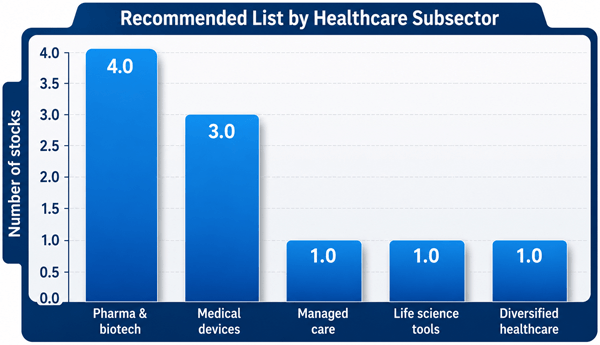
1. What Are Healthcare Stocks?
Healthcare stocks are shares of companies that make money from healthcare products or services. That can mean medicines, vaccines, medical devices, robotic surgery systems, health insurance, hospital services, lab equipment, diagnostics, or tools used by biotech researchers. In simple words, when people need treatment, testing, surgery, insurance, or better medicine, many public companies participate in that system.
A beginner should understand one key point: healthcare is not one industry. It is a group of industries under one roof. A pharmaceutical stock behaves differently from a health insurance stock. A robotic surgery stock behaves differently from a vaccine company. A life-science tools company can do well when drug research spending improves, even if one individual drug company fails a trial.
| Type of healthcare stock | How it makes money | Example from this article | Beginner takeaway |
|---|---|---|---|
| Pharmaceuticals | Develop and sell approved medicines. | Eli Lilly, Merck, AbbVie, Johnson & Johnson | Great products can create huge cash flow, but patents expire and drug pricing can be political. |
| Biotech | Uses biology and advanced science to create new treatments. | Amgen | Higher innovation upside, but clinical trials and regulation matter. |
| Medical devices | Sells devices used in surgery, diagnosis, monitoring, or treatment. | Intuitive Surgical, Boston Scientific, Abbott | Often benefits from procedure volume and hospital adoption. |
| Managed care / insurance | Collects premiums and pays medical claims while managing care costs. | UnitedHealth Group | Can be steady, but medical-cost inflation and policy changes matter. |
| Life-science tools | Sells lab equipment, reagents, diagnostics, and services to researchers. | Thermo Fisher Scientific | A picks-and-shovels way to invest in drug discovery. |
2. Why Healthcare Stocks Matter in 2026
Healthcare demand is naturally durable because people do not stop needing medicine, surgery, diagnostics, or insurance when the economy slows. But durable demand does not mean every healthcare stock is safe. In 2026, investors are watching five forces: GLP-1 obesity and diabetes drugs, medical-cost inflation, robotic and minimally invasive surgery, drug patent cliffs, and a possible recovery in biotech and life-science tools spending.
- GLP-1 drugs are changing diabetes, obesity, and possibly broader metabolic care. This supports Lilly but also affects device and procedure categories in complicated ways.
- Patent cliffs are real. When a drug loses exclusivity, cheaper competition can quickly reduce sales. That is why pipeline quality matters.
- Medical devices can benefit from aging populations and higher procedure volumes, but hospitals still watch budgets carefully.
- Health insurers can look cheap after bad years, but claims costs and Medicare rules can change the story quickly.
- Beginners should avoid buying only one healthcare theme. A balanced watchlist is usually smarter than chasing one hot drug or one recent headline.
Beginner example
Imagine you buy only one obesity-drug stock because it is popular. If that company reports strong sales, you may do very well. But if pricing falls, supply disappoints, or a competitor launches a better pill, the stock can drop quickly. A more balanced healthcare portfolio might include one obesity-drug leader, one medical device company, one diversified dividend healthcare stock, and one life-science tools company.
3. How I Selected These 10 Healthcare Stocks
The list is built like a practical investor watchlist, not a hype list. The goal is to identify companies that have strong businesses, understandable growth drivers, durable demand, and realistic risks. A beginner should be able to explain in one sentence why each company might grow and in one sentence why it might disappoint.
| Selection factor | What it means | Why it matters |
|---|---|---|
| Revenue quality | Is growth coming from real demand, recurring use, or one-time items? | Recurring revenue and high-use products are usually more dependable. |
| Competitive advantage | Does the company have scale, patents, brand trust, data, installed systems, or regulatory experience? | Healthcare is heavily regulated; strong moats help protect profits. |
| Pipeline or product cycle | Are new products likely to replace older ones? | Patent cliffs and device upgrade cycles can change growth rates. |
| Valuation discipline | Is the stock price already assuming perfection? | A great company can be a poor buy if expectations are too high. |
| Balance sheet and cash flow | Can the company fund R&D, dividends, buybacks, or acquisitions? | Healthcare leaders need capital to keep innovating. |
| Regulatory and legal risk | Does the business face drug-price, insurance, trial, reimbursement, or litigation risk? | These risks can move healthcare stocks suddenly. |
4. Eli Lilly (LLY)
High-growth pharmaceutical leader
Eli Lilly is one of the most important healthcare stocks in 2026 because it sits at the center of the obesity and diabetes drug boom. Its GLP-1 medicines, including Mounjaro and Zepbound, have become major revenue drivers. In Q1 2026, Lilly reported revenue of $19.8 billion, up 56% year over year, mainly because of volume growth from Mounjaro and Zepbound. That is not normal growth for a large pharma company; it is closer to what investors usually expect from a much smaller company.
4.1 Why it could work in 2026
- The main bull case is simple: millions of people need better obesity and diabetes treatment, and Lilly has leading products in that market.
- The company is also spending aggressively on manufacturing capacity and research, which matters because demand has been so high.
- Lilly may benefit from new formulations, broader insurance coverage, and pipeline expansion beyond metabolic disease.
4.2 What beginners must watch
- Valuation is the biggest issue. A high-quality business can still disappoint if investors already expect perfect execution.
- Drug pricing pressure is real. Even strong volume growth can be partly offset by lower realized prices.
- Supply, side effects, competition, or trial results can change sentiment quickly.
Practical investor fit
Best for investors who want growth and can tolerate volatility. Beginners should avoid making Lilly their entire healthcare position.
5. Johnson & Johnson (JNJ)
Diversified healthcare compounder and dividend stock
Johnson & Johnson is easier for beginners to understand because it is not just one product story. The company has Innovative Medicine and MedTech businesses. In Q1 2026, J&J reported sales of $24.1 billion, up 9.9% on a reported basis, and raised its 2026 outlook. That mix gives investors exposure to cancer drugs, immunology, neuroscience, cardiovascular devices, surgery, and other medical technologies.
5.1 Why it could work in 2026
- Diversification makes J&J a practical core healthcare holding.
- The company has a long history of dividends and global healthcare scale.
- MedTech growth gives it a second engine beyond prescription medicines.
5.2 What beginners must watch
- Stelara patent loss shows that even blue-chip pharma companies must constantly replace old blockbusters.
- Legal liabilities, including talc-related litigation, remain part of the risk profile.
- Because it is large and diversified, J&J may not grow as fast as Lilly or Intuitive Surgical.
Practical investor fit
Best for readers who want a steadier healthcare stock with both medicine and device exposure.
6. Intuitive Surgical (ISRG)
Robotic surgery leader
Intuitive Surgical makes the da Vinci robotic surgery system. The business model is attractive because hospitals buy systems, surgeons perform procedures, and Intuitive earns recurring revenue from instruments, accessories, service, and upgrades. In its Q1 2026 outlook, Intuitive expected worldwide da Vinci procedure growth of about 13.5% to 15.5% for the full year.
6.1 Why it could work in 2026
- Installed systems create a sticky ecosystem. Hospitals train surgeons, surgeons build habits, and procedure volume can support recurring revenue.
- Robotic surgery may keep expanding into more procedures and more countries.
- The da Vinci 5 upgrade cycle can support future sales if adoption remains strong.
6.2 What beginners must watch
- The stock often trades at a premium valuation. Premium stocks can fall sharply if growth slows.
- Competition is increasing as other medtech companies target robotic surgery.
- Hospital budgets and procedure volumes matter.
Practical investor fit
Best for investors who want medical technology growth and understand valuation risk.
7. AbbVie (ABBV)
Immunology cash flow and pipeline rebuilding
AbbVie is a useful case study for beginners because it shows both the danger of patent cliffs and the power of successful product replacement. Humira sales declined after biosimilar competition, but Skyrizi and Rinvoq have grown into major immunology products. In Q1 2026, AbbVie reported immunology revenue of $7.29 billion, with Skyrizi up about 31% and Rinvoq up about 23% on a reported basis, while Humira declined sharply.
7.1 Why it could work in 2026
- Skyrizi and Rinvoq are offsetting much of the Humira decline.
- AbbVie also has neuroscience, aesthetics, and oncology exposure.
- The 2026 Apogee Therapeutics acquisition adds another immunology pipeline asset.
7.2 What beginners must watch
- The company remains highly exposed to immunology.
- Future patent cliffs for newer drugs must be watched well before they arrive.
- Large acquisitions can help growth but also add debt and execution risk.
Practical investor fit
Best for investors who want income/cash-flow qualities plus immunology growth.
8. Boston Scientific (BSX)
Medical device growth with cardiovascular strength
Boston Scientific is a medical device company focused on areas such as cardiovascular, electrophysiology, endoscopy, urology, and neuromodulation. In Q1 2026, Boston Scientific reported net sales of about $5.2 billion, up 11.6% reported and 9.4% operationally. For beginners, the appeal is that devices often grow with procedure volumes and innovation rather than patent-protected drug cycles.
8.1 Why it could work in 2026
- Cardiovascular devices are supported by aging populations and chronic disease demand.
- The company has multiple product categories, which reduces dependence on one therapy.
- Medical devices can have attractive margins when innovation and adoption are strong.
8.2 What beginners must watch
- The company has lowered or adjusted expectations before, so guidance quality matters.
- Hospital spending and competitive product cycles can affect growth.
- Device recalls or safety issues can create sudden risk.
Practical investor fit
Best for investors who want healthcare growth without relying only on pharma pipelines.
9. Thermo Fisher Scientific (TMO)
Life-science tools and lab infrastructure
Thermo Fisher is a picks-and-shovels healthcare stock. Instead of betting only on which drug wins, Thermo Fisher sells instruments, reagents, diagnostics, clinical research services, and bioproduction tools to many scientific customers. This makes it attractive when drug discovery, biotech funding, and lab activity improve.
9.1 Why it could work in 2026
- It serves pharma, biotech, academic labs, diagnostics, and industrial customers.
- The business benefits from long-term science spending and complex research needs.
- Its scale and broad catalog make it hard to replace.
9.2 What beginners must watch
- Biotech funding cycles can slow orders.
- If customers delay lab spending, growth may be muted.
- Large acquisitions require careful integration.
Practical investor fit
Best for investors who want healthcare innovation exposure without choosing a single drug winner.
10. UnitedHealth Group (UNH)
Managed care and healthcare services turnaround
UnitedHealth Group is one of the largest healthcare companies in the world, combining UnitedHealthcare insurance with Optum healthcare services, pharmacy, analytics, and care delivery. In Q1 2026, it reported $111.7 billion in revenue and an 83.9% medical cost ratio, down from 84.8% a year earlier. The medical cost ratio matters because it shows how much premium revenue is being spent on medical care.
10.1 Why it could work in 2026
- UnitedHealth has enormous scale and a deep services platform through Optum.
- If medical cost trends stabilize, earnings can recover.
- The stock may appeal to value-oriented investors after prior pressure.
10.2 What beginners must watch
- Medicare Advantage reimbursement, Medicaid mix, political scrutiny, and medical inflation are major risks.
- Investors must watch medical cost ratio, not just revenue.
- Public trust and regulatory pressure can affect valuation.
Practical investor fit
Best for investors who understand insurance risk and want a potential healthcare turnaround.
11. Amgen (AMGN)
Biotech income, biologics, and pipeline optionality
Amgen is a mature biotech company with a broad biologics and specialty medicine portfolio. In Q1 2026, Amgen reported total revenue of $8.6 billion, up 6% year over year, and noted that many products were growing at double-digit rates. It also has pipeline optionality, including obesity-related research such as MariTide.
11.1 Why it could work in 2026
- Amgen has scale, cash flow, and a history in complex biologic medicines.
- The portfolio is broader than a single product story.
- Dividend-oriented healthcare investors may find it more approachable than early-stage biotech.
11.2 What beginners must watch
- Older products can face biosimilar and pricing pressure.
- Pipeline success is not guaranteed.
- Obesity-drug expectations can be volatile.
Practical investor fit
Best for investors who want biotech exposure with more maturity than small clinical-stage companies.
12. Merck (MRK)
Oncology strength with patent-cliff preparation
Merck is best known for Keytruda, one of the world’s most important cancer medicines. In Q1 2026, Merck reported first-quarter results that included continued oncology strength, but the company also showed why investors must watch product concentration. Merck is investing heavily and making acquisitions to prepare for future patent risk.
12.1 Why it could work in 2026
- Keytruda remains a major cash-flow engine.
- The company has vaccine, cardiovascular, animal health, and oncology exposure.
- Merck may appeal to investors seeking a more value-oriented large pharma stock.
12.2 What beginners must watch
- Keytruda concentration and future loss of exclusivity are the central risks.
- Gardasil trends and international demand can affect results.
- Acquisition and R&D spending may temporarily pressure earnings.
Practical investor fit
Best for investors who want large pharma exposure but are willing to monitor patent risk closely.
13. Abbott Laboratories (ABT)
Diversified devices, diagnostics, nutrition, and diabetes care
Abbott is a diversified healthcare company with medical devices, diagnostics, nutrition, and established pharmaceuticals. Its diabetes-care franchise, especially FreeStyle Libre, is a key reason many investors follow it. Abbott is not as high-growth as Lilly, but it offers a broad healthcare mix that can fit a conservative watchlist.
13.1 Why it could work in 2026
- FreeStyle Libre gives Abbott exposure to diabetes monitoring, a large and durable market.
- The company operates across multiple healthcare categories.
- Medical devices can provide a long runway if adoption and innovation continue.
13.2 What beginners must watch
- Nutrition and diagnostics can be uneven.
- Legal issues and product safety concerns can weigh on sentiment.
- Growth may be slower than the top names in this list.
Practical investor fit
Best for investors who want broad healthcare exposure with a device and diabetes-care angle.
14. Comparison Table: Which Healthcare Stock Fits Which Investor?
| Investor type | Best matching stocks | Why |
|---|---|---|
| Beginner wanting quality and simplicity | JNJ, ABT, TMO | Diversified businesses are easier to understand than single-drug or clinical-stage stories. |
| Growth-focused investor | LLY, ISRG, BSX | These have clear product-cycle growth drivers but may trade at higher valuations. |
| Dividend or income-focused investor | JNJ, ABBV, AMGN | These companies have more mature cash-flow profiles than early-stage biotech. |
| Value/turnaround investor | UNH, MRK | Both have visible concerns, but also scale and potential recovery drivers. |
| Healthcare innovation investor | LLY, ISRG, TMO, AMGN | Exposure to obesity drugs, robotic surgery, life-science tools, and biologics. |
15. Beginner Checklist Before Buying Any Healthcare Stock
- Write down the business in one sentence. Example: “Intuitive Surgical sells robotic surgery systems and earns recurring revenue from procedures.” If you cannot explain it simply, do more research.
- Check whether growth comes from one product or many products. One-product dependence can create big upside and big downside.
- Look at valuation. A stock with excellent products can still be expensive.
- Read the latest quarterly earnings release. Focus on revenue growth, margins, guidance, and management commentary.
- Watch regulatory risk. For pharma, look at FDA approvals and patent dates. For insurers, watch Medicare Advantage rates and medical cost ratios. For devices, watch safety, recalls, and hospital demand.
- Diversify. A beginner-friendly healthcare portfolio should not depend only on GLP-1 drugs or only on one insurer.
- Use position sizing. If a stock is volatile or highly valued, consider a smaller starting position.
- Compare with healthcare ETFs. If choosing individual stocks feels difficult, a healthcare ETF may be simpler.
16. Practical Portfolio Examples
| Example portfolio style | Possible mix | Who it may suit | Main caution |
|---|---|---|---|
| Conservative healthcare basket | JNJ, ABT, AMGN, TMO | Reader wants quality, diversification, and less single-product risk. | May underperform high-growth stocks in a strong risk-on market. |
| Growth healthcare basket | LLY, ISRG, BSX, TMO | Reader wants innovation in drugs, surgery, and devices. | Higher valuation risk; sharp pullbacks are possible. |
| Balanced 10-stock watchlist | All 10 equally weighted as a watchlist, not an automatic buy list | Reader wants to learn the full sector before choosing. | Equal weighting may overexpose to expensive names if bought without valuation checks. |
| ETF plus satellite stocks | Healthcare ETF as core plus 2-3 favorites such as LLY, ISRG, JNJ | Reader wants simplicity but also some active stock picks. | Still requires monitoring individual stock risks. |
17. Common Mistakes Beginners Make With Healthcare Stocks
- Buying after a headline without reading the earnings release. A drug approval or acquisition can be good news, but valuation still matters.
- Ignoring patent cliffs. Many blockbuster drugs eventually face cheaper competition.
- Treating all healthcare stocks as defensive. A small biotech can be far riskier than a utility-like company.
- Not understanding medical cost ratio for insurers. For managed-care stocks, revenue growth alone is not enough.
- Overconcentrating in one theme. GLP-1 drugs are powerful, but a portfolio built only around one trend can become fragile.
- Confusing a great company with a guaranteed stock return. Stock returns depend on price paid, expectations, and future execution.
18. Frequently Asked Questions
18.1 Are healthcare stocks good for beginners?
Yes, but beginners should start with understandable, profitable companies rather than speculative clinical-stage biotech. Diversified healthcare stocks and healthcare ETFs can be easier entry points.
18.2 What is the safest healthcare stock to buy in 2026?
No stock is completely safe. Among this list, diversified names such as Johnson & Johnson and Abbott may feel easier for conservative investors, but they still have legal, product, and valuation risks.
18.3 Are biotech stocks too risky?
Small biotech stocks can be very risky because one trial result can change the company’s future. Larger biotech companies such as Amgen are usually more stable, but still face pipeline and pricing risk.
18.4 Should I buy healthcare stocks or a healthcare ETF?
A healthcare ETF is often simpler for beginners because it spreads risk across many companies. Individual stocks may offer more upside, but require more research.
18.5 Which healthcare stocks benefit from AI?
AI may help drug discovery, imaging, workflow automation, and diagnostics. In this list, Lilly, Thermo Fisher, Intuitive Surgical, and J&J have areas where data, automation, and advanced science may matter, but AI should be treated as a long-term tool, not a guaranteed stock catalyst.
18.6 What healthcare stock metrics should I check first?
For pharma: product sales, pipeline, patents, R&D, and margins. For devices: procedure growth, installed base, recurring revenue, and gross margin. For insurers: medical cost ratio, membership, premiums, and regulation. For life-science tools: organic growth, orders, biopharma demand, and margins.
19. Final Takeaway
The best healthcare stocks to buy in 2026 are not simply the most popular names. They are the companies with clear demand, durable competitive advantages, credible product pipelines, and risks that an ordinary investor can understand. Eli Lilly offers exceptional growth but high expectations. Johnson & Johnson offers diversification. Intuitive Surgical offers robotic surgery leadership. AbbVie shows how a pharma company can recover after a patent cliff. Boston Scientific, Thermo Fisher, UnitedHealth, Amgen, Merck, and Abbott each add a different angle to the healthcare investing story.
For a beginner, the smartest approach is to treat this article as a watchlist and research framework. Do not buy all ten automatically. Compare valuation, read the latest earnings, decide your time horizon, and build positions gradually. Healthcare can be one of the most rewarding sectors to study because it connects business, science, aging populations, technology, and real human needs. But honest investing means respecting both the opportunity and the risk.
Sources Consulted and Checked
The following sources were consulted and checked while preparing this article and reviewing its factual accuracy. Company results and market information can change, so readers should confirm the latest figures directly from official sources before acting.
| Source | URL |
|---|---|
| Eli Lilly Q1 2026 results | https://investor.lilly.com/news-releases/news-release-details/lilly-reports-first-quarter-2026-financial-results-raises-full |
| Johnson & Johnson Q1 2026 results | https://www.jnj.com/media-center/press-releases/johnson-johnson-reports-q1-2026-results-raises-2026-outlook |
| Intuitive Surgical Q1 2026 earnings | https://isrg.intuitive.com/news-releases/news-release-details/intuitive-announces-first-quarter-earnings-7 |
| AbbVie Q1 2026 results | https://investors.abbvie.com/news-releases/news-release-details/abbvie-reports-first-quarter-2026-financial-results |
| Boston Scientific Q1 2026 results | https://news.bostonscientific.com/2026-04-22-Boston-Scientific-announces-results-for-first-quarter-2026 |
| UnitedHealth Group Q1 2026 results | https://www.unitedhealthgroup.com/newsroom/2026/2026-04-21-uhg-reports-first-quarter-2026-results.html |
| Amgen Q1 2026 results | https://investors.amgen.com/news-releases/news-release-details/amgen-reports-first-quarter-2026-financial-results |
| Merck Q1 2026 results | https://www.msd.com/news/merck-co-inc-rahway-n-j-usa-announces-first-quarter-2026-financial-results-highlights-significant-regulatory-approvals-and-clinical-milestones/ |
| McKinsey US healthcare 2026 outlook | https://www.mckinsey.com/industries/healthcare/our-insights/what-to-expect-in-us-healthcare |
| Schwab sector outlook, May 2026 | https://www.schwab.com/learn/story/stock-sector-outlook |
Reader Advice
This article is provided solely for educational and informational purposes. It does not constitute personalized financial, investment, legal, tax, or other professional advice, and it does not recommend that any reader buy, sell, or hold a particular security. Investing in healthcare stocks involves risk, including the possible loss of principal. Healthcare companies may also be affected by factors such as regulatory approvals, clinical trial outcomes, healthcare policies, patent developments, reimbursement decisions, and advances in medical technology, so it is always helpful to consider the latest industry and company-specific information when doing your own research.
Prices, valuation ratios, company results, regulations, interest-rate conditions, and other facts may change after publication and may differ according to the data source or calculation method. Before making any financial decision, readers should assess their own objectives, financial position, risk tolerance, and time horizon; verify all facts and figures using current company filings and official regulatory sources; and, where appropriate, seek advice from a qualified and duly licensed professional. Past performance does not guarantee future results.