10 Best Banking Stocks to Buy in 2026
1. Introduction: Why Banking Stocks Matter in 2026
Banking stocks are shares of companies that make money by moving, lending, protecting, and managing money. A bank may earn interest on loans, fees from cards and accounts, trading revenue, investment-banking fees, wealth-management fees, and payments revenue. That is why the banking sector can be attractive to long-term investors: it sits close to the flow of the economy.
In 2026, the setup is more balanced than it was during the sharp rate-change years. The FDIC reported that U.S. insured banks produced $80.5 billion of net income in the first quarter of 2026 and that the industry continued to maintain strong capital and liquidity levels. The same FDIC profile said industry return on assets was 1.26%. For a beginner, that means the sector is not just a story about stock prices; it is also a story about earnings power, capital strength, credit quality, and deposits.
This guide explains the 10 banking stocks worth researching in 2026 in plain English. The phrase “best banking stocks to buy” is treated responsibly: these are not automatic buys for every investor. They are strong candidates to study, compare, and place on a watchlist depending on your risk tolerance, time horizon, valuation discipline, and portfolio needs.
2. How Banking Stocks Work, in Very Simple Words
Imagine a bank as a business with two sides. On one side, it gathers money through deposits, bonds, and other funding. On the other side, it uses that money to make loans, buy securities, support payments, and serve clients. The difference between what the bank earns and what it pays for funding is called net interest income. When interest rates, deposit costs, loan demand, and credit losses change, bank earnings can change quickly.
Banks also earn noninterest income. This includes card fees, wealth-management fees, brokerage commissions, investment-banking fees, trading revenue, servicing fees, and payment-network income. A bank with many fee-based businesses may be less dependent on loan spreads than a bank that relies mostly on lending.
Beginners should know five words before buying any bank stock: deposits, net interest margin, credit losses, capital, and valuation. Deposits are the bank’s funding base. Net interest margin shows how profitable the lending spread is. Credit losses show whether borrowers are struggling. Capital is the cushion against losses. Valuation tells you whether the stock price already reflects good news.
3. Important Beginner Lesson: “Cheap” Is Not Always Safe
A low P/E ratio can mean a bank stock is undervalued. It can also mean investors expect weak growth, credit losses, regulatory pressure, or lower profitability. A high P/E ratio can mean the market expects stronger growth, cleaner earnings, or a special catalyst. Beginners should not buy a bank stock only because it looks cheap.
A practical rule: Compare valuation with quality. A bank with strong deposits, disciplined credit, rising capital, and diversified revenue deserves a different valuation than a bank with falling deposits, rising charge-offs, and unclear strategy. The best banking stock for a beginner is usually not the most exciting one. It is the one whose risks are easiest to understand.
Current industry context: The Federal Reserve described its 2026 stress-test scenarios as a way to estimate large-bank losses, revenues, expenses, and capital levels under a severe hypothetical recession. In June 2026, the Fed also said the 2026 stress-test results would not affect large-bank capital requirements because current stress capital buffer requirements are being maintained until 2027 while the framework is reviewed. This supports a key point for readers: bank investing is partly about earnings, but it is also about regulation and capital resilience.
4. Quick Comparison: 10 Banking Stocks for 2026 Research
Use this table as a starting point, not as a buy list. It shows current price, market capitalization, P/E ratio, and the main reason each stock deserves attention. Market data is as of June 22, 2026.
| Ticker | Company | Price | Market Cap | P/E | 2026 thesis |
|---|---|---|---|---|---|
| JPM | JPMorgan Chase | $331.48 | $917.4B | 16.41 | Quality benchmark |
| BAC | Bank of America | $57.37 | $425.5B | 14.24 | Deposit scale |
| WFC | Wells Fargo | $83.84 | $261.4B | 12.96 | Turnaround |
| C | Citigroup | $145.67 | $258.7B | 18.01 | Global value |
| GS | Goldman Sachs | $1,106.37 | $340.8B | 20.21 | Capital markets |
| MS | Morgan Stanley | $227.09 | $357.9B | 20.57 | Wealth platform |
| USB | U.S. Bancorp | $58.68 | $91.2B | 12.30 | Conservative regional |
| PNC | PNC Financial Services | $234.71 | $95.1B | 13.64 | NIM recovery |
| COF | Capital One | $200.70 | $124.9B | 51.20 | Cards/payments |
| SCHW | Charles Schwab | $92.03 | $161.2B | 18.30 | Brokerage-bank hybrid |
Visual comparison: market cap and valuation help readers see the difference between giant universal banks, investment banks, regional banks, and specialty financial firms.
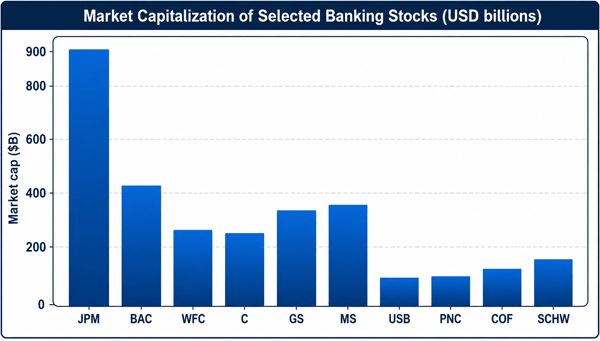
Figure 1. Market capitalization of the selected banking stocks (USD billions).
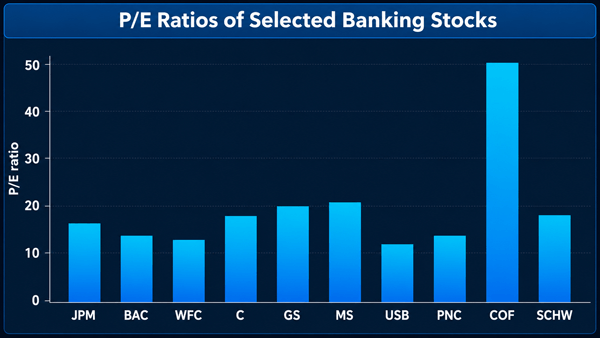
Figure 2. P/E ratios of the selected banking stocks.
4.1 JPM - JPMorgan Chase
Best all-around banking stock for beginners to study
| Current price | $331.48 |
|---|---|
| Market cap | $917.4 billion |
| P/E ratio | 16.41 |
| Investor role | Scale, fortress balance sheet, cards, deposits, investment banking |
JPMorgan Chase is often the first bank stock beginners should understand because it operates across consumer banking, credit cards, commercial banking, markets, asset management, and investment banking. Its size gives it funding advantages and a broad view of the economy. Its 2025 annual materials showed very large profitability, and its current market capitalization is the largest in this group.
Practical beginner example: A beginner might use JPM as the “core bank stock” benchmark. If another bank looks cheaper than JPM, ask why. Does it have weaker deposits, more credit risk, lower returns, or a less diversified business?
What to watch before buying: large-bank regulation, credit cycles, lower net interest income if deposit costs rise faster than loan yields, market volatility, and valuation risk after strong performance.
Bottom line: JPM belongs on a 2026 bank-stock watchlist, but it should be compared with peers on valuation, capital, deposits, credit quality, and expected earnings durability before any purchase.
4.2 BAC - Bank of America
Best deposit-franchise and rate-cycle stock to watch
| Current price | $57.37 |
|---|---|
| Market cap | $425.5 billion |
| P/E ratio | 14.24 |
| Investor role | Deposit franchise, rate sensitivity, digital banking scale |
Bank of America is a huge consumer and commercial bank with a major digital banking base. Its 2025 materials reported $113.1 billion of revenue and $30.5 billion of net income. BAC often attracts investors who want exposure to everyday banking, credit cards, wealth management, and rate-sensitive net interest income.
Practical beginner example: if interest rates fall slowly and deposit costs stabilize, BAC may benefit from a large base of deposits and securities repricing. But if credit losses rise or loan growth weakens, the benefit may be delayed.
What to watch before buying: interest-rate sensitivity, consumer credit, unrealized securities marks, regulatory costs, and the possibility that the stock already prices in a better margin outlook.
Bottom line: BAC belongs on a 2026 bank-stock watchlist, but it should be compared with peers on valuation, capital, deposits, credit quality, and expected earnings durability before any purchase.
4.3 WFC - Wells Fargo
Best turnaround bank stock for patient investors
| Current price | $83.84 |
|---|---|
| Market cap | $261.4 billion |
| P/E ratio | 12.96 |
| Investor role | Turnaround story, cost control, consumer banking footprint |
Wells Fargo is a classic turnaround case. The appeal is not just that it is a large U.S. bank; the appeal is that better efficiency, cleaner controls, and steady consumer/commercial banking could support improved profitability over time. Turnaround stocks can work well, but they require patience and careful monitoring.
Practical beginner example: A beginner should not buy WFC only because the P/E looks lower than some peers. The better question is: what has to go right for earnings quality and investor confidence to improve? Track expense control, deposit trends, credit losses, and management execution.
What to watch before buying: execution risk, regulatory history, reputational issues, credit-cycle exposure, and disappointment if the turnaround takes longer than expected.
Bottom line: WFC belongs on a 2026 bank-stock watchlist, but it should be compared with peers on valuation, capital, deposits, credit quality, and expected earnings durability before any purchase.
4.4 C - Citigroup
Best global-bank turnaround and value candidate
| Current price | $145.67 |
|---|---|
| Market cap | $258.7 billion |
| P/E ratio | 18.01 |
| Investor role | Global services, payments, restructuring upside |
Citigroup is a global banking franchise with treasury services, markets, banking, wealth, and U.S. personal banking. Citi’s 2025 annual report highlighted $85.2 billion of revenue, $14.3 billion of net income, and a 13.2% CET1 capital ratio. The investment case is largely about simplification, better returns, and narrowing the gap between Citi’s potential and its actual profitability.
Practical beginner example: A practical way to evaluate Citi: do not focus only on revenue growth. Watch whether restructuring improves return on tangible common equity, expenses, controls, and capital returns.
What to watch before buying: global complexity, regulatory and control costs, restructuring execution, currency/geopolitical exposure, and lower profitability versus stronger peers.
Bottom line: C belongs on a 2026 bank-stock watchlist, but it should be compared with peers on valuation, capital, deposits, credit quality, and expected earnings durability before any purchase.
4.5 GS - Goldman Sachs
Best capital-markets recovery stock
| Current price | $1,106.37 |
|---|---|
| Market cap | $340.8 billion |
| P/E ratio | 20.21 |
| Investor role | Capital markets recovery, advisory, trading, wealth expansion |
Goldman Sachs is more tied to investment banking, trading, asset management, and institutional activity than a traditional deposit-heavy bank. Its 2025 annual report noted net revenues of $58.3 billion and EPS growth, showing how strong markets and deal activity can lift results.
Practical beginner example: A beginner should understand that GS can shine when mergers, IPOs, underwriting, and trading are healthy. But when deal activity slows, results can be lumpier than a traditional retail bank.
What to watch before buying: capital-markets cyclicality, trading volatility, compensation pressure, regulatory capital rules, and valuation risk when markets are already optimistic.
Bottom line: GS belongs on a 2026 bank-stock watchlist, but it should be compared with peers on valuation, capital, deposits, credit quality, and expected earnings durability before any purchase.
4.6 MS - Morgan Stanley
Best wealth-management banking stock
| Current price | $227.09 |
|---|---|
| Market cap | $357.9 billion |
| P/E ratio | 20.57 |
| Investor role | Wealth management stability plus trading and dealmaking |
Morgan Stanley combines investment banking and trading with a large wealth-management platform. Its 2025 earnings release reported full-year net revenues of $70.6 billion and ROTCE of 21.6%. Wealth management can make the business feel steadier because fees are linked to client assets, advice, and long-term relationships.
Practical beginner example: if stock markets rise, client assets can rise, which can help wealth-management revenue. If markets fall, fee revenue may weaken, but the client relationship business may still be more stable than pure dealmaking.
What to watch before buying: market levels, client asset flows, investment-banking cycles, trading risks, and valuation after a strong run.
Bottom line: MS belongs on a 2026 bank-stock watchlist, but it should be compared with peers on valuation, capital, deposits, credit quality, and expected earnings durability before any purchase.
4.7 USB - U.S. Bancorp
Best conservative super-regional bank to compare
| Current price | $58.68 |
|---|---|
| Market cap | $91.2 billion |
| P/E ratio | 12.30 |
| Investor role | Payments, conservative lending, valuation discipline |
U.S. Bancorp is often viewed as a higher-quality regional/super-regional bank with consumer, commercial, wealth, and payments exposure. For beginners, USB is useful because it shows that not every banking stock needs to be a Wall Street mega-bank to be relevant.
Practical beginner example: A beginner can compare USB with PNC: both are large regional banks, but USB has meaningful payments exposure while PNC has a different commercial and branch mix. The best choice depends on valuation, credit quality, and earnings consistency.
What to watch before buying: commercial real estate exposure, regional-bank funding pressure, loan growth, credit losses, and competition from larger banks and fintech platforms.
Bottom line: USB belongs on a 2026 bank-stock watchlist, but it should be compared with peers on valuation, capital, deposits, credit quality, and expected earnings durability before any purchase.
4.8 PNC - PNC Financial Services
Best disciplined super-regional bank for NIM recovery
| Current price | $234.71 |
|---|---|
| Market cap | $95.1 billion |
| P/E ratio | 13.64 |
| Investor role | Commercial banking, NIM improvement, disciplined credit |
PNC reported full-year 2025 net income of $7.0 billion and diluted EPS of $16.59. Its fourth-quarter materials said net interest income improved, helped by lower funding costs, loan growth, and fixed-rate asset repricing. This makes PNC a practical example of how net interest margin can affect a bank stock.
Practical beginner example: A beginner can watch PNC’s NIM, deposit costs, loan growth, and credit provisions. If NIM expands while credit stays controlled, earnings may improve. If credit weakens, the NIM benefit may not matter enough.
What to watch before buying: regional economic exposure, commercial lending, funding costs, integration risk from acquisitions, and sensitivity to credit trends.
Bottom line: PNC belongs on a 2026 bank-stock watchlist, but it should be compared with peers on valuation, capital, deposits, credit quality, and expected earnings durability before any purchase.
4.9 COF - Capital One
Best credit-card and payments-network growth candidate
| Current price | $200.70 |
|---|---|
| Market cap | $124.9 billion |
| P/E ratio | 51.20 |
| Investor role | Card scale, Discover acquisition, payments-network optionality |
Capital One is more exposed to credit cards and consumer lending than many traditional banks. The completed Discover acquisition gives it a larger card base and potential payments-network advantages, but also brings integration and credit-cycle risks.
Practical beginner example: COF may benefit when consumers keep spending and credit losses remain manageable. But if unemployment rises or delinquencies climb, card lenders can feel pain faster than some deposit-heavy banks.
What to watch before buying: credit-card charge-offs, consumer stress, integration of Discover, regulatory review of card pricing and fees, and high reported P/E from temporarily depressed or acquisition-affected earnings.
Bottom line: COF belongs on a 2026 bank-stock watchlist, but it should be compared with peers on valuation, capital, deposits, credit quality, and expected earnings durability before any purchase.
4.10 SCHW - Charles Schwab
Best brokerage-bank hybrid stock
| Current price | $92.03 |
|---|---|
| Market cap | $161.2 billion |
| P/E ratio | 18.30 |
| Investor role | Client assets, cash sweep recovery, brokerage-bank model |
Charles Schwab is not a bank in the same way JPM or BAC is. It is a brokerage and wealth platform with banking operations. The investment case is tied to client assets, cash sorting, net interest revenue recovery, trading activity, advisory services, and long-term account growth.
Practical beginner example: A beginner can think of SCHW as a “financial platform” stock. When investors are active and client assets rise, Schwab can do well. When clients move idle cash into higher-yielding products, bank spread income can be pressured.
What to watch before buying: cash sorting, interest-rate sensitivity, market downturns, client trading slowdowns, competitive pricing, and balance-sheet perception after past regional-bank stress.
Bottom line: SCHW belongs on a 2026 bank-stock watchlist, but it should be compared with peers on valuation, capital, deposits, credit quality, and expected earnings durability before any purchase.
5. How to Choose the Right Banking Stock as a Beginner
Start with your goal. If you want a steadier core bank, study JPM, BAC, USB, or PNC first. If you want capital-markets upside, study GS or MS. If you want a turnaround, study WFC or C. If you want credit-card and payments exposure, study COF. If you want brokerage and wealth-platform exposure, study SCHW.
Do not put all your money into one bank stock. Banking is cyclical. A beginner may use a diversified financial-sector ETF for broad exposure and then add one or two individual stocks only after understanding their business models. This approach reduces single-company risk while still allowing focused research.
Use a simple checklist: Is revenue diversified? Are deposits stable? Is net interest margin improving? Are credit losses manageable? Is capital strong? Is the valuation fair compared with growth and quality? Is management returning capital responsibly through dividends and buybacks?
6. Practical Portfolio Examples
Conservative example: 60% broad market index fund, 20% financial-sector ETF, 10% JPM, 10% BAC or USB. This investor wants bank exposure but does not want one bank to dominate the portfolio.
Balanced bank-stock basket example: 25% JPM, 15% BAC, 15% MS, 15% PNC, 10% C, 10% USB, 10% SCHW. This gives exposure to universal banking, wealth, regional banking, and platform finance. It is still concentrated in financials, so it should only be one part of a wider portfolio.
Higher-risk opportunity basket example: 25% C, 20% WFC, 20% COF, 15% GS, 10% PNC, 10% SCHW. This portfolio depends more on turnarounds, credit conditions, and capital-markets strength. It may have higher upside but also higher drawdown risk.
7. Banking-Stock Metrics Beginners Should Track
- Net interest income: the money a bank earns from interest after paying funding costs. Rising NII can help bank earnings, but only if credit quality stays healthy.
- Net interest margin: the spread between earning assets and funding costs. A few basis points can matter because bank balance sheets are huge.
- CET1 ratio: a key capital-strength measure. A higher ratio gives a bank more loss-absorbing capacity, though too much idle capital may also reduce returns.
- Efficiency ratio: lower is usually better because it means the bank spends less to produce each dollar of revenue.
- Credit costs and charge-offs: these reveal whether borrowers are paying. Rising charge-offs are often the early warning sign bank investors should not ignore.
- Price-to-earnings and price-to-book: valuation matters. Banks often trade on earnings, tangible book value, and expected return on tangible common equity.
8. Common Mistakes to Avoid
- Buying only because the dividend looks high. A high yield can be a warning sign if investors fear earnings pressure or dividend risk.
- Ignoring credit quality. Bank earnings can look fine right before credit losses rise.
- Confusing big banks with safe stocks. Large banks are usually more resilient, but their stocks can still fall sharply in recessions or financial stress.
- Buying after a rally without a plan. Set a valuation range, decide what would make you sell, and keep position sizes reasonable.
- Using borrowed money or short-term money to buy cyclical stocks. Banking stocks can be volatile, so they are usually better suited to long-term capital.
9. Frequently Asked Questions
9.1 What are banking stocks?
Banking stocks are shares of companies that provide financial services such as deposits, loans, credit cards, investment banking, trading, wealth management, payments, and brokerage services.
9.2 Are banking stocks good for beginners?
They can be, but beginners should start with large, understandable banks and learn the key risks before buying individual stocks. Diversified ETFs may be easier for new investors.
9.3 What is the best banking stock to buy in 2026?
There is no single best stock for everyone. JPM is the strongest all-around benchmark, BAC is a major deposit-franchise stock, MS is attractive for wealth management, and PNC/USB offer super-regional exposure. The right choice depends on valuation and risk tolerance.
9.4 Are bank stocks safe during recessions?
No stock is fully safe. Banks are directly exposed to credit losses and economic stress. Strong capital and liquidity help, but share prices can still fall.
9.5 Do bank stocks pay dividends?
Many banks pay dividends, but dividends are not guaranteed. Investors should check payout ratio, capital levels, profitability, and regulatory constraints before relying on dividends.
9.6 What is net interest income?
Net interest income is the difference between interest earned on loans and securities and interest paid on deposits and other funding. It is one of the most important drivers of traditional bank earnings.
10. Final Verdict
The best banking stocks to research in 2026 are not all the same type of investment. JPMorgan Chase is the quality benchmark. Bank of America offers scale and rate-cycle sensitivity. Wells Fargo and Citigroup are turnaround stories. Goldman Sachs and Morgan Stanley offer capital-markets and wealth-management exposure. U.S. Bancorp and PNC provide super-regional bank exposure. Capital One adds credit-card and payments upside. Charles Schwab adds brokerage-bank platform exposure.
For most beginners, the safest process is to build a watchlist, compare valuation and risk, buy gradually only when the price makes sense, and keep bank stocks as one part of a diversified portfolio. The goal is not to predict the perfect entry point. The goal is to understand what you own before you own it.
11. Summary Comparison
The following table brings the principal research case, main risk, and beginner suitability for each stock into one view.
| Rank | Stock | Best reason to research | Main risk | Beginner suitability |
|---|---|---|---|---|
| 1 | JPM - JPMorgan Chase | Scale, fortress balance sheet, cards, deposits, investment banking | Valuation and regulation | High |
| 2 | BAC - Bank of America | Deposit franchise, rate sensitivity, digital banking scale | Rate sensitivity | High |
| 3 | MS - Morgan Stanley | Wealth management stability plus trading and dealmaking | Market levels | Medium-high |
| 4 | PNC - PNC Financial Services | Commercial banking, NIM improvement, disciplined credit | Credit and funding | Medium-high |
| 5 | USB - U.S. Bancorp | Payments, conservative lending, valuation discipline | Regional-bank cycle | Medium-high |
| 6 | GS - Goldman Sachs | Capital markets recovery, advisory, trading, wealth expansion | Deal/trading cycle | Medium |
| 7 | C - Citigroup | Global services, payments, restructuring upside | Execution and complexity | Medium, higher risk |
| 8 | WFC - Wells Fargo | Turnaround story, cost control, consumer banking footprint | Turnaround execution | Medium, turnaround risk |
| 9 | SCHW - Charles Schwab | Client assets, cash sweep recovery, brokerage-bank model | Cash sorting and rates | Medium |
| 10 | COF - Capital One | Card scale, Discover acquisition, payments-network optionality | Consumer credit | Medium, higher credit risk |
Sources Consulted and Checked
The following sources were consulted in preparing this document and checking the accuracy of its factual statements and data. Readers should consult the latest official versions because figures, disclosures, and regulatory information may change.
- FDIC Quarterly Banking Profile, First Quarter 2026: https://www.fdic.gov/quarterly-banking-profile
- FDIC Q1 2026 speech/profile summary: https://www.fdic.gov/news/speeches/2026/fdic-quarterly-banking-profile-first-quarter-2026
- Federal Reserve 2026 stress-test scenarios: https://www.federalreserve.gov/publications/2026-stress-test-scenarios.htm
- Federal Reserve June 9, 2026 stress-test capital buffer note: https://www.federalreserve.gov/newsevents/pressreleases/bcreg20260609a.htm
- JPMorgan Chase 2025 Annual Report: https://www.jpmorganchase.com/content/dam/jpmc/jpmorgan-chase-and-co/investor-relations/documents/annualreport-2025.pdf
- Bank of America 2025 Annual Report / investor materials: https://investor.bankofamerica.com/
- Citigroup 2025 Annual Report: https://www.citigroup.com/rcs/citigpa/storage/public/Annual_Report/2025/citi-2025-annual-report.pdf
- Goldman Sachs 2025 Annual Report: https://www.goldmansachs.com/investor-relations/financials/current/annual-reports/2025/annual-report.pdf
- Morgan Stanley Q4 and full-year 2025 earnings release: https://www.morganstanley.com/about-us-ir/shareholder/4q2025.pdf
- PNC full-year 2025 earnings release: https://investor.pnc.com/news-events/financial-press-releases/detail/677/pnc-reports-full-year-2025-net-income-of-7-0-billion-16-59-diluted-eps
- Current market prices, market caps and P/E ratios: Finance feed used on June 23, 2026 for latest June 22, 2026 market data
Reader Advice
This article is provided solely for educational and informational purposes. It does not constitute personalized financial, investment, legal, tax, or other professional advice, and it does not recommend that any reader buy, sell, or hold a particular security. Investing in banking stocks involves risk, including the possible loss of principal. Banks can be particularly sensitive to changes in interest rates, credit quality, loan demand, deposit trends, capital and liquidity requirements, economic conditions, and banking regulations, so these factors are useful to keep in mind when researching the stocks discussed.
Prices, valuation ratios, company results, regulations, interest-rate conditions, and other facts may change after publication and may differ according to the data source or calculation method. Before making any financial decision, readers should assess their own objectives, financial position, risk tolerance, and time horizon; verify all facts and figures using current company filings and official regulatory sources; and, where appropriate, seek advice from a qualified and duly licensed professional. Past performance does not guarantee future results.