PBS and MEV-Boost: Complete Guide, Examples, Risks and Best Practices
1. Quick Answer: What Are PBS and MEV-Boost?
Proposer-builder separation (PBS) is an Ethereum block-production design that separates two jobs: building a block and proposing that block to the network. Instead of every validator having to create the most profitable block itself, specialized builders compete to construct blocks, and the validator scheduled for the slot chooses the best available block.
MEV-Boost is the widely used off-protocol software that brings a version of PBS to proof-of-stake Ethereum today. It is middleware run by validators. It connects validators to relays, which receive block bids from builders and pass the best bids to validators. Flashbots describes MEV-Boost as open-source middleware that gives validators access to a competitive block-building market.
In plain English: PBS is the design idea. MEV-Boost is the practical tool validators use today. Enshrined PBS, often shortened to ePBS, is the longer-term goal of building this separation directly into Ethereum’s protocol instead of relying on external relays.
| Term | Simple meaning | Why it matters |
|---|---|---|
| MEV | Maximal extractable value: extra value that can be captured by ordering, inserting, or excluding transactions in a block. | MEV affects users, validators, DeFi trades, and block-production incentives. |
| PBS | A design that separates block builders from block proposers. | It can reduce validator complexity and create a more open market for block construction. |
| MEV-Boost | Middleware used by validators to request blocks from external builders through relays. | It can increase validator rewards, but adds relay, censorship, and centralization concerns. |
| ePBS | Enshrined proposer-builder separation built into Ethereum itself. | It aims to reduce reliance on trusted third-party relays, but research and trade-offs remain active. |
2. Why PBS Exists: The MEV Problem in Simple Terms
To understand PBS and MEV-Boost, start with a normal Ethereum block. Every few seconds, the network needs someone to propose the next block. That block contains transactions: token swaps, NFT transfers, lending actions, liquidations, contract calls, and other activity.
The order of those transactions matters. In decentralized finance, moving one transaction before or after another can create profit. For example, a searcher may see a large swap in the public mempool and place another trade immediately after it to capture an arbitrage opportunity. This extra extractable value is called MEV.
MEV is not always illegal or harmful. Some MEV, such as arbitrage that brings prices back into line across decentralized exchanges, can improve market efficiency. But MEV can also harm ordinary users through sandwich attacks, worse execution prices, failed transactions, and increased competition for block space.
2.1 The Block-Production Roles
PBS becomes easier to understand when you separate the roles involved in a modern MEV supply chain.
| Role | What it does | Beginner analogy |
|---|---|---|
| User | Submits a transaction, such as a swap or transfer. | A customer placing an order. |
| Searcher | Looks for MEV opportunities and may submit bundles of transactions. | A trader looking for price differences. |
| Builder | Collects transactions and bundles, then constructs a full block. | A contractor preparing the best package. |
| Relay | Sits between builders and validators, forwarding bids and protecting block contents before signing. | An auction house and escrow-like messenger. |
| Validator / proposer | The validator selected for a slot signs and proposes a block. | The official who chooses the winning package and submits it. |
3. How MEV-Boost Works Step by Step
MEV-Boost is commonly described as a sidecar for Ethereum consensus clients. A validator still runs the normal validator client, consensus client, and execution client. MEV-Boost is an additional piece of software that helps the validator outsource block construction to a competitive builder market.
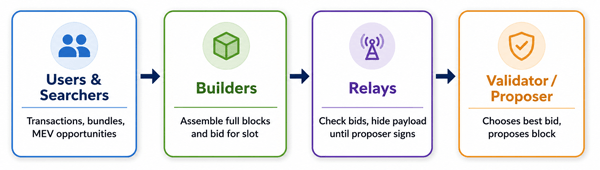
Figure 1: Simplified PBS and MEV-Boost flow.
Here is the simplified sequence:
- Searchers and users submit transactions or bundles. Searchers may package MEV strategies, such as arbitrage or liquidation transactions.
- Builders assemble candidate blocks. They combine ordinary transactions, searcher bundles, and their own ordering strategies to create profitable blocks.
- Builders send bids to relays. A bid tells the relay and proposer how much the builder is willing to pay for the right to have its block proposed.
- Relays validate and forward the best bids. Relays help prevent builders from revealing full block contents before the proposer commits, and they help validators compare bids from many builders.
- The validator picks a winning bid. The validator’s consensus client receives the best available header through MEV-Boost, signs it, and proposes the block.
- The full block payload is revealed and published. After the proposer commits, the builder releases the full execution payload so the block can be included in Ethereum.
4. PBS vs MEV-Boost vs ePBS
| Feature | PBS | MEV-Boost | Enshrined PBS / ePBS |
|---|---|---|---|
| What it is | A design pattern for separating block proposal from block building. | A real-world off-protocol implementation of PBS used by validators. | A protocol-level version of PBS proposed for Ethereum. |
| Where it lives | Concept / architecture. | External middleware plus relays and builders. | Inside Ethereum consensus rules if adopted. |
| Main goal | Reduce pressure on validators to be expert block builders. | Let validators access builder bids and higher rewards today. | Reduce reliance on trusted relays and make PBS more native to Ethereum. |
| Main risk | Builder centralization and MEV concentration can still happen. | Relay dependence, censorship concerns, configuration mistakes, and market concentration. | Design complexity, new incentive issues, and unresolved MEV/censorship questions. |
| Status | Core Ethereum roadmap idea. | Available today as optional validator middleware. | Active protocol research and proposal work, including EIP-7732. |
5. A Practical Example: Token Swap and Backrunning
Imagine Alice submits a large swap from Token A to Token B on a decentralized exchange. That trade changes the pool price. A searcher sees the pending swap and notices that after Alice’s swap, the price on another exchange will be different. The searcher creates a backrunning transaction that buys or sells after Alice to capture the price difference.
Without PBS, the validator proposing the block might need sophisticated software and private order flow to capture that opportunity. With MEV-Boost, specialized builders compete to include the most profitable combination of Alice’s transaction, searcher bundles, and normal transactions. The winning builder pays the proposer a bid. Alice still gets her transaction included, but the economic value created by transaction ordering is distributed through the builder market.
This example shows why PBS is attractive: it gives smaller validators access to sophisticated block-building revenue without requiring them to become MEV experts. It also shows the trade-off: specialized builders can become very powerful if only a few consistently win blocks.
6. Benefits of PBS and MEV-Boost
6.1 Validators can earn more competitive rewards
Validators that use MEV-Boost can receive bids from specialized builders. In many slots, those bids may be more profitable than a locally built block. This is one reason MEV-Boost became important after Ethereum moved to proof of stake.
6.2 Solo validators can compete with sophisticated operators
A solo validator does not need to build a private MEV trading desk. By connecting to relays, the validator can access blocks built by professional builders. This can reduce the advantage of large operators in block construction, although it does not eliminate all economies of scale.
6.3 Block building becomes a competitive market
PBS turns block construction into an auction-like market. Builders compete to deliver valuable blocks. In theory, competition pushes more value to validators and can make block production more efficient.
6.4 Validator hardware and operational burden may be lower
Validators can focus on validation and proposal duties while builders handle complex transaction ordering. Ethereum.org describes PBS as a way to split block building and block proposing so proposers do not have to perform all block-construction work themselves.
6.5 It creates a path toward protocol-level improvements
MEV-Boost is not the final destination. It has helped Ethereum learn how PBS works in practice. That experience informs ePBS research, relay design, inclusion-list discussions, and other attempts to improve censorship resistance and decentralization.
7. Risks and Limitations
7.1 Relay trust and reliability
Today’s MEV-Boost depends on relays. Relays are not part of Ethereum’s core protocol. They help verify builder bids and release payloads, but they also become important infrastructure. If a relay fails, censors, misbehaves, or becomes too dominant, validators and users can be affected. Flashbots notes that MEV-Boost is implemented as a sidecar and validators can fall back to local block production if MEV-Boost has a fault, but fallback behavior depends on correct setup and client behavior.
7.2 Builder centralization
Even if many validators use MEV-Boost, block construction may concentrate among a small number of high-performing builders. Builders with better order flow, faster infrastructure, and stronger MEV strategies can win more often. This can create a new centralization point: validators remain distributed, but the blocks they propose may come from a smaller builder set.
7.3 Censorship concerns
Some relays or builders may filter transactions for legal, policy, or business reasons. This creates censorship-risk debates because transaction inclusion can be influenced by off-protocol actors. MEV-Boost itself is a tool; the practical risk depends on which relays validators use, which builders dominate, and whether alternative non-censoring paths remain available.
7.4 Hidden MEV and private order flow
PBS does not make MEV disappear. It changes who competes for it and how it is sold. Private order flow, exclusive searcher-builder relationships, latency advantages, and off-chain agreements can still reduce transparency.
7.5 Incorrect validator configuration
Validators can lose potential rewards or create operational risk if MEV-Boost is misconfigured. Examples include using unreliable relay endpoints, not testing fallback block production, failing to monitor relay status, or running outdated software.
7.6 ePBS is not a magic fix
Enshrined PBS aims to reduce reliance on external relays, but it does not automatically solve every MEV problem. Research continues on inclusion lists, builder centralization, free-option problems, payment design, and censorship resistance. EIP-7732 proposes a protocol-level separation of consensus and execution responsibilities, but the broader design space remains active.
8. Best Practices for Validators Using MEV-Boost
The exact commands depend on the validator’s client stack, operating system, and relay choices. The following practices are general and should be adapted to the official documentation for your clients and relays.
- Use multiple reputable relays instead of relying on a single relay. This can reduce downtime and concentration risk.
- Understand each relay’s policy. Some relays may apply filtering or compliance rules; others may not. Choose based on your legal, operational, and ethical requirements.
- Keep validator, consensus, execution, and MEV-Boost software updated. Security fixes and compatibility changes matter.
- Confirm local block-production fallback. A validator should still be able to propose a local block if MEV-Boost or relays fail.
- Monitor missed proposals, relay errors, bid values, and client logs. Do not assume MEV-Boost is working just because the service is running.
- Avoid blindly copying relay lists from social media. Use official relay information and community-maintained dashboards with caution.
- Separate keys and infrastructure safely. MEV-Boost should not change basic validator security rules: protect signing keys, use secure access controls, and avoid unnecessary remote exposure.
- Document your setup. A simple runbook helps during upgrades, outages, and emergency fallback situations.
9. Best Practices for Users and DeFi Traders
Ordinary Ethereum users do not usually run MEV-Boost, but they can still be affected by MEV and block-building markets. Practical habits can reduce avoidable losses.
- Use sensible slippage settings. Very high slippage can make sandwich attacks more profitable.
- Prefer reputable trading interfaces that offer MEV protection or private transaction routing when appropriate.
- Break very large trades into smaller trades only when it truly improves execution; splitting can also add fees and complexity.
- Check price impact before swapping. A trade with high price impact is more visible and potentially more attractive to MEV searchers.
- Do not assume private routing is always better. It can reduce some mempool risks but may introduce trust assumptions about the provider.
- For high-value DeFi actions, compare routes, timing, and execution methods before submitting.
10. Common Misconceptions
| Misconception | Reality |
|---|---|
| MEV-Boost is the same as MEV. | No. MEV is the value created by transaction ordering. MEV-Boost is software that helps validators access builder bids related to that value. |
| PBS eliminates MEV. | No. PBS reorganizes the market for MEV. It can improve access and competition but does not remove MEV incentives. |
| Only large validators benefit. | Large operators may have advantages, but MEV-Boost can also help solo validators access competitive blocks. |
| Relays are part of Ethereum consensus. | Current MEV-Boost relays are external infrastructure. ePBS aims to move parts of this role into protocol rules. |
| The highest bid is always best for Ethereum. | The highest bid may maximize validator revenue for a slot, but it may not address censorship, decentralization, or user-experience concerns. |
11. How PBS Affects Ethereum Decentralization
PBS has a mixed relationship with decentralization. On one hand, it can help validators avoid the need to run complex MEV infrastructure. That supports smaller validators because they can access builder markets through common middleware. On the other hand, the builder market itself can centralize if only a few builders have the best order flow, algorithms, and network connections.
A useful way to think about it is this: PBS can decentralize validation while centralizing block construction unless the builder market remains competitive and censorship-resistant. Ethereum researchers therefore focus not only on validator decentralization, but also on builder diversity, relay neutrality, transaction inclusion guarantees, and protocol-level safeguards.
12. What Is Enshrined PBS and Why Does It Matter?
Enshrined PBS means building proposer-builder separation directly into Ethereum’s protocol. Instead of depending on external relays as trusted intermediaries, the protocol would define how proposers and builders interact. EIP-7732 is a major proposal in this direction. It describes separating the Ethereum block into consensus and execution parts and adding a mechanism for a consensus proposer to choose an execution proposer, commonly called a builder.
The motivation is clear: if PBS is important enough to become a core part of Ethereum block production, relying forever on external relay infrastructure may not be ideal. Enshrining PBS could harden the trust model and reduce some relay-related risks. However, it also introduces protocol complexity and does not automatically solve builder centralization or all forms of MEV.
13. Simple Checklist: Should a Validator Use MEV-Boost?
| Question | Why it matters |
|---|---|
| Do I understand my client’s MEV-Boost setup instructions? | Incorrect setup can reduce rewards or cause proposal issues. |
| Can my node fall back to local block production? | Fallback protects liveness if relays or MEV-Boost fail. |
| Which relays am I using and why? | Relay choice affects censorship exposure, reliability, and revenue. |
| Am I monitoring proposal performance? | Logs and alerts help catch problems early. |
| Do I have an upgrade and incident plan? | MEV infrastructure changes quickly; safe operations require maintenance. |
14. FAQs About PBS and MEV-Boost
14.1 What does PBS mean in Ethereum?
PBS means proposer-builder separation. It separates the validator that proposes a block from the specialized builder that constructs the block.
14.2 What is MEV-Boost?
MEV-Boost is open-source middleware that validators can run to receive block bids from builders through relays. It is an off-protocol implementation of PBS for proof-of-stake Ethereum.
14.3 Is MEV-Boost required to run an Ethereum validator?
No. Validators can run without MEV-Boost and build local blocks. Many validators use MEV-Boost because it can improve rewards, but it is optional.
14.4 Does MEV-Boost make Ethereum more centralized?
It can reduce some validator-level advantages but may introduce centralization in builders and relays. The effect depends on market diversity, relay policies, and validator choices.
14.5 What is a relay in MEV-Boost?
A relay connects builders and validators. It receives builder bids, checks them, and forwards the best available bids to validators while helping protect full block contents before the proposer signs.
14.6 What is the difference between MEV-Boost and ePBS?
MEV-Boost is external middleware used today. ePBS is the idea of building proposer-builder separation directly into Ethereum’s consensus protocol.
14.7 Does PBS stop sandwich attacks?
Not by itself. PBS changes block-building roles, but user-facing MEV risks such as sandwich attacks can still exist. Users need better routing, slippage controls, and MEV-protection tools.
14.8 Why do builders pay validators?
Builders pay because they want their block to be selected. If a block contains valuable MEV opportunities or high transaction fees, the builder can bid part of that value to the proposer.
14.9 Can a validator connect to more than one relay?
Yes. Validators commonly configure multiple relays to improve access to bids and reduce reliance on a single relay.
14.10 Is enshrined PBS already live?
As of this writing, PBS is available through MEV-Boost, while ePBS remains a protocol-development and proposal area. EIP-7732 is a key proposal, but readers should check current Ethereum upgrade status before making operational decisions.
15. Conclusion: The Practical Meaning of PBS and MEV-Boost
PBS and MEV-Boost are important because they sit at the center of modern Ethereum block production. PBS separates the work of building blocks from proposing blocks. MEV-Boost gives validators a practical way to use that separation today by connecting them to builders through relays.
The benefit is clear: validators, including solo validators, can access more competitive block-building revenue without becoming MEV specialists. The trade-off is also clear: Ethereum must manage relay dependence, builder concentration, censorship concerns, and the fact that MEV itself does not disappear.
For beginners, the best summary is simple: MEV is the economic force, PBS is the architecture, MEV-Boost is today’s middleware, and ePBS is the protocol-level direction Ethereum researchers are exploring. A strong understanding of all four helps validators operate more safely and helps users understand why transaction ordering matters.
Sources Consulted and Checked
The following sources were consulted and checked while preparing this article to support clarity and accuracy.
- Ethereum.org, “Proposer-builder separation”
- Flashbots Docs, “What is MEV-Boost?”
- Flashbots GitHub, “mev-boost”
- Flashbots Docs, “MEV-Boost Risks and Considerations”
- EIP-7732, “Enshrined Proposer-Builder Separation”
- MEV Watch, relay censorship tracking
- Koegler, “SoK: Current State of Ethereum’s Enshrined Proposer Builder Separation”
Reader Advice
This article is provided for educational and informational purposes only and is not personalized legal, financial, investment, tax, cybersecurity, or validator-operating advice. Ethereum software, network conditions, relay and builder practices, protocol proposals, laws, policies, rules, and statistics can change over time and may vary by jurisdiction. Before making operational, financial, or compliance decisions, verify current information through official Ethereum client documentation, recognized project sources, and qualified professionals where appropriate. Running validator or MEV-related infrastructure and using DeFi involve technical, market, security, censorship, configuration, and loss risks; assess these risks carefully, test changes safely, protect keys, and never commit funds or systems you cannot afford to lose or disrupt.