Common Crypto Myths Explained: What Beginners Should Know Before Investing
1. Introduction: Why Crypto Myths Are So Easy to Believe
Cryptocurrency can feel exciting, confusing, and intimidating all at once. One person says Bitcoin is the future of money. Another says crypto is a scam. Social media shows stories of people turning small amounts into life-changing gains, while news headlines show hacks, bankruptcies, and people losing access to their coins forever.
For beginners, the biggest danger is not simply buying the wrong coin. It is believing the wrong story. Crypto myths can push people into rushed decisions, unrealistic expectations, unsafe platforms, or scams that are difficult to recover from.
This guide explains the most common crypto myths in plain English. You will learn what cryptocurrency is, how it works at a basic level, what benefits and risks matter, and what practical steps to take before investing.
2. First, What Is Cryptocurrency in Simple Terms?
A cryptocurrency is a digital asset that usually exists on a blockchain. A blockchain is a shared record of transactions maintained by a network of computers instead of one central database. Bitcoin, Ethereum, Solana, and many other crypto assets use this kind of public ledger, although they differ in design, purpose, fees, speed, and risk.
Think of a blockchain like a public notebook that many computers help update. When a valid transaction is added, the network records it in a way that is difficult to secretly change later. That does not mean every crypto project is trustworthy. It only means the transaction system may be transparent and resistant to tampering under the right conditions.
2.1 How Crypto Works: A Beginner-Friendly Overview
- You buy or receive crypto through an exchange, broker, wallet, or another user.
- Your crypto is linked to cryptographic keys. A public address is like an account number. A private key or seed phrase is like the master password.
- Transactions are broadcast to the network and checked by validators or miners, depending on the blockchain.
- Once confirmed, the transaction appears on the ledger. Many crypto transactions cannot be easily reversed.
- You may keep crypto with a platform, in a software wallet, or in a hardware wallet. Each choice has trade-offs.
2.2 Key Crypto Terms Beginners Should Know
| Term | Simple meaning | Why it matters |
|---|---|---|
| Coin | A crypto asset native to its own blockchain, such as bitcoin on Bitcoin. | Coins often secure or power a network. |
| Token | A crypto asset built on another blockchain, such as many tokens on Ethereum. | Tokens vary widely; some have little real use. |
| Wallet | Software or hardware used to manage crypto keys and transactions. | Wallet safety is central to protecting funds. |
| Exchange | A platform where users buy, sell, or trade crypto. | Platform quality, regulation, fees, and custody risk matter. |
| Stablecoin | A token designed to track another asset, often the U.S. dollar. | Stable does not mean risk-free; backing and redemption matter. |
| Private key / seed phrase | The secret that controls access to crypto. | Anyone with it can move the funds. |
| Gas / network fee | A fee paid to process a blockchain transaction. | Fees can rise during network congestion. |
| DeFi | Decentralized finance apps such as lending, trading, or staking protocols. | Can offer access and automation, but carries smart contract and user-error risk. |
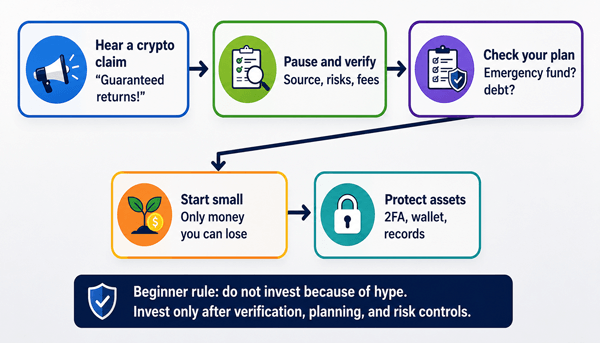
Figure 1: A simple decision flow for checking crypto claims before investing.
3. Common Crypto Myths Explained
3.1 Myth 1: “Crypto Is a Guaranteed Way to Get Rich”
The truth: Crypto can produce large gains, but it can also fall sharply, stay down for years, or go to zero. No legitimate investment offers guaranteed high returns without risk.
- A beginner sees a video saying a new coin will “100x.” They invest money needed for rent. The coin drops 70%, and there is no easy way to recover the loss.
- A safer approach is to decide your risk limit first, such as a small percentage of your investment portfolio, and never use emergency savings.
3.2 Myth 2: “Bitcoin and Crypto Are the Same Thing”
The truth: Bitcoin is one cryptocurrency. The broader crypto market includes thousands of assets with different purposes and risk levels.
- Bitcoin is mainly viewed by supporters as scarce digital money or a store-of-value experiment.
- Ethereum supports smart contracts and decentralized applications.
- A meme coin may depend mostly on hype and community attention.
- Do not assume a small token has the same security, liquidity, or track record as Bitcoin.
3.3 Myth 3: “Blockchain Means the Project Is Safe”
The truth: A blockchain can make transaction records transparent, but it cannot guarantee that a project team is honest, the token is valuable, or the code is free of bugs.
- A token can be recorded on a real blockchain and still be part of a pump-and-dump scheme.
- A DeFi app can be transparent and still lose money through a smart contract exploit.
- A founder can make impressive claims while hiding weak economics or conflicts of interest.
3.4 Myth 4: “Crypto Is Anonymous”
The truth: Many public blockchains are pseudonymous, not fully anonymous. Transactions may show wallet addresses instead of names, but activity can sometimes be traced and linked to real people.
- If you buy crypto through a regulated exchange, the platform may collect identity information.
- If you reuse the same wallet address, observers may build a profile of your activity.
- Privacy varies by asset, wallet behavior, exchange rules, and local law.
3.5 Myth 5: “Stablecoins Are Always Stable and Risk-Free”
The truth: Stablecoins are designed to track another asset, but the design can fail. Risks include weak reserves, poor transparency, regulatory issues, platform freezes, and loss of market confidence.
- A fully reserved, regularly audited stablecoin is different from an algorithmic stablecoin that relies on market incentives.
- Even if the token price usually stays near $1, you still face issuer, custody, liquidity, and regulatory risk.
3.6 Myth 6: “If a Coin Is Cheap, It Has More Upside”
The truth: A low price per coin does not mean a bargain. Market capitalization, supply, demand, utility, liquidity, and token distribution matter more than unit price.
- A coin priced at $0.01 with 100 billion tokens has a $1 billion market capitalization.
- A coin priced at $1,000 with 1 million tokens also has a $1 billion market capitalization.
- Price per coin alone tells you almost nothing about value.
3.7 Myth 7: “You Need to Buy a Whole Bitcoin”
The truth: You can buy fractions of many cryptocurrencies. Bitcoin is divisible into small units, so beginners do not need to buy a whole coin.
- A person can buy $20 or $100 worth of bitcoin on many platforms, depending on local availability and platform minimums.
- The better question is not “Can I afford one coin?” but “Does this fit my risk plan?”
3.8 Myth 8: “Crypto Exchanges Are Like Banks”
The truth: Exchanges may feel like banking apps, but they are not the same. Investor protections, insurance, segregation of assets, bankruptcy treatment, withdrawal rules, and oversight can vary significantly.
- If an exchange fails, users may face delays, losses, or legal uncertainty.
- Keeping assets on an exchange is convenient but creates counterparty risk.
- Self-custody removes some platform risk but adds personal responsibility for keys.
3.9 Myth 9: “Self-Custody Is Always Safer”
The truth: Self-custody can reduce dependence on a platform, but it is only safer if you can manage keys securely. Losing a seed phrase, falling for a phishing link, or signing a malicious transaction can be disastrous.
- A hardware wallet can improve security, but it does not protect you from sending crypto to a scam address.
- A beginner with poor backup habits may be safer starting with a reputable, regulated platform while learning.
3.10 Myth 10: “Crypto Transactions Can Be Undone If Something Goes Wrong”
The truth: Many crypto transactions are difficult or impossible to reverse. If you send funds to the wrong address or to a scammer, recovery may depend on the recipient, the platform, or law enforcement.
- Always send a small test transaction when moving a meaningful amount.
- Check the network carefully. Sending an asset on the wrong network can cause loss.
- Do not trust anyone who rushes you into sending crypto.
3.11 Myth 11: “High APY Means Easy Passive Income”
The truth: High advertised yields often come with high risk. Yield can come from token inflation, leverage, lending risk, smart contract risk, or unsustainable incentives.
- A 40% yield sounds attractive, but it may be paid in a token that loses 80% of its value.
- Ask where the yield comes from. If you cannot understand the source, do not treat it as safe income.
3.12 Myth 12: “More Followers Means a Better Crypto Project”
The truth: Social media popularity can be bought, manipulated, or driven by hype. A strong community can help a project, but followers are not proof of security, adoption, or value.
- Look for transparent documentation, credible audits, realistic token economics, active development, and clear risks.
- Be extra cautious when influencers use urgency, referral links, or vague claims about insider information.
3.13 Myth 13: “All Crypto Is a Scam”
The truth: Some crypto projects are fraudulent or useless, but not all crypto activity is the same. There are legitimate experiments in payments, settlement, digital ownership, programmable finance, and decentralized networks. Still, legitimate does not mean low-risk.
- A serious project can still be overvalued.
- A useful network token can still be volatile.
- An innovative idea can still fail commercially.
3.14 Myth 14: “Regulation Will Kill Crypto”
The truth: Regulation can create costs and restrictions, but it can also improve consumer protection, transparency, and institutional confidence. The impact depends on the country, asset type, platform, and rule.
- A token treated as a security may face different rules than a payment token or commodity-like asset.
- Beginners should check local laws, tax obligations, and whether a platform is authorized to serve their location.
3.15 Myth 15: “I Am Too Late to Learn About Crypto”
The truth: You do not need to chase every trend. Beginners are better served by learning the basics, avoiding scams, and moving slowly than trying to catch every price spike.
- Good investing does not require panic.
- Missing one rally is better than losing money to a myth you did not understand.
4. Crypto Benefits: Why People Are Interested
A balanced crypto article should not only list risks. People are interested in crypto because it attempts to solve real problems and opens new possibilities. The challenge is separating genuine potential from exaggerated marketing.
| Potential benefit | What it can mean | Beginner reality check |
|---|---|---|
| Open access | Some networks can be used by anyone with internet access. | Access does not remove price, scam, or technical risk. |
| Fast settlement | Some crypto transfers settle faster than traditional banking rails. | Speed depends on the network, fees, and exchange processing. |
| Self-custody | Users can hold assets without relying on a bank or broker. | You become responsible for private keys and mistakes. |
| Programmable money | Smart contracts can automate financial or digital ownership actions. | Smart contract bugs and exploits can cause losses. |
| Portfolio diversification | Some investors treat crypto as a high-risk alternative asset. | Correlation can rise during market stress; diversification is not guaranteed. |
5. Crypto Risks Beginners Should Take Seriously
Crypto is not just a normal stock market with different branding. It has its own risk profile, and beginners should understand these risks before putting in money.
| Risk | What can happen | Practical protection |
|---|---|---|
| Volatility | Prices can rise or fall dramatically in short periods. | Use small position sizes and avoid borrowed money. |
| Scams | Fraudsters may use fake exchanges, romance scams, impersonation, or guaranteed-return offers. | Never send crypto because of pressure, romance, threats, or promises. |
| Platform failure | An exchange, lender, or custodian may freeze withdrawals or fail. | Research platforms and avoid keeping all assets in one place. |
| Self-custody mistakes | Lost seed phrases, phishing, wrong addresses, and wrong networks can lead to permanent loss. | Use backups, test transactions, and hardware wallets for larger amounts. |
| Liquidity risk | You may not be able to sell a small token at the displayed price. | Prefer assets with deep markets if you are a beginner. |
| Regulatory and tax risk | Rules may change and tax reporting can be complex. | Keep records and check local requirements. |
| Leverage risk | Borrowed-money trades can be liquidated quickly. | Avoid leverage as a beginner. |
6. Beginner Decision Checklist Before Buying Crypto
Before investing, answer these questions honestly. If several answers are unclear, pause and learn more before buying.
- Do I have an emergency fund and no urgent debt that should be handled first?
- Am I using only money I can afford to lose without harming rent, food, bills, education, or family needs?
- Do I understand what the asset does, why it may have value, and what could make it fail?
- Have I checked the project from sources other than influencers and ads?
- Do I understand platform fees, spreads, withdrawal fees, and network fees?
- Do I know how I will store the asset and protect my login, wallet, and seed phrase?
- Have I considered tax and local regulatory requirements?
- Have I written down my exit plan before buying?
- Am I avoiding leverage, “guaranteed” returns, and panic buying?
- Would I still be comfortable with this decision if the price fell 50%?
7. How to Research a Crypto Asset Without Getting Lost
Beginners do not need to become blockchain engineers, but they should use a repeatable research process. A simple framework is better than scrolling through hype.
7.1 Understand the purpose
Ask: What problem does this asset or network claim to solve? Is the token actually needed, or is it mainly used for speculation?
7.2 Check the team and governance
Look for transparent leadership, credible contributors, public development activity, and clear governance. Anonymous teams are not automatically scams, but they require more caution.
7.3 Review token economics
Check supply, inflation, unlock schedules, insider allocations, and how the token is used. A project can have good technology and poor token economics.
7.4 Look at security history
Has the code been audited? Were there previous hacks? Are audit reports public? Remember that audits reduce risk but do not eliminate it.
7.5 Study liquidity and market structure
Thinly traded tokens can be hard to sell. Large spreads, low volume, or heavy insider ownership can create big losses even when the displayed price looks attractive.
7.6 Compare claims with evidence
A serious project should provide documentation, usage data, developer activity, partnerships that can be verified, and realistic risk disclosures. Vague claims such as “next Bitcoin” or “guaranteed passive income” are warning signs.
8. Crypto Storage: Exchange vs Wallet vs Hardware Wallet
| Storage option | Pros | Cons | Best for |
|---|---|---|---|
| Exchange account | Easy to use; simple buying and selling; password recovery may exist. | Platform/custody risk; withdrawal limits; account freezes; hacking risk. | Small beginner amounts while learning, if using a reputable platform. |
| Software wallet | More control; can access DeFi and on-chain apps. | Phishing, malware, seed phrase loss, wrong transactions. | Users who understand wallet safety and only use trusted apps. |
| Hardware wallet | Private keys kept offline; strong security for larger holdings. | Costs money; still requires safe backups; user mistakes remain possible. | Longer-term storage for meaningful amounts after learning proper setup. |
9. Common Beginner Mistakes to Avoid
- Investing because a coin is trending instead of understanding the risk.
- Putting all money into one token or one exchange.
- Using leverage, futures, or margin before understanding basic spot investing.
- Ignoring fees, spreads, and tax records.
- Buying a token only because it has a low price per coin.
- Sending crypto without checking the address and network.
- Keeping a seed phrase in screenshots, cloud notes, email, or chat apps.
- Trusting influencers who are paid or who do not disclose conflicts.
- Falling for recovery scams after already being scammed.
- Confusing a good technology story with a good investment price.
10. Red Flags of Crypto Scams
Many crypto scams are old scams with a new payment method. Be especially careful when someone creates urgency or tells you crypto is the only way to pay.
| Red flag | Why it is dangerous | What to do |
|---|---|---|
| Guaranteed returns | Real investments do not guarantee high profits without risk. | Walk away. |
| Pressure to act now | Urgency is used to stop you from checking facts. | Slow down and verify independently. |
| Romance or friendship plus investment advice | Scammers build trust before asking for money. | Do not send funds to someone you only know online. |
| Fake exchange dashboard showing profits | Scammers may display fake gains while blocking withdrawals. | Try independent verification; do not pay more fees to withdraw. |
| Requests to pay taxes or unlock fees in crypto | Scammers often demand extra payments after the first loss. | Contact the real platform or authorities; do not send more. |
| Secret insider tips | Claims of exclusive access are often manipulation. | Assume it is suspicious unless independently proven. |
11. A Practical Beginner Strategy: If You Still Want Exposure
Many beginners benefit from a conservative framework.
- Learn first for at least a few days or weeks. Do not buy on the same day you discover a coin through hype.
- Set a maximum crypto allocation. For many cautious beginners, that may be a small percentage of investable assets.
- Start with simpler, more liquid assets before exploring small tokens, DeFi, NFTs, leverage, or staking.
- Use dollar-cost averaging only if it fits your budget and you understand that it does not remove risk.
- Keep written records of purchase date, amount, price, platform, wallet address, and fees.
- Review your plan regularly, but avoid checking prices every few minutes if it leads to emotional decisions.
- Secure accounts with strong unique passwords, two-factor authentication, withdrawal allowlists where available, and safe seed phrase storage.
- Have an exit plan: when to take profit, when to reduce risk, and when to stop investing more.
12. Pros and Cons of Crypto for Beginners
| Pros | Cons |
|---|---|
| Access to innovative digital networks and new financial tools. | High volatility and possible total loss. |
| Potential for self-custody and direct ownership. | Self-custody mistakes can be permanent. |
| Markets operate globally and often around the clock. | Around-the-clock markets can encourage overtrading. |
| Some assets have transparent on-chain data. | Transparency does not prevent scams or bad economics. |
| Can diversify a high-risk portion of a portfolio. | May not diversify during market stress and can be highly speculative. |
13. FAQs About Common Crypto Myths
13.1 Is crypto a good investment for beginners?
Crypto may be suitable only for beginners who understand the risk, can afford losses, and start small. It is not suitable for emergency funds, borrowed money, or essential savings.
13.2 Can I lose more than I invest in crypto?
If you buy spot crypto without borrowing, the asset can fall to zero but normally not below zero. If you use leverage, margin, futures, or borrowing, you can lose much more quickly and may owe money depending on the product and platform.
13.3 Is Bitcoin safer than other cryptocurrencies?
Bitcoin has the longest track record and deep liquidity compared with many crypto assets, but it is still volatile and speculative. Safer does not mean safe.
13.4 Are crypto ETFs safer than buying crypto directly?
An ETF may remove some wallet and self-custody risks, but it still exposes you to the price volatility of the underlying asset. Fees, tracking, tax treatment, and product structure also matter.
13.5 What is the safest way to store crypto?
There is no one safest method for everyone. Small beginners may prefer a reputable platform while learning. Larger long-term holders often use hardware wallets, but only after learning backup and transaction safety.
13.6 Should I invest in meme coins?
Meme coins are usually highly speculative and often driven by attention rather than fundamentals. Beginners should be extremely cautious and should not invest money they cannot lose.
13.7 What is dollar-cost averaging in crypto?
Dollar-cost averaging means investing a fixed amount at regular intervals instead of trying to time the market. It can reduce timing pressure, but it does not guarantee profit or protect against long-term decline.
13.8 How do I know if a crypto project is real?
Look for transparent documentation, real development activity, credible security practices, clear token economics, active users, and independent discussion. Avoid projects built mainly on urgency, celebrity hype, or guaranteed returns.
13.9 Can crypto be hacked?
A blockchain itself may be hard to alter, but exchanges, wallets, bridges, smart contracts, and users can be hacked or exploited. Security depends on the whole system, not just the chain.
13.10 Do I need a financial advisor for crypto?
A qualified advisor can help you decide whether crypto fits your overall financial plan, especially if you have debt, taxes, retirement goals, or a large amount at risk.
14. Final Takeaway: Learn Before You Buy
The most dangerous crypto myth is the idea that you must act quickly or miss your only chance. Beginners make better decisions when they slow down, verify claims, understand custody, avoid leverage, and treat crypto as a high-risk part of a broader financial picture rather than a guaranteed path to wealth.
Crypto may continue to evolve, and some projects may create real value. But your first job as a beginner is not to predict the future perfectly. It is to protect yourself from avoidable mistakes today.
Sources Consulted and Checked
These sources were consulted and checked while preparing this document to support accuracy and responsible presentation.
- SEC Investor.gov, “Exercise Caution with Crypto Asset Securities: Investor Alert” (March 23, 2023). Key point: crypto asset securities can be exceptionally risky, volatile, speculative, and may lack important investor protections.
- SEC Investor.gov, “Funds Trading in Bitcoin Futures - Investor Bulletin” (June 10, 2021). Key point: Bitcoin-related funds may have unique characteristics and heightened risks, and investors should consider how they fit their overall plan.
- FTC Consumer Advice, “What To Know About Cryptocurrency and Scams.” Key point: scammers use investment, impersonation, romance, and other tactics involving cryptocurrency.
- FTC Consumer Advice, “Did someone insist you pay them with cryptocurrency?” (August 28, 2023). Key point: cryptocurrency payments are typically not reversible.
- FCA, “FCA warns consumers of the risks of investments advertising high returns based on cryptoassets” (January 11, 2021). Key point: consumers should be prepared to lose all their money in high-risk cryptoasset investments.
Reader Advice
This article is provided for educational and informational purposes only. It offers general guidance and is not personalized financial, investment, tax, legal, or regulatory advice, and it is not a recommendation to buy, sell, or hold any crypto asset. Cryptocurrency involves substantial risks, including volatility, scams, platform failure, technical errors, regulatory uncertainty, and the possible loss of all money invested. Rules, policies, laws, tax requirements, product terms, and statistics may change over time and may vary by country or region, so readers should verify current information through official sources and, where appropriate, consult a suitably qualified professional before making a decision. Never invest money you cannot afford to lose.