Warren Buffett's Favorite Stocks and Why He Owns Them
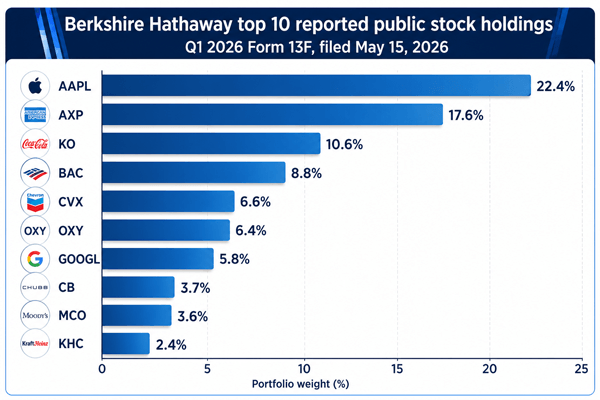
Figure 1. Berkshire Hathaway top 10 reported public stock holdings by portfolio weight.
1. Introduction: Why People Care About Warren Buffett Stocks
Warren Buffett is followed because he made investing feel both serious and simple. He does not chase every hot trend. He prefers understandable businesses, durable brands, strong cash flow, trustworthy management, and prices that make sense. When people search for Warren Buffett's favorite stocks, they are usually not just looking for a list of ticker symbols. They want to know what Buffett sees that ordinary investors may miss.
The most useful way to read Berkshire Hathaway's portfolio is not as a shopping list. It is a case study in business ownership. Berkshire's stock holdings show how a long-term investor thinks about competitive advantage, customer loyalty, pricing power, dividends, balance sheets, and patience. A beginner can learn a lot from these holdings, but only if the lesson is applied carefully.
This guide explains Berkshire Hathaway's biggest reported public stock positions in plain English. It also explains how 13F filings work, why the data is delayed, what beginner investors should watch out for, and how to build a practical research process before using any investment app, brokerage account, retirement account, robo-advisor, or financial advisor.
2. Warren Buffett's Favorite Stocks: Latest Berkshire Hathaway Snapshot
Berkshire Hathaway's latest Form 13F disclosed approximately $263.1 billion in reported U.S.-listed public equity holdings for the quarter ended March 31, 2026. The portfolio remained highly concentrated: the top five positions represented about two-thirds of reported 13F portfolio value. The largest positions were Apple, American Express, Coca-Cola, Bank of America, and Chevron.
| Rank | Stock | Ticker | Reported value | Portfolio weight | Q1 2026 status |
|---|---|---|---|---|---|
| 1 | Apple | AAPL | $57.8B | 22.0% | Unchanged |
| 2 | American Express | AXP | $45.9B | 17.4% | Unchanged |
| 3 | Coca-Cola | KO | $30.4B | 11.6% | Unchanged |
| 4 | Bank of America | BAC | $25.0B | 9.5% | Reduced slightly |
| 5 | Chevron | CVX | $17.5B | 6.6% | Reduced |
| 6 | Occidental Petroleum | OXY | $17.2B | 6.5% | Unchanged |
| 7 | Alphabet | GOOGL | $15.6B | 5.9% | Increased |
| 8 | Chubb | CB | $11.2B | 4.2% | Unchanged |
| 9 | Moody's | MCO | $10.8B | 4.1% | Unchanged |
| 10 | Kraft Heinz | KHC | $7.3B | 2.8% | Unchanged |
| Stock | Why Berkshire may like it | Main beginner caution |
|---|---|---|
| Apple | A massive consumer ecosystem, loyal customers, high margins, services revenue, and large cash generation. | Even a wonderful business can be risky if valuation is high or growth slows. |
| American Express | A premium payments network with loyal cardholders, merchant relationships, brand strength, and attractive economics. | Credit losses and consumer spending can weaken in recessions. |
| Coca-Cola | A global beverage brand with pricing power, distribution strength, repeat purchases, and long dividend history. | Stable businesses can still underperform if growth is too slow or the entry price is too high. |
| Bank of America | A large banking franchise tied to deposits, lending, consumer finance, and U.S. economic activity. | Banks are cyclical, regulated, and sensitive to credit losses and interest rates. |
| Chevron / Occidental | Energy exposure, dividends, commodity cash flow, and inflation sensitivity. | Oil and gas profits can swing sharply with commodity prices. |
| Alphabet | Search, YouTube, cloud, advertising, and artificial intelligence exposure. | AI disruption, regulation, and heavy capital spending can affect returns. |
| Chubb / Moody’s | Insurance discipline, ratings/data, and high-quality information services. | Boring businesses still need valuation discipline. |
| Kraft Heinz | Recognizable packaged food brands and cash flow. | Brand familiarity does not guarantee growth or strong stock returns. |
Source note: Stock values and weights above are based on Berkshire Hathaway's Q1 2026 Form 13F and public filing aggregations. 13F filings generally show positions as of the quarter end and are not real-time portfolio data.
3. What Is a 13F Filing, and How Does It Work?
A Form 13F is a quarterly report that certain large investment managers file with the U.S. Securities and Exchange Commission. It lists many U.S.-listed stocks and securities held at the end of the quarter. For Buffett watchers, the 13F is the main public window into Berkshire Hathaway's public stock portfolio.
The key limitation is timing. A 13F is backward-looking. By the time an investor sees it, Berkshire may have already changed some positions. It also does not show every detail an investor would want, such as the exact purchase price, the reason for the trade, hedges, some foreign securities, or the full economics of complex positions.
For beginners, the smart use of a 13F is educational. It can help you ask better questions: Why does this business have staying power? How does it make money? What could go wrong? Is the current price reasonable? Does this stock fit my risk tolerance, time horizon, and portfolio allocation?
| What a 13F can show | What it cannot show |
|---|---|
| Publicly reported U.S. equity positions at quarter end | The exact reason Berkshire bought, held, trimmed, or sold a stock |
| Approximate value of holdings on the filing date basis | Real-time holdings today |
| Changes in shares versus prior quarters | The full portfolio, including every foreign holding or private business |
| Portfolio concentration and sector exposure | Whether the stock is a good buy at today’s price for you |
4. Why Berkshire Owns These Stocks: Simple Business Lessons
4.1 Apple (AAPL): A Consumer Brand That Became an Ecosystem
Apple is often described as a technology company, but Buffett has historically talked about it more like a consumer business. The iPhone is not just a device; it is a habit, a status product, a services gateway, and a personal computing platform. People store photos, messages, payments, apps, subscriptions, and work tools inside Apple's ecosystem. That creates switching costs.
The beginner lesson is that a great business often makes customers come back without needing constant price cuts. Apple also generates large free cash flow, buys back stock, and benefits from services revenue. The risk is valuation, regulatory pressure, product cycles, China exposure, and the possibility that consumer hardware growth slows.
4.2 American Express (AXP): Brand, Network Effects, and High-Quality Customers
American Express is a payments company, lender, and premium consumer brand. Its model benefits when cardholders spend, merchants accept the card, and affluent customers remain loyal. The company also earns fees and interest income, though credit losses matter when the economy weakens.
The beginner lesson is network effects. A payment network becomes more useful when more cardholders and merchants participate. Berkshire has owned American Express for decades, and the position shows Buffett's preference for durable franchises that can compound over long periods.
4.3 Coca-Cola (KO): The Classic Example of Brand and Distribution
Coca-Cola is one of Buffett's most famous holdings because it is easy to understand. People around the world buy Coke products repeatedly. The company has global distribution, strong marketing, and the ability to raise prices slowly over time.
The beginner lesson is pricing power. A company with pricing power can often protect profits during inflation better than a commodity-like business. The risk is slower growth, health trends, currency exposure, and the fact that a stable business can still be a poor investment if bought at too high a valuation.
4.4 Bank of America (BAC): A Bet on a Large Banking Franchise
Bank of America gives Berkshire exposure to banking, deposits, lending, wealth management, and the broader U.S. economy. Banks can earn attractive returns when they manage credit risk well and benefit from low-cost deposits. But they are also cyclical, regulated, and sensitive to interest rates and loan losses.
The beginner lesson is that financial stocks need extra caution. A bank can look cheap on earnings, but hidden credit problems, rate changes, or funding pressure can change the picture quickly. Beginners should read capital ratios, loan quality, deposit trends, and regulatory risk before copying a bank investment.
4.5 Chevron and Occidental: Energy Cash Flow, Dividends, and Inflation Exposure
Chevron and Occidental give Berkshire exposure to oil and gas. Energy companies can generate huge cash flow when commodity prices are favorable, and many return cash through dividends or buybacks. Berkshire's Occidental exposure is especially notable because it includes common stock, preferred stock, and warrants.
The beginner lesson is that commodity businesses are different from consumer brands. Oil prices can move sharply based on supply, demand, geopolitics, and economic cycles. The stock can be attractive at the right price, but investors must understand volatility.
4.6 Alphabet (GOOGL): A Modern Quality Business With AI Exposure
Alphabet is best known for Google Search, YouTube, Android, advertising technology, cloud computing, and artificial intelligence investments. Its core advertising business has historically generated significant cash flow, while cloud and AI infrastructure give it exposure to long-term digital growth.
The beginner lesson is that Buffett-style investing is not limited to old industries. The real question is whether the business has a durable competitive advantage, strong cash generation, and a price that makes sense. Risks include AI disruption, regulation, advertising cycles, and capital spending.
4.7 Chubb and Moody’s: Boring Can Be Beautiful
Chubb is an insurance company, and insurance has always been central to Berkshire Hathaway. Good insurers collect premiums today, invest the float, and pay claims later. The best insurers are disciplined underwriters, not just aggressive premium growers.
Moody's is a ratings and financial analytics business. It benefits from trust, regulatory relevance, data, and the need for companies and governments to access debt markets. The beginner lesson from both stocks is that boring businesses can be excellent if they have durable economics and disciplined management.
4.8 Kraft Heinz: A Reminder That Even Buffett Stocks Can Disappoint
Kraft Heinz is useful because it prevents hero worship. It owns well-known food brands, but packaged food can face slow growth, changing consumer tastes, retailer pressure, and debt issues. Berkshire has had to deal with impairment concerns related to this investment.
The beginner lesson is humility. Even famous investors make mistakes or hold investments that underperform. A good brand is not enough if growth, balance sheet, competition, or valuation work against shareholders.
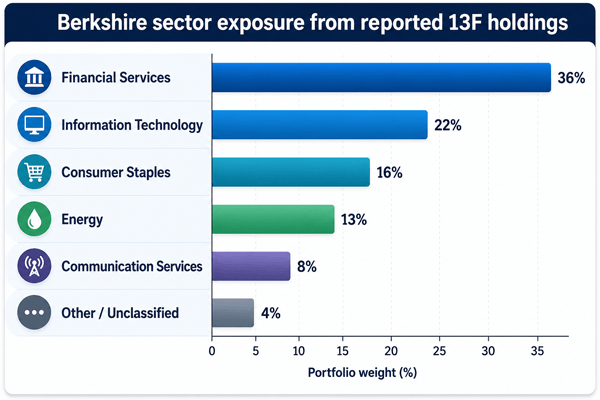
Figure 2. Sector exposure based on reported Q1 2026 Form 13F weights.
5. How Beginners Can Use Buffett’s Portfolio Without Copying It Blindly
The right way to use Berkshire's portfolio is to reverse-engineer the thinking, not blindly copy the trades. Buffett can hold through deep drawdowns, use insurance float, negotiate special deals, and tolerate years of underperformance. A beginner investing through a brokerage account or retirement account usually needs a simpler, more diversified plan.
Use Buffett stocks as a research classroom. Pick one company. Read what it sells, how it earns money, why customers choose it, what could harm profits, how much debt it has, and whether the current stock price already assumes too much optimism. Then compare it with an index fund or a competitor.
| Step | Action | Beginner-friendly example |
|---|---|---|
| 1. Understand the business | Explain how the company earns money in one sentence. | Coca-Cola sells beverages through a global brand and distribution system. |
| 2. Identify the moat | Ask why customers, suppliers, or competitors cannot easily replace it. | American Express has a premium cardholder base and merchant network. |
| 3. Check the financial engine | Look for revenue quality, margins, free cash flow, debt, and return on capital. | Apple converts customer loyalty into recurring services and high cash generation. |
| 4. Study risk | Write down the top three ways the thesis can fail. | Bank losses can rise in recessions; energy profits can fall when oil prices drop. |
| 5. Compare valuation | Compare price to earnings, free cash flow, growth, and alternatives. | A wonderful company can still be too expensive. |
| 6. Decide portfolio fit | Limit position size and avoid concentration you cannot emotionally handle. | A beginner may prefer a diversified ETF plus a small watchlist of individual stocks. |
Actionable rule
Before buying any individual Buffett stock, write a one-page investment memo. Include the business model, moat, risks, valuation, position size, and reason you would sell. If you cannot explain it simply, do not buy it yet.
6. Buffett Stocks vs Index Funds: Which Is Better for Beginners?
Many beginners ask whether they should buy Warren Buffett stocks or simply buy a broad-market index fund. For most people, the honest answer is that an index fund is often the easier core holding, while individual stocks can be used only after education, risk controls, and proper diversification.
| Choice | Pros | Cons | Best for |
|---|---|---|---|
| Copying Berkshire’s top stocks | Educational; exposure to high-quality businesses; can teach stock analysis. | Concentration risk; delayed data; valuation risk; may not match your goals. | Investors willing to research individual stocks deeply. |
| Broad index fund or ETF | Instant diversification; low maintenance; lower company-specific risk. | Less exciting; includes both great and average companies. | Most beginners building long-term retirement wealth. |
| Hybrid approach | Index fund as core, selected stocks as smaller satellite positions. | Requires discipline and rebalancing. | Beginners who want to learn without risking the whole portfolio. |
7. Practical Portfolio Example for a New Investor
Imagine a beginner has $10,000 to invest for the long term. A risky approach would be to put all $10,000 into one stock just because Berkshire owns it. A more balanced approach might use a diversified ETF or retirement account as the core, keep an emergency fund separate, and use only a small percentage for individual stock learning.
| Portfolio bucket | Example allocation | Purpose |
|---|---|---|
| Emergency savings | Not invested in stocks | Protects you from selling investments during a crisis. |
| Core diversified fund | 70% to 90% of investable long-term money | Broad exposure and lower single-company risk. |
| Individual stock learning bucket | 10% to 30%, depending on experience and risk tolerance | Allows research into companies like Apple, American Express, or Coca-Cola without overconcentration. |
| Cash for opportunities | Optional small reserve | Prevents emotional buying and supports disciplined investing. |
8. Common Mistakes People Make With Warren Buffett Stocks
8.1 Treating Berkshire’s holdings as real-time buy signals
A 13F filing is delayed. The position may have changed. Even if the holding is unchanged, the stock price may be very different from Berkshire’s purchase price.
8.2 Ignoring valuation
A wonderful business can become a poor investment if you pay too much. Always compare price, earnings, cash flow, growth, debt, and expected return.
8.3 Forgetting position size
Berkshire can hold large concentrated positions because it has huge cash reserves and operating businesses. A beginner with limited savings should usually avoid extreme concentration.
8.4 Confusing brand familiarity with investment quality
You may use an iPhone, drink Coke, or have a credit card, but customer familiarity is not enough. You still need to understand margins, competition, regulation, debt, and valuation.
8.5 Skipping tax and account planning
Dividend taxes, capital gains taxes, retirement account rules, and transaction costs can change your real return. Consider a qualified financial advisor or tax professional for personalized decisions.
9. Beginner Stock Research Checklist
- Can I explain the business in one sentence?
- Do I know how the company makes money?
- Does it have pricing power, brand strength, network effects, cost advantages, or switching costs?
- Is the balance sheet safe enough for a downturn?
- Is free cash flow strong and repeatable?
- What are the top three risks?
- What valuation am I paying today?
- How does this compare with a low-cost index fund?
- What position size would let me sleep at night?
- What would make me sell?
10. FAQ: Warren Buffett’s Favorite Stocks
10.1 What is Warren Buffett’s biggest stock holding?
Based on the Q1 2026 13F data, Apple was Berkshire Hathaway’s largest reported public stock holding, representing about 22% of the reported 13F portfolio.
10.2 Does Warren Buffett still own Coca-Cola?
Yes. Berkshire’s Coca-Cola stake remained one of its largest reported public stock holdings in the Q1 2026 13F data.
10.3 Should beginners buy the same stocks as Buffett?
Not automatically. Beginners should use Berkshire’s portfolio as a research guide, not a buy list. Your time horizon, risk tolerance, taxes, debt, and diversification needs may be very different.
10.4 Why does Buffett like dividend stocks?
Buffett likes businesses that generate cash. Some of those companies pay dividends, but the deeper attraction is often durable earnings power, strong brands, pricing power, and management discipline.
10.5 Are Buffett stocks safe?
No stock is completely safe. Even Berkshire holdings can fall sharply, underperform, or disappoint. Safety depends on business quality, valuation, balance sheet strength, diversification, and your own time horizon.
10.6 What stock research tools should beginners use?
Start with company annual reports, quarterly reports, SEC filings, investor presentations, earnings transcripts, and reputable financial data platforms. Stock screeners and investment apps can help, but they should not replace thinking.
11. Conclusion: The Real Lesson From Buffett’s Favorite Stocks
The best lesson from Warren Buffett's favorite stocks is not to copy a billionaire blindly. The lesson is to think like a business owner. Berkshire's portfolio favors companies with durable advantages, strong cash generation, trusted brands, disciplined management, and the ability to survive many economic environments.
For beginners, the practical path is simple: start with education, diversify first, research individual stocks slowly, manage risk, and avoid hype. Buffett's holdings can be an excellent study guide, but your portfolio should be built around your own goals, time horizon, and financial reality.
Sources Consulted and Checked
The following sources were consulted and checked while preparing this article to support accuracy and verification of the reported data.
- SEC EDGAR: Berkshire Hathaway Form 13F-HR filed May 15, 2026, report period March 31, 2026: https://www.sec.gov/Archives/edgar/data/1067983/000119312526226661/xslForm13F_X02/primary_doc.xml
- Berkshire Hathaway Q1 2026 Quarterly Report: https://www.berkshirehathaway.com/qtrly/1stqtr26.pdf
- InvestorLens Berkshire Hathaway Q1 2026 13F holdings summary: https://www.investorlens.capital/investors/warren-buffett
Reader Advice
This article is provided solely for educational and informational purposes. It does not constitute financial, investment, legal, tax, or other professional advice, and it is not a recommendation to buy, sell, or hold any security. Investment rules, tax treatment, account regulations, company holdings, market prices, and reported figures may change because of new filings, laws, policies, economic conditions, or individual circumstances.
Readers should independently verify current facts and figures through official sources, including SEC filings, company reports, and applicable regulatory or tax authorities, before making any decision. Consider your goals, time horizon, risk tolerance, income stability, debt, tax position, and need for diversification, and consult a suitably qualified financial advisor, tax professional, or legal professional when personalized guidance is required. Past performance and the holdings of Warren Buffett or Berkshire Hathaway do not guarantee future results.