Growth Stocks vs Value Stocks: Which Strategy Is Better?
1. Quick Answer
Neither growth stocks nor value stocks are “always better.” Growth stocks can perform very well when companies are expanding quickly and investors are willing to pay high prices for future earnings. Value stocks can perform well when the market has become too pessimistic and prices are low compared with earnings, cash flow, assets, or dividends. For most beginners, the best strategy is usually not choosing one side completely. A broad, diversified core portfolio plus a small, intentional growth or value tilt is often easier to manage than trying to predict which style will win next year.
| Best for... | Growth stocks | Value stocks | Beginner takeaway |
|---|---|---|---|
| Long time horizon | Often suitable if you can tolerate sharp price drops. | Suitable too, especially when valuations are reasonable. | Time helps, but it does not remove risk. |
| Income today | Usually weak because many growth companies reinvest profits. | Often stronger because mature companies may pay dividends. | Do not chase yield without checking business quality. |
| Lower-looking price | Usually not the main attraction; they often look expensive. | Often the main attraction, but cheap can get cheaper. | Low price is not the same as good value. |
| Simple beginner portfolio | Use diversified growth ETFs only as a tilt. | Use diversified value ETFs only as a tilt. | A total-market index fund can be the core. |
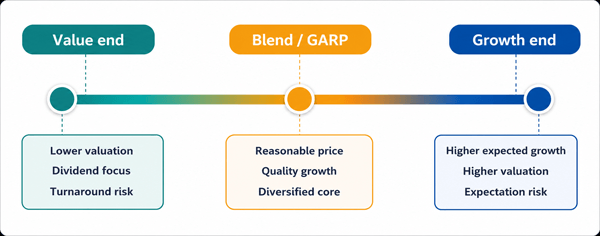
Figure 1: Growth and value are not enemies; they are two ends of a stock-selection spectrum.
2. What Are Growth Stocks?
A growth stock is a company stock that investors buy mainly because they expect the business to grow faster than the average company. Growth may come from rising revenue, expanding profits, new products, market share gains, international expansion, or a powerful trend such as cloud computing, digital payments, artificial intelligence, healthcare innovation, or premium consumer brands.
The U.S. investor education site Investor.gov describes growth stocks as companies with earnings growing faster than the market average; these companies rarely pay dividends because investors buy them mainly for capital appreciation. S&P Dow Jones Indices classifies S&P 500 growth stocks using factors such as sales growth, earnings change relative to price, and momentum. In plain English: growth investors are paying for what a company may become, not only what it is today.
| Common sign | What it means | Beginner warning |
|---|---|---|
| High revenue growth | Sales are rising quickly. | Revenue growth is not useful if the company cannot eventually earn good profits. |
| High P/E or P/S ratio | Investors are paying a premium for expected future results. | A great company can still be a poor investment if bought at a wildly unrealistic price. |
| Low or no dividend | Cash is reinvested into growth. | You may depend mainly on price appreciation, which can be volatile. |
| Strong story or trend | The company benefits from a large market opportunity. | A good story can attract crowded, overpriced buying. |
Practical example
Imagine Company A sells software to businesses. Revenue grows 25% a year, profits are rising, and customers rarely cancel. Investors may accept a high valuation because they believe profits will be much larger in five years. But if growth slows from 25% to 10%, the stock may fall even if the company is still profitable. That is expectation risk.
3. What Are Value Stocks?
A value stock is a company stock that looks inexpensive compared with some measure of business value: earnings, book value, cash flow, sales, dividends, or estimated intrinsic value. Value investors act like bargain hunters. They ask: “Is the market pricing this company too pessimistically?”
Value stocks are often found in mature industries such as banking, insurance, energy, industrials, utilities, telecom, consumer staples, and healthcare. But a value stock is not automatically a boring company, and a growth stock is not automatically a technology company. A stock can shift between categories as its price and business prospects change.
| Common sign | What it means | Beginner warning |
|---|---|---|
| Low P/E ratio | The stock price is low relative to earnings. | Earnings may be about to fall, making the stock less cheap than it looks. |
| High dividend yield | The company returns cash to shareholders. | A very high yield can signal market concern that the dividend may be cut. |
| Low price-to-book ratio | Price is low relative to accounting net assets. | Book value may be less useful for asset-light businesses. |
| Temporary bad news | The market may be overreacting. | Sometimes bad news is not temporary; it is a business decline. |
Practical example
Company B is a profitable bank trading at a lower P/E than the market because investors fear loan losses. A value investor may buy if the bank has strong capital, conservative lending, and a history of surviving difficult cycles. But if credit losses are worse than expected, the cheap stock may become a value trap.
4. Growth vs Value Stocks: The Main Difference in One Table
| Factor | Growth investing | Value investing |
|---|---|---|
| Core question | How big can this company become? | Is the market underpricing this company? |
| Main return driver | Rising earnings, revenue, margins, and investor confidence. | Price recovery, dividends, mean reversion, and improved sentiment. |
| Typical valuation | Higher P/E, P/S, P/B, or EV/EBITDA. | Lower P/E, P/B, P/FCF, or higher dividend yield. |
| Investor psychology | Optimism about future growth. | Skepticism toward market pessimism. |
| Biggest risk | Overpaying for expectations that do not happen. | Buying a cheap stock that deserves to be cheap. |
| When it may shine | Falling interest rates, strong earnings growth, innovation booms, risk-on markets. | Rising rates, inflationary periods, economic recoveries, valuation resets. |
| Typical holding experience | Exciting upside, painful drawdowns, headline-driven volatility. | Slower patience game, dividends, possible long periods of underperformance. |
5. Which Strategy Has Performed Better Historically?
History is mixed, and that is exactly why beginners should be careful with absolute claims. Academic research from Fama and French found a long-term value premium in many periods and markets, meaning value stocks often delivered higher average returns than growth stocks. However, later research also shows that the value premium became weaker and more volatile in recent decades. Vanguard has noted that U.S. growth stocks strongly outperformed U.S. value stocks during the decade before its 2021 research paper, while calling that level of value underperformance historically unusual. More recent market commentary has shown style leadership continuing to rotate, with growth dominating some periods and value leading in others.
The practical lesson is simple: growth and value move in cycles. A strategy can be right over 10 or 20 years and still look wrong for several years. Beginners who switch strategies after every period of underperformance often buy yesterday’s winner and sell tomorrow’s recovery.
| Period or environment | Style that often benefits | Why |
|---|---|---|
| Low rates and cheap capital | Growth | Future earnings are valued more highly when discount rates are low. |
| High rates or inflation pressure | Value | Investors may prefer current cash flow and lower valuations. |
| Technology/productivity boom | Growth | Fast-growing companies can compound revenue and earnings quickly. |
| Economic recovery after recession | Value/cyclical value | Depressed sectors may rebound from low expectations. |
| Market panic | Depends | High-quality growth and strong value can both be mispriced; weak companies suffer. |
6. How Growth Stocks Make Money for Investors
- Business growth: revenue and profits increase faster than expected.
- Multiple expansion: investors become willing to pay an even higher valuation for the same earnings.
- Market leadership: the company builds a durable competitive advantage, such as a network effect, brand, data advantage, patents, or switching costs.
- Reinvestment: instead of paying dividends, the company reinvests cash into products, acquisitions, hiring, technology, and expansion.
The best growth investing is not just chasing exciting stories. It is asking whether the business can turn growth into durable cash flow. Many beginners focus on revenue growth but ignore dilution, debt, customer concentration, competition, and whether the company can become profitable without constantly raising capital.
7. How Value Stocks Make Money for Investors
- Re-rating: the market realizes the company is better than feared, and the valuation rises.
- Dividends: shareholders receive cash while waiting for the market to recognize value.
- Buybacks: the company buys back shares when management believes the stock is undervalued.
- Mean reversion: unusually cheap valuations return closer to normal when panic fades.
- Operational improvement: new management, cost cuts, asset sales, or industry recovery improve profits.
Good value investing is not buying the lowest P/E stock on a screener. It is separating temporary problems from permanent decline. A low valuation is the beginning of research, not the conclusion.
8. Important Valuation Metrics Beginners Should Know
| Metric | Simple meaning | Useful for | Common mistake |
|---|---|---|---|
| P/E ratio | Price divided by earnings per share. | Comparing profitable companies in similar industries. | Comparing a bank, software firm, and utility as if they should have the same P/E. |
| Forward P/E | Price divided by expected future earnings. | Growth stocks and cyclical stocks. | Treating analyst forecasts as guaranteed. |
| PEG ratio | P/E divided by expected earnings growth. | Growth at a reasonable price. | Using unreliable growth forecasts. |
| P/S ratio | Price divided by sales. | Young companies with little profit. | Ignoring margins; low-margin sales are worth less. |
| P/B ratio | Price compared with book value. | Banks, insurers, and asset-heavy companies. | Using it for asset-light companies where intangible assets matter. |
| Free cash flow yield | Free cash flow divided by market value. | Quality value and mature businesses. | Ignoring one-time cash flow boosts. |
| Dividend yield | Annual dividend divided by stock price. | Income-focused value stocks. | Chasing high yield without checking dividend safety. |
9. Beginner-Friendly Examples
9.1 Example 1: A growth stock that is good but too expensive
A company grows earnings at 20% a year and has a strong brand. The stock trades at 70 times earnings. For the investment to work, the company must keep growing fast for a long time. If growth slows, investors may lower the valuation to 35 times earnings. Even with rising earnings, the stock can fall because expectations were too high.
9.2 Example 2: A value stock that is cheap for a reason
A retailer trades at 8 times earnings and pays a dividend. It looks cheap. But its stores are losing customers, debt is high, and online competitors are taking share. The low valuation may be a warning sign, not an opportunity. This is a value trap.
9.3 Example 3: A balanced GARP-style stock
A healthcare company grows earnings 10% a year, has strong free cash flow, and trades at a fair but not extreme valuation. It may not be the cheapest stock or the fastest grower, but it may offer a practical middle ground. This is often called GARP: growth at a reasonable price.
10. Growth vs Value: Pros and Cons
| Strategy | Pros | Cons |
|---|---|---|
| Growth stocks | Can compound wealth rapidly; benefit from innovation; often led by strong brands and scalable business models; may outperform in risk-on markets. | Can be expensive; sensitive to interest rates; large drawdowns are common; expectations can become unrealistic. |
| Value stocks | Lower valuations can create margin of safety; dividends may support returns; less dependent on distant future profits; can rebound strongly after pessimism. | Can remain cheap for years; some are declining businesses; may lag during growth booms; requires patience and fundamental research. |
| Blend/core index approach | Diversified; simple; avoids all-or-nothing style bets; suitable for many beginners. | May feel boring; will never fully match the hottest style; still carries market risk. |
11. Which Is Better for Beginners?
For most beginners, the better first question is not “growth or value?” It is “How do I build a portfolio I can actually hold through bad markets?” A simple, diversified stock index fund or ETF can give exposure to both styles. After that, a beginner can add a small tilt toward growth or value based on goals, time horizon, and risk tolerance.
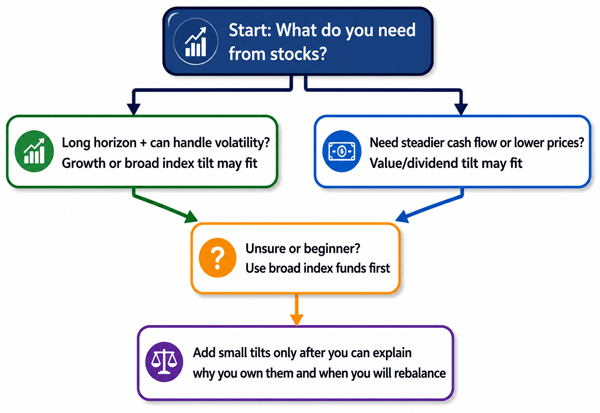
Figure 2: A practical decision framework for beginners.
| Investor situation | Possible approach | Why |
|---|---|---|
| New investor with no experience | Start with a broad market index fund before style tilts. | It reduces the chance of overconcentration and emotional mistakes. |
| Long horizon, high risk tolerance | Broad core plus modest growth tilt. | Growth can be volatile but may fit long compounding goals. |
| Wants income and lower valuation exposure | Broad core plus modest value/dividend tilt. | Value may offer dividends and lower expectations. |
| Cannot handle 30%-50% declines in a stock | Avoid concentrated individual growth stocks. | Even great companies can suffer large drawdowns. |
| Enjoys research and reading financial statements | Small individual-stock sleeve after building a diversified core. | Research skill matters more for single-stock investing. |
12. How Beginners Can Use Growth and Value in a Portfolio
The safest practical use is usually through diversified funds rather than a handful of individual stocks. A total-market ETF already owns both growth and value companies. A growth ETF, value ETF, dividend ETF, quality ETF, or mutual fund can be used as a tilt, but the tilt should be intentional and limited enough that you can hold it during underperformance.
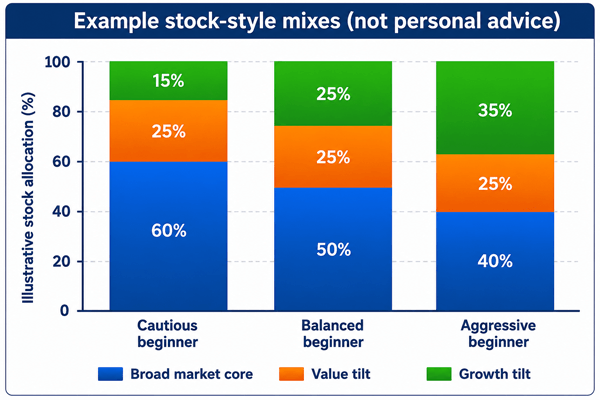
Figure 3: Illustrative style mixes. These are examples for education, not personalized portfolio advice.
| Step | Action | Why it helps |
|---|---|---|
| 1 | Define your time horizon: 3 years, 10 years, 30 years? | Growth stocks usually need more time and emotional tolerance. |
| 2 | Build a diversified core first. | A core fund reduces single-company and single-style risk. |
| 3 | Choose a small tilt if you have a reason. | A 10%-25% tilt is easier to manage than an all-in bet. |
| 4 | Write down your rules. | Decide when to buy, rebalance, and sell before emotions rise. |
| 5 | Review annually, not daily. | Style investing requires patience; daily checking encourages bad decisions. |
13. Individual Stocks vs ETFs: Which Is Better?
Individual stocks can produce large gains, but they also require more research and carry company-specific risk. ETFs and mutual funds spread risk across many companies. For beginners, diversified funds are usually a more practical way to learn without making one wrong stock pick too damaging.
| Choice | Best use | Advantages | Risks |
|---|---|---|---|
| Individual growth stocks | Small satellite position for investors who can research businesses. | High upside if the company executes well. | Overvaluation, concentration, disruption, earnings disappointment. |
| Individual value stocks | Research-driven investors who can analyze financial statements. | Potential bargain price and dividends. | Value traps, debt, declining industries, slow recovery. |
| Growth ETFs | Simple growth exposure. | Diversified across many growth companies. | Can be heavily concentrated in large technology names. |
| Value ETFs | Simple value exposure. | Diversified lower-valuation exposure. | May include weak companies and can underperform for years. |
| Total market ETFs | Beginner core holding. | Owns both styles and many sectors. | No specific style tilt; still falls when the market falls. |
14. Common Mistakes Beginners Make
- Buying a growth stock only because the chart went up.
- Buying a value stock only because the P/E ratio is low.
- Ignoring debt, cash flow, profit margins, and competitive advantage.
- Confusing a popular company with a good investment price.
- Chasing dividend yield without checking whether the dividend is sustainable.
- Switching between growth and value after every headline.
- Putting too much money into one stock, sector, or theme.
- Forgetting taxes, fund expense ratios, trading costs, and currency risk where relevant.
- Following social media stock tips without reading filings or fund documents.
- Thinking “long term” means never reviewing the investment thesis.
15. A Practical Checklist Before Buying Any Growth Stock
- Can I explain how the company makes money in one sentence?
- Is revenue growth converting into profit or free cash flow over time?
- What must go right for today’s valuation to make sense?
- Who are the competitors, and what prevents them from copying the company?
- How much debt does the company have?
- Is management diluting shareholders by issuing many new shares?
- Would I still hold this stock if it fell 40% but the business thesis remained intact?
16. A Practical Checklist Before Buying Any Value Stock
- Why is the stock cheap? Temporary fear or permanent decline?
- Are earnings and free cash flow stable enough to support the valuation?
- Is debt manageable if the economy weakens?
- Is the dividend covered by cash flow?
- Does management allocate capital well through dividends, buybacks, or debt reduction?
- What catalyst could change market perception?
- What evidence would prove my thesis wrong?
17. How Interest Rates Affect Growth and Value Stocks
Interest rates matter because a stock price reflects expected future cash flows. Growth stocks often depend more on profits expected far in the future. When interest rates rise, those future profits may be discounted more heavily, which can pressure high-valuation growth stocks. Value stocks often depend more on current earnings and dividends, so they may be less sensitive to distant cash-flow assumptions. This is not a rule that works every time, but it helps explain why style leadership often changes when inflation, bond yields, and central bank policy shift.
18. Tax, Fees, and Account Type Considerations
Taxes and costs can quietly reduce returns. Frequent trading may create taxable gains. High-fee mutual funds must outperform low-cost alternatives just to break even after fees. Dividend-heavy value strategies may create taxable income in some accounts. Growth stocks may defer taxes if gains are unrealized, but selling after a large gain may create a tax bill. The right account type depends on local tax rules, so readers should check rules in their country or speak with a qualified tax professional.
19. Frequently Asked Questions
19.1 Are growth stocks riskier than value stocks?
Growth stocks often have higher valuation risk and bigger drawdowns when expectations fall. Value stocks have different risks, especially value traps and slow business decline. Risk depends on price, business quality, debt, diversification, and investor behavior.
19.2 Are value stocks safer?
Not automatically. A value stock can be safer if the business is strong and the price is reasonable, but a cheap stock with shrinking earnings, heavy debt, or weak management can be very risky.
19.3 Can a stock be both growth and value?
Yes. A company can grow at a healthy rate while trading at a reasonable price. This middle-ground approach is often called blend investing or GARP.
19.4 Should beginners buy growth or value ETFs?
Many beginners may start with a broad market ETF first. Growth or value ETFs can be added later as smaller tilts, but beginners should understand concentration, fees, holdings, and volatility before buying.
19.5 Which performs better in a recession?
It depends on the recession. Defensive value sectors may hold up better in some downturns, while high-quality growth companies may recover faster in others. Balance and diversification matter more than trying to predict every cycle.
19.6 Is dividend investing the same as value investing?
No. Many value stocks pay dividends, but not all dividend stocks are good value. Dividend safety, cash flow, debt, and business quality matter.
19.7 What is the biggest mistake in growth investing?
Overpaying for a popular company because the story sounds exciting.
19.8 What is the biggest mistake in value investing?
Buying a cheap stock without understanding why it is cheap.
20. Final Verdict: Growth vs Value - Which Strategy Is Better?
The better strategy is the one you can understand, afford, diversify, and hold through bad periods. Growth investing works best when you identify companies that can compound earnings for many years without paying an irrational price. Value investing works best when you buy solid or improving businesses at prices that are too pessimistic. A beginner does not need to pick one forever. A broad market core, clear rules, low costs, and modest style tilts can capture the strengths of both approaches while reducing the risk of being completely wrong about the next market cycle.
Honest bottom line
Do not ask, “Which style will win next month?” Ask, “What portfolio can I hold for the next decade without panic selling?” That question is more useful for real investors than any one-year growth-versus-value prediction.
Sources Consulted and Checked
The following sources were consulted and checked while preparing this article to support factual accuracy and provide reliable background information.
- Investor.gov Stocks FAQ - beginner definitions of growth and value-style stocks.
- Investor.gov Asset Allocation Guide - diversification and portfolio risk principles.
- S&P Dow Jones Indices S&P 500 Growth - style classification factors.
- Fama and French, The Value Premium - academic evidence on value premiums and volatility.
- Vanguard value-versus-growth research - long-term cycles and recent growth outperformance.
- Morningstar market commentary - recent examples of style rotation.
Reader Advice
This article is provided solely for educational and general informational purposes. It is not personalized investment, financial, tax, accounting, or legal advice, and it does not recommend buying, selling, or holding any particular stock, fund, security, or investment strategy.
Investment decisions should be based on your own objectives, financial circumstances, time horizon, risk tolerance, liquidity needs, costs, tax position, and applicable laws. Consider conducting independent research and consulting a suitably qualified financial, tax, or legal professional before making a decision.
Market conditions, company fundamentals, interest rates, tax rules, regulations, fund holdings, fees, and other relevant facts can change. Readers should therefore verify current facts, figures, product documents, official filings, and legal or regulatory requirements through authoritative and official sources. Past performance and illustrative examples do not guarantee future results, and all investments involve risk, including possible loss of principal.