Best Small-Cap Growth Stocks for Long-Term Investors
Small-cap growth stocks are shares of smaller public companies that are trying to grow faster than the average business. They can be exciting because today’s small company may become tomorrow’s industry leader. They can also be painful because many small companies are still proving their business model, raising capital, fighting larger competitors, or dealing with heavy price swings.
This guide explains small-cap growth investing in a simple, honest, and practical way. It is written for beginners who want to understand what these stocks are, how they work, how to research them, and how to avoid common mistakes. The goal is not to chase hype. The goal is to build a repeatable process that helps long-term investors find higher-quality opportunities while controlling risk.
| Quick answer | What it means for a beginner |
|---|---|
| Best starting point | Most beginners should consider a diversified small-cap growth ETF before buying individual small-cap stocks. |
| Best type of small-cap growth stock | A company with fast revenue growth, improving margins, a large addressable market, manageable debt, clear customer demand, and enough cash to survive downturns. |
| Biggest risk | Many small growth companies look promising but never become consistently profitable. Their stocks can fall 30%-70% even when the long-term story sounds attractive. |
| Best mindset | Think in years, not weeks. Build a watchlist, wait for reasonable prices, diversify, and keep position sizes modest. |
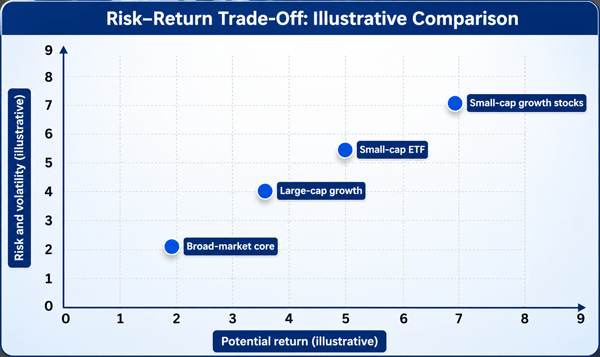
Figure 1. Individual small-cap growth stocks may offer higher upside, but they generally involve greater volatility and company-specific risk.
1. What Are Small-Cap Growth Stocks?
A small-cap stock is usually a company with a smaller stock market value than large household names. Different index providers use different ranges, but many investors think of small-cap companies as businesses worth roughly a few hundred million dollars up to several billion dollars. A growth stock is a company expected to increase revenue, earnings, users, store count, production, or cash flow faster than the broader market.
Put the two ideas together and you get small-cap growth stocks: smaller companies with above-average growth potential. They often operate in areas such as software, medical devices, specialty retail, clean energy, industrial technology, fintech, restaurants, e-commerce, aerospace, biotech, cybersecurity, and niche manufacturing.
The appeal is simple: large companies already have huge revenue bases. A small company can sometimes double sales from a smaller starting point if it finds product-market fit. That growth can lead to big stock returns. But the same small size creates risk: less access to capital, fewer customers, thinner margins, less analyst coverage, and more sensitivity to interest rates or recessions.
1.1 How Small-Cap Growth Investing Works
Small-cap growth investing works by identifying companies that may compound value over many years. Investors look for businesses that can expand into a large market, grow sales faster than peers, improve profitability, and reinvest cash at attractive returns. The stock market often rewards these companies before their earnings are fully mature, which is why valuation discipline matters.
A beginner should understand that the stock price does not move only because a company is growing. The price also moves because investors change what they are willing to pay for that growth. A company can report strong revenue growth and still see its stock fall if guidance is weaker than expected, losses widen, or the valuation was already too high.
1.2 Small-Cap Growth vs. Small-Cap Value vs. Large-Cap Growth
| Category | Typical company profile | What investors usually like | Main risk |
|---|---|---|---|
| Small-cap growth | Younger or smaller company growing quickly | Early-stage upside, faster revenue growth, takeover potential | Volatility, funding risk, losses, valuation resets |
| Small-cap value | Smaller company trading at a lower valuation | Cheap price, potential turnaround, dividends in some cases | Value traps, weak balance sheets, cyclical exposure |
| Large-cap growth | Big company with strong growth and brand power | Stability, liquidity, global scale, durable cash flow | High expectations, slower future growth, crowded trades |
| Small-cap ETF | Basket of many small companies | Diversification, lower single-stock risk, simple execution | May own weak companies along with good ones |
2. Why Long-Term Investors Consider Small-Cap Growth Stocks
Long-term investors look at small-cap growth stocks because the category can offer exposure to companies before they become widely known. Some of the strongest historical stock market winners started as smaller businesses with a focused product, a long runway, and a management team that executed for years. The key is patience. Small-cap growth investing is rarely smooth.
There are also market-cycle reasons. Smaller companies are often more sensitive to interest rates and economic growth. When financing conditions improve, earnings recover, or investors rotate away from crowded mega-cap trades, small caps can attract renewed attention. In 2026, several market outlooks highlighted small caps as relatively attractive after years of lagging large-cap stocks, although volatility remains a major concern.
2.1 The Beginner-Friendly Way to Define “Best”
The “best” small-cap growth stocks are not simply the stocks that went up the most last month. For long-term investors, “best” should mean highest quality for the risk taken. A practical definition is: a small company with a real product, growing demand, a large market, improving economics, capable management, reasonable financing risk, and a valuation that does not require perfection.
| Quality filter | Beginner question to ask | Why it matters |
|---|---|---|
| Revenue growth | Is sales growth strong and consistent, or only one lucky quarter? | Real growth should show repeat demand. |
| Gross margin | Are margins stable or improving? | Better margins create room for profit later. |
| Cash runway | Can the company fund operations for the next 12-24 months? | Weak funding can force bad share dilution. |
| Debt level | Can the company handle interest payments? | Small companies can be hurt badly by high debt. |
| Customer concentration | Does one customer create too much dependence? | Losing one major customer can damage the business. |
| Insider ownership | Do founders or executives own meaningful shares? | Alignment can matter, though it is not a guarantee. |
| Valuation | Is the price reasonable compared with growth and risk? | A great company can be a bad investment at the wrong price. |
3. Best Small-Cap Growth Stock Ideas: A Safer Watchlist Framework
Instead of relying on a blind “buy now” list, investors can create a watchlist using a consistent research framework. Small-cap rankings become outdated quickly. A company can move from small-cap to mid-cap, a promising growth story can miss guidance, or a balance sheet can deteriorate. The table below gives practical categories and example traits to research.
| Watchlist bucket | What to look for | Example areas to research | Beginner caution |
|---|---|---|---|
| Profitable small-cap compounders | Consistent revenue growth, positive earnings, strong return on capital | Specialty manufacturers, niche software, medical devices, local service platforms | Often not cheap; wait for reasonable valuation. |
| High-growth disruptors | Fast revenue growth, expanding market, improving unit economics | Space infrastructure, AI infrastructure suppliers, cybersecurity, automation | Many remain unprofitable and can dilute shareholders. |
| Healthcare innovators | Approved products, growing adoption, reimbursement clarity | Medtech, diagnostics, surgical tools, specialty pharma | Regulatory and clinical risk can be severe. |
| Consumer brands with repeat demand | Store expansion, high customer loyalty, strong same-store sales | Restaurants, specialty retail, fitness, beauty, pet care | Trendy brands can fade; watch margins and debt. |
| Small-cap growth ETFs | Low-cost diversified exposure to hundreds of companies | Russell 2000 Growth, CRSP small-cap growth, S&P SmallCap 600 growth ETFs | Less exciting than single stocks but safer for beginners. |
3.1 ETF Route: Often the Best First Step for Beginners
A small-cap growth ETF can be the simplest way to invest because it spreads money across many companies. This lowers the damage if one company disappoints. ETFs also reduce the research burden. Beginners who do not yet know how to read financial statements may be better served by starting with a diversified ETF and later adding a small individual-stock sleeve.
| ETF example | What it tracks or targets | Why it may fit beginners | Key thing to check |
|---|---|---|---|
| iShares Russell 2000 Growth ETF (IWO) | U.S. small-cap growth exposure through the Russell 2000 Growth universe | Broad exposure, liquid, transparent holdings | Expense ratio, valuation, sector exposure, overlap with existing funds |
| Vanguard Small-Cap Growth ETF (VBK) | U.S. small-cap growth exposure using Vanguard’s index methodology | Very low-cost diversified route | Expense ratio, holdings, portfolio overlap |
| S&P SmallCap 600 Growth ETFs | Growth slice of the S&P SmallCap 600 universe | The parent S&P 600 index uses profitability and liquidity screens | May be less broad than Russell-style products |
| Total small-cap ETF | Owns both growth and value small caps | Simpler, more balanced option | Not a pure growth strategy |
4. How to Research an Individual Small-Cap Growth Stock
Here is a practical seven-step process a beginner can use before buying any individual small-cap growth stock:
- Understand the business in one sentence. If you cannot explain how the company makes money, skip it.
- Read the latest annual report and quarterly report. Focus on revenue growth, gross margin, operating losses, cash balance, debt, and risk factors.
- Check whether growth is organic or created by acquisitions. Organic growth is often higher quality.
- Look at customer demand. For software, watch net retention and customer count. For retail, watch same-store sales. For medtech, watch procedure volume and adoption.
- Compare valuation with similar companies. Use price-to-sales for unprofitable firms and earnings or free-cash-flow metrics for profitable firms.
- Build a downside case. Ask what happens if revenue growth slows, capital gets expensive, or the company misses guidance.
- Decide position size before buying. Small-cap growth positions should usually be smaller than core index fund positions.
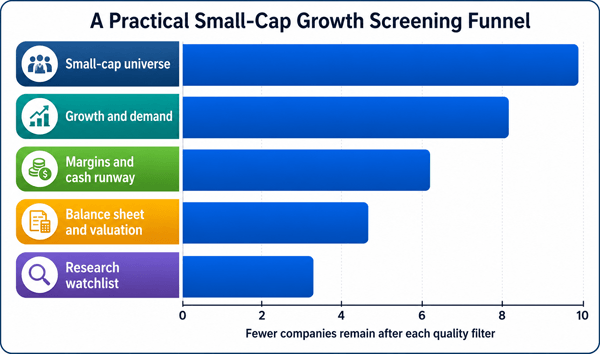
Figure 2. A repeatable screening process helps investors narrow a large universe to a manageable research watchlist.
4.1 A Simple Stock Scoring Checklist
| Score area | 0-2 points | 3-4 points | 5 points |
|---|---|---|---|
| Growth quality | Growth is lumpy or unclear | Growth is good but dependent on one product/customer | Growth is durable, diversified, and repeatable |
| Profit path | Losses are widening with no clear plan | Margins improving but cash burn remains high | Profits or free cash flow are visible and improving |
| Balance sheet | High debt or urgent financing need | Some funding risk | Strong cash position and manageable debt |
| Moat | No clear differentiation | Some brand, tech, or switching cost | Clear competitive advantage or niche leadership |
| Valuation | Requires perfect execution | Fair but not cheap | Reasonable relative to growth and risk |
A beginner-friendly rule: Avoid companies scoring poorly on both balance sheet and profit path. A fast-growing business can still be a dangerous investment if it constantly needs new capital.
4.2 Practical Example: Comparing Two Hypothetical Small-Cap Growth Stocks
| Metric | Company A: Quality Growth | Company B: Hype Growth |
|---|---|---|
| Revenue growth | 28% year over year for three years | 80% last quarter after a one-time contract |
| Gross margin | Improving from 45% to 54% | Falling from 38% to 25% |
| Cash position | Enough cash for 30 months | May need to raise capital within 9 months |
| Debt | Low | High and variable-rate |
| Customers | Hundreds of customers, low concentration | Two customers create most revenue |
| Valuation | 6x sales with improving margins | 20x sales with worsening losses |
| Better long-term candidate? | Likely yes, if valuation stays reasonable | Probably not for beginners |
This example shows why “fastest growth” is not always best. Long-term investors want growth that can survive bad markets. Company A may look less exciting, but it has more ways to win and fewer ways to fail.
5. Risk Management and Portfolio Decisions
5.1 Common Mistakes Beginners Make
- Buying only because a stock is cheap in dollar price. A $5 stock is not automatically cheaper than a $100 stock; market capitalization and valuation matter.
- Ignoring dilution. If a company keeps issuing shares, each existing share owns a smaller piece of the business.
- Confusing a great product with a great stock. The business can be real while the valuation is too high.
- Putting too much money into one small company. Even strong small caps can crash after one bad earnings report.
- Chasing recent winners. Best-performing lists often show what already happened, not what will happen next.
- Ignoring interest rates. Small growth companies are usually more sensitive to financing costs.
- Not having an exit or review plan. “Long term” does not mean ignoring broken fundamentals.
5.2 Position Sizing: How Much Should a Beginner Invest?
A practical approach is to separate core investing from satellite investing. The core may include broad-market index funds, retirement accounts, and diversified ETFs. The satellite portion can include small-cap growth stocks. Many conservative beginners keep any single speculative small-cap position to a small percentage of their portfolio. The right number depends on age, income, risk tolerance, emergency savings, and investment goals.
| Investor type | Possible small-cap growth exposure | Reasonable structure |
|---|---|---|
| Beginner, low risk tolerance | 0%-5% | Use broad index funds first; learn with a watchlist. |
| Beginner, moderate risk tolerance | 5%-10% | Mostly ETF exposure; small individual positions only after research. |
| Experienced long-term investor | 10%-20% | Blend ETFs with carefully researched individual stocks. |
| Aggressive investor | 20%+ | Requires strong research process, emotional discipline, and ability to handle large drawdowns. |
5.3 When to Buy: A Practical Entry Strategy
Beginners often ask, “Should I buy now?” A better question is, “What price and evidence would make this a good risk?” Small-cap growth stocks can move quickly, so using a watchlist is often better than rushing. Investors can consider dollar-cost averaging into ETFs. For individual stocks, many prefer buying in stages after earnings reports confirm the thesis.
A simple entry checklist: The business is understandable, growth is real, the balance sheet is not fragile, valuation is not extreme, position size is modest, and the investor knows what would make them sell or stop adding.
5.4 When to Sell or Reconsider
Selling is not only about price. Sometimes a stock falls because the market is fearful. Other times it falls because the thesis is broken. Long-term investors should review small-cap growth holdings at least quarterly.
| Warning sign | Why it matters | Possible action |
|---|---|---|
| Revenue growth slows sharply | The growth thesis may be weakening | Recheck management commentary and industry demand |
| Margins deteriorate for several quarters | Growth may be unprofitable or promotional | Lower expected valuation; consider reducing |
| Cash burn rises and cash runway shrinks | Dilution risk increases | Avoid adding until funding is clear |
| Debt becomes difficult to service | Financial risk can overwhelm growth | Require stronger margin of safety |
| Management changes story repeatedly | Credibility matters in small caps | Demand evidence, not promises |
| Stock becomes too large a portfolio position | Risk becomes concentrated | Rebalance or trim if needed |
5.5 Small-Cap Growth Stocks in Retirement Accounts
Small-cap growth exposure can be used in a retirement investing plan, but it should match the investor’s time horizon and risk tolerance. Younger investors may have more time to recover from volatility. Retirees or people needing money soon usually need more stability. A Roth IRA or other tax-advantaged account may be useful for long-term growth assets, but tax rules vary by country and personal situation, so readers should check with a tax professional.
5.6 People’s Real-World Experience: What Investors Often Learn the Hard Way
Experienced small-cap investors often say the hardest part is not finding exciting companies. The hardest part is surviving volatility without making emotional mistakes. A stock can drop 40% on a disappointing quarter even when the long-term market opportunity remains large. Another common experience is that winners can take years to show results, while losers reveal themselves quickly through dilution, missed guidance, or weak demand.
The practical lesson is to diversify, write down your thesis, and review facts instead of reacting to message boards or social media hype. A calm investor with a process has a better chance than a beginner chasing every “next big thing.”
6. The Best Small-Cap Growth Strategy for Most Long-Term Investors
For most beginners, the best strategy is not to build a portfolio of 20 random small-cap stocks. A more realistic plan is:
- Build the core portfolio first with diversified funds.
- Use a small-cap growth ETF for broad exposure.
- Create a watchlist of individual companies using strict quality filters.
- Start with small positions only after reading financial statements.
- Add only when the company keeps executing and valuation remains sensible.
- Review quarterly and cut exposure when the thesis breaks.
7. Frequently Asked Questions
7.1 Are small-cap growth stocks good for beginners?
They can be useful for learning and long-term growth, but beginners should usually start with diversified ETFs before buying individual small-cap stocks.
7.2 What is the safest way to invest in small-cap growth stocks?
No stock investment is completely safe. The lower-risk route is usually a diversified small-cap growth ETF, modest allocation, dollar-cost averaging, and a long time horizon.
7.3 How many small-cap growth stocks should I own?
If buying individual stocks, owning several across different industries can reduce single-company risk. Many beginners are better served by one ETF plus a small watchlist.
7.4 Should I buy profitable or unprofitable growth companies?
Profitable companies are usually easier for beginners to evaluate. Unprofitable companies can produce big returns but carry higher funding and dilution risk.
7.5 What is better: small-cap growth stocks or large-cap growth stocks?
They serve different roles. Large-cap growth is usually more stable. Small-cap growth may offer more upside but also more volatility and business risk.
7.6 How often should I check my small-cap portfolio?
Quarterly review is usually enough for long-term investors. Daily checking often leads to emotional decisions.
7.7 Can small-cap growth stocks make you rich?
They can create significant wealth if you find rare long-term winners and manage risk. But many small companies fail to deliver, so diversification and discipline are essential.
8. 2026 Small-Cap Growth Watchlist Examples
The following companies are educational examples of the types of businesses a long-term investor may research. They are not recommendations. Market capitalization, price, earnings, cash, debt, and recent filings should be rechecked because small-cap status and investment conditions can change quickly.
| Example ticker | Business category | Why it may attract growth investors | Key risks to mention honestly |
|---|---|---|---|
| TARS | Specialty pharmaceuticals / eye care | Commercial-stage product story, niche healthcare market, potential operating leverage if sales scale | Still loss-making; product concentration, reimbursement, regulation, and competition matter |
| ALKT | Digital banking software | Provides cloud-based banking technology to financial institutions, recurring software-style revenue opportunity | Bank technology budgets can slow; unprofitable firms can face valuation pressure |
| PRCT | Surgical robotics / medical devices | Robotic procedure adoption can create long growth runways if hospitals keep buying and utilization rises | Medical device adoption can be uneven; losses, competition, and hospital capital spending are risks |
| INSP | Medical device / sleep apnea treatment | Profitable niche medtech company with a differentiated treatment market | Growth expectations can reset; reimbursement, procedure volumes, and competition matter |
| RXST | Ophthalmology devices | Very small medtech name with product adoption potential | Micro-cap style risk; losses, liquidity, financing, and execution risk are high |
| RGTI | Quantum computing hardware | Speculative exposure to quantum computing infrastructure | Very high uncertainty; losses and dilution risk; not suitable for conservative beginners |
The stock examples above are a research starting point, not a buy list. A beginner who cannot tolerate a 50% drawdown should generally prefer diversified ETFs or avoid individual small-cap growth stocks.
9. Conclusion
Small-cap growth stocks can be one of the most rewarding areas of the market, but they are also one of the least forgiving. The best long-term opportunities are not found by chasing headlines. They are found by studying real businesses, checking balance sheets, comparing valuations, and giving only the strongest ideas a place in a diversified portfolio.
For most beginners, the smartest first step is a low-cost small-cap growth ETF. After that, individual stocks can be added carefully, with small position sizes and a written thesis. The investor who survives in small caps is usually not the person who finds the most exciting story. It is the person who avoids permanent losses, stays patient with quality companies, and keeps learning from each earnings season.
Bottom line: Treat small-cap growth investing as a disciplined research process, not a lottery ticket. The opportunity is real, but the risk is real too.
Sources Consulted and Checked
The following sources were consulted when preparing and checking this article. Readers should verify current fund data, index rules, company filings, market capitalization, fees, holdings, and other time-sensitive information directly from official sources before acting.
- BlackRock/iShares — iShares Russell 2000 Growth ETF (IWO)
- Vanguard — Vanguard Small-Cap Growth ETF (VBK)
- S&P Dow Jones Indices — S&P SmallCap 600
- Morningstar — U.S. stock-market outlook and small-cap valuation research
- Columbia Threadneedle — Why own U.S. small caps in 2026
- Royce Investment Partners — Small-cap market commentary
- Charles Schwab — S&P 600 index discussion
- NerdWallet — Understanding small-cap stocks
Reader Advice
This article is provided solely for educational and informational purposes. It is not personalized investment, financial, legal, tax, accounting, or retirement advice, and it is not a recommendation or solicitation to buy, sell, or hold any security, fund, or investment product. The examples are intended only for learning and watchlist research. Any small-cap growth stocks or companies discussed should not be interpreted as suitable for every investor or as predictions of future performance. A long-term investment horizon does not eliminate investment risk, and companies identified as having growth potential may underperform expectations or lose significant value.
Investing involves risk, including the possible loss of principal. Small-cap growth stocks can be especially volatile, may have limited liquidity, and may experience substantial price declines. Past performance does not guarantee future results. Before making any decision, consider your objectives, financial position, emergency savings, debts, time horizon, tax circumstances, and ability to tolerate losses. Consult appropriately qualified financial, tax, or legal professionals when needed.
Rules, tax treatment, index membership, market capitalization, company fundamentals, stock prices, estimates, ETF fees, holdings, and other facts may change because of market conditions, corporate events, regulations, methodology updates, and other factors. Verify all current facts and figures from company filings, fund providers, regulators, tax authorities, and other official or primary sources. Do not rely on this article as the sole basis for an investment decision.