10 Best Growth Stocks to Buy in 2026
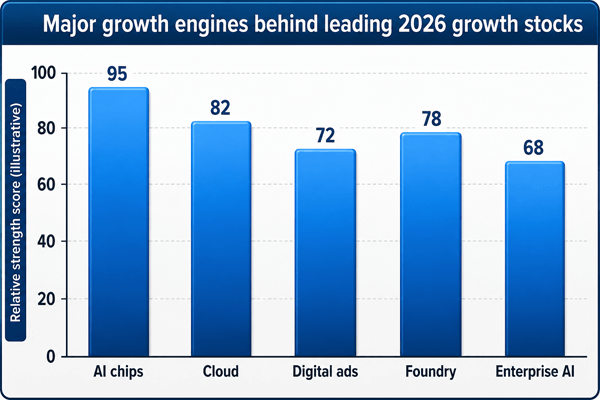
Figure 1: Original illustration showing the main business themes driving many 2026 growth-stock candidates.
1. What Is a Growth Stock?
A growth stock is a company whose sales, profits, users, cash flow, or market opportunity are expanding faster than average. These companies often reinvest heavily instead of paying large dividends. Investors buy them because they believe the business can become much larger over time.
For example, a mature utility company may grow slowly and pay a steady dividend. A growth company like a cloud platform, AI chipmaker, or enterprise software provider may reinvest billions of dollars into data centers, research, engineers, and new products. The reward can be higher long-term capital appreciation. The tradeoff is higher volatility.
2. How Growth Stock Investing Works
The simple version is this: investors pay today for what they think a company can earn tomorrow. If a company grows faster than expected, the stock can rise sharply. If growth slows, expenses rise, or the market decides the valuation is too high, the stock can fall even when the business is still good.
That is why beginners should separate a good company from a good stock price. A wonderful business can still be a poor investment if bought at an unrealistic valuation. Practical growth investing is about balancing business quality, future growth, valuation, and risk management.
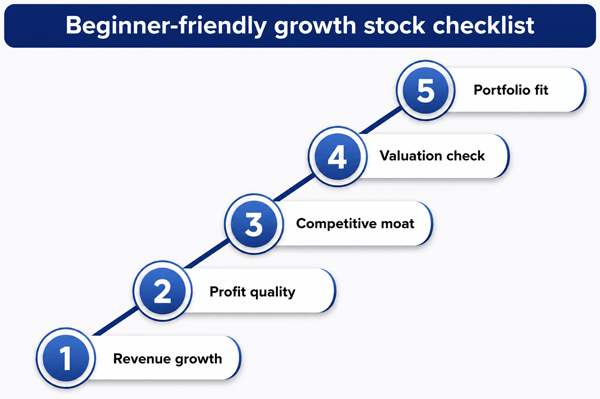
Figure 2: A simple checklist beginners can use before buying any growth stock.
3. How I Selected These 10 Stocks
- Clear 2026 growth catalyst such as AI, cloud, advanced chips, digital advertising, or enterprise software.
- Recent company-reported revenue growth or strong segment growth.
- A durable competitive advantage such as switching costs, scale, intellectual property, network effects, or manufacturing leadership.
- Enough market liquidity and business maturity for beginner investors to research easily.
- A realistic discussion of risks, not only upside.
4. Quick Comparison Table
| Ticker | Theme | Recent price* | Market cap* | P/E* | Recent growth signal |
|---|---|---|---|---|---|
| NVDA | AI accelerators and data center computing | $207.78 | $5.07T | 31.6 | Q1 FY2027 revenue was $81.6 billion, up 85% year over year; Data Center revenue was $75.2 billion, up 92%. |
| MSFT | Cloud, enterprise software, AI productivity | $368.79 | $2.75T | 22.0 | FY2026 Q3 revenue was $82.9 billion, up 18%; Microsoft Cloud revenue was $54.5 billion, up 29%. |
| AMZN | AWS, retail scale, advertising, AI cloud services | $233.35 | $2.54T | 27.9 | Q1 2026 revenue was $181.5 billion; AWS sales rose 28% year over year to $37.6 billion. |
| GOOGL | Search, YouTube, Google Cloud, Gemini AI | $348.61 | $4.22T | 26.6 | Q1 2026 Google Services revenue rose 16% to $89.6 billion; Google Cloud revenue rose 63% to $20.0 billion. |
| META | AI-powered advertising and social platforms | $564.23 | $1.45T | 20.5 | Q1 2026 revenue was $56.31 billion, up 33% year over year. |
| AVGO | Custom AI chips, networking, infrastructure software | $394.91 | $183.83B | 97.6 | Q2 FY2026 AI semiconductor revenue was $10.8 billion, up 143% year over year; total revenue was $22.2 billion. |
| AMD | Data center CPUs, GPUs, AI accelerators | $545.24 | $899.65B | 178.8 | Q1 2026 Data Center revenue was $5.8 billion, up 57% year over year. |
| TSM | Advanced chip manufacturing | $466.10 | $12.09T | N/A | Q1 2026 net revenue was $35.90 billion with gross margin of 66.2%; Q2 guidance was $39.0-$40.2 billion. |
| ASML | EUV lithography equipment for advanced chips | $1,904.66 | $749.41B | N/A | Q1 2026 net sales were €8.8 billion; ASML guided 2026 net sales to €36-€40 billion. |
| PLTR | Enterprise AI software and decision platforms | $119.41 | $306.97B | 134.2 | Q1 2026 revenue was $1.63 billion, up 85% year over year; U.S. revenue grew 104%. |
*Market data snapshot accessed June 23, 2026. Prices and valuation ratios change constantly. Always verify current figures before investing.
5. 10 Best Growth Stocks to Research in 2026
5.1 NVIDIA (NVDA) - AI accelerators and data center computing
NVIDIA remains the clearest pure-play beneficiary of the AI infrastructure buildout. Its GPUs, networking, CUDA software ecosystem, and data center platform make it difficult for customers to switch quickly.
| What beginners should know | Details |
|---|---|
| Current snapshot | Recent price: $207.78; market cap: $5.07T; P/E: 31.6 |
| Latest growth data | Q1 FY2027 revenue was $81.6 billion, up 85% year over year; Data Center revenue was $75.2 billion, up 92%. |
| How it makes money | It sells products or services tied to its main growth engine and benefits when customers increase spending in that category. |
| Practical example | A beginner who wants exposure to AI accelerators and data center computing could place this stock on a watchlist, read the latest quarterly results, compare revenue growth with valuation, then decide whether it fits a diversified portfolio. |
| Key risk | Expect volatility because expectations are extremely high. Watch export restrictions, hyperscaler spending cycles, gross margin, and any sign that custom chips reduce demand. |
| Best suited for | Long-term investors who can tolerate volatility and who review earnings updates instead of buying only because the stock is popular. |
5.2 Microsoft (MSFT) - Cloud, enterprise software, AI productivity
Microsoft combines Azure, Office, GitHub, LinkedIn, security, and Copilot into a sticky enterprise platform. For beginners, it is a growth stock with more diversification than many smaller AI names.
| What beginners should know | Details |
|---|---|
| Current snapshot | Recent price: $368.79; market cap: $2.75T; P/E: 22.0 |
| Latest growth data | FY2026 Q3 revenue was $82.9 billion, up 18%; Microsoft Cloud revenue was $54.5 billion, up 29%. |
| How it makes money | It sells products or services tied to its main growth engine and benefits when customers increase spending in that category. |
| Practical example | A beginner who wants exposure to cloud, enterprise software, and AI productivity could place this stock on a watchlist, read the latest quarterly results, compare revenue growth with valuation, then decide whether it fits a diversified portfolio. |
| Key risk | AI spending is heavy and investors are watching Azure capacity, Copilot adoption, and whether margins can keep improving. |
| Best suited for | Long-term investors who can tolerate volatility and who review earnings updates instead of buying only because the stock is popular. |
5.3 Amazon (AMZN) - AWS, retail scale, advertising, AI cloud services
Amazon gives exposure to cloud infrastructure, e-commerce efficiency, digital ads, logistics, and AI services. AWS remains the profit engine, while retail improvements can add operating leverage.
| What beginners should know | Details |
|---|---|
| Current snapshot | Recent price: $233.35; market cap: $2.54T; P/E: 27.9 |
| Latest growth data | Q1 2026 revenue was $181.5 billion; AWS sales rose 28% year over year to $37.6 billion. |
| How it makes money | It sells products or services tied to its main growth engine and benefits when customers increase spending in that category. |
| Practical example | A beginner who wants exposure to AWS, retail scale, advertising, and AI cloud services could place this stock on a watchlist, read the latest quarterly results, compare revenue growth with valuation, then decide whether it fits a diversified portfolio. |
| Key risk | Capex, retail margins, antitrust pressure, and AWS competition from Microsoft and Google are the big items to monitor. |
| Best suited for | Long-term investors who can tolerate volatility and who review earnings updates instead of buying only because the stock is popular. |
5.4 Alphabet (GOOGL) - Search, YouTube, Google Cloud, Gemini AI
Alphabet is a cash-rich growth stock with dominant Search economics, YouTube, Android, and rapidly growing Google Cloud. AI is both an opportunity and a threat, so execution matters.
| What beginners should know | Details |
|---|---|
| Current snapshot | Recent price: $348.61; market cap: $4.22T; P/E: 26.6 |
| Latest growth data | Q1 2026 Google Services revenue rose 16% to $89.6 billion; Google Cloud revenue rose 63% to $20.0 billion. |
| How it makes money | It sells products or services tied to its main growth engine and benefits when customers increase spending in that category. |
| Practical example | A beginner who wants exposure to Search, YouTube, Google Cloud, and Gemini AI could place this stock on a watchlist, read the latest quarterly results, compare revenue growth with valuation, then decide whether it fits a diversified portfolio. |
| Key risk | The largest risk is whether AI changes search behavior faster than Alphabet can monetize it. Regulatory risk also remains material. |
| Best suited for | Long-term investors who can tolerate volatility and who review earnings updates instead of buying only because the stock is popular. |
5.5 Meta Platforms (META) - AI-powered advertising and social platforms
Meta converts engagement on Facebook, Instagram, WhatsApp, and Threads into ad revenue. AI has improved ad targeting, content recommendations, and automation for advertisers.
| What beginners should know | Details |
|---|---|
| Current snapshot | Recent price: $564.23; market cap: $1.45T; P/E: 20.5 |
| Latest growth data | Q1 2026 revenue was $56.31 billion, up 33% year over year. |
| How it makes money | It sells products or services tied to its main growth engine and benefits when customers increase spending in that category. |
| Practical example | A beginner who wants exposure to AI-powered advertising and social platforms could place this stock on a watchlist, read the latest quarterly results, compare revenue growth with valuation, then decide whether it fits a diversified portfolio. |
| Key risk | Reality Labs spending, privacy rules, platform fatigue, and high AI capex can pressure free cash flow. |
| Best suited for | Long-term investors who can tolerate volatility and who review earnings updates instead of buying only because the stock is popular. |
5.6 Broadcom (AVGO) - Custom AI chips, networking, infrastructure software
Broadcom is becoming a key AI infrastructure supplier through custom accelerators, networking chips, and VMware software. It is less famous than NVIDIA but important inside data centers.
| What beginners should know | Details |
|---|---|
| Current snapshot | Recent price: $394.91; market cap: $183.83B; P/E: 97.6 |
| Latest growth data | Q2 FY2026 AI semiconductor revenue was $10.8 billion, up 143% year over year; total revenue was $22.2 billion. |
| How it makes money | It sells products or services tied to its main growth engine and benefits when customers increase spending in that category. |
| Practical example | A beginner who wants exposure to custom AI chips, networking, and infrastructure software could place this stock on a watchlist, read the latest quarterly results, compare revenue growth with valuation, then decide whether it fits a diversified portfolio. |
| Key risk | Customer concentration, integration risk from large acquisitions, valuation, and the timing of hyperscaler orders are the main watch points. |
| Best suited for | Long-term investors who can tolerate volatility and who review earnings updates instead of buying only because the stock is popular. |
5.7 Advanced Micro Devices (AMD) - Data center CPUs, GPUs, AI accelerators
AMD offers a second major way to invest in AI compute. EPYC CPUs and Instinct GPUs give it a chance to gain share as customers want alternatives and supply diversity.
| What beginners should know | Details |
|---|---|
| Current snapshot | Recent price: $545.24; market cap: $899.65B; P/E: 178.8 |
| Latest growth data | Q1 2026 Data Center revenue was $5.8 billion, up 57% year over year. |
| How it makes money | It sells products or services tied to its main growth engine and benefits when customers increase spending in that category. |
| Practical example | A beginner who wants exposure to data center CPUs, GPUs, and AI accelerators could place this stock on a watchlist, read the latest quarterly results, compare revenue growth with valuation, then decide whether it fits a diversified portfolio. |
| Key risk | The valuation assumes strong execution. Watch gross margin, AI GPU adoption, software ecosystem progress, and competition from NVIDIA and custom chips. |
| Best suited for | Long-term investors who can tolerate volatility and who review earnings updates instead of buying only because the stock is popular. |
5.8 Taiwan Semiconductor Manufacturing (TSM) - Advanced chip manufacturing
TSMC manufactures leading-edge chips for many of the AI winners. Rather than betting on one chip designer, investors get exposure to the foundry layer of the AI supply chain.
| What beginners should know | Details |
|---|---|
| Current snapshot | Recent price: $466.10; market cap: $12.09T; P/E: N/A |
| Latest growth data | Q1 2026 net revenue was $35.90 billion with gross margin of 66.2%; Q2 guidance was $39.0-$40.2 billion. |
| How it makes money | It sells products or services tied to its main growth engine and benefits when customers increase spending in that category. |
| Practical example | A beginner who wants exposure to advanced chip manufacturing could place this stock on a watchlist, read the latest quarterly results, compare revenue growth with valuation, then decide whether it fits a diversified portfolio. |
| Key risk | Geopolitical risk around Taiwan, customer concentration, capital intensity, and semiconductor cycles must be taken seriously. |
| Best suited for | Long-term investors who can tolerate volatility and who review earnings updates instead of buying only because the stock is popular. |
5.9 ASML Holding (ASML) - EUV lithography equipment for advanced chips
ASML sells the critical lithography systems needed to make advanced semiconductors. Its moat is rare: the most advanced fabs depend on its EUV technology.
| What beginners should know | Details |
|---|---|
| Current snapshot | Recent price: $1,904.66; market cap: $749.41B; P/E: N/A |
| Latest growth data | Q1 2026 net sales were €8.8 billion; ASML guided 2026 net sales to €36-€40 billion. |
| How it makes money | It sells products or services tied to its main growth engine and benefits when customers increase spending in that category. |
| Practical example | A beginner who wants exposure to EUV lithography equipment for advanced chips could place this stock on a watchlist, read the latest quarterly results, compare revenue growth with valuation, then decide whether it fits a diversified portfolio. |
| Key risk | Export controls, China exposure, order timing, and chip-cycle pauses can create sharp swings. |
| Best suited for | Long-term investors who can tolerate volatility and who review earnings updates instead of buying only because the stock is popular. |
5.10 Palantir Technologies (PLTR) - Enterprise AI software and decision platforms
Palantir is a high-growth enterprise AI software name. Its platforms help governments and companies connect data, workflows, and AI decisions.
| What beginners should know | Details |
|---|---|
| Current snapshot | Recent price: $119.41; market cap: $306.97B; P/E: 134.2 |
| Latest growth data | Q1 2026 revenue was $1.63 billion, up 85% year over year; U.S. revenue grew 104%. |
| How it makes money | It sells products or services tied to its main growth engine and benefits when customers increase spending in that category. |
| Practical example | A beginner who wants exposure to enterprise AI software and decision platforms could place this stock on a watchlist, read the latest quarterly results, compare revenue growth with valuation, then decide whether it fits a diversified portfolio. |
| Key risk | Valuation risk is high. Watch commercial customer growth, competition, government concentration, and whether AI software budgets remain strong. |
| Best suited for | Long-term investors who can tolerate volatility and who review earnings updates instead of buying only because the stock is popular. |
6. Beginner Buying Strategy: How to Use This List Safely
A smart beginner does not need to buy all 10 stocks. A practical approach is to build a watchlist, learn the businesses, and choose only the names that match personal goals, risk tolerance, and time horizon.
- Start with a diversified core. Many investors use a broad-market index fund or ETF as the foundation, then add selected growth stocks as satellites.
- Avoid putting too much money into one theme. AI is powerful, but the same trend affects NVIDIA, AMD, Broadcom, TSMC, ASML, Microsoft, Amazon, Alphabet, Meta, and Palantir. That means hidden concentration risk.
- Use dollar-cost averaging if volatility makes timing difficult. Buying in smaller scheduled amounts can reduce the pressure of picking the perfect entry price.
- Check valuation before buying. Revenue growth is not enough. Compare P/E, price-to-sales, free cash flow, margins, and expected growth.
- Keep an investment journal. Write down why you bought, what would make you sell, and what metrics you will monitor.
7. Example Portfolio Allocations
| Investor type | Possible approach | Why it may help |
|---|---|---|
| Conservative beginner | 80-90% broad ETFs, 10-20% selected growth stocks | Limits damage if a high-growth stock falls sharply. |
| Balanced growth investor | 60-75% diversified ETFs, 25-40% growth stocks | Adds upside while keeping a diversified base. |
| Aggressive experienced investor | 40-60% diversified funds, 40-60% carefully researched growth stocks | Higher upside, but much higher volatility and drawdown risk. |
8. Growth Stocks vs Value Stocks vs Dividend Stocks
| Type | Main goal | Typical strength | Typical risk | Example from this article |
|---|---|---|---|---|
| Growth stocks | Capital appreciation | Fast revenue and earnings growth | High valuation and volatility | NVIDIA, Palantir, AMD |
| Value stocks | Buy below estimated fair value | Potential margin of safety | Can stay cheap for years | Not the focus of this article |
| Dividend stocks | Income and stability | Cash payouts | Lower growth potential | Some large tech names pay small dividends, but income is not the main reason to own them |
9. Red Flags Beginners Should Watch
- Revenue growth slows for several quarters while valuation remains high.
- Management talks mostly about hype but provides little financial detail.
- Free cash flow weakens because capital spending rises faster than revenue.
- Customer concentration is too high and one large buyer can affect results.
- The company needs constant stock issuance or debt to fund growth.
- The stock rises only because of social media excitement, not business performance.
5.11 Practical Example: How a Beginner Might Research NVIDIA
Suppose a beginner hears that NVIDIA is one of the best AI stocks. Instead of buying immediately, they can follow a simple process. First, read the latest earnings release and confirm revenue growth. Second, identify which segment is driving the growth. Third, compare the valuation with expected future earnings. Fourth, ask what could go wrong, such as export rules, lower hyperscaler spending, or competition from custom chips. Fifth, decide position size. A 2% portfolio position behaves very differently from a 25% position.
11. Frequently Asked Questions
11.1 Are growth stocks good for beginners?
They can be, but only in sensible position sizes. Beginners should understand volatility and avoid investing money they may need soon.
11.2 What is the best growth stock to buy in 2026?
There is no single best stock for everyone. NVIDIA has the clearest AI infrastructure leadership, Microsoft is more diversified, and Palantir has faster software growth but higher valuation risk.
11.3 Should I buy growth stocks in a Roth IRA or taxable brokerage account?
Tax treatment depends on the country and personal situation. In the U.S., long-term growth stocks can be attractive in tax-advantaged accounts such as a Roth IRA, while taxable accounts may create capital gains tax when shares are sold. Consult a tax professional.
11.4 How many growth stocks should I own?
Many beginners are better served by owning a diversified fund plus a small number of individual stocks they understand well. Owning too many individual stocks can become difficult to monitor.
11.5 What is the biggest mistake beginners make?
The biggest mistake is buying a popular stock without understanding the business, valuation, and risk. A stock can be famous and still be overpriced.
11.6 Can these stocks fall even if AI keeps growing?
Yes. Stocks move based on expectations. If investors already priced in huge growth, even good results can disappoint.
12. Final Analyst View
The best growth stocks for 2026 are concentrated around a few powerful themes: AI infrastructure, cloud computing, digital advertising, advanced chip manufacturing, and enterprise AI software. NVIDIA, Microsoft, Amazon, Alphabet, and Meta are stronger core candidates because they combine growth with scale and profitability. Broadcom, AMD, TSMC, ASML, and Palantir offer more targeted exposure to the AI value chain, but they also require careful risk management.
For a beginner, the most honest answer is not to chase a list blindly. Use this article to build a watchlist, compare the companies, read the latest earnings, and decide what fits your own long-term portfolio. Good investing is not about finding a magic stock. It is about buying quality businesses at reasonable prices, sizing positions wisely, and staying patient through volatility.
Sources Consulted and Checked
The following sources were consulted and checked while preparing this article to support factual accuracy and editorial reliability. Readers should open the official sources to confirm the latest information.
- [1] NVIDIA Q1 FY2027 results: https://nvidianews.nvidia.com/news/nvidia-announces-financial-results-for-first-quarter-fiscal-2027
- [2] Microsoft FY2026 Q3 earnings release: https://www.microsoft.com/en-us/investor/earnings/fy-2026-q3/press-release-webcast
- [3] Amazon Q1 2026 results: https://ir.aboutamazon.com/news-release/news-release-details/2026/Amazon-com-Announces-First-Quarter-Results/default.aspx
- [4] Alphabet Q1 2026 results: https://www.sec.gov/Archives/edgar/data/1652044/000165204426000043/googexhibit991q12026.htm
- [5] Meta Q1 2026 results: https://investor.atmeta.com/investor-news/press-release-details/2026/Meta-Reports-First-Quarter-2026-Results/default.aspx
- [6] Broadcom Q2 FY2026 results: https://www.prnewswire.com/news-releases/broadcom-inc-announces-second-quarter-fiscal-year-2026-financial-results-and-quarterly-dividend-302790698.html
- [7] AMD Q1 2026 results: https://ir.amd.com/news-events/press-releases/detail/1284/amd-reports-first-quarter-2026-financial-results
- [8] TSMC Q1 2026 results: https://investor.tsmc.com/english/quarterly-results/2026/q1
- [9] ASML Q1 2026 results: https://www.asml.com/news/press-releases/2026/q1-2026-financial-results
- [10] Palantir Q1 2026 results: https://investors.palantir.com/news-details/2026/Palantir-Reports-Q1-2026-U-S--Revenue-Growth-of-104-YY-and-Revenue-Growth-of-85-YY-Raises-FY-2026-Revenue-Guidance-to-71-YY-Growth-and-U-S--Comm-Revenue-Guidance-to-120-YY-Crushing-Consensus-Expectations/
- [11] Market data snapshot from financial data provider accessed June 23, 2026: Live market snapshot in article research notes
Reader Advice
This article is provided solely for educational and informational purposes. It does not constitute personalized investment, financial, legal, accounting, or tax advice, and it should not be treated as a recommendation or solicitation to buy, sell, or hold any security. The use of terms such as “best” or “to buy” reflects the article’s general research and editorial context only and does not imply that any stock is suitable for every investor or is expected to deliver positive returns in 2026 or thereafter. Any companies or stocks mentioned should be considered examples for further independent research rather than specific investment recommendations.
Growth stocks can be highly volatile, and investors may lose some or all of the money invested. Before making any decision, readers should conduct independent research, consider their financial goals, time horizon, risk tolerance, and portfolio circumstances, and consult appropriately licensed financial, legal, or tax professionals where necessary.
Market prices, valuation ratios, company results, tax rules, regulations, account requirements, and other facts may change because of market conditions, jurisdiction, policy updates, company actions, or individual circumstances. Verify all current figures and applicable rules directly from official company filings, regulators, tax authorities, and other authoritative sources before relying on them.
The publisher and author do not guarantee the completeness, accuracy, or future performance of any company or investment discussed. Past performance does not guarantee future results.